Sample Room Verification for Apparel Supplier Qualification
Verify the people, pattern control, sample gates and bulk handover behind a supplier’s development claims before approving commercial production.
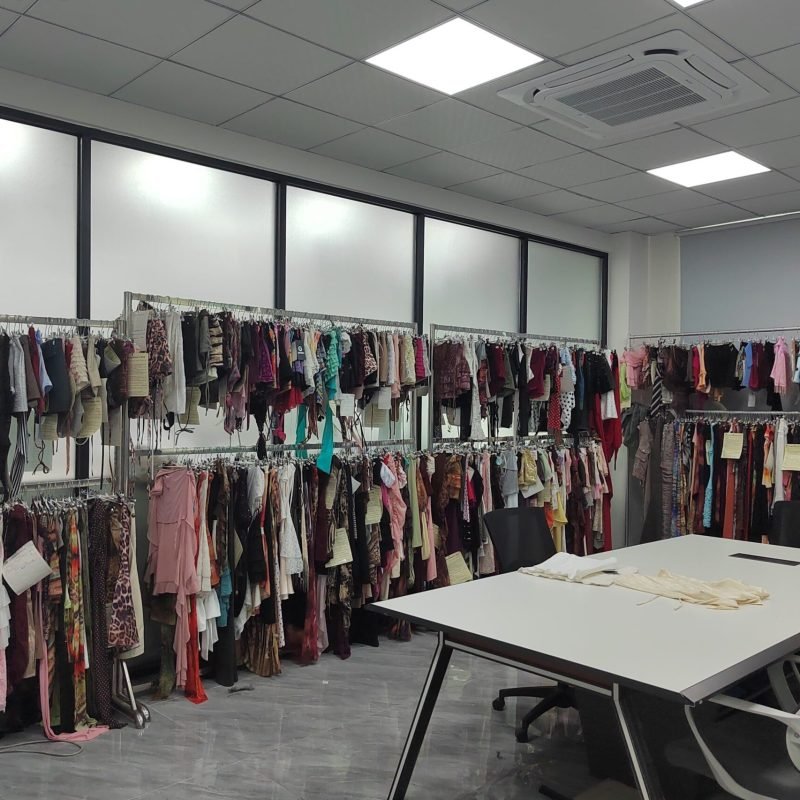
?XZapparel operates 6 sample rooms supported by 48 pattern makers and 60 sample makers for parallel women’s fashion development.
?Normal development throughput is about 45-60 samples per day and 1,500-2,000 samples per month, depending on style complexity and material readiness.
?Qualification should confirm more than finished samples: pattern versions, fit comments, revision records, PPS status and production handover all need traceable evidence. A sourcing team should be able to follow one style from development input to an approved production reference without relying on personal memory.




Verify the Development System, Not Just the Sample Room
Room Presence Is Only a Starting Point
Qualification Requires Traceable Decisions
A production-ready sample system should connect each approved result to a controlled input. Sourcing and technical teams should be able to follow the route from reference, Tech Pack or physical garment to pattern, first sample, fit review, revised pattern, size validation where required, PPS and bulk release. Records do not need to expose confidential brand information publicly, but the supplier should be able to demonstrate the method with approved, anonymized evidence. A room full of good-looking samples is useful; a traceable development chain is what supports qualification.
Six Checks That Turn a Visit Into Supplier Qualification
Use a fixed verification sequence so factory visits, video audits and development trials lead to comparable decisions instead of impressions based on presentation quality.

People and Ownership
Confirm who actually performs pattern making, sample sewing, technical review and fit correction. Ask which functions are in-house, which rely on specialist partners, and who remains responsible when work crosses company boundaries. Interviewing the people who handle a live style is more useful than reading an organization chart.
A qualified signal is consistent ownership from development input through approval. A warning sign is a sales explanation that changes when technical staff are asked the same question.

Pattern and Fit Control
Review how design intent becomes measurable geometry. Ask to see how base size, POM, ease, length, balance, support and fabric behavior are translated into pattern decisions.
For fitted dresses, swimwear, structured tops or bottoms, static measurements alone are not enough; wear position and movement can expose issues that only appear during fitting. Qualification should confirm that fit comments lead to specific pattern or measurement changes rather than remaining as informal messages without controlled follow-up.

Input and DFM Review
Check how the supplier handles different starting points such as a Tech Pack, reference image, sketch, physical garment or size chart. Each route carries missing information. A reference image may not show internal construction, fabric specification or exact measurements, while a Tech Pack may still contain conflicts between design, material and sewing sequence. A strong sample room identifies those gaps before sewing begins and raises alternatives when construction, material availability, process order, MOQ or timing could block the intended result.

Revision and Version Identity
Ask for a revision trail. The sample should be tied to a pattern version, measurement version and comment round so later teams know what changed and why. Version control becomes especially important when several styles are being developed at once, different people comment on fit, or a launch contains multiple colors and sizes.
The goal is simple: the approved pattern and specification must be distinguishable from earlier working versions. If the supplier cannot identify which version produced the approved sample, bulk risk is already visible.

PPS and Bulk Gate
Verify what must be closed before pre-production approval. Final material, trims, color, measurements, construction, artwork or process details, labels and packing requirements should be aligned before bulk release when they affect the approved standard.
A PPS is not merely another attractive sample. It functions as a production gate. Qualification should therefore check how unresolved items are listed, who approves them, and whether production can start only after required material and technical conditions are ready.

Evidence and Handover
Finish the review by following approved information into production. Ask how the sample team transfers the approved PPS, pattern, measurement specification, BOM, process notes and critical QC points to cutting, sewing and inspection. Evidence may include anonymized revision records, tagged samples, controlled patterns, PPM documents and inspection references. The most useful question is not, “Can you make this sample?” It is, “Can the factory reproduce the approved standard across the planned order without losing the decisions made during development?”
Sample Room Supplier Qualification Scorecard
Use the same evidence standard across shortlisted factories. The scorecard keeps attention on controllable development capability rather than showroom presentation, headcount alone or unsupported speed claims.
| Verification Area | What to Check | Evidence to Ask For | Qualified Signal | Red Flag |
|---|---|---|---|---|
| Team ownership | Pattern, sample, technical and fit responsibilities | Team roles, live workflow, anonymized records | Clear owners can explain the same style consistently | Sales cannot identify who controls technical decisions |
| Pattern capability | Base size, POM, balance, grading route | Pattern pieces, POM notes, revision marks | Pattern changes connect directly to fit comments | Only finished garments are available for review |
| Development input | Tech Pack, reference, sketch, garment, size chart | Intake brief, clarification list, DFM comments | Missing information is identified before sewing | Sample starts before critical inputs are clarified |
| First sample control | Structure, fit, material and process direction | First sample notes, open-issue list | Each sample has a defined validation purpose | First sample is treated as final bulk standard |
| Revision control | Comment rounds and approved version | Version labels, change record, revised pattern | Changes remain traceable across rounds | Files and samples cannot be matched to revisions |
| Size validation | Grade logic and critical POM where required | Size set, graded measurements, fit observations | Base-size approval expands through controlled grading | Only one size is checked for a broad size range |
| Material and trim approval | Bulk lot, color, handfeel, stretch, components | Approved swatch, trim reference, test or supplier data | Sample assumptions are separated from bulk approvals | Substitute sample material is not clearly identified |
| PPS gate | Final production standard | Approved PPS, final spec, BOM, artwork and pack details | Required inputs are closed before bulk release | Production starts with open technical decisions |
| Bulk handover | Transfer from development to production | PPM, approved pattern/spec, QC points | Production teams use the same approved references | Sample knowledge stays with one technician |
| Traceability | Link between style, version, material and inspection | Style IDs, version logs, batch or approval records | Approved history can be reconstructed | Records depend on memory or informal chat only |
XZapparel Sample Development Capacity in Qualification Context
The following facts are most useful when they are read as development capacity signals, not as standalone scale claims. Style complexity and material readiness still determine actual timing.
Six Sample Rooms
Six sample rooms allow different women’s fashion programs to move in parallel instead of forcing every style through one development queue. For qualification, the useful question is how those rooms are allocated and coordinated: core dresses, tops, bottoms, swimwear, sets and fit-sensitive projects may require different skills and approval intensity. Multiple rooms only create value when style identity, comments, patterns and approvals remain controlled across teams. The review should therefore connect physical capacity with version discipline rather than treating room count as sufficient proof.
Forty-Eight Pattern Makers
XZapparel’s pattern team includes 48 pattern makers, providing enough depth for simultaneous base-pattern work, revisions, fit correction and multi-style collection development. The number matters because pattern workload rises quickly when styles carry fitted silhouettes, structured panels, different fabric behaviors or broad size ranges. Qualification should still go beyond headcount. The stronger evidence is a controlled relationship between fit comments, POM changes, pattern versions and approved output. A large team without common revision discipline can create more variation rather than less.
Sixty Sample Makers
Sixty sample makers support first samples, corrected samples, fit revisions and PPS preparation across ongoing development programs. Sample making is not treated as isolated sewing output; each garment should answer a defined technical question. During qualification, sourcing teams should look for whether sample makers receive clear pattern, material, trim and operation inputs, and whether observations return to the pattern or technical team when construction does not behave as expected. Communication between pattern and sample functions is more important than speed alone.
45-60 Samples Per Day
Normal development throughput is about 45-60 samples per day across the system. The figure shows the ability to handle multiple active styles, but it should not be read as a promise that every complex garment can be completed within one day. Corset structures, new stretch systems, specialty trims, draping, external process samples or material substitutions can extend development.
A credible qualification review therefore asks how priority is set, how complex styles are separated from routine revisions, and how late comments are prevented from disrupting approved work.
1,500-2,000 Samples Monthly
Monthly output is normally around 1,500-2,000 samples across development activities. The value becomes clearer for fashion brands managing repeated drops, replenishment and seasonal range development, where many styles can sit at different approval stages at the same time. The qualification question is whether the organization can preserve style identity while volume rises. Sample quantity should be read together with version control, approval ownership, material status and handover records; otherwise higher throughput can simply move unresolved problems faster.
1,000-1,500 Styles Monthly
The broader development system can handle approximately 1,000-1,500 independent styles per month, subject to style complexity and project mix.
For sourcing teams, the number is relevant to assortment width rather than instant capacity for one account. A large seasonal program still requires forecast, priority, approval timing and material planning. During verification, ask how new styles, revisions and PPS are differentiated in tracking, how urgent hero styles are prioritized, and how technical resources are assigned when several launch windows overlap.
Verify How Different Development Inputs Enter the Sample Room
Strong sample rooms do not demand one perfect starting file. They identify what is known, what is missing and which approvals must be created before reliable sampling can begin.

Tech Pack Route

Reference Image Route

Sketch Route
A sketch can show proportion and design lines while leaving fit, fabric, support, closure and construction open.
Qualification should confirm that pattern and technical teams ask the right questions rather than silently filling gaps that may later change cost, appearance or fit. The stronger route records those open decisions before pattern work becomes expensive to reverse.

Physical Garment Route

Size Chart Route

Existing Sample Route
Pattern Revision Must Be Visible, Measurable and Version Controlled
Pattern skill becomes qualification evidence only when fit observations are converted into controlled changes that can survive multiple sample rounds and reach production without version drift.
Read Fit as Geometry, Not as a General Impression
A strong technical review starts by defining what the garment is meant to do on the body. For a fitted dress, a comment such as “the waist feels tight” can come from several different sources: insufficient ease, the wrong fabric stretch assumption, front-to-back balance, seam position, lining restriction or an incorrect waist POM. For a halter top, neckline tension may be influenced by neck drop, bust volume, strap length, armhole shape and fabric recovery. A useful sample room therefore separates appearance, static measurements and wearing behavior before deciding what to change.
Pattern review should connect the brand’s size chart and fit intent with measurable control points. Critical POM should be identified for the product rather than copied from a generic template. Photos, fitting notes and measured values can then be compared against the intended silhouette. Where movement matters, standing position alone is not enough. Bottoms may require sitting or squat checks; swimwear and fitted stretch pieces may need movement and recovery observations; structured dresses may need neckline, bust and waist balance checked together.
Qualification evidence can be simple and still meaningful: annotated fit photos, POM notes, marked pattern pieces or controlled measurement sheets. The key is whether the technical team can explain the relationship between the observed issue and the chosen correction. Vague comments such as “make it better” or “adjust fit” do not demonstrate engineering control.

Turn Fit Comments Into Specific Pattern and POM Revisions
Fit comments only create value when they become an executable change. Each revision should state what changed, where it changed and which sample or pattern version contains the correction. A comment on gaping may lead to armhole reshaping, bust redistribution, strap position changes or a material decision. A rise complaint on a jumpsuit or bottom may require front and back rise balance, hip ease and crotch shaping to be reviewed together. The correction should not be hidden inside one technician’s memory.
A controlled revision cycle normally links four items: the comment, the technical decision, the revised pattern or measurement, and the new sample result. If two variables change at once, the record should make the interaction clear. Changing both fabric and pattern, for example, can make it difficult to know which adjustment solved or created the next problem. For fit-sensitive garments, the sample room should also record unresolved risks rather than forcing every sample into an artificial “approved” status.
Sourcing teams can test revision discipline with one simple audit method: select a recent anonymized style and ask to see the sequence from initial input to current approved version. The team should be able to identify the first sample, comments, revised pattern, updated measurements and current status without reconstructing the history from chat messages. That trace is stronger evidence than a wall of finished samples.

Freeze an Approved Pattern Before Bulk Uses It
The approved pattern is the bridge between sample approval and repeatable cutting. Qualification should therefore confirm how working versions are separated from the final approved version and how the approved version is released to downstream teams. File name alone is not enough if several people can overwrite or reuse patterns without a controlled status. The physical or digital pattern identity should match the measurement specification, sample approval and material assumptions that produced the accepted fit.
Fabric behavior must remain part of the pattern decision. Shrinkage, stretch, recovery, drape and thickness can change the relationship between pattern geometry and finished measurement. A pattern approved on substitute fabric may require another review when bulk material changes. Likewise, a wash or heat process can affect dimensions after sewing. The sample room should know when an approved pattern remains valid and when a material or process change requires revalidation.
Before bulk, a technical team should be able to answer three questions quickly: Which pattern version is approved? Which measurement/specification version belongs to it? Which sample or PPS demonstrates the accepted result? If those links are clear, later production and QC teams can work from the same standard. If those links are unclear, sample approval has not yet become a controlled manufacturing input.

Sample Gates Should Close Specific Risks Before Approval Moves Forward
Each sample stage needs a defined job. Treating every garment as simply “a sample” hides unresolved risks and makes approval status difficult to control.
First Sample - Confirm Direction Before Refining Detail
A first sample should answer whether the intended product can move in the right technical direction. It is the stage to confirm silhouette, major proportions, essential construction, basic material behavior and process feasibility before time is spent polishing details that may still change. For XZapparel, normal simple samples are typically around 3-5 working days and complex samples around 5-7 working days, depending on material readiness, special trims, embellishment, structure and information completeness. Those ranges are development baselines, not guaranteed turnaround for every style.
The first-sample review should separate approved points from open points. A satin dress may have the correct neckline but need skirt balance or lining adjustment. A fitted knit top may achieve the visual shape but reveal recovery or seam-extension issues. A structured dress may need cup, boning or closure revisions before final fit can be judged. Recording those open items prevents the next round from becoming a general remake with no clear learning.
A strong qualification check asks whether the team can explain what the first sample was intended to validate. If the answer is simply “for approval,” the process may be too vague. Each early sample should reduce uncertainty in a controlled order so later approvals become more stable.

Fit Review and Revision - Convert Wear Feedback Into Controlled Change
Revision rounds should close identified issues rather than restart the development discussion. XZapparel’s normal revision window is typically about 2-3 working days once required inputs and materials are ready, but timing changes when comments alter material, components, special process or major pattern structure. The critical point for qualification is not speed. It is whether comments are converted into measurable and traceable actions.
Fit review should distinguish static measurement from wearing behavior. A measurement can sit within tolerance and still look or feel wrong if fabric stretch, support, body balance or seam position is unsuitable. Conversely, a visual comment may not justify a measurement change if the real cause is drape, pressing or construction. Pattern, sample and technical teams need a common interpretation so one correction does not create a new problem elsewhere.
Each revision should retain the relationship between fit photos or comments, POM changes, pattern edits and unresolved risks. When a revised sample returns, the review should confirm both the original correction and any side effects. The process becomes particularly important for multi-SKU programs, where similar silhouettes can easily carry the wrong comment or pattern if style identity is weak. A controlled review also records which open points were deliberately deferred to the next stage instead of being forgotten.
Size Set and Grading - Prove More Than the Base Size
Base-size approval does not automatically prove that the complete size range will hold the intended proportions. Where a program requires size-set validation, the review should check grade logic, critical POM and structural relationships across selected sizes. A waist or bust increment can be mathematically consistent while armhole depth, strap position, rise, torso length or support placement becomes visually unbalanced at another size.
The need for size-set work depends on product type, brand size architecture and risk. A simple relaxed top may require fewer fit checks than a fitted jumpsuit, swimwear style or structured occasion dress. The sample team should know which POM are grade-critical and which construction points need visual review at more than one size. Size-set approval should also use the intended bulk fabric or a confirmed equivalent when stretch, recovery or drape changes fit behavior.
Qualification should therefore ask how grading is reviewed, who approves deviations, and how approved graded measurements connect back to the pattern nest used for cutting. The goal is not to create more samples for appearance. It is to prevent a program from being “right in medium” and inconsistent across the commercial size range. When several sizes are sampled, every garment should carry enough identity to avoid mixing comments between sizes.

Verify Product-Specific Sample Capability, Not Generic Sewing Skill
Women’s fashion categories create different fit, material and construction risks. Qualification becomes more meaningful when a sample room is tested against the actual products planned for development and production.

Dresses
Dress sampling should test silhouette, balance, drape, lining, closure and fit as one system. Structured or occasion styles may also involve cups, boning, panels, neckline support, layered construction or specialty trims. Ask how the team distinguishes a pattern issue from a fabric or support issue, and whether fit comments are tied to the exact sample and pattern version.
A supplier that handles dresses well should be able to explain where the critical control points change between bias, bodycon, structured, draped and relaxed silhouettes.

Tops
Tops often look simple until armhole, neckline, bust, sleeve and fabric behavior begin to interact. Verification should review shoulder position, bust ease, sleeve pitch, placket or closure behavior, stretch assumptions and opacity where relevant. Fitted or bra-friendly tops need more than visual similarity; support, lining and component placement can change the fit. A strong sample room should identify which measurements are style-critical and which issues must be solved through pattern shape, construction or material choice rather than by changing every dimension at once.
Bottoms
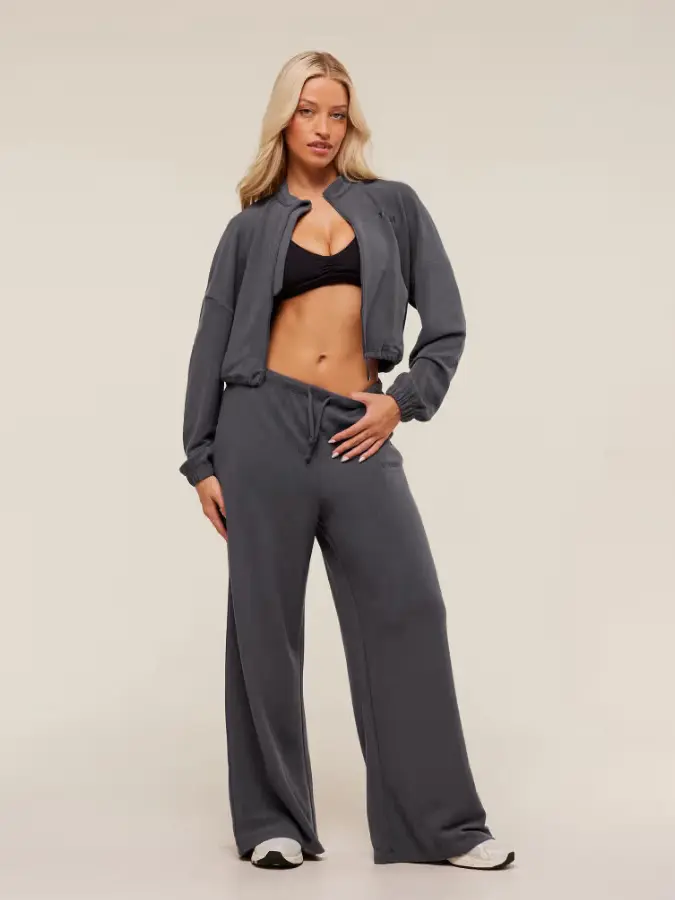
Bottoms require close control of waist-to-hip relationship, rise, crotch shape, thigh ease, waistband behavior and closure position. Stretch and recovery can alter the fit even when flat measurements appear correct. Qualification should include sitting or movement review when the product is fitted. For skirts and pants, grading also deserves attention because waist, hip and length increments do not always scale visually at the same rate.
Ask to see how comments move from fit observation to pattern correction and then into approved measurements.

Swimwear
Swimwear is highly sensitive to negative ease, stretch recovery, lining, elastic tension, torso length, leg opening and bust support. A sample room should be able to separate measurement issues from fabric recovery or elastic application.
Wet and stretch behavior can amplify risks that are not obvious on a dry garment.
Qualification should therefore connect sample development with material approval and relevant production-control testing. If cups, underwire, lining or support structures are used, the team should also show how placement and attachment are reviewed before bulk.

Sets
Matching sets create a coordination problem as well as two separate fit problems. Top and bottom need compatible color, handfeel, scale and styling, while each garment still requires its own critical POM and construction control. A strong sample room should be able to manage shared materials without assuming both pieces behave identically.
Qualification should also check whether comments are recorded by component so a revision to the top does not unintentionally change the bottom, and whether both pieces reach approval under the same style and color identity.

Shapewear and Fitted Stretch
Shapewear and fitted stretch products sit within XZapparel’s established capability and require careful review of negative ease, recovery, seam placement, support zones and component attachment. The sample room should show how fit is assessed during movement, not only on a mannequin. Material choice, pattern reduction and construction method need to be evaluated together because increasing compression through pattern alone can create discomfort or distortion. Qualification should confirm where development decisions are supported by internal production-control tests and where formal third-party testing would be handled separately if required.
PPS Should Function as a Real Bulk Approval Gate
A PPS becomes valuable when it freezes the production standard. It should close final decisions that affect repeatability instead of serving as another visual sample in the development sequence.
Lock Materials, Trims and Visible Product Standards
The PPS should represent the approved material direction that bulk production will follow. Main fabric, lining, elastic, lace, zipper, hardware, labels and other components need to be identified against the final specification where they affect appearance, fit or function. If an earlier sample used substitute fabric or provisional trims, the difference should be explicit and the final replacement should be reviewed before bulk release. Shade, handfeel, stretch, recovery, shrinkage or other relevant material behavior can change the final garment even when the pattern remains unchanged.
Branding and visible process details should also be tied to an approved reference. Placement, scale, color, print, embroidery, embellishment or special finish may require a strike-off, process sample or garment-level approval depending on the project. The sample room should not treat those elements as decoration added after technical approval if they can distort fabric, change weight, create puckering or affect fit.
Qualification evidence should therefore connect the PPS to the actual material and trim records used for production. A tagged sample, approved swatch, trim card, artwork version or controlled specification can all support the link. The objective is to prevent a situation where the PPS looks correct but bulk purchasing follows a different interpretation. Approval identity should remain clear even when several colors or trim options are developed for the same style.

Freeze Fit, Construction and Measurement Standards
PPS approval should confirm more than styling. The accepted pattern version, critical POM, measurement specification, construction method and finishing expectations need to agree with the physical garment. For fitted or structured women’s fashion, the relationship is especially important because small changes in seam allowance, lining, elastic tension, boning position, cup placement, zipper insertion or pressing can alter the visible fit without changing the nominal measurements.
A sourcing or technical team can verify the gate by selecting one PPS and asking the supplier to identify the exact approved pattern and specification behind it. If the garment has been revised several times, earlier versions should remain distinguishable from the final version. If material behavior required pattern compensation, the final specification should reflect that decision rather than relying on one experienced operator to remember the adjustment.
Where size-set or grading approval is required, the PPS route should also show how base-size decisions were translated to the commercial size range. The important question is whether the approved garment can be described in measurable, controlled terms. If the sample can only be reproduced by the same person who made it, the approval standard is not strong enough for production qualification. The production team should be able to rebuild the approved result from controlled inputs, not personal memory.
Release Bulk Only After Required Inputs Are Ready
Bulk timing should start from readiness, not from the date a first sample looked acceptable. XZapparel’s normal bulk production is typically about 25-35 working days after fabric and trims are ready, PPS is approved and production details are confirmed. The exact schedule still depends on quantity, SKU mix, style complexity, special processes and available production windows. Presenting a calendar before those inputs are closed can create a false sense of certainty.
A credible bulk gate should therefore include an unresolved-item check. Missing final material, open artwork, incomplete measurements, unapproved packaging or unclear process instructions should remain visible rather than being pushed into production under schedule pressure. The pre-production meeting can then transfer the approved PPS, pattern, specifications, materials, critical operations, QC points and timing to the teams responsible for cutting, sewing, inspection and packing.
For qualification, ask who has authority to release bulk and what evidence confirms the release conditions. A mature process makes the decision auditable. Production does not begin simply because the sample room is finished; it begins when the approved product standard is ready to be reproduced. Where one input remains intentionally open, the exception should have an owner, deadline and clear impact on the production plan rather than disappearing into informal follow-up.
Sample-to-Bulk Handover Must Preserve the Approved Standard
Use handover evidence to confirm that sample-room decisions remain intact after development. Every approved asset should have a clear production role and a controlled downstream owner.
| Approved Asset | Sample Room / Technical Role | Bulk Production Handover | Verification Question |
| Approved PPS | Physical reference for final appearance, fit and construction | PPM, line and QC reference | Is the PPS status and identity clearly marked? |
| Approved pattern | Final geometry for cutting | Cutting and pattern control | Does production use the same approved revision? |
| Measurement specification | Critical POM, tolerances and method | Measurement inspection | Are method, tolerance and version aligned? |
| BOM / trim specification | Material and component identity | Sourcing and line issue | Are final components linked to the approved sample? |
| Artwork / process reference | Placement, scale, color and process result | Printing, embroidery or specialist process control | Is the approved version tied to the style? |
| Critical operation notes | Construction points discovered during sampling | Sewing line and PPM | Are risk operations explained before line launch? |
| QC points | Known fit, material and construction risks | Inline, measurement and final inspection | Do inspection criteria reflect development learning? |
| Change log | Controlled record of approved changes | Merchandising, technical and production teams | Can later changes be traced to an owner and approval? |
Sample Room Red Flags That Deserve Further Verification
Warning signs do not automatically disqualify a supplier, but each one should trigger a deeper review before development cost, launch timing or bulk volume is committed.
Samples Without Records
A supplier can show dozens of attractive samples yet still have weak development control if none can be connected to an input, pattern, comment round or approval status.
Ask for one anonymized style and follow its history. If the team can only explain the garment from memory, later repeatability may depend too heavily on individuals. A stronger system can show enough record identity to reconstruct why the sample looks the way it does without exposing confidential brand material.
No Approved Pattern Version
Working patterns naturally change during development. The risk appears when the supplier cannot distinguish the approved version from earlier attempts. If several versions sit in the same folder or CAD environment without a clear status, cutting can begin from the wrong geometry. Qualification should confirm how approval is marked, who controls updates and how the production pattern is linked to the final measurement specification and PPS. Version discipline is more important than software brand or file naming style.
Fit Comments Stay in Chat
Email and chat are useful communication channels, but they should not become the only record of technical decisions. Comments such as “raise neckline,” “reduce waist” or “fix gaping” need to become controlled pattern, POM or construction changes. If the sample room cannot show how comments are converted into executable actions, the same discussion may repeat in later rounds or disappear before bulk. Qualification should look for a change path, not a preferred communication platform.
Substitute Materials Are Unclear
Using substitute fabric or trims during early sampling can be reasonable when the final material is not yet available. The risk begins when the substitute is not clearly identified or when its behavior differs from the intended bulk material.
Stretch, recovery, shrinkage, drape, thickness or surface friction can all change fit and construction. A qualified process should record which sample decisions remain valid and which points need rechecking once the bulk material or approved equivalent becomes available.
Sample Room Isolated From Production
Some factories can make excellent samples because one technician personally controls every detail, yet the production floor receives only a garment and a basic spec. Ask how critical operations, fit risks, material sensitivities and approved changes are explained before line launch. If the sample room cannot show a formal or repeatable handover to production and QC, the first bulk pieces may become another development round. Qualification should test the connection between departments, not only the skill of individual sample makers.
Ownership Claims Are Too Broad
Statements such as “everything is in-house” deserve verification when the product uses embroidery, specialty printing, knitwear processes, unusual finishes or other specialist operations.
Partner-supported capability can still be strong when ownership, approval and QC responsibility are clear. The risk is not using a specialist partner; it is hiding the boundary.
Qualification should identify who performs the process, who approves the sample, how transport or handoff is controlled, and who owns the final garment quality decision.
Multi-SKU Programs Test Whether Sample Control Can Scale
Large fashion programs expose weaknesses that single-style trials can hide. Verification should test how development remains controlled when many styles, comments, colors and approval dates overlap.
Style Queue Control
A multi-style program needs visible priority. Hero products, complex structures, shared-material styles and late additions should not compete in one unmanaged queue. Ask how sample rooms allocate work, how urgent revisions are separated from new first samples, and how capacity is reviewed before launch dates are promised.
A strong system can explain why one style moves ahead of another and how that decision affects downstream approvals. Volume alone does not create control; priority rules and accountable ownership do.
Version Drift Prevention
When 10, 20 or 30 styles move at once, similar silhouettes and repeated comments make version errors more likely. One style may be at first sample while another is at revised sample or PPS, even when they share fabric and construction.
Qualification should check whether sample, pattern, measurement and artwork versions carry enough identity to prevent cross-use. The test is simple: choose several styles at different stages and ask the team to show the current approved or working status without relying on one person’s memory.

Fit Comments Stay in Chat
Delays often come from waiting for decisions rather than sewing time. A sample system serving established brands should track which approvals are pending, who owns the next action and which downstream tasks are blocked. Fit approval may hold grading; material approval may hold PPS; artwork approval may hold process sampling. Ask how the supplier communicates those dependencies and whether late comments are separated from already approved points. An approval calendar protects both the brand and the factory from hidden critical-path changes.
Shared Material Coordination
Collections often reuse fabrics, linings, zippers, elastics or trims across several styles. Shared materials can improve consistency and commercial efficiency, but they also create a common failure point when one approval changes. The sample room should work with sourcing and technical teams to identify which styles depend on the same material decision and which need separate validation. Qualification should check whether a material substitution, shade change or performance issue is assessed across every affected style rather than corrected only on the first sample discovered.

Specialist Process Timing
Embroidery, selected printing, knitwear and certain special treatments may use long-term specialist partners within XZapparel’s controlled supply chain. Multi-SKU programs need those external process windows planned alongside internal sampling. Ask how strike-offs, process samples, transport, approval and final garment integration are scheduled. Clear ownership matters more than pretending every operation sits in one building. The supplier should remain responsible for development input, approved result, garment integration and quality control within the agreed scope.

Cross-Team Bulk Handover
As style count increases, approved information has to move through merchandising, pattern, sample, sourcing, production and QC without becoming fragmented. Qualification should test whether one approved version can be recognized by every function.
A useful audit method is to select a style close to bulk release and ask different teams to identify its PPS, pattern, measurements, material status and critical QC points. Consistent answers show organizational control; conflicting answers reveal handover risk before volume amplifies it.
Anonymized Multi-Style Qualification Case for a Fashion Program
The following representative program uses order parameters common in established brand projects. It illustrates how sample-room verification should work without exposing any brand name, design or commercial terms.
Program Brief and Qualification Goal
The representative program contains 18 women’s fashion styles and 42,000 units across three planned launch drops. The assortment includes seven dresses, four tops, four sets and three bottoms, with an average of two colors per style and a commercial size range from XS to XL. Total volume sits inside the normal 20,000-80,000 unit range common to larger brand orders, while the 18-style width reflects the 10-30 style programs frequently handled in one order cycle.
Qualification would not begin by asking whether 18 first samples can be produced quickly. The first task is to map development risk. Structured dresses with lining, cups or internal support require more pattern and fit attention than relaxed tops. Sets create coordination risk across two garments. Fitted bottoms require rise, hip and movement review. Shared fabrics may connect several styles, meaning one material approval can affect multiple SKUs.
The sample-room review would therefore divide styles into standard, fit-sensitive and process-sensitive groups, then assign the required approval route to each. The audit would check whether pattern ownership, material status, sample stage and open comments are visible for every style. Success is measured by controlled progress through development gates, not by the number of garments displayed at one time.


Development Control Across Eighteen Styles
Each style would enter through a defined input route: Tech Pack, reference, physical garment or combined reference package. Before first sample, missing measurements, unclear construction, material assumptions and specialist-process requirements would be identified. Styles sharing fabric or trims would be linked so a late material change does not create inconsistent decisions across the range. The sample queue would prioritize long-lead or fit-sensitive styles first instead of treating all 18 styles as equal work.
First samples would then be reviewed against a style-specific purpose. A structured dress might need neckline support and bust balance resolved before decorative details are finalized. A set could require color, handfeel and top-bottom proportion checked together. A fitted bottom could need rise and movement corrected before grading. Revisions would be tied to updated pattern or POM records rather than informal instructions. Where size-set validation is required, the commercial range would be checked after the base-size direction is stable.
The qualification team would select several styles at different stages and reconstruct their histories. One might be at first sample, another at fit revision, another at size set and another at PPS. The sample room should be able to identify the current pattern, latest comments, material status and next approval for each style. That exercise is more revealing than reviewing 18 finished garments lined up on a rack.
Bulk Release Conditions for 42,000 Units
Before the 42,000-unit program enters bulk, the approved standards need to be transferable across styles, colors and sizes. Final PPS status, approved pattern, measurement specification, BOM, material and trim approvals, artwork or specialist-process references, labeling and packing instructions should be aligned according to each style’s needs. Shared-material styles should use the intended bulk lot or an approved route that makes any remaining differences explicit.
The pre-production handover would then communicate critical construction operations, fit-sensitive points and QC checks to the production teams. For multi-style programs, the handover should also identify which styles share materials or processes, which have unusual risk points, and which approvals remain time-critical. The objective is to prevent one approved sample from becoming an isolated reference that cannot be reproduced once several lines, batches or teams are involved.
A sourcing team auditing the program would not need access to confidential brand designs from another account. Anonymized records can still demonstrate the system: version identity, sample stage, pattern revision, PPS status, material linkage and production release logic. Those controls are the qualification evidence that matters before significant bulk volume is committed. The review can also compare several styles with different risk levels to confirm that the same control logic works across the assortment rather than only on one carefully prepared example.

Evidence Should Prove the Claim It Is Attached To
A useful qualification pack does not rely on one factory tour photo. Each evidence type should answer a specific technical or organizational question without exposing confidential brand information.
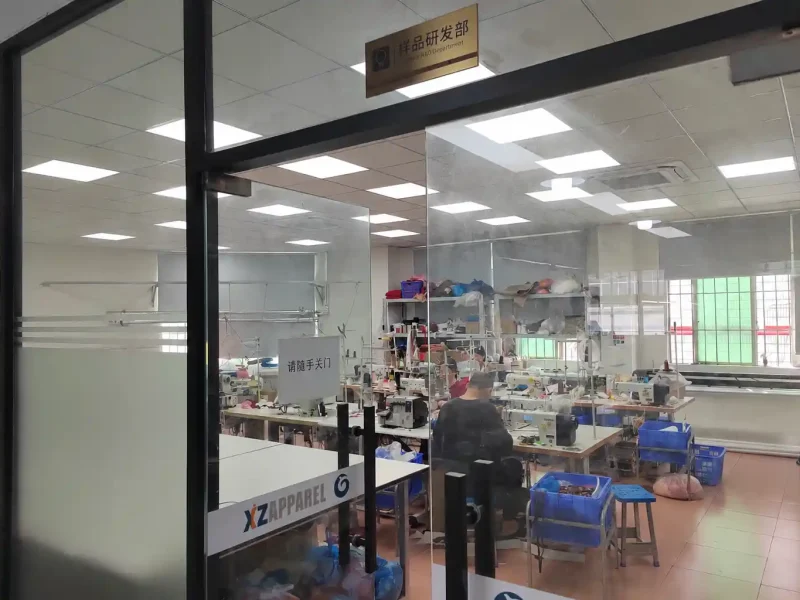
Sample Room Reality
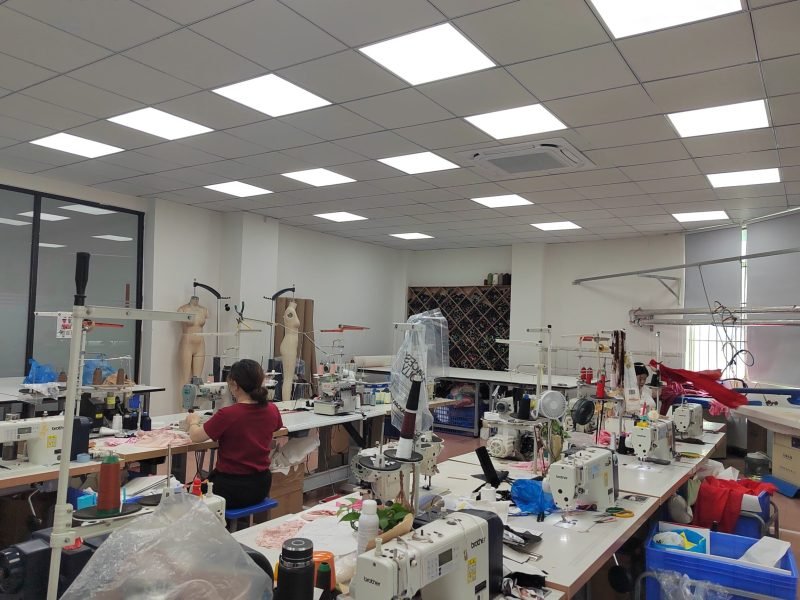
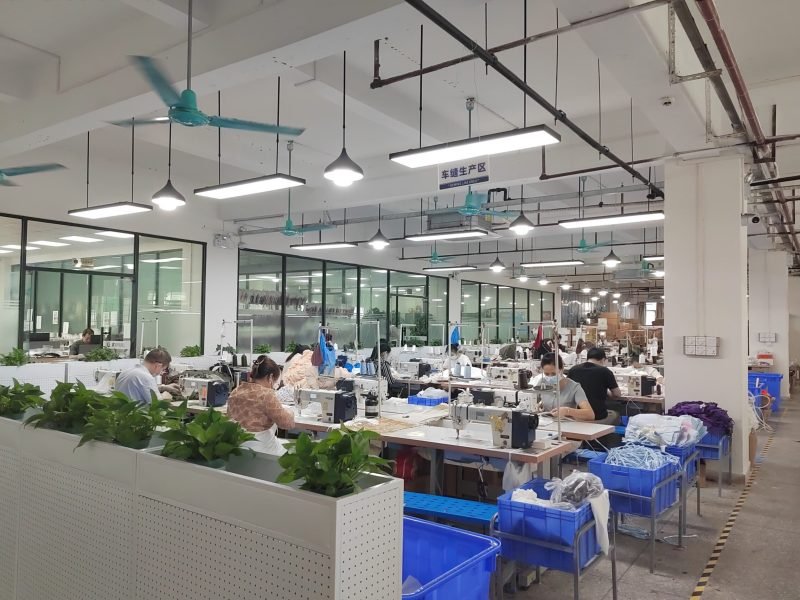
Current photos or video of the six sample rooms can confirm that development space, teams and ongoing sample activity exist. The strongest visual shows work context rather than staged racks alone: pattern interaction, sample construction, fitting or review. Room images prove operational presence, not final quality by themselves. Date, area and activity context should be clear enough for a sourcing team to understand what the image actually verifies. A short caption should identify the development function rather than making a broad quality claim.
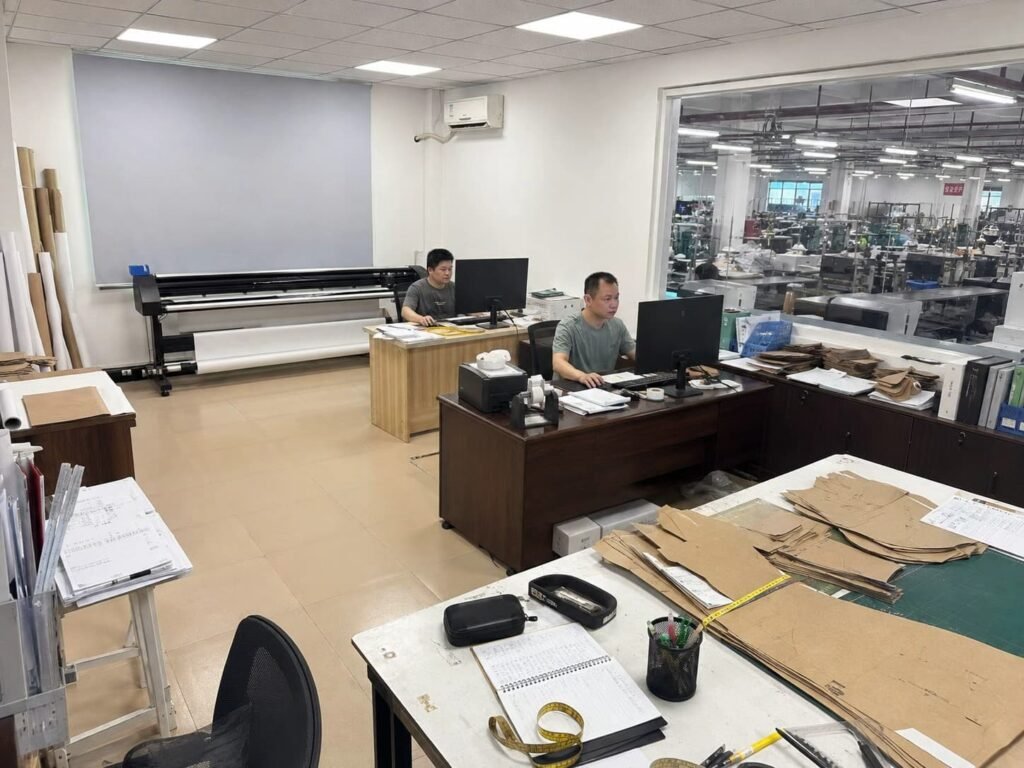
Pattern and POM Records
Anonymized pattern pieces, POM sheets and technical annotations can demonstrate how fit intent becomes controlled geometry. The evidence should show enough version identity to establish that pattern work is linked to a style and revision stage while removing any confidential artwork, brand name or proprietary design detail. A visible connection between comment, changed area and approved version is stronger than a generic CAD screenshot. Where several versions exist, the evidence should make approved status distinguishable from working files.
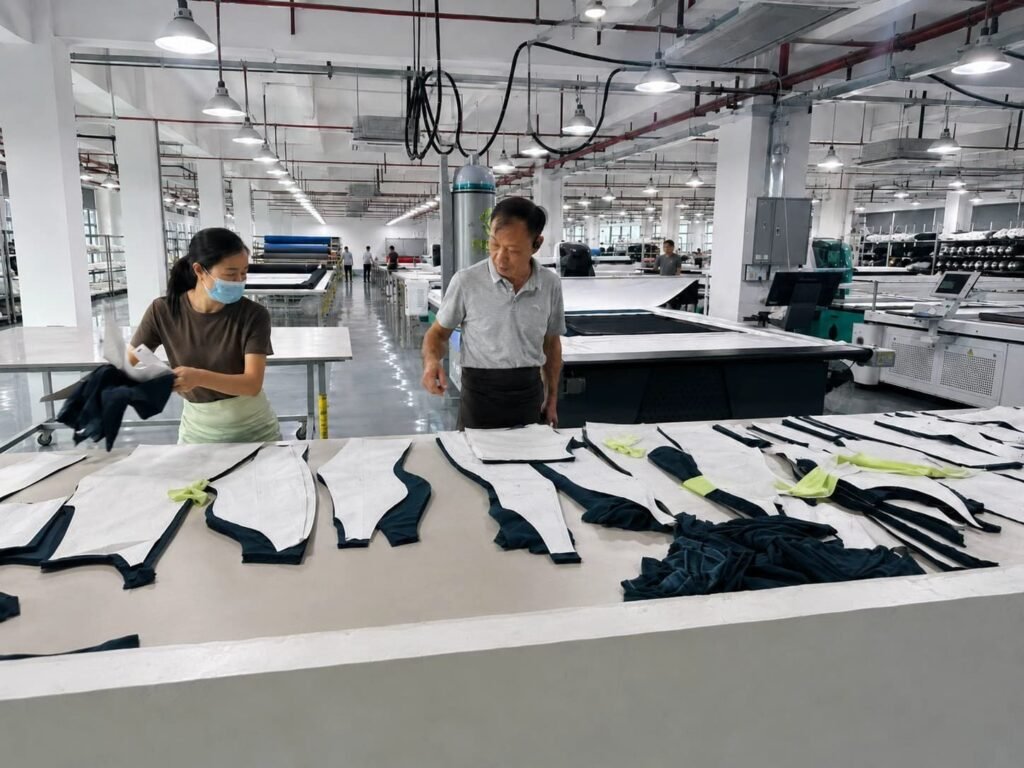
Revision Trail
A controlled comment and revision sequence can prove that sample feedback leads to documented action. Useful evidence may include a redacted comment sheet, marked pattern area, updated measurement line or version label.
The goal is not to publish client files; it is to show the mechanism that prevents comments from disappearing between sample rounds. One example with two or three clear revisions can demonstrate more control than dozens of unlinked garments.

Fit Review Evidence
Fit photos on a mannequin or model, measurement checks and before-after correction views can demonstrate how issues are identified. Any public visual should be anonymized and authorized. The evidence is strongest when the technical reason for the correction is clear rather than presenting a polished garment without explaining what changed. Front, side or movement views should be selected according to the risk being checked, not for appearance alone. Measurement evidence can sit beside the image when the correction depends on a critical POM.

PPS Identity
A tagged or otherwise controlled PPS can show how the final development result is distinguished from earlier samples. The supporting record should connect the PPS to the approved pattern, measurement specification, material and key process references used for bulk. A PPS photo without status or version context proves much less. Where several colors exist, the evidence should also make clear which approvals are shared and which remain color-specific. Any unresolved exception should remain visible until the responsible team closes it.

Production Handover
Redacted PPM, change-log or QC-reference material can demonstrate that development decisions move into production. Evidence should show the presence of approved references, critical operations or known risk points without exposing private commercial information.
Handover proof connects sample-room capability to the supplier qualification decision more directly than a general factory image. A sourcing team should be able to see how sample learning becomes an instruction or inspection point before bulk begins.
Prepare the Right Information for a Supplier Qualification Review
A focused qualification review works best when both sides know what must be verified. XZapparel can prepare development evidence, while brand teams provide enough project context to test the system against real requirements.
Information XZapparel Can Prepare
Information That Makes the Review Meaningful
Frequently Asked Questions About Sample Room Verification
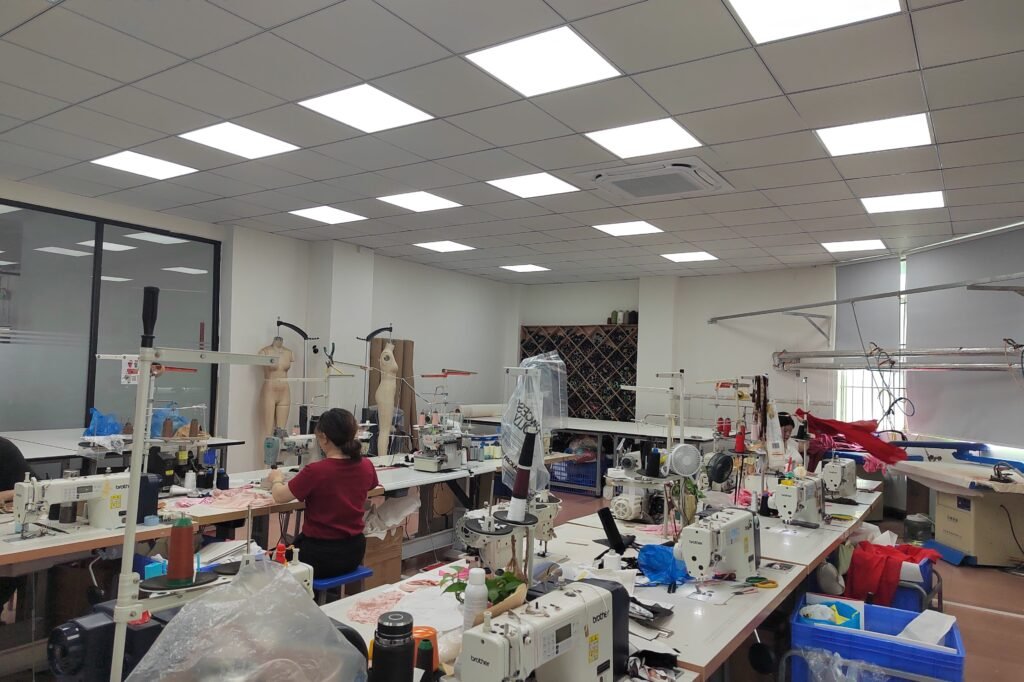
Start a Sample Room Qualification Review With XZapparel
If your sourcing or product development team is evaluating a new women’s apparel supplier, send the project context before scheduling the review. We can prepare the relevant sample-room, pattern, development, PPS and handover information around the products you actually plan to source rather than giving a generic factory presentation.
Useful inputs include:
- Product categories and approximate number of styles
- Estimated units by style or program
- Target market and intended launch window
- Tech Pack, reference image, sketch or physical sample status
- Brand size chart, base size and important fit requirements
- Fabric, trim and special-process direction
- Current sample stage, if development has already started
- Supplier questionnaire, audit checklist or quality requirements
- Any required evidence for pattern control, PPS or bulk handover
XZapparel will review which information is already ready, which points need clarification and which evidence can be prepared within confidentiality and verification boundaries. The goal is to make the first technical discussion useful for qualification, not to push an incomplete project into quotation or bulk planning before the development standard is clear.