Skip to content

Women’s Apparel Factory Supplier Qualification Guide
Use a qualification system built for fashion production, not a generic factory checklist. Review product fit, development, materials, capacity, quality, testing, compliance, supply-chain ownership, and commercial readiness before approving a manufacturing partner.
- 6 sample rooms, 48 pattern makers, and 60 sample makers support parallel development and fit revisions.
- 80 sewing lines and normal system capacity of 180,000-200,000 pieces per month, subject to product mix and allocation.
- Standard garment MOQ is 200 pieces per style per color; fabric, trim, or specialist processes can require higher quantities.
- Quality flow covers Fabric Inspection, PPM, Cutting, Inline QC, Measurement, 100% Finishing, Final Inspection, and Packing Inspection.


What Actually Qualifies a Women’s Apparel Factory?
Supplier qualification should prove that a factory can develop, reproduce, control, and deliver the intended women’s apparel program under defined product, quality, timing, and evidence requirements.
Qualification Is More Than an Audit
A factory audit is important, but factory qualification goes further. A sourcing team needs to confirm whether the proposed manufacturing route fits the actual garment category, construction, fit standard, material behavior, order structure, and target market. A clean facility can still be the wrong production partner for structured dresses, stretch tops, swimwear, or multi-SKU collections if product development and bulk control are weak.
A useful qualification review asks four connected questions:
- Product fit: Has the supplier demonstrated relevant experience for the silhouette, fabric, support structure, finishing, and size range being sourced?
- Development control: Can references, sketches, Tech Packs, size charts, and comments move through pattern, sample, revision, and PPS without losing information?
- Bulk repeatability: Can approved materials, measurements, construction, workmanship, artwork, and packing standards be reproduced across production lots?
- Evidence quality: Can claims about capacity, testing, certification, ownership, and quality be supported by records, real facilities, approved samples, or current documents?
Qualification should end in a sourcing decision, not a collection of factory photos. The output should state what is approved, what remains conditional, what evidence is missing, and what must be closed before bulk production starts. For multi-department organizations, the same review should also identify who owns each open item: sourcing for commercial terms and factory identity, product development for fit and construction, QA for inspection and testing, and operations for timeline and shipment conditions


Women’s Apparel Needs Product-Specific Review
A broad statement such as “we make women’s clothing” is not enough for a serious supplier review. Dresses, fitted tops, bottoms, sets, swimwear, activewear, sweatwear, knitwear, and selected outerwear carry different fit, fabric, construction, equipment, process, testing, and production risks. Qualification depth should rise with garment complexity and with the cost of a bulk failure.
For example, a bodycon dress may require controlled stretch and recovery, stable side seams, neckline support, opacity management, consistent garment length, and reliable measurement after finishing. A satin occasion dress shifts attention toward drape, seam appearance, bias behavior, pressing, lining, zipper installation, and shade consistency. Swimwear adds negative ease, lining, elastic, opacity, stretch recovery, colorfastness, and support engineering. Embellished styles add placement, attachment security, backing, puckering control, and specialist-process ownership.
The strongest supplier review therefore connects product category to fit, material, construction, sample gates, quality risks, and bulk controls. Factory scale matters, but only after confirming that the scale is relevant to the garments being sourced. A useful method is to select two or three representative high-risk styles from the planned collection and test the supplier against them. If the factory can explain how those styles will be patterned, sampled, sourced, processed, inspected, and scaled, the qualification conversation becomes far more meaningful than reviewing a broad product catalog.
Separate Qualification, Audit, and Inspection Responsibilities
Supplier Qualification
Qualification decides whether a manufacturing partner should enter an approved or conditional supplier pool. It combines factory identity, category capability, development resources, material control, capacity, quality systems, testing, compliance scope, specialist-process ownership, commercial fit, and evidence.| The review should be tied to the intended women’s apparel program rather than completed once as a generic corporate form.
- Output: proceed, conditional review, hold for evidence, or not suitable.
- Best timing: before meaningful bulk commitment and when onboarding a second source.
- Main evidence: capability records, factory route, product samples, quality records, current documents, and project-specific feasibility review.
Factory Audit
A factory audit verifies how the manufacturing site is organized and controlled. It can examine the actual location, facilities, management systems, equipment, production flow, quality procedures, warehouse controls, worker and safety practices, and selected documentation.
Audit findings support qualification, but an audit alone does not prove that the site can execute every garment category, fit requirement, or specialist process in a proposed collection.
- Output: factual findings, observations, corrective actions, and document status.
- Best timing: during onboarding, major program expansion, or a material change in manufacturing route.
- Key caution: confirm which site, legal entity, and production activities the audit actually covers.
Production Inspection
Production inspection checks whether a defined order follows approved specifications during or after manufacturing. Inline and final inspection can identify measurement, workmanship, appearance, labeling, packing, and assortment problems, but inspection starts too late to replace supplier qualification.
A supplier with weak development control or hidden subcontracting can pass one shipment and still carry long-term program risk.
- Output: pass, hold, rework, reject, escalation, or further review against an agreed standard.
- Best timing: inline, finishing, final, and packing stages.
- Key caution: inspection criteria require approved inputs such as Tech Pack, PPS, measurement method, and defect definitions.
Women’s Apparel Supplier Qualification Matrix
Use one framework across sourcing, product development, QA, and operations. Each domain should produce a clear evidence requirement and a sourcing decision before bulk production is released.
| Qualification Domain | What to Verify | Evidence to Request | Decision Output |
|---|---|---|---|
| Factory Identity | Brand, legal contracting entity, manufacturing site, address, production ownership | Current company documents, site details, audit/KYC pack, manufacturing route | Entity and factory relationship confirmed |
| Product Capability | Category, silhouette, fabric, construction, fit, embellishment, size range | Relevant samples, product matrix, process examples, maturity statement | Product scope approved or limited |
| Development | Pattern, sample, fit revision, PPS, comment control | Sample workflow, pattern/POM evidence, sample records, approval gates | Development route confirmed |
| Material Control | Fabric sourcing, trims, lot/shade, substitutes, documentation | Fabric specs, swatches, receiving/inspection records, supplier document scope | Material route approved |
| Capacity | Relevant lines, machines, workload, product mix, allocation, bottlenecks | Capacity statement, line plan, production route, delivery assumptions | Usable capacity confirmed |
| Quality System | Incoming, PPM, cutting, inline, measurement, finishing, final, packing | QC flow, checklists, records, defect handling, release criteria | Bulk control system accepted |
| Testing | Product-specific tests and interpretation | Test method, sample/lot context, internal record, third-party report where required | Test plan accepted |
| Compliance | Facility, market, social, material, label, document responsibilities | Current certificates/audits, scope, dates, supplier/material documents | Applicable evidence verified |
| Ownership | In-house, specialist partner, third-party lab/inspection | Ownership map, partner scope, approval flow, final QC responsibility | Outsourcing risk controlled |
| Commercial Fit | MOQ, sample timing, bulk timing, quotation inputs, packaging, trade terms, reorder | Project quotation, timeline assumptions, order matrix, term confirmation | Program feasibility confirmed |
Verify Factory Identity Before Reviewing Capability
Factory qualification starts with a simple question: who will actually contract, develop, manufacture, inspect, and ship the garments? Every later claim depends on a clear answer.
Reconcile Brand, Entity, and Manufacturing Site
A sourcing team should avoid assuming that a website brand name, factory address, legal company name, and payment entity are automatically the same. Supplier onboarding should reconcile each role with current documentation. For XZ Apparel, the public brand and manufacturing system are presented separately from exact legal fields used for contracts, KYC, and payment. Manufacturing operations began in 2008, while the current legal entity should be verified from current documents rather than inferred from manufacturing heritage.
The manufacturing base is in Humen, Dongguan, Guangdong, with 3 production buildings covering approximately 20,000 square meters. The facility system includes product development, sample, fabric and trim storage, cutting, sewing, pressing, quality, packing, and warehouse functions. A qualification pack should connect the physical manufacturing route to the contractual route, especially when a program includes specialist processes or third-party testing.
Before approval, verify:
- current legal company name and registration documents used for the project;
- manufacturing address and the functions performed there;
- contracting and payment entity relationship;
- whether any production step is moved to a partner site;
- which entity owns audit, certification, material, or test documentation;
- who is responsible for final garment release and shipment.


Follow the Garment Through the Factory
A factory tour is more valuable when it follows the product instead of jumping between impressive machines. Start with development input, then trace materials through inspection and storage, cutting, sewing, specialist-process handoffs where relevant, finishing, measurement, final inspection, packing, and warehouse release. The route should match the order being discussed.
For a fast-fashion program, pay particular attention to handoffs. Many bulk problems are created where responsibility changes: a revised pattern reaches cutting but not a specialist process; an approved trim color changes during replenishment; a print or embroidery strike-off is accepted but placement control is not carried into bulk; a finishing requirement is known by merchandising but missing from production instructions.
A credible supplier should be able to explain the owner of each approval, the approved reference used at each stage, and the record created when a change occurs. Outsourcing is not automatically a weakness. Hidden outsourcing, unclear responsibility, and uncontrolled standard transfer are the real risks. During a factory visit, ask the team to select one current style and walk through its actual development and production records. The exercise often reveals more than a prepared presentation because it shows whether merchandising, technical, production, and quality teams are working from the same approved information.
Qualify Product Capability by Women’s Apparel Category
Product qualification should reflect the garments entering development. Review silhouette, material behavior, construction, fit, finishing, and known failure modes instead of accepting a generic category list.
Dresses and Occasionwear
Qualification should examine drape, lining, neckline stability, bust support, zipper installation, slit and hem control, seam appearance, pressing, embellishment, and size consistency.
Satin, mesh, stretch jersey, lace, sequins, and structured fabrics behave differently in cutting and sewing. A relevant factory should show comparable construction, not only front-view product photos.
- Review: internal construction, lining, closures, support, hems, embellishment placement.
- Evidence: inside-out samples, approved PPS, measurement and workmanship records.
- Risk signal: attractive sample photography without evidence of repeatable bulk construction.
Fashion Tops
Fitted, cropped, corset-inspired, halter, strapless, ruched, mesh, and stretch tops require more than basic T-shirt capability.
Qualification should focus on neckline shape, armhole and underarm control, bust placement, support, stretch behavior, recovery, binding, elastic, lining, and construction symmetry. Fit intent must be linked to the brand size chart and fabric behavior.
- Review: stretch and recovery, support components, POM method, neckline and armhole stability.
- Evidence: fit samples, pattern corrections, fabric specification, approved construction details.
- Risk signal: factory claims “tops” experience but shows only loose basic knits.
Bottoms and Skirts
Bottom qualification should cover rise, waist stability, hip shape, zipper or elastic function, pocket construction, hem balance, lining where used, and fabric recovery.Bias, satin, stretch woven, knit, and sculpting fabrics can alter both measurement and appearance after sewing or finishing. Skirts with drape or asymmetric hems need a different control plan from leggings or tailored trousers.
- Review: rise and inseam method, waistband construction, closure, grain direction, hem behavior.
- Evidence: measurement method, pattern pieces, finished samples, wash or recovery checks where relevant.
- Risk signal: size chart accepted without agreement on POM method or tolerance.
Matching Sets
Sets create coordination risk because tops and bottoms must work as one commercial product. Fabric lot, shade, handfeel, print position, trim, size relationship, packing, and delivery timing should remain aligned.
A strong supplier should explain whether components share material lots and how partial approval or rework affects the set.
- Review: shared materials, shade continuity, top-bottom size relationship, packing identity.
- Evidence: coordinated PPS, lot control, assortment and packing records.
- Risk signal: each component is managed as a separate order with no collection-level control.
Swimwear and Resort
Swimwear requires product-specific knowledge in negative ease, stretch and recovery, lining, elastic, coverage, opacity, support, leg opening, torso length, and colorfastness. Resortwear can involve lightweight woven, mesh, crochet-look materials, trims, and cover-up constructions with very different bulk risks.
- Review: main fabric and lining compatibility, elastic recovery, support structure, fit movement.
- Evidence: stretch/recovery checks, fit samples, measurement points, construction samples.
- Risk signal: swimwear is treated like ordinary knitwear without separate fit and material review.
Activewear and Shapewear
Active and contour products depend on controlled negative ease, stretch direction, recovery, compression intent, seam behavior, opacity, support, and comfort.
Panels, waistbands, bonded areas, elastics, and lining can change fit under movement. Product maturity should be stated accurately, especially when experience varies by program type.
- Review: performance fabric route, fit under stretch, seam and support construction, opacity.
- Evidence: relevant samples, fabric data, test plan, fit comments.
- Risk signal: capability is based only on fabric similarity rather than garment engineering.
Sweatwear and Casual Knit
Hoodies, sweatshirts, joggers, and casual knit programs should be reviewed for fabric weight, shrinkage, spirality, seam stability, rib recovery, hood balance, pocket construction, brushing or finishing, and wash performance.
Program repeatability often depends on fabric lot consistency and shrinkage management before cutting.
- Review: GSM, shrinkage, rib behavior, wash response, size specification.
- Evidence: fabric inspection, pre-production checks, approved measurements, wash test records.
- Risk signal: garment measurements are checked before wash but no post-wash behavior is considered.
Knitwear and Specialist Processes
Knitwear, embroidery, selected printing, and specialized fabric treatments may be managed through long-term specialist partners rather than in-house equipment.
Qualification should focus on ownership transparency, development handoff, strike-off or sample approval, material compatibility, production timing, and final garment QC.
- Review: execution owner, partner scope, standard transfer, approval points, final responsibility.
- Evidence: ownership map, process sample, approved artwork, garment-level inspection.
- Risk signal: every specialist process is marketed as in-house without supporting evidence.
Qualify Development From Reference to Approved PPS
A strong sample room does more than produce attractive prototypes. Each stage should remove a defined uncertainty before the style is released toward bulk production.

Development Input Review
Development can start from a Tech Pack, reference image, sketch, physical garment, size chart, or a combination of inputs. The first qualification question is not whether a factory accepts the file; it is whether missing information is identified before pattern work begins. Unseen construction, fabric composition, stretch direction, internal support, tolerance, and finishing cannot be guessed reliably from a photo.
- Confirm: silhouette, target fit, size base, fabric direction, visible and hidden construction, trim, artwork, target quantity, and launch window.
- XZ Apparel baseline: multiple input types are supported, with technical clarification before sampling.

Pattern Development
Pattern capability should be reviewed through real technical work: POM definition, balance, ease, seam allowance, construction compatibility, grading intent, and revision records.
Headcount alone is not enough, but resource depth matters when many styles are moving at the same time. XZ Apparel operates with 48 pattern makers supporting multi-style development and revision capacity.
- Confirm: pattern owner, base size, fit reference, POM method, grading assumptions, and change log.
- Evidence: pattern pieces, POM annotations, before/after fit corrections, and revision notes.

First Sample
The first sample should answer whether design intent can be manufactured with the proposed construction and material direction.
Normal sample timing at XZ Apparel is typically 3-5 working days, while complex styles are typically 5-7 working days, subject to material readiness, process complexity, and input clarity.
- Review: silhouette, construction, material behavior, major measurements, workmanship, and missing specifications.
- Do not approve bulk from a visually attractive first sample when fit, material, or process variables are still open.

Fit and Revision
Fit revision should convert comments into controlled changes rather than creating a new interpretation each round.
Typical revision timing is 2-3 working days after clear comments and required materials are available. Strong qualification evidence includes a change log connecting issue, location, measurement, visual effect, requested action, and revised result.
- Confirm: which comments require pattern change, construction change, material change, or tolerance clarification.
- Evidence: fitting photos, POM updates, pattern notes, and revision comparison.

Process and Material Approval
Print, embroidery, embellishment, wash, special finish, custom color, support components, and unusual trims should be approved at the correct stage. A garment can fit well but still be unready for bulk if process placement, attachment, handfeel, color, material lot, or trim function has not been frozen.
- Confirm: artwork scale, placement, color reference, backing, attachment method, supplier specification, and compatibility with the garment fabric.
- Evidence: strike-off, lab dip, swatch, trim sample, process sample, or garment sample as appropriate.

PPS Release
PPS is the bulk reference gate, not another styling sample. XZ Apparel typically allows 4-5 working days for PPS after the required inputs and preceding approvals are ready.
The approved PPS should freeze applicable material, trim, measurements, construction, workmanship, artwork, branding, finishing, and packaging details.
- Release condition: unresolved changes should not continue informally into bulk.
- Evidence: approved PPS, version-controlled specification, final comments, and production-ready material/trim status.
Qualify Fabric, Trim, and Material Control
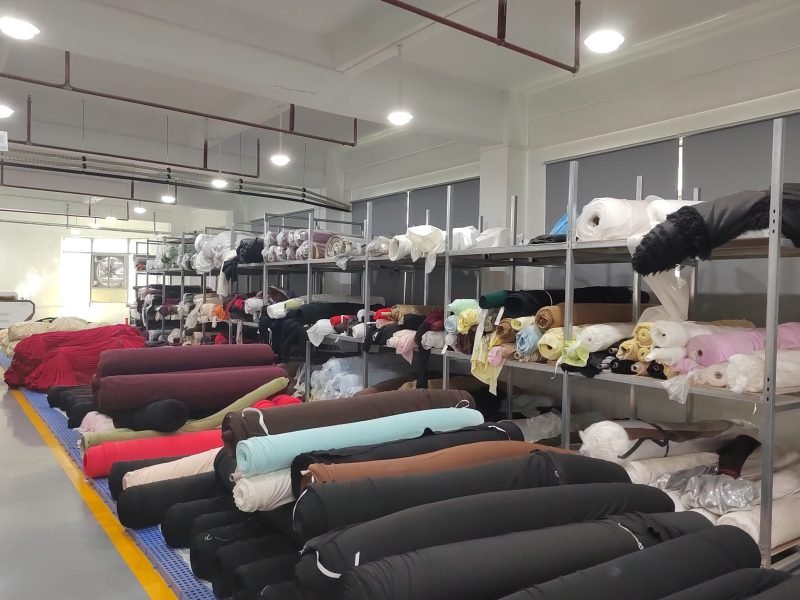
Material qualification should prove how a supplier sources, approves, receives, checks, stores, issues, and changes fabrics and trims before bulk problems reach the sewing floor.
Fabric Sourcing Route
A strong material system offers several controlled routes rather than promising “any fabric.” XZ Apparel regularly works with 30+ fabric suppliers, including approximately 8 core suppliers, with sourcing access in Dongguan/Humen and Guangzhou Zhongda. The sourcing route can move from existing stock/specification to similar match, custom color or finish, custom construction/GSM, or a documented certified-material route.
- Check: composition, construction, GSM, stretch, recovery, drape, opacity, handfeel, color, finish, supplier MOQ, lead time, and required documents.
- Control: approve a physical or documented material standard before bulk booking.

Incoming Fabric Control
Incoming fabric should be checked before cutting, not after garments show shade, shrinkage, defects, or dimensional problems.
XZ Apparel uses in-house fabric inspection and production-control testing that can include GSM, shrinkage, colorfastness, rubbing, washing, pilling, stretch/recovery, spirality, and dimensional stability according to product risk.
- Check: lot identity, shade, width/specification, visible defects, shrinkage risk, and relevant performance behavior.
- Decision: approve, segregate, hold, replace, retest, or review against the project requirement.

Trim and Component Control
Buttons, zippers, elastic, lace, cups, underwire, boning, labels, hangtags, packaging, and custom hardware can create delays or failures even when the main fabric is correct.
Qualification should establish how specification, color, quantity, appearance, function, and required performance are checked before issue to production.
- Check: approved sample, supplier specification, color/finish, function, attachment compatibility, replacement availability, and MOQ.
- Control: separate approved, pending, and rejected components and keep version changes visible to merchandising and production.

Material Change Management
Material substitutions are one of the highest-risk shortcuts in fast fashion. A similar-looking fabric can change fit, drape, opacity, stretch, recovery, shrinkage, seam appearance, pressing response, print behavior, or garment cost. No substitution should enter bulk only because the color is close or the composition label appears similar.
- Re-review: fit, measurement, construction compatibility, test requirement, handfeel, color, and commercial impact.
- Re-approve: swatch, sample, or PPS level depending on the size of the change and the garment risk.
Verify Usable Capacity, Not Just Factory Size
A capacity number becomes meaningful only after the product mix, line allocation, material readiness, specialist-process windows, SKU complexity, and required delivery window are understood.
Convert Headline Capacity Into Program Capacity
XZ Apparel operates approximately 80 sewing lines with around 640 Brother sewing machines. Normal finished output is approximately 180,000-200,000 pieces per month across the manufacturing system, with upper output around 220,000 pieces depending on product mix. Those numbers describe the system, not guaranteed capacity available to one new program.
A serious capacity review should therefore ask how the proposed styles will be allocated. Eighteen straightforward jersey tops and eighteen structured embellished dresses do not consume the same pattern, sample, cutting, sewing, pressing, specialist-process, inspection, or finishing resources. Multi-SKU programs also create changeover and approval pressure that does not appear in a monthly capacity headline.
Review the following before relying on a capacity statement:
- style count, color count, size range, and total units;
- construction complexity and expected sewing minutes;
- fabric readiness and any pre-shrink or conditioning need;
- specialist processes and external partner windows;
- line suitability for woven, stretch, swim, sweatwear, or other product groups;
- overlapping delivery windows and current production commitments;
- inspection, finishing, packing, and warehouse release capacity.


Use Capacity Planning as a Qualification Gate
Bulk timing at XZ Apparel is typically 25-35 working days after fabric and trims are ready, PPS is approved, and production details are confirmed. The starting point matters. A calendar promise made before material booking, fit approval, special-process scheduling, or packaging confirmation is not a reliable production plan.
For larger programs, capacity qualification should move from “Can you produce 40,000 pieces?” to “How will 40,000 pieces across these styles, fabrics, colors, processes, and delivery dates move through the system?” The answer should connect development priorities, material booking, line allocation, partner slots, quality gates, packing requirements, and exception management.
Strong evidence can include a milestone plan, line or workshop allocation logic, material readiness status, approval calendar, and clear assumptions. Capacity should be reviewed again when assortment, fabric, process, quantity, or delivery dates change materially. For recurring programs, add a second check before material booking or line reservation. Reorders often look simpler than new development, but a changed fabric lot, added color, new packaging requirement, or compressed launch date can alter the original capacity logic. Reusing last season’s capacity statement without reviewing the changed inputs can create false confidence. For urgent drops, confirm whether the proposed schedule uses additional shifts, alternate workshops, or specialist partners, and record those assumptions before approval.
Qualify the Quality System Before Bulk Production
Quality qualification should show where a garment can be stopped, corrected, measured, rechecked, or escalated before shipment. End-only inspection is not a sufficient control system.
Fabric Inspection
Fabric is reviewed before cutting so shade, visible defects, width/specification, shrinkage, or performance risks can be identified while correction is still possible. Product risk determines whether checks such as GSM, shrinkage, colorfastness, rubbing, pilling, stretch/recovery, spirality, or dimensional stability should be added.
- Decision: approve, segregate, condition, replace, or hold.
- Evidence: inspection/test record tied to material or batch context.
Pre-Production Meeting
PPM aligns the approved product standard with merchandising, technical, production, quality, and relevant process owners. It should confirm the current version of material, measurements, construction, workmanship, artwork, trims, finishing, packaging, and any critical defect or tolerance requirements.
- Decision: ready for cutting or blocked by unresolved input.
- Evidence: approved references, checklist, outstanding issue list, and responsibility owner.
Cutting Inspection
Cutting control protects the pattern, grain direction, placement, ply quality, shade grouping, notch/reference points, and bundle identity before sewing multiplies an error across the order.
Stretch, satin, print placement, directional nap, lace, and asymmetric designs may require additional controls.
- Decision: release bundles, correct layout, recut, or hold affected material.
- Evidence: cutting check and traceable bundle/lot information.
Inline QC
Inline inspection should find construction and workmanship drift while units are still moving through production. Typical focus areas include seam type, stitch quality, symmetry, zipper or elastic application, support components, artwork placement, puckering, open seams, skipped stitches, twisting, and visible appearance.
- Decision: continue, correct at station, rework, escalate, or stop a process.
- Evidence: inline record linked to style, line, issue, and corrective action.
Measurement Inspection
Measurement control requires more than checking numbers against a chart. POM definition, measurement method, garment condition, fabric stretch, finishing state, and tolerance must be aligned. Dynamic stretch products and draped garments need different interpretation from stable woven styles.
- Decision: accept, correct pattern/process, remeasure, or escalate fit risk.
- Evidence: measurement sheet with method and approved specification.
100% Finishing Inspection
XZ Apparel applies 100% finishing inspection as a separate control step before final inspection.
The purpose is to review every finished garment for visible workmanship, appearance, loose threads, stains, finishing, labeling, and other agreed finishing criteria rather than relying only on statistical final sampling.
- Decision: release to final inspection, clean, repair, rework, or segregate.
- Evidence: finishing control and rework status.
Final Inspection
Final inspection confirms the released lot against agreed product and shipment criteria. Depending on the project, final inspection can follow AQL 2.5, AQL 4.0, a brand-defined standard, or an agreed 100% final inspection approach. AQL sampling is separate from 100% finishing inspection and should not be described as every piece being inspected under AQL.
- Decision: pass, hold, rework, reject, or escalate.
- Evidence: final inspection record and defect classification.
Packing Inspection
Packing control verifies size/color assortment, labels, tags, polybags, barcode or retail requirements, carton identity, quantities, and shipment readiness.
Multi-SKU programs are especially vulnerable to packing and assortment errors even when garment quality is acceptable.
- Decision: release shipment or correct packing discrepancies.
- Evidence: pack matrix, carton/assortment check, and release status.
Review Testing by Product Risk, Not Test Count
A long test list does not qualify a factory by itself. Testing has value only when the method, sample context, result, limit, and production decision are connected.

GSM and Construction
GSM helps verify whether a fabric lot is reasonably aligned with the approved material weight and intended garment behavior. A material with the same fiber composition can still feel, drape, stretch, and sew differently when construction or weight changes.
- Use for: jersey, active, sweatwear, swim, lining, and other weight-sensitive materials.
- Production decision: approve lot, investigate deviation, resample, or adjust specification review.

Shrinkage and Stability
- Use for: cotton-rich, jersey, sweatwear, washed products, and dimension-sensitive garments.
- Production decision: pre-condition, adjust pattern allowance, reject material, or revise care/production control.

Colorfastness and Rubbing
- Use for: dark jersey, printed fabric, trims, linings, swim, and contrast color combinations.
- Production decision: approve, improve process, retest, change material, or review color combination.

Pilling and Surface Wear
Pilling risk depends on fiber, yarn, construction, finish, friction, and end use.
A soft fashion fabric may look excellent at development stage but lose appearance rapidly if the construction is not suited to the intended product or wear condition.
- Use for: knits, brushed fabrics, soft jerseys, sweatwear, and high-contact products.
- Production decision: compare alternative material, revise finish, accept against standard, or hold.

Stretch and Recovery
- Use for: negative-ease and stretch-dependent silhouettes.
- Production decision: confirm pattern route, revise fit, change fabric, or adjust support/construction.

Third-Party Testing Scope
In-house testing supports production control; it should not be presented as an accredited third-party laboratory result.Formal reports required by a brand, retailer, or target market should identify the laboratory, product or batch, method, result, date, and applicable scope.
- Use for: contractual, market, performance, or formal compliance requirements.
- Production decision: coordinate external testing, close failed items, or hold release until required evidence is accepted.
Check Compliance Scope Before Accepting Certificates
Certificate names alone do not qualify a supplier. The relevant question is which entity, factory, material, product, process, and validity period each document actually covers.
Separate Factory, Material, and Project Evidence
Supplier qualification should distinguish four evidence types: factory audit or certification, material or supplier documentation, project-specific test reports, and market-specific documentation. Mixing them creates false assurance. A fabric supplier’s OEKO-TEX or GRS-related document does not automatically make the garment factory certified. A partner factory’s audit does not automatically cover the main manufacturing site. An in-house production-control test is not an accredited laboratory report.
XZ Apparel’s internal records include SMETA and ISO as company/factory facts, but current public claims should be supported by the applicable current documents, entity, scope, and status. BSCI support is project-dependent rather than a blanket factory-certification claim. GRS/OEKO-TEX-related material documents belong to the qualified supplier or material scope unless XZ Apparel separately holds the relevant certification.
For U.S. programs, adult apparel, children’s products, fiber/content labeling, flammability, chemical, performance, retailer, and state-specific requirements should not be merged into one generic “compliant for the U.S.” statement. Compliance planning must match the actual product and destination. The sourcing file should also distinguish mandatory legal requirements from retailer protocols and voluntary material claims, because each category may require different evidence, testing, labeling, or document retention. Treating them as one checklist can create both unnecessary cost and dangerous omissions.

Build a Document Verification Routine
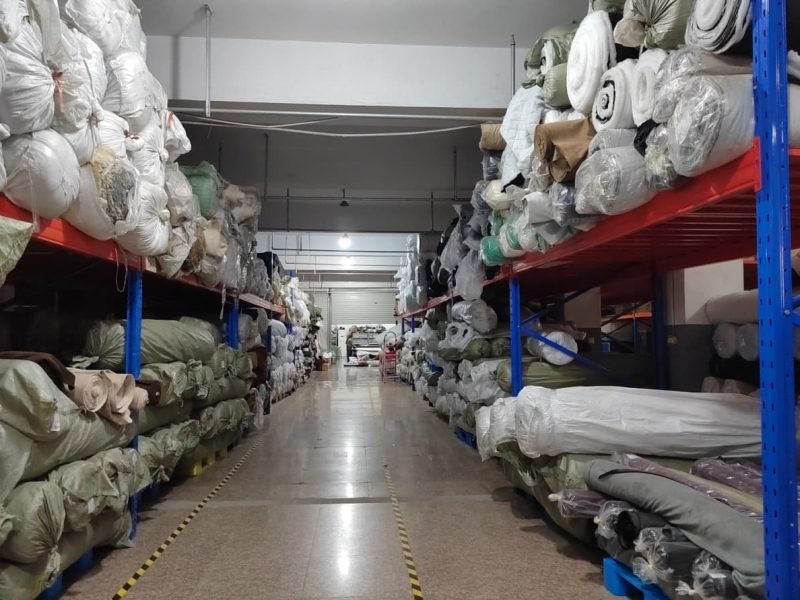
A sourcing team should record more than a PDF filename. For each document, capture the issuing body, company or facility name, address where relevant, scope, standard or program, issue/expiry date, products or processes covered, and whether the document is factory-level, material-level, partner-level, or project-level.
Recommended checks include:
- Does the company or facility name match the entity being qualified?
- Does the address or site scope match the actual production location?
- Is the document current for the planned order period?
- Does the scope cover the relevant product, process, or material?
- Is the evidence owned by XZ Apparel, a material supplier, a specialist partner, or a third-party laboratory?
- Does the brand require additional testing or documentation beyond the supplier’s standard pack?
Compliance evidence should be treated as a living qualification item. New market entry, material change, production-site change, or specialist-process change may require re-verification even when previous documents remain on file. For annual or seasonal supplier reviews, keep an expiry tracker and a simple responsibility map showing who must renew, request, or validate each document. The most useful document pack is not the largest one; it is the one where every file can be tied to a requirement, an entity, a scope, and a current project decision.
Verify Specialist Partners and Outsourced Processes
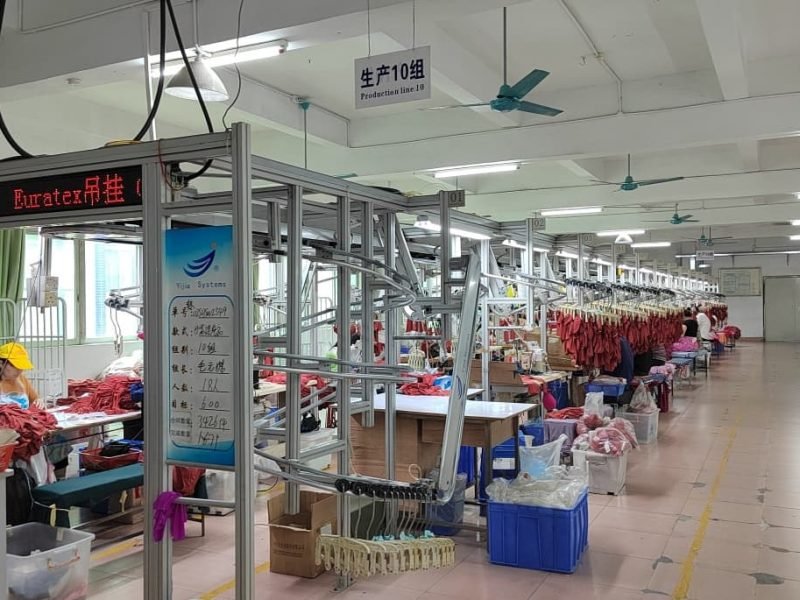
A strong supply chain does not need to pretend every process is in-house. Qualification should reveal who performs each specialist operation and how standards remain controlled.
Outsourcing Risk Is an Ownership Problem
Embroidery, selected printing, knitwear, specialty fabric treatments, washing, and other processes can require dedicated equipment or specialist expertise. The qualification question is not simply “Is it outsourced?” A better review asks who executes the process, who approves the sample or strike-off, who controls material and artwork versions, who schedules the production window, who checks the result on the garment, and who is responsible when a defect or delay occurs.
XZ Apparel’s manufacturing model is Centralized Product Development + Core In-House Manufacturing + Controlled Specialist Supply Chain. Core garment development, cutting, sewing, quality control, and packing are managed within the main manufacturing system, while selected specialist capabilities are supported through long-term partners. Partner equipment and certificates should not be represented as XZ Apparel’s own factory assets.
A sourcing team should request an ownership map for any critical external process. The map does not need to expose confidential supplier names publicly, but the supplier should be able to explain responsibility, approval gates, handoff points, capacity assumptions, and final quality ownership during a formal qualification review. For processes that can materially change appearance or performance, add a defined re-approval trigger. A partner substitution, artwork revision, backing change, finishing change, or production-site shift should not be treated as an invisible operational detail when it can alter the approved garment result.

Control the Standard Across Every Handoff
Specialist-process control starts before bulk. Artwork, placement, size, color, stitch or print method, backing, handfeel, attachment, wash or heat behavior, and fabric compatibility should be reviewed through a strike-off, process sample, or garment sample as appropriate. Approval should then be linked to the bulk version used by the specialist partner.
The main garment supplier must also manage timing. A sewing line can be ready while embroidery, printing, washing, or a custom trim is late. Bulk planning should therefore include partner windows and transport between process stages, not only sewing days.
Final qualification should answer three questions clearly:
- Can the supplier identify every critical external process before order confirmation?
- Can approved standards be transferred without version drift?
- Does the main supplier retain responsibility for final garment quality and release?
Transparent answers reduce risk more effectively than an “everything under one roof” claim. The same ownership logic should continue into corrective action. If a specialist-process defect appears in bulk, the main garment supplier should be able to isolate affected lots, identify the approved process reference, coordinate root-cause review with the partner, manage rework or replacement, and document the final release decision. A partner network becomes a qualified capability only when accountability remains visible from development through shipment.
Qualify Commercial Fit Before Approving the Supplier
Technical capability still has to fit the collection structure. MOQ, material thresholds, development timing, bulk timing, packaging, trade terms, and reorder conditions should be reviewed together.

MOQ and Order Structure
XZ Apparel’s standard garment MOQ is 200 pieces per style per color. Material suppliers, custom trims, specialist processes, certified materials, hand embellishment, or unusual construction may require higher project quantities. Size quantities can be mixed within the same approved style/color structure when commercially workable.
- Review: styles, colors, units per style/color, size range, shared fabrics, shared trims, and custom processes.
- Avoid: treating a process MOQ as the garment MOQ or promising 200 pieces regardless of material conditions.

Development Timing
Normal samples are typically 3-5 working days, complex samples 5-7 working days, revisions 2-3 working days, and PPS 4-5 working days after the required inputs and materials are ready.
Timing should be planned by stage rather than combined into a single “sample lead time.”
- Review: input completeness, material availability, process sampling, fit comments, approval turnaround, and number of styles moving in parallel.
- Avoid: scheduling bulk before critical fit, material, process, and PPS approvals are closed.

Bulk and Delivery Timing
Normal bulk production is typically 25-35 working days after fabrics and trims are ready, PPS is approved, and production details are confirmed.
Quantity, product mix, specialist processes, packing, peak-season loading, and split-shipment requirements can change the plan.
- Review: material-ready date, PPS approval, production start, line allocation, quality gates, packing, ex-factory requirement, and logistics terms.
- Avoid: treating sample speed as proof of guaranteed bulk delivery.

Reorder and Change Control
A qualified supplier should explain how repeat orders reuse approved assets while still checking changes. Fabric lot, color, trim supplier, pattern revision, size spec, artwork, packaging, quantity, and target date can all affect a reorder that appears identical on the PO.
- Review: what is unchanged, what changed, what needs re-approval, and whether capacity/material conditions remain valid.
- Avoid: assuming a repeat PO can bypass all material, version, and quality checks.
Watch for Supplier Qualification Red Flags
Serious warning signs are usually connected to ownership, evidence, repeatability, or undisclosed change. A strong sourcing team investigates the cause before committing bulk production.
Identity Does Not Reconcile
The website brand, contract company, bank recipient, audit document, and manufacturing site cannot be clearly connected.
A legitimate group structure can involve several entities, but the relationship should be explainable and supported during onboarding.
- Ask for: current legal/KYC documents and manufacturing-site relationship.
- Hold if: key entities remain unexplained or documents conflict materially.
Everything Is “In-House”
The supplier claims fabric production, printing, embroidery, washing, knitwear, testing, every garment category, and every specialist process are all performed internally, yet cannot show relevant areas, ownership, or equipment. The concern is not outsourcing itself; the concern is hidden outsourcing and uncontrolled responsibility.
- Ask for: process ownership map and specialist-process workflow.
- Hold if: critical process owners remain undisclosed.
Capacity Has No Context
A large monthly number is quoted without product mix, current workload, line suitability, process bottlenecks, or delivery assumptions.
Capacity should be relevant to the proposed collection, not only a company-wide annual or monthly headline.
- Ask for: program allocation logic and timing assumptions.
- Hold if: delivery is guaranteed without material, approval, or production planning inputs.
Certificates Lack Scope
Certificates or test reports are supplied as screenshots or logos without a clear entity, site, scope, validity period, product, material, or batch connection.
Material supplier documents may be incorrectly presented as factory certification.
- Ask for: current original documentation and scope details.
- Hold if: evidence cannot be tied to the qualified entity or requirement.
Sample Looks Good, System Is Weak
A beautiful sample is available, but there is no clear PPS gate, measurement method, inline control, finishing check, final inspection process, or change record. One successful sample proves development output, not bulk repeatability.
- Ask for: sample-to-bulk control flow and quality records.
- Hold if: bulk control relies mainly on final inspection.
Subcontracting Appears Late
Embroidery, printing, washing, knitwear, special finishing, or even core sewing is moved to another facility after quotation or after sampling without clear re-approval.
Late changes can affect quality, capacity, certification, test scope, and delivery.
- Ask for: pre-order ownership disclosure and change notification rule.
- Hold if: critical production-route changes can occur without approval.
Turn Evidence Into a Supplier Qualification Decision
A qualification review should finish with an action. Avoid vague labels such as “looks good” or invented weighted scores that are not backed by a validated sourcing method.
| Decision Status | When to Use It | Required Next Step | Bulk Commitment |
|---|---|---|---|
| Proceed | Product scope, manufacturing route, quality controls, commercial fit, and critical evidence are sufficiently confirmed | Complete style-specific development and order review | Allowed after project approvals |
| Conditional Review | Core capability appears suitable, but limited documents, tests, partner details, or commercial conditions remain open | Close named conditions with owners and due dates | Do not release affected scope until closed |
| Hold for Evidence | Critical factory identity, capability, quality, compliance, capacity, or ownership evidence is missing or contradictory | Request evidence, corrective action, audit, sample, or re-verification | No bulk commitment |
| Not Suitable | Product, scale, quality system, ownership, commercial structure, or required evidence is materially outside the program need | Select another supplier or narrow the proposed scope | No bulk commitment |
Apply the Same Qualification Criteria to XZ Apparel
XZ Apparel should be reviewed by the same standards used for any women’s apparel factory. The points below show available capability evidence and the boundaries that still require project-level verification.
Manufacturing Reality
XZ Apparel’s manufacturing base is in Humen, Dongguan, Guangdong, China, with 3 production buildings covering approximately 20,000 square meters and approximately 1,120 employees across the manufacturing platform. The system includes development, sample, material storage, cutting, sewing, pressing, quality, packing, and warehousing. Exact legal company fields used for contracts, KYC, and payment should be verified from current legal documents rather than inferred from the public brand or manufacturing history.
- Evidence direction: manufacturing-site records, factory route, current KYC documents.
- Boundary: manufacturing operations began in 2008; current legal entity formation should not be backdated to 2008 without legal support.
Core Product Scope
Proven core categories include Dresses, Tops, Bottoms, Swimwear, and Sets. Sweatwear, Activewear, and Shapewear are established capabilities in selected programs.
Knitwear and selected embroidery/printing or specialist fabric processes are supported through long-term specialist partners.
Selected outerwear remains a development/expansion capability rather than a proven core specialization.
- Evidence direction: relevant samples, category-specific development and production records.
- Boundary: multi-category capability does not mean every product has equal maturity or identical production ownership.
Development Throughput
The development system includes 6 sample rooms, 48 pattern makers, and 60 sample makers.
Current baseline throughput is approximately 45-60 samples per day and 1,500-2,000 per month across the system, depending on complexity.
Normal samples are typically 3-5 working days, complex samples 5-7, revisions 2-3, and PPS 4-5 after required inputs are ready.
- Evidence direction: sample rooms, pattern/POM work, revision flow, PPS records.
- Boundary: timing is conditional on materials, process complexity, input clarity, and approval speed.
Material Ecosystem
XZ Apparel regularly works with 30+ fabric suppliers, including approximately 8 core suppliers, using Dongguan/Humen and Guangzhou Zhongda sourcing channels plus a broader trim and specialist-process network. The material route can cover existing specifications, similar matches, custom colors, custom construction/GSM, and material documentation according to project requirements.
- Evidence direction: fabric briefs, swatches, supplier documentation, incoming inspection/testing records.
- Boundary: no blanket claim is made that every material is in stock, carries fixed MOQ, or has fixed certification.
Production Capacity
The manufacturing system operates approximately 80 sewing lines with around 640 Brother sewing machines.
Normal capacity is approximately 180,000-200,000 finished pieces per month, with output up to approximately 220,000 depending on product mix. Capacity qualification for a specific program still requires style, quantity, process, material, and delivery review.
- Evidence direction: factory resources, production planning, allocation assumptions.
- Boundary: company-wide capacity is not a guaranteed allocation for one brand or one product mix.
Quality Control
The quality flow covers Fabric Inspection, Pre-Production Meeting, Cutting Inspection, Inline QC, Measurement Inspection, 100% Finishing Inspection, Final Inspection, and Packing Inspection.
Final inspection can be aligned to AQL 2.5, AQL 4.0, a brand-defined standard, or an agreed final-inspection approach depending on the project.
- Evidence direction: checklists, records, defect handling, measurement sheets, inspection reports.
- Boundary: 100% finishing inspection and AQL-based final inspection are different control stages.
Testing and Validation
In-house production-control capability includes fabric inspection and checks such as GSM, shrinkage, colorfastness, rubbing, washing, pilling, stretch/recovery, spirality, dimensional stability, print adhesion, and heat resistance where relevant to the product.
Formal accredited third-party reports are coordinated separately when a project requires them.
- Evidence direction: equipment/process records, test records, sample or lot context, third-party reports when required.
- Boundary: in-house control testing should not be described as an accredited external laboratory service.
Ownership and Compliance
XZ Apparel uses a controlled model that combines core in-house garment manufacturing with long-term specialist partners for selected processes. SMETA and ISO are recorded in the internal company/factory fact set, while BSCI support is project-dependent and GRS/OEKO-TEX-related material documentation belongs to supplier/material scope unless separately held by XZ Apparel.
- Evidence direction: current audit/certificate documents, ownership map, specialist-process approval flow.
- Boundary: entity, scope, validity, and document ownership should be rechecked during formal qualification.
Anonymized Multi-SKU Qualification Case
A representative program within XZ Apparel’s normal order structure shows how qualification moves from a supplier questionnaire into style-level development, material, capacity, and quality controls.
18 Styles and 43,200 Pieces
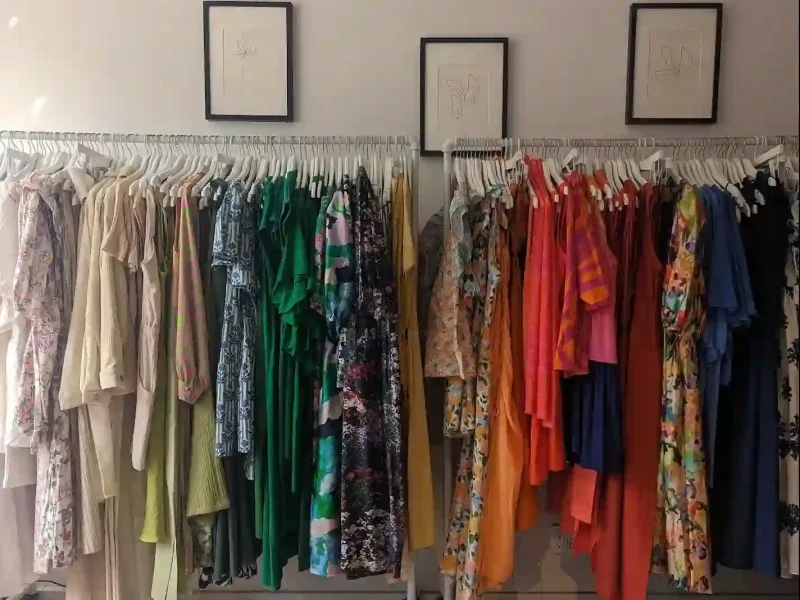
The anonymized program covered 18 women’s fashion styles with a total quantity of 43,200 pieces, sitting within the recurring 10-30 style and 20,000-80,000 piece order structure commonly handled for established fashion programs. The assortment included dresses, fashion tops, bottoms, and matching-set components across a commercial size range. The purpose of the qualification review was not to prove that one factory could “make everything.” The review mapped each style to the product team, material route, pattern/sample workload, specialist-process needs, sewing route, quality checks, and delivery assumptions before the bulk plan was locked.
Development was staggered rather than forcing all 18 styles through the same approval date. Styles with straightforward construction could move through first sample and revision while higher-risk fitted, lined, embellished, or stretch-dependent styles remained in deeper review. Each style needed a clear approved reference before release: fabric or swatch standard, fit/measurement comments, construction detail, applicable artwork or process approval, and PPS status.
For sourcing teams, the key lesson is scale sequencing. A 43,200-piece order should not be treated as one number. The relevant workload is the combination of 18 style files, multiple approvals, material bookings, size/color assortments, specialist process windows, line allocation, inspection stages, and packing identities. Qualification therefore needs both company-level evidence and style-level readiness.
How Risk Was Structured Before Bulk
The program was organized around four control groups. Development controlled pattern, fit, sample versions, and PPS readiness. Materials controlled fabric and trim specification, lot/shade considerations, availability, and any replacement review. Production planning converted the approved assortment into line and timing assumptions rather than relying on company-wide capacity alone. Quality linked each style to incoming checks, PPM, cutting, inline workmanship, measurement, finishing, final inspection, and packing.
A multi-SKU qualification review should also define change rules. If a fabric lot changes, a trim supplier changes, a process is moved to a specialist partner, a measurement is revised, or an artwork file changes after PPS, the program needs a documented re-review rather than an informal message. The larger the assortment, the more damaging version drift becomes because one unrecorded change can repeat across thousands of pieces.
No artificial “99% pass rate” or “zero defect” claim is needed to make the case useful. The value lies in showing how a sizable collection is broken into controllable decisions before bulk release. For established brands, that operating discipline matters more than a single sample photo or a large monthly capacity figure. The same structure also supports future reorders: approved fit, materials, artwork, construction, and packing can be reused only after every changed input is identified and reviewed against the previous approved version.
Supplier Qualification Frequently Asked Questions

Start a Women’s Apparel Supplier Qualification Review
A useful supplier review begins with enough project context to match evidence to the garments you actually plan to source. Send XZ Apparel your collection structure, target categories, quantity, market, timing, and available development files. Our team can prepare the relevant factory, product-development, material, quality, ownership, and commercial information for review rather than sending a generic company profile.
Please include:
- Company or brand name, role, website, and sourcing market.
- Product categories and approximate style count.
- Quantity per style and color, plus size range.
- Reference images, sketches, Tech Packs, size charts, or existing sample photos.
- Fabric, trim, construction, print, embroidery, embellishment, or support requirements.
- Quality, testing, audit, social-compliance, or retailer-specific requirements.
- Target sample, PPS, bulk, launch, and delivery windows.
- Any second-source, supplier-switch, multi-SKU, or recurring-order requirements.
The review will identify which requirements fit current core manufacturing capability, which specialist processes require controlled partner coordination, which documents can be supplied for qualification, and which project-specific items still need confirmation before sampling or quotation.