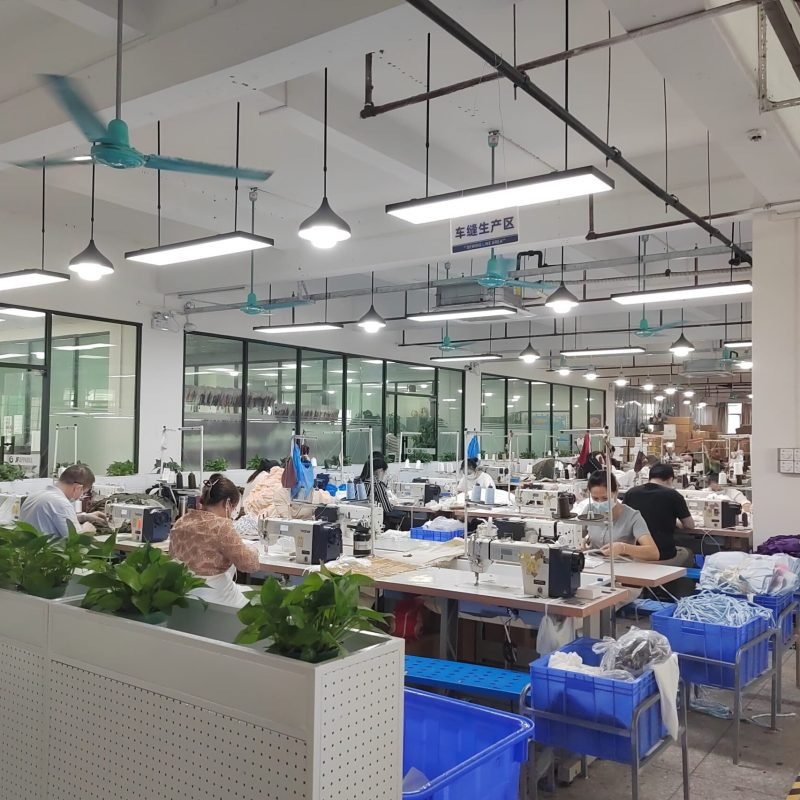
Women’s Garment Sewing Workshops and Production Lines
Production-ready women’s fashion needs more than available sewing machines. It needs the right line, operation sequence, approved standard and quality gates for each style.
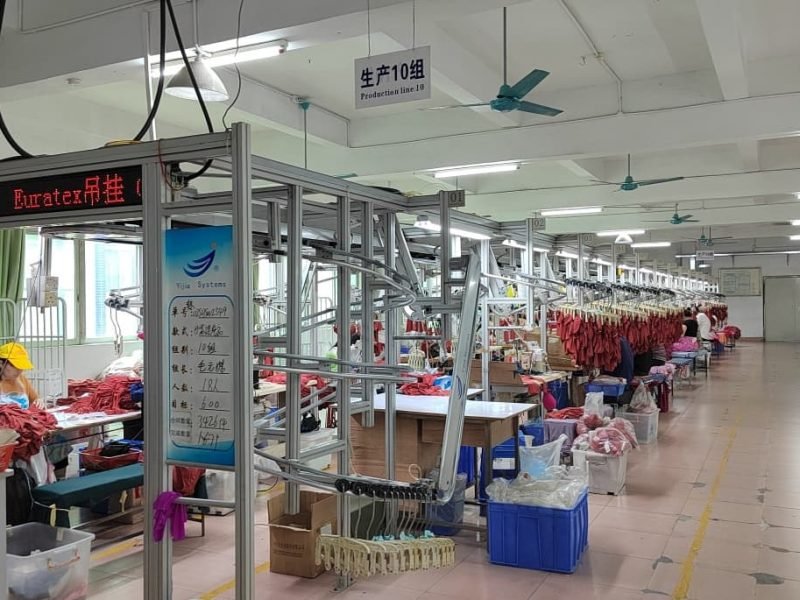
- 8 in-house sewing workshops and approximately 80 sewing lines for coordinated women’s garment production.
- Approximately 640 Brother sewing machines supporting core assembly, overlock, coverstitch, button and related operations.
- Normal factory output is approximately 180,000–200,000 pieces per month, depending on product mix, materials, construction and line allocation.




What Our Sewing Production System Is Built to Handle
XZ Apparel uses an in-house sewing platform designed for multi-category women’s fashion, where approved product standards move from cutting into controlled garment assembly, inline checking and finishing.
In-House Garment Assembly
Core sewing work is carried out through eight workshops with approximately 80 lines and an established women’s apparel operation covering dresses, tops, bottoms, swimwear and sets, with additional established capability in activewear and shapewear. Line selection is not based on garment names alone.
Fabric behaviour, seam type, lining, closure, stretch, component count and special operations all affect the production route. Approved specifications, sample references and material readiness are reviewed before bulk sewing begins so the floor receives a defined production standard rather than an incomplete design idea.
Scaled, Not Unlimited
Factory scale matters only when it is matched to the right product mix. Approximately 640 Brother sewing machines and normal monthly output of about 180,000–200,000 pieces provide a substantial production base, but no single capacity figure should be treated as an automatic delivery promise. A satin lined dress, a stretch swim style and a structured bottom consume very different operation time and equipment.
Quantity, colour split, size ratio, special processes, material arrival and current loading all influence how many lines can be assigned and when production can start.
Sewing Workshop Facts That Matter to Production Teams
Numbers are useful only when they explain how a collection can move through development and bulk production. These confirmed facts show the operating scale behind XZ Apparel’s sewing floor.
8 Sewing Workshops
Eight sewing workshops provide separate physical production areas for line-based garment assembly. The workshop count matters because multi-style women’s programmes often need different operation sequences, machine mixes and supervision points. A fitted woven dress, a stretch top and a bottom with waistband, zipper and pockets should not be treated as identical sewing work. Workshop capacity gives production management room to allocate styles by construction and schedule while keeping in-process garments identifiable by style, colour, size and production stage.
Approx. 80 Lines
Approximately 80 sewing lines form the core bulk-production platform. The number is not presented as eighty interchangeable slots.
Line allocation depends on style complexity, order quantity, material readiness, approved PPS status, required sewing operations and delivery window. A line may suit a stable repeated construction better than a style requiring frequent special operations. Production planning therefore starts with operation needs and programme priorities before capacity is committed to a particular style or order wave.
Approx. 640 Machines
The confirmed sewing equipment pool includes approximately 640 Brother machines across broad women’s apparel sewing coverage. Available operations include single-needle lockstitch, 4-thread overlock, 5-thread overlock, coverstitch, buttonhole and button sewing, together with selected in-house special sewing capabilities. Machine quantity supports scale, but machine-to-operation matching is the more important question. Production engineering must connect each garment structure with the right stitch type, seam construction, handling method and inspection point.
Approx. 640 Sewers
Approximately 640 sewing personnel carry out bulk garment assembly across the workshop system. Labour count alone does not prove repeatable quality; clear operation ownership does. Each line needs defined work content, reference standards, component sequence and inspection criteria. For women’s fashion, skill requirements can shift quickly between fine woven fabrics, stretch materials, lined garments, fitted silhouettes and detail-heavy styles. Production planning therefore considers operator suitability together with equipment and product complexity rather than treating headcount as a simple capacity multiplier.
32 Production Managers
Thirty-two production managers support scheduling, line coordination, operation planning and production follow-up.
Their role becomes especially important when a seasonal order contains many styles, colours and different garment categories. Material readiness, line availability, special operations and target completion dates need to be coordinated at programme level. Clear production ownership also gives merchandising, quality and technical teams a route for escalating issues when a sewing detail, measurement result or construction method requires adjustment before the line continues.
61 QA/QC Roles
The organisation includes 31 QC personnel and 30 QA engineers supporting production quality and technical risk control.
Sewing quality cannot be left to final inspection alone. Inline checks, measurement review, appearance assessment and corrective action are needed while garments are still in process.
QA support is also relevant when material behaviour, seam construction, stretch recovery or repeat defects require a technical response rather than a simple accept-or-reject decision at the end of production.
180k–200k Normal Output
Normal monthly factory output is approximately 180,000–200,000 pieces, with higher output possible when the product mix is suitable. The operating range is more useful than a single headline number because style mix changes the real sewing load. Straightforward knit tops, lined dresses, swimwear and detailed bottoms consume line time differently. Capacity review should therefore consider quantity by style, colour and size together with construction complexity, required operations and material availability before a realistic production window is agreed.
Multi-Category Core
Proven core manufacturing covers dresses, tops, bottoms, swimwear and sets. Sweatwear, activewear and shapewear sit within established capability, while selected specialist processes such as knitwear production, embroidery and certain printing routes may involve long-term specialist partners. Separating core in-house work from partner capability gives sourcing teams a clearer view of production ownership and avoids the common problem of treating every process shown in a supplier presentation as equipment physically owned and operated inside the same facility.
How Garments Move From Approved Standard to Finished Bulk
A reliable sewing floor depends on controlled handoffs. XZ Apparel links development, material preparation, cutting, sewing and inspection so production starts from approved inputs rather than assumptions.
From Development Approval to Cut Components
Bulk sewing should begin only after the garment standard is sufficiently defined. The working inputs normally include an approved sample or PPS, relevant measurements, fabric and trim specifications, construction details, colour information, artwork where applicable and finishing requirements. Product development, pattern, sample, merchandising and sourcing teams use these inputs to resolve fit, material and construction questions before the order reaches the sewing floor.
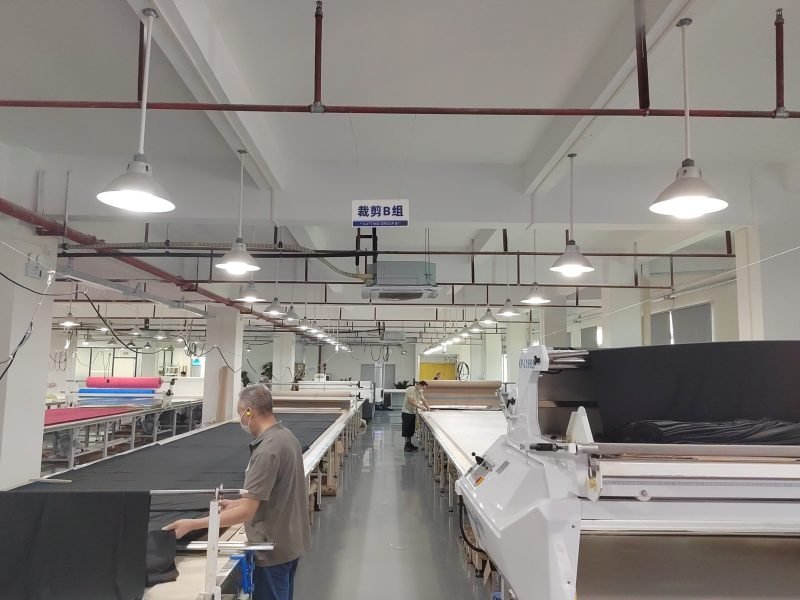
Material control starts earlier than the first stitch. Fabric and trims are received, inspected and handled according to the order. Relevant fabrics may pass through pre-shrink preparation before spreading. Automatic spreading and automatic cutting are available for suitable bulk fabrics, while manual cutting remains important for materials or constructions that are not suitable for automated handling. Cut panels then move through cutting inspection and controlled issue into sewing. The objective is simple: the sewing line should receive correctly identified components made from approved material lots and cut to the approved pattern version.
A large sewing workshop cannot compensate for uncontrolled upstream inputs. Shade mixing, unstable shrinkage, incorrect grain direction, inaccurate cutting or mismatched bundles can create defects that appear later as sewing or measurement problems. Keeping the pre-sewing route visible helps a production team trace the source of a problem instead of treating every defect as an operator issue.
From Sewing Floor to Shipment-Ready Garments
Once cut components enter sewing, the garment moves through the required assembly sequence and related special operations. The exact route depends on product construction. A lined dress may require shell assembly, lining assembly, closure insertion and controlled joining. A stretch garment may require overlock and coverstitch operations that protect movement and edge finish. A structured bottom may place greater emphasis on waistband, zipper, pocket and reinforcement accuracy.
Quality control runs alongside the manufacturing route. Inline inspection identifies workmanship or construction problems while production is active. Measurement checks compare garments against the approved method and specification. After sewing, garments move through pressing and 100% finishing inspection, followed by final inspection and packing inspection before finished cartons enter the finished-goods area.
The route is designed to preserve traceability from approved input to finished output. Every stage should answer three questions: what standard applies, who owns the decision, and what condition allows the product to move forward. For large multi-style programmes, these gates reduce the risk of carrying a small construction or measurement error across thousands of pieces. Finishing and packing are therefore treated as controlled manufacturing stages rather than administrative steps. A garment that passes sewing but carries the wrong label, size identity, pressing result or carton allocation is still commercially incorrect. Keeping the release chain connected allows production, quality and merchandising teams to verify the same order version through to shipment preparation.
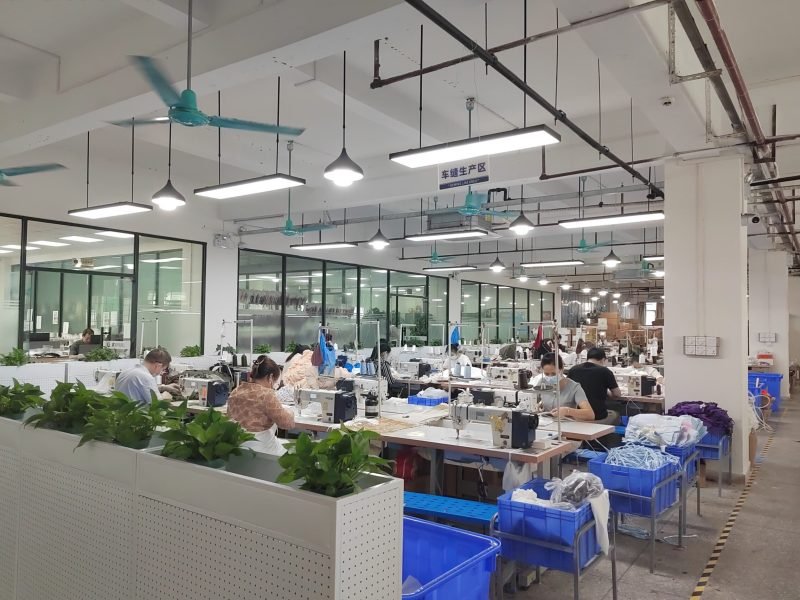
Inside the Women’s Garment Sewing Workshops
A useful factory review shows different production situations, not repeated rows of machines. Each scene should help a brand understand how garments, operations and quality controls are organised on the floor.
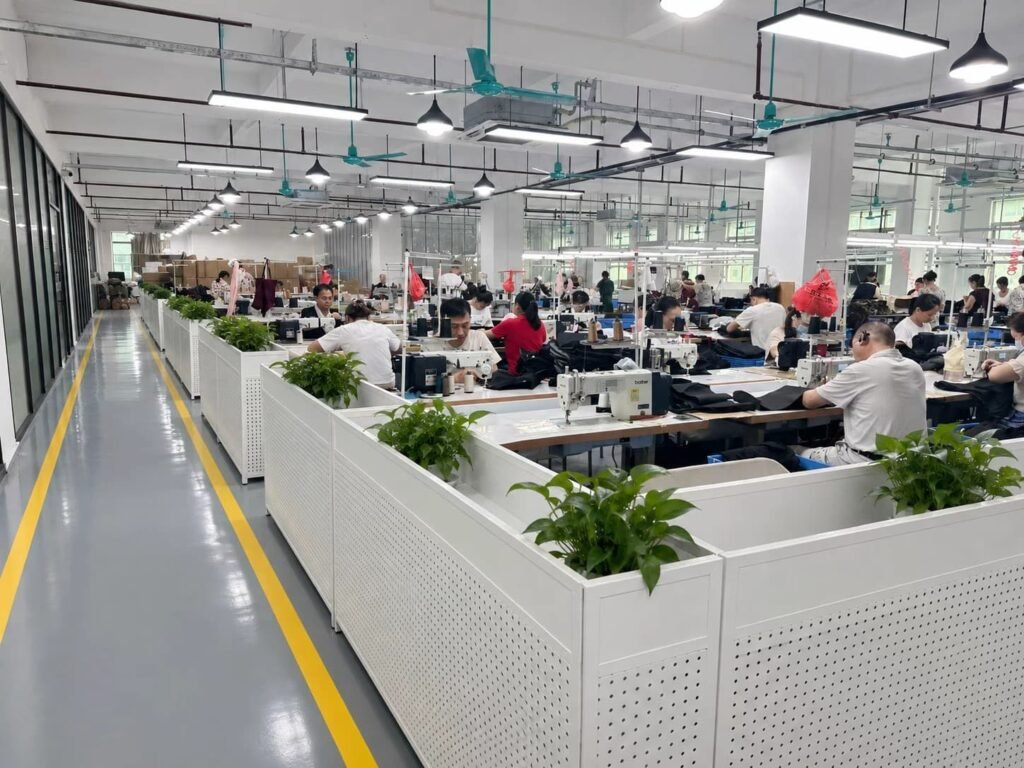
Full Workshop View
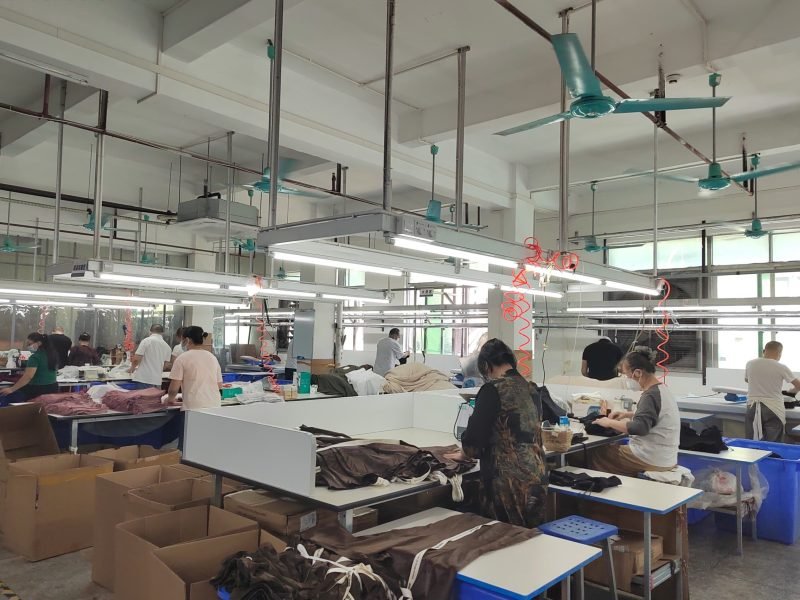
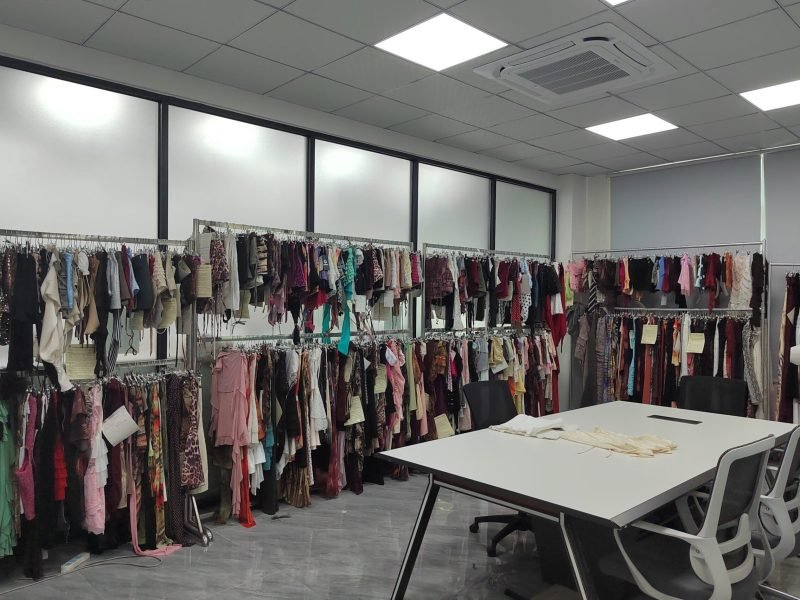
A wide workshop view should show active sewing lines, workstations, work-in-process garments and normal production flow. The value is not visual scale alone. Sourcing and production teams should be able to see whether garments remain organised by style and operation, whether line movement is understandable and whether supervision can take place without uncontrolled mixing of components. Wide views also provide more credible evidence of workshop reality than isolated machine close-ups.

Woven Fashion Line
Woven fashion products often combine precise edge control, shaped seams, closures, lining and detail placement. A dress or woven top line should therefore be shown with actual garment components and relevant operations rather than generic T-shirt production.
Production photos work best when they reveal how delicate or structured materials are handled at the workstation and how the line prevents puckering, mismatched seams or distorted garment shape during assembly.
Stretch Garment Line

Special Sewing Detail
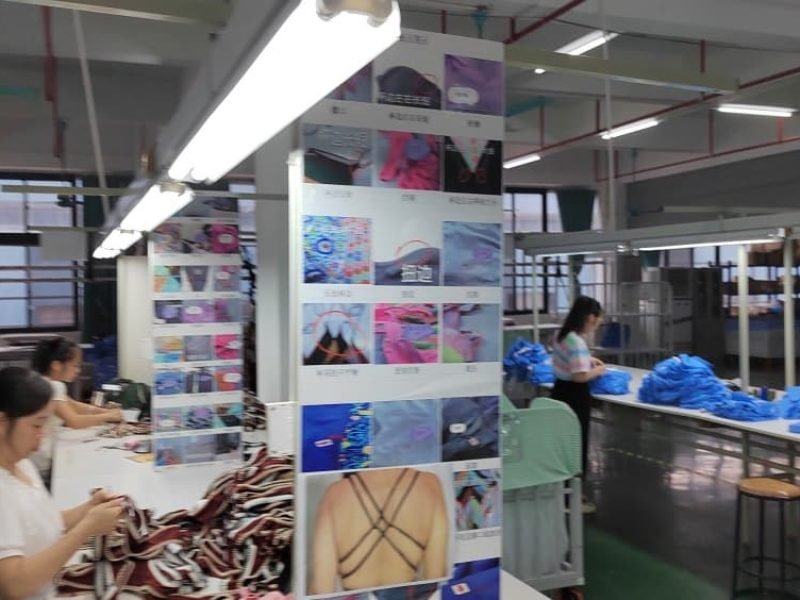
Selected in-house capabilities include smocking, pleating and template sewing. Detail images should focus on an actual operation, the garment area being controlled and the repeatability required in bulk.
A special machine photo without product context gives little sourcing value.
A stronger visual shows how a fashion detail is positioned, stitched or formed and how the finished result can be compared against the approved sample during bulk production.
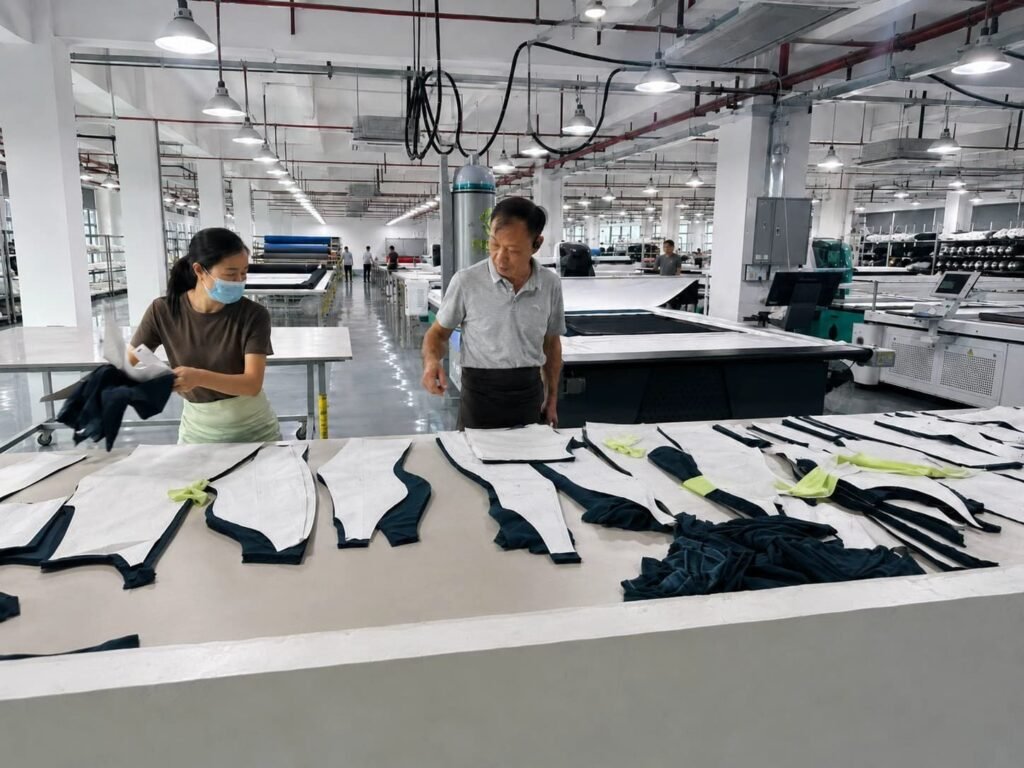
Production Supervision
Production supervision connects schedule, work content and line performance. Workshop imagery should include supervisors or production managers reviewing garments, operation flow or line status where possible.
For a multi-style programme, a brand needs to know who can respond when a construction detail is unclear, a material behaves differently from sample stage or an operation creates repeated defects. Visible ownership is more informative than a general claim of “strict management.”

Inline Inspection Point
Women’s Product-to-Line Planning Matrix
Different garment categories create different sewing loads. The matrix below shows why product, fabric and construction need to be reviewed before a production line is assigned.
| Product Category | Typical Material Behaviour | Key Sewing Challenges | Typical Operation Needs | Main Production Control |
|---|---|---|---|---|
| Dresses | Woven, stretch, satin, mesh or layered | Silhouette, lining, closures, gathering, drape | Lockstitch, overlock, zipper work, selected special sewing | Shape, seam appearance, lining alignment, length |
| Tops | Woven or knit, stable to high stretch | Neckline, armhole, sleeve, hem and trim placement | Lockstitch, overlock, coverstitch, button operations | Symmetry, edge finish, stretch behaviour, measurements |
| Bottoms | Woven or stretch with structured areas | Waistband, zipper, pockets, rise and reinforcement | Lockstitch, overlock, button/buttonhole, reinforcement | Waist/rise measurements, pocket position, closure accuracy |
| Sets | Mixed constructions across coordinated pieces | Top-bottom consistency, shared colour and fabric lots | Combination of operations by component | Lot control, fit relationship, colour and packing identity |
| Swimwear | High-stretch materials and linings | Elasticity, recovery, edge control and fit | Stretch-compatible sewing, overlock, coverstitch | Seam stretch, measurement recovery, lining and fit |
| Activewear / Shapewear | Stretch and support materials | Compression, multi-layer areas, seam comfort | Overlock, coverstitch and structured sewing as required | Stretch/recovery, seam placement, support-zone consistency |
Core Sewing Operations Used Across Women’s Fashion Production
The equipment pool supports a broad range of garment assembly work. Operation choice depends on seam purpose, material behaviour, construction and the approved appearance standard.
Single-Needle Lockstitch

Single-needle lockstitch is a core assembly operation for many woven and stable garment areas, including structural seams, topstitching and detail attachment.
The important decision is not whether lockstitch exists in the factory, but where it should be used and how the seam should look after pressing and wear. Stitch length, seam allowance, thread choice, tension and handling need to match the fabric and approved sample rather than follow one universal setting.
Four-Thread Overlock

Four-thread overlock is widely used where seam joining and edge control are needed together, especially in knit and stretch garments. Fabric feed, seam elasticity and edge stability matter because an overlocked seam can look acceptable on the table yet distort when stretched or worn.
Production teams should review seam behaviour against the intended fit, particularly on fitted tops, activewear, swimwear and other garments where negative ease or repeated movement affects the seam.
Five-Thread Overlock

Five-thread overlock combines a safety-style seam with edge finishing and can be useful in garment areas requiring stronger construction. Product suitability still depends on fabric thickness, seam bulk and the visual requirement. The operation should not be chosen simply because it is stronger. On lightweight or fashion-sensitive areas, unnecessary bulk can damage drape or comfort. Construction review determines where additional seam security adds value without compromising the intended garment hand and silhouette.
Coverstitch

Coverstitch is important for knit hems, sleeve openings and stretch garment finishes where the seam needs to move with the fabric. The visible stitch line must remain clean while the underside secures the edge. Production control should consider stretching during sewing, recovery after sewing and the effect of pressing. Coverstitch work is particularly relevant for activewear, swimwear, fitted knit tops and other products where a rigid hem can cause popping, waviness or restricted movement.
Buttonhole Sewing

Buttonholes require repeatable size, position and clean edge formation because small variation becomes obvious on shirts, dresses, tops and bottoms. Hole size must match the approved button and construction thickness, while placement must align with the pattern and closure function. A production standard should therefore define both appearance and function. Bulk checks should confirm that buttonholes open cleanly, sit in the correct position and do not distort surrounding fabric.
Button Sewing

Button sewing is a finishing and functional operation that still requires production discipline. Stitch security, shank requirement, button orientation and placement can vary by design.
Decorative buttons may also have logo or face-direction requirements. The brand specification should identify the approved button, attachment method and location. Line checks should then confirm both visual alignment and functional security before the garment moves into final finishing and packing.
Smocking Operations

Selected in-house smocking equipment supports fashion dresses, tops and sets where controlled elastic gathering forms part of the design. Smocking is sensitive to material stretch, stitch density and panel dimensions. Bulk production therefore needs an approved visual and measurement reference rather than a simple “smocked” instruction. The resulting panel should be checked for gathering consistency, recovery and symmetry so the garment retains the intended fit across the approved size range.
Pleating and Templates

Selected in-house pleating and template sewing capabilities support fashion details where repeated shape or positioning matters. Pleating needs consistent fold formation and handling, while template sewing can improve repeatability for defined stitch shapes or detail positions. Neither process should be presented as suitable for every garment. Material behaviour, panel size, design geometry and production quantity are reviewed first, then the operation is confirmed against the approved sample before bulk use.
Equipment Matters Only When It Solves a Production Risk
Machine counts are useful evidence, but equipment becomes meaningful when linked to an operation, a garment construction and a risk that needs control during bulk sewing.
Brother Sewing Pool
- Confirmed coverage includes lockstitch, overlock, coverstitch and button-related operations.
- Line setup changes with product construction and material behaviour.
- Machine quantity does not equal reserved capacity for a single programme.

Lockstitch Workstations
- Strong fit for core woven assembly and detail sewing.
- Settings remain product-specific rather than factory-wide defaults.
- Appearance is checked against the approved garment reference.

Overlock Workstations
Four-thread and five-thread overlock coverage supports edge finishing and seam construction across knit and woven products where suitable. Overlock equipment is especially relevant when edge control, stretch or seam security needs to be managed without adding excessive bulk. The correct choice depends on fabric weight, elasticity, seam purpose and wear requirement. Production teams should review how the seam behaves after handling and measurement rather than approving solely by stitch appearance at the machine.
- Used across appropriate knit, stretch and woven applications.
- Seam type is selected by function, fabric and construction.
- Bulk review focuses on edge control, elasticity and consistency.
Coverstitch Workstations
Coverstitch coverage supports hems and stretch-sensitive finishes where the garment needs a flexible, clean edge. It becomes particularly important for swimwear, activewear, fitted knit tops and other stretch products. Production risk often appears as waviness, seam popping or loss of recovery when fabric handling or tension is wrong.
The workstation therefore needs an approved seam appearance and stretch behaviour reference, not only a technical stitch name in the specification.
- Supports stretch-compatible hem and edge construction.
- Relevant to high-movement or fitted garment areas.
- Quality checks consider both appearance and seam movement.
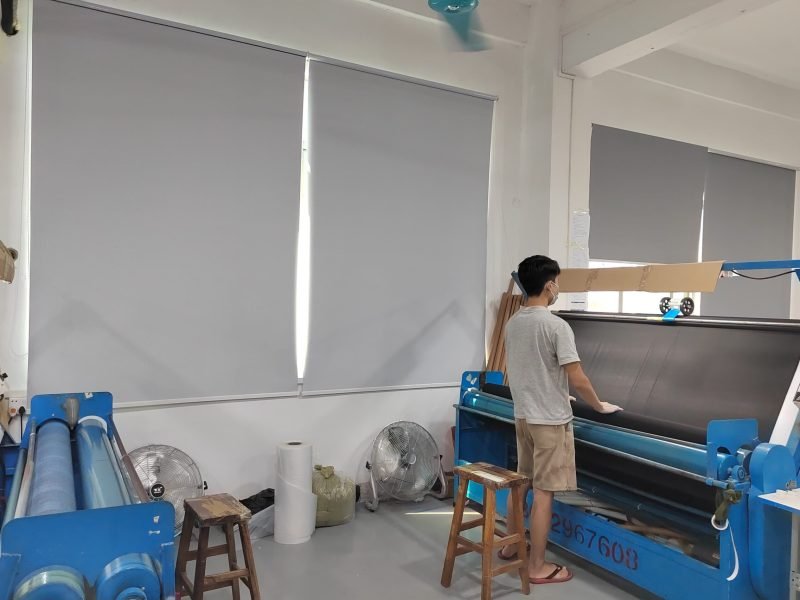
Selected Special Equipment
Selected in-house smocking, pleating and template sewing equipment supports repeatable fashion details when the style and material are suitable.These capabilities are valuable because special details can become bottlenecks if they are treated as afterthoughts. Development review should identify whether the detail is stable enough for bulk, what approved visual standard applies and whether the material responds consistently. Production scheduling then accounts for the special operation rather than assuming it behaves like ordinary line sewing.
- Suitable for selected fashion details, not every construction.
- Sample approval defines appearance before bulk use.
- Scheduling considers the special-operation workload separately.
Pressing and Finish Support
Ten confirmed steam ironing tables support pressing and final presentation after sewing. Pressing is not a cosmetic step alone. It can reveal seam puckering, shape imbalance, incorrect folding or construction distortion that may be less visible during sewing.
The pressing method should suit the fabric and garment structure, particularly for satin, structured pieces and garments with pleats or shaped seams. Finished appearance is then reviewed as part of the 100% finishing inspection stage.
- Ten FUWEI FT-1500D steam ironing tables are confirmed.
- Pressing links sewing quality with final garment appearance.
- Material sensitivity remains part of the handling decision.
Stable Sewing Starts Before the First Stitch
Many sewing-floor defects begin upstream. Material conditioning, spreading, cutting and component control must be stable before a line can reproduce the approved garment consistently.
Fabric Readiness Controls the Sewing Result
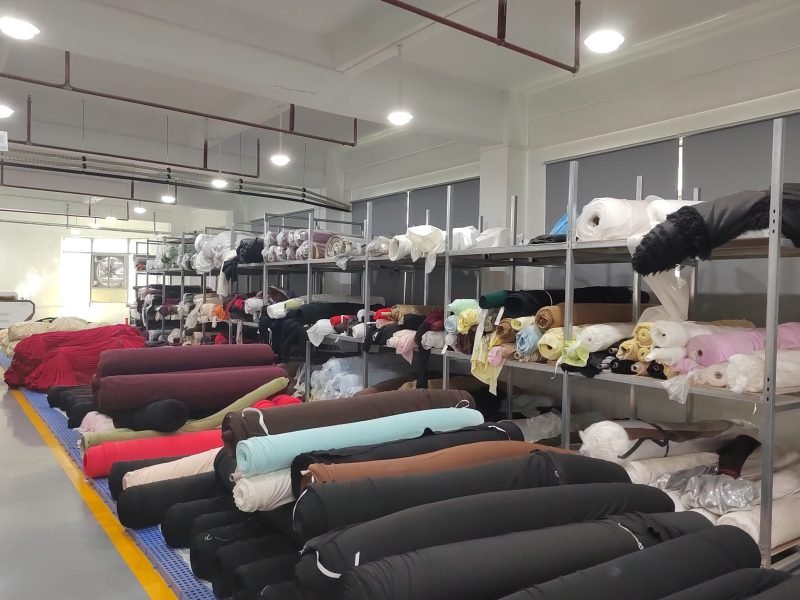
Sewing teams can only work with the material they receive. If a fabric lot has unexpected shade variation, shrinkage, width change or unstable behaviour, the sewing floor may experience problems that look like workmanship defects but actually originate in material preparation. XZ Apparel’s factory flow includes fabric inspection, basic testing and a pre-shrink machine for relevant materials before bulk cutting. The exact test or conditioning requirement depends on the fabric and programme standard.
For fashion products, material behaviour is connected directly to construction. Satin can show feed marks or puckering. Stretch fabrics can distort when layers are handled with inconsistent tension. Mesh may require careful panel control. Heavy or structured materials can create seam bulk. The production team therefore needs fabric information together with the approved garment standard before line setup is confirmed.
Material readiness also affects schedule. A line should not be treated as available production capacity if the approved fabric or trims are incomplete. Programme planning is stronger when sourcing, merchandising and production teams review material status before a bulk slot is finalised. This reduces idle line time, rushed substitutions and last-minute construction changes that increase quality risk. For brands running a tight launch calendar, material readiness should therefore be reported by style rather than averaged across the collection. One delayed lining, zipper or elastic can prevent a specific style from entering sewing even when most of the order is otherwise ready. Clear style-level readiness makes the line plan more credible and gives the brand an earlier view of where schedule risk actually sits.

Cutting Accuracy Protects Downstream Assembly
XZ Apparel uses two automatic spreaders and two automatic cutters for suitable bulk fabrics, supported by manual cutting for special materials, development work or constructions that are less suitable for automation. The purpose is not to claim automation fits every fabric. Different materials require different handling. Slippery, delicate or structurally unusual fabrics may need manual control even when automatic equipment is available.
Cut panels should match the approved pattern version, grain direction and size identity before they enter sewing. Cutting inspection helps identify problems before assembly hides the source. A small cutting deviation in a fitted bodice, armhole, waistband or swim panel can create measurement or fit issues that later appear to be sewing defects. Preventing the error is more efficient than correcting it after assembly.
For multi-size production, bundle identity also matters. Panels must remain organised by style, colour and size so components do not cross between variants. The handoff from cutting into sewing should therefore preserve traceability. A production line performs best when every bundle arrives with the correct pieces, approved material lot and clear operation reference. Cutting output should also be reviewed against the expected production sequence so line teams are not forced to wait for missing components or open incomplete bundles. When a style uses lining, paired panels, pockets, facings or multiple trim-dependent components, complete and correctly identified bundles reduce avoidable WIP disruption. The result is a cleaner link between pattern accuracy, sewing flow and measurement stability once the garment is assembled.
How Approved Samples Become a Bulk Sewing Standard
A PPS or approved sample is valuable only when its measurements, materials, construction and finish are translated into clear production references for the sewing floor.
Freeze the Decisions That Matter Before Bulk
The production floor should not be asked to resolve design questions that remain open after sampling. Before line release, the programme team needs a sufficiently complete reference covering garment construction, approved fabric and trims, relevant measurements, seam details, closures, branding positions, artwork where applicable and finishing expectations. The approved sample or PPS provides the physical benchmark, while the supporting specifications define what needs to be repeated across sizes and colours.
XZ Apparel’s development structure includes pattern makers, sample makers, merchandising, sourcing and QA support. Their role before bulk is to turn comments from development into an executable standard. If a neckline was reshaped, a zipper length changed, a seam allowance revised or a fabric substitute approved, the bulk reference should reflect the final decision rather than an earlier version.
Version control is especially important when several samples have been produced. The sewing floor should not be forced to choose between conflicting documents, photos and physical samples. A clear release package reduces interpretation differences between lines and makes quality checks more objective because inspectors can compare production against the same approved reference. Release should also clarify any approved tolerances or areas where appearance matters more than a single dimensional value. Fashion garments often contain details such as drape, gathers, pleats or stretch zones that cannot be controlled by one measurement alone. Combining the physical reference with the written specification gives operators and inspectors a more complete standard.

Translate the Standard Into Line-Level Work
Once the bulk standard is approved, production management breaks the garment into operations and sequences. The operation plan identifies how components are assembled, what equipment is needed, where special sewing occurs and which details deserve early inspection. A fashion garment may combine ordinary seams with sensitive areas such as curved necklines, invisible closures, lining joins, elastic application, smocking or precisely positioned topstitching. Those areas should receive clearer work instructions and reference points.
The first production pieces are important because they show whether the approved sample can be repeated under real line conditions. If seam appearance changes, a material feeds differently or a measurement begins to drift, the issue should be reviewed before volume increases. The objective is not to make bulk “look like a sample” by visual guesswork; it is to carry the approved fit, material, construction and workmanship standard into a repeatable line process.
A well-defined release also supports reorders. When approved measurements, materials, operations and finishing references are preserved, the next order begins from a known version rather than rebuilding the garment from memory. The same discipline protects colour extensions and repeat programmes. If a new colour uses the same construction but a different fabric lot or trim source, production can identify which parts of the original approval remain valid and which parts need renewed checking. That reduces unnecessary redevelopment while avoiding the assumption that every repeat order will behave exactly like the first one.

How We Plan and Allocate Sewing Lines for Bulk
Line planning connects product complexity with real factory capacity. XZ Apparel reviews style, quantity, materials, approved status, special operations and schedule before production space is committed.
Start With the Style, Not the Line Number
A production plan begins by understanding what the garment requires. Category alone is not enough. Two dresses can create completely different line loads: one may be a simple stretch mini dress with a limited operation count, while another uses satin, lining, gathering, an invisible zipper and a fitted bodice. The second style needs more operation balancing, more sensitive handling and potentially more specialised work even when the order quantity is identical.
Planning therefore reviews product category, construction, fabric behaviour, size range, colour split, quantity, special processes and approved PPS status. The operation sequence is considered alongside available machine coverage and operator capability. Material readiness is checked because a nominally free line is not useful if the correct fabric, trims or approved components are not ready for issue.
Delivery timing is then evaluated against the production load already in the factory. XZ Apparel’s normal bulk lead-time baseline is typically about 25–35 working days after fabric and trims are ready, PPS is approved and production details are confirmed. The range is conditional, not a fixed promise for every style. Complex construction, special processes and order structure can change the schedule. Size range can also affect operation and inspection load on fitted products because extreme sizes may require closer measurement review or different handling than the base size. Brands planning launch dates should therefore provide the full style list, quantity split and known technical risks early enough for line planning to reflect the real collection rather than an average garment assumption.
Balance Operation Time Across the Line
A sewing line is only as stable as its slowest repeated operation. If one workstation takes much longer than the operations before and after it, work-in-process builds up and the line becomes unbalanced. Women’s fashion creates frequent balancing challenges because the same garment may combine fast basic seams with slower detail work, lining operations, closures or special sewing.
Production management can respond by adjusting the operation sequence, assigning suitable operators, changing workstation distribution or separating a special operation from the main line where appropriate. The objective is not maximum speed at every station; the objective is consistent flow without creating quality shortcuts. A bottleneck solved by rushing operators often reappears as seam variation, skipped checks or rework.
Line balance also needs to remain flexible during ramp-up. The first production pieces can reveal a slower operation or handling issue that was not obvious during sampling. When that happens, the plan should be corrected early. Production managers and quality teams need clear authority to hold, adjust and recheck the process before the same issue spreads across a large quantity. Line balance should also be reviewed against quality outcomes, not only hourly output. A fast line with rising rework is not performing better than a slower line producing stable garments. Monitoring bottlenecks together with defect feedback helps production teams distinguish a genuine capacity constraint from a process problem that can be solved through better operation sequencing, workstation allocation or technical clarification.
Allocate Multiple Styles Without Losing Control
Multi-style programmes require more than adding order quantities together. A collection may include dresses, tops, bottoms and sets with different fabrics, colours and construction. Production planning considers which styles can run in parallel, which styles share material or operation needs, and which styles should be sequenced to avoid unnecessary changeovers or competition for the same special process.
The approximate 80-line platform gives scheduling flexibility, but the number does not mean eighty styles should start at once. Starting too many styles without sufficient materials, supervision and quality support can increase WIP and dilute control. A stronger plan releases styles in manageable waves based on launch priorities, approved status and the actual readiness of each style.
For sourcing teams, the most useful capacity discussion is therefore not “How many lines do you have?” but “Which lines can support my style mix during my required window, and what needs to be approved before those lines are reserved?” XZ Apparel uses quantity, construction, material readiness and timing inputs to answer that question at project level. Collection priority matters as well. Hero styles, campaign styles or early launch drops may need a different sequence from replenishment or later deliveries. A brand can therefore improve the planning discussion by identifying which styles are commercially time-critical instead of presenting one undifferentiated final date. That allows line allocation to reflect launch priorities while still protecting the technical readiness required for stable bulk production.

Multi-SKU Production Without Losing Style Identity
Fast-moving collections often combine many styles, colours and sizes. Control depends on keeping materials, versions, line status and packaging identity clear from release through final packing.
Style-Level Release
Each style should enter production only when its own approved inputs are ready. A collection approval does not mean every SKU is equally production-ready. One style may still have an unresolved zipper, revised fit comment or missing trim while another is ready for bulk. Style-level release prevents incomplete items from being forced onto a line simply to keep the wider programme moving. It also gives production and merchandising teams a clearer record of which version is active for each garment.
- Release follows actual PPS and material readiness.
- Open technical issues remain visible instead of being buried in collection-level status.
- The line receives a defined style reference rather than mixed development versions.
Colour and Lot Control
Multiple colours create material-control risks even when the construction is identical.
Fabric lots, shade, trims and labels need to stay aligned with the correct style and colour identity. Sewing efficiency loses value if components are mixed or a trim colour is attached to the wrong variant. Material issue and WIP identification should therefore remain linked to the order structure as garments move through cutting, sewing, finishing and packing.
- Fabric and trim identity stays linked to style/colour.
- Shade or lot concerns should be handled before mixed production develops.
- Packing identity is protected from the start, not corrected at carton stage.
Size Ratio Control
A multi-size order needs more than correct total quantity. Cut bundles, operation work and measurement checks must preserve the approved size ratio. Fitted dresses, swimwear, shapewear and tailored bottoms can show size-specific problems that a base-size review may miss. Measurement inspection should therefore sample the relevant size range and compare results using the approved measurement method rather than assuming one size represents the full production run.
- Size identity remains controlled through bundles and WIP.
- Measurement attention increases on fit-sensitive products.
- Grade behaviour and approved size specification guide inspection.
Special Operation Scheduling
Embroidery, certain printing routes, special fabric treatments or other partner-supported processes can create schedule dependencies outside the main sewing line. Selected in-house smocking, pleating or template work can also become a bottleneck if several styles require the same operation at the same time.
Production planning should identify those dependencies before bulk release and sequence styles around the real process window.
- Special operations are planned as capacity constraints, not decorative afterthoughts.
- Partner handoffs need approved standards and clear return checks.
- Sewing-line timing is adjusted around the process rather than ignored.
WIP Identification
Work-in-process needs to remain identifiable while garments are moving between workstations, lines or departments. Clear style, colour and size identity reduces the risk of mixed components, wrong labels or incorrect packing. WIP visibility also helps production management understand whether a problem is isolated to one operation or appearing across several lines. The objective is not excessive paperwork; it is enough traceability to protect the order when many SKUs are active at once.
- Style and variant identity should remain visible in-process.
- Rework should return to the correct production reference.
- Line status becomes easier to communicate to merchandising and quality teams.
Packing Identity
Multi-SKU control continues after sewing. Finished garments need correct labels, hangtags, size identification, folding method, packaging and carton allocation.
A programme can pass sewing inspection and still fail operationally if size, colour or style identity is lost during final preparation.
Packing inspection therefore closes the loop between the original order structure and shipment-ready cartons.
- Labels and pack details follow the approved SKU identity.
- Carton preparation should match the order plan and shipping requirement.
- Final release confirms product and packing information together.
Who Owns Production Decisions on the Sewing Floor
Large programmes move faster when each problem has a clear owner. XZ Apparel separates commercial communication, production control, technical review and quality decisions across defined roles.
Production Managers
Thirty-two production managers support line allocation, operation planning, scheduling and floor coordination. They connect the approved order plan with real workshop conditions. When material arrival, special operations or line performance changes the schedule, production management adjusts the manufacturing plan and coordinates the next action with merchandising and quality teams. Their role is especially important when several styles compete for the same production window or when an operation needs rebalancing after bulk ramp-up.
Merchandisers
Forty-two merchandisers coordinate development, materials, samples and production follow-up. They act as the working interface between brand requirements and internal departments, keeping comments, approvals and missing inputs visible.
On a sewing programme, merchandising helps confirm which version is current, whether a trim or construction comment has changed and whether a production issue requires a brand decision. The function reduces the risk of technical information being passed only through informal messages.
QA Engineers
Thirty QA engineers support testing, technical risk review and quality-system decisions. Their value is strongest when a repeated production issue needs more than a workmanship correction. Material behaviour, seam performance, stretch/recovery, shrinkage or construction interaction may require root-cause review before the line continues. QA involvement helps separate process symptoms from underlying technical causes and supports evidence-based corrective action rather than repeated rework without understanding why the problem occurs.
QC Team
Thirty-one QC personnel support inspection during production and finished-garment review. Inline quality control is tied to the approved sample, measurement requirements, workmanship standard and order-specific expectations. QC findings should lead to a decision: accept, correct, hold, recheck or escalate.
The team’s role is not to create a separate standard from production; it is to verify whether the approved standard is being reproduced consistently while the order is still moving through the factory.
Cutting Team
The cutting team controls the transition from approved pattern and material into production components. Sixteen confirmed cutting personnel support spreading, cutting and related control.
Their work protects panel accuracy, size identity and material handling before sewing begins. When cut pieces are inconsistent, the sewing floor can only compensate so far. Clear cutting ownership helps prevent measurement and assembly problems from being misdiagnosed later as operator performance issues.
Sewing Team
Approximately 640 sewing personnel perform the core garment assembly work. Operator assignment should reflect operation difficulty, machine requirement and material behaviour. Skill matching becomes particularly important on delicate fabrics, stretch products, structured areas, closures and visible topstitching. The sewing team works within a broader system of production management, approved references and inline quality control, so workmanship is supported by defined inputs rather than relying only on individual operator experience.
Inline Quality Control During Active Sewing Production
Quality problems are cheaper and easier to correct while garments are still on the line. XZ Apparel’s production flow places inspection before finishing and final release.

Check the Operation Before Volume Builds
Inline quality control starts from the approved garment standard, not from a vague idea of “good workmanship.” Inspectors need the relevant sample, measurement method and construction requirements so they can judge whether sewing output is moving in the correct direction. Early production pieces are especially important because they reveal whether the line setup, material handling and operation balance are reproducing the approved result under bulk conditions.
Typical sewing-floor checks can include seam appearance, stitch consistency, symmetry, component position, closure installation, edge finish, lining alignment and visible construction details. The exact checklist depends on the garment. A swim style may need closer attention to stretch-sensitive seams and edge recovery, while a woven dress may place more emphasis on puckering, zipper alignment and silhouette control.
When a repeated issue is found, the priority is to contain the affected quantity and identify the operation where the defect begins. Correcting ten pieces at the source is more effective than sorting hundreds after finishing. Production management and QC can then confirm whether the operation, machine setting, handling method or work instruction needs adjustment before volume resumes. The same review should check whether previously produced pieces need containment or reinspection. Without a defined containment point, a corrected workstation can continue producing good garments while earlier affected pieces remain mixed in WIP. Clear identification of the affected range makes corrective action more reliable and gives the brand a more defensible explanation of how the issue was controlled.
Separate Workmanship Defects From Technical Causes
Not every defect begins with sewing. A seam may twist because panels were cut off-grain. Measurements may drift because fabric shrinkage was not fully understood. A wavy edge may result from stretch handling rather than poor visual inspection. Inline control works best when QC can escalate a repeated problem to QA, production, pattern or material teams instead of treating every failure as an operator mistake.
This cross-functional response is especially important in women’s fashion because fabric behaviour and fit are closely connected to construction. A correction that improves appearance can still damage stretch, drape or measurement if the root cause is misunderstood. The production decision therefore needs to consider the whole garment standard, not only the local seam.
Corrective action should also be traceable. The team needs to know which quantity was affected, what was changed and how the corrected output was rechecked. A disciplined hold-correct-recheck process prevents an informal adjustment at one workstation from creating a new variation later in the order. Technical escalation should also preserve the approved design intent. For example, increasing seam tension may temporarily reduce one visual issue while reducing stretch performance; altering seam allowance may improve assembly but change garment measurements. Corrective action therefore needs to be checked against fit, material behaviour and the approved sample so one local fix does not create a different problem elsewhere in the garment.


Use Measurement as a Production Signal
Measurement inspection provides another view of line stability. A garment can look visually acceptable while key points of measure begin to move outside the approved range. Monitoring fit-sensitive dimensions during production helps identify drift before finishing or packing. The exact frequency and sample plan should follow the product risk and programme requirement rather than one universal rule for every order.
Measurement results also need context. Stretch garments may relax after sewing, pressing or rest time. Structured woven products may be more sensitive to seam allowance and panel accuracy. The approved measurement method therefore matters as much as the number itself. Production and quality teams need to measure the same garment points in the same way before comparing results.
When repeated deviation appears, the response may involve sewing, cutting, pattern, material behaviour or pressing. Using measurement as an early production signal helps the team correct the process instead of relying on final inspection to discover a large accumulated problem. Results should also be interpreted by size and garment type. A deviation concentrated in one size may point toward grading, cutting or handling issues rather than a line-wide sewing problem. A deviation appearing across all sizes may indicate a different root cause. Reading the pattern in the data helps production and technical teams choose the right response before unnecessary rework accumulates.
Measurement, Finishing and Release After Sewing
Sewing completion is not shipment approval. Finished garments pass through measurement, pressing, 100% finishing inspection, final inspection and packing checks before release.

Measurement Review
Measurement checks compare production garments with the approved specification and agreed measuring method. The focus should reflect product risk: fitted dresses, swimwear, shapewear and tailored bottoms often require closer attention to fit-sensitive points than loose silhouettes.
Repeated deviation is treated as a production signal rather than an end-stage sorting problem. Results can trigger hold, correction, recheck or technical review before the order moves into final preparation.

Pressing Control
Ten confirmed steam ironing tables support pressing and final garment presentation. Pressing can improve appearance, but it can also reveal or amplify sewing problems such as puckering, shape distortion or uneven seams. Temperature, pressure and handling need to suit the material. Satin, stretch fabrics, pleats and structured areas may respond differently. The goal is a consistent approved appearance without using pressing to hide construction defects that should have been corrected earlier.

100% Finishing Check
The finishing stage includes a 100% inspection step focused on garment appearance and completion before final inspection.
Typical concerns can include loose threads, visible stains, construction finish, missing components and pressing quality.
The step is not a substitute for inline control. Its purpose is to catch individual finishing issues after sewing while the full production process has already been controlled upstream.

Final Inspection
Final inspection provides a release decision on finished production according to the agreed quality requirement. The exact method can vary by order and brand standard. AQL or third-party inspection requirements should not be assumed to be identical across every programme. Final inspection works best when it confirms the result of earlier controls rather than becoming the first serious quality check performed on the order.

Packing Inspection
Packing inspection verifies that approved garments are matched with the correct size, colour, labels, hangtags, folding method, packaging and carton identity. Multi-SKU programmes are especially sensitive because product quality can be correct while commercial identity is wrong. Packing control protects the final link between production output and the order file before cartons enter the finished-goods warehouse.

Shipment Release
Shipment release should occur only after garment and packing requirements have been reviewed and the order is ready for dispatch. Production status, final inspection results and packing information need to align. A clean release record also supports future reorders because the brand and factory can refer back to the approved product version, packaging method and known production conditions rather than rebuilding the history from memory.
What Our Capacity Numbers Mean in Real Production
Capacity should be discussed in the context of product mix and readiness. The figures below show how major variables can change the usable sewing window for a collection.
| Capacity Variable | Confirmed / Typical Baseline | What Changes the Real Sewing Load | Production Implication |
|---|---|---|---|
| Sewing platform | Approx. 80 lines | Construction, operation count, machine mix, current loading | Lines are allocated by style needs, not divided equally across orders |
| Sewing equipment | Approx. 640 Brother machines | Required stitch type, special operations, operator skill | Machine count supports scale but does not equal one client’s reserved capacity |
| Normal monthly output | Approx. 180,000–200,000 pcs | Product mix, complexity, materials, line balance | Used as a factory-level planning range, not a fixed programme promise |
| Higher output potential | Up to approx. 220,000 pcs depending on mix | Simpler product mix and suitable production conditions | Only relevant after programme structure is reviewed |
| Bulk lead-time baseline | Typically about 25–35 working days after prerequisites | Fabric/trim readiness, PPS approval, process complexity, quantity structure | Production timing begins from readiness, not PO date alone |
| Standard garment MOQ | 200 pcs/style/color | Fabric MOQ, trim MOQ, custom components, special processes | Commercial feasibility is reviewed before line planning |
In-House Sewing and Controlled Specialist Production Boundaries
Production transparency matters more than claiming every process is under one roof. XZ Apparel keeps core garment manufacturing in-house and coordinates selected specialist capabilities through long-term partners.
Core In-House Manufacturing
Specialist Partner Capability
What to Verify During a Factory or Remote Review
A credible sewing-workshop review should prove how production runs, not only show clean floors. Use real manufacturing evidence to confirm scale, line organisation and quality controls.
Workshop Wide View
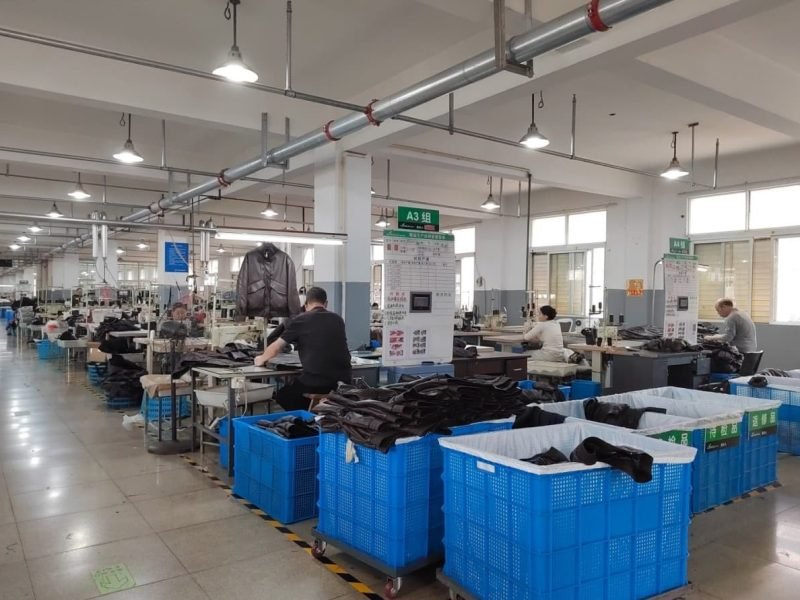
Ask for a wide, current view of the sewing workshop rather than a tightly cropped machine photo. The image or video should show multiple active workstations, garment WIP and normal floor organisation.
A wide view helps confirm whether the facility shown matches the claimed workshop scale and whether line-based production is visibly operating. It also gives more context for aisle control, workstation grouping, supervision and the movement of garments between operations.
For audit use, prefer dated or live evidence where policy allows, confirm that the product being shown belongs to the stated capability, and pair wide views with close-up process evidence.
Live Garment Operations
Review actual women’s garments being sewn and connect the operation to the product construction. A dress line should show dress components, a stretch line should show stretch-compatible sewing, and detail operations should show the garment area under control. The purpose is to verify production relevance, not only machine ownership. Live operation evidence can also reveal how components are identified, how operators follow the work sequence and how finished pieces move to the next station.
Match operation evidence to the product category being evaluated, look for approved reference use near sensitive operations where possible, and avoid treating a single demonstration piece as proof of full-scale capacity.
Cutting-to-Sewing Handoff

Inspect how fabric moves from spreading and cutting into sewing. Useful evidence includes cut-panel identification, bundle control, cutting inspection and the route used to issue components to the correct line. A sewing floor can appear well organised while upstream panel control remains weak. Reviewing the handoff helps explain whether size, colour and style identity are protected before operators begin assembly and whether cutting problems can be traced before they become sewing defects.
Confirm how style, colour and size identity is maintained, review both automatic and manual cutting routes where relevant, and ask how special or slippery materials are handled before sewing begins.
Line Supervision
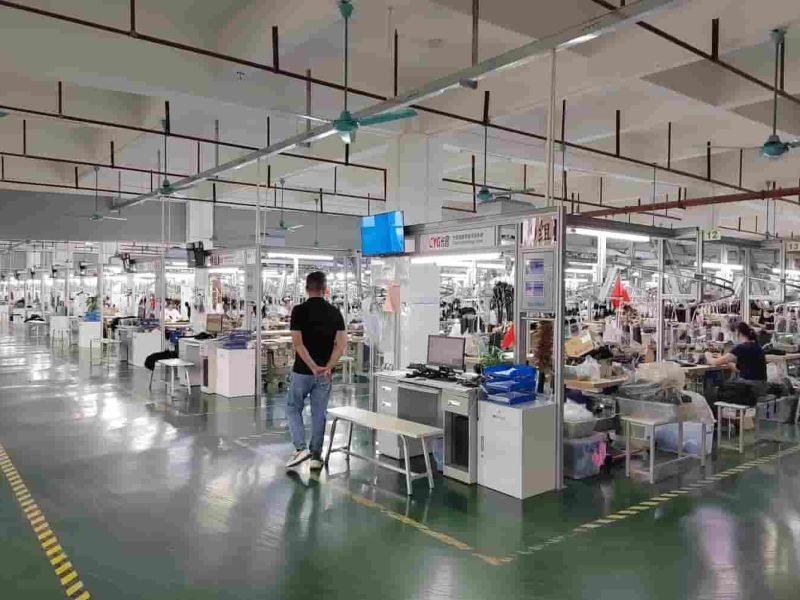
A production review should identify who owns each line or workshop area and who can make decisions when output falls outside the approved standard. Evidence may include line supervisors, production managers, line boards or live production discussions. The important question is not whether a board looks sophisticated. The important question is whether responsibilities for schedule, operation balance, defects and escalation are clear enough to keep a multi-style programme under control.
Ask who can stop or adjust a line, confirm how merchandising and QA receive escalated issues, and review one real issue path rather than relying only on general policy statements.
Inline QC Evidence
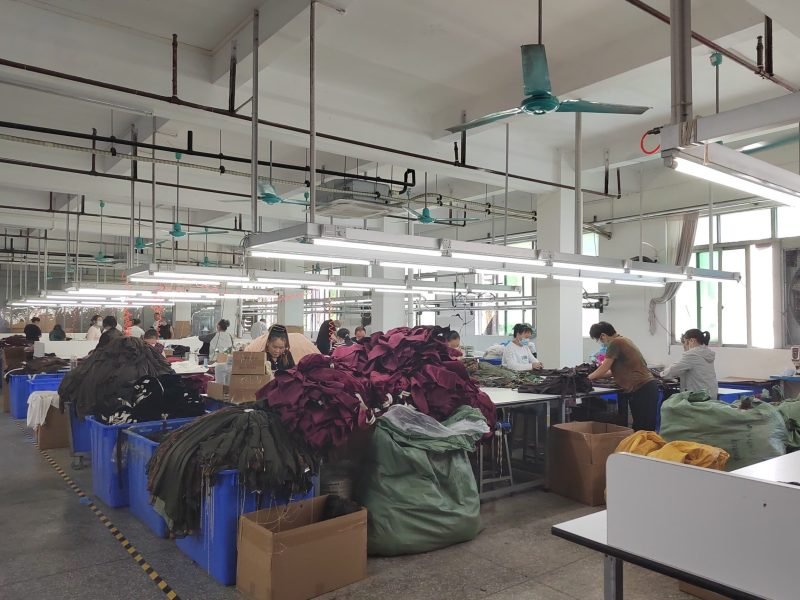
Look for quality control occurring during sewing. Useful evidence can include inline inspection activity, defect markings, measurement checks, controlled rework or redacted inspection records. A finished garment rack does not prove process control. Inline evidence shows whether problems are being identified while corrections are still manageable. It also helps clarify whether QC has access to the same approved construction and measurement standard used by production.
Review how defects are recorded or communicated, ask how corrected pieces are rechecked, and confirm that repeated issues can be escalated beyond the operator level when technical support is needed.
Measurement Checks

Ask to see how measurements are taken, which garment points are checked and which specification or method is used. Fit-sensitive products need more than a visual review. Measurement evidence is especially useful for fitted dresses, bottoms, swimwear and shapewear where small deviation can affect wear and return rates. The review should distinguish an approved measuring method from casual spot checks made only for a factory tour.
Compare the measuring method rather than only reported numbers, review size-range checks for fit-sensitive programmes, and ask what happens when repeated deviation appears during production.
In-House Boundaries
Verify which sewing and specialist operations are physically carried out inside the facility. If embroidery, certain printing, knitwear or specialised material processes use partners, the handoff should be explained directly. Clear boundaries are a positive supplier-qualification signal because they allow sourcing teams to assess risk honestly. The review should also clarify who approves partner output and where final garment quality ownership returns to XZ Apparel.
Separate XZ Apparel-owned equipment from partner equipment, ask how specialist output is approved and traced, and confirm that garment-level QC remains connected to the final programme standard after the partner process returns.
Final and Packing Route
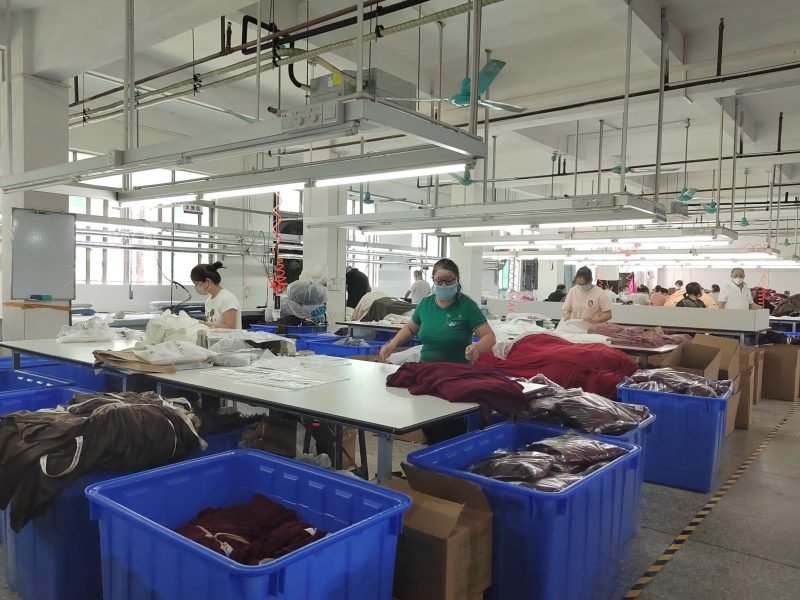
Follow finished garments beyond sewing. Review pressing, 100% finishing inspection, final inspection, packing inspection and the finished-goods area.
The purpose is to confirm that sewing output remains controlled until shipment preparation. A strong review should show how product identity, garment quality and packing accuracy are preserved after the sewing line ends, especially when many styles, colours and sizes are being prepared for the same collection launch.
Check labels, size identity and packaging against the order structure, review the route from finished garment to approved carton, and confirm that final release is not based on appearance alone.
Representative Multi-Style Women’s Fashion Production Case
The example below reflects a realistic programme structure within the order ranges XZ Apparel handles. Brand identity is omitted and exact figures are presented as an anonymised production example.
Programme Scope: 18 Styles and 47,520 Pieces
The programme combined 18 women’s fashion styles with a total planned quantity of 47,520 pieces. The mix included six dresses, five tops, four coordinated sets and three bottoms, with different colour and size structures by style. Individual style quantities ranged from approximately 2,000 to 3,600 pieces. The collection used both woven and stretch materials, so operation requirements varied from standard lockstitch and overlock work to coverstitch, closures, lining and selected detail operations. Several styles also carried different colour and size ratios, meaning the production task was not only to sew 47,520 pieces but to preserve SKU identity across a large assortment. That made material issue, WIP identification, measurement checks and final packing control part of the same production plan from the beginning.
A single-line strategy would have been unsuitable because style complexity was not uniform. The planning task was therefore organised around readiness and operation needs rather than simply grouping products by category. Styles with stable materials and approved construction could enter bulk earlier, while styles using more sensitive fabrics or added detail needed more preparation before line release.
Commercially, the programme size was large enough to require coordinated line planning but still small enough for style-level control to matter. Losing track of one colour, trim or size ratio could create a meaningful delivery problem even if total monthly factory capacity remained available.

Line Planning by Readiness and Construction
The programme was structured in controlled production waves. Styles were reviewed against approved PPS status, fabric and trim readiness, sewing complexity and required launch timing. Straightforward tops and selected bottoms could be assigned to lines with stable operation sequences, while lined dresses and stretch products required different equipment and inspection emphasis. Special-detail work was scheduled so it would not become a bottleneck for several styles at once.
The key planning discipline was to avoid releasing all 18 styles simply because fabric had arrived. A style could enter sewing only when its approved reference, material identity, construction and production requirements were sufficiently complete. This kept unresolved development comments off the sewing floor and reduced the risk of line teams working from different versions.
During bulk, line management focused on operation balance and WIP. If a closure operation, lining step or stretch-sensitive seam began to slow output or create repeated defects, production management could adjust the line before the issue expanded across the remaining quantity. The collection schedule was therefore managed as a sequence of style decisions rather than one large monthly-capacity number. Merchandising maintained a style-by-style readiness view so production management could see which approvals were complete, which materials were on hand and which technical comments still blocked release. The approach also gave the brand clearer status information: instead of hearing only that the order was “in production,” the team could understand which styles were cutting, sewing, under inline review, finishing or waiting for a defined dependency.
Quality Gates Before Final Release
Quality control followed the production route rather than waiting for the full 47,520 pieces to be finished. Early sewing output was reviewed against the approved workmanship and construction reference. Inline QC checked repeated sewing issues while measurement inspection monitored fit-sensitive dimensions. Problems that suggested material or technical causes could be escalated to QA, production, pattern or sourcing teams instead of being treated only as rework.
After sewing, garments moved through pressing and 100% finishing inspection, then final and packing checks. Multi-SKU packing control was especially important because dresses, tops, sets and bottoms had different size ratios, colour assortments and packaging identities. Product quality and order identity therefore had to remain aligned until carton preparation.
The programme example shows the operating value of an 80-line platform: not every line is used for one collection, and not every style starts together. The benefit comes from being able to allocate appropriate lines and control multiple production waves while preserving the approved standard for each style. A collection of this size also benefits from keeping commercial identity aligned with production status. Size ratios, colour assortments, labels and pack requirements need to remain linked to the correct style as garments move through the factory. The production system therefore protects both garment quality and order accuracy, reducing the risk of a technically acceptable garment reaching the wrong SKU or shipment configuration.

Frequently Asked Questions About Sewing Workshops and Lines
Send Your Collection for Sewing Capacity Review
A useful production review starts with the information that affects line suitability. Send the collection scope before requesting a capacity date so our merchandising and production teams can review the product mix, operation requirements, material status and approval stage together. The goal is to identify which styles are ready for sewing, which styles need technical clarification, and what production window is realistic for the full programme.
Please include:
- Product categories and number of styles
- Quantity by style and colour
- Size range and ratio where available
- Tech Packs, sketches or reference images
- Fabric composition, weight and stretch information where known
- Lining, closures, elastic, cups, boning or other construction details
- Printing, embroidery, smocking, pleating or other special processes
- Current sample or PPS approval status
- Target bulk delivery window and destination market
- Factory-audit, inspection or remote-review requirements