Skip to content

Fabric and Trim Warehousing for Apparel Production
Control fabrics and trims from arrival through inspection, approval, storage and release so bulk womenswear starts with verified production inputs.
- Separate fabric and trim/accessory warehouse functions keep approved materials identifiable before cutting, sewing and later quality checkpoints.
- 1 fabric inspection machine and 1 pre-shrink machine support incoming control and material conditioning where the product or fabric requires it.
- 30+ regularly used fabric suppliers provide sourcing routes for dresses, tops, bottoms, sets, swimwear and selected performance categories.
- In-house production-control checks can include GSM, shrinkage, colourfastness, crock/rubbing, washing, pilling, stretch/recovery, spirality and dimensional stability according to project needs.


What Fabric and Trim Warehousing Actually Controls
Fabric and trim warehousing should preserve material identity, approval status and production readiness from receiving through cutting, sewing and reorder. XZ Apparel connects storage with inspection, release and traceability.
From Receipt to Approved Material
Incoming fabric and trims should enter a defined review path before they are treated as production-ready. Fabric needs identity, colour and lot context, followed by inspection or testing where the material or product risk requires it. Trims need confirmation against the approved specification, colour, size, branding or functional requirement. A roll or component can be physically present in the factory while still being unsuitable for release. Production readiness therefore depends on approval status, not only on stock availability.
For fashion programmes, the distinction matters because cutting commits fabric to a style and colour. Once the wrong lot, unapproved shade or incorrect trim version is issued, recovery becomes slower and more expensive. Material control should make it clear what has arrived, what has been checked, what remains on hold and what can move forward.
A strong receiving gate also reduces confusion between merchandising and production. Merchandising may know which material was ordered, while warehouse and technical teams need to know which delivered lot is actually suitable for bulk use. Bringing those views together prevents paperwork approval from getting ahead of physical material approval. For commercial programmes with several colours or styles, the receiving stage should also make shortages and partial deliveries visible early enough for production planning to react before cutting capacity is reserved.

From Approved Stock to Production Issue
Approved material must then be connected to the correct style, colour and production stage. Fabric identity can involve supplier, specification, colour, lot, roll and inspection result. Trim identity can involve supplier, specification, colour, logo or artwork version, size and lot where relevant. These links reduce the risk of visually similar materials being mixed across programmes or of an older component version reaching a later bulk order.
Production issue should follow confirmed manufacturing inputs rather than convenience on the warehouse floor. The same control principle continues through cutting, line launch, quality inspection and packing. A material warehouse is most valuable when it supports a clear answer to one question: can the factory prove which approved materials were released into which production programme?
The issue step should also protect quantity allocation. When several styles share the same base fabric, lining or label family, stock can be technically correct yet still be released to the wrong programme. Allocation against planned consumption helps avoid that problem. Material issue therefore combines identity, approval and quantity discipline. The goal is not a complicated warehouse ritual; it is a clear handoff in which cutting or sewing receives the right approved input in the quantity and version intended for the scheduled style.
From Material Control to Bulk Consistency
Bulk consistency depends on more than final inspection. Shade variation, shrinkage, poor recovery, wrong branding trims or substituted components can begin at material stage. Warehousing therefore supports quality by keeping material identity visible before cutting and by reducing the chance that normal stock, held stock and changed versions are treated as interchangeable.
For repeat orders, the same discipline becomes even more important. Previous specifications may still be valid while fabric lots, suppliers, colour behaviour, trim availability or compliance documents have changed. A controlled warehouse supports comparison between the previous approved standard and the current material situation before a reorder is released. The aim is not to freeze every supply variable forever; the aim is to make changes visible before they reach finished garments.
Material control also supports faster investigation when something goes wrong. If a colour, trim or dimensional problem can be linked back to a specific lot, roll or component version, corrective action can be limited to the affected scope. Without that link, teams may need to quarantine far more production than necessary. Mature operations therefore treat warehouse identity as part of quality containment, not just stock administration. The same discipline helps sourcing teams compare supplier performance across repeated deliveries without relying on memory or informal notes.

XZ Apparel Material Control Facts at a Glance

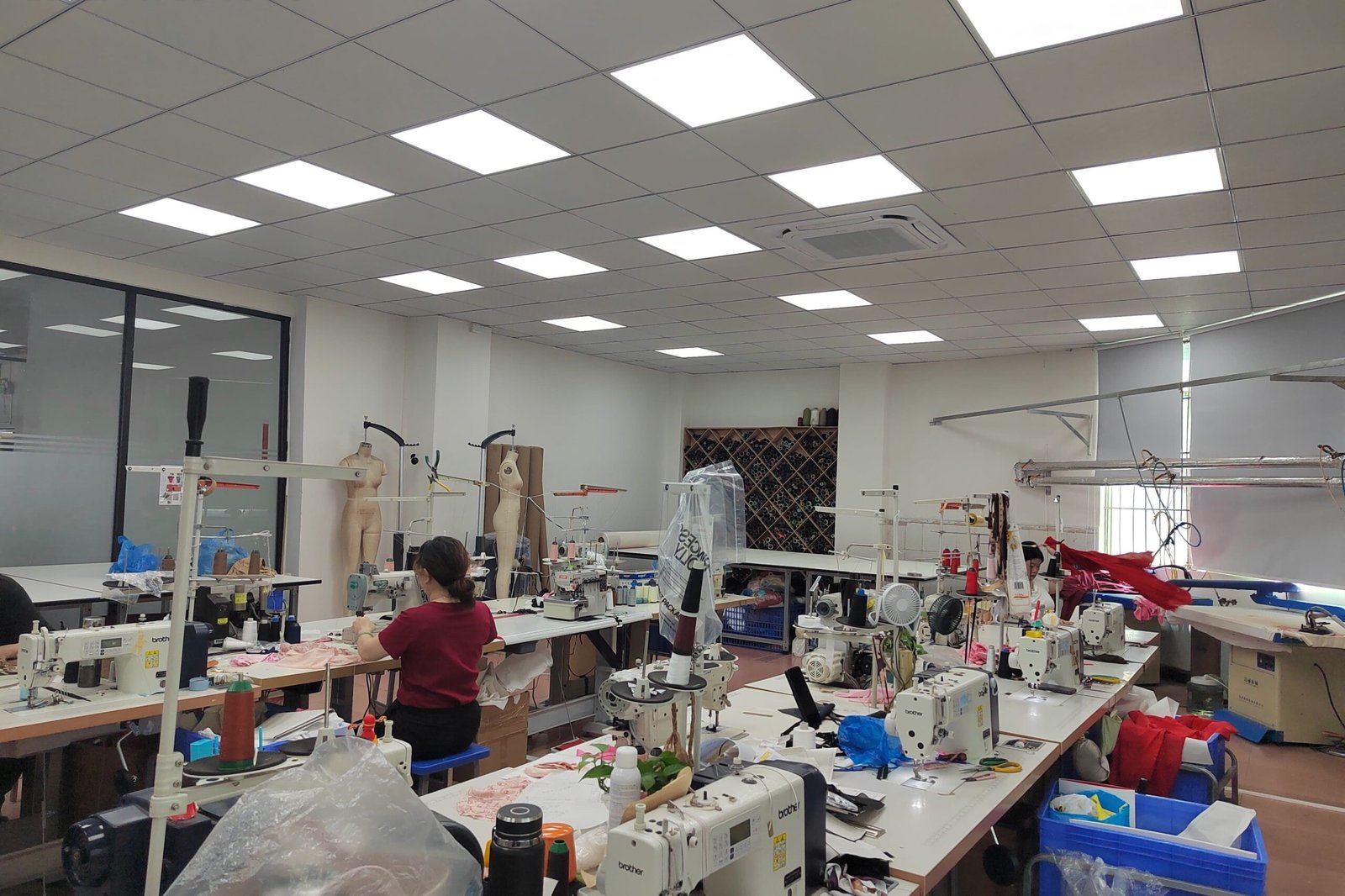
Separate Material Warehousing

Fabric Inspection Equipment
Incoming fabric control is supported by 1 fabric inspection machine. The equipment is used to observe incoming fabric rolls for relevant visible conditions such as defects, shade concerns and width-related issues before approved material moves into later production stages. Equipment alone does not create quality; its value comes from connecting observed material conditions with approval, hold, supplier action or cutting decisions.

Pre-Shrink Capability
XZ Apparel has 1 pre-shrink machine for materials where conditioning is relevant to product risk and production planning. Pre-shrink is not applied as a universal step to every fabric. The need depends on material behaviour, garment construction, required dimensional stability and the results of development or incoming controls. Where used, the objective is to reduce avoidable size change before cutting and bulk assembly.

Production-Control Testing

Fabric Sourcing Network

Controlled Production Release
From Material Arrival to Controlled Production Release
A clear material route keeps warehouse activity connected to garment decisions. Six stages help prevent stock availability from being confused with production approval.
Receive and Identify
Fabric rolls and trim components first need a usable project identity. The receiving stage should connect materials to the relevant programme, style, colour, supplier information and specification before later teams rely on them.
Visual similarity is not a safe identification method. A black elastic for one garment may have a different width, recovery or approved supplier from another black elastic. Clear identity provides the starting point for every later inspection, approval and production decision.
Inspect Relevant Risks
Incoming control should focus on risks that can change garment quality or production feasibility. Fabric may require review for defects, shade, width, GSM, shrinkage, dimensional behaviour, rubbing, wash or stretch/recovery depending on the category. Trims can require specification, colour, size, appearance, branding and functional review. The aim is not to run every possible check on every component. The aim is to identify the checks that can change an approve, hold, correct or supplier-action decision.
Approve or Hold
Materials should not become production-ready merely because the delivery has been received. Approval should reflect the accepted fabric, trim, colour, handfeel, function, artwork or other programme standard. Where results are unclear, the correct outcome can be hold, recheck, replacement, supplier review or brand confirmation. Keeping approval status visible protects production teams from treating unresolved material as normal stock and helps prevent a rushed cutting decision from creating a larger bulk problem.
Store with Identity
After approval, storage should preserve the information already established during development and inspection. Fabric lots, rolls and colour groups should remain distinguishable, while trim versions, sizes and branding references should remain connected to the intended styles. Good storage control reduces accidental mixing but does not replace inspection. Warehousing works best as the physical continuation of approved product information, keeping materials identifiable until production needs them. The same principle should cover partial deliveries and replenishment, so later-arriving stock can be distinguished from the earlier approved batch instead of being merged informally.
Issue for Production
Material issue should follow the production plan, approved PPS or other confirmed bulk standard, and the correct style/colour requirement. Fabric released to spreading and cutting needs to match the approved lot and production purpose.
Critical trims need to be available before line launch so sewing is not forced into unplanned substitutions or stoppages. Controlled issue creates a visible handoff from warehouse responsibility to cutting and production responsibility. Planned issue quantities also help protect shared materials across multi-style programmes, preventing one style from consuming stock reserved for another scheduled SKU.
Retain Traceability
Material identity should remain useful after release. If a shade issue, wrong label, trim mismatch or other defect appears later, the team needs enough links to narrow the affected scope.
Relevant traceability can connect fabric lot/roll, trim version, production bundle or line window, inspection status and packing information.
Effective traceability does not require exaggerated claims about digital systems; it requires reliable relationships between the approved material, the production record and the finished programme.
Fabric and Trim Warehouses Control Different Risks
Fabric and trim storage belong to the same production system, but their identities, approval points and failure modes differ. Treating them as one generic raw-material category hides important garment risks.
| Control Area | Fabric Warehouse | Trim & Accessory Warehouse | Production Risk Controlled |
| Primary identity | Supplier, specification, colour, lot, roll | Supplier, specification, colour, size, logo/version, lot where relevant | Wrong material or version entering bulk |
| Incoming review | Defect, shade, width, GSM and risk-based checks | Specification, appearance, colour, quantity and functional/branding checks | Problems discovered after line launch |
| Approval focus | Material behaviour and lot suitability | Component correctness and approved reference | Unapproved inputs reaching garments |
| Storage separation | Roll/lot/colour and status distinction | Style/size/colour/version and status distinction | Mixed lots or mixed component versions |
| Production release | Approved fabric to spreading/cutting | Approved components to sewing/assembly | Cutting or sewing with wrong inputs |
| Traceability value | Links shade/shrinkage/defect issues to lot/roll | Links branding/function/version issues to component lot or reference | Faster containment of affected scope |
Fabric Receiving Inspection and Release Before Cutting
Fabric control is one of the strongest opportunities to prevent avoidable bulk loss. The objective is to identify material risk before cutting commits rolls to styles, colours and quantities.

Establish the Fabric Identity Before Inspection Begins
A fabric roll should enter the control process with enough information to connect it to the intended garment programme. Useful identity includes supplier, fabric specification, colour, lot and roll information where available, together with the relevant style or programme context. Identification matters because a quality observation without batch context is difficult to use. A shade concern, shrink result or visible defect only becomes actionable when the affected material can be distinguished from other rolls that may still be acceptable.
XZ Apparel maintains separate fabric warehousing and uses a fabric inspection machine as part of incoming material control. The equipment supports examination of incoming rolls before cutting, while broader in-house production-control testing can be selected according to product risk. The control point is especially important for dresses, blouses and sets where appearance, drape, shade and handfeel can be commercially critical, and for swim or active products where stretch/recovery and dimensional behaviour can affect fit.
Inspection records should lead to a decision rather than becoming paperwork with no production consequence. Material can proceed, require additional review, be held, be segregated by lot or shade, or trigger supplier action. Cutting should receive approved material, not simply available material.
For style development teams, material identity should also stay connected to the approved sample path. If the sample used one handfeel, shade or stretch level and bulk arrives with a different condition, the issue should be visible before cutting rather than discovered after fit or appearance changes in finished garments. That connection is particularly useful when one colour is supplied across several rolls or when a shared fabric is allocated to several SKUs in the same launch.
Connect Testing Results to a Production Decision
Fabric testing has value only when the result changes a manufacturing decision. GSM or weight helps confirm whether material identity and expected garment body are aligned. Shrinkage or dimensional-stability checks can influence material approval, pre-shrink need, pattern compensation or wash expectations. Colourfastness and crock/rubbing become more important with dark colours, contrast trims or surfaces that may transfer colour. Stretch/recovery is particularly relevant for swimwear, activewear, bodycon silhouettes and shapewear because fit depends on material behaviour as well as pattern measurements.
XZ Apparel can perform production-control checks including GSM, shrinkage, colourfastness, crock/rubbing, washing, pilling, stretch/recovery, spirality and dimensional stability according to project needs. Cotton has an additional confirmed incoming-batch rule: every incoming batch of cotton fabric enters the relevant testing/control process. The rule refers to incoming batches, not every metre of fabric and not every finished garment receiving every possible laboratory test.
Where formal market, retailer or brand evidence is required, qualified third-party laboratory reports remain separate from factory production-control testing. Keeping the boundary clear prevents internal checks from being misrepresented as accredited certification.
The strongest control is therefore a decision map rather than a long test list. A result can confirm use as planned, trigger pre-shrink, require lot segregation, prompt pattern or cut-direction review, hold material for supplier discussion, or require third-party confirmation. Recording the production consequence makes technical checks useful to merchandising, planning and quality teams at the same time. It also prevents test activity from becoming detached from the commercial question of whether a style can move into bulk safely and on schedule.


Use Pre-Shrink and Lot Control Where Material Behaviour Requires It
XZ Apparel has 1 pre-shrink machine for relevant fabrics. Pre-shrink should be treated as a risk-control decision rather than a universal production ritual. Material construction, finish, wash behaviour, garment silhouette and final measurement requirements determine whether conditioning is useful. Development and incoming checks should provide the evidence for that choice.
Lot and shade control remain important after inspection. Two rolls can share the same commercial colour name while showing different visual behaviour under garment assembly or after finishing. For coordinated sets, colour and handfeel consistency across top and bottom can be especially sensitive. For dresses and blouses, visible shade movement across panels can undermine the intended appearance even when sewing quality is otherwise acceptable.
The release gate should therefore answer three questions before fabric reaches spreading: Is the material the approved specification? Is the relevant lot or shade acceptable for the intended style? Have required risk checks or conditioning steps been completed? When those answers are visible before cutting, the production team can protect both material yield and garment consistency.
Where several styles share the same fabric, lot control can also support collection-level consistency. A matching skirt and top, for example, may need the same visual colour and handfeel even when they are cut on different days or lines. Keeping the relevant lot relationship visible allows planning to sequence cutting around approved material groups instead of relying on whatever roll is easiest to reach. That discipline becomes more valuable as style count and colour count increase.
Trim and Component Inspection Before Bulk Production
Trims carry product identity, fit, closure, support and branding functions. A wrong component can stop sewing, change garment performance or create a finished product that no longer matches the approved standard.
Match Every Component to the Approved Specification
Trim control starts with knowing what the component is supposed to be. Zippers, buttons, elastics, labels, cups, boning, hooks, hardware, drawcords and other components should be checked against the relevant approved specification rather than compared only by general appearance. Colour, size, width, length, finish, artwork, logo version and functional requirement can all be important depending on the garment.
Fast-fashion womenswear often combines several component types in one style. A structured dress may use zipper, lining, boning and cup components; swimwear may use lining, elastic and hardware; activewear can combine performance elastic, zipper or heat-applied branding. A small deviation in one component can change fit, support, closure alignment or brand presentation even when the main fabric is correct.
XZ Apparel separates Trim & Accessory Warehouse functions from fabric warehousing because component identity follows different control logic. The aim is to preserve the link between approved trim references and the styles that need them before line issue.
Approved references should remain current. If a zipper pull, label artwork, elastic width or hardware finish changes during development, the warehouse and production teams need a way to distinguish the superseded version from the released version. The same applies when a component arrives in several sizes. A component can be correct in colour yet wrong in length or size, so trim identity must carry enough information to protect the garment specification rather than only the supplier carton description.


Check Appearance and Function Before Components Reach Sewing
Incoming trim review should focus on characteristics that can affect assembly or finished garment acceptance. Visual checks can cover colour, surface, finish, visible defects and artwork presentation. Functional checks depend on the component: a zipper must operate as expected; elastic needs the specified width and relevant tension/recovery behaviour; cups and boning need the correct shape or structural role; hardware must match the intended attachment and garment use.
The depth of review should follow the risk. A simple internal label does not require the same assessment as a branded metal closure or a support component used in a fitted dress. Brand-specific components can also carry version risk. A revised logo, care label, size mark or artwork cannot be managed safely if old and new versions are treated as interchangeable stock.
A clear hold/release decision prevents unresolved components from being issued simply because sewing is waiting. Line continuity matters, but substituting an unapproved trim to avoid delay can create larger rework, compliance or presentation problems later.
Component review also needs to reflect how the trim behaves after attachment. A rigid metal part on a light stretch fabric, for example, can create pulling or distortion even when the component itself appears defect-free. Elastic recovery, zipper tape behaviour and support-component shape can influence construction and fit. Linking trim approval with sample and PPS feedback gives the factory a better basis for deciding whether the delivered component can be used as planned or needs further review before bulk release.
Make Critical Trim Readiness Part of Production Planning
Critical trims should be approved and received before the line depends on them. Production planning should not assume that fabric readiness alone means the order is ready to launch. Missing zipper lengths, elastic widths, labels, closures, hardware or support components can interrupt assembly even when cut panels are already available.
XZ Apparel’s bulk-readiness logic links critical trims with fabric readiness, PPS approval, special-process timing, packing instructions and production capacity. Material status therefore influences the start of bulk production as well as the continuity of the sewing line. A delay discovered before cutting is easier to manage than a shortage discovered after work-in-progress has accumulated.
For repeat programmes, previous trim references remain useful but still need a change review. Supplier availability, artwork, colour, component specification or packaging information may have changed. Reorder control should compare the approved previous standard with current availability before releasing a new bulk programme.
A critical-trim list is especially useful for multi-style launches. Standard labels may be common across many SKUs, while one branded closure or structural component may be unique to a single style and have a longer replacement path. Planning teams can then distinguish routine stock from line-stopping items. The approach helps avoid spending cutting capacity on styles that cannot complete assembly and gives sourcing teams earlier notice when supplier action or brand approval is required.

Controlled Storage Protects Approval Status After Inspection
Warehousing should preserve the decisions already made during material development and incoming control. Four control principles keep approved stock from becoming mixed, outdated or incorrectly issued.
Material Identity
Every stored input needs an identity strong enough to distinguish it from lookalike materials. For fabric, supplier, specification, colour, lot and roll context can be important. For trims, specification, colour, size, branding or artwork version and lot may matter. Identity allows warehouse staff, merchandisers, production and QC teams to refer to the same material without relying on informal visual recognition. A reliable identity also makes partial deliveries easier to reconcile, because later lots or versions can be reviewed before being merged with previously approved stock.
Lot and Colour Separation
Lot and shade differences can affect dresses, blouses, sets and other appearance-sensitive products. Fabric from different lots should not be treated as automatically interchangeable only because the commercial colour name is the same. Storage discipline should keep relevant lot and shade information visible until cutting decisions are made, reducing the chance of panel colour mismatch or inconsistent coordinated garments. The same control supports deliberate cutting sequence decisions when one programme uses several rolls or when coordinated garments need closer colour alignment.
Approval Status
Received, approved, held and rejected materials do not carry the same production status. A well-controlled warehouse makes it difficult for unresolved material to move forward by mistake. Approval status should remain connected to the material after inspection, especially when a programme is waiting for brand confirmation, additional testing, replacement or supplier action. Physical availability should never be mistaken for release authority. Status control is most useful when the reason for hold is visible to the responsible team, allowing inspection, sourcing or approval action to happen without informal warehouse workarounds.
Production Allocation
Approved materials still need to reach the correct style, colour and production requirement. Allocation helps prevent one programme from consuming stock intended for another and supports visibility over critical fabric or trim shortages before line launch.
For multi-style collections, the discipline becomes more important when styles share a common fabric, colour or trim but require different quantities, versions or production timing. Allocation should also reflect planned consumption and replenishment timing, especially when several SKUs use one common material but launch on different cutting dates.
Material Approval and Traceability Across the Production Chain
Traceability connects material identity with the approved product standard, production activity and later inspection records. The goal is faster containment and clearer decisions when a material or version issue appears.
PO Style and Colour
The programme, purchase order, style, colour and current version define the commercial and technical scope of material control. Material records become more useful when they can be connected to the exact styles and colours affected. A shortage or shade concern can then be evaluated against the relevant production requirement rather than being treated as an isolated warehouse problem. It also gives planning teams a clear unit for allocating shared fabrics and trims when one collection contains several styles with overlapping material requirements.
Approved PPS Reference
An approved PPS or standard sample provides the product reference that bulk should follow. Material and trim approvals need to stay aligned with that standard. If a material, colour, component, artwork or construction input changes after PPS approval, the change should be reviewed for possible impact rather than silently entering production under an older approval status.
Keeping the release tied to the current approved version reduces the risk that old sample comments or superseded component choices are carried into later bulk production.
Fabric Lot and Roll
Fabric traceability can include supplier, specification, colour, lot, roll and inspection result. These relationships support investigation of shade, shrinkage, defect or dimensional issues. When a problem appears, the team can assess whether the affected scope follows one lot, selected rolls or a broader material condition instead of assuming the entire order requires the same action. The same relationship supports targeted supplier discussion because observations can be connected to the specific delivery rather than described only as a general fabric complaint.
Trim Version and Lot
Trim traceability can include supplier, specification, colour, logo or artwork version and lot where relevant. Version control is especially important for labels, branded hardware, printed components and updated accessory specifications. If a wrong label or component is discovered, the team needs enough information to isolate the affected production or packing scope without disturbing unaffected goods.
Clear component identity also helps distinguish a true stock shortage from a version mismatch, which require different sourcing and production responses.
Production and QC Records
After materials leave the warehouse, useful links continue through cut bundles, line or production window, inspection records, defects and rework status. These links help distinguish material-driven problems from pattern, operation or process problems. Traceability therefore supports diagnosis as well as containment, making corrective action more targeted and reducing unnecessary rework across unaffected production. When those records remain connected, CAPA work can focus on the likely source of variation instead of treating every defect as an isolated garment-level problem.
Reorder Change Review
A repeat order should start from the previous approved standard, then compare current fabric and trim availability, supplier situation, lot behaviour, branding versions, compliance needs and production details. Where a relevant change exists, the programme may need new confirmation or PPS review. Repeatability comes from controlled change, not from assuming every future material batch will behave exactly like the previous one. The result is a controlled continuity path: reuse what is genuinely unchanged, recheck what has changed, and avoid turning speed into hidden material risk.
Material Readiness Must Be Confirmed Before Cutting Starts
A production schedule is reliable only when critical inputs are ready. Fabric and trim warehousing therefore has a direct relationship with cutting dates, line launch and delivery planning.
Use a Bulk Readiness Gate Instead of a Calendar Assumption
Bulk production should not start from a calendar date alone. XZ Apparel’s readiness logic requires the relevant PPS/specification to be confirmed, fabric bulk lot received and approved, required material testing completed, critical trims approved and received, specialist-process timing aligned where relevant, and production details prepared for the planned line and cutting schedule. Packing information also needs to be controlled before late-stage execution creates avoidable rework.
The logic protects production from false readiness. Fabric may have arrived but still be on hold for inspection or test review. Trims may be partly available while one closure or label remains missing. A special process may be approved but still require coordination with a long-term specialist partner. Cutting or sewing before those dependencies are visible can produce work-in-progress that cannot move forward normally.
Bulk lead time at XZ Apparel is typically 25-35 working days after material readiness, PPS approval and production details are confirmed. The timing is therefore conditional, not a promise that starts when an initial enquiry or purchase order is sent.
A readiness gate also improves communication with brand teams. Instead of saying production is ‘almost ready,’ the factory can identify the unresolved dependency – for example, one fabric lot on hold, a missing zipper length or a pending PPS confirmation. Clear status makes schedule decisions easier because each delay has an owner and a next action. It also avoids overpromising a line start before the inputs required for normal flow are actually released.


Treat Fabric and Critical Trims as Separate Readiness Signals
Fabric readiness answers whether approved bulk material can be spread and cut under the intended lot, shade and conditioning conditions. Critical-trim readiness answers whether sewing and assembly can proceed without substitution, interruption or an unapproved component. Both signals are required for a stable launch.
A fitted dress can have all fabric ready but remain blocked by zipper, boning, cup or lining components. Swimwear can have approved main fabric while elastic or lining remains unresolved. A matching set can have sufficient metreage while top and bottom shades or handfeel need coordination. Production planners therefore need style-specific material information rather than a single warehouse-level stock number.
Material status also affects line allocation. Complex styles should not be scheduled as if every style in a multi-SKU collection carries the same dependency. Identifying critical materials early allows the planning team to sequence styles more intelligently and avoid starting work that cannot be completed.
For sourcing teams, separating the two signals helps with escalation. A fabric issue may need supplier replacement, testing or shade review, while a trim issue may need a revised component, artwork approval or alternative source. Different problems move through different decision paths. Treating them as one generic ‘materials pending’ status hides the action required and makes it harder to judge whether a style can be resequenced or must remain on hold.
Connect Material Readiness to Collection Launch Dates
Fast-fashion programmes often work backwards from launch, campaign, wholesale or delivery milestones. Material booking, trim development, sample/PPS approval, cutting, sewing, finishing and inspection all need to fit inside the available window. Warehousing gives the production team a real view of which materials are physically present and which are approved for use.
For multi-style programmes, shared fabrics or trims can create both efficiency and dependency. A common lot can improve colour consistency across coordinated styles, but one late material can also affect several SKUs. Production planning should therefore identify shared inputs, critical paths and style-level priorities before line launch.
The most useful material status is not simply “in stock.” It is “received, approved, allocated and ready for the intended production decision.” That distinction gives sourcing and operations teams a more dependable basis for launch planning and delivery discussions.
The same visibility supports realistic reorder planning. A previous style may be production-ready from a pattern and construction perspective while its original fabric or trim is no longer available. A launch calendar should therefore include a material reconfirmation point before the factory assumes repeat production can follow the earlier timing. Reusing approved standards saves time; rechecking current availability protects the programme from late substitutions and avoidable schedule changes.

Material Risks Change Across Womenswear Product Categories
Warehouse control should reflect garment engineering. Dresses, sets, swimwear and support garments do not depend on the same material behaviour, trim mix or approval priorities.

Dresses

Tops and Blouses
Tops and blouses often depend on drape, opacity, collar or cuff structure, buttons, plackets and clean surface appearance. Light fabrics can reveal shade differences, handling damage or seam-pucker risk more easily than heavier materials. Warehouse and incoming control should therefore preserve fabric identity, colour/lot information and approved trim references while giving production enough visibility to select appropriate material and construction handling before cutting. Where buttons or light trims are visually prominent, version and colour control should stay linked to the approved sample rather than being treated as generic accessory stock.

Matching Sets
Matching sets create an additional consistency requirement because two garments must read as one coordinated product.
Shade, lot, handfeel and wash behaviour need to remain aligned across the top and bottom.
Where styles share material, common lot planning can support visual consistency and reduce unnecessary material fragmentation.
Warehouse allocation must still preserve the quantity needs of each style so one SKU does not consume stock required for its matching partner.

Swimwear
Swimwear places greater emphasis on stretch/recovery, colourfastness, lining, elastic, opacity context, hardware and fit. Main fabric, lining and elastic must work together; substituting one component can change support, stretch balance or finished fit. Incoming material control should therefore link risk-based testing and component approval with the exact swim style and colour before materials are released into cutting and assembly.
Lot identity is also important when one colour is used across main fabric and coordinated pieces, because wet-use products can expose colour and recovery differences more clearly.

Activewear
Activewear relies on stretch/recovery, pilling resistance, wash and dimensional stability, seam compatibility and repeated-wear performance. Fabric and elastic identity matter because visually similar materials can behave differently under movement and heat. XZ Apparel treats activewear as an established capability for selected projects, so material readiness should be reviewed against the garment’s movement, fit and performance requirements rather than copied from a casualwear programme. Critical materials should be reviewed before line release so visually similar stretch fabrics or elastics are not substituted without checking fit, recovery and process compatibility.

Shapewear
Shapewear depends on support fabrics, recovery, fit, elastic and component attachment. Material behaviour and construction operate together, making uncontrolled substitution particularly risky.
The warehouse must preserve the identity of approved power fabrics and support components while production controls confirm that the correct materials reach the intended panel, seam and size requirements.
XZ Apparel handles shapewear as an established capability for selected projects rather than presenting it as a universal core category.
Material Control for Multi-SKU Fashion Collections
Large programmes create a different warehousing problem from a single style. Shared materials can improve efficiency, while poor allocation can spread one material issue across many SKUs.

Plan Shared Fabrics and Trims Before Bulk Allocation
Multi-style collections often use common colours, base fabrics, linings, labels, elastics or hardware across several garments. Shared sourcing can reduce fragmented procurement and can help maintain consistency, but only when material allocation is planned before production begins. A common fabric lot may serve a dress, top and skirt, yet each style still has its own consumption, cutting timing and quantity requirement. Warehouse control needs to protect the shared material from being consumed by the first style that reaches cutting.
XZ Apparel’s production-planning logic recommends using shared fabric or trim from the same lot where appropriate to improve consistency and reduce unnecessary MOQ waste. The method works best when styles are identified early and their material requirements are reviewed together rather than booked as isolated orders. Collection planning should also distinguish critical materials from items that can be replenished or substituted only after approval.
A material map for the collection can therefore show which SKUs share fabric, which share trims, which require unique components and which depend on specialist processes. The map turns warehousing into a coordination tool rather than a passive stock list.
For merchandising teams, the benefit is clearer shortage visibility. If one shared fabric is under-delivered, the effect can be calculated across the styles that depend on it instead of discovered one cutting request at a time. That view supports earlier decisions about priority styles, replenishment, colour balance or launch sequencing. It also gives the warehouse a planned issue framework rather than asking staff to decide allocation from the floor when production pressure is already high.
Separate Material Complexity from Piece Quantity
Two styles with the same order quantity can create very different material risks. A simple top may use one main fabric and standard trims, while a structured dress may require lining, zipper, boning, cups and decorative components. Production planning should not divide lead time evenly across styles only because their piece counts are similar.
Critical-path materials need earlier attention. Custom-dyed fabric, branded hardware, special lace, support components or outsourced specialist processes can change the real readiness date. Warehousing and material approval status help planners decide which styles are genuinely ready for cutting and which should remain outside the line schedule until dependencies are resolved.
The same logic applies to colour splits. A collection can be commercially one programme while material risks still vary by colour. Dark shades may need closer rubbing or colourfastness attention; contrast trims can create transfer risk; a coordinated set may require lot control across two garments. Style-level and colour-level visibility therefore matters more than a single total-stock figure.
A complexity view can also guide evidence requirements. Standard fabric already used in the programme may need routine incoming control, while a new stretch material, special finish or custom hardware may need stronger approval before release. The point is not to make every style equally complicated. The point is to place attention where one unresolved input can create disproportionate production or quality risk.


Make Reorders a Change Review Rather Than a Copy-Paste Exercise
Repeat orders benefit from approved patterns, measurements, materials and previous production knowledge, but current inputs still need review. Fabric lot, supplier, shade, finish, trim availability, artwork version, packaging and brand requirements may have changed. A reorder should move from Previous Approved Standard to Current Material/Trim Availability, then through Change Review and new confirmation where a relevant change exists.
Warehousing supports the process by showing what current material is actually available and how it relates to the earlier approved programme. If the original fabric is no longer available, the replacement needs a new decision rather than silent substitution. If the supplier remains the same but a new lot behaves differently, incoming control should reveal the difference before cutting.
The objective is continuity without complacency. Reorders become faster when unchanged standards can be reused, while material changes are isolated and reviewed instead of forcing the entire programme through unnecessary redevelopment.
A structured change review also helps separate commercial continuity from technical change. Order quantity or delivery timing may change without affecting the approved material specification, while a new fabric supplier or trim version can affect product performance even if the style code remains the same. Recording which variables changed gives production teams a cleaner route to reuse earlier knowledge without carrying forward assumptions that no longer apply.
Multi-SKU Material Readiness Example for a Fashion Programme
Example Programme: 18 Styles and 42,000 Pieces
Consider an 18-style womenswear programme totalling 42,000 pieces across dresses, tops, skirts and matching sets. Six fabric families cover the assortment, with three colours shared across multiple SKUs. Several styles use common linings and labels, while structured dresses require unique zipper lengths, boning and cup components. Two matching sets need top-and-bottom shade and handfeel consistency, so their shared fabric is planned from the same approved lot where feasible.
Material control begins by mapping every style to its fabric and critical trims before bulk cutting. Shared fabric is allocated across styles rather than released only by whichever cutting request arrives first. Unique components are flagged as critical because one missing trim can block an otherwise ready style. Incoming checks then focus on the risks that can alter bulk decisions: shade and lot identity for coordinated colours, shrinkage and dimensional behaviour for selected fabrics, and specification/version control for branded or structural trims.
A readiness review might show 14 styles fully ready, 2 styles waiting on critical trims and 2 styles held for fabric confirmation. Production can sequence genuinely ready styles while unresolved materials stay outside the cutting plan. The value comes from avoiding a false “all materials arrived” status when several SKUs still carry unresolved dependencies.
How Material Decisions Protect the Launch Calendar
The same programme becomes easier to manage when warehouse status, material approval and production planning use the same style-level view. If a shade concern affects one fabric lot used by three coordinated styles, the team can isolate the affected lot and delay only the relevant cutting rather than freezing the full 42,000-piece programme. If a zipper version changes on two structured dresses, the change can be reviewed against those styles without disturbing unrelated tops and skirts.
Shared materials also create purchasing leverage, but allocation discipline remains essential. A common lining booked for eight styles must be distributed against planned consumption so an early-cut style does not exhaust stock intended for later SKUs. Reorder planning uses the same logic: previous approved references are retained, but new material lots, supplier availability and trim versions are checked before a repeat release.
For a programme at this scale, warehousing is therefore not measured by how much stock can fit inside a building. The stronger indicator is whether material identity, approval, allocation and release remain visible across 18 styles, multiple colours and different production sequences. That operating discipline supports a more stable launch calendar and more targeted problem containment when a material issue appears.
Common Production Failures Linked to Weak Material Control
Warehouse problems often appear later as cutting, sewing, fit or delivery problems. Four failure patterns show why material identity and release discipline matter.
Mixed Shade or Lot
Fabric from different lots can look similar in the warehouse yet create visible panel or set variation after cutting and assembly. The risk is especially high in satin, dresses, blouses and matching sets where surface and colour consistency are prominent. Lot/roll identity, shade grouping and controlled cutting allocation help isolate acceptable material and prevent mixed-lot use from becoming a finished-garment problem. A controlled response can isolate the affected rolls or cut bundles and protect unaffected production, reducing the need for full-order rework when the problem is limited in scope.
Wrong Trim Version
A label, zipper, elastic, hardware or branded component may have the correct general appearance while belonging to an old specification or artwork version. If old and current trims are stored without clear version identity, sewing or packing can use the wrong component even when the item appears “in stock.” Trim version control allows affected styles or packing batches to be isolated without rechecking unrelated production. A current-approved-version check before issue is particularly important after artwork or branding revisions, when old stock may still be physically usable but commercially unacceptable.
Critical Trim Shortage
Fabric readiness can create a false sense of production readiness when critical trims are incomplete. Missing zipper lengths, elastic widths, labels, cups, boning or hardware can stop a sewing line after cutting has already started.
Readiness gates should therefore confirm critical components before line launch. An early shortage decision gives sourcing and planning teams time to reorder, resequence styles or seek approval rather than improvising during assembly. Clear shortage visibility also allows planners to resequence ready styles rather than occupying line capacity with work that cannot reach normal completion.
Unapproved Material Release
Material can be physically present while still waiting for inspection, testing, brand confirmation or supplier correction. Releasing held material because production is waiting transfers an unresolved warehouse issue into bulk garments. Clear status separation and release authority reduce the chance of cutting unapproved fabric or installing unresolved components. The safest recovery is to solve uncertainty before irreversible production steps commit time and material. Keeping hold reasons and release authority visible makes escalation faster and reduces pressure on warehouse staff to make technical decisions that belong to sourcing, quality or product teams.
What Sourcing Teams Should Audit in Material Warehousing
| Audit Check | What to Look For | Why It Matters |
|---|---|---|
| Fabric identity | Supplier/spec/colour/lot/roll connection | Supports shade, shrinkage and defect containment |
| Trim identity | Spec/colour/size/logo or version reference | Prevents wrong components and branding errors |
| Incoming fabric control | Inspection equipment, records, relevant test or review path | Finds material risk before cutting |
| Approval status | Clear distinction between approved, held and unresolved material | Stops unresolved inputs from reaching production |
| Lot/shade handling | Visible lot or shade distinction where relevant | Reduces mixed-lot panel and set variation |
| Critical trim readiness | Approved and received components before line dependency | Reduces stoppage and substitution risk |
| Production issue | Material linked to style/colour/order requirement | Prevents wrong material release |
| Traceability | Material identity can connect with production and inspection records | Speeds containment when problems appear |
| Reorder change review | Previous approved standard compared with current material availability | Protects repeat consistency without unnecessary redevelopment |
| In-house vs partner boundary | Clear explanation of factory control and specialist-partner handoffs | Prevents misleading process-ownership claims |
Inside XZ Apparel Material Control Operations
Factory evidence should show where material is stored, how it is checked and where the handoff into production occurs. Real operating evidence is more useful than staged warehouse photography.
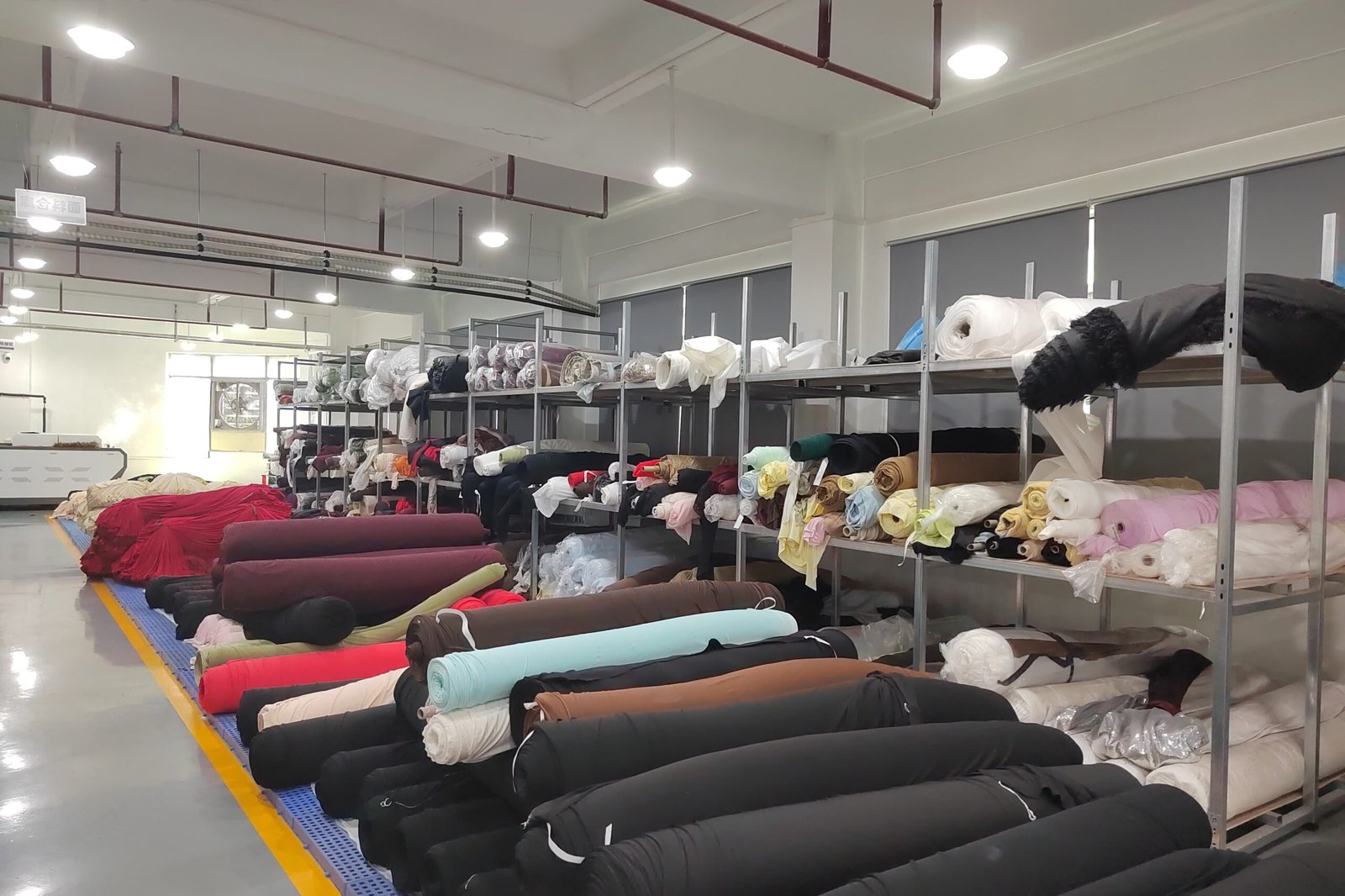
Fabric Warehouse
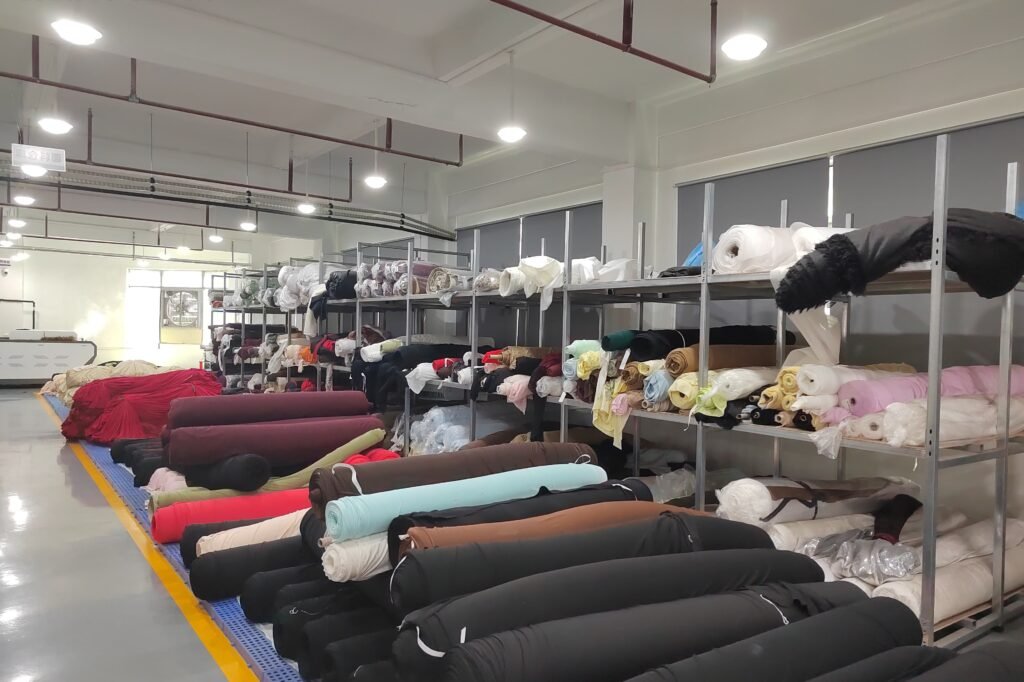
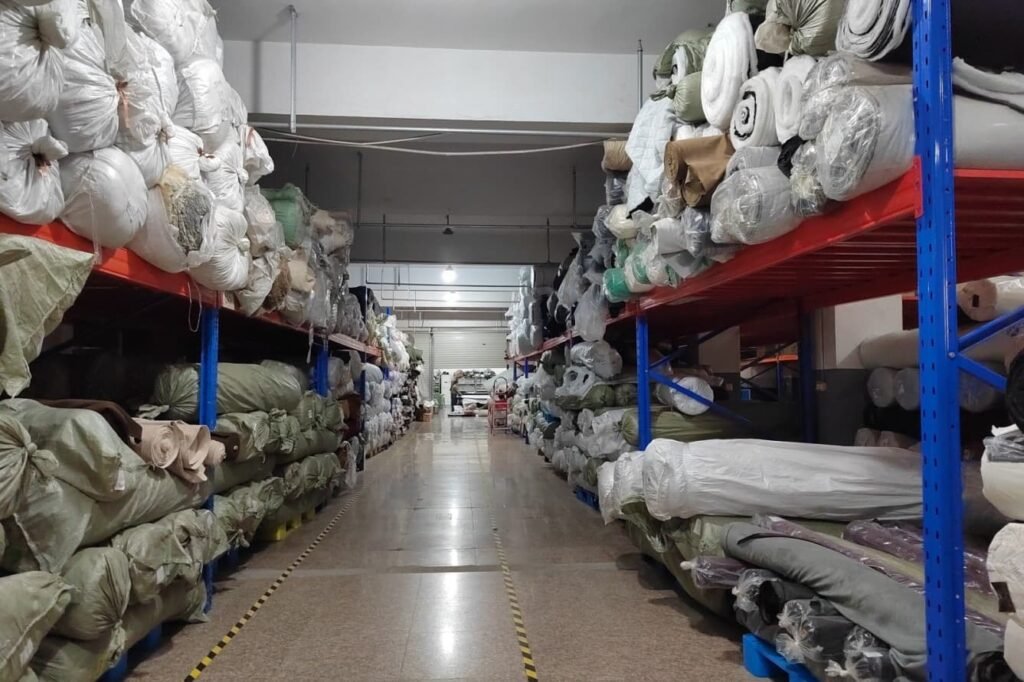
XZ Apparel maintains a separate Fabric Warehouse within the Dongguan manufacturing system. During a supplier review, the relevant evidence is not only rows of fabric rolls. Sourcing and technical teams should look for how approved materials remain connected to colour, lot, roll and production needs before cutting. The warehouse should be viewed as the physical link between material approval and controlled production issue.
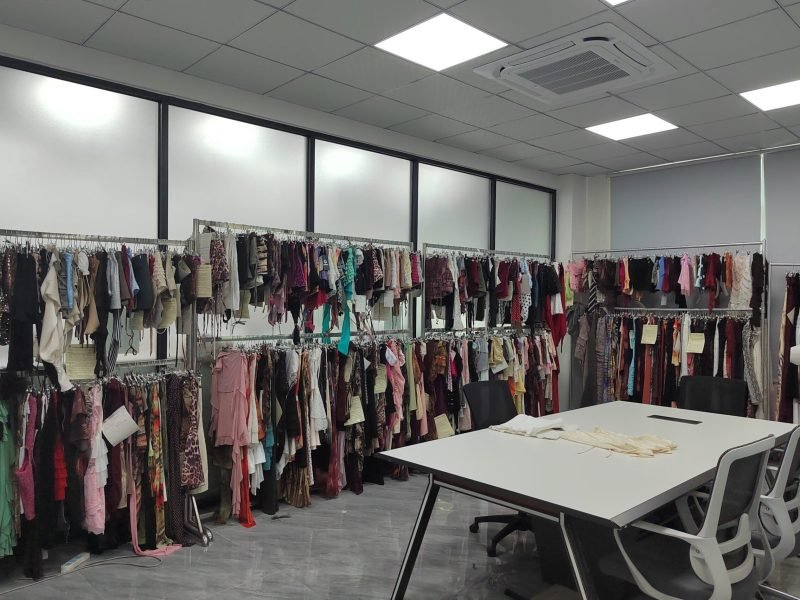
Trim Accessory Warehouse
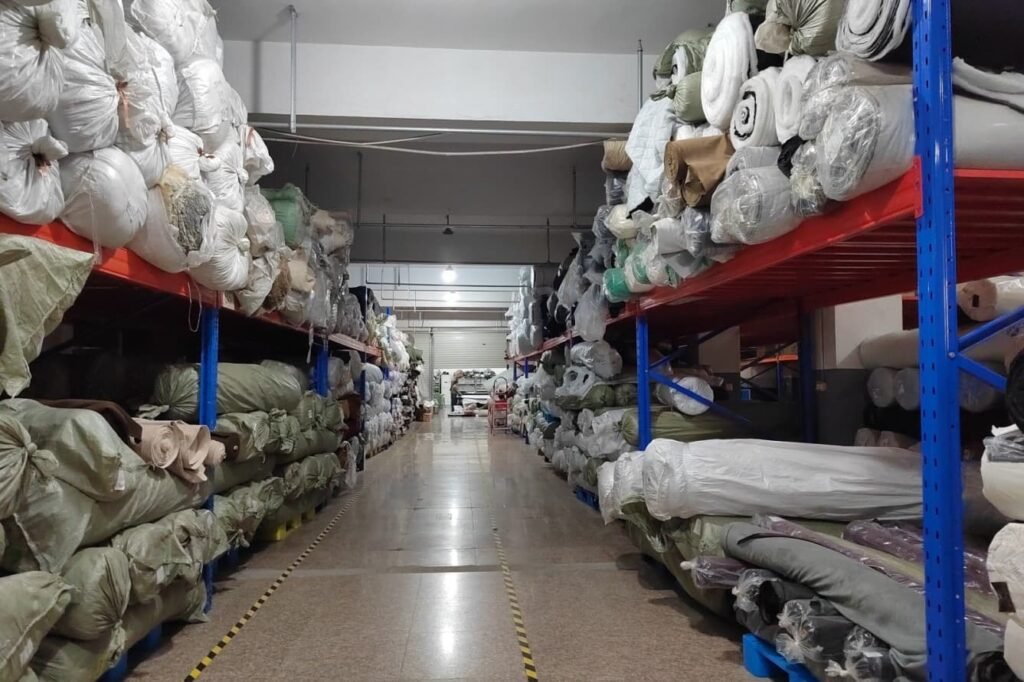
The separate Trim & Accessory Warehouse supports components with different identity requirements from fabric. Review should focus on how style, colour, size, specification and branding/version information remain visible before issue. For structured dresses, swimwear, activewear and shapewear, trims can influence fit, support and function, so component control deserves the same seriousness as main-fabric handling.
Fabric Inspection Machine

XZ Apparel has 1 fabric inspection machine used for incoming material control. A factory visit can connect the equipment with the decision process: what is observed, how the relevant roll is identified, what happens when a concern appears and how inspection status affects cutting release. The strongest proof is not the machine itself but the relationship between inspection and production action.
Pre-Shrink Machine
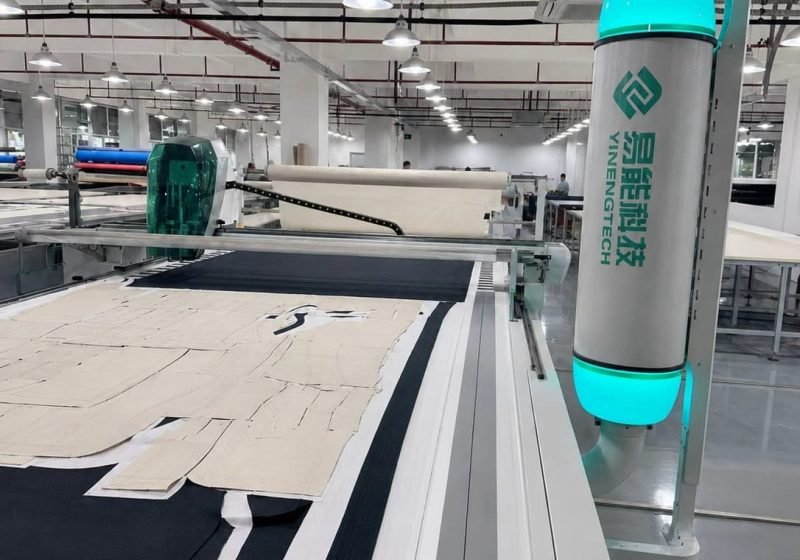
XZ Apparel has 1 pre-shrink machine for fabrics where conditioning is relevant. The operation should be shown alongside the reason for use, not as a universal treatment claim.
Relevant evidence can connect shrinkage or dimensional behaviour with the decision to condition material before cutting, supporting measurement stability where the product and fabric require the step.
Material Testing Area
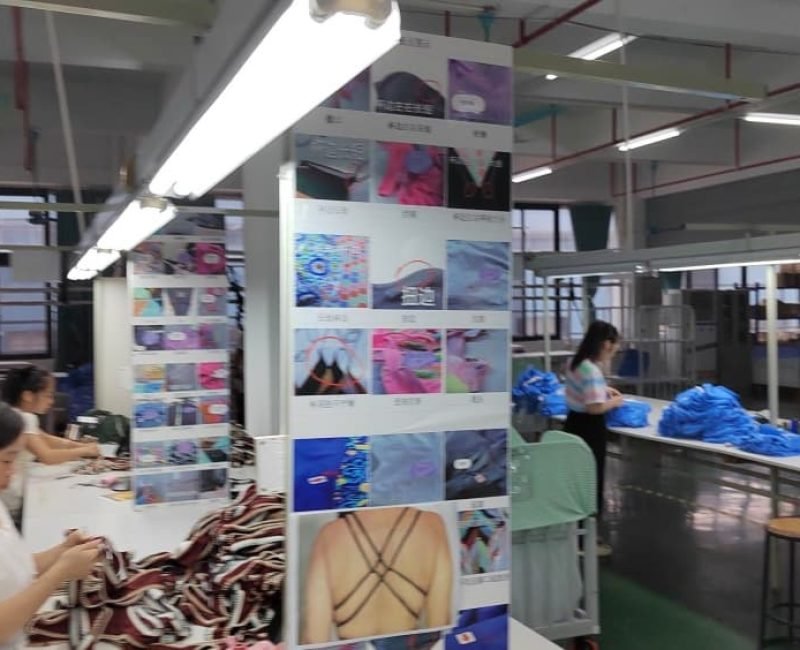
In-house production-control checks can cover GSM, shrinkage, colourfastness, crock/rubbing, washing, pilling, stretch/recovery, spirality, dimensional stability and selected process compatibility checks.
A technical review should connect each check with a garment decision. Formal brand or market reports remain within qualified third-party laboratory scope when required; factory testing supports production control rather than accredited-lab claims.
Cutting Release Handoff
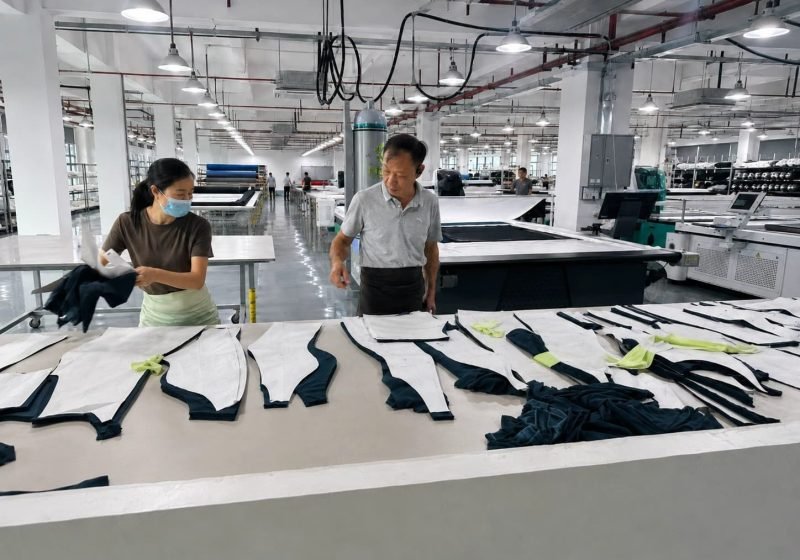
The most important warehouse evidence appears at the handoff into spreading and cutting. Approved fabric, current product information and production planning need to meet at the same point. XZ Apparel’s confirmed manufacturing flow moves from Fabric/Trim Receiving and Inspection/Testing into pre-shrink where relevant, then Spreading/Cutting, Cutting Inspection, Sewing/Inline QC and later quality gates. The handoff shows how material control becomes garment control.
Frequently Asked Questions About Fabric and Trim Warehousing
Start a Material and Production Readiness Review
A useful review starts with the materials and production decisions that can change quality, timing or bulk consistency.
Share enough project detail for the XZ Apparel team to understand the collection structure, identify critical fabric and trim dependencies, and connect them with sampling, approval, warehousing and production planning. The review is designed for production-ready fashion brands, retailers and sourcing teams managing commercial womenswear programmes rather than ready-stock or micro-order enquiries.
Please include:
- Style list, Tech Packs, reference images or approved samples.
- Fabric composition, GSM/weight, stretch, drape, colour or finish requirements where known.
- Critical trims such as zippers, elastic, labels, hardware, cups, boning, lining or branded components.
- Quantity by style and colour, plus any shared material plan across the collection.
- Target market, required testing or brand technical standards.
- Required delivery window and whether the programme is a new development, supplier transfer or reorder.
The team can then review material sourcing routes, incoming-control needs, critical approval gates and production-readiness dependencies before quotation or bulk planning moves forward.