Skip to content

Women’s Apparel Factory Visit and Audit Preparation
A factory visit should verify more than the size of a sewing floor. For women’s fashion programs, the strongest review connects product development, materials, fit, process ownership, production capacity, quality gates and records to the styles a brand plans to place.
- 6 sample rooms support pattern, sample and revision work before bulk approval.
- 80 sewing lines and around 640 Brother sewing machines support normal monthly production of about 180,000-200,000 pieces, depending on product mix.
- Core women’s categories include Dresses, Tops, Bottoms, Swimwear and Sets, with separate capability boundaries for established, partner-supported and development categories.
- Quality control follows Fabric Inspection → Pre-Production Meeting → Cutting Inspection → Inline QC → Measurement Inspection → 100% Finishing Inspection → Final Inspection → Packing Inspection.


Know What Each Factory Review Is Designed to Prove
A visit, supplier audit, inline inspection and final inspection answer different questions. Separating them prevents a sourcing team from using shipment inspection to replace supplier qualification, or a factory tour to replace production evidence.

Factory Visit
A factory visit verifies the operating reality behind a supplier profile. Walk the areas connected to the proposed program, meet the people responsible for development and production, and compare visible work with the stated product capability.
A useful visit should connect sample rooms, cutting, sewing, finishing, quality control, packing and material storage to real workflows rather than relying on a showroom presentation. Ask the host to identify the actual department or line proposed for your styles and note any area that cannot be verified during the visit.

Supplier Qualification Audit
A supplier qualification audit examines whether the organization can control the program repeatedly. The review should cover legal and factory identity, relevant women’s product experience, development resources, process ownership, capacity logic, quality records, testing controls, compliance documents and corrective-action practices. The result should support an approval decision, a conditional approval, a corrective-action request or a decision not to proceed. Record each finding against a defined requirement and owner so the result can feed supplier onboarding, corrective-action tracking and internal approval without reinterpretation later.

Inline Production Inspection
Inline inspection is order-specific. It checks work in progress against approved inputs such as the Tech Pack, PPS, measurement method, workmanship standard, approved fabric and trim references. It can reveal measurement drift, construction defects, shade issues or process variation while production is still running, but it does not prove the entire supplier organization is suitable for future programs.
Agree the inspection frequency and escalation rule before production starts, especially for fit-sensitive, stretch-dependent or construction-heavy women’s styles where defects can repeat quickly across a line.

Final Shipment Inspection
Final inspection evaluates finished goods near shipment readiness. Sampling level, AQL approach or a brand-defined inspection method should be agreed for the order. Final inspection can confirm workmanship, measurements, assortment, packing and visible defects, yet it cannot replace earlier checks on development capability, material controls, production ownership or whether the proposed capacity was realistic from the beginning. Keep shipment acceptance separate from supplier approval; a passed final lot cannot prove future development capacity, undisclosed subcontracting controls or long-term process ownership.
XZ Apparel Facts Worth Verifying During a Factory Review
Use factory facts as verification points, not advertising claims. Each item below can be tied to a physical area, operating record or production responsibility during supplier qualification.
Development System

XZ Apparel operates 6 sample rooms with 48 pattern makers and 60 sample makers.
A sourcing team can use the visit to examine how references or Tech Packs become patterns, how revisions are marked, how measurements are checked,
and how approved sample information moves toward PPS and bulk preparation instead of treating sample-room headcount as proof by itself.
Production Footprint

The manufacturing operation is based in Humen, Dongguan, across 3 production buildings with approximately 20,000 m² of production and operating space. A meaningful visit should connect the physical footprint to actual cutting, sewing, finishing, QC, packing and support functions, then confirm which areas would serve the proposed women’s collection. Ask which building and responsible team would own development, production, QC and packing for the proposed program.
Sewing Capacity

Approx. 80 sewing lines and around 640 Brother sewing machines support normal output of about 180,000-200,000 pieces per month, with output up to approximately 220,000 depending on product mix.
Capacity should be reviewed against style complexity, line allocation, current loading, materials and specialist-process bottlenecks rather than treated as one universal promise. Confirm the planned line group and the assumptions behind its available window.
Core Women’s Categories

Dresses, Tops, Bottoms, Swimwear and Sets are positioned as proven core categories. During a qualification visit, product relevance should be checked through real samples, construction details, fit requirements, material handling and production routes. Established or partner-supported categories should be reviewed under their own capability and ownership boundaries instead of being grouped as identical specialties.
Material Network
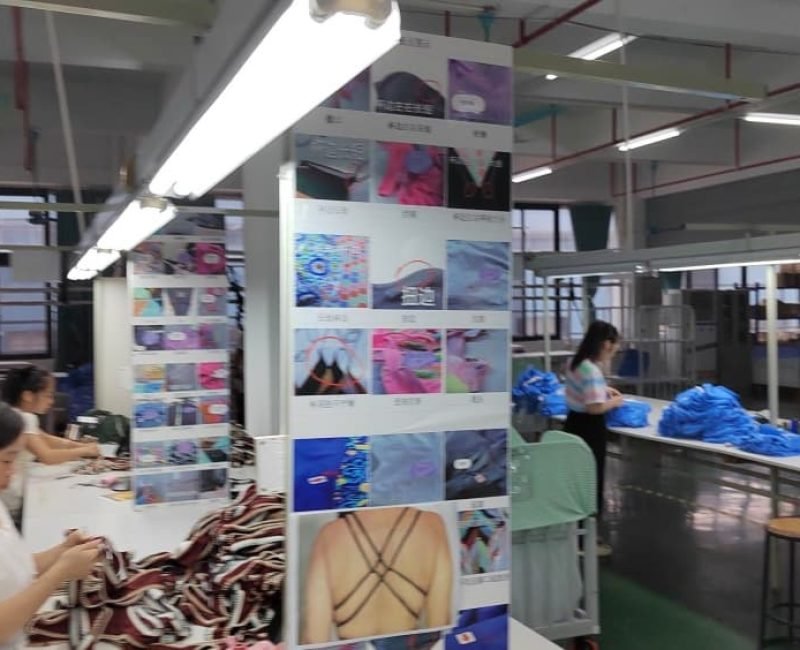
XZ Apparel regularly works with more than 30 fabric suppliers and uses the Humen/Dongguan and Guangzhou Zhongda sourcing ecosystem alongside trim and specialist-process resources. Audit value comes from seeing how a material specification, approval, incoming check and production decision are connected, not from the size of a supplier list alone. Review at least one approved material route from specification to incoming status.
Quality Flow
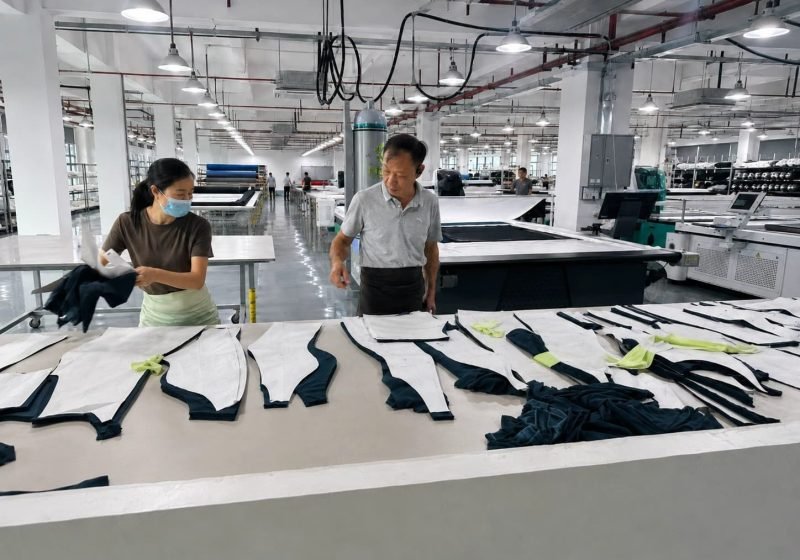
The operating quality flow covers Fabric Inspection, Pre-Production Meeting, Cutting Inspection, Inline QC, Measurement Inspection, 100% Finishing Inspection, Final Inspection and Packing Inspection. During a visit, review what approved input is used at each gate, what record is created, who owns the decision and how nonconforming work is isolated or corrected. Ask to follow one recent quality finding from detection through disposition and closure.
Set the Audit Scope Before Booking the Factory Visit
A focused visit starts with a defined decision. Select the review scope according to product risk, sourcing stage and internal approval requirements rather than trying to inspect every topic with equal depth.
Product Capability
Confirm whether the factory’s proven product work matches the planned assortment. For women’s fashion, review silhouettes, fit sensitivity, fabric behavior, lining, closures, support construction, stretch, embellishment and finishing details. A dress program, fitted top program and swim program require different evidence even when they share the same sewing floor, so the scope should list the actual styles being considered. Define one or two representative high-risk styles in advance and require the visit to trace their development, material and production route from input to release.
Production and Capacity
Review the proposed production route, line allocation logic, relevant machines, current workload, expected bottlenecks and any specialist processes. Capacity becomes meaningful only when connected to style count, piece quantity, fabric readiness, launch window and required process sequence. Ask how multiple styles would be scheduled together rather than accepting one monthly output number as proof of available capacity. Include the planned quantity, number of styles, color count and launch window in the review so line loading can be judged against a real program.

Quality and Testing
Define the quality inputs before arrival: Tech Pack, PPS or approved reference, measurement method, tolerance, workmanship standard, test requirements and inspection method. The visit should show how controls are used from fabric receipt through packing. Testing review should focus on what a result changes in material approval, pattern allowance, process selection or bulk release. Ask the quality team to demonstrate one recorded example where a failed measurement, fabric result or workmanship issue caused a clear containment, correction or re-approval action.
Compliance and Ownership
List the company, factory, certification, social-compliance and supply-chain ownership questions that matter to the program. Identify which processes must be performed at the audited site, which may use approved specialist partners and which require independent third-party testing or inspection. Clear ownership is more useful than an unrealistic claim that every process is physically in one building. State any non-negotiable site, social-audit, nominated-supplier or third-party testing requirements before travel so the visit does not discover approval barriers after technical review is complete.
Prepare Both Sides Before the Sourcing Team Arrives
A strong factory review starts before travel. The brand team should bring order-specific standards; the factory should prepare evidence that can be matched to those standards without searching for records during the visit.
Bring the Product Standard
Prepare the styles that matter to the qualification decision:
Tech Packs, sketches, size charts, key POMs, reference garments or approved samples, fabric and trim requirements, artwork, target colors, quantity by style/color, packaging needs, target market, quality requirements and launch timing. If the project is still at reference-image stage, mark which details remain open so the visit can distinguish development questions from final production requirements.
Add a one-page priority list naming the three to five decisions that would block supplier approval if they remain unresolved after the visit, such as fit control, process ownership, capacity allocation or certification scope.
- Identify high-risk styles and constructions before travel.
- Mark fit-sensitive POMs and tolerance expectations.
- List required material, wash, stretch, color or appearance checks.
- Bring a clear method for recording findings and responsible owners. Use the same terminology found in the Tech Pack and quality manual so notes can be compared directly after the visit instead of being rewritten into a second internal language.
Prepare the Factory Evidence
Ask the factory to organize records and responsible staff around the same project. Useful material includes the factory profile, legal and site information, relevant women’s product samples, development records, process route, capacity and line-allocation logic, material inspection examples, QC and measurement records, testing records, certification or audit documentation, packing controls and disclosed specialist-process ownership. Advance preparation allows the visit to verify evidence rather than spend most of the day collecting basic files. Where confidentiality limits access, agree in advance whether redacted records, anonymized examples, controlled screen review or on-site-only viewing will satisfy the sourcing team’s evidence requirement.
- Confirm which departments and production areas will be available.
- Request any restricted documents through an agreed confidentiality process.
- Ask for process ownership to be declared before the factory walk.
- Align the audit agenda with the people who own each decision. Confirm who will answer development, production, quality, testing, compliance and commercial questions so the review does not rely on one sales contact speaking for every function.
Follow the Product Flow Instead of Taking a Showroom Tour
Walk the route a style follows from material receipt to packed goods. Each stop should answer one operating question and connect visible work with an approved input, responsible owner and record.
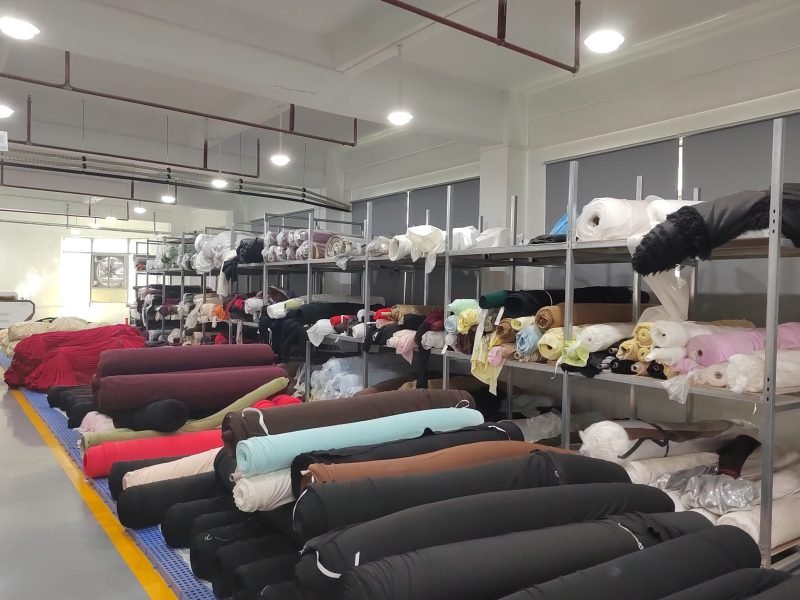
Fabric Receiving
Check how incoming fabric and trims are identified, stored and linked to purchase or style information. Look for lot separation, shade awareness, material status and protection from mix-ups. For sensitive women’s products, confirm that stretch, drape, opacity or surface appearance concerns are recognized before cutting rather than discovered after sewing has begun. Record how pending, approved and rejected materials are physically separated.

Fabric Inspection
Review how fabric inspection is performed, what defects are recorded and what happens when a roll or lot falls outside the requirement.
Ask how GSM, shrinkage, colorfastness, rubbing, washing, pilling or stretch/recovery information is used when relevant. A test list matters only when the result can change a sourcing, pattern, cutting or production decision. Ask to see one example of a result that changed material release status.
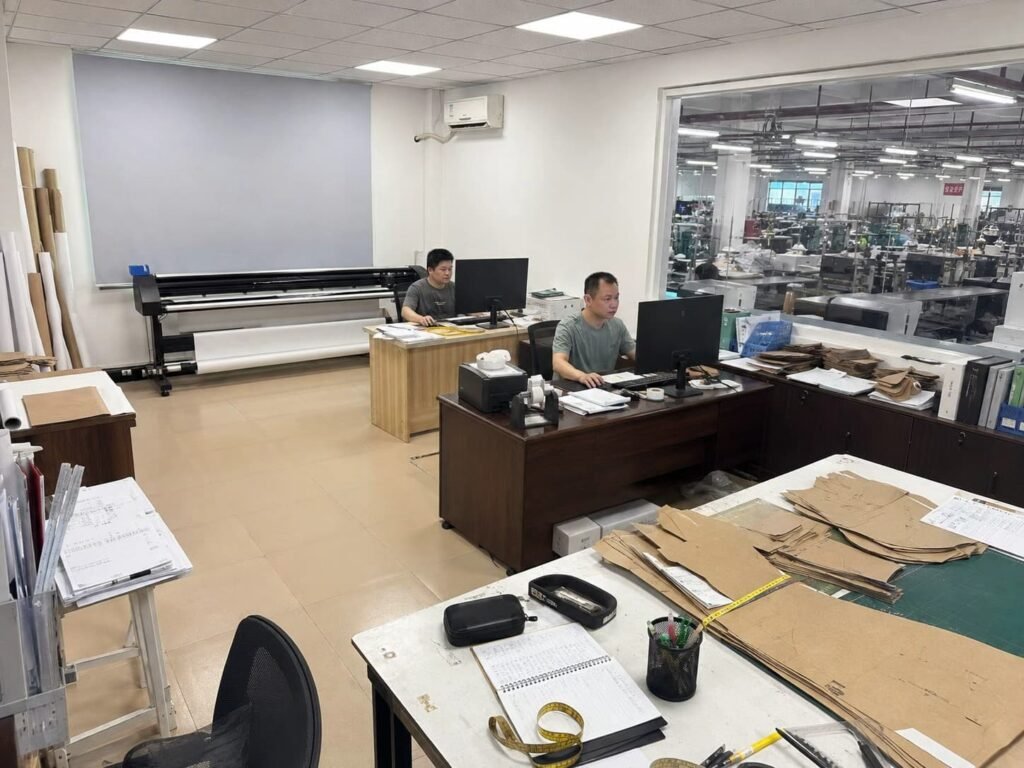
Pattern and Sample
Inspect the handoff from Tech Pack or reference to pattern, first sample, fit comments, revision and PPS. Look for version control, POM references, measurement methods and documented changes. Women’s silhouettes often depend on small adjustments in bust, waist, hip, torso length, rise, neckline or support construction, so development evidence should be product-specific. Compare the latest revision marking with the physical sample in hand.
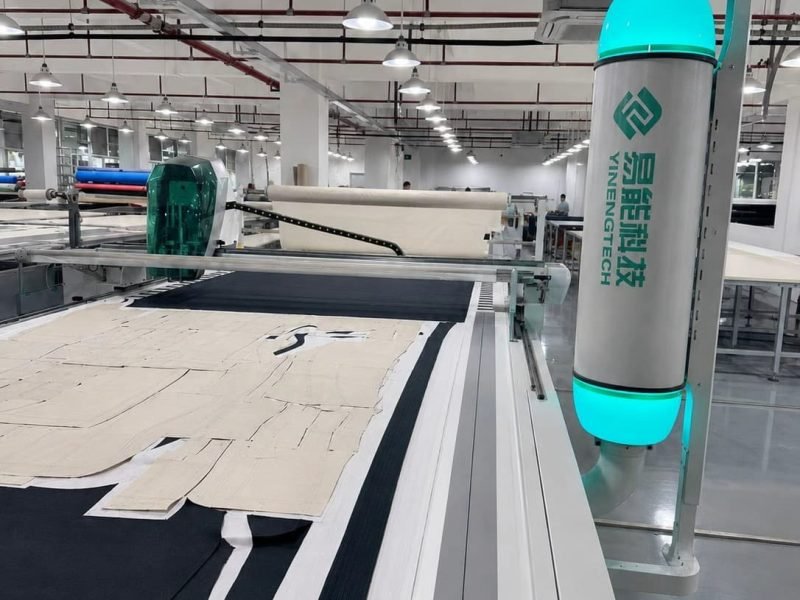
Cutting
Check marker and cutting preparation, lay control, shade or lot separation and identification of cut components.
Ask how fabric behavior, shrinkage allowance, stripe or print placement and directional surfaces are handled. Cutting accuracy has direct consequences for seam balance, garment symmetry, measurement stability and shade consistency across the finished assortment. Confirm how bundles remain traceable after components leave the cutting area.

Sewing
Observe the actual operation sequence, work-in-progress control, operator handling and in-line checks. Compare relevant machinery and skills with the proposed styles, especially when the assortment includes stretch fabrics, fine wovens, lining, boning, cups, concealed zips, binding, elastic, mesh or decoration. Production proof should match the product, not merely the number of operators. Ask how recurring defects are escalated back to line supervision and technical staff.

Finishing
Review thread trimming, pressing, appearance checks, stain control, shaping and any final garment treatment. Dresses and fashion tops can lose intended drape or structure through poor pressing or handling even when seams are technically correct.
Confirm how finishing standards are communicated and how rejected pieces are separated from approved goods. Review the visual standard used for pressing and final appearance.

Measurement and QC
Ask the team to demonstrate how garments are measured and which POMs are critical for the sample or bulk style. Review tolerance, frequency, recording and escalation. A strong measurement process should use an approved method, not personal interpretation, especially for fitted garments, swimwear, trousers, structured dresses and matching sets where component balance matters. Ask the inspector to demonstrate the agreed measuring method on one garment.

Packing
Check folding, labels, hangtags, polybags, size/color assortment, carton marks and packing verification against the order requirement. Matching sets need particular attention so top and bottom sizes, shades and components remain paired correctly.
Packing records should make errors traceable before cartons are closed and released. Verify how packing changes are approved and communicated to operators.

Warehouse and Release
Review how finished goods are identified, segregated by status and released for shipment.
Ask what prevents failed or pending goods from entering approved stock. Where final inspection or third-party review is required, confirm the release gate and record trail so shipping responsibility is clear before goods leave the site.
Confirm who signs the release and what evidence is retained.
Audit Women’s Product Risks by Category, Not Generically
Women’s apparel carries different engineering risks by silhouette and material. Use the matrix to decide where the factory visit should spend the most time for the planned assortment.
| Product Category | Main Audit Risks | What to Verify On Site | Useful Evidence |
|---|---|---|---|
| Dresses | Drape, lining, opacity, bust/waist balance, zips, boning/cups, decoration | Pattern revisions, sample fit, lining route, closure construction, measurement points, finishing | Approved samples, pattern/POM notes, inline records, real production details |
| Tops | Neckline/bust fit, stretch, sheerness, hems, trims, closures | Fabric behavior, neckline stabilization, seam/hem handling, fit POMs | Fabric test records, fit comments, construction samples |
| Bottoms | Waist/hip/rise, zip, pocket balance, stretch recovery, seam twisting | Pattern balance, rise/waist POMs, zipper/pocket operations, recovery control | Measurement records, approved sample, wash/stretch checks |
| Swimwear | Stretch/recovery, opacity, lining, elastic, coverage, support, colorfastness | Main fabric/lining pairing, elastic tension, torso fit, support details, recovery checks | Stretch/recovery records, samples, fit measurements, QC checks |
| Matching Sets | Component fit, shade consistency, size pairing, packing accuracy | Top-bottom fit relationship, shared fabric lot, paired packing, assortment control | Shade/lot records, paired samples, packing checks |
Verify Pattern, Sample and Fit Control Before Bulk Approval
A sample room should show how design intent becomes a repeatable production standard. For fashion programs, pattern accuracy, fit comments and version control deserve the same attention as sewing capacity.
Development Inputs Must Be Complete Enough to Make Decisions
Start by tracing one style from its original input. A Tech Pack should be reviewed for construction, materials, trims, artwork, size specification, POMs, tolerances and any missing information. A visual reference can start development, but the team still needs to define what cannot be read reliably from a photograph: fabric weight, stretch, handfeel, lining, internal support, closure type, finishing and target measurements. During the visit, ask who owns each missing decision and how it is recorded before a pattern is released.
XZ Apparel’s development system includes 6 sample rooms, 48 pattern makers and 60 sample makers. The meaningful audit question is not only how many people are present, but how work is routed among them. Review pattern markings, revision notes, sample comments, measurement sheets and PPS handoff where available. For fitted dresses, tops, bottoms and swimwear, small changes around bust, waist, hip, torso length, rise or leg opening can change fit materially. A reliable system should show how a fit comment becomes a controlled pattern or construction revision rather than an informal verbal change. Also review how fabric behavior is incorporated into fit decisions. The same pattern dimensions can perform differently when GSM, stretch direction, recovery, drape or lining changes. Ask whether material changes trigger a new fit review, measurement check or sample stage instead of being treated as a purchasing substitution. A reliable development route should make those triggers visible before bulk.


Sample Stages Should Remove Specific Risks
Treat each sample stage as a decision gate. A first sample may confirm silhouette, construction feasibility and general fabric direction. A revised sample should close identified fit or workmanship issues. PPS should represent the approved standard for bulk in the areas agreed by the project team. During the audit, compare the documented comment with the physical correction. A comment such as “tight at bust” is not enough unless the team can show what changed: pattern width, dart position, seam allowance, stretch requirement, cup/support structure or another measurable variable.
Normal sample timing at XZ Apparel is typically about 3-5 working days for simpler styles and 5-7 working days for complex styles; revision samples are typically around 2-3 working days and PPS around 4-5 working days, subject to materials, construction and approval readiness. Timing should never be reviewed separately from workload and input completeness. Faster sampling has little value if fit comments, fabric choices or construction decisions are not controlled for the next version. Check how comments are prioritized and closed. A useful revision record identifies the issue, the requested change, the person responsible, the new version and the verification result. For complex women’s styles, ask whether internal support, lining balance, closure behavior and construction sequence are reviewed together with external appearance. Isolated fit changes can create new sewing or finishing problems if the sample is not assessed as a complete garment.
Bulk Handoff Must Preserve the Approved Version
Before bulk, ask how the approved pattern, sample, material, trim, artwork, measurement requirement and workmanship standard are released to production. A strong handoff should prevent an earlier sample version, substitute trim or unapproved material from becoming the factory-floor reference. Review how the Pre-Production Meeting communicates critical points and how QC identifies the approved standard during cutting, sewing, measurement and finishing.
For women’s apparel, bulk consistency should be tested against category-specific risks. A lined dress may require checks on shell-lining balance, zipper behavior, hem level and bust support. Stretch bottoms may need waist, rise and recovery attention. Swimwear may need fabric/lining stretch balance, elastic tension, coverage and support control. Matching sets add shade and paired-size risks. Product-specific checkpoints are stronger evidence than a generic statement that “all garments are checked.” Review the production package used on the line and confirm that operators, line leaders and QC can identify the same approved version. Where a style has multiple colorways or material lots, ask how changes are logged so one approval is not assumed to cover a materially different fabric behavior. The handoff should also define which issues require line stoppage, technical review or renewed sample approval before production continues. Confirm how those escalation rules are documented in the production package and who has authority to release the style again after technical review.

Trace Fabric and Trims From Approval to Production Use
Material control affects fit, appearance, repeatability and timing. A factory visit should show how approved specifications remain connected to incoming lots, testing decisions, cutting status and finished-garment quality.

Audit the Material Specification Before Inspecting the Warehouse
Begin with the requirement, not the roll rack. Confirm fiber composition, knit or woven construction, GSM or weight range, stretch direction and recovery need, handfeel, drape, opacity, color, print or dye requirement, lining expectation and relevant wash or appearance concerns. Women’s fashion relies heavily on material behavior: a satin dress needs different control from a compressive swim fabric, a fitted jersey top or a structured woven bottom. The audit should therefore ask whether the material specification is detailed enough to predict the garment result.
XZ Apparel regularly works with more than 30 fabric suppliers and uses sourcing routes in Humen/Dongguan and Guangzhou Zhongda as well as trim and specialist-process networks. The useful factory-level question is how a supplier option becomes an approved production material. Review swatches, supplier specifications, internal checks, approval records and incoming status when available. If a different supplier or lot is introduced, ask what must be rechecked before cutting. Ask how shade, handfeel, width, weight and appearance are compared with the approved reference and how material status is shown to cutting. For a multi-style collection, review whether shared fabrics are intentionally consolidated across styles and whether a change to one lot could affect several SKUs at once. Material traceability should make those cross-style dependencies visible rather than relying on memory.
Use Testing to Change a Production Decision
Review relevant in-house checks such as fabric inspection, GSM, shrinkage, colorfastness, crock/rubbing, washing, pilling, stretch/recovery, spirality and dimensional stability. For printing or heat-related processes, print adhesion and heat resistance may also be relevant. Do not treat every test as mandatory for every style. The audit should identify which risk each check controls and what action follows an out-of-range result.
Shrinkage, for example, can affect pattern allowance and finished measurements. Poor stretch recovery can affect fitted tops, bottoms or swimwear after wear. Colorfastness and rubbing results may change dye, print or wash decisions. Opacity may trigger lining or fabric changes even if the fabric technically passes another property. Connecting the result to a decision shows that testing is part of product engineering rather than a display of equipment. Ask who reviews results, who has authority to hold material and how a failed result is communicated to merchandising, pattern and production teams. If a brand requires a third-party method or formal report, identify the external test before bulk and confirm how the sample is selected. Internal production-control testing and accredited external reporting should remain separate in both records and claims. Review the sample-selection chain and report-routing responsibility so an external result can be traced back to the exact fabric, color, style or production lot it represents.

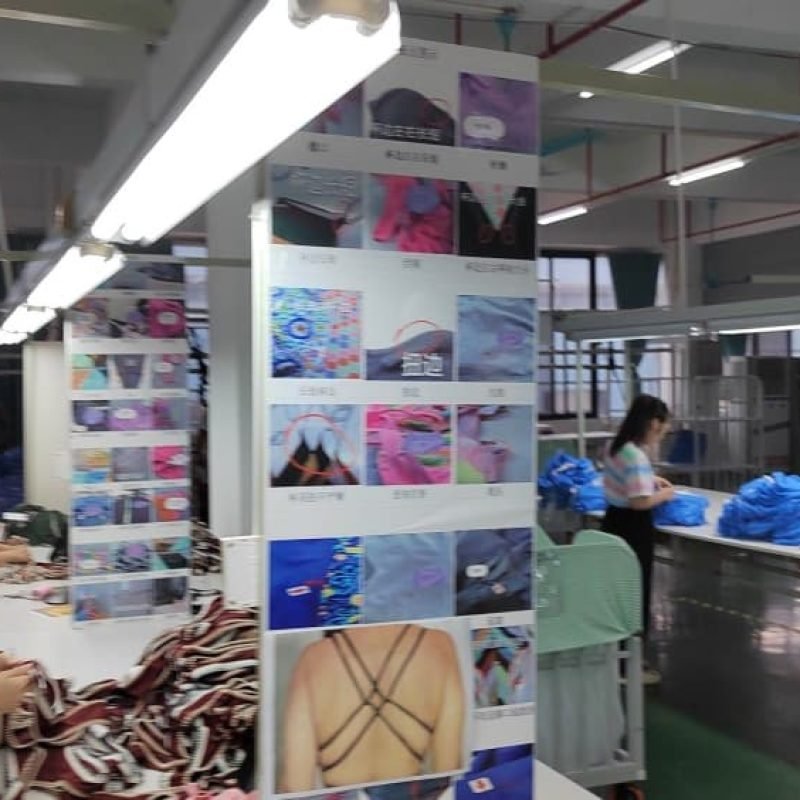
Check Trim and Specialist-Process Dependencies
Trims can create hidden MOQ, lead-time and consistency risks. Review zips, elastic, cups, boning, hooks, labels, branded hardware, lace, mesh, packaging components and decoration according to the planned styles. Confirm who supplies them, what is approved before bulk, how replacement lots are handled and whether the item has a supplier or process minimum that differs from garment MOQ.
For embroidery, certain printing, knitwear and specialized fabric treatments supported through long-term specialist partners, the audit should examine the handoff: approved artwork or standard, sample or strike-off approval, production transfer, return inspection and finished-garment QC. Partner use is not the core risk. Undisclosed ownership, unclear standards and weak return control are the larger risks. Ask to trace one partner-supported process from artwork or technical standard through sample approval, bulk instruction, transfer document, return inspection and final garment release. If the process can alter dimensions, handfeel, shade or durability, define what is rechecked after return. Also confirm whether partner lead time or minimum quantity can become the true commercial constraint for the garment even when sewing capacity is available. For a multi-style program, compare partner capacity and approval lead time with the internal sewing plan so external work does not become an invisible schedule gap.
Make Production Ownership Visible Before Approving the Supplier
A mature sourcing program should know who performs each process, who controls the standard and who releases the finished garment. XZ Apparel separates core in-house manufacturing, specialist partner processes and independent third-party services.
Core In-House Control
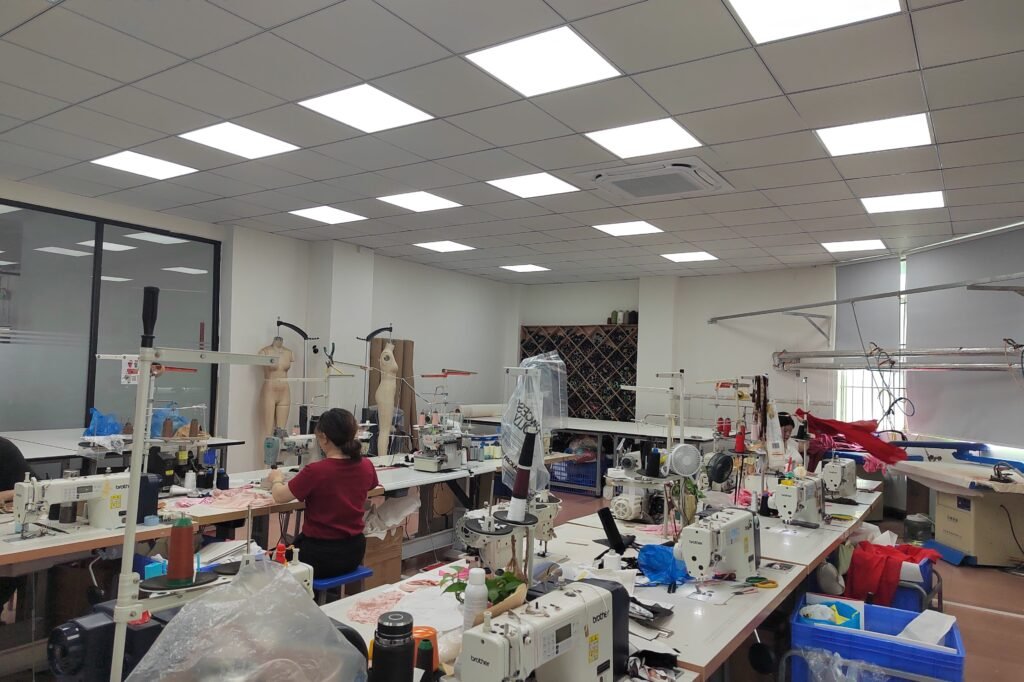
Centralized product development, pattern and sample work, cutting, core garment sewing, QC and packing form the main in-house control route for XZ Apparel. During an audit, verify the people, areas and records that support those functions rather than assuming an organization chart proves execution. The goal is to see how approved product information moves through the factory and who is accountable when a standard changes. Ask for one recent example of how an approved revision was communicated from development into cutting, sewing and QC without relying on verbal memory.
Long-Term Specialist Partners

Knitwear, embroidery, certain printing and specialized fabric treatments may use long-term specialist partners. Review who performs the operation, what input leaves XZ Apparel, what sample or strike-off must be approved, how bulk standards are transferred, what record returns with the work and how the garment is checked when it comes back. Clear partner management is preferable to describing external capabilities as factory-owned equipment. For every partner-supported step, record the executing party, approval gate, transfer document, return inspection and final release owner in the audit notes.
Independent Third Parties

Formal third-party testing, inspection or audit services are separate from manufacturing ownership. When a market, retailer or quality agreement requires an external report, confirm the responsible laboratory or inspection organization, required method, sample source and release condition. An independent report should not be described as an in-house accredited test, and a partner certificate should not be presented as the certificate of the audited factory. Confirm the report number, tested sample, issuing organization and decision owner whenever third-party evidence is used for supplier approval.
Test Capacity Against Your Style Mix and Delivery Window
Capacity should be reviewed as an allocation problem. Product complexity, current loading, materials and specialist processes can change achievable output even when total factory scale remains constant.
Relevant Lines and Skills
Start with the product mix rather than total line count. XZ Apparel operates approximately 80 sewing lines and around 640 Brother sewing machines, but a sourcing team should ask which lines, operators and machines are relevant to the proposed garments. Fine woven dresses, stretch products, structured styles and basic casualwear do not consume line time in the same way.
Review the most complex operation in the proposed assortment and confirm that enough trained operators and suitable equipment are available on the planned line.
Current Loading and Allocation
Ask how line loading is planned for the requested production window and whether the quoted schedule assumes reserved capacity, normal loading or a future opening. Normal XZ Apparel monthly output is approximately 180,000-200,000 pieces, with output up to around 220,000 depending on product mix. A monthly total should never be interpreted as immediately available capacity for one program. Ask for the intended production window, line-loading assumptions and any competing commitments that could change the allocation before the planned cut date.
Material and Process Bottlenecks
Check whether fabric, trims, printing, embroidery, special finishes or other partner-supported operations can keep pace with sewing. A delayed zipper, branded trim or approved process can become the true bottleneck even when sewing capacity is available.
Request a route and milestone view for the highest-risk styles in the collection rather than a single factory-wide number. Include approvals and incoming dates for the slowest trim or partner process so the schedule exposes non-sewing constraints before production starts.
Production Readiness Gate
Bulk lead time is typically around 25-35 working days after fabric and trims are ready, PPS is approved and production details are confirmed. During qualification, ask what evidence marks each prerequisite as complete and what happens when one is late. A realistic capacity review connects development readiness, material readiness and line allocation before any delivery commitment is treated as firm. Record the exact readiness assumptions behind the proposed timeline so later changes can be traced to material, approval or capacity events rather than an unexplained delay.
Audit Quality Gates From Fabric Receipt Through Packing
Quality becomes repeatable when every inspection has an approved reference, an owner, a record and a response to failure. Follow the control sequence instead of asking whether the factory has “strict QC.”
Fabric Inspection
Confirm how incoming fabric is identified, inspected and released. Review defect recording, lot or shade separation and any relevant internal checks before cutting.
For women’s programs using satin, mesh, stretch knits, swim fabrics or lining combinations, material behavior can change fit and appearance before a sewing defect even exists. Ask how failed or pending lots are blocked from cutting release.

Pre-Production Meeting
The meeting should translate approved product information into production instructions. Review who attends, which version of the Tech Pack or PPS is used, which construction and measurement points are highlighted, and how fabric, trims, artwork, packing and known risks are communicated. A useful PPM creates one shared production standard before the line starts. Check whether responsibilities and escalation points are recorded, not only discussed verbally.

Cutting Inspection
Check cut-piece accuracy, component identification and lot/shade control. Review how directional fabrics, print placement, stripes, nap or shrinkage allowance are handled when relevant. Problems created at cutting can appear later as twisted seams, uneven hems, mismatched panels or measurement variation, so correction should happen before sewing adds value to defective components. Review how rejected bundles or components are identified and isolated.

Inline QC
Inline control should identify recurring workmanship or assembly problems while there is still time to correct the process.
Ask what defects are recorded, how frequently checks occur, who has authority to stop or correct work and how a pattern, machine or operation issue is escalated when defects repeat across multiple pieces. Ask for one example where inline data led to an operation or machine correction.

Measurement Inspection
Review the measurement method, critical POMs, tolerance and recording frequency for the actual product. Fitted dresses, swimwear, trousers and matching sets can require different focus points. Ask the inspector to measure a garment using the agreed method so the sourcing team can see whether the factory and brand are interpreting the specification consistently. Record any method difference immediately because inconsistent measuring can create false pass or fail decisions.

100% Finishing Inspection
Finishing inspection should cover visible workmanship, loose threads, stains, pressing, appearance, component completeness and product-specific details before goods proceed. Every piece passing through finishing does not mean every property has been laboratory tested; the control is a garment-level finishing check designed to remove visible defects and incomplete work before final release. Confirm how repaired garments are rechecked before they re-enter approved flow.

Final Inspection
Final inspection should follow the agreed brand or order method, such as AQL 2.5, AQL 4.0, a brand-defined standard or 100% inspection where agreed. Confirm sampling, defect classification, measurement approach, result recording and shipment release responsibility. The inspection method should be clear before production reaches the shipping stage. Confirm who can authorize shipment after a failed or conditional result.
Packing Inspection
Check labels, size/color assortment, folding, polybags, hangtags, carton marks, ratios and any paired-garment requirements. For sets, confirm that components remain matched by size, color and approved pairing. Packing inspection should prevent correct garments from becoming incorrect shipments through assortment or labeling errors at the last stage. Check carton and assortment verification against the final approved packing instruction.
Use Fabric Tests to Make Better Production Decisions
A useful test changes an approval, construction or production choice. Review the method, sample context, acceptance requirement and action path rather than collecting a long list of laboratory names.

GSM and Weight
GSM helps confirm whether a fabric sits within the intended weight range and can explain differences in opacity, drape, structure or handfeel.
For fitted tops, swimwear, dresses and bottoms, a meaningful deviation may affect pattern behavior or perceived quality.
Record the tested material lot and compare the result with the approved specification before deciding whether cutting can proceed.
Ask how tolerance is defined, whether multiple rolls or lots are sampled, and what happens when a result sits near the acceptance boundary.

Shrinkage and Dimensional Stability
Shrinkage affects finished garment measurements and can change pattern allowance, wash method or material approval. Review how the specimen is prepared, washed or treated, measured and recorded. A result outside the accepted range should trigger a defined decision before bulk cutting. Dimensional stability is particularly important when fit tolerances are tight or when different components must remain aligned after care. For lined or multi-component garments, confirm whether shell, lining and elastic components are assessed together when differential shrinkage could distort fit or hem balance.

Colorfastness and Rubbing
Colorfastness and crock/rubbing checks help identify risks of color transfer, fading or staining.
Dark colors, contrast combinations, light linings and multi-material garments deserve careful review.
The factory team should be able to explain which material or process decision changes after a poor result, and when independent third-party testing is required by the brand or target market.
Contrast combinations should also be reviewed for migration or staining risk after pressing, packing or storage when dark and light components touch each other.

Washing and Pilling
Wash and pilling checks help predict appearance changes that may not be visible on fresh fabric. Review the style’s expected care route, fabric construction and surface sensitivity before selecting the test.
A soft brushed fabric, jersey or textured knit may require a different interpretation from a smooth woven. Record the decision path if the appearance falls outside the approved reference. Ask whether the team compares tested appearance with an agreed swatch, sample or rating standard so acceptance is not based on memory alone.

Stretch and Recovery
Stretch percentage alone does not prove performance. Fitted tops, bottoms, active styles and swimwear depend on recovery, directional stretch and interaction with lining, elastic and pattern negative ease. Ask how stretch and recovery are checked and how the result affects fit, elastic tension, pattern dimensions or fabric approval. Repeated deformation can be more important than one initial stretch reading. Review the fabric direction used in cutting and confirm whether recovery expectations are linked to the actual garment panel orientation and intended body area.

Print and Heat Performance
Print adhesion and heat resistance matter when artwork, transfers or heat-applied components are used. Review process temperature, material compatibility, appearance after treatment and any wash or flex requirement. For partner-supported printing or special processes, inspect strike-off or sample approval and the return QC step so the approved appearance remains connected to bulk garments. Record the approved process settings or sample reference and confirm how bulk pieces are checked for edge lifting, cracking, distortion, scorching or appearance change.
Check Certification Scope Instead of Counting Logos
A certification or material document is useful only when the entity, site, scope and validity match the sourcing requirement. Keep factory certification, project support, material documentation and third-party reports separate.
SMETA Records
SMETA is recorded in XZ Apparel’s company/factory facts. During qualification, request the relevant current documentation through the agreed review process and confirm the entity, production site, audit scope and date. A sourcing team with its own social-compliance platform or approval workflow should state those requirements before the visit so the correct records can be prepared. If the brand requires a specific platform upload, corrective-action status or follow-up audit, include those deliverables in the pre-visit document request.
ISO Records
ISO is also recorded as a company/factory fact. The useful audit step is to review the certificate scope and entity rather than displaying the logo alone. If a brand requires a particular standard, issuing body, validity period or factory-site match, specify the requirement in advance and confirm the document against the factory being evaluated. Record any required standard version or certificate scope in the qualification checklist so an adjacent but irrelevant certification is not accepted accidentally.
BSCI Project Support
BSCI should be presented as project-based support rather than an automatic blanket certification claim. If a retailer or sourcing program requires BSCI-related onboarding, share the required platform, site and approval conditions before scheduling the review. The qualification team can then determine what existing information is available and what additional action or audit coordination may be needed. Treat the outcome as a project requirement with its own owner and timing rather than implying that one generic factory statement satisfies every retailer program.
Material and Third-Party Documents
GRS or OEKO-TEX-related documentation may belong to qualified material suppliers or specific materials and should not be reassigned to the XZ Apparel factory. Formal third-party laboratory or inspection reports also belong to the issuing organization and tested sample.
During audit preparation, list exactly which material, test or market document is required so scope can be matched correctly. Link each document to the actual material, supplier, process or tested sample and keep expiry or validity dates visible during approval review.
Ask for Evidence That Matches Each Supplier Claim
Factory scale, product skill, quality and testing need different forms of proof. A useful evidence pack lets a sourcing team connect each claim to a real place, sample, record or approved document.
Factory and Line Reality
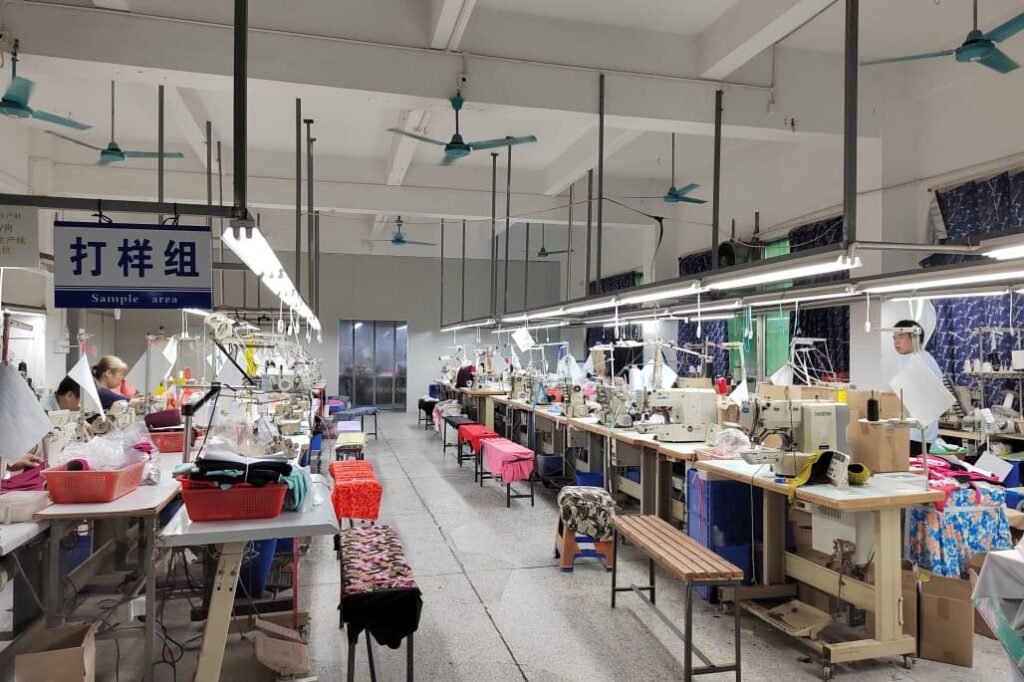
Use real production areas, relevant sewing lines, cutting, finishing, QC, packing and warehouse locations to confirm that the operating footprint exists. Photographs are useful orientation evidence, but the visit should still match the visible area to the product route and responsible team. A large sewing floor alone does not prove fit development, testing or quality performance. Ask which area and records would be available for the exact program under review.
Pattern and Sample Evidence
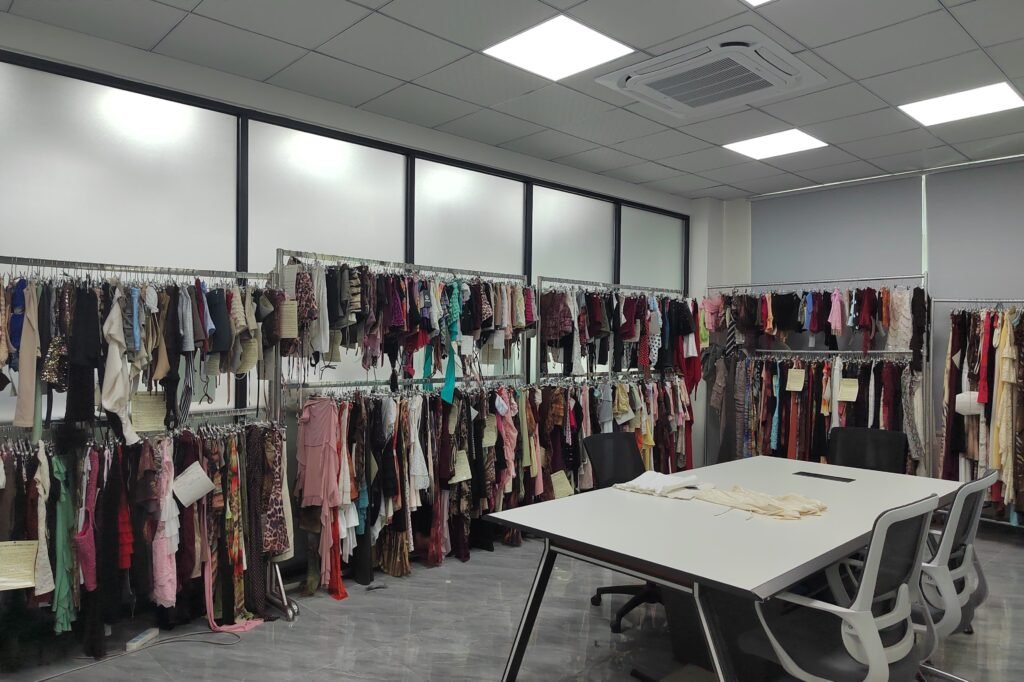
Review real pattern work, POM references, revision markings, fit comments, samples and PPS-related records where confidentiality allows. XZ Apparel’s 6 sample rooms, 48 pattern makers and 60 sample makers are more meaningful when the sourcing team can see how version changes and measurements are controlled for relevant women’s styles. Compare at least one documented revision with the corresponding physical sample or pattern mark.
Material and Testing Records
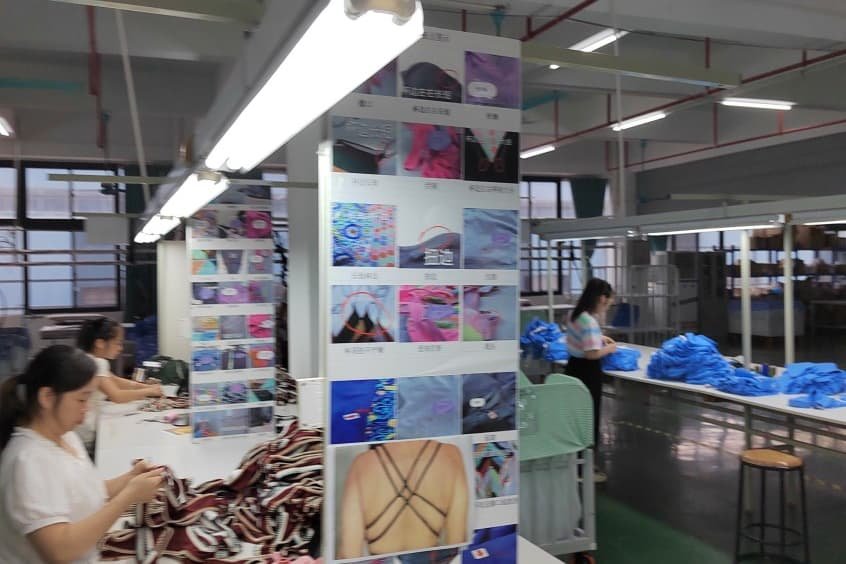
Ask for examples of fabric inspection, GSM, shrinkage, colorfastness, rubbing, washing, pilling, stretch/recovery, spirality or dimensional-stability records relevant to the product.
Test evidence should identify the material or sample context. An industry explanation of a test method should never be presented as a measured XZ Apparel result. Check the record date, material context, method and resulting production decision.
Production and WIP Evidence

Observe work in progress, line boards or production-control information that can show how styles move through cutting, sewing, finishing and QC.
The goal is not to request confidential data from unrelated brands, but to understand the control method, line allocation logic, status visibility and response when production falls behind or a quality issue appears. Ask how status changes are escalated and who owns recovery planning.
QC and Measurement Records
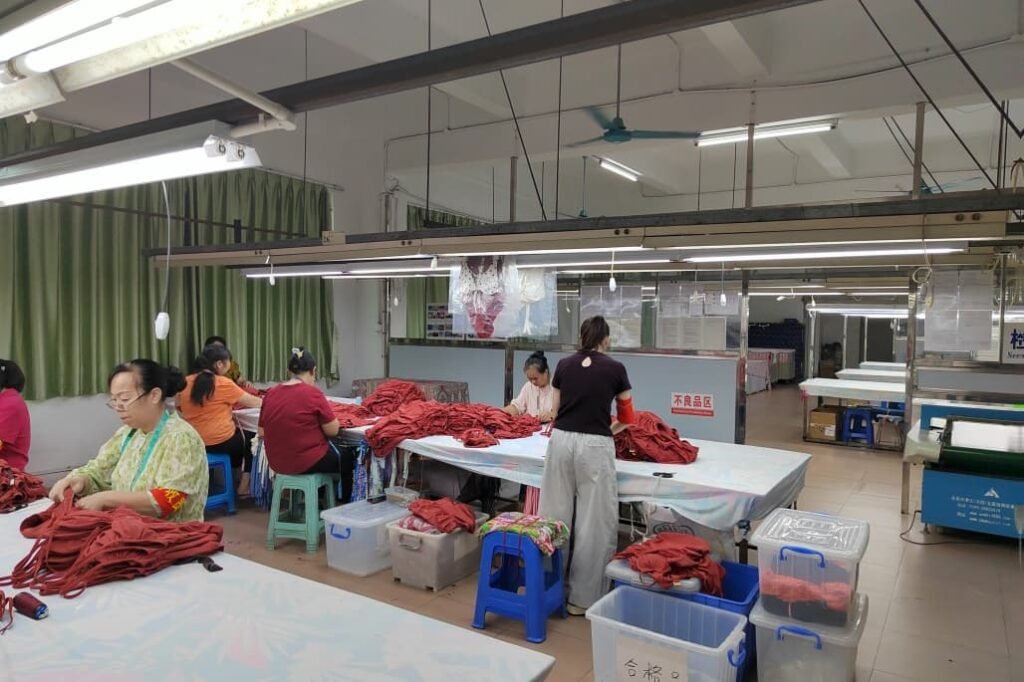
Review measurement sheets, defect records, inline findings, finishing checks, final inspection examples and corrective-action trails where available. Ask how the record links to the approved product version. Strong evidence should show both the check and the decision that follows when a result fails, rather than only a completed checklist with no escalation path. Confirm whether repeat defects trigger root-cause or process review before final inspection.
Packing and Warehouse Evidence

Inspect label verification, packing instructions, paired-set controls, carton markings, finished-goods status and warehouse segregation. For large multi-style programs, packaging errors can create retail problems even when sewing quality is acceptable. Evidence should show how approved, pending and rejected goods remain identifiable until release for shipment. Verify how mixed styles, colors and sizes remain traceable through final storage.
Treat Audit Red Flags as Decision Triggers, Not Footnotes
A sourcing team should agree in advance which findings require clarification, corrective action or rejection. The most serious risks often involve identity, hidden ownership and missing production standards rather than cosmetic presentation.
Unclear Legal or Site Identity
Stop and reconcile any mismatch between the contracting entity, factory location, certificates, bank or commercial documentation and the site being visited. A brand cannot approve a supplier confidently when it is unclear which legal or manufacturing entity is responsible. Exact legal-entity fields should be verified from current documents rather than inferred from marketing material. If any entity differs, pause qualification until the relationship among contracting company, production site and invoicing party is documented and internally accepted.
Hidden Subcontracting
Undisclosed outsourcing creates traceability, quality and compliance risk. Ask where cutting, sewing, finishing, knitting, embroidery, printing, washing or special treatments are performed for the planned styles. Specialist partners can be acceptable when ownership is declared, standards are transferred, approvals are controlled and finished garments return through defined QC gates. Request the partner name or controlled identifier, physical location, approved process scope and return-control record when the outsourced step is critical to product quality or compliance.
Unsupported Capacity Claims
Treat a large monthly output figure cautiously when there is no clear link to relevant lines, product mix, current loading or the requested delivery window. Ask for the proposed allocation logic and identify bottlenecks outside sewing.
Capacity should be realistic for the actual assortment, not a factory-wide maximum applied automatically to every project. Ask for allocation assumptions tied to the planned styles, quantities and dates, then compare them with material readiness and process capacity before accepting the timeline.
No Approved Production Standard
Quality control cannot be repeatable without approved inputs. If the production team cannot identify the current Tech Pack, PPS or approved sample, measurement method, material standard and workmanship requirement, “strict QC” has no stable reference. Resolve version control before assuming final inspection can catch every upstream mistake. Require one controlled master version and make sure development, production and QC teams can independently point to the same approved reference during the visit.
Certification Scope Mismatch
A certificate logo is not enough. Confirm the entity, site, scope, validity and whether the document belongs to the factory, a material supplier, a specialist partner or a third-party laboratory.
A material document should not be used to imply factory certification, and an independent test report should not be presented as an in-house accredited capability.
Any ambiguity around certificate ownership, tested product or production-site scope should remain open until the issuing document can be verified.
No Corrective-Action Trail
Every factory experiences defects or delays. Greater concern arises when recurring problems leave no record of cause, containment, correction or verification. Ask for an example of how an issue moved from finding to corrective action.
A clear trail shows whether the organization can learn from failures instead of relying on final inspection to sort problems repeatedly. A usable CAP trail should show the finding, immediate containment, root cause where appropriate, corrective action, responsible owner, due date and evidence of verification.
Score Supplier Qualification Without Hiding Critical Failures
Use a scorecard to organize findings, but keep critical issues visible. A strong average should never cancel a serious problem involving legal identity, undisclosed production ownership, safety, compliance or the absence of an approved production standard.
| Qualification Area | Suggested Weight | Evidence to Review | Decision Note |
|---|---|---|---|
| Product capability | 15% | Relevant women’s samples, construction, fit/product route | Must match planned assortment |
| Development & sampling | 12% | Pattern, sample revisions, PPS handoff, POM control | Confirm repeatable version control |
| Materials & trims | 10% | Specs, incoming checks, lot/shade control, approvals | Flag sourcing or MOQ dependencies |
| Production ownership | 10% | In-house/partner/third-party map, transfer controls | Hidden ownership is critical |
| Capacity & planning | 10% | Relevant lines, loading, milestones, bottlenecks | Judge against actual program |
| Quality system | 15% | Inline, measurement, finishing, final, CAP records | Approved standard required |
| Testing | 8% | Relevant test records and decision rules | Scope must match product risk |
| Compliance & documents | 10% | Site/entity/scope-valid records | Critical mismatches cannot be averaged away |
| Communication & traceability | 5% | Owners, escalation, version/status records | Confirm decision responsibility |
| Commercial fit | 5% | MOQ structure, timing prerequisites, trade terms | Review project-specific conditions |
Use a Representative Multi-Style Order to Stress-Test the Audit
A real qualification decision becomes clearer when the audit is applied to a collection rather than a single sample. The scenario below reflects the scale and complexity of recurring fashion programs without disclosing a brand identity.

Order Profile: 18 Styles and 36,000 Pieces
Consider a representative women’s collection containing 18 styles and 36,000 pieces: 7 dresses, 4 tops, 3 bottoms and 4 matching-set styles across several colorways. The assortment uses six main fabric and trim routes, including stretch jersey, woven dress fabric, lining, mesh or lace details, zippers, elastic and selected decoration. Average quantity is large enough that one perfect sample cannot be treated as proof of bulk consistency.
Before the visit, the sourcing team groups the 18 styles by production risk rather than reviewing every SKU equally. High-risk styles include fitted or lined dresses, garments with boning or cup support, styles using stretch/lining combinations, and sets requiring paired shade and packing control. Lower-risk styles still remain in scope for capacity and quality, but the audit spends more time where one error can affect fit, appearance or a larger share of the order. The team also selects one style that looks simple but uses a shared fabric or trim across several SKUs, because a single material decision can create a collection-wide risk. Before travel, critical POMs, approval status, required tests and partner-supported processes are marked on a one-page style matrix so the factory visit can spend time on evidence rather than reconstructing the order structure.
Audit Route: Development, Material and Production Gates
The review starts with three representative styles: one structured dress, one stretch top and one matching set. For each, the team traces Tech Pack or reference input through pattern, sample comments, fabric approval, trim approval, PPS, cutting instructions, sewing operations, measurement control and packing requirements. The aim is to confirm whether the same operating system can handle variety across the full 18-style order.
Capacity is reviewed by style group instead of dividing 36,000 pieces by monthly output. The sourcing team asks which lines would run woven dresses, which would run stretch styles, how sets would be paired, and which decoration or trim suppliers create external lead-time dependencies. Material readiness and PPS approval dates are placed next to line allocation so the proposed production window can be judged against actual prerequisites. The audit then samples records from each route: one pattern revision, one incoming material control, one inline defect response, one measurement record and one packing instruction. The objective is not to collect every record for all 36,000 pieces, but to test whether the same control logic appears consistently across different product families and departments. Any break in version or status traceability becomes a specific finding with an owner. The team should also note whether the break affects only the sampled style or indicates a system issue that could extend across the wider collection.


Decision Output: Approve the System, Not a Presentation
The audit closes with findings assigned to owners and dates. A minor documentation gap may become a corrective action, while an undisclosed partner process, unresolved certification-scope issue or missing approved production standard would require a stronger response. A representative pilot or controlled first bulk stage can then focus on the highest-risk product groups while the remaining collection follows the agreed approval gates.
For a program of 18 styles and 36,000 pieces, successful qualification means the sourcing team can see how product variety is controlled without losing version, material, measurement or ownership traceability. Factory size supports the program only when development, quality and production controls can operate across the collection at the same time. The sourcing team can then classify findings into critical, major and minor groups and decide whether corrective action must close before PPS, before cutting or before shipment. A pilot can be concentrated on the styles with the highest fit, material or ownership risk rather than spreading attention equally across all 18 styles. That approach turns the audit into a production decision tool instead of a one-day inspection event. Before final approval, the team should confirm which findings are closed by evidence, which require physical verification and which remain conditions on the first bulk order.
Turn Audit Findings Into Controlled Production Decisions
A factory audit should end with owners, deadlines and release conditions. Avoid closing the visit with a long issue list that has no connection to sample approval, pilot production or supplier onboarding.
Document Findings
Close Corrective Actions
Verify the Change
Move Into Pilot or Approved Production
Frequently Asked Questions About Factory Visits and Audits

Prepare Your XZ Apparel Supplier Qualification Review
A useful factory visit starts with the exact products, risks and approval requirements your sourcing team needs to verify. Send the planned style mix and audit scope before the visit so the appropriate development, production, quality, testing and ownership evidence can be prepared around the program rather than presenting a generic factory tour.
For an efficient review, include:
- Company or brand name, role and target market
- Product categories and number of styles
- Estimated quantity by style/color where available
- Tech Pack, reference images or representative sample details
- Fit, measurement or PPS requirements
- Fabric, trim, print, embroidery or specialist-process needs
- Quality, testing and final-inspection expectations
- Certification, social-compliance or document requirements
- Preferred visit window and audit format
- Any supplier qualification checklist your organization already uses
The project team can then identify the relevant factory areas, records, product examples and responsible staff for review. Standard garment MOQ is 200 pcs/style/color, subject to material, trim, process and supplier requirements. Commercial timing and production allocation should be confirmed after the style mix, material readiness and approval path are reviewed.
To keep the visit focused, identify the three highest-risk styles and any mandatory approval blockers before scheduling travel. If your organization uses a supplier questionnaire, code of conduct, restricted-substance requirement, nominated laboratory or external audit provider, include those requirements early. Confidential records can be handled through agreed redaction, controlled screen review or on-site-only access instead of unnecessary circulation.