Skip to content

Material Sourcing Verification for Apparel Supplier Qualification
Verify material sources, approval controls, incoming lots and documentation before moving an apparel supplier into development or production.
- 30+ regularly used fabric suppliers, including approximately 8 core long-term fabric sources supporting recurring development and bulk programs.
- Humen/Dongguan and Guangzhou Zhongda sourcing routes cover fashion fabrics, woven materials, printed fabrics, trims and specialty options for women’s apparel.
- In-house material control includes fabric inspection plus GSM, shrinkage, colorfastness, crock/rubbing, washing, pilling, stretch/recovery, spirality and dimensional-stability checks; every incoming cotton fabric batch enters the relevant testing or control process.


Sourcing Access Is Not Sourcing Verification
Sourcing Access
A factory may know many mills, traders and trim vendors, yet broad access alone does not show whether the selected material is suitable for a specific garment.
A sourcing team should still confirm composition, construction, GSM, stretch or recovery, color, finish, supplier availability, MOQ conditions and intended use. Good sourcing begins with a clear material target, not with a promise that “any fabric” can be found for every commercial program.
Verification Control
Verification starts when a shortlisted material is tied to a project standard and remains identifiable through development and bulk. The working record should connect the approved swatch or sample with material specification, color, supplier route, lot or roll where relevant, inspection results and any approved change. Qualification is stronger when the apparel manufacturer can explain the control path and show supporting records instead of relying on verbal assurances during supplier onboarding.
Material Control Facts Relevant to Supplier Qualification
Fabric And Trim Warehousing
In-House Material Checks
Cotton Batch Control
Six Steps to Verify Material Sourcing
Define Material Target
Verify Sourcing Route
Approve Material Standard
Check Incoming Lot
Link Records And Versions
Control Later Changes
Material Sourcing Verification Matrix for Qualification
Use the matrix to separate sourcing claims from evidence. Each checkpoint should lead to a reviewable record, production decision or clearly stated qualification boundary.
| Verification Area | What to Check | Useful Evidence | Risk if Missing | XZapparel Control Route |
|---|---|---|---|---|
| Source Route | Existing, similar, custom or certified route | Material brief, sourcing option, supplier route | Quote or timing built on an unclear supply path | Humen/Dongguan, Zhongda and recurring supplier network |
| Material Identity | Composition, construction, GSM, width, stretch/recovery, finish | Spec, swatch, physical sample, inspection record | Wrong material enters sampling or bulk | Material brief plus incoming checks |
| Color And Shade | Approved color, lot/roll shade relationship | Lab dip or approved swatch, lot identity | Visible shade variation across garments | Color approval and lot/shade review |
| Performance | Shrinkage, rubbing, wash, pilling, recovery, spirality as relevant | Internal test/check record or third-party report | Fit, appearance or durability changes after production | In-house production-control testing plus external lab when required |
| Sample Alignment | Material used in approved sample/PPS matches bulk intent | Approved sample/PPS, material reference, version | Sample looks correct but bulk changes | Approved-input and PPS control |
| Certification Scope | Correct entity, validity, scope and material applicability | Supplier/material document, certificate, transaction/project record where required | Supplier document misrepresented as factory certification | Document boundary review by project |
| Incoming Lot | Lot/roll identity, inspection result, shade/defect status | Receiving and inspection record | Mixed or unsuitable lot reaches cutting | Fabric receiving, inspection, testing and segregation decisions |
| Trim Identity | Closure, elastic, cup, boning, hardware, label or packaging version | BOM, physical sample, approved trim reference | Wrong function, color or branding version | Trim approval and incoming component check |
| Substitution | Reason, new source/spec, changed risk and approval | Change log, new swatch/sample/test | Unapproved material changes fit, quality or compliance | Re-review before production release |
| Reorder Continuity | Previous approved standard versus new lot/source | Prior PO/style record, approved reference, new inspection | Reorder differs despite same style number | Version and material change review |
Four Material Sourcing Routes We Verify

Existing Stock Or Spec
- Confirm stock or repeat availability.
- Compare lot, shade and key specification.
- Review tests required by the garment risk.

Similar Material Match
- Compare physical handfeel and appearance.
- Check product-critical performance.
- Approve the chosen swatch before sampling.

Custom Color Or Finish
Custom color, wash or finish introduces new approval steps because dye route, lab approval, lot behavior, MOQ and timing can change. Color should be linked to an approved standard, while any finish that changes handfeel, shrinkage or surface should be reviewed together with garment construction and measurement. Bulk should not rely only on a development image when physical approval is required.
- Approve color or finish standard.
- Check lot/shade and dimensional behavior.
- Reconfirm production timing after material readiness.

Custom Or Certified Material
- Define construction and performance targets.
- Confirm document scope before commitment.
- Approve sample and relevant test route.
What a Complete Material Brief Should Define
Fiber Composition
Fabric Construction
GSM And Width
Stretch And Recovery
Color And Artwork
Provide Pantone, approved color sample, print artwork or placement standard where relevant. Color approval should distinguish development target from bulk lot.
For prints, the material base, printing route, heat or wash exposure and final garment process can affect shade and appearance, so artwork cannot be reviewed independently from fabric behavior.
Handfeel And Drape
Describe soft, crisp, fluid, compact, brushed, dry, silky or another target in relation to the garment silhouette. Handfeel language becomes more reliable when paired with a physical swatch, reference garment or photo.
Drape and body must be reviewed together with construction details such as lining, gathering, pleats or support layers.
Documentation Need
Quantity And Timeline
Share style count, quantity per style/color, color count, launch timing and sample target. Material MOQ, dye lot, custom trim or specialist process can affect feasibility even when the standard garment MOQ is 200 pieces per style/color.
Early visibility allows sourcing options to be compared before an unsuitable material route delays development.
Incoming Fabric Checks Before Cutting Starts
Incoming control should answer one question: can the received material enter cutting without creating avoidable fit, shade, appearance or bulk-consistency risk?

Receiving, Identification and Fabric Inspection Before Release
Incoming control begins by confirming the material expected for the style, color and current approved version. Fabric should be received into the correct project context, not treated as anonymous warehouse stock. Roll or lot information becomes especially important for shade-sensitive, printed, washed, stretch or repeat-order programs because a later quality investigation needs a clear route back to the material used.
- Identity and appearance:Compare composition or specification references, color, surface, finish and visible defects against the approved material. A roll that looks close can still create a different drape or shade once garments are assembled across several panels.
- Lot and shade control:Shade variation is reviewed before cutting so rolls can be separated or grouped when needed. Mixing incompatible lots across one garment or coordinated set can produce visible variation that final inspection cannot efficiently correct.
- Width and usable condition:Width, defects and fabric condition affect consumption and cutting. Material with bowing, skewing, surface defects or unstable condition may require supplier action, segregation or further review before release.
- Pre-shrink where relevant:XZapparel has in-house pre-shrink capability. The decision depends on fabric behavior and garment requirement rather than applying one treatment to every fabric.
A qualification team should ask to see the fabric receiving area, warehouse, inspection process and sample records. The objective is not a photo of stacked rolls; the useful evidence is how an approved material is identified, checked and released to cutting.
Testing Must Change a Production Decision
Internal testing supports production control and should never be presented as accredited laboratory certification. XZapparel’s recorded in-house checks include GSM, shrinkage, colorfastness, crock/rubbing, washing, pilling, stretch/recovery, spirality and dimensional stability, with the test mix selected according to material and product risk. Every incoming cotton fabric batch enters the relevant testing or control process; the rule applies to batches, not every meter or every garment.
- GSM / weight:Used to confirm whether material identity and expected body remain suitable for the garment. A meaningful deviation can change drape, consumption, opacity and sewing behavior.
- Shrinkage / dimensional stability:Used to decide whether material can be approved as received, requires conditioning or pre-shrink action, needs pattern compensation, or should be held for supplier review.
- Colorfastness / rubbing:Important for dark or saturated fabrics, contrast trims, swim and products where color transfer can affect other components or wear conditions.
- Pilling / surface behavior:Supports material selection for knits, sweatwear and higher-friction use cases where the surface can change after wear or washing.
- Stretch and recovery:Critical for swim, active, bodycon and shapewear. Stretch percentage alone is not enough; direction and recovery must be considered with ease, support and fit.
- Spirality / skewing:Helps identify knit distortion risk before cutting and supports decisions on material approval, supplier action and cutting direction.
Results should lead to an explicit action: approve, hold, segregate, correct, retest or request external verification. When a market, retailer or regulated claim requires formal proof, a qualified third-party laboratory should issue the report under the applicable project scope.


Material Approval Must Stay Linked to PPS and Bulk
Incoming material control loses value if the production team does not know which swatch, sample or specification represents the approved target. The material used in the PPS or approved sample should remain connected to the bulk production standard together with current pattern, measurement, trim and construction versions. A good-looking sample does not protect bulk production when material, fit or process versions drift after approval.
- Approved input:Keep the reference material, critical specification and approval status identifiable for production handover.
- PPS alignment:Confirm that material, trim, construction, color and measurement decisions used for the production reference match the approved project version.
- Change visibility:If a later lot or supplier change is necessary, the difference should be reviewed before release. High-risk changes may require new swatch approval, revised sample, new test or explicit brand confirmation.
- Bulk handover:Cutting receives material only after the required checks and approvals are complete. Problems found after cutting create far more expensive recovery decisions than problems found during incoming control.
The strongest qualification evidence therefore connects sourcing, incoming inspection, testing and PPS rather than presenting them as separate departments. It shows how one material standard travels into bulk production and remains identifiable when production questions or reorder decisions arise later.
Traceability Should Connect Material to Production
Project And Style Identity

Each program should be distinguishable by project, PO, style, color and current version so sourcing and production records are not mixed. Identity becomes more important as collections grow across many styles or launch waves. A qualification review should confirm how merchandising, sourcing, production and QC teams refer to the same approved style and material standard.
- Link current style/color to approved specifications.
- Keep old and current versions distinguishable.
- Preserve confidentiality around brand-specific records.
Approved Sample Version

PPS or another approved sample acts as a production reference only when its version is known. Material, construction, measurement and trim decisions should match the approved reference. If a sample is revised after material changes, the new version should replace the old production reference rather than allowing both to circulate without a clear approval status.
- Identify approval date or version.
- Connect material and trim references.
- Remove superseded standards from production use.
Fabric Lot And Roll

Fabric traceability should retain supplier route, material specification, color, lot or roll identity and relevant inspection result. The level of detail depends on product and risk, but shade-sensitive or repeat programs benefit from stronger lot visibility. When a garment issue appears, the team should be able to narrow the affected material rather than treating an entire program as one undifferentiated batch.
- Keep lot or roll context where relevant.
- Record inspection or testing disposition.
- Support shade grouping and issue isolation.
Trim And Component Version
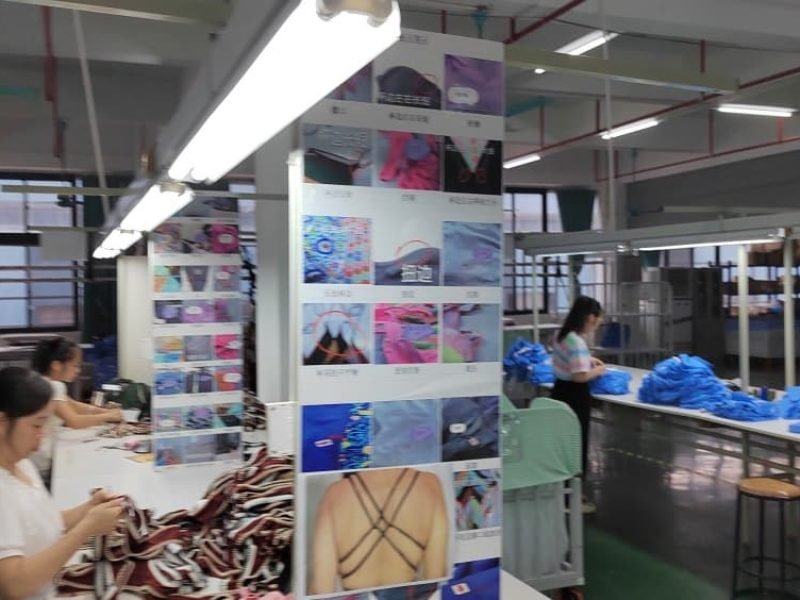
Elastic, zippers, cups, boning, hardware, labels and packaging can create as much production risk as main fabric.
Traceability should identify the approved specification, color, logo or artwork version and lot where relevant.
Branded components deserve especially careful version control because a functional component error can become a retail, fit, compliance or brand-identity error.
- Link BOM and approved trim reference.
- Control artwork and logo version.
- Record incoming acceptance or issue status.
Special Process Handoff

For partner-supported embroidery, selected printing, knitwear or specialty material processes, the useful record is not a partner logo. It is the handoff standard: artwork or process version, material input, sample approval, job or batch reference where available, and finished-garment QC expectation.
Ownership should remain transparent so specialist work is not presented as in-house equipment or internal manufacturing capacity.
- State who performs the process.
- Record what XZapparel controls.
- Keep approval and garment QC linked.
Reorder Change Record

- Recheck source and lot changes.
- Compare current material with prior approval.
- Trigger re-test or re-sample when risk changes.
Keep Certification and Ownership Claims Separate
XZapparel Factory
- Confirm legal or factory entity before publication.
- Keep current scope and status with the document.
- Avoid blanket claims covering every product or market.
Material Supplier Documents
Qualified material suppliers may provide GRS- or OEKO-TEX-related materials and documentation for applicable projects.
Verification should confirm the supplier or certificate holder, validity, scope, material applicability and any project or transaction documentation required. “Can source certified material” is a sourcing capability; it does not mean every fabric is certified or that the garment factory owns the supplier’s certificate.
- Check entity, scope and expiry.
- Link document to actual material and project.
- Recheck status for repeat orders or source changes.
Third-Party Verification
Formal market, retailer or regulated testing can be coordinated with qualified laboratories such as SGS, Intertek or Bureau Veritas when required by the project. Internal checks remain production-control tools and should not be described as third-party certification.
The qualification record should show which result comes from XZapparel’s control process and which conclusion depends on an external laboratory or authority.
- Define required report before testing.
- Identify product, material, batch and market scope.
- Hold high-risk claims until formal evidence is available.
Material Changes Need a Controlled Approval Path
Supply pressure is normal in apparel. The risk comes from changing source, lot, finish or component without rechecking the decisions built around the approved material.

Separate Commercial Pressure From Technical Approval
A material may need replacement because stock is unavailable, a supplier MOQ no longer fits the order structure, color capacity is limited, a delivery slot is lost or a core property cannot be repeated. Commercial pressure explains why a change is requested; it does not prove the replacement is technically acceptable. The new option should return to the same critical characteristics used for the original approval.
- Define the reason:stock shortage, MOQ, timing, quality failure, color limitation, certification requirement or supplier change. Recording the reason helps teams judge which variables are most likely to move.
- Compare the correct properties:composition alone is not enough. Construction, GSM, width, stretch/recovery, drape, opacity, handfeel, finish, shade and wash behavior may affect pattern, construction or consumption.
- Protect product intent:a replacement for a fluid dress fabric should be judged on drape and opacity; a swim replacement needs stretch/recovery, lining compatibility, colorfastness and support behavior; a coordinated set needs cross-piece shade and handfeel control.
- Recheck commercial impact:new material can change supplier MOQ, consumption, unit cost, lab-dip timing or process lead time. Quote and delivery assumptions should be refreshed before the change is treated as closed.
A sourcing team should be able to show why the change occurred, what was compared and which approval gate released the replacement. Silent substitution is a qualification red flag because downstream teams cannot distinguish a controlled change from an uncontrolled material drift.
Match the Approval Depth to Change Risk
Not every substitution needs the same amount of re-development. A new roll from the same approved lot may only need incoming confirmation, while a new supplier or different construction can change fit, shrinkage, sewing behavior and appearance. Approval depth should increase with the number of product decisions affected and the severity of a possible failure.
- Low change risk:same approved material, new incoming roll or lot. Focus on identity, shade, defects and relevant incoming checks.
- Moderate change risk:same construction but new supplier, finish or color route. Compare physical swatch, critical specification and key performance; recheck sample components where needed.
- High change risk:changed construction, GSM, stretch/recovery, lining relationship, support behavior or certified-material route. A new garment sample, fit review, test plan or PPS may be necessary before bulk.
- Document-sensitive change:new certificate holder, expired document, different transaction route or new third-party requirement. Document verification should be completed before claims or shipment paperwork rely on the new source.
The aim is proportional control, not bureaucracy. Approval should focus on the decisions that can actually change, with a clear record of who accepted the new material, which evidence was reviewed, whether a new sample or test was required, and whether costing, fit or production assumptions were updated before release.


Reorders Need Change Review, Not Blind Duplication
Repeat production creates a common sourcing trap: teams assume the same style number automatically means the same material result. In reality, fiber supply, dye lot, supplier capacity, finishing conditions and component availability can move between orders. Reorder control should start from the prior approved standard and compare current inputs rather than rebuilding the project from memory. A disciplined review also separates commercial continuity from technical sameness. Rebooking the same nominal fabric does not prove that shade, handfeel, shrinkage, recovery, finish or documentation remain unchanged. The sourcing team should first recover the previous approved references, then compare the proposed current source against those references before confirming booking, sample reuse or production release.
- Retrieve prior references:previous material standard, approved sample/PPS, critical tests, trim versions and known production notes.
- Identify differences early:new supplier, new lot, new shade, changed MOQ, revised care label, altered hardware or updated process partner should be visible before bulk booking.
- Repeat only what needs repeating:stable inputs can reuse approved standards; changed inputs receive fresh confirmation. A full re-development is unnecessary when nothing meaningful changed, but an unreviewed change should never hide behind “repeat order” status.
Preserve commercial continuity: material change review protects fit, appearance, retail consistency and replenishment reliability – the reasons established brands use approved-supplier systems in the first place
Verify Trims and Components Alongside Fabric

Elastic And Support
Elastic width, stretch, recovery and application ratio affect swimwear, activewear, shapewear, bottoms and gathered styles.
Cups, underwires and boning also change support and fit.
Approval should cover function as well as color or appearance, with incoming checks confirming the supplied component still matches the version used in the approved garment.

Zippers And Closures
Zippers, buttons, snaps and hooks should be reviewed for type, length, color, finish, attachment and function.
A replacement slider or finish may look acceptable on a trim card but perform differently after sewing or washing.
For fitted dresses and bottoms, closure performance can directly affect fit, wearability and sample-to-bulk consistency.

Hardware And Decoration
Metal logos, decorative hardware, lace, embroidery inputs and similar components introduce supplier MOQ, finish, placement and durability variables. When specialist partners are involved, qualification should make ownership visible and keep artwork, sample approval and garment QC linked. Partner capability should be described as managed specialist work, not reassigned as in-house equipment.

Labels And Packaging
Woven labels, care labels, size labels, hangtags and packaging carry brand, size, fiber, care and retail information.
Wrong artwork or an outdated version can create a shipment-level problem even when garment construction is correct.
Approval should connect artwork version, physical reference, incoming check and packing instruction to the same style and market.
Material Verification Changes by Women's Category
Dresses

- Drape and opacity against silhouette.
- Lining, zipper and support compatibility.
- Lot/shade control for visible panels.
Tops And Blouses

Tops often expose neckline, sleeve, collar, placket and surface behavior at close viewing distance. Material review should cover drape, opacity, stability, shrinkage and any smocking, shirring, print or embroidery interaction.
A light blouse fabric may look correct on a hanger but need reinforcement, lining or construction changes once the neckline, sleeve and closure are finalized.
- Check surface and handfeel close-up.
- Confirm opacity and seam stability.
- Review print or decoration compatibility.
Bottoms
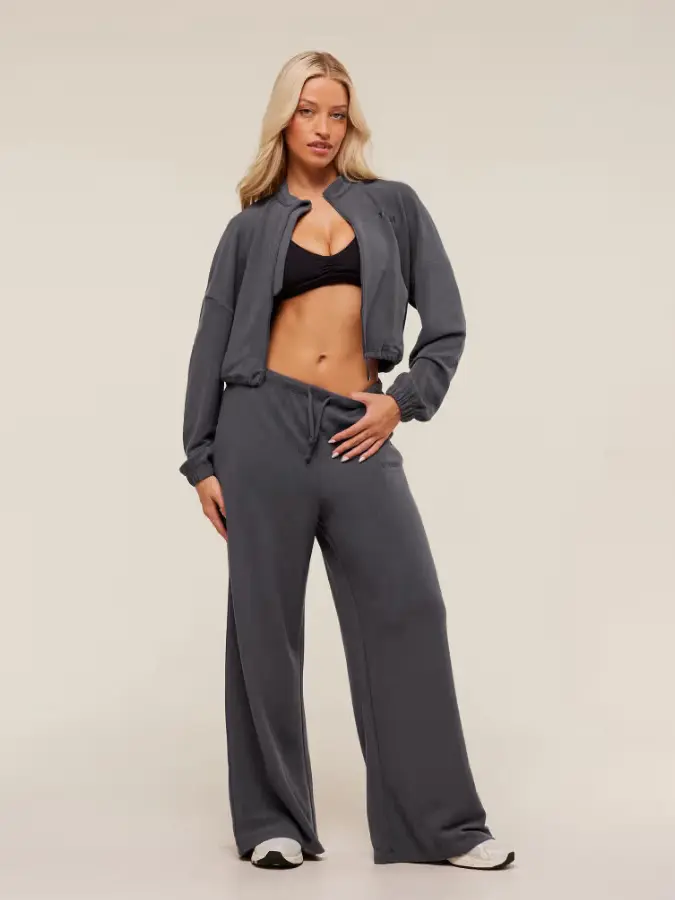
Bottoms place material under repeated movement at the waist, hip, rise and thigh. Stretch/recovery, dimensional stability, waistband or elastic behavior, shade and pocket construction can matter more than handfeel alone.
For coordinated sets, bottom material should also be compared against the matching top for color, surface and lot consistency rather than approved as an isolated component.
- Review stretch/recovery with fit ease.
- Check waistband and closure behavior.
- Control shade across set components.
Swimwear

- Main fabric plus lining and elastic.
- Stretch direction, percentage and recovery.
- Opacity, colorfastness and support behavior.
Matching Sets

- Align fabric lot and shade across pieces.
- Share trims where commercially sensible.
- Keep both garments on one approved version path.
An Anonymized Multi-Style Material Qualification Example
The composite below reflects recurring order structures used with established fashion programs and shows how material verification can scale across a collection without exposing brand data.

Project Structure and Material Risk Across 18 Styles
The program structure combines 18 women’s styles and 48,600 total pieces, within the 10-30 style and 20,000-80,000 piece order range commonly handled for established brand programs. The assortment includes dresses, tops, bottoms and coordinated sets across seven color positions. Five main fabric platforms are used across the collection so sourcing decisions can be shared where product performance allows rather than creating 18 unrelated material routes.
The qualification challenge is not simply finding five fabrics. Each platform must remain suitable for the styles that use it. A stretch woven shared across fitted bottoms and a matching top needs recovery, shade and finish consistency across two silhouettes. A fluid dress fabric needs drape and opacity approval before colors are expanded. A lined structured dress requires shell, lining, zipper and support components to remain compatible through sampling and bulk. Labels and packaging must also remain on the correct artwork version across all styles.
Material verification therefore starts with a collection-level map: which styles share a fabric, which colors share a dye route, which trims can be standardized, and which styles need independent testing because fit or construction risk is higher. The result is a sourcing structure that reduces unnecessary fragmentation without forcing one fabric into products where it does not belong.
Qualification Actions Before Bulk Release
The material-control sequence begins with five approved material references rather than 18 separate sourcing searches. Each fabric platform receives a defined composition/construction target, weight or GSM expectation where relevant, color route, handfeel or drape target and product-specific performance checks. Swatches or physical references are compared before the fabrics enter garment sampling. Custom colors move through color approval, while fabrics used in stretch or fitted products receive closer recovery and dimensional review.
As bulk material arrives, lot and shade identity are checked before cutting. Coordinated-set fabrics are grouped carefully so top and bottom pieces do not drift in shade. Cotton-containing batches enter the relevant incoming testing or control process. Any source, lot, finish or component change that can alter fit, appearance or documentation is returned to review rather than treated as an automatic substitution.
For the production handover, each style is linked to the approved material route, current sample/PPS, trim version and quality checkpoints. The program can then move into bulk with one controlled standard per style instead of separate verbal instructions across sourcing, sample and sewing teams. Normal bulk lead time is typically 25-35 working days after material readiness, PPS approval and production details are confirmed; the timing is treated as conditional, not guaranteed before the material gates close.
The value of the process is visible during a later reorder. Stable materials can reuse the approved standard, while new lots, suppliers or documents receive focused change review. A repeat style therefore keeps continuity without assuming the upstream supply chain has remained unchanged.

Build a Supplier Qualification Evidence Pack
Factory Fact Card
Provide current entity and factory facts at the level approved for external use, including manufacturing base, relevant scale ranges and operating scope.
Precise legal fields, certificates and controlled documents should come from formal records rather than marketing copy.
The purpose is to establish who the manufacturing organization is before material claims are evaluated and controlled documents are requested.
- Confirm current entity and manufacturing location.
- Keep dated facts and controlled documents current.
- Separate public facts from KYC-only information.
Capability Matrix
Show product capability by real maturity rather than listing every category as a core specialty.
XZapparel treats dresses, tops, bottoms, swimwear and sets as proven core categories; sweatwear, activewear and shapewear are established selected capabilities; knitwear and certain specialist processes involve long-term partners; selected outerwear remains development/expansion capability.
- Match material evidence to product maturity.
- Do not let broad sourcing access inflate category claims.
- Keep development capability distinct from proven bulk history and avoid using one sample as proof of recurring production maturity.
Ownership Map
- In-house work: show factory/process evidence.
- Partner work: show approved handoff and garment proof.
- Third-party work: identify report or inspection source.
Supplier Network Summary
Explain the material sourcing structure without publishing supplier names, quotations or internal costs.
XZapparel can disclose 30+ regularly used fabric suppliers, approximately eight core fabric sources and the Humen/Dongguan plus Guangzhou Zhongda sourcing ecosystems.
Qualification teams can then review how supplier options are selected, approved, checked and changed for different product requirements and repeat orders.
- Network size and sourcing geography.
- Route for existing, similar, custom and documented materials.
- Confidential supplier identities remain protected.
Testing And QMS
Provide the quality route from fabric inspection through production and final packing, plus the material checks relevant to the program. Internal tests should be identified as production control.
Formal third-party requirements should remain separate.
A strong pack explains how results change approve, hold, correct, retest or release decisions rather than supplying a generic “strict QC” statement.
- Fabric inspection and incoming checks.
- PPM, cutting, inline, measurement, finishing and final gates.
- Third-party reports only within confirmed scope.
Traceability Records
- Style/color/version identity.
- Material and trim lot context where relevant.
- Change and reorder review records.
Certification Boundary
- Confirm who owns the document.
- Check project and material applicability.
- Reverify when source or status changes.
Anonymized Project Evidence
Where permissions allow, use anonymized samples, fabric comparisons, inspection records, test records or change-control examples to demonstrate execution.
A case should show context, constraint, decision, iteration, evidence and outcome without disclosing brand names, unreleased designs, prices or confidential supplier information. Real evidence should remain tied to the claim it supports, with identifying client or supplier details removed when confidentiality requires it.
- E1: process/checklist evidence.
- E2: real sample, fabric or test imagery.
- E3: documented records where publishable.
What Strong Material Evidence Looks Like
Fabric Warehouse Evidence
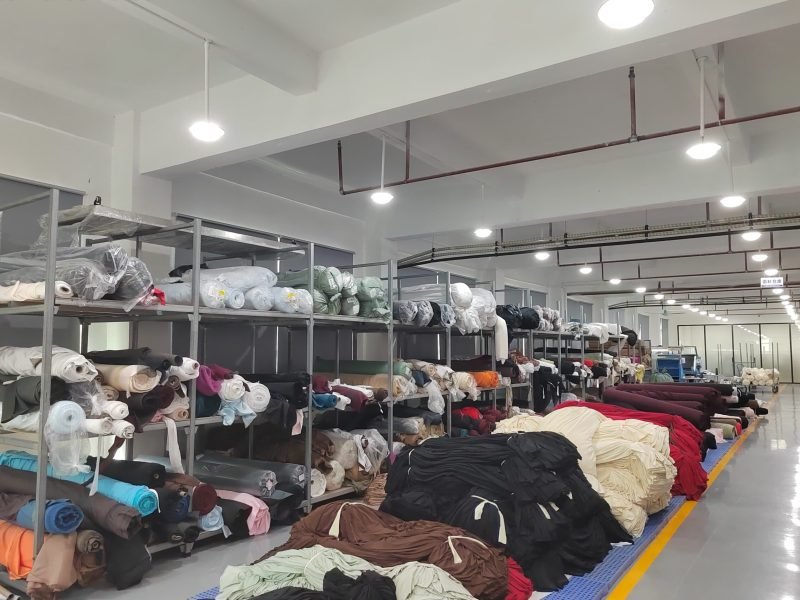
Show real receiving and storage conditions with enough context to explain how approved material lots are separated and issued. A warehouse image becomes useful when the qualification team can see identification, project separation or lot-handling logic. Stacked fabric rolls without explanation provide very little evidence of sourcing control, lot identity or production release discipline.
Inspection Process Evidence
Test Record Evidence

Approved Swatch Evidence

Traceability Evidence

Use anonymized style, material lot, roll, PPS, trim or change records to demonstrate how a problem can be narrowed. The goal is not to expose confidential systems.
The useful proof is the relationship between production identity and the upstream material standard, especially when multiple colors, lots, repeat orders or partner processes are involved.
Change-Control Evidence

Material Qualification Claims That Need Caution
Any Fabric Available
Broad sourcing access does not guarantee every composition, construction, finish, color or certification can meet the same MOQ, timing and price. A credible manufacturer should explain the sourcing route and variables that may change feasibility before a material is quoted or approved.
XZapparel uses existing, similar, custom and documented-material routes rather than promising unlimited availability.
All Certifications Are Ours
Everything Is In-House
Women’s fashion programs often use specialist partners for selected knitwear, embroidery, printing or material treatments.
The important qualification question is not whether every machine is in one building; it is whether ownership, technical handoff, sample approval, incoming review and garment QC remain controlled. Partner capability should remain explicitly labeled, with the controlling development and QC responsibilities made clear.
Traceability Means Software
Material Sourcing Frequently Asked Questions

Start a Material Sourcing Qualification Review
If your team is qualifying a new apparel manufacturing partner, send enough project information for a material-focused review rather than a generic contact message. XZapparel can review the product mix, proposed material route, sourcing constraints, incoming-control expectations, documentation requirements and any supplier-approval questions that need evidence before development moves forward.
- Product categories and approximate style count.
- Quantity by style/color and expected color count.
- Fabric composition, construction, GSM/weight, stretch/recovery or reference swatch where available.
- Target color, print, handfeel, drape, opacity or finish requirements.
- Trim and component requirements, including elastic, closures, support components, labels and packaging.
- Required material documents, factory audit files or third-party testing scope.
- Target market and any retailer-specific quality requirements.
- Development files such as Tech Pack, size specification, reference images or existing sample photos.
- Sample, PPS and bulk timing targets.
A useful qualification response should identify what can be confirmed immediately, what depends on supplier or material review, which evidence can be shared, and what must remain project-specific. Supplier names, internal costs and confidential client records are not published, but controlled qualification documents and anonymized technical evidence can be discussed through the appropriate review process.