Skip to content
Blouses are the backbone of any women’s fashion collection—but their diversity often goes unnoticed.
Blouses come in many types, including button-down, wrap, ruffle, puff sleeve, off-shoulder, and more—each with its own silhouette, function, and fashion context.
When I began working closely with boutique and brand buyers, I realized they weren’t just looking for “tops.” They were searching for blouses that align with their brand’s identity, seasonality, and customer base. Knowing the types of blouses makes this process much more strategic.
What are the most essential types of blouses in modern fashion?
Each blouse type plays a unique role—whether it’s structure, femininity, drama, or comfort.
From structured to flowy, minimal to embellished, blouse styles vary in design intent, making them essential across categories like workwear, resortwear, and occasionwear.
Here’s a comprehensive breakdown of the most commercially relevant blouse types I regularly develop or source for buyers:
Button-Down Blouse
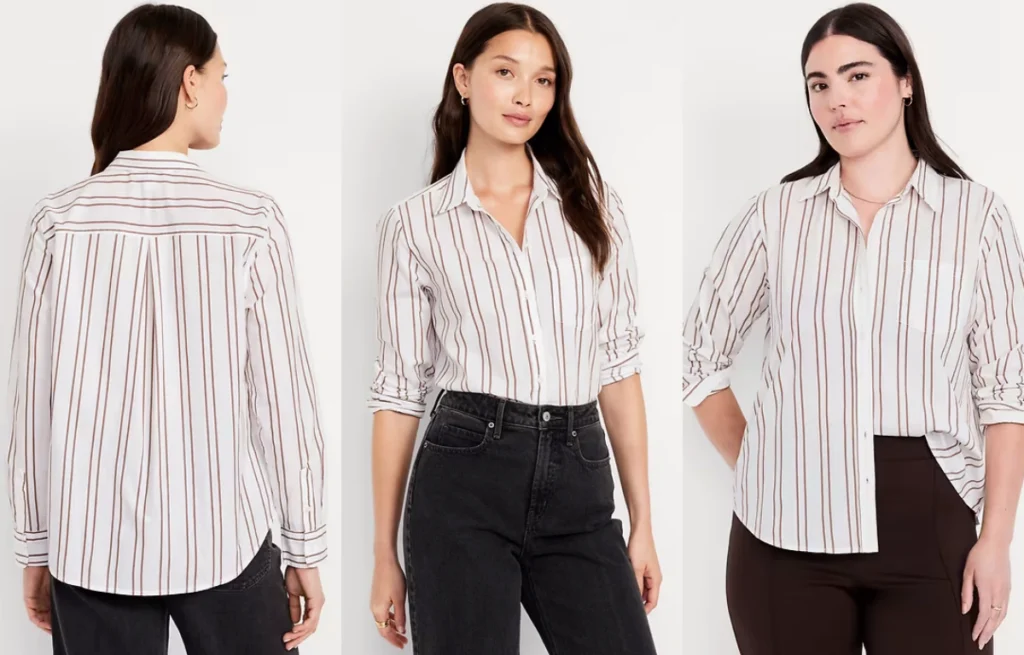
Among all blouse types, this one crosses fashion and function like no other.
The button-down blouse is a versatile classic, blending professional structure with trend adaptability across seasons and demographics.
I’ve seen the same basic button-down reinvented in silk for a luxury brand and in oversized cotton for Gen Z streetwear. That range is what makes it unbeatable in wholesale.
Button-Down Construction Basics
| Component | Design Focus |
|---|---|
| Collar | Sharp, spread, or band collar options |
| Button Placket | Concealed or exposed |
| Cuffs | Barrel, French, or single-button |
| Fit | Slim-fit, boxy, oversized |
Key Fabric Types for Button-Downs
| Fabric | Benefits | Usage Notes |
|---|---|---|
| Poplin | Crisp, smooth surface | Ideal for office wear |
| Tencel | Breathable, drapey | Suits relaxed, eco-conscious brands |
| Stretch Cotton | Adds flexibility | Popular for fitted styles |
| Linen Blends | Natural look, airy | Common in summer collections |
| Satin or Silk | Luxurious, flowing | Favored by high-end or occasion brands |
Trend Variations of Button-Down Blouses
- Oversized and Unstructured: Perfect for Gen Z and casual collections
- Cropped with Utility Pockets: Popular for street style or layering
- Sheer Button-Downs: Adds sensuality for eveningwear brands
- Colorblock or Contrast Stitching: Creates statement pieces for Instagram-driven brands
Buyer Considerations
- MOQ Flexibility: Structured designs increase production steps and MOQ
- Fit Consistency: Slim-fit or darted styles need tighter quality control
- Trend Timing: Classic versions stay evergreen, while trendy cuts must be aligned with seasonal drops
| Customer Segment | Preferred Fit | Fabric Preference | Design Twist |
|---|---|---|---|
| Gen Z | Oversized or cropped | Tencel, Cotton Blends | Patchwork, contrast topstitch |
| Millennial Office | Slim or relaxed fit | Poplin, Satin | Soft pastel tones, neat collars |
| Occasion/Evening | Flowing, tailored | Silk, Satin | Deep V-neck, concealed buttons |
| Resort Wear Brands | Loose fit | Linen, Cotton Voile | Half-sleeve, open collar, prints |
Chiffon Blouse

What makes the chiffon blouse a must-have in modern wardrobes?
It’s light, elegant, and always in demand for resort, occasion, and casual collections.
Chiffon blouses offer a unique mix of breathability, femininity, and layering versatility, making them a year-round favorite across global markets.
I still remember the first time a boutique buyer ordered a chiffon line from us. They wanted “lightweight, romantic, and sheer—but not see-through.” That sentence alone shows how specific chiffon designs can be.
Chiffon Fabric Characteristics
| Property | Description |
|---|---|
| Weight | Very light, semi-sheer |
| Drape | Soft, flowing |
| Texture | Smooth but slightly rough to the touch |
| Stretch | Typically non-stretch unless blended |
| Common Fibers | Polyester, silk, viscose |
Why Chiffon Blouses Need Special Handling
| Factor | Reason |
|---|---|
| Sewing Difficulty | Fabric slips and frays easily |
| Cutting Precision | Pattern layout must account for transparency |
| Lining Needs | To prevent too much sheerness |
| Ironing Limits | Heat-sensitive, prone to burning |
Key Chiffon Blouse Styles
- Layered Ruffle Chiffon – Adds volume without heaviness.
- Pussy Bow Chiffon Blouse – Ideal for vintage and formal edits.
- Sheer Sleeve Designs – Adds drama to otherwise basic bodies.
- Printed Chiffon Tops – Use floral or abstract prints for resort appeal.
- Chiffon Wrap Blouses – Great for feminine and waist-accentuating silhouettes.
Sourcing Tips for Chiffon Blouses
When developing chiffon styles, I always double-check for:
- Fabric Source Consistency: Chiffon varies by mill—even in the same GSM.
- Color Absorption: It reflects differently under lighting, especially in photoshoots.
- Stitch Testing: We conduct pull tests on sample seams to ensure durability.
Common Challenges with Chiffon Production
| Issue | Solution |
|---|---|
| Fraying Edges | Use French seams or double-rolled hems |
| Transparency Complaints | Offer versions with lining or shell |
| Uneven Drape on Body | Check pattern grading across sizes |
| Color Fastness | Use pigment-resistant dyes in pre-wash |
Matching Chiffon Blouses to Buyer Needs
| Buyer Type | Preferred Chiffon Blouse Features |
|---|---|
| Resortwear Boutiques | Tropical prints, sleeveless, sheer layers |
| Formalwear Labels | Solid tones, high neck, bowtie necklines |
| Trendy Fast Fashion | Puff sleeve, cropped, ruched center styles |
| Plus-Size Brands | Flowy, double-layered with strategic darts |
What makes chiffon blouses different from satin or cotton ones?
Beyond texture, chiffon requires different design logic and handling methods.
Compared to satin or cotton blouses, chiffon ones need tighter control over pattern, lining, and fit due to their transparency and light drape.
Satin adds weight and sheen, cotton gives crisp structure, but chiffon flows—and sometimes floats—so every dart and hem must be intentional.
Comparison Table
| Feature | Chiffon | Satin | Cotton Poplin |
|---|---|---|---|
| Sheerness | High | Medium | Low |
| Structure | Soft, loose | Medium | Firm, tailored |
| Use in Trends | Feminine, breezy | Formal, shiny | Classic, clean lines |
| Best for | Layers, summer, event tops | Party blouses | Office shirts |
Tie-Neck Blouse
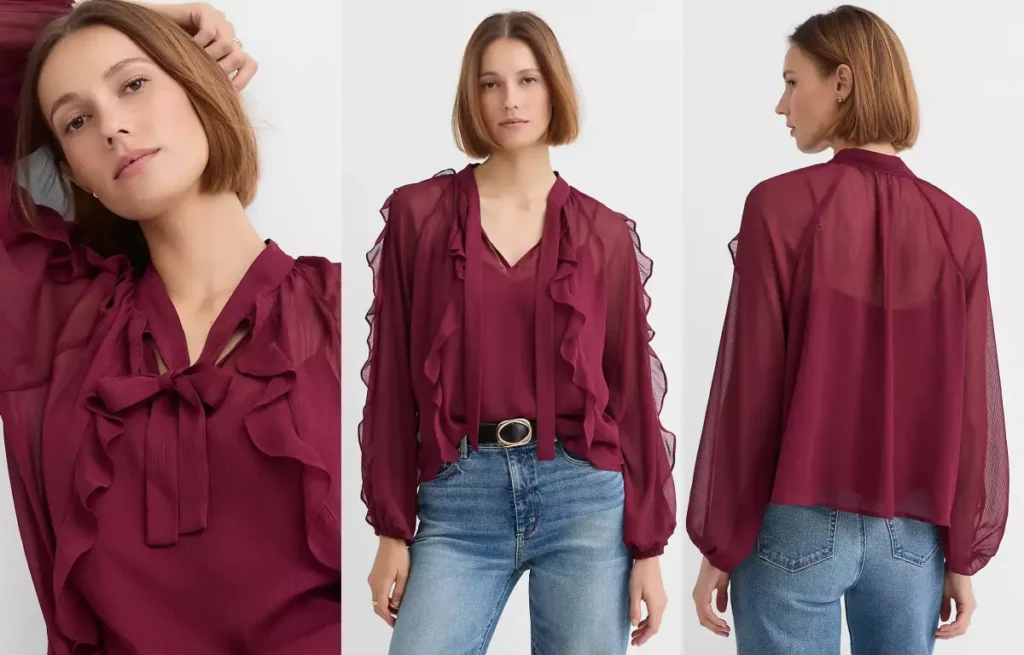
What makes the tie-neck blouse stand out in women’s fashion?
It offers a built-in statement without needing accessories.
The tie-neck blouse features a long ribbon or fabric strip at the collar that can be tied into a bow or knot, instantly adding sophistication to any look.
Some of my most successful B2B orders involved tie-neck styles that merged classic shapes with seasonal prints or unexpected fabrics. It’s a detail that transforms simple tops into statement pieces.
Construction Details of Tie-Neck Blouses
| Component | Design Variation |
|---|---|
| Tie Length | Short (modest) or long (dramatic bow) |
| Neckline | High collar, V-neck with ties, or wrap-neck |
| Tie Shape | Flat ribbon, wide scarf, or structured bow |
| Sleeve Options | Long, puff, cap, or bishop sleeves |
Best Fabrics for Tie-Neck Blouses
| Fabric | Benefits | Recommended Use Case |
|---|---|---|
| Silk/Satin | Elegant drape, luxurious feel | Formalwear, premium labels |
| Chiffon | Light, floaty, romantic | Resort, occasion collections |
| Polyester | Easy-care, versatile, cost-effective | Fast fashion, workwear |
| Tencel/Rayon | Soft, breathable, modern aesthetic | Contemporary boutiques |
Styling Versatility of Tie-Neck Blouses
- Knot It Loosely – For casual or semi-formal days.
- Bow It Tightly – For office, vintage, or formalwear styling.
- Let It Hang Untied – Adds movement and attitude.
- Wrap the Tie Around Neck Twice – Gives scarf-like sophistication.
How Tie-Neck Blouses Serve Multiple Market Segments
| Segment | Preferred Style Notes |
|---|---|
| Officewear Buyers | Mid-length ties, satin or poly fabric |
| Vintage Fashion Stores | Large bows, printed fabrics, puff sleeves |
| Occasion/Eveningwear | Silk or chiffon, sheer sleeves, rich colors |
| Contemporary Labels | Minimalist bow, clean cuts, neutral tones |
Sourcing and Production Notes
- Pattern Grading: Tie length must scale with size to avoid awkward proportions.
- Bulk Cutting Caution: Long ties require more fabric space, which affects yield.
- QC Points: Ensure symmetrical tie shapes and reinforced stitching at the collar base.
Ruffle Blouse
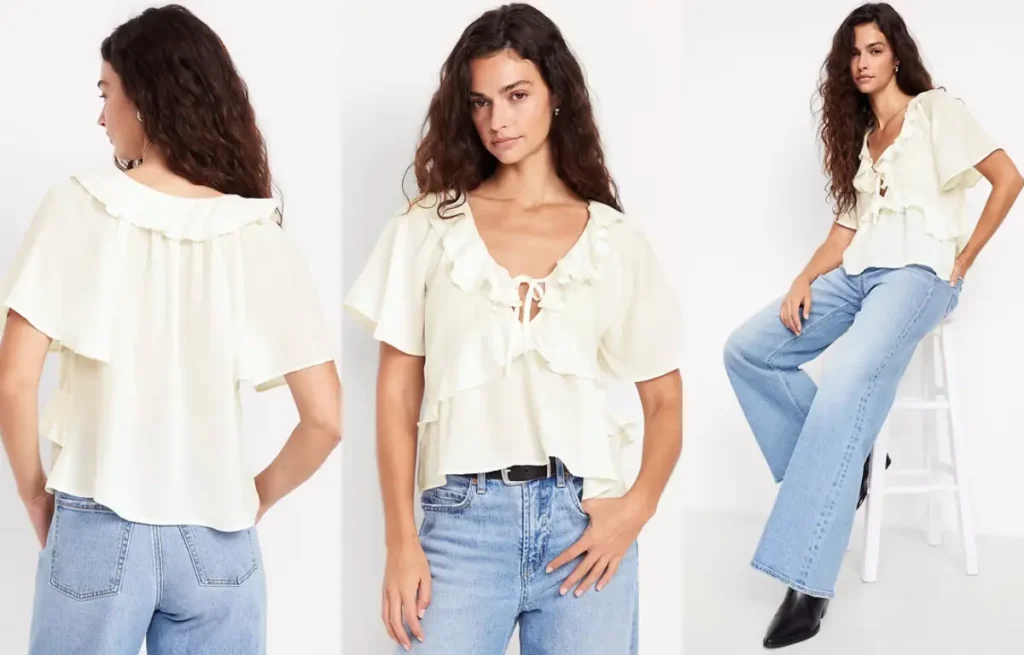
Why is the ruffle blouse such a timeless and expressive option?
Because it adds movement, volume, and femininity without overcomplicating the garment.
Ruffle blouses are designed with layered fabric flounces that add dimension and drama—making them a top choice for both romantic and trend-focused collections.
The first time I offered a ruffle blouse to a boutique client, it became their best-seller within weeks. It wasn’t just the design—it was the way the ruffles moved, caught light, and created emotion.
Ruffle Placement Options
| Placement Area | Design Impact |
|---|---|
| Neckline | Romantic or Victorian feel |
| Shoulder to Sleeve | Adds volume, balances narrow shoulders |
| Bodice Front | Draws focus to the center of the torso |
| Hemline | Creates playful, youthful finish |
| Asymmetric Panels | Adds dynamic motion and modern structure |
Common Fabrics for Ruffle Blouses
| Fabric | Benefits | Use Cases |
|---|---|---|
| Chiffon | Lightweight, flowing | Romantic or layered ruffle tops |
| Poplin | Structured, crisp | Neat ruffles with defined edges |
| Georgette | Textured and semi-sheer | Boho, vintage-inspired looks |
| Satin | Soft sheen, elegant fall | Formal or partywear designs |
| Cotton Lawn | Breathable, subtle volume | Everyday feminine blouses |
Types of Ruffle Blouses by Trend
- Victorian Ruffle Blouse – High neckline, full ruffles at collar and cuffs.
- Minimal Ruffle Trim Blouse – Clean lines with subtle ruffle at hem or collar.
- Statement Sleeve Ruffle Blouse – Oversized ruffles that start at shoulder and drape into the sleeve.
- Asymmetric Ruffle Blouse – Uneven layers for modern editorial looks.
- Peplum with Ruffle Detail – Combines waist flare and soft ruffle accents.
Production Considerations
- Fabric Consumption: Ruffles increase fabric usage by 20–30% depending on width and layering.
- Pattern Scaling: Must maintain ruffle volume across sizes—often needs unique grading.
- Sewing Precision: Uneven or stretched seams make ruffles appear sloppy.
- Quality Control Focus: Symmetry, edge finishing, and topstitch tension.
How do different ruffle placements affect visual proportions?
| Ruffle Placement | Best For Body Type | Styling Tip |
|---|---|---|
| Across shoulders | Pear-shaped | Balances wider hips |
| Vertical center | Rectangle-shaped | Adds illusion of curves |
| Bottom hemline | Petite frames | Creates light movement without overwhelming |
| Neckline & cuffs | Heart or oval faces | Draws attention upward |
Puff Sleeve Blouse
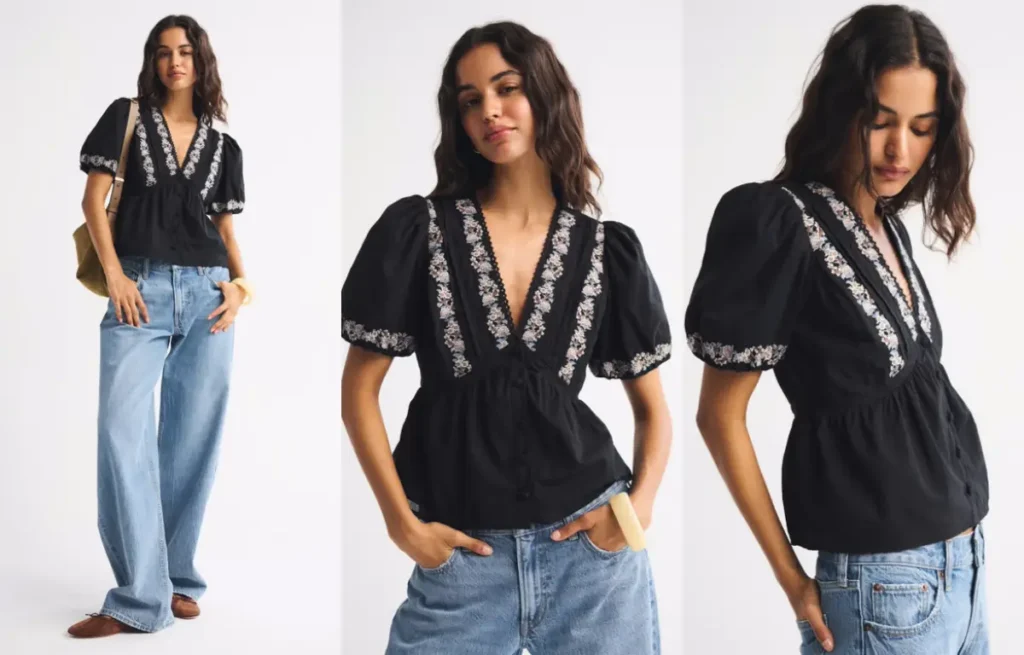
Why is the puff sleeve blouse dominating modern fashion?
Because it blends vintage charm with contemporary flair—and suits a wide range of styles.
Puff sleeve blouses feature exaggerated, voluminous sleeves that create visual drama and balance body proportions—making them a go-to for trend-focused buyers.
The first time I introduced puff sleeve styles into a wholesale capsule, they outsold every other blouse variation. Their visual impact on hangers and photoshoots is hard to ignore.
Anatomy of a Puff Sleeve Blouse
| Sleeve Type | Volume Location | Visual Impact |
|---|---|---|
| Short Puff Sleeve | Upper arm | Youthful, playful |
| Elbow-Length Puff | Mid-arm | Balanced, semi-formal |
| Long Puff Sleeve | Shoulder to wrist | Dramatic, statement-ready |
| Balloon Sleeve | Extra wide, tapered cuff | High fashion, couture-inspired |
| Juliet Sleeve | Puff at shoulder, slim arm | Romantic, historical reference |
Popular Fabrics for Puff Sleeve Blouses
| Fabric | Characteristics | Use Case |
|---|---|---|
| Cotton Poplin | Structured, holds volume | Preppy and tailored designs |
| Organza | Sheer, crisp, airy | Occasion or statement pieces |
| Linen Blend | Breathable, soft stiffness | Natural, elevated casuals |
| Taffeta | Shiny, dramatic hold | Formalwear or runway-inspired lines |
| Rayon Blend | Soft drape, semi-structured | Feminine everyday options |
How Sleeve Shape Affects Buyer Perception
| Volume Style | Buyer Appeal |
|---|---|
| Dramatic Shoulder | Gen Z, Instagram-driven brands |
| Subtle Puff | Millennials, workwear or smart casual |
| Sheer with Layers | Occasion and boutique collections |
| Cropped + Puff | Youth fashion, festival lines |
Patternmaking & Production Concerns
- Extra Fabric Usage: Puff sleeves increase material needs by 10–25%.
- Elastic or Cuff Detail: Must stabilize sleeve base to prevent slippage.
- Seam Strength: Puff sleeves add stress points, especially near shoulder seams.
- Symmetry Checks: Uneven puff shapes are easily noticed—strict QC required.
Fit and Body Type Considerations
| Body Type | Styling Note |
|---|---|
| Pear Shape | Balances lower body by adding shoulder width |
| Rectangle Shape | Creates the illusion of curves |
| Broad Shoulders | Choose smaller puff or dropped shoulder line |
| Petite Frames | Opt for short, narrow puffs to avoid bulk |
Trend Cycles and Longevity
Puff sleeves have re-emerged every few seasons since the 80s. They’re now part of many brands’ permanent rotation due to their flexibility across aesthetics:
- Romantic – Pair with floral prints and sweetheart necklines.
- Minimalist – Use monochrome and subtle puff on clean bodies.
- Vintage/Retro – Combine with square necks and cropped cuts.
- Cottagecore – Match with natural fabrics and button details.
Buyer Checklist for Puff Sleeve Styles
- Does the sleeve hold volume after washing?
- Is the elastic or gathering too tight or loose?
- Can this be layered under outerwear comfortably?
- Is the sleeve design trend-forward but easy to wear?
Sleeveless Blouse
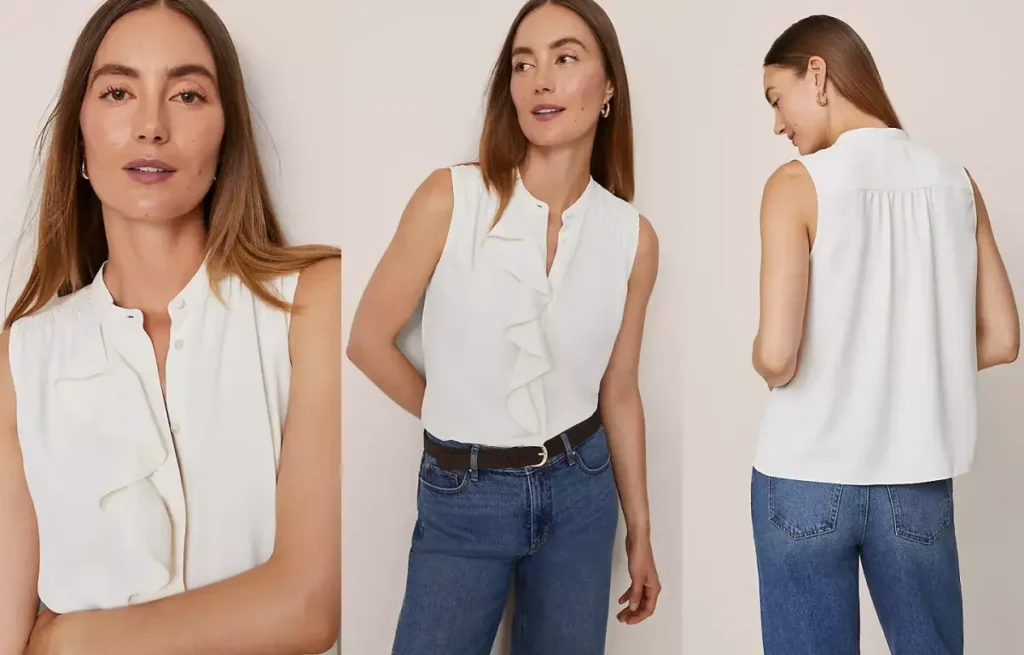
Why are sleeveless blouses a wardrobe staple across seasons?
Because they offer comfort, versatility, and timeless appeal in one simple silhouette.
Sleeveless blouses are armhole-finished tops without sleeves, ideal for warm weather, layering under jackets, or creating clean minimalist looks.
Some buyers associate sleeveless only with summer, but I’ve seen it work year-round—especially in markets like Australia or Southeast Asia. And for brands targeting Gen Z or young Millennials, sleeveless styles are must-haves.
Key Design Variations in Sleeveless Blouses
| Type | Design Feature |
|---|---|
| Classic Shell Top | Simple round neck, straight fit |
| Sleeveless Button-Up | Collar and button placket, no sleeves |
| Halter Neck Blouse | Ties or fastens at the back of neck |
| Racerback Blouse | Armholes curve in toward the neck |
| Mock Neck Sleeveless | High neckline, adds formal touch |
| Cowl Neck Blouse | Draped neckline for elegance |
Common Fabrics for Sleeveless Blouses
| Fabric | Characteristics | Ideal Use Case |
|---|---|---|
| Crepe | Light texture, drapey | Office or semi-formal tops |
| Chiffon | Sheer, breathable | Summer layering or dressy looks |
| Satin | Smooth and glossy | Eveningwear or partywear |
| Linen Blend | Cool, natural, relaxed finish | Resort and casual collections |
| Cotton Poplin | Crisp and structured | Workwear or tailored edits |
Advantages for Buyers and Brands
- Seasonless Flexibility: Wear alone or layered under outerwear.
- Cost-Efficient Production: No sleeve means less labor and fabric usage.
- High Conversion Online: Clean-cut, sleeveless styles photograph well.
- Easy Customization: Necklines and back details offer design options with minimal construction changes.
Sizing and Fit Considerations
| Fit Type | Key Notes |
|---|---|
| Slim Fit | Ensure armhole isn’t too tight or gaping |
| Relaxed Fit | Requires shaping darts or panels to avoid bulk |
| Boxy Fit | Trendy but may need styling notes for petite customers |
Long Sleeve Chiffon Blouse
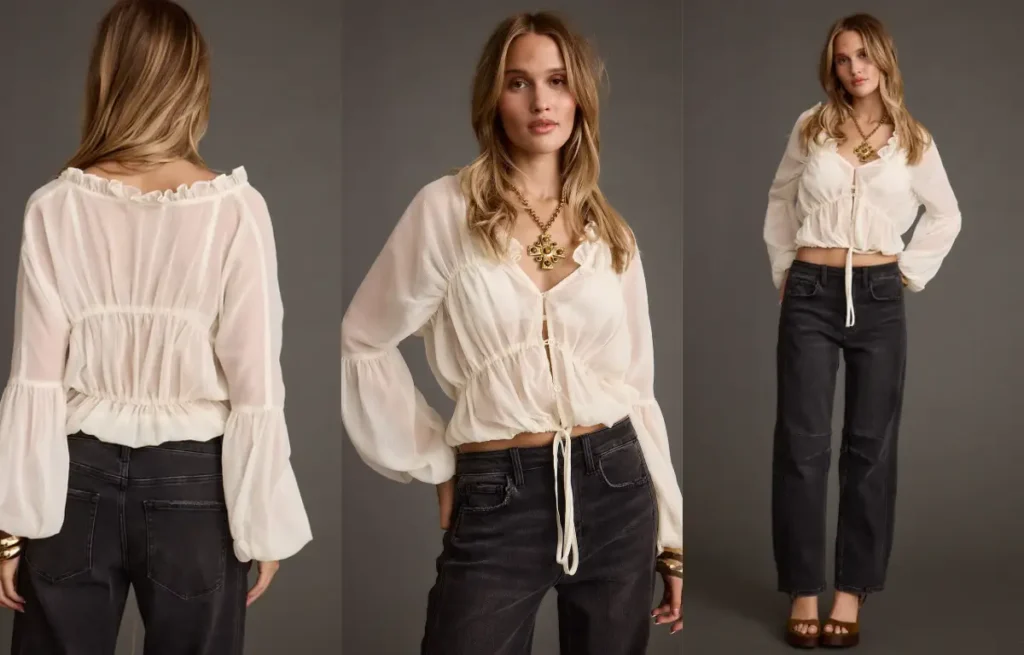
What makes the long sleeve chiffon blouse a fashion essential?
It balances femininity, breathability, and year-round wearability.
Long sleeve chiffon blouses offer full arm coverage while maintaining a lightweight, sheer look—perfect for layering, formal edits, and trans-seasonal wardrobes.
These blouses are especially popular among boutique and mid-premium brands who need elegant options that aren’t too warm or too stiff. They offer flexibility in styling without losing a polished look.
Design Features of Long Sleeve Chiffon Blouses
| Feature | Description |
|---|---|
| Sleeve Construction | Bishop, puff, bell, or straight-cut |
| Cuff Style | Buttoned, elastic, smocked, or flared |
| Neckline Options | V-neck, tie-neck, round, or mock neck |
| Hem Finishes | Curved, straight, or high-low |
| Lining | Optional body lining, sleeves usually unlined |
Popular Fabric Compositions
| Material | Characteristics | Ideal For |
|---|---|---|
| Polyester Chiffon | Cost-effective, durable | Fast fashion, high-volume runs |
| Silk Chiffon | Soft, luxurious, delicate | Premium or occasionwear lines |
| Recycled Chiffon | Eco-friendly, similar to poly chiffon | Sustainable brands |
| Georgette (semi-sheer) | More texture and drape | Boho and vintage edits |
Functional and Styling Advantages
- Layering Friendly: Works under vests, blazers, and lightweight outerwear.
- Lightweight Yet Modest: Appeals to markets with modest dress codes.
- Movement & Drape: Adds elegance through natural motion of fabric.
- Seasonal Bridge: Perfect for spring/fall transitions and indoor wear.
Sleeve Shape Variations and Their Impact
| Sleeve Style | Visual Impact | Styling Tip |
|---|---|---|
| Bishop Sleeve | Flowy and feminine | Pair with slim pants or skirts |
| Puff Sleeve | Trendy, vintage-inspired | Works well for Gen Z and boho markets |
| Straight Sleeve | Minimalist and clean | Best for office or modern edits |
| Bell Sleeve | Dramatic and soft | Good for occasionwear or statement tops |
Challenges in Manufacturing Long Sleeve Chiffon Blouses
- Seam Strength: Lightweight fabrics require reinforced or French seams to avoid tearing.
- Cuff Construction: Thin fabric may not support heavy buttons or stiff interfacing.
- Fabric Cutting: Chiffon shifts during cutting—requires weight or laser precision tools.
- Lining Coordination: Must match opacity without stiffening the body.
Market Applications for Long Sleeve Chiffon Blouses
| Market Type | Recommended Design Approach |
|---|---|
| Modest Fashion Brands | High necklines, fully lined bodies, opaque colors |
| Officewear Labels | Straight sleeves, soft V-necks, neutral tones |
| Occasionwear Brands | Tie-neck, pleated details, pearl buttons |
| Resort & Boho Retailers | Bishop sleeves, floral prints, layered chiffon |
Satin Blouse
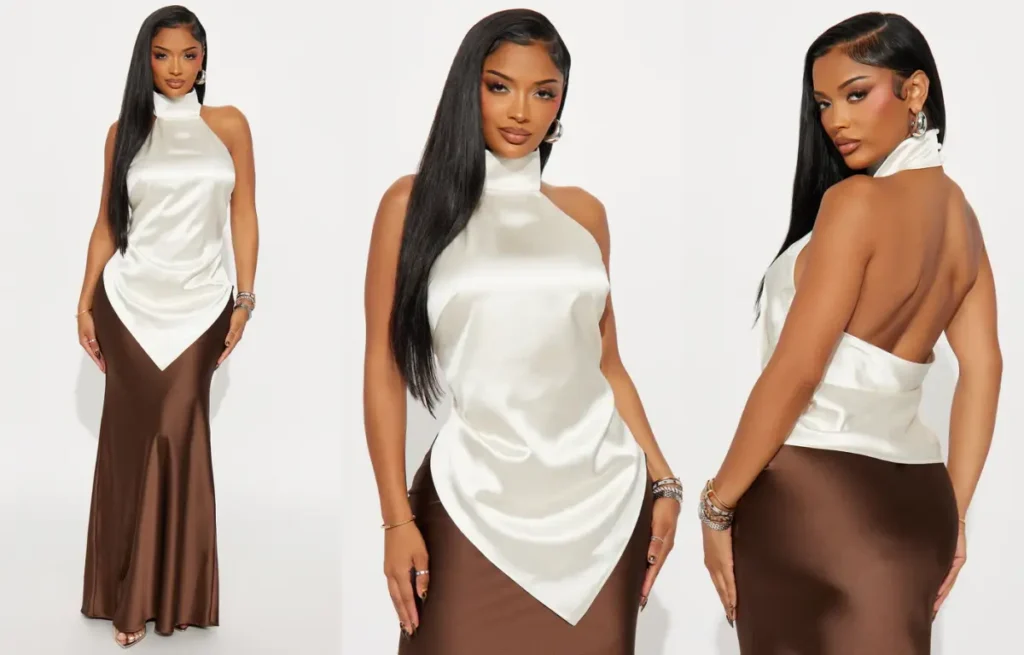
Why is the satin blouse a key item in every stylish wardrobe?
Because it delivers a luxurious look with minimal effort.
Satin blouses are soft, glossy tops made from fabrics with a smooth finish—offering an upscale look suitable for office, evening, or casual-luxe styling.
The first time I introduced satin blouses in a capsule, the feedback was instant—“polished, easy to pair, high perceived value.” It’s now a staple across several of our export markets.
Features That Define a Satin Blouse
| Feature | Function |
|---|---|
| Sheen Finish | Reflects light, adds elegance |
| Soft Drape | Follows body curves, flatters various shapes |
| Minimal Stitch Lines | Keeps look clean and polished |
| Neckline Variations | Cowl, V-neck, tie-neck, mock neck |
| Sleeve Options | Fitted, bishop, puff, or kimono |
Satin Fabric Types Used in Blouses
| Satin Type | Description | Recommended Use |
|---|---|---|
| Polyester Satin | Affordable, machine-washable | Fast fashion and accessible lines |
| Silk Satin | Luxurious, delicate, breathable | Premium or designer collections |
| Stretch Satin | Slight elasticity, better fit and comfort | Slim-fit or structured designs |
| Matte Satin | Subtle sheen, less reflective | Understated, minimalist styles |
Common Design Styles in Satin Blouses
- Cowl Neck Satin Blouse – Drapes softly around neckline.
- Satin Button-Up – Structured yet feminine with glossy finish.
- Tie-Neck Satin Blouse – Combines shine with elegance.
- Wrap Satin Blouse – Enhances waistline with fluid movement.
- Puffed Sleeve Satin Top – Trendy yet dressy.
Manufacturing Considerations for Satin Blouses
- Fray Control: Satin frays easily—use French seams or overlocking.
- Ironing Precision: Easily scorched—needs low-heat pressing techniques.
- Stitch Visibility: Any tension pulls are visible due to the sheen.
- Color Consistency: Dye lots must be tightly controlled to avoid mismatches.
Fit and Styling Impacts
| Design Detail | Effect on Styling |
|---|---|
| Loose Fit | Casual-luxe or boho styling |
| Fitted Construction | Officewear or formal edits |
| Deep V-Necks | Enhances femininity, ideal for layering |
| Bell or Bishop Sleeves | Softens the silhouette, adds drama |
Printed Blouse
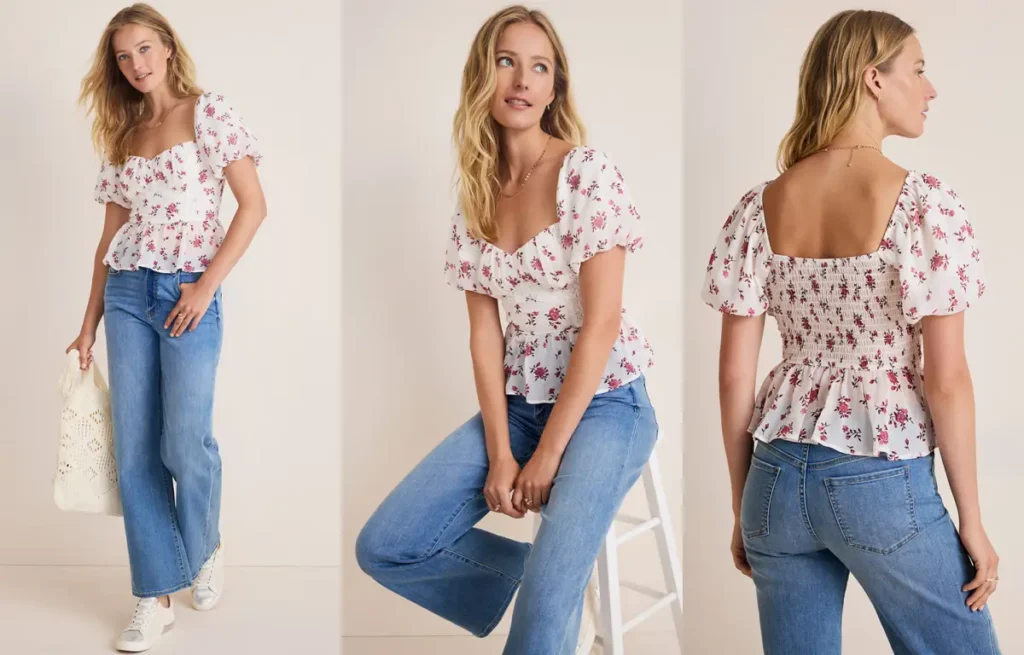
Why are printed blouses essential for fashion-forward collections?
They combine visual impact with versatility across body types and occasions.
Printed blouses use patterns—floral, geometric, animal, or abstract—to add personality and trend value, turning simple garments into strong style pieces.
When I prepare printed blouse samples, I’m not just choosing colors. I’m selecting a visual story that speaks to each target audience—whether romantic florals for boutiques or bold graphics for Gen Z buyers.
Types of Popular Prints in Blouses
| Print Type | Description | Common Use Cases |
|---|---|---|
| Floral | Botanical motifs, soft or bold | Spring, feminine edits, resortwear |
| Animal Print | Leopard, zebra, snake textures | Statement looks, nightlife fashion |
| Geometric | Stripes, checks, polka dots, grids | Workwear, retro-inspired lines |
| Abstract | Artistic splashes, brushstrokes, patterns | Contemporary brands, trend-forward lines |
| Tie-Dye | Irregular dye patterns, often colorful | Casual, festival, Gen Z collections |
| Tropical | Palms, fruits, island themes | Resort, summer releases |
Matching Print Scale to Garment Design
| Garment Cut | Best Print Scale |
|---|---|
| Fitted or cropped | Small to medium prints |
| Loose or oversized | Large, bold prints |
| Draped or wrap | Flowing prints that follow garment lines |
| Structured pieces | Symmetrical or graphic print placement |
Fabric Considerations for Printed Blouses
| Fabric Type | Print Behavior | Best for |
|---|---|---|
| Polyester Chiffon | Holds vibrant color, sheer look | Layered or sheer print blouses |
| Cotton Voile | Soft, breathable | Casual and summer looks |
| Satin | Glossy finish enhances print depth | Party or luxury pieces |
| Rayon | Natural drape, high print clarity | Feminine and flowy designs |
| Crepe | Slight texture adds print dimension | Officewear or modern edits |
Common Printed Blouse Styles
- Printed Wrap Blouse – Combines form-flattering shape with pattern appeal.
- Button-Up with All-Over Print – Works for office or casual wear.
- Puff Sleeve Printed Top – Trendy silhouette with eye-catching graphics.
- Peplum with Floral Print – Romantic, youthful, and ideal for boutiques.
- Asymmetric Hem Printed Blouse – Adds modern twist to artistic prints.
Print Design and Production Challenges
- Color Matching: Printed fabrics must be aligned with brand’s color palette.
- Print Placement Control: Large motifs need careful positioning to avoid awkward cuts.
- Shrinkage & Bleed Testing: Especially important for natural fiber bases.
- MOQ from Mills: Custom prints often require higher minimums than solids.
Off-Shoulder Blouse
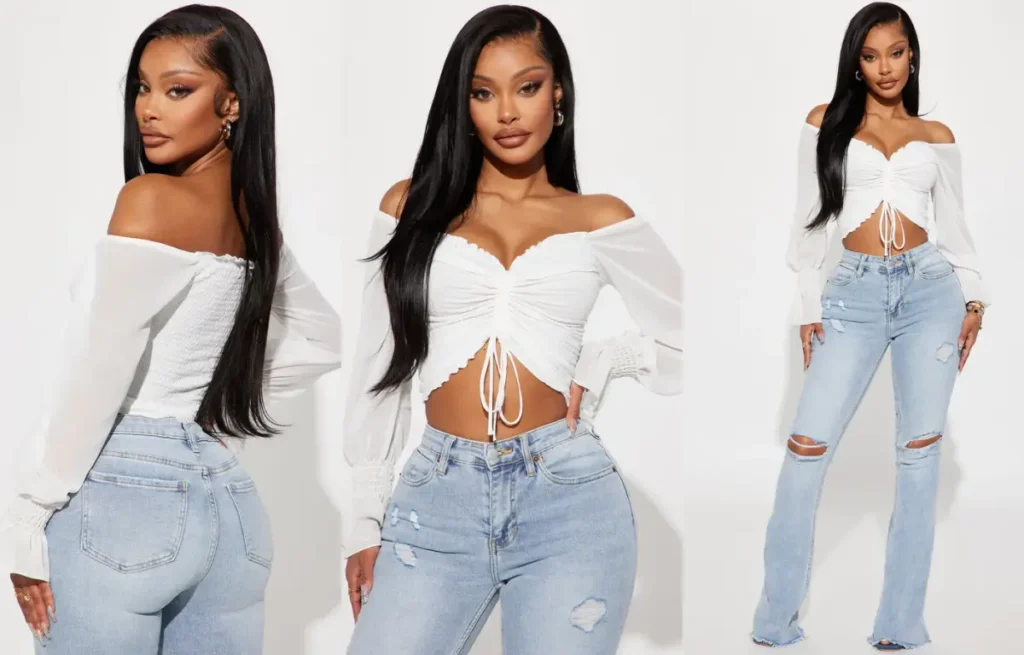
Why are off-shoulder blouses so popular across global fashion markets?
They blend sensuality with versatility—highlighting the neckline while staying wearable.
Off-shoulder blouses feature an exposed shoulder design, often supported by elastic or structured seams, offering a mix of casual and elegant appeal depending on fabric and cut.
This blouse type is especially effective in markets targeting Gen Z and young Millennials. It fits perfectly into resortwear, festival, and night-out categories. I’ve seen it sell well even in transitional seasons when paired with long sleeves or dramatic silhouettes.
Common Types of Off-Shoulder Blouses
| Style Name | Key Feature |
|---|---|
| Classic Off-Shoulder | Elastic band sits across both shoulders |
| One-Shoulder Blouse | Single shoulder cutout, asymmetric look |
| Bardot Blouse | Romantic with ruffles, often cropped |
| Off-Shoulder with Sleeves | Full-length or puff sleeves attached below shoulders |
| Smocked Off-Shoulder | Fitted body with stretch panel |
Ideal Fabrics for Off-Shoulder Blouses
| Fabric | Benefit | Target Look |
|---|---|---|
| Cotton Poplin | Structured, breathable | Preppy or casual off-shoulders |
| Rayon | Soft and drapey | Feminine, flowy designs |
| Chiffon | Sheer, lightweight | Layered or romantic styles |
| Linen Blends | Natural texture, summer-friendly | Resortwear or vacation collections |
| Stretch Jersey | Comfortable, fitted | Youth and casual fashion |
Key Design Elements for Function and Fit
- Elastic Band Quality: Ensures blouse stays in place while moving.
- Sleeve Attachment: Drop sleeves must be comfortable and non-restrictive.
- Neckline Shape: Straight, sweetheart, or ruched for different aesthetics.
- Back Coverage: Full-back or open-back options depending on formality.
Production Considerations
| Concern | Solution |
|---|---|
| Elastic distortion | Use high-quality braided or knitted elastic |
| Slipping from shoulders | Add silicone grip tape or design side ties |
| Fabric stretching | Pre-wash fabrics to reduce post-sewing distortion |
| Sleeve fit inconsistency | Check underarm fit carefully during grading |
Lace or Cut-Out Blouse
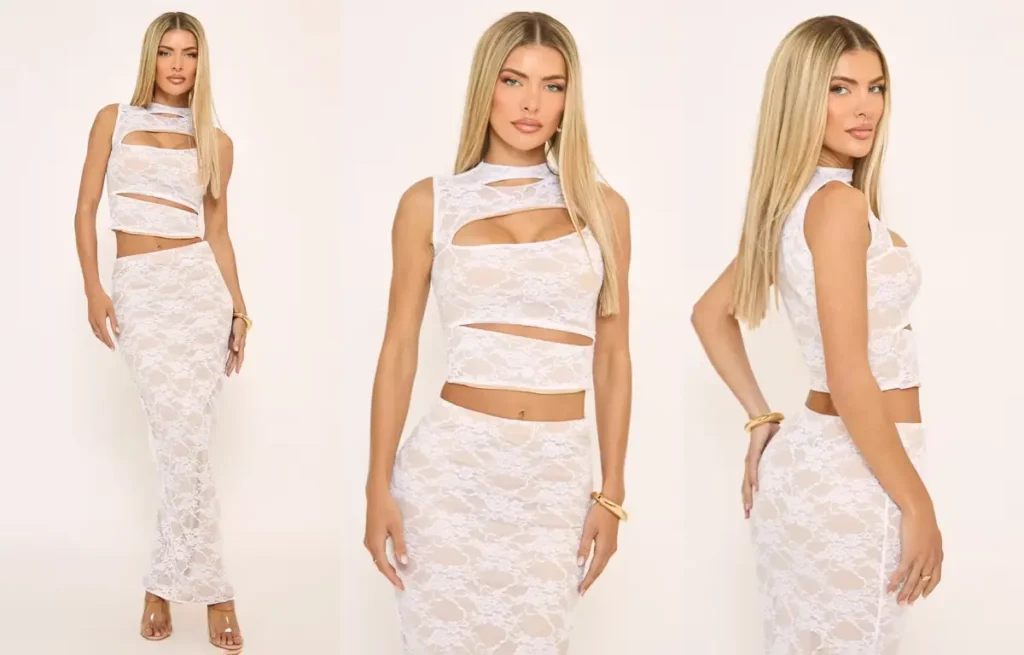
Why are lace and cut-out blouses so impactful in fashion?
Because they add texture, shape, and dimension without relying on loud colors or prints.
Lace and cut-out blouses use intricate trims or strategically placed openings to enhance visual interest—offering detail-driven appeal across formal and trend markets.
These styles allow fashion brands to serve customers looking for something more unique. Even small lace inserts or back cut-outs can change the entire mood of a blouse. And with minimal change to the base pattern, you get maximum variation in look.
Common Design Types in Lace or Cut-Out Blouses
| Design Style | Key Feature |
|---|---|
| Full Lace Blouse | Entire blouse made of lace, often with lining |
| Lace Insert Blouse | Lace panels at neckline, shoulders, or sleeves |
| Keyhole Cut-Out Blouse | Round or teardrop opening at front or back |
| Side Cut-Out Blouse | Openings at the waist or bodice |
| Laser-Cut Blouse | Fabric with decorative laser-cut shapes |
| Sleeve Cut-Out Blouse | Exposed shoulder or arm areas |
Best Fabric Pairings for Lace & Cut-Outs
| Base Fabric | Paired Detail | Best Use Scenario |
|---|---|---|
| Cotton Voile | Crochet or floral lace | Casual or bohemian blouses |
| Chiffon | Small cut-out inserts | Light, romantic designs |
| Satin | Back keyhole or sheer lace | Eveningwear or luxury lines |
| Poplin | Shoulder cut-outs | Modern or structured blouses |
| Jersey | Laser-cut patterns | Trend-driven, youth-focused fashion |
Functional Considerations in Production
| Factor | What to Watch For |
|---|---|
| Seam Finishing | Lace and cut-outs must be clean to avoid fraying |
| Lining Management | Balance coverage vs. transparency for key zones |
| Pattern Matching | Lace inserts must align correctly for symmetry |
| Cut-Out Placement | Ensure cut-outs flatter the body and allow movement |
| Durability | Avoid weak spots where cut-outs are too close to seams |
Styling Advantages of Lace or Cut-Out Blouses
- Adds Visual Texture: Great for neutral collections needing subtle interest.
- Supports Layering: Lace and sheer cut-outs pair well with tanks or bralettes.
- Flattering Shape Control: Strategic cut-outs can elongate necklines or define waists.
- Year-Round Appeal: Sheer lace for spring/summer, heavier fabrics for fall/winter.
Fit & Design Considerations for End Customers
| Body Area Highlighted | Design Impact |
|---|---|
| Upper Chest | Creates a delicate or romantic look |
| Back or Shoulder | Adds drama and elegance, especially with updos |
| Waist or Ribcage | Flatters midsection in slim-fit designs |
| Arms | Lightens visual bulk with open sleeve detail |
Layered Blouse
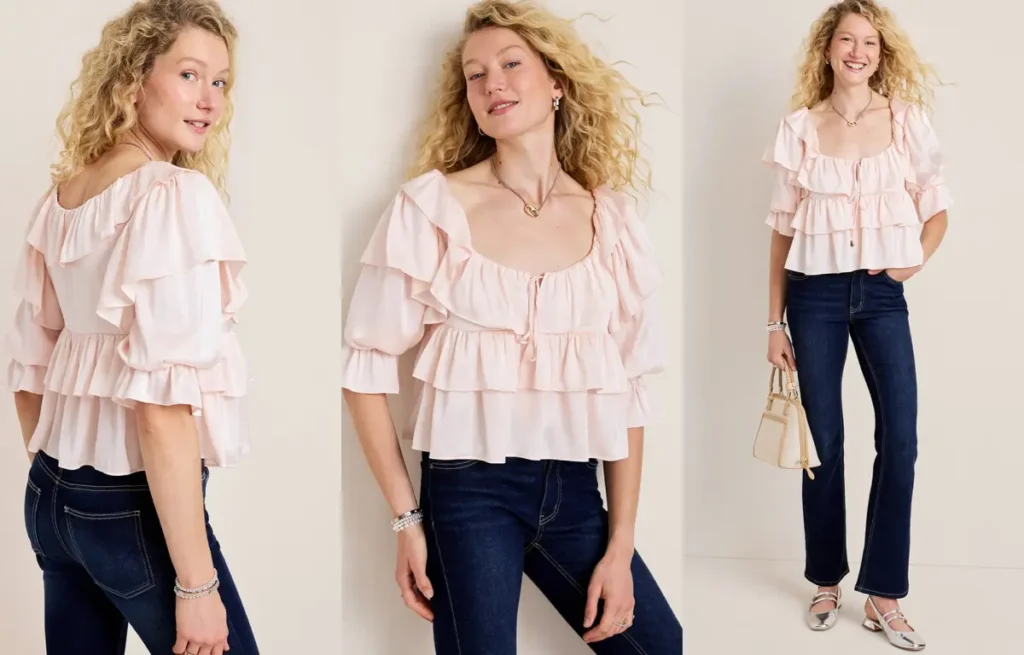
Why are layered blouses key to creating dimensional and trend-forward looks?
Because they use fabric placement and silhouette design to enhance motion, texture, and structure.
Layered blouses feature multiple fabric panels—either in tiers, ruffles, or overlays—to add depth, volume, or a unique shape to the garment.
These styles aren’t just about fashion—they’re about form. They can elongate, exaggerate, or soften a figure, depending on how the layers fall. From minimal folds to dramatic cascades, this style plays a visual game with gravity and flow.
Common Types of Layered Blouses
| Style Name | Key Characteristics |
|---|---|
| Tiered Layer Blouse | Horizontal fabric layers down the body |
| Peplum with Double Hem | Fitted top with two ruffle layers at the waist |
| Overlapped Panel Blouse | Asymmetric front or back layers |
| Layered Shoulder Blouse | Tiered ruffles or fabric at shoulder and sleeve |
| Chiffon Overlay Blouse | Sheer outer layer over a solid base |
Best Fabrics for Layered Construction
| Fabric Type | Benefit | Use Case |
|---|---|---|
| Chiffon | Light, flows well in layers | Feminine or romantic designs |
| Georgette | Slight texture, drapes without clinging | Boho, casual chic |
| Poplin | Holds shape for structured layers | Workwear or smart casual pieces |
| Satin | Adds fluid movement with sheen | Occasionwear or elegant edits |
| Organza | Stiff and crisp—ideal for bold volume | Couture-inspired or editorial |
Construction Details for Layered Blouses
- Seam Allowance Control: Layers must lie flat without bulk.
- Fabric Weight Matching: Combine similar weights to avoid dragging.
- Finish Edges Carefully: Rolled hems, laser cuts, or bias finishing reduce stiffness.
- Layer Positioning: Placement affects perceived body proportions.
How Layer Placement Affects Fit and Flattery
| Layer Focus Area | Visual Effect |
|---|---|
| Bust or neckline | Adds volume—great for smaller chest shapes |
| Waist/hip | Enhances curves or balances broad shoulders |
| Hemline only | Creates movement, elongates lower body |
| Sleeves/shoulders | Adds width, can create dramatic silhouettes |
Cropped Blouse
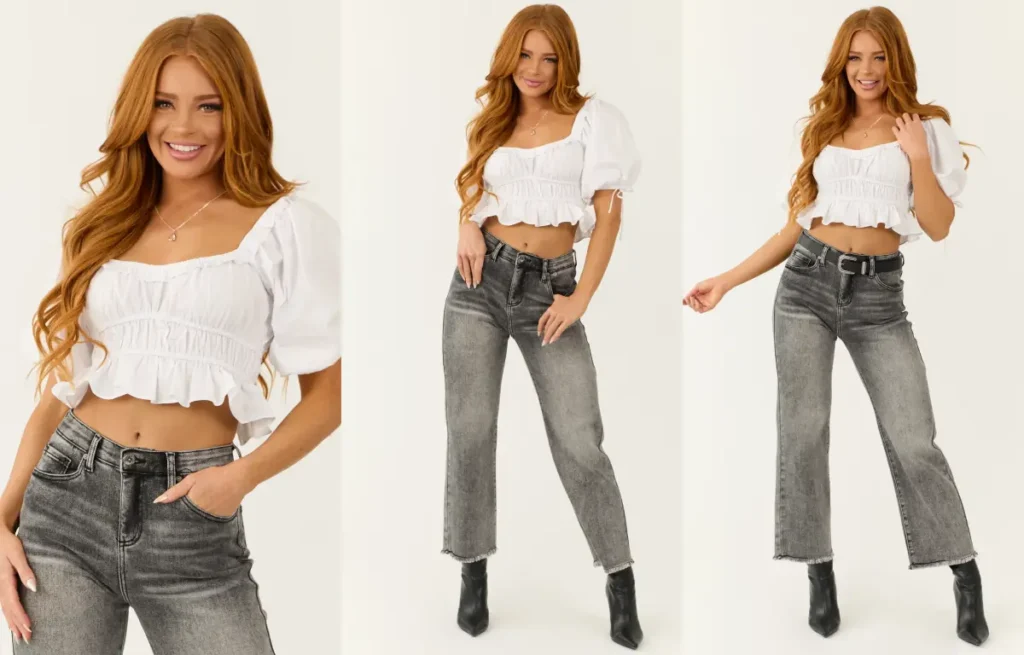
Why are cropped blouses essential for Gen Z and modern fashion lines?
Because they’re bold, adaptable, and tap into the current demand for body-positive, trend-forward styles.
Cropped blouses are shorter-length tops that typically stop at or above the waist, offering a fashion-forward silhouette that pairs well with high-rise bottoms and layered looks.
In many of our collections, cropped blouses serve as hero pieces—they grab attention in e-commerce photography, work well with styling content, and attract a younger, fashion-hungry demographic.
Most Common Cropped Blouse Styles
| Style Name | Key Feature |
|---|---|
| Cropped Button-Up | Classic shirt shape, shortened hem |
| Cropped Puff Sleeve | Trendy, voluminous sleeves |
| Corset-Inspired Crop | Structured fit with boning or seam shaping |
| Wrap Cropped Blouse | Adjustable front, ties at waist |
| Elastic Hem Cropped Top | Stretch band holds blouse at waistline |
| Collared Cropped Blouse | Clean, tailored feel with youthful length |
Ideal Fabrics for Cropped Blouses
| Fabric | Benefit | Best Use Cases |
|---|---|---|
| Poplin | Crisp, structured | Collared or shirt-style crops |
| Chiffon | Light, feminine drape | Layered or printed crop styles |
| Cotton Jersey | Stretchy and breathable | Casual and everyday designs |
| Satin | Adds elegance and sheen | Partywear or occasionwear |
| Linen Blends | Cool and textured | Summer and resort collections |
Key Design and Fit Considerations
| Design Element | Functionality Impact |
|---|---|
| Hem Elastic or Band | Keeps blouse in place while allowing movement |
| Sleeve Design | Can balance cropped length with volume |
| Neckline Depth | Needs to complement shorter length |
| Back Coverage | Consider modesty or layering options |
Sizing & Body Type Notes
| Body Type | Cropped Style Advantage |
|---|---|
| Petite | Enhances proportions, elongates legs |
| Hourglass | Highlights waist, works with high-rise bottoms |
| Rectangle | Adds shape when combined with puff or wrap styles |
| Plus Size | Needs thoughtful shaping and supportive fabrics |
Backless Blouse
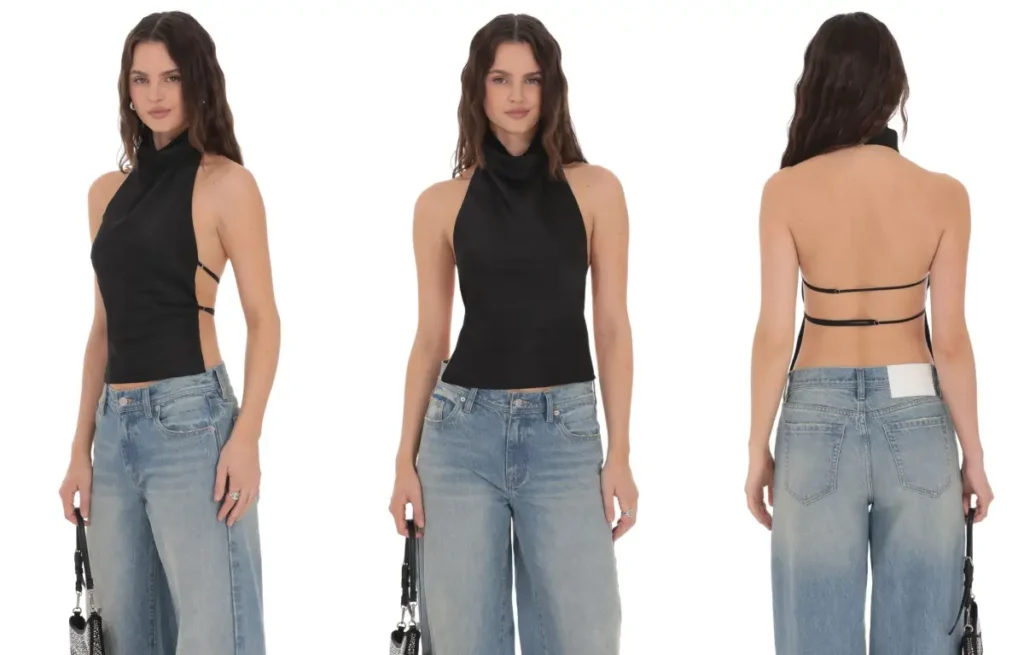
Why are backless blouses a statement piece in modern fashion?
Because they blend elegance and sensuality in a way that few other tops can.
Backless blouses expose part or all of the back, often using ties, straps, or low cuts—making them a popular choice for eveningwear, resortwear, and fashion-forward looks.
These blouses often require more thought in design and construction, but they offer a unique selling point. When executed well, they elevate any collection and are frequently featured in brand campaigns and influencer content.
Types of Backless Blouses and Their Features
| Style Type | Design Feature |
|---|---|
| Full Open Back | Complete exposure, usually tied at neck/waist |
| Keyhole Back | Small circular/oval cut-out near neckline |
| Crisscross Strap Back | Straps forming X-shapes or lacing at the back |
| Low-Back Cut Blouse | Deep scoop or V backline |
| Tie-Back Blouse | Back held by adjustable or decorative ties |
Fabric Selection for Backless Styles
| Fabric | Why It’s Suitable | Target Use |
|---|---|---|
| Satin | Smooth, drapey, elegant | Eveningwear, party blouses |
| Chiffon | Lightweight, breathable | Layered or sheer-backed designs |
| Stretch Knit | Body-hugging, comfortable | Minimalist or fitted backless tops |
| Georgette | Semi-sheer, soft texture | Boho and dressy casual styles |
| Silk | Luxurious, lightweight | Premium collections, eventwear |
Technical Construction Considerations
| Design Area | Production Note |
|---|---|
| Neck and Back Ties | Must be secure yet adjustable |
| Seams and Hems | Need clean finishing to maintain high-end appearance |
| Support Structure | May need built-in cups, elastics, or linings |
| Back Panel Symmetry | Back shape must stay consistent across all sizes |
| Fabric Draping | Test fabric for flow and recovery without structure loss |
Styling and Body Fit Considerations
| Body Feature | Styling Impact |
|---|---|
| Broad Shoulders | Pair with thin straps or halter style |
| Curved Lower Back | Use low-cut or V-back to emphasize natural lines |
| Slim Torso | Crisscross or lace-up back adds shape and depth |
| Fuller Bust | Use structured front with firm underband or lining |
Cape Blouse
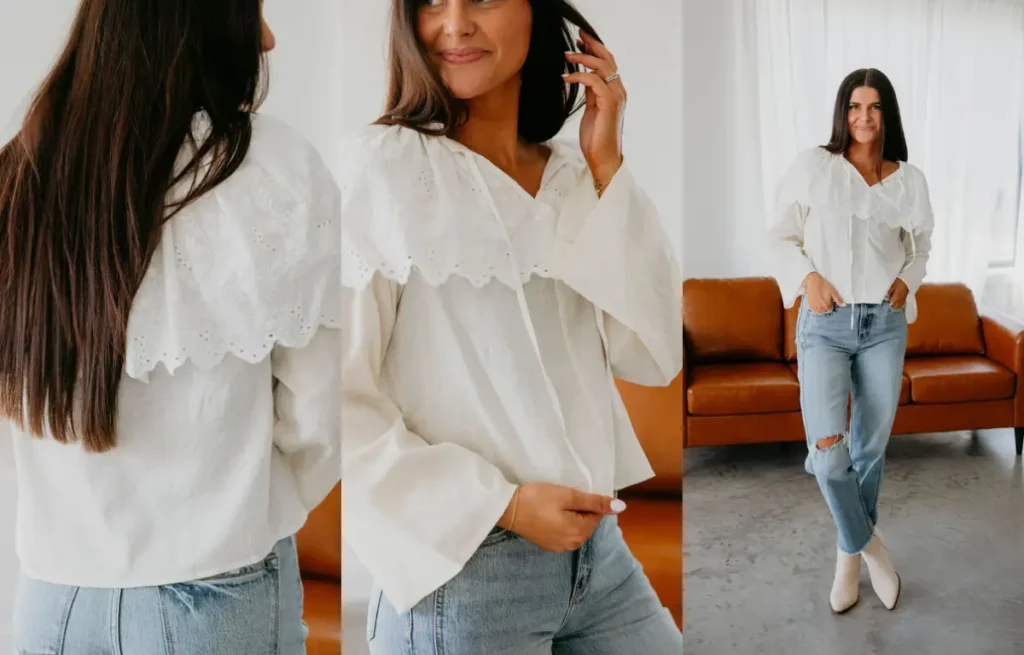
What makes the cape blouse a dramatic yet wearable fashion piece?
It merges functionality with flair—giving movement, modesty, and style in one design.
Cape blouses feature an attached fabric panel that drapes over the shoulders or arms like a cape, creating flow and visual drama without sacrificing comfort or wearability.
These blouses blur the line between fashion and occasionwear. They’re ideal for brands that want to offer sophistication with a modern twist, whether for professional, formal, or editorial markets.
Most Common Cape Blouse Designs
| Cape Style | Description |
|---|---|
| Shoulder-Covering Cape | Fabric drapes from neck over shoulders and back |
| Front-Overlay Cape | Fabric extends over arms from neckline to front hem |
| Split-Sleeve Cape | Sleeves built into cape for comfort and mobility |
| High-Neck Cape Blouse | Cape combined with a structured neckline |
| Layered Cape Blouse | Multiple cape tiers for added volume or movement |
Ideal Fabrics for Cape Blouses
| Fabric | Why It’s Effective | Best Use Case |
|---|---|---|
| Chiffon | Light, floats gracefully | Eveningwear, romantic edits |
| Georgette | Semi-sheer, soft drape | Boho or resort styles |
| Satin | Glossy and fluid | Formal or luxury collections |
| Crepe | Slight texture, holds structured shapes | Office or minimal fashion |
| Silk | Premium feel, softest movement | Premium boutiques or special occasion |
Technical Construction Considerations
| Production Focus | Details to Manage |
|---|---|
| Shoulder Seam Support | Reinforce where cape joins to body |
| Lining Choice | Optional—based on sheerness of base fabric |
| Edge Finishing | Rolled hems or clean bias tape to prevent fraying |
| Cape Weight Balance | Keep cape light enough to avoid pulling the neckline |
| Movement Testing | Ensure cape flows naturally without twisting |
Style and Fit Benefits of Cape Blouses
| Styling Function | Why It Matters |
|---|---|
| Adds Volume | Enhances visual movement, ideal for photography |
| Balances Silhouette | Great for narrow shoulders or rectangular shapes |
| Modesty Layer | Provides coverage without full sleeves |
| Emphasizes Neckline | Often paired with high necks or collars |
Mandarin Collar Blouse
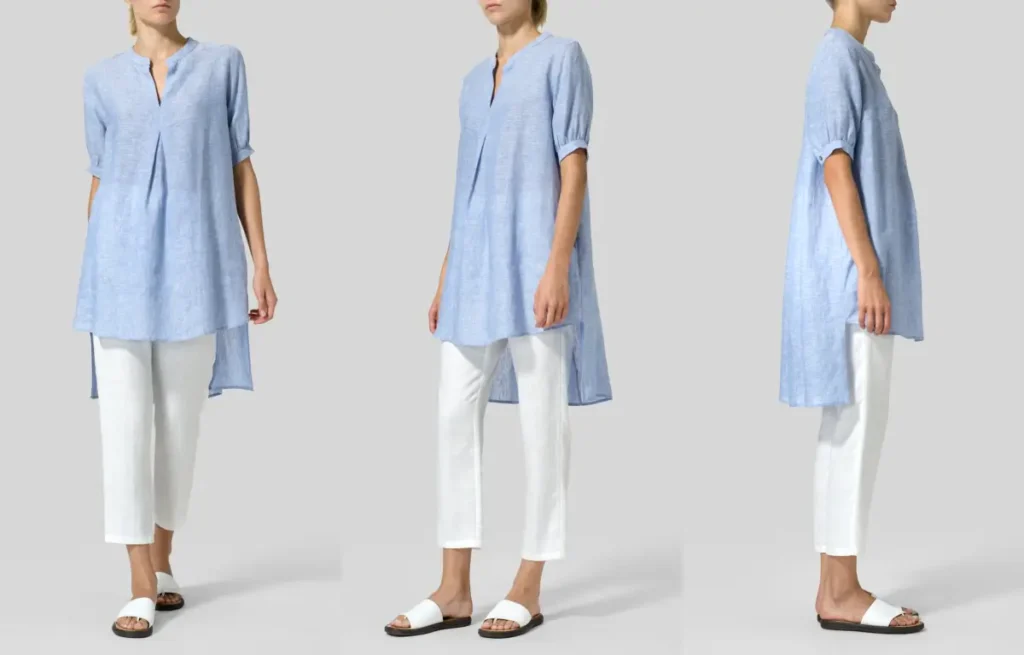
Why is the mandarin collar blouse a refined staple for modern collections?
Because it combines minimalism with structure—perfect for smart, global aesthetics.
A mandarin collar blouse features a short, stand-up collar without lapels, giving a sleek neckline often used in workwear, formal, and modern minimalist fashion.
Its design roots come from East Asian traditional wear, but today, it fits effortlessly into modern wardrobes. The collar sits comfortably around the neck without folding down, offering structure without bulk.
Types of Mandarin Collar Blouses
| Style Variation | Key Feature |
|---|---|
| Classic Mandarin Collar | Simple stand-up band, no embellishment |
| Buttoned Front | Buttons along center or side for functional detail |
| Mandarin with Pleats | Added texture around placket or shoulder |
| Half-Placket Blouse | Mandarin collar with short-button placket |
| Soft Mandarin Collar | Less structured, often combined with flowing fabric |
Ideal Fabrics for Mandarin Collar Blouses
| Fabric | Why It Works | Best Use Case |
|---|---|---|
| Poplin | Crisp and clean structure | Officewear, uniforms |
| Satin | Adds shine and elegance | Formalwear or event pieces |
| Linen Blends | Breathable and soft with natural texture | Resort or contemporary edits |
| Silk | Premium feel and drape | Premium boutiques, minimalist fashion |
| Cotton Stretch | Comfort with structure | All-day wear for modern professionals |
Construction Insights
| Focus Area | Key Notes |
|---|---|
| Collar Stand Height | Should sit 2–4 cm high for optimal comfort |
| Button Spacing | Even placement maintains symmetry |
| Seam Cleanliness | Highly visible collar area requires precise finishing |
| Neckline Shape | Balance between close-fit and breathability |
Styling and Body Fit Impact
| Collar Effect | Style Result |
|---|---|
| Elongates Neckline | Creates refined, upright posture |
| No Distractions | Perfect canvas for bold earrings or makeup focus |
| Adds Formal Edge | Transforms soft fabrics into sharp silhouettes |
Twist Front Blouse
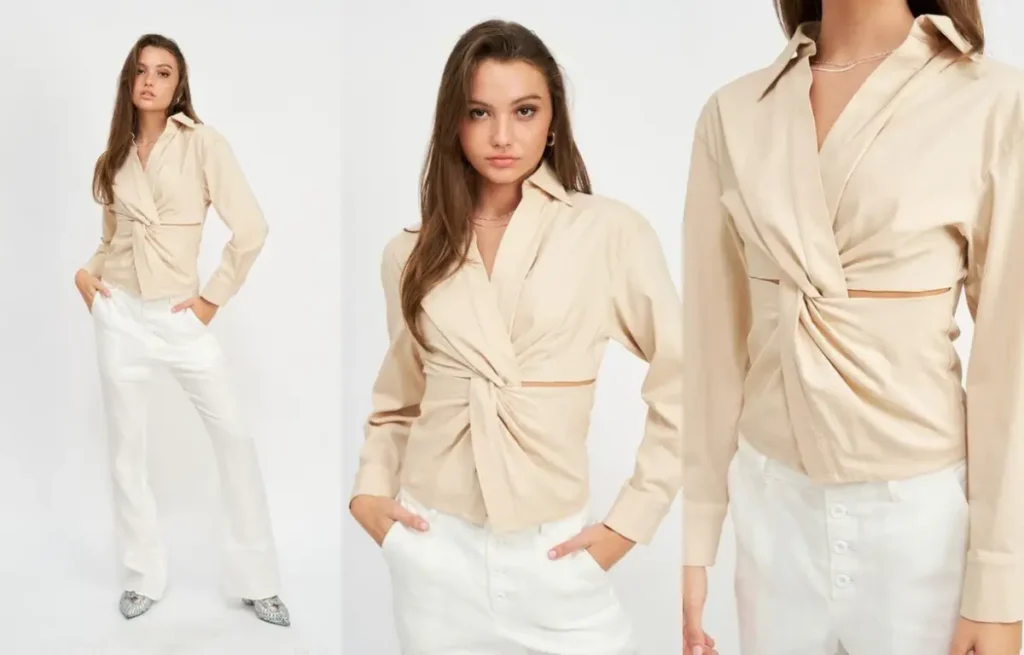
Why is the twist front blouse a flattering and fashion-focused choice?
Because it naturally enhances the waist and bust line while adding texture and movement.
Twist front blouses feature a knot or twist in the fabric—usually placed at the waist or bust—creating a gathered, draped effect that flatters the body and adds visual interest.
This small design detail creates a dynamic focal point. Whether you’re targeting minimalists or bold dressers, the twist front delivers something fresh without relying on prints or loud trims.
Common Twist Front Blouse Styles
| Style Variation | Key Feature |
|---|---|
| Waistline Twist | Twist sits at the natural waist, often cropped |
| Bust Knot Twist | Center front knot under bustline, adds fullness |
| Side Twist | Knot placed at side seam for asymmetry |
| Twist Hem with Draping | Gathered fabric falls below the twist for flow |
| Twist Crop Top | Short length with bold central twist, Gen Z-friendly |
Best Fabrics for Twist Front Blouses
| Fabric | Why It Works | Ideal Use Case |
|---|---|---|
| Rayon Spandex | Stretch and drape for clean twist shape | Casual or body-hugging designs |
| Satin | Soft shine, smooth twist effect | Eveningwear or partywear |
| Modal Blend | Fluid, lightweight | Contemporary daily wear |
| Cotton Jersey | Structured but stretchable | Streetwear or youth styles |
| Crepe | Slight texture adds twist depth | Workwear or formal edits |
Technical Construction Considerations
| Design Area | Production Focus |
|---|---|
| Twist Placement | Must hit flattering point on body—adjust by size |
| Bulk Management | Fabric layers should lie flat beneath twist |
| Stitch Reinforcement | Twist center can pull—needs secure inner construction |
| Pattern Adjustment | Each twist type may need separate base pattern |
Wrap Blouse
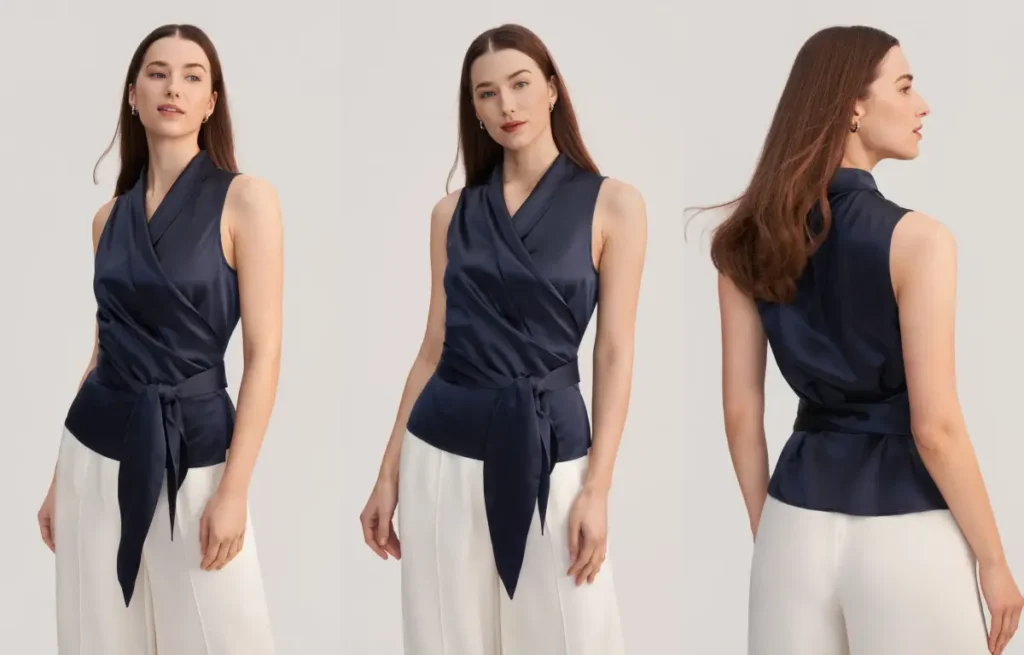
Why is the wrap blouse a universally flattering and highly commercial piece?
Because it enhances shape while offering comfort and styling versatility.
A wrap blouse crosses one side of the fabric over the other and ties it at the waist or side—creating a V-neck and cinched silhouette that suits many body shapes and markets.
The beauty of the wrap blouse is that it blends form and function. It can be classic or trendy, fitted or flowy. And for buyers, that means fewer fit complaints and broader styling potential.
Key Variations of Wrap Blouses
| Wrap Type | Description |
|---|---|
| Classic Side Tie Wrap | Wraps around waist and ties at the side or back |
| Faux Wrap Blouse | Pre-stitched overlap, no actual tying |
| Front Tie Wrap | Wrap ties in front, often cropped |
| Peplum Wrap Blouse | Flared hem below the waist tie for hourglass effect |
| Wrap with Puff Sleeves | Adds volume to balance the fitted body |
Fabric Selection for Wrap Blouses
| Fabric | Characteristics | Best Use Case |
|---|---|---|
| Rayon | Soft drape, breathable | Feminine, flowy styles |
| Cotton Poplin | Structured with a clean finish | Workwear or modern classics |
| Chiffon | Lightweight and sheer | Layered wrap blouses for summer |
| Satin | Glossy, elegant | Occasionwear and evening edits |
| Jersey Knit | Stretchy, forgiving fit | Casual or youth-focused styles |
Technical Considerations for Manufacturing
| Construction Area | Focus Point |
|---|---|
| Neckline Finish | V-necklines must lay flat without pulling |
| Waist Tie Placement | Adjust for different torso lengths |
| Seam Reinforcement | Stress at the side seam or tie points |
| Overlap Control | Inner button or snap for secure fit |
Ruched Blouse
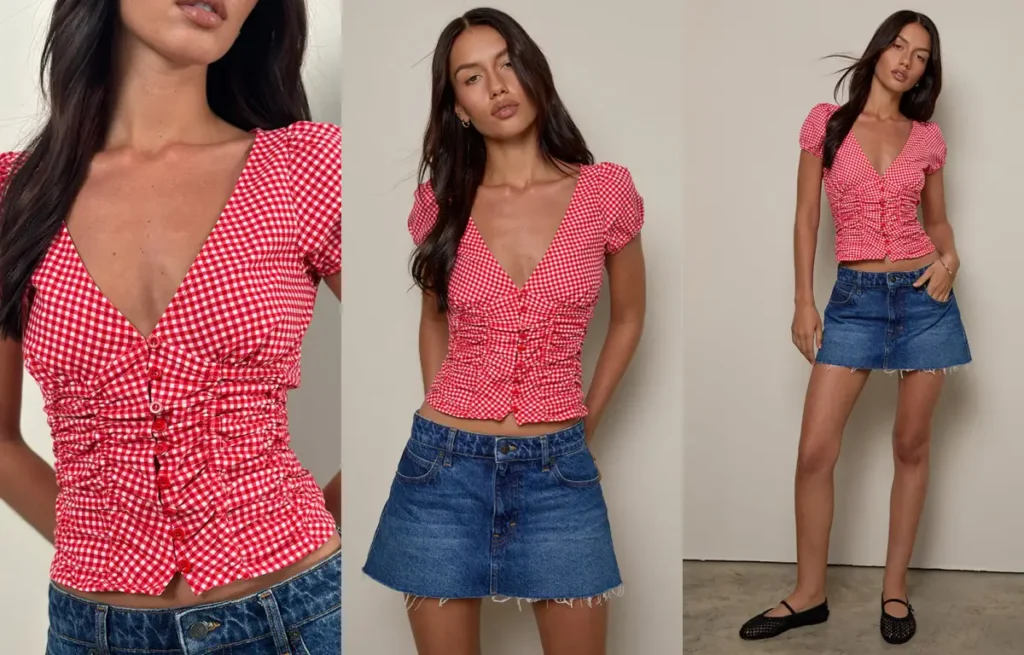
Why is the ruched blouse such a flattering and commercially smart design?
Because it enhances shape, creates depth, and fits comfortably while staying stylish.
Ruched blouses feature gathered fabric along seams, usually created by elastic or drawstring channels—producing a textured, fitted look that’s both flattering and forgiving.
These designs work across casual, elevated basics, and eveningwear. Depending on fabric and cut, ruching can be subtle and structured or dramatic and fashion-forward—giving buyers lots of range.
Types of Ruched Blouses by Design Focus
| Ruched Style Type | Description |
|---|---|
| Side Ruched Blouse | Gathers on one or both side seams for waist shaping |
| Front-Center Ruching | Elastic channel at center front for bust focus |
| Ruched Sleeves | Elastic or drawstring along sleeves for volume control |
| Full Body Ruched | All-over gathering for bodycon effect |
| Adjustable Drawstring Ruched | Ties allow wearer to control amount of ruching |
Ideal Fabrics for Ruching
| Fabric | Why It Works Well | Use Case |
|---|---|---|
| Jersey Knit | Stretchy, soft, molds easily | Youthful basics, fitted styles |
| Rayon Spandex | Breathable with soft drape | Feminine ruching with fluid movement |
| Satin | Holds gathered texture with soft shine | Partywear or evening blouses |
| Lightweight Poplin | Structured ruching for workwear blends | Modern or elevated casual designs |
| Mesh or Tulle | Creates layered ruching with transparency | Trend-forward, Gen Z-focused lines |
Technical Construction Tips
| Design Element | Key Consideration |
|---|---|
| Elastic Tension | Needs careful adjustment to avoid over-tight gathering |
| Seam Strength | Reinforce ruched seams due to stretch and pull |
| Symmetry in Gathering | Keep ruching even on both sides or sleeves |
| Channel Width | Affects volume—narrow for delicate, wide for bold styles |
Mesh or Sheer Blouse
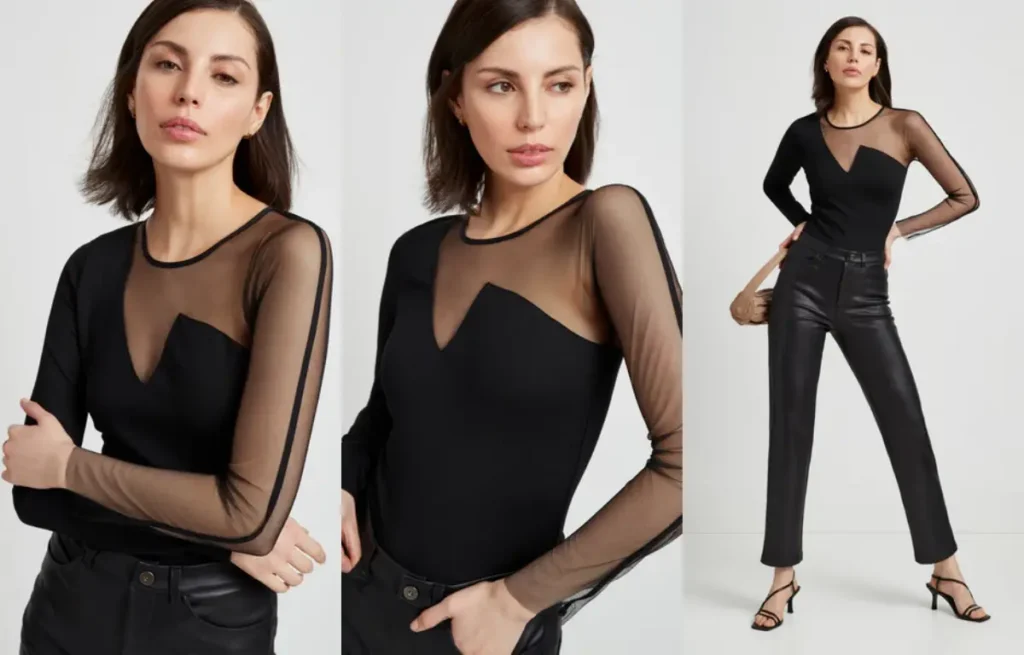
What makes mesh or sheer blouses a standout in modern fashion?
They add visual intrigue without relying on prints—using light and layering to shape the silhouette.
Mesh or sheer blouses are made from translucent fabrics that either reveal skin or create layered depth, often styled for statement looks, layering pieces, or sensual eveningwear.
These styles allow brands to offer subtle or bold designs without adding bulk. Depending on the fabric and cut, they can serve Gen Z’s demand for edgy styling or older markets that appreciate sophistication with a twist.
Types of Mesh or Sheer Blouses
| Style Type | Key Features |
|---|---|
| Full Mesh Blouse | Entirely sheer with long sleeves or mock neck |
| Sheer Panel Blouse | Transparent inserts at sleeves, neckline, or sides |
| Double-Layer Sheer Blouse | Inner tank or lining layer under transparent outer layer |
| Embroidered Mesh Blouse | Delicate lace or stitched patterns on mesh base |
| Glitter or Foil Mesh Top | Fashion-forward, metallic or sparkly for nightwear |
Ideal Fabrics for Mesh and Sheer Designs
| Fabric | Characteristics | Best Use Case |
|---|---|---|
| Nylon Mesh | Stretchy, lightweight, slightly structured | Streetwear, layering pieces |
| Tulle | Fine net texture, soft structure | Embellished or romantic looks |
| Organza | Crisp and structured with light stiffness | High-fashion or editorial styles |
| Chiffon | Soft, flowy, semi-transparent | Feminine and elegant styles |
| Power Mesh | Durable stretch mesh, body-hugging | Fitted tops, underlayers |
Construction and Technical Considerations
| Detail Area | Key Challenges and Solutions |
|---|---|
| Seams and Hems | Use baby hems or bound edges to avoid puckering |
| Stretch Management | Stabilize neck and wrist openings on stretch mesh |
| Transparency Control | Offer optional linings or matching bralettes |
| Embellishment Weight | Ensure embroidery or stones don’t distort sheer fabric |
Styling and Fit Functions
| Feature Focus | Styling Impact |
|---|---|
| Transparency | Allows creative layering and skin visibility |
| Lightweight Fabric | Adds movement, comfort, and drama |
| Slim Fit or Oversized | Stretch mesh for body-hugging looks, organza for volume |
| Sleeve and Neck Detail | Puff sleeves, mock necks, and bell cuffs add elegance |
What should buyers consider when selecting blouse types for their collection?
It’s not just about aesthetics—it’s about function, audience, and fabrication.
Buyers should align blouse types with customer body types, seasonal timing, fabric capabilities, and styling trends to ensure successful commercial performance.
Strategic Selection Checklist
| Consideration | Why It Matters |
|---|---|
| Target Demographic | Determines sleeve type, fit preference, and neckline |
| Seasonality | Impacts fabric weight, coverage, and layering options |
| Styling Versatility | Increases rewear potential and customer satisfaction |
| Production Complexity | Affects cost, lead time, and MOQ feasibility |
| Trend Alignment | Ensures market relevance and faster sell-through |
Conclusion
Understanding the different types of blouses helps fashion professionals create more targeted, trend-aligned, and commercially viable collections—one style at a time.