 Skip to content

How to Verify a Women’s Clothing Manufacturer in China
Verify more than a business licence. Confirm who makes the garments, how development is controlled, and whether approved standards can be repeated in bulk.
- Check legal identity, factory address, contract entity, and payment beneficiary before commercial commitment.
- Verify product-specific capability across pattern, fit, fabric, construction, sampling, and production ownership.
- Confirm bulk control through PPS, measurement, inline inspection, finishing, final inspection, and packing checks.
- For reference, XZapparel operates from a manufacturing base of about 20,000 m² with about 80 sewing lines and a standard garment MOQ of 200 pcs/style/color, subject to material and process conditions.
Verify Legitimacy, Capability, and Repeatability Before Production
A supplier can be legally registered yet still be unsuitable for a fashion program. Use three verification layers before approving samples, deposits, or bulk production.
Legitimacy Comes First
Confirm the company exists and identify the entity that will sign the contract, receive payment, and take responsibility for production. A business licence should match formal company documents, while the production address should be confirmed separately through factory records, live video, audit evidence, or an on-site visit. Do not assume a brand name, sales office, factory, and bank beneficiary are automatically the same legal entity.
- Match legal names across formal documents.
- Confirm the production address independently.
- Clarify the contract and payment relationship.
Capability Must Match Product
A real factory is not automatically the right factory for dresses, swimwear, fitted tops, structured sets, or other women’s fashion categories. Ask for evidence tied to the actual product: patterns, samples, fabrics, construction details, approved measurements, relevant machinery, and recent production examples. Capability should be evaluated by category and construction complexity rather than by a long catalogue of garment names.
- Review relevant product history.
- Check fit, fabric, and construction knowledge.
- Confirm whether specialist processes are in-house or partner-managed.
Repeatability Proves Production
The final question is whether an approved result can be repeated across hundreds or thousands of units. Review how the supplier carries approved samples, measurements, materials, trims, workmanship, and packaging requirements into production. A reliable system should show approval gates before bulk, inspection points during production, and clear change control when fabric lots, trims, fit comments, or production details move from one version to another.
- Trace the path from sample to PPS.
- Review inline and measurement control.
- Check how changes are recorded before reorder.
Eight Checks Before You Approve a Manufacturer
Use the same sequence for every shortlisted supplier. A consistent method prevents impressive samples, certificates, or factory photos from hiding weaknesses elsewhere in the production system.
Legal Entity
Request the registered company information used for contracts and payment. Compare it with invoices, bank details, business documents, and the manufacturing address. Any unexplained mismatch should be resolved before a deposit or production commitment is made. Ask who is authorised to sign commercial documents and whether the invoicing relationship changes for export transactions. Keep copies of the records used during onboarding so later changes can be checked against the original qualification file.
Factory Ownership
Confirm where cutting, sewing, finishing, inspection, and packing actually happen. Ask which processes are controlled directly, which are completed by long-term specialist partners, and who remains responsible for standards, approvals, and final garment quality. Follow one representative style through the proposed manufacturing route and note every location or handover. A clear ownership map is more useful than a general claim that the supplier controls everything.
Product Experience
Look for repeated experience in the specific women’s category, silhouette, fabric, and construction level you need. A supplier with strong casual tops may not automatically be suitable for lined occasion dresses or stretch swimwear with support engineering. Ask for relevant samples, redacted development records, or current production evidence. The strongest proof links product history with pattern, material, construction, fit, and quality controls used for similar work.
Development System
Evaluate pattern making, sample making, fit revision, material sourcing, and technical communication before focusing on bulk capacity. Development resources reveal whether the supplier can convert a reference, Tech Pack, sample, or size chart into a controlled production standard. Ask who owns comments between rounds, how revised measurements are recorded, and how the approved version reaches production. Development discipline becomes especially important when several styles move in parallel.
Material Control
Review how fabrics and trims are sourced, inspected, tested, approved, and rechecked by lot. Material risk can affect shrinkage, stretch, colour, drape, fit, seam stability, and delivery long before sewing begins. Ask for the specification or approved reference used to compare bulk material, then confirm what happens when a lot differs.
Strong material control links a test or inspection result to an approval, hold, replacement, or pattern decision.
Bulk Quality
Ask how approved measurements, workmanship, materials, trims, and packaging become production references. Look for pre-production controls, inline inspection, measurement checks, finishing inspection, final inspection, and clear handling of defects or changes. Confirm that production and QC work from the same approved version rather than separate notes. Also ask how recurring defects are escalated and whether corrective action is checked before the remaining quantity continues.
Capacity Reality
Compare claimed capacity with sewing lines, machines, staffing, current workload, product complexity, style mix, material readiness, and requested lead time. One large monthly number is not enough to judge available capacity for a specific program. Ask what portion of the factory can realistically be allocated during the proposed window and what assumptions support the schedule. Capacity should tighten when styles become more complex, approvals arrive late, or specialist processes create bottlenecks.
Commercial Fit
Confirm garment MOQ, material or trim constraints, quotation inputs, payment terms, lead-time conditions, packing requirements, and shipment responsibilities. Commercial terms should reflect the actual style, quantity, market, and production route rather than a generic promise. Ask which assumptions can change the quote after sampling and which items must be fixed before production starts. A transparent supplier should surface commercial constraints early enough for the sourcing team to restructure the program if needed.
Match Legal, Factory, Contract, and Payment Records
Legal verification works best when every document has a defined role. The table below shows what to request, what to compare, and where mismatches deserve further review.
| Verification Point | What to Request | What Should Match | Red Flag to Resolve |
|---|---|---|---|
| Registered company | Current business registration or qualification document | Contract entity and formal company records | Sales brand presented as legal entity without supporting documents |
| Manufacturing location | Factory address, live tour, audit or production evidence | Actual cutting, sewing, QC and packing location | Only a showroom or office can be shown |
| Contract party | Draft contract or supplier onboarding form | Registered company and agreed commercial responsibility | Contract issued by an unexplained third party |
| Payment beneficiary | Bank beneficiary information on formal documentation | Contract and invoicing relationship | Payment requested to an unrelated personal or company account |
| Certification subject | Current certificate or audit document | Named company/site and stated scope | Logo shown without subject, scope, or validity details |
| Production responsibility | Ownership map for key processes | Factory route, specialist partners, QC responsibility | Subcontracting is denied or cannot be explained |
Confirm Who Actually Makes and Controls the Garment
A strong supply chain is defined by controlled responsibility, not by claiming every process sits under one roof. Map each production step and identify who owns the standard.
Separate Core Manufacturing From Commercial Representation
A website, trading name, showroom, sales office, and sewing factory may belong to different parts of the same business structure. Verification should establish the operating relationship rather than relying on a single photo or introduction. Ask where pattern development, sample making, cutting, sewing, inspection, finishing, and packing occur, then request evidence from those locations. If the company coordinates several sites, the brand should know which site handles the order and who controls approvals.
A useful ownership review follows the garment itself. Start with the development file, move to material sourcing, trace cutting and sewing, and finish with quality control and packing. For each stage, record the responsible team, physical site, approved input, output, and handover point. The objective is not to force every operation into one building. The objective is to know exactly where product responsibility changes hands and who can stop production when the standard is not met. For larger programs, also ask how the factory separates production ownership from sales coordination and how a sourcing concern reaches the technical owner without being filtered through several commercial contacts.
Key checks:
- Confirm the manufacturing site used for the intended category.
- Ask who owns pattern, sample, cutting, sewing, QC, and packing decisions.
- Match factory photos and live video to the stated production route.
- Require explanations for any external operation before approval.

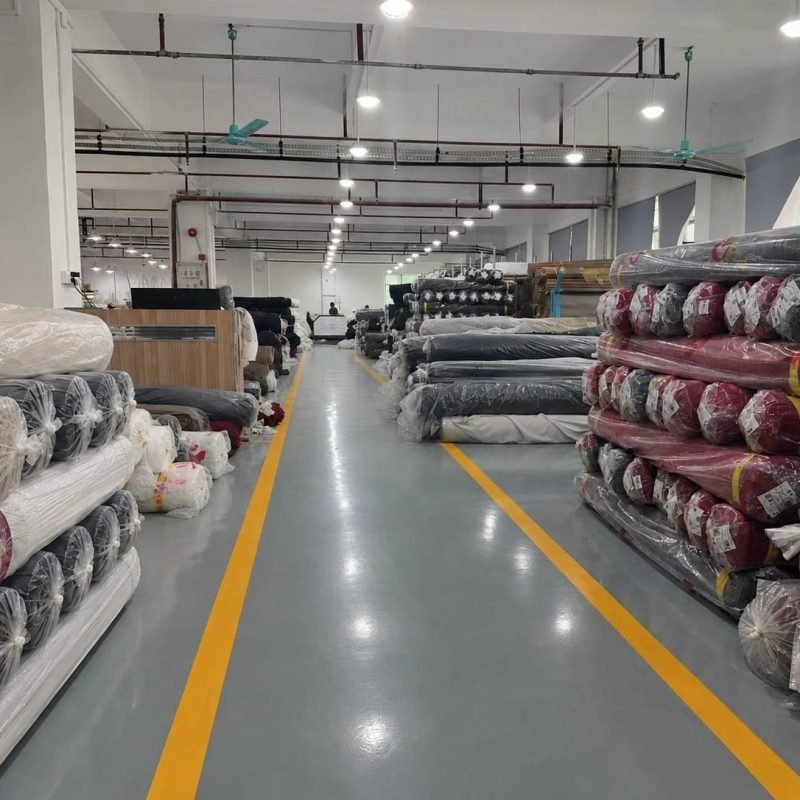
Treat Specialist Partners as a Controlled Production Layer
Embroidery, selected printing, knitwear, specialist fabric processes, or other technical operations are often managed through specialist partners. The critical question is whether the garment supplier controls standards before and after the external process. Ask how artwork, placement, colour, handfeel, dimensions, wash requirements, and approved samples are transferred to the specialist unit. Then ask who inspects the processed component or garment before production continues.
A transparent partner system should identify the outsourced process, approval gate, responsible coordinator, incoming verification, and final garment QC. A weak system hides the external step or treats the partner as outside the supplier’s responsibility. For fashion programs with frequent artwork, embellishment, or material effects, hidden ownership becomes a serious repeatability risk because the same garment can pass through several technical hands before final sewing. A strong supplier can show the approval reference used by the specialist partner, the return-inspection standard, and the decision owner when the outsourced result differs from the approved sample. That evidence is far more useful than a generic partner list.
Key checks:
- Confirm which specialist operations leave the main production site.
- Review strike-off, embroidery sample, print sample, or trim approval where relevant.
- Check who releases processed goods back into garment production.
- Keep partner certificates and factory certificates under separate ownership.
Verify Responsibility After Every Handover
Production control becomes visible at handover points. A factory can own sewing yet still lose control if material lots, outsourced decoration, measurements, or version changes arrive without documented checks. Ask what happens when a fabric lot shrinks differently, a trim supplier changes finish, an embroidery panel shifts placement, or a fit comment reaches the factory after PPS. The answer should include a defined review route, not only “we will handle it.”
For a mature program, every important handover should have an approved reference. Fabric should have an agreed specification or approved swatch; trims should have approved samples or dimensions; patterns should carry controlled versions; PPS should reflect final production decisions; quality teams should inspect against the same standards used during development. Clear ownership reduces the gap between a polished sample room result and the reality of bulk production. The same review should cover emergency substitutions: if an approved trim, fabric, or specialist process becomes unavailable, the supplier should pause, propose an alternative, and obtain approval before silently changing the production route.
Key checks:
- Ask how version changes are issued after sample approval.
- Confirm material and trim changes trigger a new review when needed.
- Verify production teams receive the same approved references as QC.
- Check whether final inspection can trace a defect back to its process owner.

Verify Capability by Women’s Clothing Category, Not Catalogue Size

Dresses
Dress capability should be checked through silhouette control, bust and waist balance, lining, closures, drape, hem behaviour, and construction complexity.
Ask to see relevant fitted, bias, occasion, bodycon, or structured dress samples rather than unrelated garments. Review how the factory handles neckline shape, seam balance, zipper installation, lining turn, and measurement points. A long dress catalogue is less useful than a few relevant samples supported by patterns, fit comments, and bulk workmanship evidence.
- Check relevant silhouettes and fabrics.
- Review lining, closures, support, and hem control.
- Ask how fit comments move into revised patterns.

Fashion Tops
Women’s tops can look simple while carrying high fit risk around neckline shape, armhole, shoulder, bust, length, and stretch recovery.
Verification should reflect the intended product: woven blouse, corset-inspired top, mesh top, jersey bodycon style, halter, or structured crop. Ask how seam choice, interfacing, elastic, binding, lining, and fabric behaviour affect the approved fit. Product evidence should match both the visual reference and the construction level expected for bulk.
- Compare samples with the intended fit class.
- Check stretch or woven construction knowledge.
- Review neckline, armhole, support, and finishing standards.

Bottoms
Skirts, trousers, and fitted bottoms require control of waist shape, rise, hip balance, inseam, side seam, closure placement, pocket position, hem, and fabric behaviour. Ask whether the factory develops pattern balance from measurements and fit comments rather than grading blindly from one size. For stretch bottoms, verify recovery and seam performance; for woven styles, review ease, waistband construction, zipper or hook placement, and pressing. Bulk consistency depends on both pattern accuracy and cutting control.
- Review waist, hip, rise, and length measurements.
- Check stretch recovery or woven ease requirements.
- Confirm cutting and waistband construction controls.

Matching Sets
Sets should be evaluated as coordinated products, not as two unrelated garments. Fabric shade, handfeel, trim colour, print placement, finishing, and delivery timing must remain aligned across both pieces.
Fit also needs coordination so the top and bottom create the intended proportion when worn together. Ask how one material lot, colour standard, artwork version, and packing instruction are shared across the set, especially when styles move through different production lines or specialist processes.
- Verify shared fabric and colour references.
- Check proportion across top and bottom.
- Confirm paired packing and style identification.

Swimwear
Swimwear verification should focus on stretch and recovery, lining, elastic application, opacity, support, seam stretch, edge tension, and fit retention. A factory that can sew jersey is not automatically qualified for swimwear.
Ask how shell, lining, elastic, and support components are approved together, how measurements account for stretch, and what testing or wear-related checks are used before bulk. Construction evidence is more important than polished model photography.
- Review shell, lining, and elastic compatibility.
- Check stretch/recovery and fit retention controls.
- Confirm seam and support construction before bulk.

Established Adjacent Categories
For activewear, shapewear, sweatwear, knitwear, or specialist processes, ask the supplier to state the maturity level and production ownership clearly. Established capability is different from a core high-volume category, while partner-managed knitwear, embroidery, or selected printing should be identified as such. A supplier that explains capability boundaries gives a sourcing team more usable information than one that labels every category “specialised.” Scope clarity makes qualification faster and reduces surprises after sampling starts.
- Separate core, established, and partner-supported capability.
- Ask for evidence relevant to the intended program.
- Do not treat every listed category as equal experience.
Check the Pattern and Sampling System Before Bulk
Development resources reveal whether a factory can translate design intent into repeatable production. Review people, workflow, revision control, and sample output together.
Pattern Capacity Should Match the Development Load
Pattern making is where visual intent becomes measurable production language. For a multi-style women’s collection, ask how many pattern makers support development, how work is allocated across categories, and how revisions are controlled after fit comments. XZapparel’s current system includes 48 pattern makers working across six sample rooms, which matters because several styles can move through first sample, fitting, revision, and PPS at the same time. The number is useful only when connected to workflow: who owns the base pattern, who updates graded points, and how the latest version reaches cutting and QC.
A sourcing team should request evidence from the pattern process rather than rely on staff counts alone. Useful items include a controlled pattern version, measurement specification, fit comment sheet, graded nest where appropriate, or a before-and-after revision example with confidential details removed. Check whether pattern decisions reflect fabric behaviour, seam construction, lining, support, and intended ease. A pattern that fits one sample fabric may need adjustment when the approved bulk fabric has different stretch, thickness, shrinkage, or drape.
Key checks:
- Confirm who owns pattern creation and revision.
- Review version control after each fitting round.
- Connect pattern decisions to approved fabric and construction.
- Verify the same version reaches sampling, production, and QC.


Sample Output Must Be More Than Speed
Sample speed is useful only when the factory learns from each round. XZapparel operates with 60 sample makers across six sample rooms, with a typical output of about 45-60 samples per day and roughly 1,500-2,000 per month. Simple samples typically take about 3-5 working days, complex samples about 5-7, revisions around 2-3, and PPS about 4-5 working days when materials and development inputs are ready. Those ranges should never be treated as unconditional promises; complexity and material readiness change the schedule.
During verification, review what happens inside the sample cycle. A first sample should expose construction, fit, fabric, trim, and specification issues early. Revision comments should be translated into controlled changes rather than discussed only in chat messages. PPS should confirm the final production route, not simply repeat the first sample. Ask to see how measurements, approved materials, workmanship notes, and packaging details are attached to the final production reference. Also check whether the sample schedule distinguishes development work from commercial urgency; compressing every stage into one promised date can hide unresolved fit or material decisions rather than genuinely shorten development.
Key checks:
- Compare first sample and revised sample comments.
- Check whether materials used in PPS match approved bulk intent.
- Verify measurements and workmanship standards before release.
- Ask how rejected or superseded sample versions are controlled.
Development Input Should Not Depend on One File Format
Mature fashion programs arrive with different levels of technical preparation. A manufacturer may receive a complete Tech Pack, a reference garment, a sketch, a size chart, a visual reference, or a combination of these. Verification should focus on how the development team closes missing information before making a production claim. A strong team identifies unclear fit targets, fabric behaviour, trim requirements, construction details, tolerances, and finishing expectations before they become expensive sample revisions.
For XZapparel, the development route can begin from idea, reference image, sketch, Tech Pack, physical garment, or size chart, but the input still has to be converted into measurable standards before bulk. A reference image alone does not contain seam allowance, internal construction, fabric specification, fit ease, measurement tolerance, or care requirements. The useful capability is not “we can copy from a photo”; it is the ability to identify missing decisions and turn them into an approved sample and PPS path. During qualification, ask the team to identify three or four missing variables from one reference style. The quality of those questions often reveals technical depth faster than a long company presentation.
Key checks:
- Ask what information is missing before sampling.
- Confirm fit target, fabric direction, quantity, and market early.
- Require decisions to move from messages into controlled project records.
- Judge development quality by fewer unresolved variables before bulk.

Verify Fabric and Trim Control Before Sewing Starts
Fabric Specification
Do not approve fabric from colour or handfeel alone. Record composition, construction, GSM or weight, width, stretch where relevant, surface, finish, colour standard, and intended garment use
Compare the bulk material against the approved reference before cutting. A supplier should be able to explain which properties matter for the chosen silhouette and construction rather than offering “similar fabric” without measurable criteria.
- Match specification to garment use.
- Keep approved swatch or material reference.
- Recheck bulk lots before cutting.
Stretch and Drape
- Link stretch to fit and recovery.
- Link drape to silhouette and hem.
- Revisit pattern decisions if material changes.
Shrinkage Control
- Check shrinkage before bulk cutting.
- Record direction and percentage where measured.
- Update pattern or process when needed.
Colour and Surface
Colourfastness, crock/rubbing, washing, pilling, spirality, print adhesion, and heat resistance may become relevant depending on the fabric and finishing route. A supplier should separate routine production-control checks from formal third-party testing.
Ask which checks are performed in-house, what result triggers rejection or adjustment, and when an external laboratory is required by the program.Test names alone are not evidence of control.
- Define the risk before choosing the test.
- Link results to approval or corrective action.
- Keep formal lab reports separate from in-house checks.
Trim Compatibility
Zippers, elastic, hooks, labels, buttons, linings, cups, tapes, cords, and decorative trims can introduce hidden MOQ, colour, performance, or lead-time constraints. Verify size, colour, finish, placement, strength, wash behaviour, and compatibility with the garment fabric.
A trim should have an approved reference before production. Custom components may also require supplier quantities above the garment MOQ, so commercial feasibility should be reviewed early.
- Approve trim sample and specification.
- Check process and supplier quantities.
- Confirm replacement rules if a component changes.
Sourcing Network
A large supplier list matters only if the manufacturer can source, compare, and validate materials efficiently.XZapparel works with more than 30 regularly used fabric suppliers and the Humen/Dongguan and Guangzhou Zhongda sourcing ecosystem, supported by a wider trim and specialist network. During qualification, focus on how options are narrowed, sampled, checked, and approved rather than on the headline number of suppliers.
- Ask how alternatives are selected.
- Compare lead time, quality, and lot consistency.
- Keep material certificates under the correct supplier scope.
Control the Route From First Sample to Bulk
A good sample is only useful when every approved decision becomes a production reference. Verify the handovers, approval gates, and change controls before bulk starts.

Start With Controlled Inputs
Bulk consistency begins before a sample is sewn. The development file should identify the style, intended fit, target measurements, fabric direction, trim requirements, construction details, artwork or decoration where relevant, and expected market. If a reference image is the main input, missing internal construction and measurement information must be resolved during development rather than guessed on the production floor. Every later approval depends on the clarity of these inputs.
For verification, ask the supplier to show how one style moves from input review into pattern, sample, fit comments, and material approval. The sequence should create progressively more controlled information. Informal conversations can support development, but the final decisions need to appear in project records that production and QC can use. A factory that relies on memory or scattered messages will struggle when several styles change at the same time. Ask how the factory marks superseded files, who receives revision notifications, and whether production can demonstrate which measurement sheet, pattern, artwork, and material reference are currently approved. Version discipline is a direct bulk-risk control.
Key checks:
- Confirm style version and measurement reference.
- Identify unresolved fit, fabric, trim, or construction variables.
- Move final decisions into controlled files before PPS.
- Reject production starts based on incomplete sample information.

Use Fit Revisions to Remove Production Risk
Fit revision is not a cosmetic step. It is the stage where body balance, measurement, pattern shape, fabric behaviour, seam position, support, and construction are reconciled. A comment such as “make the waist tighter” can affect side seam shape, zipper behaviour, lining, hip ease, and grading. Strong development teams convert comments into measurable pattern changes and check the next sample against the revised standard.
During supplier qualification, ask for a redacted fit-comment example or a demonstration of how comments are logged. Confirm whether measurement points are defined consistently and whether tolerance is considered before bulk. For stretch products, check whether recovery changes the fit after wearing or washing. For woven products, review ease and balance. The value of fit revision is not the number of rounds; it is the reduction of uncertainty before PPS.
A reliable supplier can explain why a revision was made, what measurement or balance issue changed, and whether the alteration affects grading, lining, trims, or construction in other sizes. That explanation should remain traceable after the fitting meeting ends.
Key checks:
- Trace each fit comment to a pattern or specification change.
- Re-measure revised samples against the latest standard.
- Review fabric and construction effects together with fit.
- Freeze only the approved version for PPS.

Make PPS the Production Approval Gate
PPS should represent the intended bulk construction, approved materials, trims, measurements, workmanship, and finishing route as closely as possible. It should not be treated as another sales sample.
Verify what must be approved before PPS is released and what happens if fabric, trim, artwork, construction, or fit changes afterward. Any material change after PPS may require a new review because the original production reference is no longer complete.
A useful PPS package links the physical sample with the latest measurement sheet, material and trim approvals, workmanship notes, artwork or placement references, labelling, and packaging instructions where required. Production, merchandising, and QC should work from the same version.
Ask who signs off each element and how the factory prevents an older file from reaching cutting or sewing. Where several colours or shared fabrics are involved, verify that PPS status is tracked by the correct style-colour combination rather than by a broad style name. Approval granularity matters once production splits across lines or dates. It also reduces confusion when a late colour or trim approval applies to only part of the order.
Key checks:
- Match PPS to intended bulk materials and trims.
- Attach the latest measurements and construction notes.
- Control version access across production and QC.
- Reopen approval when a critical variable changes.

Carry Approved Standards Through Bulk
Once production starts, the supplier should be able to show how approved standards are checked at fabric receipt, cutting, sewing, measurement, finishing, final inspection, and packing. The purpose is not to inspect quality only at the end. Early checks catch material and cutting risks before they multiply; inline checks catch workmanship and assembly issues while production can still be corrected; finishing and final checks confirm presentation, measurements, and packing before shipment.
For repeat programs, approved standards should also support reorder consistency. Fabric lots, trims, artwork, pattern versions, measurements, and packaging may change over time, so the factory needs a review route for any deviation. Reorder control is strongest when the supplier can distinguish “same approved standard” from “new version requiring approval.” Ask whether the reorder file records previous approved measurements, material source, trim reference, artwork, packaging, and any authorised deviations. A repeat order should inherit proven standards while still triggering review when a component, lot, market, or fit requirement changes. The change record should be visible to merchandising, production, and quality teams before the next cut starts.
Key checks:
- Use the same approved references across production and QC.
- Inspect early enough for corrective action to matter.
- Record material or construction changes before reorder.
- Treat repeat orders as controlled continuation, not a restart from memory.
See How Verification Works on a Multi-Style Program
A single perfect sample does not prove multi-SKU execution. The example below shows how supplier verification changes when 18 styles and 42,000 pieces move together.
Program Profile: 18 Styles, 42,000 Pieces
Consider an anonymized recurring-program structure within the order range XZapparel commonly handles: 18 women’s styles and 42,000 pieces in total, averaging about 2,333 pieces per style before actual style allocation. The mix may include seven dresses, four tops, three bottoms, and four coordinated-set styles, with several styles sharing fabrics, colours, or trims. A program at this scale cannot be qualified by checking one sample and one production line. The sourcing team needs to know whether development, materials, approvals, capacity, and QC can stay aligned across the full style matrix.
Verification should begin with a style-level control sheet. Each style needs a current version, target quantity, colour allocation, approved fabric and trim route, fit status, sample status, PPS status, and production readiness date. Shared materials should be identified because one delayed fabric lot or incorrect shade can affect several styles at once. Styles using special processes should be separated from straightforward cut-and-sew work so the production route remains visible. The same matrix should flag common dependencies, because one shared zipper, lining, print base, or fabric lot can influence several launch dates at once and deserves earlier approval than an isolated component.
Key checks:
- Confirm all 18 styles have a named development status.
- Identify shared fabrics, trims, and specialist processes.
- Check quantity allocation against realistic line planning.
- Do not release a style to bulk before its approval set is complete.


Development Qualification Before the Production Window
With 18 styles, pattern and sample capacity becomes a qualification issue rather than an internal factory detail. Several styles may be in first sample, fitting, revision, material substitution, or PPS at the same time. A supplier with limited development resources can create a hidden bottleneck even when sewing capacity is available. Review how pattern makers, sample makers, merchandising, sourcing, and technical comments are assigned across the collection.
A good review does not demand that all styles move at identical speed. Complex lined dresses may require more development time than a straightforward jersey top. The important question is whether the supplier can identify critical paths early, sequence approvals, and avoid pushing unresolved development into the bulk calendar. Shared fabrics should be approved before multiple dependent styles are released, and fit comments should not remain open while line planning is already fixed. For qualification, compare the development calendar with the intended production start and identify which styles sit on the critical path. A credible supplier should be able to explain those dependencies without compressing every style into the same deadline.
Key checks:
- Compare development workload with available pattern/sample resources.
- Separate complex and straightforward styles in the calendar.
- Resolve shared-material risk before dependent styles enter bulk.
- Check whether late comments trigger formal schedule review.
Bulk Control Across a 42,000-Piece Order
At 42,000 pieces, consistency depends on system discipline. Each style needs the correct pattern version, material lot, trim reference, workmanship standard, measurement sheet, PPS, and packing instruction. If two similar styles use different necklines, lengths, labels, or trim colours, line-level identification becomes essential. Production teams should not rely on visual memory, especially when the collection contains repeated fabrics or similar silhouettes.
The quality plan should also reflect program risk. Fabric inspection and cutting checks help prevent early multiplication of errors. Inline QC and measurement checks reveal sewing or fit drift while correction is still possible. Finishing and final inspection verify appearance and measurement before packing. For a recurring program, any change from the approved reference should be documented so later reorders do not accidentally revert to an older version. The 42,000-piece total should therefore be treated as a portfolio of controlled style standards, not one homogeneous order. Qualification becomes stronger when the supplier can show status and exceptions by style rather than only a top-line production percentage.
Key checks:
- Keep style identity visible through cutting, sewing, finishing, and packing.
- Use approved PPS and measurements as the bulk reference.
- Record deviations and corrective action by style.
- Review reorder changes before repeating the 42,000-piece standard.

Verify Quality Through Eight Production Gates
Fabric Inspection
Bulk control starts with the incoming material. Check fabric appearance, width, colour, handfeel, lot consistency, defects, and any product-specific property needed before cutting.Where relevant, GSM, shrinkage, colourfastness, rubbing, washing, pilling, stretch/recovery, spirality, or dimensional-stability checks may support the decision. The key question is whether a failed result can stop or redirect production before fabric is consumed.
- Verify the lot before cutting.
- Link checks to product risk.
- Record approval or corrective action.
Pre-Production Meeting
- Confirm approved inputs are complete.
- Close open production questions.
- Distribute one controlled standard.
Cutting Inspection
- Check pattern version before cutting.
- Monitor shade and component accuracy.
- Stop repeat errors early.
Inline QC
Inline QC checks workmanship while garments are being assembled. Review seam type, stitch quality, puckering, alignment, attachment, reinforcement, construction sequence, and product-specific details against approved references. More importantly, ask what happens when a defect rate rises.
A useful inline system identifies the operation, corrects the cause, rechecks affected work, and prevents the same defect from passing through the remaining production quantity.
- Inspect while correction is possible.
- Trace defects to operations.
- Recheck after corrective action.
Measurement Inspection
Measurement control verifies that production garments remain within the approved size and fit standard.
Ask which POMs are critical, what tolerance applies, how samples are selected, and how out-of-tolerance results are handled. Measurement should use the same method defined during development. For stretch garments, fabric behaviour may affect the reading; for structured woven styles, pressing and construction balance can also influence final dimensions.
- Use approved POM definitions.
- Apply agreed tolerances consistently.
- Escalate repeated measurement drift.
Finishing Inspection
Finishing inspection focuses on the garment after sewing: thread trimming, pressing, appearance, stains, attachments, labels, closures, shape, and presentation. XZapparel’s process includes 100% finishing inspection before final inspection. The value is not the percentage alone; the check should remove obvious workmanship and presentation defects before the final sampling stage, while keeping defect feedback connected to the responsible process.
- Check every finished garment for presentation.
- Separate repairable from nonconforming issues.
- Feed repeated defects back to production.
Final Inspection
- Confirm the inspection standard in advance.
- Keep third-party and internal inspection roles clear.
- Release only against approved criteria.
Packing Inspection
Packing is part of product conformity for retail and e-commerce programs. Verify size and colour assortment, folding, polybag, barcode, hangtag, carton marks, ratio, carton quantity, and any market-specific instruction agreed for the program.
Errors at this stage can create warehouse, retail, or fulfilment problems even when the garment itself is correct. Packing inspection should reference the approved packing specification and shipment plan.
- Match assortment to purchase requirements.
- Check labels and carton information.
- Verify packing before shipment release.

Test Capacity Claims Against Product Mix and Timing
Capacity is not a single marketing number. Compare physical resources, product complexity, current workload, approval readiness, and requested delivery window before accepting a production commitment.
Start With the Physical Production Base
A capacity claim becomes more credible when it connects to visible production resources. XZapparel’s current manufacturing base includes three production buildings of about 20,000 m², approximately 80 sewing lines, and around 640 Brother sewing machines. These figures help establish manufacturing scale, but they do not prove that the entire resource is available for one program or one date. A sourcing team still needs to understand line allocation, category mix, labour loading, and current production commitments.
When verifying another manufacturer, ask to see the relevant production floor during a live tour and compare the claimed line count with actual operating lines. Look at what those lines are producing, because a factory configured for simple jersey styles may not deliver the same output on lined dresses, fitted woven garments, or styles with heavy manual work. Capacity should be translated into the product mix being sourced, not treated as a universal throughput figure. During a live review, compare line layout, work-in-progress, finishing area, and packing flow with the claimed scale. Physical continuity across these areas helps test whether headline capacity is supported by an operating manufacturing system.
Key checks:
- Confirm relevant lines and equipment are operating.
- Match line capability to intended garment construction.
- Separate total factory scale from available program capacity.
- Review peak-season and current workload conditions.


Use Normal Capacity, Not Peak Capacity, for Planning
XZapparel’s normal output is approximately 180,000-200,000 pieces per month, with up to about 220,000 depending on product mix. The wording matters. Normal output is a planning reference; the higher figure is conditional and should not be converted into a guarantee for every style mix. Complex garments, extensive handwork, special processes, multiple colour changes, or late approvals can reduce effective throughput even when the sewing line count stays the same.
A realistic capacity review should break the program into style complexity, units, colour splits, process route, and planned production window. Ask the factory how it schedules similar categories and what assumptions sit behind the proposed delivery date. If a supplier gives one fixed monthly number without asking about product mix, material readiness, or approval status, the number has limited decision value. Ask the planning team to convert your style matrix into line-days or a production window. Even a high-level answer should show that complex styles, changeovers, rework risk, and external processes have been considered. A credible plan should also distinguish committed capacity from theoretical maximum output.
Key checks:
- Ask for normal and conditional capacity separately.
- Review style complexity and colour changeovers.
- Check whether specialist processes create external bottlenecks.
- Require delivery planning to reflect actual program inputs.
Tie Lead Time to Material and Approval Readiness
Bulk production at XZapparel typically runs about 25-35 working days after fabric and trims are ready, PPS is approved, and production details are confirmed. These conditions are more useful than a headline “fast production” promise because the clock cannot run accurately while critical inputs remain open. A delayed custom trim, changed fabric, unresolved fit comment, or unapproved artwork can shift the production start even if sewing capacity is available.
When qualifying a supplier, ask when the quoted lead time starts and what must be complete before that date. Then review whether the production plan includes material arrival, pre-production review, cutting, sewing, finishing, final inspection, packing, and any third-party inspection or shipment booking. Delivery confidence improves when the supplier can explain dependencies and decision gates rather than offering a date before the technical file is stable. Also separate factory completion from freight transit. Production lead time, final inspection, booking, export handling, and transportation are different stages, and each should have a clear owner when the commercial schedule is approved. Shipment readiness should never be confused with vessel or air-transit time.
Key checks:
- Define the formal production-start condition.
- Separate material lead time from sewing lead time.
- Confirm PPS and production details before counting bulk days.
- Replan when critical inputs change after approval.

Verify Certificates by Subject, Scope, and Validity
A certificate can support one part of supplier qualification, but only when the named entity, site, scope, and validity match the claim being made.
| Document or Claim | What to Verify | What It Can Support | What It Does Not Prove Alone |
|---|---|---|---|
| Factory or company audit | Named entity, production site, issue date, validity, audit scope | Social or management requirements covered by the audit | Product-specific workmanship, fit, or current capacity |
| ISO record | Exact certificate holder, standard, scope, validity | Defined management-system scope where current | That every product or process meets a separate performance requirement |
| SMETA record | Site, entity, audit status, current documentation | Social-compliance review within the stated scope | Garment quality, category expertise, or delivery performance |
| Material certificate | Material supplier, article or chain documentation, validity | Claims tied to the covered material or supply chain | Factory-wide certification when the factory is not the certificate holder |
| Third-party test report | Sample identity, test method, lab, date, result | Performance of the tested sample under stated conditions | Automatic conformity of every future production lot |
| Internal test record | Method, sample/lot, date, result, decision owner | Production-control decision for the checked material or garment | Independent third-party certification |
Verify a Factory Remotely Before Booking Travel
A live factory review can reveal production reality when the route is controlled by the sourcing team. Ask to see connected areas in sequence, not only selected promotional scenes.

Factory Entrance
- Confirm address and site identity.
- Keep the video route continuous where possible.
- Note areas that are not part of the current operation.

Pattern and Sample
- Ask who owns pattern revision.
- Review current sample workflow.
- Protect confidential style information during the tour.

Fabric Inspection
- Observe lot identification and inspection flow.
- Ask what stops fabric from reaching cutting.
- Separate routine checks from formal lab testing.

Cutting Area
- Match cutting to approved style versions.
- Check bundle or component identification.
- Review controls for shade and pattern changes.

Sewing and Inline QC
- Observe relevant construction in progress.
- Ask how inline defects are corrected.
- Compare line capability with the proposed program.

Finishing and Packing
- Review finishing and final checks.
- Confirm packing specification control.
- Trace packed goods back to the approved style and order.
Watch for Red Flags That Break the Evidence Chain
A red flag is not one imperfect answer. Risk rises when important claims cannot be connected to documents, production evidence, ownership, or an accountable process.
Everything Is In-House
Treat a blanket “everything is in-house” claim carefully when the range includes knitting, embroidery, printing, specialist fabric finishing, testing, and garment production.
Many legitimate manufacturers use specialist partners. The issue is not external processing; the issue is hidden processing. Ask for the ownership map, approval gate, and final QC responsibility for each specialist step before accepting the claim.
- Ask which processes leave the main site.
- Verify partner control and garment reinspection.
Every Category Is Core
A factory listing dozens of unrelated garment categories as equal specialties may be describing sourcing access rather than repeated production depth. Ask which categories have stable bulk history, which are established secondary capabilities, and which are development or partner-supported. Product maturity should be visible in samples, patterns, construction knowledge, material choices, quality risks, and current production, not only in a website menu.
- Ask for category-specific evidence.
- Separate core, established, and partner-supported scope.
Capacity Never Changes
A fixed capacity number presented without product mix, season, current workload, colour splits, or process complexity is difficult to use for planning. Real capacity changes with the program.
Ask for normal output, peak conditions, relevant line allocation, and the assumptions behind the proposed delivery window. The supplier should be able to explain why one style mix runs faster or slower than another.
- Ask for normal versus conditional capacity.
- Tie the number to the intended product mix.
Quality Means Final Only
If quality control begins only after production is complete, material, cutting, fit, and sewing risks may already be multiplied across the order.
Ask about incoming fabric checks, pre-production review, cutting inspection, inline QC, measurement, finishing, final inspection, and packing control.
A mature system does not depend on one final gate to discover every problem after the cost of correction is highest.
- Check early and inline inspection points.
- Ask how defects trigger corrective action.
Certificates Are Just Logos
A row of certification logos without the named entity, site, scope, validity, or current document should not be treated as evidence. Ask for the actual certificate or controlled summary, then verify what it covers.
Material certificates, partner audits, factory audits, and test reports belong to different subjects. Mixing them can create a stronger marketing claim than the underlying evidence supports.
- Verify subject, scope, and validity.
- Keep factory and material documents separate.
Payment Details Shift Late
Unexpected changes to beneficiary name, company account, invoicing entity, or contract party deserve immediate clarification. Commercial structures can have legitimate explanations, but the relationship should be documented before payment. Do not resolve a legal or financial mismatch through informal messaging alone. Supplier qualification should confirm who contracts, who receives funds, and who carries production responsibility.
- Recheck documents after any payment change.
- Escalate unexplained entity mismatches.
Samples Have No Records
A polished sample without measurement history, fit comments, material approval, construction notes, or version control provides weak evidence for repeat production.
Ask how the factory knows which sample is approved and what changed from the previous round. If sample knowledge exists only with one merchandiser or sample maker, the information may not transfer reliably to production and QC.
- Ask for the approved sample reference.
- Review version and fit-comment history.
Quotes Ignore the Product
An instant fixed quote before reviewing fabric, trims, construction, quantity, colour splits, finishing, testing, packaging, and delivery requirements may hide later changes. Early ranges can be useful, but a production quotation should be tied to defined inputs. Strong suppliers explain which variables change feasibility, cost, MOQ, or lead time instead of pretending every design fits one commercial formula.
- Request the assumptions behind the quote.
- Confirm commercial conditions before deposit.

Score Shortlisted Manufacturers Using the Same Eight Criteria
Rate each supplier from 1 to 5 on evidence quality, not presentation quality. Keep notes beside every score so the final shortlist remains auditable.
Product Fit
Score whether the manufacturer has repeated experience in the intended category, silhouette, fabric, and construction level.
A high score requires relevant samples or production evidence plus clear engineering knowledge.
A medium score may show adjacent capability that still needs sampling. A low score means the supplier relies on a broad catalogue or verbal claim without relevant proof.
- 5: repeated category evidence and clear scope.
- 3: adjacent experience with gaps to validate.
- 1: generic claim with no relevant proof.
Development
Score pattern making, sample making, fit revision, technical communication, and the ability to convert references or Tech Packs into controlled production inputs. A strong supplier can explain who owns each development step and how revisions are recorded. A weak supplier moves directly from sales discussion to sample production without identifying missing measurements, materials, construction details, or approval requirements.
- 5: controlled development workflow and records.
- 3: workable process with limited evidence.
- 1: sales-led sampling with unclear technical ownership.
Materials
Score the ability to source, compare, inspect, test, and approve fabrics and trims relevant to the program. High scores require a clear material route and awareness of shrinkage, stretch, colour, drape, lot, trim, or certificate risks where applicable.
Low scores appear when the supplier promises “any fabric” without specification, approval, or supplier-document boundaries.
- 5: sourcing plus validation and approval discipline.
- 3: sourcing capability with partial control evidence.
- 1: material promises without measurable standards.
Ownership
Score how clearly the supplier explains in-house operations, specialist partners, third-party testing, and responsibility after each handover. High scores do not require every process to be internal. They require transparent ownership, approved references, incoming verification, and final garment responsibility. Low scores appear when subcontracting is hidden, denied, or impossible to trace.
- 5: clear ownership map and controlled handovers.
- 3: external steps known but lightly documented.
- 1: production route remains unclear.
Quality
Score how the supplier carries approved standards through incoming material, pre-production review, cutting, sewing, measurement, finishing, final inspection, and packing. High scores connect defects to corrective action and use the same approved reference across production and QC.
Low scores rely mainly on end-of-line checking or broad statements such as “strict QC.”
- 5: multi-gate quality control tied to approved inputs.
- 3: several checks but limited traceability.
- 1: final inspection is the main control.
Capacity
Score whether capacity claims are supported by physical resources, relevant lines, current workload, product mix, and realistic scheduling. A high score explains normal versus conditional capacity and how complex styles affect throughput. A low score gives one large number without asking about category, construction, colour splits, material readiness, or production window.
- 5: capacity model fits the proposed program.
- 3: scale visible but allocation still needs review.
- 1: unsupported fixed capacity claim.
Compliance
Score certificate, audit, testing, and documentation discipline by subject, scope, date, and relevance to the intended market. A high score provides current controlled documents and clearly separates factory, material-supplier, specialist-partner, and third-party evidence. A low score relies on logos, expired files, or certificates that do not match the manufacturing entity or site being proposed.
- 5: current, scope-aware evidence.
- 3: usable documents with gaps to close.
- 1: unclear or mismatched evidence.
Commercial Control
Score whether MOQ, quotation, lead time, terms, packaging, shipment responsibility, and change conditions are explained before commitment. High scores tie commercial terms to style, material, quantity, market, and approval readiness. Low scores appear when price and timing are guaranteed before technical details are defined or when important constraints surface only after development has already begun.
- 5: commercial assumptions are clear and conditional.
- 3: workable terms with several items to confirm.
- 1: vague or contradictory commercial commitments.

Choose the Right Level of Independent Verification
Not every sourcing program needs the same audit depth. Match verification effort to order value, internal policy, market requirements, technical risk, and available evidence.
Remote Supplier Review
Use document checks, live factory video, relevant sample review, ownership mapping, quality-flow discussion, and commercial review to build an initial shortlist.
Remote verification is useful before travel or before requesting expensive third-party work. It should confirm enough information to decide whether the supplier deserves deeper qualification, not attempt to replace every legal, compliance, or technical audit requirement.
- Best for early qualification and shortlist reduction.
- Focus on entity, factory, capability, and process evidence.
- Escalate unresolved high-risk items before payment.
On-Site Factory Review
An on-site visit allows direct review of development, materials, cutting, sewing, QC, finishing, packing, records, workflow, and current production. Prepare the visit around defined verification questions so the tour does not become a hospitality event.
Ask to follow a garment route, review the areas relevant to the intended category, and speak with technical or quality personnel where appropriate.
- Best when production importance justifies direct observation.
- Use a prepared checklist tied to the intended program.
- Record open items and required evidence after the visit.
Third-Party Audit
- Best for defined independent evidence requirements.
- Choose the audit type to match the actual risk.
- Verify the site, scope, date, and sample identity in every report.
Apply the Same Verification Framework to XZapparel
XZapparel should be assessed with the same criteria used for any shortlisted manufacturer: entity clarity, category fit, development depth, ownership, quality, capacity, and evidence.

Manufacturing Identity and Physical Scale
XZapparel is the public brand and website identity used for the manufacturing business. The manufacturing base is located in Humen, Dongguan, Guangdong, China and includes three production buildings covering about 20,000 m² with approximately 1,120 employees. The garment manufacturing operation began in 2008, while the current public brand identity should not be confused with the exact legal contracting entity. Formal legal, payment, and KYC fields belong in controlled qualification documents and should be verified before contracting rather than filled in from marketing copy.
Physical scale can be checked through factory evidence, live video, or audit activity. Scale itself is not a quality conclusion, so the useful review is how the site connects sample rooms, sourcing, cutting, sewing, QC, finishing, and packing. XZapparel can provide a manufacturing route that allows a sourcing team to examine where work happens and how responsibility passes from development into bulk production. A qualification review should therefore combine identity records with factory evidence rather than asking public marketing copy to carry legal information it was not designed to provide.
Verification points:
- Confirm the manufacturing address and production route.
- Match legal and payment details through formal qualification documents.
- Review real production areas instead of relying on scale figures alone.
- Keep public brand identity and legal KYC data in their correct roles.

Product Development and Women’s Category Fit
XZapparel’s proven core manufacturing categories include dresses, tops, bottoms, swimwear, and sets. Established capabilities include selected sweatwear, activewear, and shapewear programs, while knitwear, embroidery, selected printing, and specialist processes can be managed through long-term specialist partners. The qualification value lies in the maturity boundary: core, established, partner-supported, and development categories should not be presented as identical experience. For a sourcing team, this makes category allocation more disciplined: core dress, top, bottom, swimwear, and set programs can be reviewed differently from adjacent categories that may require extra sampling, partner coordination, or proof before bulk approval. The category boundary should remain visible in quotations, sampling plans, and evidence requests.
The development system includes six sample rooms, 48 pattern makers, and 60 sample makers, with typical output of about 45-60 samples per day and roughly 1,500-2,000 per month. Development can start from an idea, reference image, sketch, Tech Pack, physical garment, or size chart, but missing information still has to be converted into controlled fit, material, construction, measurement, and approval decisions before bulk.
Verification points:
- Match the intended category to the correct capability level.
- Review pattern and sample workflow for the proposed style mix.
- Ask for relevant anonymized development or product evidence.
- Confirm specialist processes are identified as partner-managed where applicable.

Materials, Production, and Quality Control
XZapparel works with more than 30 regularly used fabric suppliers within the Humen/Dongguan and Guangzhou Zhongda sourcing ecosystem, supported by a wider trim and specialist network. In-house production-control checks can include fabric inspection, GSM, shrinkage, colourfastness, rubbing, washing, pilling, stretch/recovery, spirality, dimensional stability, print adhesion, and heat resistance where relevant. These checks support manufacturing decisions; formal third-party reports remain separate evidence when required.
The core production system includes about 80 sewing lines and around 640 Brother sewing machines. Normal monthly output is approximately 180,000-200,000 pieces and can reach about 220,000 depending on product mix. Quality control follows Fabric Inspection → PPM → Cutting Inspection → Inline QC → Measurement → 100% Finishing Inspection → Final Inspection → Packing Inspection. The sequence is more important than any single headline number because it shows where risk can be identified before shipment. During qualification, the strongest evidence is not a list of tests or machines; it is the connection between a known product risk, the check used to evaluate it, the production decision that followed, and the record retained for the style or lot.
Verification points:
- Review material approval and testing routes for the intended product.
- Compare capacity with actual style complexity and production timing.
- Examine quality gates and sample-to-bulk references.
- Separate in-house production controls from third-party evidence.

Commercial and Compliance Boundaries
XZapparel’s standard garment MOQ is 200 pcs/style/color, with higher project requirements possible when special fabrics, custom trims, specialist processes, or supplier quantities apply. Simple samples typically take about 3-5 working days, complex samples about 5-7, revisions around 2-3, and PPS around 4-5 when inputs and materials are ready. Bulk production typically runs about 25-35 working days after fabric and trims are ready, PPS is approved, and production details are confirmed. Each figure is a conditional planning baseline rather than an unconditional promise.
SMETA and ISO are recorded company/factory facts within the internal knowledge base; specific public claims still need to remain aligned with the correct entity, site, scope, and current documentation. GRS or OEKO-TEX related material documents belong to qualified supplier or material scope unless XZapparel itself holds the relevant certification. Commercial transparency also requires clear quotation inputs, ownership of specialist processes, and review of any change that affects material, fit, production, or delivery.
When formal documentation is required for onboarding, the current controlled file should take precedence over summaries reproduced on a marketing site.
Verification points:
- Confirm MOQ against style, colour, fabric, trim, and process structure.
- Request current compliance documents through the qualification route.
- Check certificate ownership and scope before using any claim.
- Review lead time only after material and approval readiness are defined.
Frequently Asked Questions About Manufacturer Verification

Start a Supplier Qualification Review With XZapparel
Send enough project information for a focused manufacturing and qualification review rather than a generic quotation request. Helpful inputs include your product category, style count, expected quantity by style and colour, target market, reference images or Tech Packs, fabric direction, construction details, required delivery window, packaging needs, and any audit, testing, social-compliance, or documentation requirements. If several styles are involved, a line sheet or SKU matrix helps our team review shared materials, development load, process ownership, and production planning together.
For supplier verification, also tell us what your sourcing team needs to confirm. We can organise the review around manufacturing identity, women’s category capability, pattern and sample resources, material sourcing, in-house versus specialist-partner ownership, quality gates, capacity conditions, and available qualification documentation. Where a claim depends on formal legal, certification, or third-party records, the relevant information should be reviewed through controlled documents rather than assumed from website copy.
Please prepare:
- Product category and style count
- Quantity by style and colour
- Tech Pack, reference, or line sheet
- Fabric and trim requirements
- Target market and delivery window
- Audit or compliance requirements
- Main supplier-verification concerns
