Skip to content

Factory Audit Documents for Women's Apparel Suppliers
A sourcing-team framework for verifying factory identity, production ownership, apparel capability, quality records, traceability and current compliance evidence before approval.
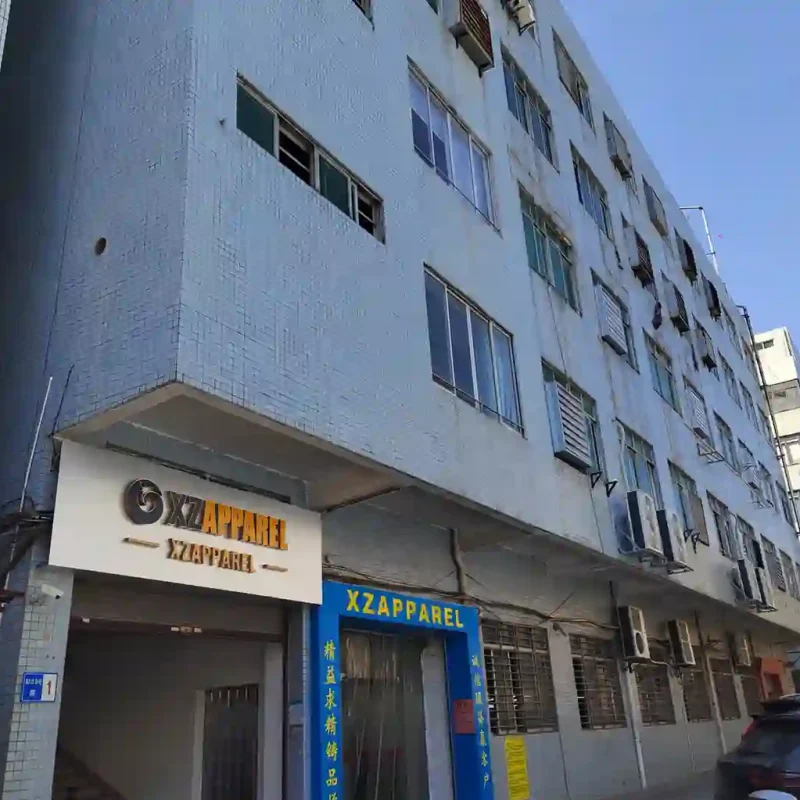
- Factory reality: 3 factory buildings across approximately 20,000 m2, giving sourcing teams a clear site footprint to verify during qualification.
- Production scale: about 80 sewing lines and roughly 640 Brother sewing machines, reviewed against product mix, line allocation and current workload.
- Development capacity: 6 sample rooms supported by 48 pattern makers and 60 sample makers for multi-style sampling, revision and PPS work.
- Quality records: eight control gates run from fabric inspection and PPM through cutting, inline, measurement, 100% finishing, final and packing inspection.



Eight Document Families to Review Before Supplier Approval
A useful factory audit file is organised by the risk being verified, not by the number of PDFs collected. Eight evidence families cover most women’s apparel supplier qualification reviews.
Legal Entity Records
Start with the legal company identity, registration information, factory address and the entity named on commercial documents.
Names and addresses should reconcile across registration, quotation, contract, invoice, audit and certification records. A mismatch is not automatically disqualifying, but it requires a clear relationship map and formal supporting documents before vendor approval moves forward.
Factory Site Records
Request a current factory profile, site layout or address confirmation, production-area information and evidence that the proposed order will be made at the audited location. Photos alone are weak proof.
Site records become more useful when they match the actual cutting, sewing, finishing, storage, testing and packing areas reviewed during an on-site or remote qualification process.
Capability Records
Product capability should be supported by evidence relevant to women’s apparel, not only a general machine list. Review pattern and sample resources, product categories, construction capability, sample approvals, production examples and any specialist-process route. A factory producing dresses, swimwear or structured tops should be able to show records that reflect those product-specific development and production controls.
Capacity Records
Capacity evidence should connect equipment, workforce, product mix and production planning. Useful records include machine lists, line allocation, production plans, output records and current load. Headcount or monthly capacity claims by themselves are not enough. Sourcing teams need to understand whether usable capacity exists for the proposed style count, quantity, construction complexity and delivery window.
Material Traceability
Fabric and trim records should show where materials came from, how lots are identified, how incoming materials are inspected and how approvals move into cutting and production. For fashion collections using multiple colours, stretch fabrics, trims or decorative processes, lot, shade, approval and issue records help prevent unapproved substitutions and make root-cause review possible when a bulk problem appears.
Quality Records
Quality manuals describe a system; inspection records show whether the system is operating. Ask for examples of incoming fabric inspection, pre-production review, cutting checks, inline findings, measurement records, finishing inspection and final or packing checks. Records should identify the style, date, inspection point, result and action rather than presenting a blank template with no production history behind it.
Testing Evidence
Separate internal production-control tests from formal third-party laboratory reports. In-house records can support GSM, shrinkage, rubbing, colourfastness, washing, pilling, stretch and recovery or other process decisions. Formal reports should be checked for issuer, product or material identification, batch or sample scope, method, date and result. Neither type should be presented as proof beyond its actual scope.
Compliance Records
Review factory-level audit and certification documents by subject, site, scope, date and validity. Social, quality, environmental, material and product-level documents solve different problems and should not be mixed together. A material supplier’s certificate does not automatically certify the garment factory, while a social audit does not prove product performance or bulk measurement consistency.
Factory Audit Document Matrix for Women's Apparel Suppliers
Use the matrix to connect each requested record to a supplier claim, a cross-check and a follow-up trigger. Document collection without verification leaves the main qualification risks unresolved.
Evidence Family | What to Request | What It Proves | Cross-Check | Red Flag |
Legal identity | Registration / business licence | Who the contracting entity is | Name, address, invoice and contract entity | Different entities with no documented relationship |
Manufacturing site | Factory profile / site record | Where production will occur | Address, production areas, audit location | Quoted factory does not match production site |
Product capability | Category / sample / pattern records | Relevant apparel capability exists | Real samples, pattern flow, approved versions | Generic claims with no category evidence |
Capacity | Machine list / line plan / output record | Usable production resources | Equipment, line allocation, current load | Capacity number cannot be reconciled |
Materials | Supplier / lot / inspection records | Traceability and material control | Roll, lot, shade, approval and cutting issue | No lot or approval link to bulk |
Quality | Inspection / measurement / CAPA records | Quality gates are operating | Style, date, findings, correction, closure | Only blank SOPs or undated forms |
Testing | Internal record / third-party report | A defined test was performed | Method, item, batch, date, result, issuer | Report cannot be linked to material or product |
Compliance | Audit / certificate / controlled file | A defined entity and scope were assessed | Holder, site, scope, status, validity | Expired, wrong site or wrong certificate holder |
Review Audit Documents at the Right Stage
Before the Audit
Request the core document pack early enough to compare legal identity, site, capability, capacity, quality and audit scope before the meeting. Mark missing, expired or unclear records rather than accepting a late document dump.
Pre-review allows the site visit or remote audit to focus on unresolved risks, process ownership and evidence that must be checked against live production. Record the exact entity, site and document version reviewed so later updates can be distinguished from the original qualification file.
During the Audit
After the Audit
Verify Legal Entity, Factory Site and KYC Records
Legal identity is a controlled verification task. Keep marketing names, legal contracting details, manufacturing addresses and payment information distinct until formal records confirm the relationship.
Separate Brand, Legal Entity and Factory Site
A supplier can use a trading name, a legal contracting company and a manufacturing site without those three labels being identical. Qualification fails when the relationships are unclear, not simply because more than one entity exists. Start by mapping the public brand name, the legal company named on registration and contracts, the factory site proposed for production and the entity receiving payment. The map should be supported by formal records rather than an explanation made only in email or chat.
For XZapparel, the public brand and website identity are XZapparel and XZapparel.com, while the confirmed manufacturing base is in Humen, Dongguan, Guangdong, China. The current knowledge base does not publish an assumed legal company name or registration number because those precision fields require formal KYC documents. During supplier qualification, legal and payment fields should therefore be provided through controlled documentation and checked against the project contract instead of being guessed from the brand name.
A sourcing team should cross-check five points: company name, registered address, manufacturing address, contract or invoice entity and audit or certificate holder. Differences can be legitimate when supported by ownership or service relationships, but unexplained differences should remain open findings. The result needed from the review is simple: who signs, who receives payment, where garments are made, and which entity or site each audit document actually covers.
Audit Product Capability, Not Only Factory Size
Pattern Development

Sample Development

Fabric and Trims

Cutting Control

Sewing and Construction
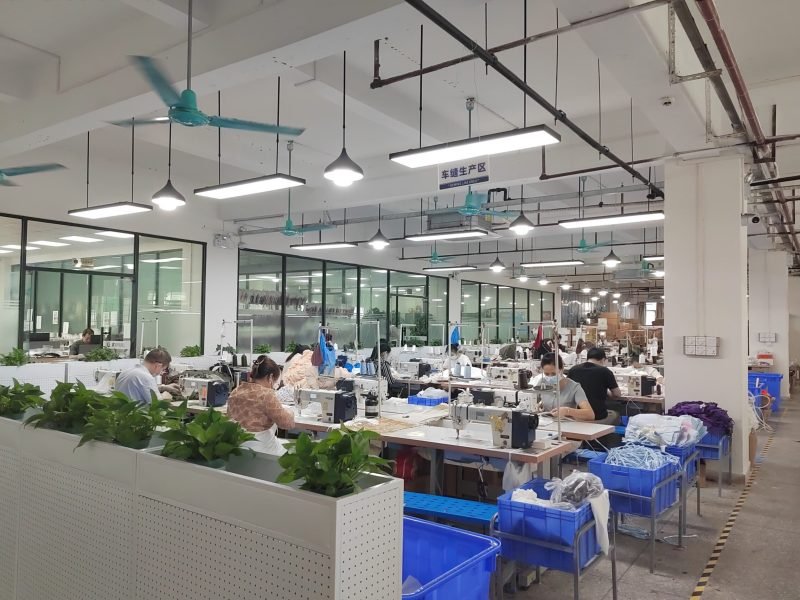
Machine count should be paired with evidence that the line can execute the required construction. Women’s fashion may involve lining, zippers, elastic, cups, boning, mesh layers, binding, topstitching or delicate seams.
During qualification, review real product samples, sewing operations, inline quality records and process ownership. A broad equipment list does not prove every construction is suitable for stable bulk production.
Finishing and Packing
Make Production Ownership Visible in the Audit File
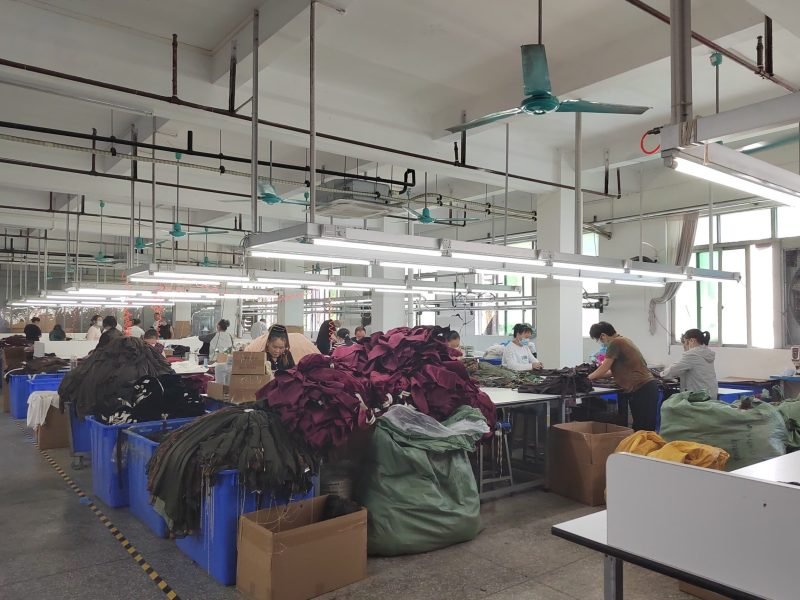
A mature audit pack should show who performs each process, what evidence follows each handoff, and where responsibility returns to the garment quality system.

Map Who Performs Every Process
Production ownership should be documented as a route, not reduced to a slogan such as ‘everything in-house’. Start with the core garment path: development, material approval, cutting, sewing, finishing, inspection and packing. Then add specialist processes such as embroidery, printing, pleating, smocking, beading, rhinestones or specialised fabric treatments when relevant. For each operation, record whether execution is in-house, completed by a long-term specialist partner, or handled by an independent third party for testing or inspection.
The documentation expected from each route is different. In-house operations can be supported by equipment, site, production and quality records. Specialist-partner processes need approved samples or strike-offs, handoff requirements, incoming or post-process inspection, responsibility for defects and evidence that the finished garment returns to the main quality system. Independent testing needs the report issuer, method, product or material identification, sample or batch scope, date and result. One evidence type should never be used to imply another ownership model.
XZapparel’s operating model is Centralized Product Development + Core In-House Manufacturing + Controlled Specialist Supply Chain. Core apparel production is managed through the Humen manufacturing base, while selected specialist processes can be coordinated through long-term partners. Transparency is more useful to an established brand than an inaccurate claim that every machine sits in one building. The qualification outcome should show who performs each operation, what XZapparel controls before and after the handoff, and which records can be reviewed for the proposed collection.
What Documents Support a Factory Capacity Claim
Capacity claims become useful only when equipment, workforce, planning and current load can be reconciled with the proposed style count, construction and delivery window.
Equipment Match
Check whether listed equipment is relevant to the proposed women’s apparel program. XZapparel’s confirmed production footprint includes roughly 640 Brother sewing machines across approximately 80 sewing lines. Equipment quantity supports scale verification, but it should still be matched to the required operations, product mix and line setup. A machine inventory should not be treated as proof that every technical process can run on every line.
Workforce Structure
Capacity depends on technical and production roles as much as machine count. Review how merchandising, pattern, sampling, sourcing, production and QA/QC responsibilities connect. For development throughput, XZapparel records 48 pattern makers, 60 sample makers and 6 sample rooms. The useful audit question is whether people and responsibilities can support the style count, revision load and production plan being discussed.
Production Planning
Ask how the factory converts confirmed styles, materials, approvals and quantities into line plans. Normal XZapparel output is recorded at approximately 180,000-200,000 pieces per month, with higher output possible depending on product mix. The figure should be treated as a factory-scale indicator, not a guaranteed allocation for one program. Project capacity still depends on construction, quantity, SKU mix, material readiness and schedule.
Current Load
A credible capacity review considers existing commitments, seasonal peaks and bottleneck operations. The sourcing team should ask which lines or production windows are intended for the program and what conditions could change the plan. Capacity is most useful when linked to a realistic production window after material readiness and PPS approval, rather than presented as an annualised number disconnected from the current factory schedule.
Audit Sampling, Fit and PPS Documentation
Sample records should prove how design intent becomes an approved, repeatable production standard, with controlled versions for fit, material, construction and PPS.

Control the Approved Product Before Bulk
Women’s apparel development generates more than one physical sample. First samples expose construction, silhouette and material questions; fit revisions correct measurements and shape; PPS confirms the production-ready standard before bulk. An audit should therefore look for a version trail rather than a single garment labelled ‘approved’. Useful records can include the incoming Tech Pack or reference, pattern version, size specification, fit comments, sample revision notes, material and trim approvals, approved artwork or embellishment reference where relevant, PPS approval and controlled changes after approval.
At XZapparel, simple samples are normally planned around 3-5 working days, complex samples around 5-7 working days, revisions around 2-3 working days and PPS around 4-5 working days, subject to material, construction and approval readiness. Those timings are development baselines, not proof that a style is ready for bulk. The record set should show what changed between versions, who approved the change and which version production teams are expected to follow.
The strongest audit check is transferability. Select one representative style and trace it from incoming design information through pattern, sample, comments, approved material and PPS into cutting and line reference. If the factory cannot identify the approved standard quickly, bulk consistency depends too heavily on verbal memory. For multi-style seasonal collections, version discipline also prevents one style’s late revision from being applied incorrectly to another colour, size range or related set.
Trace Fabric and Trims From Approval to Cutting
Approved Material Source
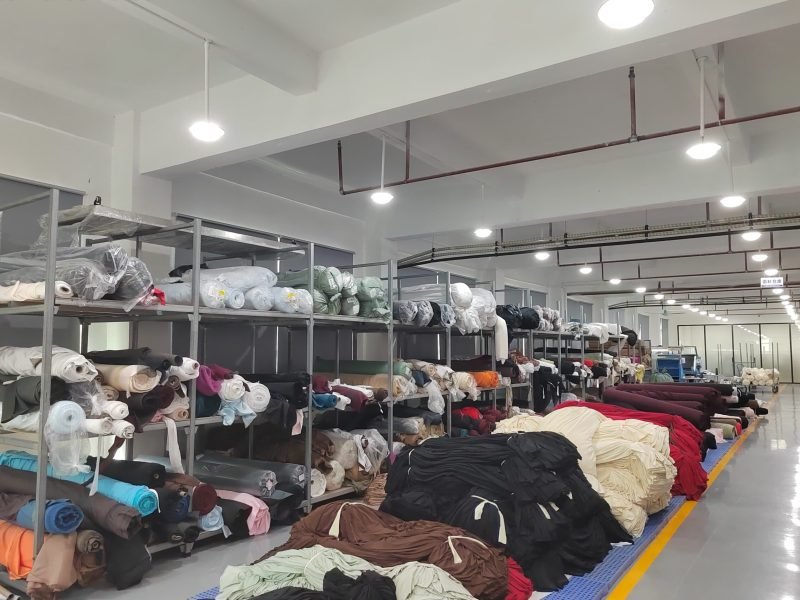
Start with the approved fabric or trim source and the commercial specification used for development. A supplier list by itself does not prove what entered a specific order.
Link composition, construction, GSM or weight, stretch or recovery where relevant, finish, colour and trim specification to the style.
Certified or specialty material documentation should remain attached to the material or supplier identity rather than being presented as a blanket factory certificate.
Incoming Fabric Inspection

Roll and Lot Identity

Roll, dye-lot or batch identity is essential when shade, width, finish or physical behaviour can vary.
Records should make it possible to trace material from receiving or inspection into cutting.
For satin, jersey, mesh, swim fabrics and colour-sensitive fashion materials, lot separation can prevent visible shade variation or inconsistent stretch behaviour across finished garments.
A traceability system should be usable on the factory floor, not exist only as a policy statement.
Shade and Colour Control

Colour approval may involve swatches, lab dips, shade bands or bulk approval depending on the sourcing route. Audit evidence should show the approved reference, lighting or comparison method used internally, lot identification and any decision to segregate shade groups. For collection programs with several colours, controlling shade at material stage is usually more effective than trying to correct visible colour variation after garments have already been cut and sewn.
Records should make any accepted shade grouping visible to cutting and sewing teams before pieces from different groups are mixed.
Material Approval Status

A clear approval status prevents development fabric, rejected fabric or unapproved substitutes from entering bulk by mistake. Review how approved, pending, rejected and replacement materials are identified and communicated to cutting or production. When a trim, lining, elastic, cup, zipper or decorative component changes after sampling, the change should be reflected in the latest specification and approval record rather than being handled only through informal messages. The same status should be visible to sourcing, sample, production and quality teams so one department does not release an outdated component.
Issue to Cutting

Material traceability becomes meaningful when the approved lot can be linked to the cutting order and production batch.
Review issue records, roll identity, quantity reconciliation and any shade or lot grouping required for the style.
If a later defect appears, the factory should be able to narrow the investigation to affected material, colour, batch or process.
Strong traceability reduces the need to treat an entire order as one undifferentiated problem.
Follow Quality Records From Fabric to Packing
Quality documentation should show where defects are prevented, detected, corrected and released, using approved product information rather than generic inspection language.
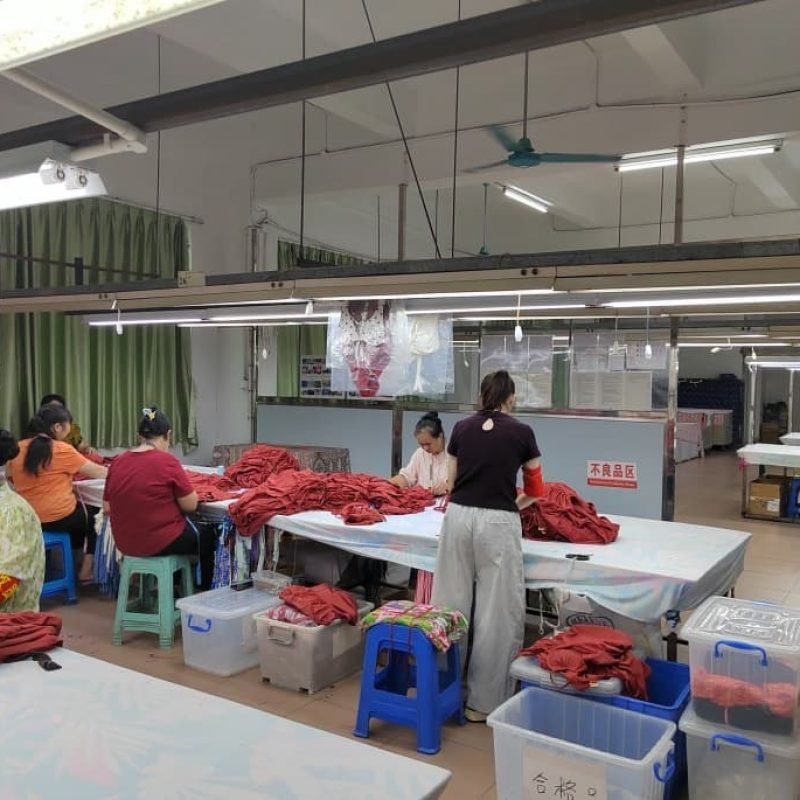
Follow the Quality Gates and Their Records
A quality system is easiest to audit as a sequence of decision gates. XZapparel’s recorded flow is Fabric Inspection -> Pre-Production Meeting -> Cutting Inspection -> Inline QC -> Measurement Inspection -> 100% Finishing Inspection -> Final Inspection -> Packing Inspection. Each gate should have a clear purpose and a record that can be connected to the style, date, responsible team and follow-up action. The audit does not need every historical file; a small number of recent, representative records is often more useful than a large folder of blank templates.
Fabric Inspection should confirm material condition before cutting. PPM should align the approved sample, construction, measurements, material, trims, workmanship and special instructions. Cutting Inspection should catch marker, shade, piece or cutting issues before sewing. Inline QC should identify recurring defects while correction is still possible. Measurement records should use the approved POM and method. The 100% finishing inspection should address visible workmanship and presentation before final sampling or release. Final and packing checks should confirm the finished garment and pack-out against the approved requirements.
CAPA evidence becomes important when defects recur. A strong record describes the problem, identifies likely root cause, assigns corrective action and verifies closure. ‘Operator reminded’ is weak when the same defect comes from material, pattern, machine setting, process sequence or unclear workmanship standards. For a collection with many styles, the quality file should also show how one style’s corrective action is communicated without creating unintended changes on another style.
Separate In-House Test Records From Third-Party Reports
GSM and Weight
Shrinkage Review
Colourfastness
Rubbing Control
Pilling Review
Stretch and Recovery
Check Certification Holder, Site, Scope and Validity
Lorem ipsum dolor sit amet, consectetur adipiscing elit. Ut elit tellus, luctus nec ullamcorper mattis, pulvinar dapibus leo.
Evidence | Holder / Subject | Scope | Verify | Does Not Prove |
SMETA | Factory/company record | Named site and audit scope | Entity, site, date/status, available report | Product performance or every market requirement |
ISO | Named certified entity/site | Specific management-system scope | Certificate holder, scope, issue/expiry | A product-level test result |
BSCI support | Project/customer requirement | Applicable participating site/project | Current project need and supporting status | Automatic factory certification for every program |
GRS/OEKO-TEX material files | Material supplier or qualified material | Defined material/article/supplier scope | Supplier identity, material, validity, transaction/supporting docs if required | XZapparel factory certification unless separately held |
Third-party test report | Laboratory report for sample/product/material | Defined method and sample/batch | Issuer, report no., method, item, date, result | Unrelated colours, later batches or factory social compliance |
Eight Factory Audit Red Flags Worth Following Up
Red flags are follow-up triggers, not automatic rejection rules. The goal is to identify evidence gaps that can affect entity verification, production control, quality or compliance.
Entity Mismatch
The company named on registration, contract, invoice, audit or payment records does not reconcile and no ownership or service relationship is documented. Different entities can be legitimate, but the relationship must be clear before approval. Keep the finding open until formal records explain who contracts, who receives payment and which entity operates the proposed manufacturing site.
Site Mismatch
The address on an audit or certificate does not match the factory proposed for production, or the supplier cannot explain the relationship between locations. A document for one facility should not be used to qualify another. Confirm where pattern, sampling, cutting, sewing, finishing, storage and packing will occur, then review the evidence applicable to that actual production route.
Expired Documents
An expired audit or certificate may still provide historical context, but it should not be presented as current evidence. Check issue date, expiry date, status and any open corrective actions. When renewal is underway, record the interim status and what evidence is available. Avoid a simple pass/fail label when the real question is whether the current qualification requirement has been satisfied.
Wrong Scope
A document may be genuine but irrelevant to the claim being made. Material certification does not automatically certify the garment factory; a social audit does not prove product testing; an internal production-control test is not a third-party laboratory report.
Check subject, site, product or material scope, method and responsible organisation before using any record as qualification evidence.
Procedure Without Records
A polished quality manual is weak evidence if the factory cannot show recent inspection, measurement, non-conformance or corrective-action records. Procedures explain how work should happen; completed records show whether the process operates in production. Request a small set of current examples connected to real styles and dates, then verify that teams can explain how the records are created and used.
Capacity Without Evidence
Large monthly figures should trigger a review of sewing lines, equipment, workforce, product mix, current load and production planning.
Capacity is not simply the highest number a factory can quote. If the proposed collection contains complex construction, many styles or specialist processes, ask how those factors change usable output and which resources are actually planned for the order.
Hidden Subcontracting
Outsourcing is not automatically a negative finding. Uncontrolled or undisclosed outsourcing is. Ask which processes leave the main site, who approves the specialist source, how samples or strike-offs are controlled, how processed goods are identified on return and where final quality responsibility sits.
The production route should remain auditable even when specialist partners contribute to the finished garment.
Unlinked Test Report
A test report has limited value when it cannot be linked to the actual material, colour, style, sample or batch under review. Check report number, issuer, sample description, method, date and result, then compare the tested item with the approved product.
Avoid extending a passing result from one colour, fabric lot or supplier to future production without supporting evidence.
What XZapparel Can Prepare for Supplier Qualification
Large sourcing teams usually need a structured qualification pack rather than scattered PDFs. XZapparel can organise evidence by entity, capability, ownership, development, quality, compliance and confidentiality.
Factory Fact Card
A controlled fact card can summarise XZapparel’s public brand identity, manufacturing base, factory footprint and relevant production resources while keeping legal KYC fields in formal documents.
The purpose is to give sourcing teams a stable reference for site and capability review, then route precision legal, payment or registration fields into controlled verification rather than mixing them into marketing copy.
Capability Matrix
The capability matrix separates Proven Core, Established, Long-Term Specialist Partner and Development capabilities. Core women’s apparel categories include dresses, tops, bottoms, swimwear and sets; sweatwear, activewear and shapewear are established capabilities; selected specialist processes and knitwear use controlled partner routes; selected outerwear remains development-led. The matrix helps sourcing teams avoid treating every website category as equal production maturity.
Ownership Map
An ownership map identifies which operations are performed in-house, which use specialist partners and where independent third-party testing or inspection may apply.
The map should also state what XZapparel controls at each handoff: specification, sample or strike-off approval, material compatibility, process sequence, incoming checks and finished-garment QC. Transparency makes supplier qualification faster and reduces ambiguity during audit preparation.
Development Workflow
The development pack can explain how references or Tech Packs move through pattern, sample, fit revision, material approval and PPS before bulk. XZapparel’s documented development resources include 6 sample rooms, 48 pattern makers and 60 sample makers.
Supporting records can be selected according to the program so that a sourcing or technical team can review how approved information is transferred into production.
Capacity Conditions
Capacity information should include the relevant factory-scale facts and the conditions that change usable output. XZapparel records approximately 80 sewing lines, around 640 Brother sewing machines and normal monthly output of roughly 180,000-200,000 pieces depending on product mix. Project-level allocation, timing and peak planning still require review against style complexity, quantity, materials, approvals and current production load.
Quality and Testing
Qualification can include the quality-gate flow, representative inspection records and the boundary between in-house production-control tests and formal external reports. XZapparel’s quality route covers fabric inspection, PPM, cutting, inline, measurement, 100% finishing, final and packing inspection.
Test scope can include GSM, shrinkage, colourfastness, rubbing, washing, pilling, stretch and recovery and other risk-based checks.
Compliance Documents
SMETA and ISO are recorded company or factory facts in the current knowledge base and should be provided with correct entity, scope and status when used for qualification.
BSCI is handled according to project or client requirements. GRS or OEKO-TEX material-related documents must remain tied to the relevant supplier or material unless XZapparel separately holds a factory-level certification for the claimed scope.
Confidentiality Controls
Supplier qualification often involves unreleased Tech Packs, target costs, forecasts, test records, complaint data and internal vendor documents. XZapparel’s knowledge framework treats customer design IP, commercial information, supplier data and project-quality records as controlled information. Public evidence should use approved or anonymised materials, while project-specific records can be shared according to the qualification process, NDA and agreed access requirements.
Match Every Factory Claim With Relevant Evidence
Factory evidence should be organised around claims: development, material control, cutting, sewing, quality and packing. Every image or record should answer what it proves and what it does not.
Sample Room Evidence
Use real sample-room images and representative development records to support the claim that garment development is physically organised within the manufacturing system. Strong evidence can connect sample work with pattern, comments and PPS rather than showing mannequins or sewing machines without context. For qualification, visual proof should answer what development activity occurs there and how it supports the proposed style mix.
Fabric Inspection Evidence

Cutting Route Evidence

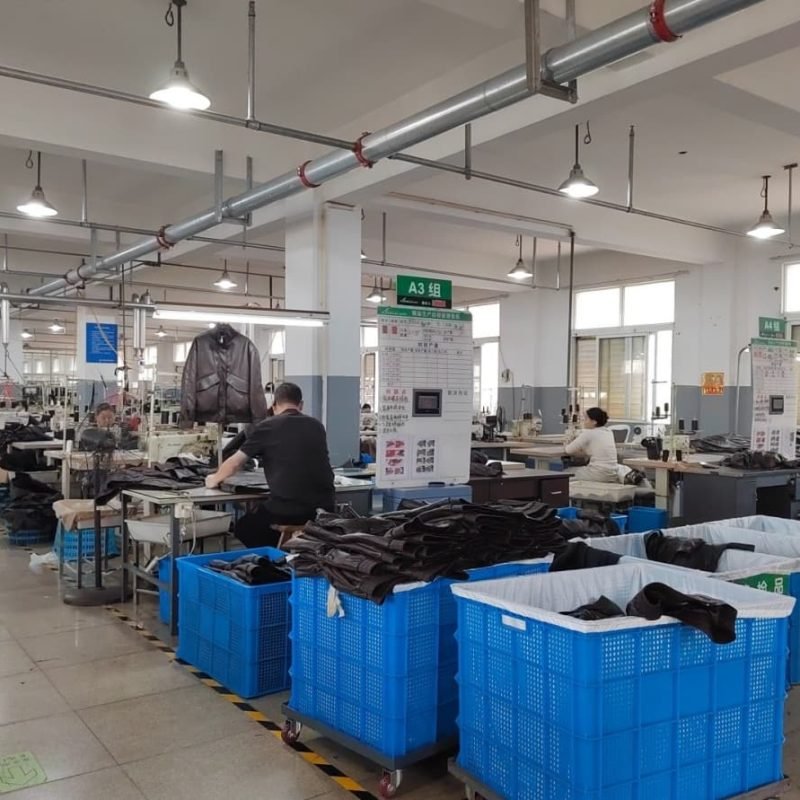
Sewing Line Evidence

Sewing-line images support factory reality and scale when they are tied to actual operations, line organisation and product categories. They should not be used to imply that every specialist process is in-house.
For women’s apparel qualification, useful supporting evidence can include line setup, workmanship reference, inline QC activity and examples of relevant construction while preserving confidential style information.
Measurement and QC

Measurement and inline quality evidence should show real inspection activity rather than posed photography. A useful image can be paired with the POM or inspection stage it represents, with sensitive style information removed when necessary. The purpose is to prove that measurement and defect checks happen within production and that findings feed correction, not to claim perfect quality from one photographed inspection.
Finishing and Packing

How a 36,000-Piece Collection Audit Can Be Structured
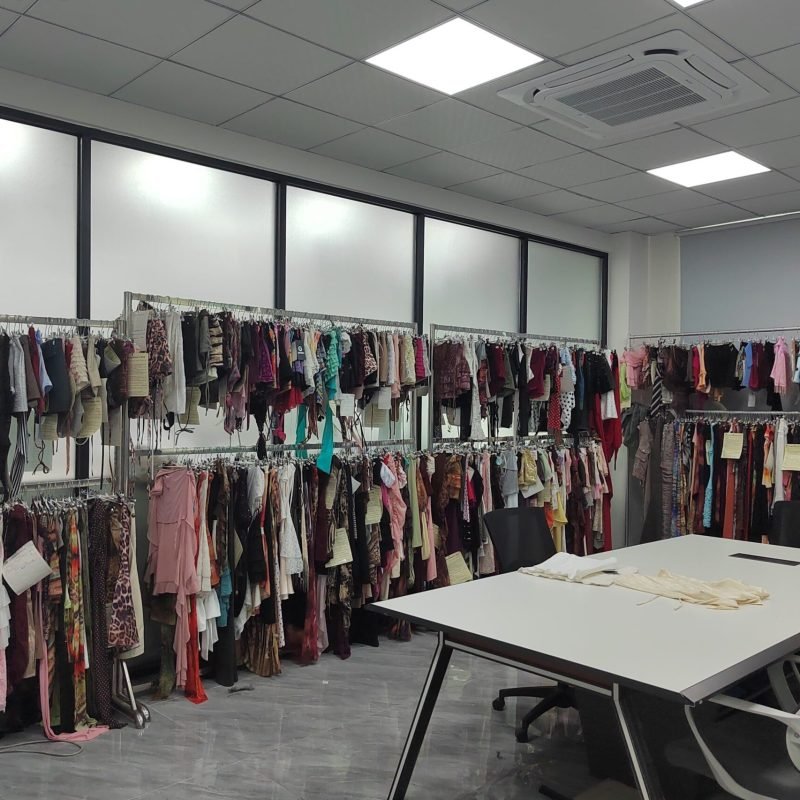
Qualification Scope for an 18-Style, 36,000-Piece Collection
Consider a representative seasonal women’s collection containing 18 styles and 36,000 pieces across dresses, fashion tops, matching sets and bottoms. The first audit task is not to request every document the factory owns. Build a project-specific evidence list around the styles, materials and production route. Legal and factory-site records establish who will contract and where core production occurs. A capability matrix confirms whether the product categories sit within proven or established manufacturing scope. An ownership map identifies any specialist processes that leave the main site and defines how approvals and incoming quality are controlled.
Development records should then be sampled across different risk profiles: one fitted dress with lining and zipper, one mesh or stretch top, one coordinated set and one bottom with a structured waistband. For each, trace the incoming reference or Tech Pack through pattern, first sample, fit comments, material and trim approval and PPS. Sampling baselines may range from 3-5 working days for simpler styles to 5-7 for more complex development, with revision and PPS stages following after comments and material readiness. The purpose is to confirm version control, not to score the factory on speed alone.
Before bulk approval, the sourcing team should agree the document set that will travel with production: approved standard, material and lot records, PPM output, cutting inspection, inline QC, measurement, finishing and final or packing records. Normal bulk lead time is recorded at roughly 25-35 working days after fabrics and trims are ready, PPS is approved and production details are confirmed. A 36,000-piece program can then be assessed against actual line planning and current load rather than a headline monthly-capacity figure.
What the Audit File Should Show Before Release
For the same 18-style program, the audit file should make exceptions visible. If two styles use a specialist embellishment partner, the ownership map should identify the handoff, approved strike-off or sample, return inspection and responsibility for rework. If several colours share one fabric family, material records should show approved source, lot or shade identity and the relevant incoming checks. If stretch fabrics appear in fitted tops, the file should link material behaviour to the approved fit and construction rather than relying only on composition labels.
Quality evidence should be sampled from live or recent comparable production. One record from each major gate is more useful than dozens of blank forms: fabric inspection, PPM, cutting, inline, measurement, 100% finishing, final and packing. Any repeated defect should have a corrective-action trail showing problem, cause, action and closure. Formal third-party reports should be reviewed only for the products, materials, colours or batches they actually cover; internal production-control tests should remain clearly labelled as internal records.
The release decision becomes straightforward when the evidence is organised. Legal identity and site are verified; category capability matches the collection; ownership of core and specialist processes is disclosed; materials are traceable; sample and PPS versions are controlled; capacity planning is credible; quality gates have current records; and compliance documents match the correct entity and scope. Gaps can then be classified as document update, corrective action, additional test, conditional approval or follow-up audit instead of being lost inside an unstructured email chain.

Build a Reusable Women's Apparel Factory Audit Checklist
A useful audit checklist tracks requested, received, verified, scope match, validity and follow-up status. Organise it around evidence families rather than one long undifferentiated document list.
Entity Checklist
Confirm public supplier name, legal company identity, registered information, manufacturing address, contract or invoice entity and payment entity. Mark each item as requested, received and verified.
Add a follow-up note when different names or addresses appear. The checklist should record the relationship that resolves the difference rather than forcing all records into one name for convenience.
Factory Checklist
Confirm the proposed production site, production areas relevant to the program, core equipment and the manufacturing route from development through packing.
Note any other facilities involved and whether they are owned, partnered or independent. The checklist should identify which location is covered by each audit, certificate or quality record so that evidence for one site is not silently applied to another.
Capability Checklist
List the women’s apparel categories, construction requirements, specialist processes and development needs in the collection. For each, record the supporting evidence reviewed: samples, pattern or development flow, equipment or process record, partner route or quality control. A clear capability checklist prevents broad website claims from replacing product-specific qualification and helps technical teams flag styles that require additional development review.
Material Checklist
Track approved fabric and trim source, lot or roll identity, incoming inspection, shade or colour approval, relevant production-control tests, material approval status and issue to cutting. Add separate fields for supplier or material certificates when required.
The checklist should preserve the difference between material documentation and factory certification and should identify any change after sampling that needs reapproval before bulk.
Quality Checklist
Record the required quality gates for the program and confirm that representative records exist for fabric inspection, PPM, cutting, inline, measurement, finishing, final and packing. Note who owns each gate, the approved reference used and any open CAPA item. The checklist should also identify client-specific inspection or third-party requirements instead of assuming the factory’s internal route automatically satisfies every retail program.
Testing Checklist
List tests triggered by material, product and destination requirements. Separate in-house production-control records from external reports. For each formal report, capture issuer, report number, method, sample or batch identity, date, result and validity for the program.
For internal checks, capture material or lot, method used internally, result and the production decision made from the finding.
Compliance Checklist
Record each required audit or certification by entity, site, scope, current status and validity. Add a column for corrective-action status where applicable. Material supplier certificates should be recorded under material evidence rather than copied into the factory-certification section. When a requirement is project-specific, note the responsible party and due date so that open compliance items remain visible before order release.
Approval Checklist
Finish with decision fields: approved, conditionally approved, corrective action required, additional evidence required or follow-up audit required. Assign an owner and due date to every open item. The checklist should also record which version of the supplier qualification pack was reviewed.
A dated approval record prevents old documents or closed assumptions from becoming the default evidence for a later collection or reorder.
Frequently Asked Questions About Factory Audit Documents
Start a Supplier Qualification Review With XZapparel
If your sourcing, technical or vendor-management team is qualifying a women’s apparel supplier, send the audit scope before requesting a large document bundle. We can organise relevant XZapparel information around the legal or factory fields available for controlled review, manufacturing footprint, product capability, process ownership, sample and PPS workflow, capacity conditions, fabric and trim control, quality records, testing scope and current compliance documents. For an efficient review, include the product categories, expected style count and quantity, target market, required audit or certification framework, quality standard, proposed audit method and any company questionnaire or document checklist already used by your organisation. Sensitive legal, commercial, design and project records can be handled through the appropriate qualification channel rather than posted openly. The goal is to answer the exact supplier-approval questions your team needs before sampling or bulk commitment. A concise request usually produces a stronger response than asking for every available certificate, because each document can be matched to a defined claim, risk and approval decision.
- Product categories, style count, quantity and target market.
- Required audit, certification, KYC or vendor-onboarding checklist.
- Quality, testing, traceability and production-ownership requirements.
- Preferred remote review, document review or factory-audit route.
- Tech Pack, reference files or project brief when product capability must be assessed.