Skip to content

Finishing, Pressing and Packing Operations
From sewn garment to shipment-ready carton, appearance, retail identity and packing accuracy are controlled through defined post-sewing quality gates.
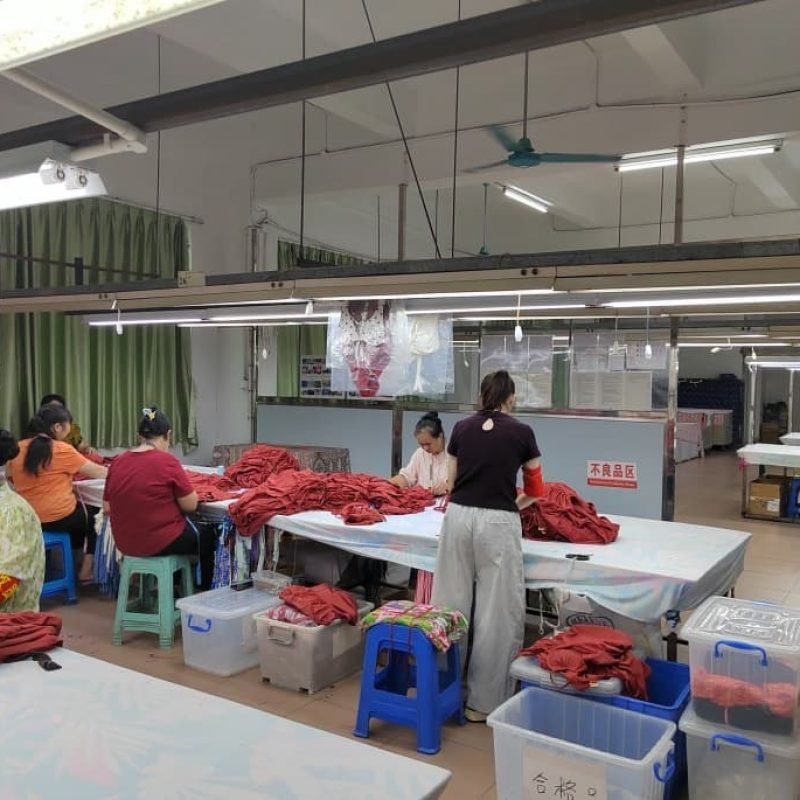
- 10 steam ironing tables support in-house pressing and finishing for sewn garments before final release, including high-volume multi-style production days and varied women’s product categories.
- Every bulk garment passes 100% finishing inspection for appearance, loose threads, stains, accessories and finishing condition.
- Final inspection can follow AQL 2.5, AQL 4.0, a brand-defined standard or 100% inspection where agreed for the program.
- A 20-person packing function prepares labels, folding, polybags, cartons and shipment identity before finished goods enter warehouse release.



How Finishing, Pressing and Packing Work Together
Finishing Controls Appearance
Pressing Sets Final Shape
Packing Protects Identity
From Sewing Exit to Shipment-Ready Finished Goods
A finished garment is not released when sewing stops. Each post-sewing gate has a clear input, operation, inspection purpose and condition for moving forward.

Measurement Before Final Appearance
Garments leaving sewing first need a reliable dimensional status before final appearance work begins. Measurement checks compare defined POMs, methods and tolerances against the approved specification rather than relying on visual judgement. The sequence matters because pressing can influence dimensions, seam behaviour and garment balance, especially on lightweight woven dresses, stretch styles and products with shaped panels. When measurement is out of tolerance, the garment should not simply be pressed into a better-looking shape and passed forward. The issue has to be identified as pattern, sewing, material or handling related, then corrected at the responsible stage. Measurements may also need a defined relaxation period after steam or handling so inspectors do not approve a temporary dimension that changes again before packing.
XZapparel places measurement within a wider quality flow that begins with fabric inspection and PPM, continues through cutting and inline QC, and then reaches finishing, final inspection and packing inspection. The aim is to preserve the same approved pattern, measurement and appearance standard through bulk production. For a brand team, the useful question is not whether a factory owns measuring tapes. The useful question is whether a defined measurement method exists, whether production teams know which POMs are critical, and whether an out-of-tolerance garment is held before finishing hides the symptom.
Pressing and 100% Finishing
After dimensional status is controlled, pressing and finishing prepare each garment for saleable presentation. XZapparel’s in-house area includes 10 steam ironing tables and finishing inspection. The operation can include controlled pressing, thread trimming, surface cleaning, accessory review and appearance correction according to the garment. A satin occasion dress may need careful control of shine and seam impressions; a structured style needs shape preserved around bust, waist, boning or lining; a stretch product needs recovery and proportion maintained instead of being pulled out of shape during handling.
Every garment then passes 100% finishing inspection. The term 100% refers to piece-by-piece finishing inspection, not a promise of zero defects and not a substitute for final inspection. Appearance, loose threads, stains, accessories, finishing condition and visible functional concerns are reviewed before the order moves to final release. When a defect is found, the correct route is hold, repair or correction, reinspection and only then release. Garments are not meant to move forward simply because the finishing operation has been completed. For multi-style production, accepted, repair and held pieces should stay physically separated so one corrected garment cannot re-enter the wrong SKU group or bypass the required recheck. Cooling, hanging or recovery time should also be defined where material behaviour can change immediately after steam.

Final Inspection and Release
Final inspection answers a different question: can the order or inspected lot be released under the agreed quality standard? XZapparel can work with AQL 2.5, AQL 4.0, a brand-defined inspection standard or 100% final inspection where agreed. The inspection basis should come from the purchase order, Tech Pack, quality manual, approved PPS, approved material, artwork, measurement specification and any program-specific defect classification. AQL is an order-level sampling framework; it should never be described as the same thing as 100% finishing inspection.
If a repeated major issue appears, release should stop while the affected style, colour, line, lot or time window is contained. Corrective action can involve production, pattern, QA, sourcing or merchandising depending on the cause. Repaired goods need reinspection. Release happens only after the applicable approved standard is met. The sequence protects brands from a common failure mode: a factory finding defects at final audit but having no clear route for containment, correction and controlled re-release. Inspection records should also identify the affected style or lot so corrective action can be traced into the next production stage or repeat order instead of disappearing after shipment. Final release records should remain aligned with the exact inspection standard applied to the order.
Packing, Warehouse and Shipment Handoff
Approved garments move into packing according to the brand’s packing manual or confirmed project instruction. Labels, hangtags, barcodes, folding, polybags, set pairing, carton assortment, carton marks and destination information must remain linked to the correct style, colour and size. XZapparel’s 20-person packing function prepares garments and cartons before finished goods move to the dedicated warehouse. Packing inspection then checks whether the correct approved garment has also been converted into the correct shipment identity.
For multi-SKU programs, final packing is one of the easiest places to lose control. A garment may pass sewing, measurement and final quality yet still create a costly receiving problem if the wrong size sticker, barcode, assortment ratio or carton mark is used. Shipment readiness therefore means more than closing cartons. It means garment quality, retail identity and carton identity agree with each other, records are consistent with the PO, and the goods can enter the brand’s warehouse, retail or e-commerce system without avoidable rework. Where an order is split by market, launch window or distribution centre, packing groups should remain separated through warehouse staging and shipment handoff. Reconciliation before dispatch should confirm carton count and destination identity against the approved shipping plan and final dispatch record.

Approved Standards Come Before Every Final Inspection
Finishing and packing decisions need a defined reference. XZapparel follows the highest applicable approved source instead of replacing a brand specification with a generic factory preference.
| Priority | Approved Reference | What It Controls | Operational Use |
|---|---|---|---|
| 1 | PO / Tech Pack / Quality Manual / Test Protocol | Product, labels, packaging, quality and inspection requirements | Primary project standard when requirements are clearly defined |
| 2 | Approved PPS / Garment / Material / Artwork | Appearance, handfeel, colour, construction, decoration and finish | Physical benchmark for bulk execution and visual comparison |
| 3 | Approved Pattern / Measurement Spec / POM Method | Fit, proportion, symmetry, measurement method and tolerance | Used for repeatable measurement and size control |
| 4 | XZapparel Internal Process Controls | Incoming material, production, finishing and packing controls | Applied where brand documents do not define a more specific rule |
Pressing Decisions Change With Fabric and Garment Construction
Heat and steam alone do not define good pressing. Material surface, stretch, structure, trims and intended silhouette determine how a garment should be supported, shaped and released.

Satin and Fluid Dresses
Satin, silky woven fabrics and fluid occasion dresses can show pressing damage long before a seam or measurement problem becomes obvious. Excessive pressure can create shine; hard seam allowances may print through to the face; high heat can affect surface character; careless handling can pull a bias or draped garment out of balance. Pressing should therefore follow the intended silhouette rather than forcing every panel flat. Seam areas, darts, hems, zippers and lined sections need controlled support so the garment keeps the approved drape and surface quality.
For satin-heavy collections, XZapparel links pressing to the earlier material and construction decisions. GSM, weave, surface, lining, seam construction, zipper type and garment geometry all influence how the finished piece behaves. A draped neckline, corset panel or bias skirt cannot be evaluated only at the ironing table. The PPS needs to establish the acceptable appearance before bulk, and finishing teams need a stable reference for surface condition and shape. When the pressed garment differs from the approved reference, the right response is not extra pressure. The cause may sit in sewing tension, seam allowance, interlining, material lot or handling and should be corrected at the responsible point. A stable release standard also needs an agreed cooling and hanging condition, because fluid garments can change appearance when moved immediately from the steam table into folding or dense carton packing.
Structured Bodices and Corset Styles
Structured dresses, corset-inspired tops and garments using cups, boning, underwire, interlining or multiple layers demand a different pressing logic. Pressure applied directly over raised or shaped components can flatten volume, mark the shell fabric or distort the internal support system. Curved seams around bust and waist need support that preserves three-dimensional form. Zipper areas also need attention because stretch imbalance, tape behaviour or aggressive pressing can create waviness that looks like a final finishing problem even when the root cause began earlier in sewing.
XZapparel treats structured finishing as a continuation of fit and construction control. The approved PPS should define silhouette, component position, neckline shape, bust contour and surface appearance. Pressing then refines the approved form without changing the engineering underneath. Where a defect appears, pattern, sewing, support material and component placement may need review before re-pressing. A supplier able to explain that difference is more useful than one promising stronger steam or higher pressure. Final appearance only becomes repeatable when the same construction, material and handling conditions are carried from sample approval into bulk. Operators also need clear limits for pressing directly over cups, boning channels, seam intersections and zipper areas so correction does not introduce a new shape problem near final release.


Stretch, Swim and Active Styles
Stretch garments need pressing control that respects recovery and dimensional behaviour. Fabric can appear smooth immediately after steam yet change after cooling, relaxation or handling. Swimwear and active styles also combine elastic, lining, stretch seams, cups or support components, so the finishing operation cannot be separated from recovery, seam extensibility and fit. Excessive heat or tension may affect elastic behaviour, distort openings or change the balance between shell and lining.
XZapparel’s established material testing capability includes stretch and recovery, shrinkage, dimensional stability, washing, colourfastness and heat resistance where relevant to production control. Those checks help define material risk before the final operation, but the garment still needs appearance and measurement review after finishing. For stretch products, final release should consider whether the garment has returned to the intended dimensions and shape, not only whether wrinkles disappeared. Packing also matters: folding method and compression inside polybags should avoid creating avoidable distortion in products designed around controlled tension and recovery. After pressing, the garment should be allowed to recover under the agreed handling condition before final dimensional review, especially when elastic openings, compression zones or lined stretch panels are part of the fit. The final measurement should represent the condition in which the garment will actually be packed and shipped.
Lace, Rhinestones and Heat-Sensitive Details
Fashion finishes can turn pressing into a local compatibility problem rather than a garment-wide operation. Lace, sequins, rhinestones, heat-transfer graphics, coated surfaces, plastic trims, special buttons and adhesive-backed components can react differently to heat, pressure and steam. A safe pressing route may involve protected contact areas, lower temperature, reduced pressure, changed sequence or local handling around decoration. No single parameter should be presented as suitable for every product.
XZapparel manages selected specialist processes through a controlled partner network while retaining development coordination, approved standards, garment integration and final QC. Finishing therefore has to respect where the decoration came from and how it was approved. A strike-off or decorated sample can be acceptable before assembly yet become damaged by later pressing if process compatibility was never considered. The better prevention is to establish finishing constraints during development, confirm them on PPS and carry the same handling instruction into bulk. Final inspection then checks both garment appearance and decoration condition before packing. For repeated bulk work, the approved finishing instruction should identify protected areas and prohibited direct-contact zones so later production does not depend on one operator remembering how the original sample was handled. Decoration condition should be checked again after cooling because adhesive or coated details may react after direct heat has ended.

Women's Apparel Needs Product-Specific Finishing and Packing Controls
One finishing routine cannot serve every category. Product structure, material behaviour, support components and retail presentation change what should be checked before final packing.
| Product | Finishing Focus | Pressing Control | Packing Priority |
|---|---|---|---|
| Dresses | Neckline, zipper, lining, hem, drape, bust-waist-hip balance, embellishment | Preserve drape and shaped areas; avoid shine, seam marks and distortion | Protect silhouette, verify length/fold, keep trim and decoration undamaged |
| Tops / Blouses | Neckline, armhole, placket, sleeve, sheerness, seam puckering | Control surface and placket shape; avoid flattening lightweight fabrics | Fold consistently, protect collars/plackets, match labels and size identity |
| Bottoms | Waistband, rise, hip/thigh, zipper, pockets, inseam/outseam | Maintain waistband and crease intent; control zipper and pocket impressions | Size and colour accuracy, clean fold, carton assortment by SKU |
| Sets | Shade, coordinated fit, shared fabric lot, top-bottom pairing | Maintain matching presentation across both pieces | Pair correct components, size and shade as one sellable unit |
| Swimwear | Stretch/recovery, lining, elastic tension, cup/strap, opacity | Avoid heat or tension that changes elastic behaviour or shape | Protect cups/straps, maintain recovery, match set or size identity |
| Activewear | Four-way stretch, recovery, seam extensibility, opacity, measurement under stretch | Maintain dimensional recovery and seam profile | Avoid excessive compression, preserve shape and correct barcode/SKU |
| Shapewear | Support zones, boning/cup/underwire, seam strength, fit pressure | Protect support structure and shaped components | Prevent distortion of support zones and maintain size identification |
What 100% Finishing Inspection Checks Before Final Release
Appearance and Surface Condition

Finishing inspection checks the garment as a complete visual product rather than as isolated sewing operations. Inspectors look for visible stains, lint, thread ends, surface marks, unwanted creases, pressing impressions, asymmetry that is visible in finished presentation and other appearance concerns against the approved reference. Lightweight dresses, satin styles and light colours can make minor handling problems highly visible, so the inspection standard must reflect the product rather than rely on a single universal checklist. Garments with unacceptable appearance are held for correction instead of moving automatically into final inspection or packing.
- Compare against PPS or approved garment appearance.
- Check surface cleanliness after pressing and handling.
- Confirm hems, drape and major visible lines present correctly.
Accessories and Garment Function

- Confirm required accessories are present and correctly positioned.
- Check relevant closures and visible functions after finishing.
- Hold damaged or incomplete garments for repair and reinspection.
Correction and Reinspection

Finding a finishing issue is only useful when the workflow defines what happens next. XZapparel uses a stop, contain, correct, reinspect and release logic across quality control.
A garment needing repair should not receive a visual touch-up and then be treated as automatically accepted.
The corrected area is checked again, and repeated issues can trigger a wider review of the affected style, colour, lot, line or production window. Repeated surface marks, stains or component issues may indicate handling, process or material causes that need action beyond one piece.
- Separate isolated repair from repeated systemic defects.
- Reinspect corrected pieces before release.
- Escalate repeated issues to production, QA, pattern or sourcing as needed.
Final Inspection Decides Whether the Order Can Release
AQL Where Agreed
Customer-Defined Standards
Release Only After Recheck
How XZapparel Handles Problems Before Goods Move Forward
Stop and Contain
Correct and Reinspect
Release and Record
Release happens only when the affected garment or lot meets the applicable approved standard. Records should show what was held, what was corrected and what was reinspected so the same issue can be monitored across future production or repeat orders. On recurring programs, those records become useful style knowledge.
A known pressing sensitivity, packing risk or label version issue can be built into the next PPM and finishing instruction instead of being rediscovered after sewing is complete.
Packing Operations Built Around Retail and Shipment Accuracy
Main Label

Size Label

Size identity must agree across the garment, hangtag, barcode, polybag sticker and carton assortment. A wrong size label creates a retail problem even if the physical garment measures correctly.
XZapparel uses the brand’s confirmed size system and packing instruction rather than inventing a generic women’s size standard.
Multi-market programs should state whether the same physical size carries different regional markings, and any change needs version control before bulk packing begins.
Care Label

Care labels combine brand, regulatory and product information depending on market and specification. Placement, material, wording, symbol set and approved version need to be locked before packing. A care label problem is not solved by good folding because the garment may be rejected or require rework after production is complete.
XZapparel treats supplied or approved care-label specifications as controlled project inputs and keeps packing inspection focused on correct style and version linkage.
Hangtag and Price Ticket

Hangtags, price tickets and retail tickets connect finished garments with merchandising, store or e-commerce systems. Style, colour, size, price, market and ticket version can all vary by program.
XZapparel aligns hangtag attachment and ticket use with the confirmed packing instruction, avoiding ad-hoc substitutions at the end.
For large drops, a clear SKU and ticket matrix is more reliable than sending separate email comments that can drift between merchandising, packing and warehouse teams.
Barcode and SKU Identity

Folding and Polybagging

Carton Assortment

Carton Marks

Carton marks tell a warehouse what the carton contains and where it belongs. PO number, style, colour, size range, carton number, destination and other brand-defined fields may be required. A correct garment packed in a carton with wrong identification can still fail receiving. XZapparel checks carton marks against the confirmed instruction and shipment identity before release. Destination-specific requirements should be approved before printing because last-minute mark changes create avoidable relabelling work and shipment delay.
Packing Inspection Protects SKU, Presentation and Carton Accuracy
Garment and Retail Identity

Inspectors verify style, colour, size and quantity against the applicable packing instruction, then confirm labels, hangtags, barcode or price ticket use the approved version.
The check matters most when visually similar garments share one packing area or when a collection contains many colour and size combinations. Identity control should not depend on whether a packer can recognise a style by sight. The approved SKU and packing matrix needs to lead the decision so retail information stays linked to the correct physical garment.
Folding and Unit Packing

Carton and Destination Control

Multi-SKU Retail Programs Professional Packing Management
As style, colour and size combinations grow, late-stage risk shifts from simple garment presentation to version control, assortment accuracy and warehouse-ready product identity across retail programs.

SKU Mapping Before Packing Starts
A multi-SKU collection can contain dozens of combinations before packaging variables are added. Consider an 18-style program with multiple colours and a broad size range: garment identity may already involve hundreds of SKU combinations, while hangtags, barcodes, price tickets, market labels and carton rules add another layer. Packing should therefore begin from a controlled matrix rather than separate email instructions. The matrix links style, colour, size, unit label set, barcode, fold method, polybag instruction and carton destination so each packed unit has one unambiguous route.
XZapparel’s merchandising and packing functions use approved project inputs to organise that handoff. Packing does not own product development decisions, so late changes must return to the correct owner before execution. A revised barcode file, regional label change or new carton ratio can affect already prepared materials and work in progress. Version control needs a cut-off point, clear replacement instruction and confirmation that old files are no longer in use. A clean packing area cannot compensate for two active versions of the same SKU instruction. A release list should show the active file revision, effective date and affected SKU group so old tickets, labels or barcode sheets can be physically removed before the new instruction reaches the line.
Carton Assortment for Retail Receiving
Retail and e-commerce programs may require solid-size cartons, ratio packs, mixed colours, mixed sizes, store-ready packs or destination-specific assortment. Each option changes the packing risk. Solid-size cartons simplify identity but increase carton count; mixed ratios improve distribution efficiency but require stronger checking because one incorrect size changes the carton content. Set products add another condition: top and bottom must remain correctly paired by size, shade and style before they are treated as one sellable unit.
XZapparel’s packing inspection focuses on size, colour, labels, barcode, polybag, carton, quantity and destination requirements. The useful operating rule is to inspect carton identity against the same packing matrix used by the team, rather than comparing finished cartons with memory or informal notes. Carton numbers, PO references and destination fields should also be confirmed before warehouse handoff. When a brand uses several distribution centres or market-specific tickets, separate carton groups help avoid mixing and make final shipment reconciliation easier. Carton counts should reconcile back to the approved SKU quantities before warehouse handoff, with shortages, overages or repacking recorded rather than silently balanced across other cartons. A clear carton status also allows final audit sampling to target the correct shipment group when one PO is split across several destinations.


Warehouse Handoff and Shipment Readiness
Finished goods should enter the warehouse with identity already resolved. The warehouse should not become the place where teams discover unclear carton marks, mixed assortments or missing SKU information. XZapparel maintains a dedicated finished-goods warehouse after packing inspection, creating a clear transition between production release and shipment coordination. Shipment-ready status means the carton contents, outer identity and project records agree, not simply that the box has been sealed.
For recurring brand programs, the same discipline supports repeat orders. Approved packing assets can be reused only after checking whether barcode, label, market, size range, carton ratio or channel requirements have changed. Reorder consistency comes from controlled version reuse, not copying last season’s files without review. A structured handoff also helps production and merchandising teams isolate late packing changes from garment quality problems, reducing unnecessary reopening, relabelling and reinspection before dispatch. Shipment staging should keep destination groups identifiable so a carton prepared for one market cannot be transferred into another dispatch merely because the outer box size is the same. Warehouse release should therefore use carton identity and shipment records together, not physical box position alone. A final reconciliation should also confirm the number of released cartons matches the approved dispatch group before loading or handover to the selected logistics route.
Representative Multi-SKU Order Through Final Preparation and Packing
A realistic collection example shows where late-stage controls matter most. The figures below reflect the scale of recurring brand programs XZapparel is structured to support without naming a specific client.

Program Scope and Approval Setup
A representative fashion program can involve 18 styles and about 42,600 garments across dresses, tops, bottoms and coordinated sets. Individual style quantities may vary according to colour and size demand, while total order volume sits within the 20,000-80,000 piece range common to larger seasonal or drop-based programs. Before bulk packing, the operational challenge is not the total quantity alone. Each style can carry a different approved PPS, measurement specification, main label, size label, care label, barcode file, fold method and carton assortment rule.
The program setup therefore begins by freezing the approval hierarchy before final production stages accelerate. Merchandising aligns the production version, PPS, size specification and quality requirements. Packing receives a controlled matrix covering style, colour, size, ticket set, barcode, folding and carton rules. Any market-specific variation is separated before execution. The point is to remove decisions from the packing table. Pack teams should execute approved instructions, not decide which ticket or carton ratio “looks right” after thousands of garments are already finished. The same setup can assign higher-risk styles, such as satin dresses or structured sets, to more protective folding and finishing instructions without changing the retail identity controls used for the rest of the order.
Finishing and Release Control
As sewing output reaches finishing, each garment moves through measurement status, pressing and 100% finishing inspection. Dresses receive additional attention around necklines, zippers, lining, hems, drape and visible surface quality; sets require shade and pairing control; tops and bottoms follow their own product-specific checkpoints. With multiple styles in production at once, inspection records and physical separation matter because repeated issues may affect only one colour, line or time window rather than the full 42,600-piece program.
Final inspection then uses the agreed order standard. One style may follow a brand-defined AQL protocol while a higher-risk product can require additional final checking by agreement. Rejected or held goods are contained, corrected and reinspected before release. The process avoids pushing every garment into packing simply to protect daily output numbers. From a brand perspective, the important result is controlled release: only garments meeting the approved standard become eligible for retail packing, reducing the chance that final carton opening reveals issues already visible at factory level. Daily output can still be tracked, but shipment pressure does not become a reason to combine accepted, repair and held goods in the same packing flow. A controlled hold area also gives QA and merchandising time to decide whether a repeated issue needs wider containment before more units are packed.


Packing and Shipment Identity
The last risk sits in converting approved garments into the correct retail and warehouse units. For an 18-style program, packing teams may work with many style-colour-size combinations, so barcode and carton identity need deliberate control. Labels and hangtags are matched to approved versions, garments follow confirmed folding and polybag instructions, sets stay correctly paired, and cartons are built according to the assortment matrix. Packing inspection checks quantities, ratios, carton marks, PO identity and destination before finished goods move into warehouse release.
The value of the control becomes clearer when one late file changes. If a barcode or price ticket is revised for one market, only the affected SKU and carton groups should be reopened. Strong version control prevents a local change from turning into full-order repacking. Finished cartons can then be staged by shipment or destination with a clearer audit trail. The same packing assets and risk notes can also support the next reorder, provided every repeated file is reviewed against the new PO rather than assumed to be unchanged. A revised size range, new market ticket or changed carton ratio should trigger a controlled update before packing materials are issued, even when the garment construction itself has not changed.
Needle Detection When Product or Market Requirements Need It
When Detection Applies
Where It Sits
The correct location depends on the agreed program, but the control belongs near final garment release where product identity and inspection status are already known.
Detection should not replace sewing needle management, inline quality control or final inspection. It adds another defined check where required. Records and handling instructions should distinguish cleared goods from held goods, and any failed item should be investigated under the same stop, contain, correct and reinspect logic used elsewhere in the quality system.
XZapparel Facilities Behind Final Garment Preparation and Packing
Pressing and Finishing Area

XZapparel operates 10 steam ironing tables within the in-house pressing and finishing function. Sewn garments enter after upstream production and measurement checks, then move through product-appropriate pressing and finishing before 100% finishing inspection. The area should be photographed with actual garments, tables and workflow rather than staged marketing scenes. For brand qualification, the evidence needs to show where post-sewing work happens, how garments are separated and what inspection follows pressing.
- 10 steam ironing tables.
- In-house pressing / finishing function.
- Direct handoff into finishing inspection.
100% Finishing Inspection

XZapparel’s quality flow includes 100% finishing inspection before final inspection. The control focuses on appearance, loose threads, stains, accessories and finishing condition.
Real evidence should show inspectors reviewing completed garments and the method used to separate accepted, repair and held pieces. The visual objective is not to prove “zero defects.” The objective is to prove a defined piece-by-piece gate exists before order-level final inspection begins.
- Piece-by-piece finishing review.
- Appearance and completion focus.
- Correction followed by reinspection.
QC and QA Ownership
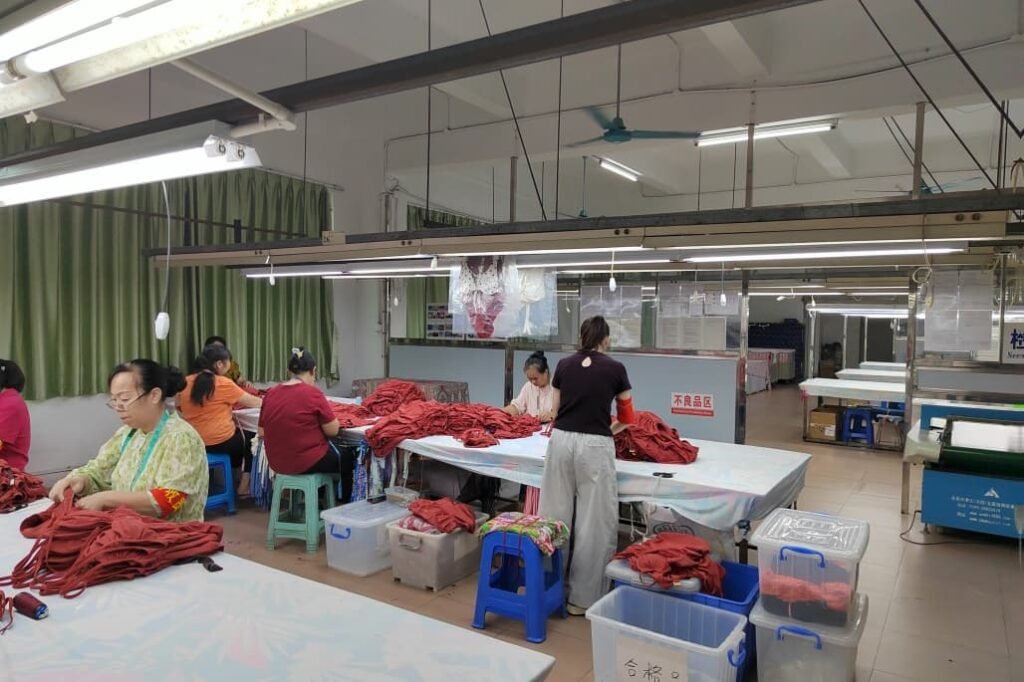
Post-sewing quality is supported by 31 QC personnel and 30 QA engineers within the confirmed organisation structure. QC handles production and finished-garment inspection, while QA supports testing, system control and technical risk.
Large programs benefit from separating daily inspection work from broader quality engineering because repeated defects often need root-cause action across production, pattern, sourcing or materials rather than a simple final repair.
- 31 QC personnel.
- 30 QA engineers.
- Quality ownership extends beyond final audit.
Packing Team
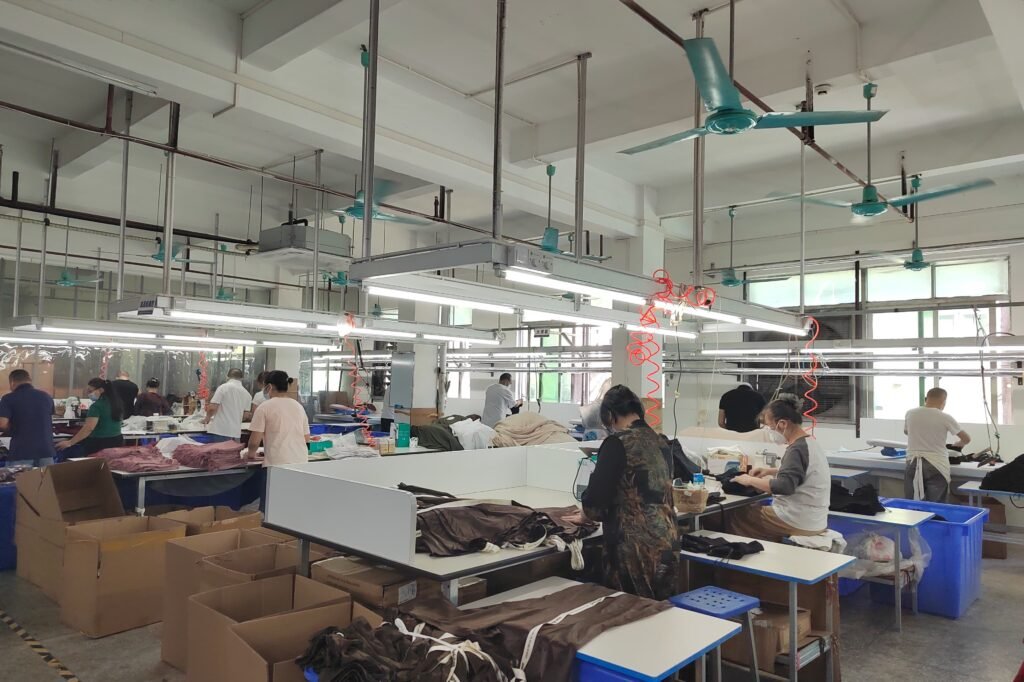
- 20-person packing function.
- Retail identity and carton preparation.
- Packing inspection before warehouse release.
Finished Goods Warehouse

A dedicated finished-goods warehouse separates shipment-ready inventory from sewing and active finishing work. Cartons should enter with packing inspection completed and shipment identity clear. The warehouse is not intended to correct missing barcodes or uncertain assortment. Its role is controlled staging for dispatch, route planning and order separation. For remote qualification, warehouse visuals should show finished-carton reality and order segregation rather than generic storage photos.
- Dedicated finished-goods warehouse.
- Shipment-ready carton staging.
- Clearer separation between production and dispatch.
Full Quality Gate Chain

- Quality gates begin before sewing.
- 100% finishing and final inspection remain separate.
- Packing inspection protects shipment identity.
What Brands Should Check in a Finishing Supplier
Process and Ownership
Product-Specific Control
Evidence and Packing Identity
Request evidence proportional to the claim: real pressing and finishing areas, inspection workflow, packing checklist, measurement records and anonymised final-inspection examples where publishable. For retail programs, ask how barcode, labels, size, colour, carton assortment and destination are linked. A beautiful factory photo does not prove packing accuracy.
The strongest evidence connects a specific control with the risk it is meant to prevent and shows how failed goods are held, corrected and released.
Information Needed Before Finishing and Packing Are Released
Garment and Quality Inputs
Retail Packing Inputs
Program and Shipment Inputs
Confirm style count, colour count, size range, quantities by SKU, carton ratio, destination, requested delivery window and any split-shipment plan. For recurring programs, flag which assets can be reused and which have changed from the previous order. XZapparel’s standard garment MOQ is 200 pieces per style per colour, while material, trim, process and supplier requirements can raise the workable threshold. Bulk production is typically 25-35 working days after materials are ready, PPS is approved and production details are confirmed.
Frequently Asked Questions About Finishing and Packing

Send Your Finishing and Packing Requirements for Review
A reliable final operation begins with clear approved standards. XZapparel can review how your garment appearance, final inspection and retail packing requirements should move from PPS into bulk execution. The most useful enquiry includes enough information for the production, quality and packing teams to identify risk before the goods reach the final stage.
Please include:
- Product categories and style count.
- Quantity by style, colour and size.
- Approved PPS, Tech Pack or reference garment information.
- Size specification, critical POMs and quality manual.
- Main, size and care label requirements.
- Hangtag, barcode or price-ticket files.
- Folding, polybag and carton assortment instructions.
- Carton mark, destination and retail/e-commerce channel requirements.
- Final inspection or third-party inspection requirements where applicable.
- Target sample, PPS, bulk and launch windows.
XZapparel’s standard garment MOQ is 200 pieces per style per colour, while material, trim, process and supplier conditions can require higher workable quantities. Once materials, PPS and production details are confirmed, regular bulk production is typically planned around a 25-35 working-day manufacturing window. Final timing remains subject to product construction, packing complexity, approvals and shipment arrangement.