Skip to content

Multi-Category Women’s Apparel Manufacturing System
One development structure for brands managing dresses, tops, bottoms, sets, swimwear, activewear, and other women’s categories across the same seasonal program.
- Proven core categories include Dresses, Tops, Bottoms, Swimwear, and Sets, supported by established Sweatwear, Activewear, and Fashion Shapewear programs.
- Development resources include 6 sample rooms, 48 pattern makers, and 60 sample makers for parallel style review, fitting, revision, and PPS preparation.
- Core production includes approximately 80 sewing lines, while knitwear, embroidery, selected printing, and specialist processes are managed through controlled long-term partners.
What a Multi-Category Women’s Apparel Manufacturing System Actually Controls
A multi-category system is not a long product list. It connects category-specific engineering with one development spine, controlled production ownership, shared approval gates, and accountable quality management.

What the System Includes
A strong multi-category operation keeps different garments technically distinct while managing them through one coordinated structure. Dresses may need drape, lining, support, closure, and embellishment decisions; swimwear needs stretch recovery, lining, elastic, coverage, and support; bottoms require rise, waistband, seat, and shrinkage control. The operating system connects those differences to shared project disciplines.
- Central product development and project ownership
- Category-specific fit, fabric, construction, and process decisions
- Approved sample, PPS, and version control before bulk
- Production routing based on product requirements rather than convenience
- Quality gates that change with category risk

What the System Avoids
Multi-category production becomes unreliable when every style is treated as the same sewing problem or when broad sourcing access is presented as direct manufacturing expertise. A controlled system separates proven in-house capability, established programs, specialist partner processes, and development categories. It also prevents one fabric, one quality checklist, or one production route from being forced across products with different technical needs.
- No “everything in-house” claim where specialist production is used
- No category expansion without a defined development and approval path
- No bulk release before fit, materials, construction, finish, and packing standards are clear
- No capacity promise separated from product mix, line allocation, and process requirements
How Coordinated Manufacturing Reduces Fragmented Collection Management Across Categories
Brands often lose time when every category runs through a separate development contact, approval format, material calendar, production schedule, and quality conversation. Coordination reduces those handoff gaps.

Fragmented Category Sourcing
Using several unrelated suppliers can work when each category is purchased independently, but complexity increases quickly once a seasonal range shares launch dates, packaging, fit standards, colors, trims, or retail requirements.
Development comments sit in different email chains, material bookings move on separate calendars, and production priorities compete without a common view of the collection.
- Repeated supplier qualification across categories
- Separate sample tracking and version control
- Material quantities that cannot be reviewed across the range
- Different interpretations of fit, finishing, packing, and release standards
- More coordination work when delivery windows overlap

Coordinated Collection Management
A coordinated model gives the brand one operating spine while still routing each category through the right technical and production resources. Assortment structure, sample priorities, material risks, production windows, and quality requirements can be reviewed together. The goal is not to remove specialist capability; the goal is to place specialist capability inside a controlled development, approval, and quality framework.
- One collection-level development calendar
- Shared approval gates for fit, materials, artwork, PPS, and packing
- Category-specific production and QC rules
- Clear ownership when specialist partners are involved
- Better continuity when the same styles move into replenishment or reorder
How XZ Apparel Organizes One Multi-Category Manufacturing System
XZ Apparel uses centralized product development, core in-house manufacturing, and a controlled specialist supply chain so different women’s categories follow the right route without losing one project standard.
One Development Spine Across Different Women’s Categories
Collection work can begin from Tech Packs, reference images, sketches, physical garments, size charts, or a combination of those inputs. The first task is not sewing; it is turning mixed information into clear product decisions. Each style is reviewed for silhouette, fit target, key measurements, fabric behavior, trims, construction, special processes, quantity, and launch timing before development is released.
For multi-category programs, centralization matters because comments from several product groups can affect the same calendar. A delayed trim on one set, a fit revision on one dress, and a fabric replacement on one top should not be managed as unrelated events if all styles belong to the same launch. XZ Apparel uses the development stage to create one information spine while preserving category-specific technical decisions.
- Inputs are grouped by category, complexity, material family, and priority.
- Pattern and sample work can move in parallel rather than waiting for one category to finish first.
- Missing specifications are identified before they become production assumptions.
- Fit, fabric, trim, artwork, finish, and packing approvals are treated as separate control gates.

Core In-House Manufacturing Where Repeatability Matters Most
The proven core product base covers Dresses, Tops, Bottoms, Swimwear, and Sets. Those categories sit closest to XZ Apparel’s central development and bulk manufacturing system, allowing approved patterns, specifications, material standards, construction details, and quality checkpoints to move from sample development into production with fewer ownership changes.
Core in-house manufacturing does not mean every garment follows one line configuration. A lined dress, elasticated swim style, tailored bottom, mesh top, and matching set require different machine combinations, operator skills, production pacing, and inline control. Production planning therefore considers product structure and readiness, not only open line space.
Approximate core production resources include around 80 sewing lines and about 640 Brother sewing machines. Capacity is reviewed against product mix, line allocation, material status, construction complexity, and delivery windows rather than presented as a fixed number detached from style requirements.
- Proven core categories receive direct production planning through the central system.
- Bulk handover starts from approved PPS, specifications, measurements, finishes, and packing requirements.
- Line assignment is matched to construction needs and schedule readiness.
- Quality ownership stays connected to the same approved standards used during development.
Pre-production alignment adds another safeguard: production, merchandising, pattern, sourcing, and QA can review the current approved references together before bulk begins, reducing the chance that one department works from an older sample or instruction.


Specialist Routes Without Hiding Production Ownership
Multi-category capability becomes more credible when production ownership is clear. Knitwear, embroidery, selected printing, and certain specialist processes are supported through long-term specialist partners rather than described as if every machine and process sits inside one building. XZ Apparel coordinates the development input, approval standard, production timing, and finished-garment quality requirements around those specialist routes.
The manufacturing decision is based on what the product needs. A knit structure should go to an appropriate knitwear resource; an embroidery program should be reviewed for base-fabric stability, placement, backing, thread, density, and bulk consistency; selected printing and special treatments require their own strike-off, approval, and process windows. Partner involvement therefore adds specialization without removing accountability.
- Production ownership is identified before bulk planning.
- Specialist routes use approved references and category-specific checkpoints.
- Process timing is built into the collection calendar instead of treated as an afterthought.
- Finished garments return to the central quality and shipment standard defined for the program.
Where a process sample, strike-off, placement approval, or specialist material reference is needed, the approval becomes part of the same style record used for PPS and bulk. The production location may change, but the approved product identity and release responsibility remain visible. Partner handoff records should also identify the current material, artwork, placement, quantity, and required return date.

Central Quality Control Brings Every Route Back Together
A multi-category system needs one quality framework, but one checklist cannot cover every garment equally well. XZ Apparel’s core flow runs through fabric inspection, pre-production review, cutting inspection, inline QC, measurement, finishing inspection, final inspection, and packing inspection. The checkpoints remain recognizable across categories while the technical focus changes with the product.
For a dress, the control emphasis may include symmetry, support, drape, closure, lining, measurement, and embellishment. Swimwear shifts toward stretch recovery, elastic application, coverage, lining, seam performance, and measurement. Bottoms put more attention on rise, waistband, seat balance, shrinkage, closure, and finished dimensions. A shared framework therefore creates accountability without flattening category differences.
- Quality requirements are linked to approved product inputs.
- Material risk is checked before it reaches a full production run.
- Inline findings can trigger correction while work is still in process.
- Final inspection and packing review confirm the finished program against agreed release criteria.
Inspection also depends on the approved inputs being complete. Measurement cannot be judged reliably without a current specification; workmanship cannot be judged consistently without an approved construction and appearance reference. Linking quality control to the approved development record turns inspection from a subjective end check into a repeatable production decision. The same discipline helps isolate whether a recurring issue came from material, pattern, sewing, finishing, or packing.
Category Capability Levels Across XZ Apparel’s Manufacturing System
A clear capability map helps sourcing teams separate proven bulk categories from established programs, specialist partner routes, and development areas before placing a mixed collection.
Capability Level | Categories / Processes | How XZ Apparel Positions the Capability | Production Ownership |
Proven Core | Dresses, Tops, Bottoms, Swimwear, Sets | Core categories with established development and bulk manufacturing routes | Core in-house manufacturing |
Established | Sweatwear, Activewear, Fashion Shapewear | Established selected-program capability with category-specific development and production review | Primarily controlled through established production routes |
Specialist Partner | Knitwear, Embroidery, selected Printing, selected specialty processes | Managed through long-term specialist resources when the product requires dedicated process capability | Long-term specialist partner with XZ coordination and QC responsibility |
Development / Expansion | Selected Outerwear; heavy winter/down remains outside mature bulk positioning | Evaluated project by project and never presented as proven bulk specialization without new evidence | Development route subject to capability review |
Women’s Categories Supported Within One Coordinated Manufacturing Platform
The category mix is designed around commercial women’s collections, with different fit, material, construction, and quality routes rather than one generic production formula applied to every style.

Dresses
From soft draped occasion styles to structured silhouettes, dress development can involve lining, boning, cups, zippers, mesh, lace, satin, asymmetric shapes, or embellishment.
Pattern balance, bust and waist shaping, opacity, drape, closure position, support, and hem behavior need to be resolved before bulk. Dresses sit within XZ Apparel’s proven core manufacturing capability.

Tops & Blouses
Tops range from simple knit silhouettes to fitted, draped, corset-inspired, mesh, halter, strapless, and woven constructions. Neckline stability, bust shaping, sleeve movement, opacity, closure, lining, stretch direction, and seam finish can change the development route significantly. Material and pattern decisions are matched to the intended silhouette rather than copied from another category.

Bottoms
Skirts, trousers, shorts, and related bottoms need careful control through rise, waistband, seat, hip, thigh, length, closure, lining, pocket construction, and shrinkage.
A fabric that looks suitable on a hanger can behave very differently at the waist or seat after wear and washing, so fit review and material behavior remain connected during development.

Matching Sets
Sets create an extra coordination requirement because top and bottom pieces must work separately and together. Fabric lot, color, finish, size ratio, fit relationship, trims, labels, and packing need to stay aligned. Development also checks whether both pieces should share one material platform or use different constructions while maintaining a coherent collection appearance.

Swimwear
Swimwear development depends heavily on stretch and recovery, lining, elastic specification, support, coverage, strap tension, edge finish, and finished measurement. Small changes in pattern shape or elastic application can alter fit more than on many casual garments. Swimwear therefore follows category-specific sample and quality checkpoints inside the wider manufacturing system.

Sweatwear
Hoodies, sweatshirts, joggers, and related fleece or French-terry programs sit within established capability rather than the same maturity tier as the proven core categories. GSM, shrinkage, rib recovery, hood construction, pocket reinforcement, garment wash, print or embroidery compatibility, and final measurements are reviewed according to the selected program and approved size standard.

Activewear
Activewear adds movement, stretch recovery, compression intent, seam performance, opacity, waistband stability, and repeated-wear considerations.
Fabric behavior and garment geometry must work together; a pattern cannot be evaluated independently from the stretch characteristics of the selected material.
Programs are reviewed by product type, performance expectation, finish, and required quality standard.

Fashion Shapewear
Fashion shapewear requires more structure than ordinary stretch garments. Panel direction, recovery, compression zones, lining, support construction, edge finish, closure, and size grading can all affect comfort and shaping. XZ Apparel positions the category as established selected-program capability, with development and production route confirmed against the exact product brief. Sample review should confirm how panel tension, edge finish, closure, and grading behave across the intended size range before bulk.
Why Different Women’s Categories Need Different Engineering Decisions
A shared manufacturing structure only works when fit, fabric, construction, and quality rules change with the garment. The collection stays coordinated, while engineering remains product specific.
Dress Engineering Balances Drape, Support and Closure
Dress development often combines visual design with hidden engineering. A satin slip dress may depend on bias behavior, neckline stability, seam tension, opacity, and drape. A corset-inspired dress can add boning, cups, lining, panel shaping, zipper control, and bust support. A bodycon style places more emphasis on recovery, seam stretch, neckline hold, and finished measurement. Treating all three as one “dress process” would miss the main production risks.
Fit review should therefore start from the intended silhouette and the areas carrying visual or structural load. Bust, waist, hip, shoulder, neckline, side seam, center front, back opening, and hem can react differently when fabric weight or stretch changes. Construction choices must follow those behaviors. A lightweight draped fabric may need stabilization at the neckline; a structured bodice may need internal support; a sheer mesh section can require lining placement or edge reinforcement.
For sourcing teams, the useful question is not simply whether a supplier can sew dresses. The stronger question is whether the development system can translate each silhouette into measurable fit points, material behavior, internal support, closure method, and repeatable bulk construction. That distinction is what separates category breadth from category engineering. For bulk planning, the same logic also guides operation sequence, pressing, support placement, measurement checkpoints, and appearance standards so the approved silhouette survives production scale.

Swimwear Depends on Recovery, Lining and Elastic
Swimwear places fabric behavior directly inside the fit equation. Stretch percentage alone is not enough. Recovery, direction of stretch, fabric weight, opacity when stretched, lining behavior, elastic specification, strap tension, support components, and seam construction can change how the garment sits on the body. A visually similar fabric substitution can therefore create a materially different fit result.
Pattern development needs to account for negative ease, coverage, leg opening, neckline, underbust control, strap length, cup or support structure, and how each measurement behaves once elastic is applied. During sample review, the garment is evaluated as a fabric-pattern-construction system rather than as a flat measurement sheet. Changes to elastic tension, lining, or recovery may require another fit review even when the pattern shape is unchanged.
Bulk control also changes. Key checks may include material lot, stretch and recovery, elastic application, seam appearance, finished dimensions, symmetry, support placement, and edge consistency. Keeping swimwear inside a larger multi-category program therefore depends on category-specific controls within a shared approval and quality framework. The material lot and elastic specification should remain tied to the approved sample because a small change in recovery or tension can alter coverage, edge pressure, and finished dimensions across the size range.


Bottoms Require Balance Through Rise, Seat and Waist
Bottoms are sensitive to geometry across the waist, rise, hip, seat, thigh, and leg. A garment can meet individual measurements and still feel wrong if front and back balance, crotch shape, waistband behavior, or fabric growth are not aligned. Woven trousers, stretch skirts, fitted shorts, and relaxed bottoms therefore need different pattern and material decisions even when they share a seasonal color or fabric family.
Fabric shrinkage and relaxation can also change finished fit after washing or pressing. Waistband construction, interfacing, elastic, zipper, hook-and-bar, pocket bags, lining, and topstitching introduce additional variables. A bulk-ready standard should define not only final measurements but also construction sequence, tolerance, pressing expectation, and critical appearance points.
For a multi-SKU collection, bottom development becomes easier to control when fit comments, approved pattern versions, fabric lots, and production checkpoints sit inside the same project structure as tops and dresses. Coordination does not remove technical differences; it keeps those differences visible and traceable. During grading, front and back rise, waistband length, seat shape, pocket position, and leg proportion also need to scale as one geometry system. The same production checklist can then identify whether a bulk issue comes from pattern balance, fabric behavior, sewing, pressing, or measurement drift instead of treating every problem as a generic sizing complaint.

Tops Change With Neckline, Opacity and Sleeve Structure
Women’s tops can move from a simple jersey tank to an asymmetric mesh top, draped halter, fitted corset-inspired silhouette, woven blouse, or stretch bodysuit. Neckline shape, bust fit, armhole, shoulder, sleeve movement, opacity, lining, closure, and hem behavior can all change the development route. A top should not inherit assumptions from another style simply because the garment category name is the same.
Sheer or lightweight materials require additional attention to seam selection, lining placement, edge finish, tension, and visible construction. Strapless or halter designs can shift support requirements toward bust shaping, internal stabilization, elastic, cups, boning, or grip. Stretch styles bring recovery, neckline hold, and garment length into the fit discussion because material growth can alter both appearance and comfort.
The value of a centralized system appears when those technical differences are organized against one assortment calendar. Product teams can review several tops with different constructions while keeping size standards, launch priorities, artwork, trims, and production readiness visible at collection level. A shared calendar also helps separate changes that affect only one neckline or sleeve from changes to a common fabric, color, label, or packaging component used across several SKUs. During bulk handover, those distinctions guide line setup, inline checkpoints, pressing, finishing, and measurement review.
Activewear Adds Movement, Recovery and Seam Performance
Activewear introduces performance expectations that cannot be solved by styling alone. Stretch and recovery, fabric weight, opacity, moisture handling requirements, seam extensibility, waistband stability, gusset construction, movement, compression intent, and repeated wear all affect the development decision. Material selection should therefore be reviewed together with pattern geometry and seam construction.
A legging, fitted top, sports-inspired bra, and active set can use different fabrics even when the brand wants one visual story. Shared color or finish does not justify forcing the same GSM or recovery profile across every product. The manufacturing system should preserve the brand direction while allowing technical specifications to change by style.
Quality review also needs movement-aware checkpoints. Waistband roll, seam stress, opacity under stretch, finished measurements, panel alignment, recovery, and visual appearance can be more important than the same checks used on a woven dress. Coordinated production succeeds when the common framework controls approvals and accountability while category knowledge controls the technical details. Sample review can include movement, waistband stability, seam stretch, and opacity under tension, while bulk control keeps the approved material, pattern, seam construction, and finishing route tied together. The result is a category-specific technical standard operating inside the same collection program as dresses, tops, or sets.

How Women’s Categories Route Through Different Production Requirements
Every style moves through the same project spine, but routing decisions change with fit risk, material behavior, construction complexity, specialist process needs, production readiness, and quality focus.
Fit Route
Fit routing starts with silhouette, body area, ease or negative ease, size range, key POM, tolerance, and the brand’s approved size standard.
Dresses may focus on bust-waist-hip balance; bottoms add rise and seat; swimwear adds coverage and stretch-dependent fit.
The output is a clear fit-review path rather than a generic sample approval.
- Confirm fit target and size reference
- Identify critical POM and proportion risks
- Decide where fitting or graded-size review is needed
Fabric Route
Material routing considers composition, construction, GSM, stretch, recovery, drape, opacity, shrinkage, surface, color, and required documentation. Satin, mesh, jersey,
French terry, swim fabric, lace, lining, and elastic do not create the same production risks. The material route defines what must be sourced, tested, approved, and controlled before bulk.
- Match fabric behavior to product function
- Separate shared material opportunities from forced standardization
- Flag supplier MOQ, color, lot, and lead-time risks early
Construction Route
Construction routing turns the visual design into a repeatable sewing and assembly method. Lining, closure, cups, boning, elastic, binding, seam type, topstitching, reinforcement, pocket structure, and internal support can change machine needs and operator skill. Development review identifies the sequence and risk points before production planning is finalized.
- Clarify hidden internal structure
- Confirm closure and support components
- Review high-risk seams and reinforcement points
- Confirm whether the construction changes measurement or pressing requirements
Process Route
Print, embroidery, pleating, smocking, beading, rhinestones, washes, or specialist treatments require their own approval steps and timing. Base-fabric stability, artwork, placement, size, color, heat tolerance, backing, handwork variation, and bulk position consistency may affect both development and MOQ. Specialist work is scheduled as a controlled process, not an informal add-on.
- Approve strike-off, artwork, placement, or sample where needed
- Define partner ownership clearly
- Build process timing into the collection calendar
- Define the approval reference that will be used for bulk process control
Production Route
Line allocation is reviewed against category, construction, quantity, fabric, specialist steps, operator skill, line readiness, and delivery sequence.
Open capacity alone does not determine the route.
A simple knit top and a structured lined dress can require very different work content even when order quantity is similar, so production planning follows product reality.
- Group styles with compatible process needs
- Protect approved handover information
- Sequence lines around material and PPS readiness
QC Route
Quality routing identifies which checks matter most for each product. The common framework remains fabric inspection, pre-production review, cutting, inline, measurement, finishing, final, and packing, while the checklist changes by category. Critical points can include support placement, elastic recovery, symmetry, rise, drape, opacity, seam stretch, embellishment security, or finished measurement.
- Use approved product inputs as inspection references
- Define product-specific critical points
- Connect test or inspection results to release decisions
- Keep the checklist tied to the current approved product version
How Centralized Development Keeps Multi-SKU Collection Programs Aligned
Multi-category programs become easier to control when product information, sample priorities, material decisions, approvals, and production readiness are managed through one development structure before bulk release.
Collection Intake Turns Mixed Inputs Into One Working Brief
A seasonal program rarely arrives as one perfectly standardized file set. Some styles may have complete Tech Packs, others may begin with reference images, sketches, physical samples, size charts, or partial specifications. Centralized intake turns those different starting points into a common development structure without pretending every style is equally ready.
The first review identifies product category, silhouette, fit target, size range, fabric direction, trims, construction, special processes, artwork, quantity, target market, and timing. Gaps are listed before pattern or sample work depends on assumptions. Styles can then be grouped by category, development complexity, material family, and launch priority.
For a 20-style collection, for example, three dresses waiting for custom trim information should not hold back five tops with complete specifications. At the same time, a shared color or fabric decision affecting several styles should be visible to every relevant team. Central intake creates that visibility.
- Development readiness is reviewed style by style.
- Shared material or trim dependencies are identified across the range.
- Priority styles can move first without losing collection-level tracking.
- Open questions remain linked to the affected product instead of disappearing into general email threads.
A collection-level status view also helps brand teams see whether the blocking item is technical, material, commercial, or approval-related. That distinction matters when several product groups are moving at different speeds but still share the same launch window. It also gives merchandising and operations teams a clearer basis for sequencing styles without confusing a missing approval with a factory-capacity issue. The same view can flag shared fabric, trim, artwork, or packaging dependencies, so one unresolved decision is recognized as a collection-level risk when it affects several styles rather than being chased repeatedly by separate teams.

Parallel Technical Review Prevents a Serial Development Bottleneck
XZ Apparel’s development resources include 6 sample rooms, 48 pattern makers, and 60 sample makers. The operational value is not the headcount itself; it is the ability to move several styles through pattern, sample, fit review, and revision at the same time when inputs are ready. A multi-SKU collection should not be forced into one-by-one development if product groups can progress in parallel.
Pattern work focuses on geometry, fit, balance, construction, and manufacturability. Sample making tests whether the selected materials and construction can reproduce the intended appearance and function. Comments then return to the relevant pattern, sample, sourcing, or process owner rather than being treated as a generic revision request.
- Dress fit comments can move while swim fabric is still under review.
- A top requiring a neckline adjustment can be revised without reopening approved bottom specifications.
- Shared trims can be reviewed once and linked to the affected styles.
- Complex construction can receive extra sample time without changing the status of simpler products.
Parallel development also makes workload visible. Pattern capacity, sample-room capacity, fitting comments, sourcing questions, and specialist-process approvals can be scheduled by readiness instead of pushing every style through one serial queue. The approach is especially useful when a collection contains both straightforward repeatable shapes and highly structured or decorated pieces.


Approval Gates Keep Decisions From Blending Together
A style should not move into bulk simply because the overall look has been accepted. Multi-category control is stronger when approvals are separated into fit, material, trim, artwork, process, PPS, measurement, finish, and packing decisions. Each gate answers a different question and may be owned by a different person on the brand side.
Separated gates reduce ambiguous instructions such as “sample approved except fabric” or “fit okay but trim pending.” Those comments are workable only when the unresolved item remains visible and blocks the relevant downstream step. The program calendar therefore needs status by style and by approval type, not only one green/red status for the whole garment.
- Fit approval confirms geometry and wearing target.
- Material approval confirms the selected fabric and relevant behavior.
- Trim and artwork approval freeze visible components and placements.
- PPS confirms the production standard before bulk handover.
- Packing approval prevents late retail-readiness issues after sewing is complete.
Each gate should also state who can approve it. Design may own appearance, a technical team may own fit and measurements, sourcing may own material confirmation, and operations may own packing or delivery details. Clear ownership prevents contradictory comments from remaining open after a style has supposedly moved forward.

Bulk Readiness Starts Before the Production Line Opens
Bulk readiness is the point where development information becomes a production instruction set. Approved pattern, measurement specification, material, trim, construction, artwork, finish, PPS reference, quality points, and packing requirements should agree with one another before the style is released. If those references conflict, the line inherits uncertainty rather than a standard.
For a multi-category program, readiness should also include material availability, specialist process windows, line allocation, and delivery priority. A product that is technically approved but still waiting on a custom zipper or embroidery slot is not operationally ready. Separating technical approval from production readiness helps prevent false starts.
- Approved version and change log should be identifiable.
- Fabric and trims should be ready or scheduled against a confirmed plan.
- Specialist process timing should be locked before line commitment.
- Critical QC points should be defined from the approved product standard.
- Production details must be confirmed before the normal bulk lead-time clock is treated as active.
Readiness review is especially important when several styles share one material or process. A late approval on a common lining, label, embroidery program, or packaging component can affect multiple SKUs at once. Seeing the dependency early allows sequence changes, alternative review, or adjusted booking before the delay reaches sewing.
Pattern and Sampling Capacity for Parallel Multi-Style Development
Sampling is used to remove product uncertainty before bulk. Multiple sample rooms and a large pattern team support parallel development, but every stage still needs a defined approval objective.

Pattern Review
Pattern work translates the intended silhouette into measurable geometry. The review considers brand size chart, reference garment, key POM, balance, ease, fabric behavior, closure, support, and construction.
A dress, bottom, swim style, and activewear piece will not share the same risk points, so pattern comments stay linked to category-specific fit requirements.
- Confirm base size and size-chart source
- Identify critical measurements and proportions
- Connect pattern shape to material behavior and construction

First Sample
The first sample tests more than appearance. It checks whether the chosen pattern, fabric, trim, construction, and process can produce the intended result. Missing information becomes visible at a lower cost than during bulk. Normal samples typically take around 3-5 working days when materials and specifications are ready; complex styles commonly require around 5-7 working days.
- Review silhouette, fit, construction, finish, and manufacturability
- Record deviations from the development brief
- Separate product corrections from material or trim substitutions

Fit Comments
Fit comments should identify what is wrong, where it is wrong, and how the intended result should be judged. “Too loose” or “not right” is difficult to reproduce across teams. Strong comments reference body area,
POM, visual balance, mobility, coverage, or support so pattern changes can be made and checked against a clear objective.
- Use photos, measurements, and marked comments where useful
- Keep each revision tied to a version
- Avoid reopening approved areas unless another change affects them

Grading Check
Grading extends the approved fit logic across the size range. The objective is not to add the same amount everywhere; it is to preserve proportion, coverage, support, ease, and style intent as sizes change. High-risk styles may need selected graded-size review before bulk, especially when stretch, structured support, or critical body coverage changes the tolerance for error.
- Confirm grade rules from the brand size standard
- Review critical POM across the range
- Check whether construction or trim limits affect larger or smaller sizes

PPS Approval
The pre-production sample freezes the standard used for bulk. PPS review should reflect the approved fabric, trims, artwork, construction, measurements, finish, labels, and packing direction whenever applicable. XZ Apparel’s typical PPS timing is around 4-5 working days after the necessary inputs are ready, subject to product complexity and material availability.
- Treat PPS as the bulk reference, not another exploratory sample
- Resolve open substitutions before release
- Confirm production-critical notes with the handover package

Revision Control
Revisions need a clear history so older comments do not reappear during bulk. XZ Apparel’s typical revision cycle is around 2-3 working days when the required material and technical inputs are available. The useful control is not speed alone; it is knowing which pattern, measurement, material, trim, artwork, and sample version is currently approved.
- Keep change comments linked to the affected version
- Mark superseded information clearly
- Carry final approved references into PPS, bulk, and reorder records
Fabric and Trim Coordination Across Multi-Category Women’s Collections
Material planning should simplify a collection where possible without forcing unsuitable fabrics, trims, colors, or constructions across products that need different technical performance.
Shared Material Platforms Reduce Fragmentation Where They Make Sense
A multi-category range often contains opportunities to share materials across several styles.
Two tops and a skirt may use the same jersey; several dresses may share a lining; a set may use one woven fabric across both pieces; labels, packaging, or selected trims can sometimes be standardized. Shared platforms can improve color coordination, material booking, supplier communication, and reorder continuity when the product requirements genuinely match.
The decision starts with performance, not convenience. Composition, construction, GSM, stretch, recovery, drape, opacity, shrinkage, surface, color, finish, and care behavior should support every style using the material. If one product needs significantly more recovery or opacity, the apparent saving from consolidation can create fit or quality problems later.
XZ Apparel works with 30+ regularly used fabric suppliers, including a smaller core of long-term sources, giving sourcing teams more routes for matching product requirements, availability, color, documentation, and order structure.
- Share materials when technical needs align.
- Separate materials when fit or function would be compromised.
- Review supplier MOQ and lot planning across the affected styles.
- Record the approved material against each style, even when several styles share the same fabric.
Shared sourcing should also preserve traceability. The program record should show which styles use the same article, color, lot, or finish so a material change can be assessed across every affected SKU instead of being approved in isolation.
Category-Specific Materials Protect Fit and Product Function
Different categories often need different fabric behavior even when the visual direction is similar. A stretch jersey used for a fitted top may not provide enough recovery for activewear. A satin selected for a draped dress may not support the structure of a corset-inspired bodice without lining, interfacing, or an alternative construction. A swim fabric needs recovery, opacity, lining compatibility, and elastic performance beyond a generic “stretch fabric” description.
Material review therefore connects the textile to silhouette and construction. GSM affects weight, drape, opacity, warmth, and sewing behavior. Stretch direction changes fit and movement. Recovery influences neckline hold, waist stability, compression, and bagging. Shrinkage can alter finished measurements. Surface and heat sensitivity can also limit print, rhinestone, pressing, or finishing options.
- Material recommendations should state the product reason, not only the fiber name.
- Substitutions need a fit and construction review when behavior changes materially.
- Test requirements should be selected because the result changes a production decision.
- Approval should identify the actual material reference used for bulk.
When a material changes after fitting, the product team should decide whether the change is minor enough to proceed or significant enough to reopen sample review. A noticeable shift in weight, stretch, recovery, drape, shrinkage, or opacity can change the way a garment hangs, supports the body, or meets finished measurements, even when the fiber composition looks similar on paper.
Custom Trims Can Control the Whole Collection Calendar
A collection may have fabric ready while custom zippers, metal hardware, elastic, cups, underwire, boning, lace trim, labels, hangtags, or decorative components remain open. Those items can become the critical path because supplier MOQ, tooling, color matching, logo development, strike-offs, and process approvals operate on their own lead times.
Trim risk becomes more important in multi-category work because one custom component may appear across several styles. A late decision can block multiple PPS samples or production windows at once. Central coordination should therefore identify shared trims, style-specific trims, approval owners, supplier quantities, and alternative routes before the program reaches bulk planning.
- Custom components are reviewed against quantity and lead time early.
- Shared trims are linked to every affected style.
- Structural trims are checked for compatibility with fabric and construction.
- Decorative trims receive placement, color, size, security, and finish approval where needed.
The same principle applies to structural components. Elastic width and tension, zipper type, cup shape, boning, underwire, interfacing, or binding can affect fit and assembly sequence, not just appearance. A trim decision may therefore trigger another construction or sample review. Treating trims as engineering inputs rather than late accessories helps protect both schedule and bulk repeatability. Shared trims should also keep a single approved color, finish, and supplier reference across every linked SKU.
Material Booking and Alternatives Protect Production Readiness
Material approval does not automatically mean production readiness. Booking needs confirmed quantity, color breakdown, supplier availability, lot strategy, required documentation, and timing. Multi-SKU programs add complexity because one delay can affect several styles, while separate colorways or material groups may be ready at different times.
A useful material plan shows what is approved, what is booked, what is pending, what has a supplier constraint, and which alternatives are technically acceptable. Alternatives should not be chosen only because they are available; the replacement needs to preserve the fit, appearance, construction, and quality expectation of the approved product.
- Book against confirmed style and color requirements.
- Track shared materials at program level and style level.
- Review lot, shade, and availability risks before line scheduling.
- Keep an approved alternative only where technical equivalence has been reviewed.
- Align material status with PPS and production allocation rather than treating sourcing as a separate calendar.
Where supply risk remains, the program plan can identify a technically reviewed second option, the approval step required before substitution, and which styles would be affected. The objective is not to promise that every material has an instant replacement; it is to prevent last-minute sourcing pressure from silently changing fit, appearance, or quality.
Clear Production Ownership Across Every Multi-Category Manufacturing Route
Multi-category sourcing works best when brands know where a process is executed, who controls the standard, and which approvals bring the finished garment back into one quality system.
Production Ownership | XZ Apparel Responsibility | Typical Scope | Main Control Gate |
Core In-House Manufacturing | Product development, pattern, sampling, sourcing coordination, bulk production planning, in-process QC, final release | Proven core categories including Dresses, Tops, Bottoms, Swimwear, and Sets | Approved PPS + production pack + product-specific QC points |
Long-Term Specialist Partner | Technical coordination, approved reference transfer, partner scheduling, process follow-up, finished-garment QC responsibility | Knitwear, embroidery, selected printing, and selected specialist processes | Approved process/sample/placement + partner handoff + XZ quality review |
Third-Party / Project-Specific Service | Requirement definition, sample/report coordination where agreed, result review against project needs | Selected formal testing, inspection, or market-specific services | Agreed standard, method, scope, report need, and release responsibility |
From First Sample to Approved Bulk Production Standard
Multi-category consistency depends on clear gates between development and production. Every stage should remove a specific risk and leave a controlled reference for the next team.
Feasibility Review
Before pattern work begins, the style is reviewed against target quality, quantity, timeline, material, trim, construction, specialist process, and capability maturity.
The output is not a sales promise; it is a development route with known assumptions and open questions. Styles outside the proven core category mix can be downgraded to established, specialist, or development review rather than overstated. The feasibility record should also note missing inputs, specialist dependencies, and any assumption that must be resolved before sample or bulk commitment.
Pattern Lock
Pattern approval identifies the geometry used for the next stage. Critical POM, balance, ease, coverage, support, and category-specific fit comments should be reflected in the approved version. A pattern is not permanently “locked” if a later fabric or construction change alters fit; version control keeps any reopened decision visible. The active pattern reference should remain linked to the corresponding size specification, sample comments, and material used during approval. Critical balance or proportion notes should travel with the pattern into grading and PPS review.
Material Approval
Bulk material should match the approved product requirement for composition, construction, GSM, stretch or recovery where relevant, color, surface, shrinkage, and required documentation. Material approval records the actual reference rather than a generic description. A substitution that changes behavior can trigger another fit, construction, or process review before production release.
The approval record should identify the article, color, supplier reference, lot or batch information where relevant, and any test or documentation requirement connected to the project.
First Sample Review
The first sample checks silhouette, fit, material behavior, construction, trims, finish, and manufacturability. Comments are separated by ownership so pattern issues are not mixed with sourcing or process issues.
The approved direction becomes the basis for revision rather than allowing each department to interpret the original concept independently. Photos, measurements, construction notes, and marked comments can be used together so the next sample answers the specific issues raised during review.
Revision Gate
Revision work verifies whether the requested correction solved the identified issue without creating another one. Measurement changes, pattern updates, material substitutions, trim changes, artwork, and construction adjustments stay linked to the current version. Older files are superseded so a bulk team does not accidentally use an outdated reference. The revision gate also checks whether one correction has affected another approved area, especially when fit, fabric, support, or construction changes are interdependent.
PPS Approval
PPS is the production standard. Approved fabric, trims, construction, measurements, artwork, labels, finish, and packing instructions should be aligned before bulk handover. Any remaining exception needs an owner and a clear disposition. Bulk scheduling becomes more reliable when PPS status and material readiness are both visible.
Production-critical exceptions should have a named owner and disposition rather than remaining as informal notes that operators are expected to interpret during line start.
Handover
The handover package connects development to production. It should include the approved pattern or pattern reference, specification, BOM or material detail, construction notes, artwork, PPS, critical QC points, finishing, labeling, and packing direction as applicable. Line, sourcing, merchandising, and QA teams work from the same approved version. The package should also identify category-specific inspection points and any specialist-process reference so information remains consistent when work moves between production stages. Packing, labels, and SKU identity should be included where they affect release readiness.
Reorder Reference
A reorder starts from the previous approved standard, then checks what changed. Fabric lot, color, trim supplier, artwork, fit comments, packing, market requirement, quantity, or production route may need review even when the style code is unchanged. Controlled history allows repeat orders to reuse knowledge without assuming every condition remains identical.
A repeat review should confirm material, trim, color, quantity, size ratio, market, packaging, and process changes before the previous standard is released again.

Managing Multi-SKU Women’s Collections as One Production Program
A multi-category collection needs program-level planning above the individual style. Assortment, approvals, materials, specialist routes, production windows, quality standards, packing, and replenishment all need one operating view.
Assortment Matrix Gives Every Style a Clear Program Role
Program control starts with a style-color-size-quantity matrix rather than a loose list of designs. The matrix identifies category, style count, colors, size range, quantity, material group, special processes, launch priority, and target delivery. Once the range is structured, related styles can be grouped for sample priority, shared material review, trim consolidation, and production planning.
The matrix also exposes risk concentration. Five styles using one custom metal trim create a different dependency from five styles using standard labels. Three swim styles sharing one fabric lot create a different color and recovery risk from three dresses using unrelated satins. A structured assortment helps sourcing and product teams see those relationships before they become schedule problems.
- Style-level data remains visible inside the collection view.
- Shared materials and trims can be planned without losing product specificity.
- Priority styles can be released earlier when their inputs are complete.
- Quantity distribution becomes part of line and supplier planning, not only final PO administration.
The same matrix can be used during collection review meetings so merchandising, development, sourcing, production, and QA see one current range structure. It becomes easier to identify which products are ready, which are blocked, and which share the same dependency without opening separate files for every style.
Milestone Calendar Keeps Approvals From Blocking Each Other
A multi-SKU calendar should show design input, pattern, sample, fit comments, material approval, artwork or process approval, PPS, material readiness, line start, inspection, packing, and shipment targets. The purpose is not to make every style finish on the same day; it is to understand where one late decision can block several downstream steps.
Approval bottlenecks often grow with program size because comments come from design, technical, sourcing, merchandising, QA, and operations roles. Clear decision owners and due dates help prevent a style from sitting between teams. The calendar can also separate launch-critical styles from later replenishment or secondary drops.
- Every approval has an owner and downstream dependency.
- Shared components are tracked against all affected styles.
- Specialist process windows are scheduled before the line is committed.
- Material and PPS readiness are checked separately.
- Delay risk is escalated while there is still time to change sequence or alternatives.
The calendar should distinguish internal work from brand approvals. A sample may be physically ready but still waiting for fit comments; fabric may be booked but awaiting color confirmation. Separating those states prevents one team from reporting a style as complete while another team still considers the same decision open. It also makes revised milestone dates easier to communicate when one approval moves.
Material and Capacity Planning Must Work From the Same Range
Material planning and production planning cannot be independent for a multi-category program. A line may be available while the approved fabric is not. Fabric may be ready while a custom zipper or embroidery slot is still pending. A production plan therefore needs to combine product structure, material readiness, specialist process status, quantity, line skill, and delivery window.
XZ Apparel’s factory platform includes approximately 80 sewing lines, but line count alone does not guarantee a delivery. Different garments consume different work content. A lined dress with internal support, a simple jersey top, a swim style with elastic, and an active set should be planned from their actual operations, not from unit quantity alone.
- Capacity is reviewed against product mix and readiness.
- Shared material or process constraints are visible at program level.
- Production can be sequenced by category or delivery priority where appropriate.
- Split windows are possible when the launch plan calls for staged release rather than one all-or-nothing completion date.
Capacity review also considers the work content created by each style. A 2,000-piece structured dress and a 2,000-piece simple top do not represent the same sewing hours, operator skill, or inline inspection load. Planning from operations and readiness gives a more useful answer than dividing total monthly capacity by unit count.
Cross-Team Handover Protects the Approved Standard
Large programs involve sales, merchandising, pattern, sample, sourcing, production, QA/QC, packing, and warehouse functions. The handover risk is not only missing information; it is different teams working from different versions. Program management therefore needs one information spine linking approved files, comments, material references, PPS, production allocation, QC requirements, and packing details.
A strong handover records what is approved, what changed, which team owns the next action, and what reference should be used. For specialist processes, the same discipline applies when information moves outside the core factory route. The specialist partner receives approved inputs, while XZ Apparel retains coordination and finished-garment quality responsibility within the agreed scope.
- Approved versions are identifiable across teams.
- Change history follows the style into bulk.
- Product-specific QC points move with the production handover.
- Packing and retail identity remain connected to the correct SKU matrix.
- Reorder records can reuse the approved baseline without rebuilding knowledge from zero.
Escalation rules are equally important. When a shared material, critical trim, approval, or specialist process threatens several styles, the issue should move to the program level rather than remain with one style owner. A collection-level decision can then protect launch priorities, production sequence, and communication with the brand team.
How Styles Are Allocated to the Right Production Resources
Production allocation should follow product requirements and readiness. Line availability matters, but category, fabric, construction, process, quantity, and delivery sequence determine whether a route is suitable.
Product Structure
A simple jersey top, lined satin dress, structured corset-style garment, elasticated swim piece, and tailored bottom do not require the same operation sequence or skill mix.
Production planning reviews the actual construction before line assignment. Styles with compatible work content can be grouped, while highly structured or specialist products may need a different route.
- Review operation sequence and critical construction
- Match the product to suitable line skill
- Protect complex work from being treated as simple capacity
Fabric Behavior
Fabric changes production difficulty. Slippery satin, stretch mesh, high-recovery swim fabric, heavy French terry, lightweight woven, and delicate lace behave differently during spreading, cutting, feeding, sewing, pressing, and finishing. Allocation therefore considers handling risk and the production team’s experience with the material family, not only the garment name.
- Check fabric stability before release
- Adjust cutting and sewing control to material behavior
- Keep approved test or inspection information available to production
Technical Difficulty
Support structures, lining, cups, boning, binding, elastic, complex closures, hand-applied decoration, asymmetric construction, or difficult matching can increase work content and inspection needs. Technical difficulty affects sample maturity, operator selection, line balance, inline checkpoints, and realistic daily output. A more complex style should not inherit the assumptions used for a basic garment.
- Identify high-risk operations before line start
- Confirm special machines or skills where required
- Build extra control into the routing rather than relying on final inspection
Quantity Profile
Order quantity affects line economics, material booking, color sequencing, size ratio, and production setup. XZ Apparel’s standard garment MOQ is 200 pcs/style/color, subject to fabric, trim, process, supplier, and order-structure requirements. Larger programs may distribute volume unevenly across hero styles, supporting styles, colors, and sizes, so allocation should follow the actual matrix.
- Review quantity by style, color, and size
- Group compatible work where it improves flow
- Avoid assuming every SKU deserves the same production window
Delivery Window
Launch calendars may contain one shipment date, several drops, split deliveries, or replenishment windows. Production planning links line start to material readiness,
PPS approval, specialist process timing, QC, packing, and logistics preparation. A style with a later launch can sometimes move after a priority group, reducing unnecessary schedule pressure on the whole collection.
- Separate launch-critical and later styles
- Align production start with real readiness
- Review split delivery requirements before packing begins
Specialist Process
Embroidery, selected printing, knitwear, beading, rhinestones, pleating, smocking, washes, or other specialist processes add external or dedicated process windows. Allocation should identify ownership, approved reference, material compatibility, process timing, transport between stages where relevant, and return-to-QC requirements. Specialist work is planned into the route rather than treated as invisible outsourcing.
- Confirm approved process sample or placement
- Schedule partner capacity before bulk start
- Bring finished work back into the agreed quality release path
Anonymized Multi-Category Program Example With 22 Coordinated Styles
The example below reflects a realistic current order profile: 10-30 styles per brand program and roughly 20,000-80,000 total units, organized without naming or exposing any brand.
Program Brief, Assortment Mix and Development Priorities
A representative multi-category program can contain 22 styles and approximately 52,800 units across Dresses, Tops, Bottoms, Matching Sets, and Swimwear. One workable mix could include 6 dresses, 5 tops, 4 bottoms, 4 sets, and 3 swim styles, with several colors and a core XS-XL size run. The commercial point is not the exact split; the value comes from treating the 22 styles as one controlled assortment rather than 22 unrelated orders.
The first program review groups the styles by category, material family, technical difficulty, launch priority, and shared components. Four dresses may use related satin qualities, three tops may share mesh or lining, two sets may use the same woven platform, and swim styles may sit on a separate stretch-material route. Custom trims, artwork, or embellishment are flagged because they can affect several SKUs at once.
A collection matrix then records style, color, size range, quantity, material, trim, special process, sample status, approval status, and target delivery. The structure helps product and sourcing teams see which decisions are common across the range and which must remain style specific. Priority can also be assigned by launch importance, technical risk, or material readiness so the program does not wait for the slowest style before useful development work begins.

Parallel Development, Material Control and Approval Planning
The program can be split into priority waves without losing one collection calendar. Complete Tech Packs and references move into pattern and first sample immediately. Styles missing trim, artwork, or fabric decisions stay visible as open items rather than entering sample production with assumptions. Dress, top, bottom, and swim development can therefore progress in parallel according to readiness.
Material planning works across the range. Shared fabrics are reviewed for total required quantity, color, lot strategy, supplier MOQ, and availability. Category-specific fabrics stay separate where recovery, opacity, drape, or construction needs differ. Custom trim quantities are combined where appropriate, while each style keeps its own approved BOM reference.
For a program of 52,800 units, production planning does not wait until every style reaches the same stage. Priority styles with approved PPS and ready materials can enter the line first, while later styles continue through revision or specialist process approval. The result is a controlled sequence rather than a single bottleneck built around the slowest SKU. Brand approvals are kept visible beside factory readiness so a style waiting for comments is not confused with a style waiting for fabric, trim, specialist processing, or line space. Shared dependencies can then be escalated across every affected style instead of being solved repeatedly one SKU at a time.

Production Routing, Quality Handover and Release Control
Before each style enters bulk, the handover package confirms the approved pattern or reference, measurement specification, material, trims, construction, artwork, finish, PPS, quality points, labels, and packing details. Core categories route through in-house production planning, while specialist operations use a clearly identified partner route with approved references and return-to-quality checkpoints.
Quality control follows the common framework of fabric review, pre-production alignment, cutting inspection, inline QC, measurement, finishing inspection, final inspection, and packing inspection. The checklist changes by category. Dresses may receive additional symmetry, support, closure, drape, and embellishment checks; swimwear shifts toward recovery, elastic, coverage, lining, and measurement; bottoms focus more heavily on rise, waistband, seat, closure, and finished dimensions.
The program example illustrates the operating logic behind larger recurring orders: assortment control first, parallel development second, gated approval before bulk, category-specific production routing, and one accountable quality and packing standard before delivery or reorder. A later repeat can then start from the approved versions and focus only on changed materials, colors, quantities, size ratios, packaging, or market requirements instead of rebuilding all 22 styles from the beginning. The same record also gives operations a clearer basis for reviewing repeat capacity, material booking, and any new quality requirement before the next production window.

One Quality Framework With Category-Specific Production Control Points
Quality control follows one recognizable production framework, while inspection priorities change with product structure, material risk, approved measurements, special processes, and market requirements.
Fabric Intake
Incoming material is checked before cutting so obvious width, shade, hand feel, surface, GSM, shrinkage, color, or performance issues can be identified early according to the material and project requirement.
Every incoming batch of cotton fabric is tested under XZ Apparel’s current control rule; the batch scope should never be misread as every meter or every garment.
- Compare material against approved reference
- Record lot or batch identity where required
- Escalate deviations before they become cut goods
Pre-Production Review
The pre-production meeting aligns production, merchandising, sourcing, pattern, sample, and QA around the approved standard. The team reviews PPS, measurements, construction, material, trims, artwork, special processes, key risks, packing, and delivery requirements. Category-specific critical points are identified before operators begin bulk work.
- Confirm the current approved version
- Review high-risk operations and measurement points
- Clarify exceptions before line start
- Record the approved PPS and critical product references used for production
- Confirm who owns any remaining action before bulk begins
Cutting Inspection
Cutting control protects size, direction, stripe or print position where relevant, fabric utilization, and bundle identity.
Stretch, nap, shine, directional surface, shrinkage allowance, or delicate materials may require additional handling. XZ Apparel’s current cutting platform includes 2 automatic cutting machines and 2 automatic spreading systems, supported by product-specific review.
- Verify marker and direction requirements
- Protect bundle and size identity
- Inspect cut components before sewing handover
- Keep lot, size, and bundle identity clear where the product plan requires traceability
Inline QC
Inline control looks for problems while garments are still being assembled.
Seam appearance, operation sequence, measurement drift, skipped reinforcement, trim placement, support construction, elastic application, or process variation can be corrected before the same issue multiplies across the order.
The checklist is adjusted to the product rather than copied unchanged across categories.
- Check critical operations during production
- Feed recurring issues back to line management
- Confirm correction before the next production stage
Measurement Control
Measurement inspection compares finished or in-process garments with the approved specification and tolerance.
Critical POM differ by category: bust and body length may dominate a dress or top, rise and waistband matter more for bottoms, while swimwear adds stretch-dependent coverage and elasticized openings.
Measurement data should be interpreted with construction and material behavior in mind.
- Use the approved size specification
- Focus on critical category POM
- Escalate systematic drift, not only isolated variation
Finishing Inspection
XZ Apparel’s workflow includes 100% finishing inspection before final release. Finishing review covers visible workmanship, thread, stains, pressing, shape, labels, closures, decoration, appearance, and other product-specific points. It is not a substitute for inline control; it is a final garment-level screen before the formal final inspection stage.
- Review every finished garment at finishing stage
- Correct visible workmanship before final release
- Keep category-specific appearance points in the checklist
- Separate correctable finishing issues from structural defects that require production feedback
Final Inspection
Final inspection verifies the completed order against the agreed release standard.
Depending on the project, the final inspection approach can use AQL 2.5, AQL 4.0, a brand-defined standard, or 100% inspection where agreed. Scope, sampling method, critical defects, measurements, and reporting should be confirmed rather than assumed.
- Use the agreed inspection method
- Reference approved product and packing standards
- Separate factory process control from formal third-party inspection where applicable
Packing Inspection
Packing control confirms size, color, SKU identity, labels, barcode or retail information where required, folding, polybag, carton assortment, carton marking, and shipment readiness. Multi-SKU programs carry a higher risk of assortment errors, so pack matrix and carton identity need the same version discipline as product specifications.
- Match packed goods to the approved assortment
- Verify retail and carton identity
- Hold discrepancies before shipment release
- Recheck corrected cartons or assortments against the current pack matrix before final dispatch

Material Testing Before Multi-Category Bulk Production Decisions
Testing is useful when the result changes a sourcing, sample, construction, finishing, or release decision. The test route depends on fabric type, product use, market, and agreed quality requirement.
GSM Check

GSM helps confirm whether the received fabric is consistent with the approved weight range and intended garment behavior. Weight can affect drape, opacity, hand feel, warmth, stretch response, and sewing performance.
A GSM result should be interpreted alongside fabric construction and product use rather than treated as a stand-alone quality score.
- Compare incoming material with the approved reference or specification
- Review whether weight deviation could affect fit or appearance
- Escalate material changes before bulk cutting
Shrinkage Review

Shrinkage affects finished measurements, pattern allowance, garment appearance, and repeat-order consistency. The relevance changes by fabric construction and finishing method. Cotton, rib, jersey, French terry, woven fabric, and blended materials may behave differently, so test conditions and acceptance expectations should match the project rather than one universal number.
- Review length and width change where relevant
- Connect results to pattern and finished measurements
- Confirm whether pre-shrinking, wash, or construction changes are needed
Color Fastness

Color-fastness evaluation helps identify whether color transfer or change may create wear, washing, trim, contrast-panel, or packing risks.
The needed method depends on fabric, dyeing, end use, and market requirement. A dark fabric beside light lining or trim can require more attention than a single-color garment with no contact-risk construction.
- Confirm which color-fastness method matters for the product
- Review contrast combinations and sensitive trims
- Use third-party formal reporting when the project requires it
Crocking and Washing

Crocking and washing checks can reveal surface color transfer, finish change, dimensional movement, seam appearance, or other issues before bulk release.
The objective is to understand whether the selected material and garment construction remain acceptable under the agreed condition, not to create a marketing claim from one test result.
- Match the method to the material and intended care route
- Record the tested sample or batch reference
- Connect findings to sourcing, construction, or release decisions
Stretch and Recovery

Stretch percentage tells how far a material extends; recovery shows how well it returns. Both matter for swimwear, activewear, fitted tops, bodycon dresses, shapewear, elasticated waist products, and other stretch-driven silhouettes. Poor recovery can change neckline hold, waistband stability, coverage, compression, and finished fit even when initial stretch appears sufficient.
- Review stretch direction and recovery together
- Compare fabric behavior with the approved sample fit
- Reassess pattern or construction when the material changes materially
Pilling and Spirality

Pilling and spirality are especially relevant to selected knit and casual materials. Surface abrasion can change appearance, while spirality can twist seams or garment balance after washing. The importance depends on fabric construction, yarn, finish, garment type, and care method. Findings should feed material selection or process control before the problem becomes a full-order issue.
- Test when the fabric and end use justify it
- Review seam orientation and garment appearance after treatment
- Keep industry test knowledge separate from project-specific pass claims unless records support them
Manufacturing Evidence Behind a Multi-Category Production System
A manufacturing system is easier to qualify when the development rooms, pattern team, cutting resources, sewing floor, fabric controls, and quality checkpoints are visible and traceable.
Sample Rooms

Six sample rooms support development from reference image, sketch, Tech Pack, physical garment, or size specification.
The evidence should show real sample-making work, fitting preparation, construction review, and product variety rather than staged empty rooms. For a multi-category program, sample-room proof demonstrates that several styles can move through development without depending on one sample maker.
- 6 sample rooms
- 60 sample makers
- Typical normal sample timing around 3-5 working days when inputs are ready
Pattern Team

The pattern function translates design intent into measurable and reproducible geometry. XZ Apparel’s current team includes 48 pattern makers, supporting fit review, revision, grading, and production handover across women’s categories. Useful evidence includes pattern workstations, measurement references, fitting comments, and version-controlled development rather than a simple staff photo.
- 48 pattern makers
- Category-specific fit and POM review
- Pattern revisions linked to sample comments and approved versions
- Grading and key POM review kept connected to the brand size standard
Cutting Systems

Cutting evidence should show how approved material and pattern information becomes controlled cut components. XZ Apparel’s current platform includes 2 automatic cutting machines and 2 automatic spreading systems.
Direction, material behavior, shade or lot considerations, size identity, and bundle control still require product-specific checks around the equipment.
- 2 automatic cutting machines
- 2 automatic spreading systems
- Cutting inspection before sewing handover
- Material direction, size identity, and bundle control reviewed around the cutting process
Sewing Floors
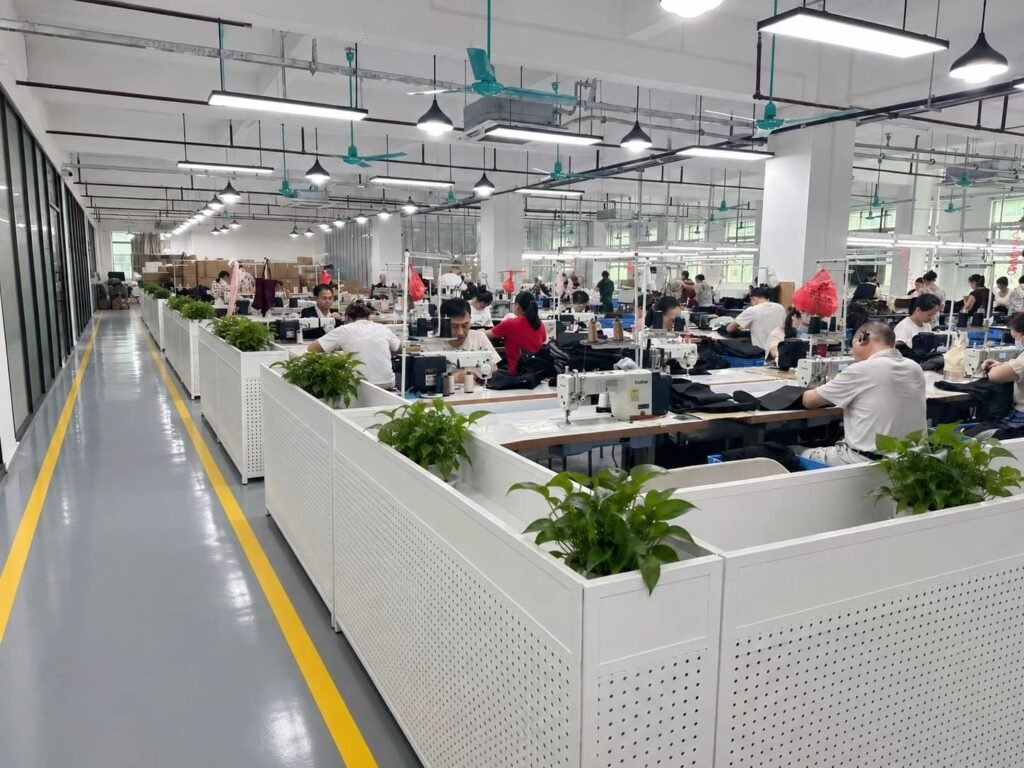
Core production is supported by approximately 80 sewing lines and about 640 Brother sewing machines.
The stronger evidence is not the equipment count by itself; it is the connection between line allocation, product structure, approved PPS, operator skill, inline control, and production status. Different categories should show visibly different operation routes where their construction requires it.
- Approximately 80 sewing lines
- About 640 Brother sewing machines
- Line allocation reviewed against product mix and complexity
Fabric Inspection
Fabric inspection and in-house testing help prevent material problems from appearing only after full production.
Useful evidence includes inspection tables, GSM checks, shrinkage setup, color-fastness or crocking controls, stretch/recovery review, and identified material references. Cotton incoming-batch testing should be described at the correct batch scope rather than expanded into a claim about every meter.
- Fabric inspection before cutting
- GSM, shrinkage, color, pilling, recovery, and other selected controls
- Material status linked to development and bulk decisions
QA and QC
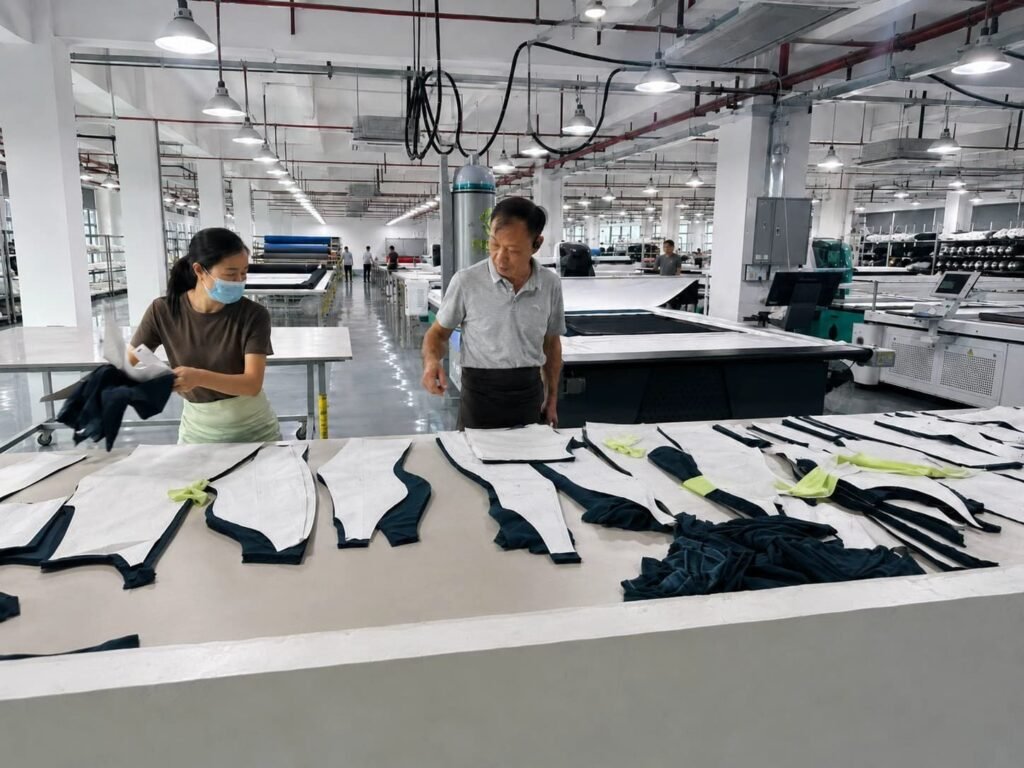
Quality evidence should show real checkpoints rather than a wall of certificates disconnected from production. XZ Apparel’s workflow includes pre-production review, cutting inspection, inline QC, measurement, 100% finishing inspection, final inspection, and packing inspection. Product-specific checklists, measurement records, approved references, and corrective follow-up provide stronger qualification evidence than generic “high quality” statements.
- In-process and final control points
- Measurement against approved specifications
- Final inspection method aligned to the agreed project standard
Reorder Continuity Starts With Controlled Product and Material Versions
Repeat production should reuse proven information without assuming every condition is unchanged. The previous approved standard becomes the baseline, while material, trim, fit, quantity, process, and market changes are reviewed again.
Freeze the Approved Standard
A completed program creates valuable reusable assets: approved pattern, size specification, material reference, trim details, artwork, construction, PPS, quality points, labels, packing method, and production notes. Those records reduce repeated development work when the same style returns. The key is to identify the approved version clearly so a later team does not rebuild from an outdated sample or superseded comment.
- Preserve approved references after delivery
- Link style identity to the correct version
- Keep critical measurements and construction notes available for reorder review
- Reuse approved assets where the product has not changed


Review Every Change
Reorder does not mean “copy last order” automatically. Fabric lot, supplier, color, trim, artwork, size ratio, quantity, destination market, packaging, or specialist process may change. A larger reorder can also create a different production allocation or material-booking requirement. The review compares the new order with the approved baseline and decides which items remain valid and which need confirmation before bulk.
- Check material and trim changes before production
- Reconfirm quantity and capacity assumptions
- Review updated market, testing, or packing requirements
- Keep a change log so the next repeat starts from the latest approved standard
What Sourcing Teams Should Confirm Before Starting Multi-Category Production
A strong supplier review should establish category fit, order structure, development readiness, material and process risk, timing assumptions, and quality requirements before commercial commitments are treated as final.
Category Fit
Confirm which categories sit in proven core, established, specialist partner, or development capability. XZ Apparel’s proven core includes Dresses, Tops, Bottoms, Swimwear, and Sets; Sweatwear, Activewear, and Fashion Shapewear are established selected-program categories. Knitwear, embroidery, selected printing, and certain specialty processes require transparent specialist partner routing.
- Share the category mix and style count
- Flag technically unusual products early
- Match capability language to the actual production route
- Confirm whether a specialist process changes sampling, MOQ, or production ownership
Quantity Structure
Quantity should be reviewed by style, color, and size rather than only as one total order number.
The standard garment MOQ is 200 pcs/style/color, subject to fabric, trim, process, supplier
MOQ, and order structure.
Larger multi-style programs can distribute volume very differently across hero styles, supporting styles, colors, and sizes, which changes material and capacity planning.
- Provide quantity by style and color
- Include expected size ratio
- Identify shared materials or trims across SKUs
Development Inputs
A collection can start from Tech Packs, sketches, references, physical garments, size charts, or mixed inputs.
Stronger inputs reduce assumptions, but a complete Tech Pack is not the only possible starting point.
For production-ready review, provide the files that define fit, materials, construction, artwork, and size expectations clearly enough for the next development decision.
- Send Tech Packs or references
- Include size chart or fit target where available
- Identify open technical questions instead of hiding them
Material and Process
Fabric, trims, print, embroidery, beading, rhinestones, special washes, knit structures, or other dedicated processes can change MOQ, sample timing, supplier route, and production sequence.
Material behavior also affects fit and construction. Early disclosure allows the sourcing and technical teams to define which approvals or tests are required before bulk planning.
- State target composition, GSM, stretch, drape, color, or documentation needs
- Share artwork and placement where relevant
- Flag custom components and specialist processes
Timeline
Typical normal samples are around 3-5 working days, complex styles around 5-7 working days, revisions around 2-3 working days, and PPS around 4-5 working days when required inputs and materials are ready.
Bulk is typically around 25-35 working days after fabric and trims are ready,
PPS is approved, and production details are confirmed.
- Share launch and delivery window
- Separate sample target from bulk target
- Build approval time into the program calendar
Market and Quality Requirements
Destination market, brand quality manual, measurement tolerance, inspection standard, packaging, labels, documentation, and third-party test requirements should be disclosed before final production planning. XZ Apparel can work with EXW, FOB, CIF, or DDP subject to order and destination confirmation, while certification or material-document requirements remain subject to their verified scope.
- Send brand quality or inspection requirements where available
- Identify third-party report needs early
- Confirm destination, packing, and trade-term expectations before shipment planning
Frequently Asked Questions About Multi-Category Manufacturing
These questions cover category ownership, development, MOQ, sampling, quality control, production timing, specialist partners, and the project information needed before a collection review begins.
Yes. Those five groups sit within XZ Apparel’s proven core category structure, provided each style passes the normal technical, material, quantity, timing, and production review. They can share one collection calendar while keeping different fit, fabric, construction, and QC requirements. Shared materials or trims may be coordinated where technically suitable, but products are not forced into one generic specification.
No. Core categories use the core in-house manufacturing system, while knitwear, embroidery, selected printing, and certain specialist processes can use long-term specialist partners. Production ownership is identified rather than hidden. XZ Apparel coordinates development input, approvals, process timing, and finished-garment quality requirements around those specialist routes.
Current proven core categories are Dresses, Tops, Bottoms, Swimwear, and Sets. Sweatwear, Activewear, and Fashion Shapewear are established selected-program capabilities. Knitwear and selected specialist processes use controlled partner routes. Selected Outerwear remains a development area, while heavy winter/down should not be presented as mature bulk specialization without additional verified evidence.
The specialist process receives an approved product or process reference, clear material and placement requirements, timing, and quality expectations. Partner capacity and process timing are incorporated into the collection plan. XZ Apparel coordinates the handoff, follows the process, and brings the finished garment back into the agreed QC and release route instead of treating the specialist step as invisible outsourcing.
Yes. Multi-style programs are easier to control when each style has its own clear specification while the assortment is managed through one collection matrix. Tech Packs, references, sketches, physical garments, size charts, or mixed inputs can be reviewed. Styles are grouped by readiness, category, material family, complexity, and priority so complete products can move without waiting for unrelated open items.
Each revision should remain linked to the affected style and approval stage. Pattern updates, measurements, materials, trims, artwork, construction, and fit comments need identifiable versions. Superseded information should be removed from active production references. The final PPS and production handover use the approved version so bulk teams do not rely on old comments or an earlier sample.
The standard garment MOQ is 200 pcs/style/color. Material supplier MOQ, custom trims, specialist processes, hand beading, rhinestones, seamless or technically unusual construction, and overall order structure may raise the project requirement. Quantity should therefore be reviewed by style, color, size ratio, material, and process instead of relying only on the total collection volume.
Normal samples typically take around 3-5 working days, complex samples around 5-7 working days, revisions around 2-3 working days, and PPS around 4-5 working days when required materials and information are ready. Bulk production is typically around 25-35 working days after fabric and trims are ready, PPS is approved, and production details are confirmed. Complex processes can change the schedule.
Yes, subject to technical review and agreement on scope. Final inspection can follow AQL 2.5, AQL 4.0, a brand-defined standard, or 100% inspection where agreed. Product-specific measurements, critical defects, testing, packing, and third-party requirements should be shared early so they can be incorporated into development, production, and release planning.
Send the category mix, style count, quantities by style and color, size range, Tech Packs or references, fabric direction, custom trims, print or embellishment requirements, target market, quality or test requirements, and sample or bulk timing. An assortment sheet is especially useful for multi-SKU work because shared materials, priorities, and production dependencies can be reviewed together.

Share Your Multi-Category Collection Plan
If your next women’s range includes several categories, send the assortment before separating the project into unrelated sourcing conversations. XZ Apparel can review category fit, development readiness, fabric and trim dependencies, specialist process needs, quantity structure, approval gates, and a realistic production route around the collection as a whole. The most useful first review is built from enough information to identify what can move immediately, what needs technical clarification, and what may change MOQ or timing. A structured assortment also lets the team identify shared materials, specialist-process dependencies, approval bottlenecks, and the most realistic sequence for sample and bulk planning.
Please include:
- Brand or company name, market, and product contact
- Categories, style count, colors, size range, and quantity by style/color
- Tech Packs, sketches, reference images, physical-sample photos, or size charts
- Fabric composition, GSM, stretch/recovery, drape, color, or documentation requirements where known
- Trims, print, embroidery, beading, rhinestones, labels, packaging, or other specialist processes
- Target sample, PPS, bulk, launch, or delivery window
- Quality manual, inspection standard, testing, or third-party report requirements where applicable