Skip to content

Remote Factory Verification for Overseas Fashion Brands
Verify factory identity, production ownership, development capability, quality controls and real manufacturing routes before committing an overseas apparel program.
- Manufacturing base: 3 production buildings in Humen, Dongguan, covering approximately 20,000 m2 with around 1,120 employees.
- Development visibility: 6 sample rooms, 48 pattern makers and 60 sample makers support fit review, revisions and PPS approval.
- Production context: approximately 80 sewing lines and 640 Brother sewing machines; normal monthly output is around 180,000-200,000 pieces depending on product mix.
- Quality visibility: Fabric Inspection -> PPM -> Cutting Inspection -> Inline QC -> Measurement -> 100% Finishing Inspection -> Final Inspection -> Packing Inspection.


Remote Verification Goes Beyond A Factory Video
What Remote Review Confirms
- Confirm the physical manufacturing route.
- Match resources to the intended product category.
- Check ownership before relying on a capability claim.
- Request documents only at the level needed for the current approval stage.
What It Cannot Replace
A live call cannot guarantee future capacity, future bulk quality, delivery performance or compliance for every order.Available production space changes with style mix, materials, approvals and scheduling.
A certificate also needs the correct entity, site, scope and validity period before it can support a qualification decision. Remote review is strongest as an evidence gate before sampling, supplier approval or an independent audit.
High-risk requirements may still justify a brand visit, third-party factory audit, laboratory testing or shipment inspection under the brand’s own policy.
- Treat remote evidence as qualification input, not a blanket guarantee.
- Escalate higher-risk claims to independent or on-site verification.
Eight Checks Before Approving An Overseas Apparel Factory
Use the same eight checks for every shortlisted manufacturer so supplier decisions rely on comparable evidence rather than different sales presentations or isolated factory photographs.
Entity And Address
Confirm the public brand, manufacturing location, contracting entity and payment details through appropriate documents before deposit or vendor onboarding.
A factory address proves where manufacturing is presented to occur; it does not automatically establish the legal company used for contracts or payment.
Ask the supplier to explain each role clearly, then compare the explanation with formal KYC records where required by internal policy.
Factory Reality
Ask for a buyer-directed live route through the areas relevant to the planned garments.
A useful walkthrough should move through development, material handling, cutting, sewing, quality control and packing instead of showing only a reception area or pre-edited video.
|The aim is to verify a working manufacturing system and the connection between departments, not to judge capability from the size of one workshop.
Product Capability
Verify experience against the actual categories, silhouettes, fabrics and construction details in the collection. A factory may produce women’s apparel but still have very different maturity across dresses, swimwear, activewear, knitwear or outerwear.
Look for evidence that matches the planned product, including real samples, development methods, machinery, material handling and known quality risks. Capability should be category-specific rather than described as “any design.”
Development Team
For fashion programs, check who translates references or Tech Packs into pattern, fit, sample and PPS decisions. Remote qualification should reveal whether pattern making and sample development are organized functions or only ad hoc sewing tasks. Ask how sample comments are recorded, how measurements are checked, how revisions are controlled and how the approved standard is handed into production. Strong bulk execution normally starts with controlled development.
Capacity Context
Do not qualify capacity from a monthly number alone. Check active sewing resources, cutting flow, product complexity, style count, color splits, specialist processes and the requested production window.
Ask the supplier to separate normal output from peak output and total factory capacity from capacity actually available for the program.
Capacity becomes meaningful only when tied to the intended garment mix and approval calendar.
Quality System
A factory should be able to explain where defects are prevented or detected before final inspection. Review incoming fabric control, pre-production alignment, cutting checks, inline QC, measurement, finishing, final inspection and packing checks.
Also ask what approved input each checkpoint uses – Tech Pack, approved sample, size specification, material standard or other controlled reference – because “strict quality” without an agreed standard cannot produce repeatable decisions.
Process Ownership
Separate in-house manufacturing from specialist partner processes and independent third-party services. Outsourcing is not automatically a risk; hidden outsourcing is. Ask who performs knitwear, embroidery, selected printing or other specialised operations, who controls samples and standards, and where final garment quality is accepted. A transparent ownership map makes responsibility easier to manage when a collection mixes core sewing with specialist fashion processes.
Documents And Audits
Verify certificates, audit documents and material documentation by entity, site, scope, issuer and validity rather than relying on website logos.
Some documents may belong to the factory, some to a material supplier and some to a specialist partner.
If brand policy requires an independent audit or laboratory report, define that requirement separately from the manufacturer’s internal production controls and arrange the appropriate external verification.
XZ Apparel Facts Relevant To Remote Qualification
These figures are most useful when they help a sourcing team judge manufacturing reality, development depth, order structure, capacity context and quality control before moving forward.

Manufacturing Base
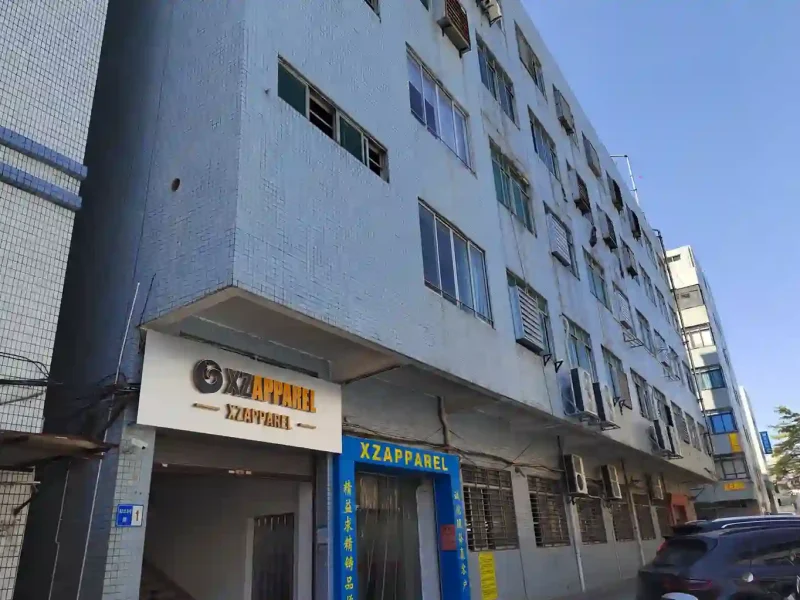
XZ Apparel operates from a manufacturing base in Humen, Dongguan, with 3 production buildings covering approximately 20,000 m2 and around 1,120 employees.
During remote qualification, those figures should be connected to visible functions such as sample development, material handling, cutting, sewing, quality control, finishing, packing and warehousing. Floor area and headcount demonstrate manufacturing scale, but neither should be treated as a stand-alone quality conclusion.

Sample Development
Six sample rooms are supported by 48 pattern makers and 60 sample makers, with current output recorded at approximately 45-60 samples per day and around 1,500-2,000 per month.
For an overseas fashion team, the more important question is how those resources handle multi-style development, fit comments and revisions. A remote review can focus on pattern work, measurement checks, sample comments and movement from first sample toward approved PPS.

Sewing Resources
The current manufacturing system includes approximately 80 sewing lines and around 640 Brother sewing machines. Those numbers establish a real production platform but should still be matched to garment construction, line allocation and the requested delivery window. A bodycon dress, structured top, swim style and sweatwear program do not consume the same production resources, so line count should support a capacity discussion rather than become an unconditional output promise.

Capacity Baseline
Normal monthly output is approximately 180,000-200,000 pieces, with up to around 220,000 pieces depending on product mix. Remote verification should distinguish this factory-level baseline from capacity reserved for one specific program. Available capacity changes with style complexity, number of SKUs, fabric readiness, specialist-process timing and existing production commitments. Commercial scheduling should therefore be reviewed after the style mix and approval calendar are known.

Order Structure
The standard garment MOQ is 200 pieces per style per color. Special fabrics, custom trims, hand beading, rhinestones, seamless structures or supplier requirements may raise the feasible quantity. A sourcing team should verify MOQ against the intended style-color matrix rather than assuming the baseline applies to every construction.
The same approach helps avoid late changes after material sourcing or specialist-process suppliers have already been engaged.

Quality Route
XZ Apparel’s recorded quality route runs through Fabric Inspection, Pre-Production Meeting, Cutting Inspection, Inline QC, Measurement, 100% Finishing Inspection, Final Inspection and Packing Inspection. Remote qualification should examine how those gates connect, which controlled standards are used at each stage and who has release responsibility.
The sequence is more useful than a generic quality statement because it shows where bulk risk is addressed during production.
Separate Brand, Factory And KYC Before Supplier Approval
A reliable qualification process keeps marketing identity, manufacturing location and legal documentation distinct, then checks that the relationships are consistent before commercial commitment.
Brand And Manufacturing Base
XZapparel is the public website and market-facing identity. The manufacturing base is in Humen, Dongguan, Guangdong, China, with 3 production buildings and approximately 20,000 m2 of manufacturing and operating space. A remote factory review should connect the public identity to a real manufacturing route through current visuals and live access. Historical project names should not be mixed into the public brand identity or used to create unnecessary entity ambiguity.
- Confirm the factory location shown during live review.
- Match factory functions with the capabilities presented on the website.
- Use current, correctly identified visual evidence.


Legal And Payment Documents
Exact legal company names, registration numbers, payment beneficiaries and other KYC fields should come from formal documents rather than from the website name or an assumed translation. Procurement or finance teams may request different document sets depending on internal onboarding rules, order value and payment method. Sensitive records can be handled under appropriate confidentiality controls instead of being published as marketing material. Consistency matters more than displaying every document publicly.
- Compare contract and payment information with approved KYC records.
- Check entity names and addresses before deposit.
- Escalate discrepancies for clarification before commercial approval.
Verification Before Approval
Before onboarding, compare four layers: public brand identity, manufacturing site, legal contracting entity and payment route. The review should also confirm whether the factory performs the relevant production steps directly or manages selected specialist partners. If internal policy requires an independent site audit, financial check or social compliance audit, keep that requirement separate from the manufacturer’s own evidence pack. A clean qualification file should make each entity and responsibility easy to trace.
- Record which evidence supports each claim.
- Keep factory, partner and third-party documents in the correct scope.
- Reverify time-sensitive documents when validity changes.
Follow A Live Route Through The Actual Factory
A remote walkthrough is most useful when the sourcing team controls the route and asks to see the production areas connected to the planned garment program.
Pattern And Sample Rooms
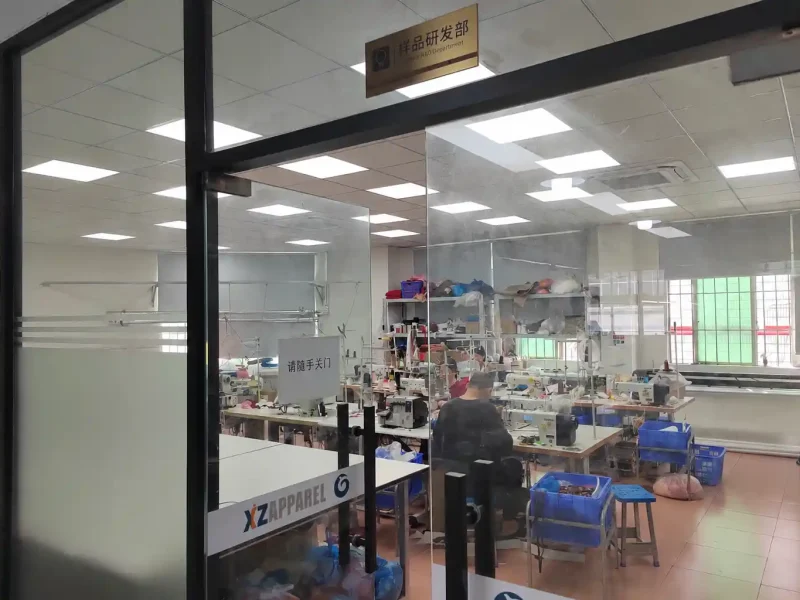
Start where product intent becomes a manufacturable garment. Ask to see active pattern and sample areas, how sample comments are communicated and how measurements are checked. XZ Apparel records 6 sample rooms, 48 pattern makers and 60 sample makers, so a live review can focus on organization rather than only showing finished samples. For multi-style collections, ask how different revisions are identified and how approved PPS information is separated from earlier sample versions.
- Look for pattern, measurement and revision workflow.
- Ask how Tech Pack or reference inputs become controlled development instructions.
Fabric Receiving And Testing
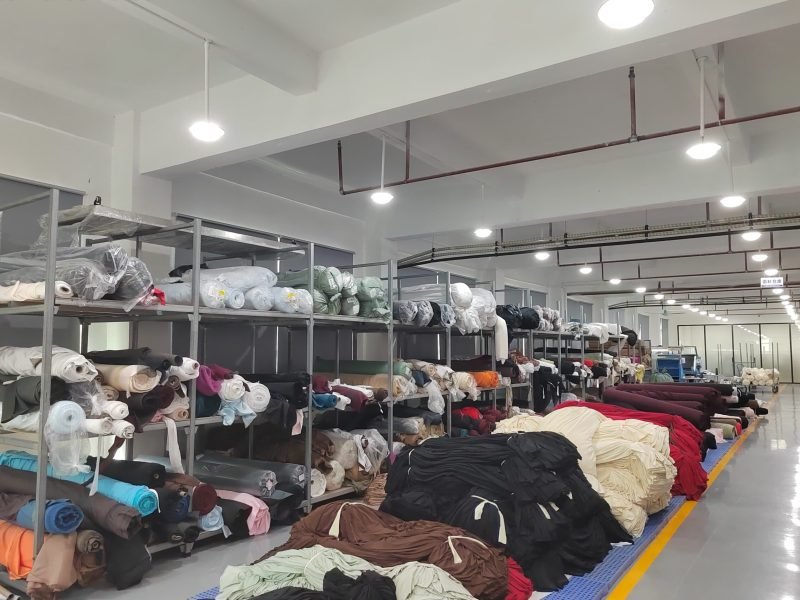
Move next to incoming material inspection and production-control testing. Ask how rolls are checked for visible defects, shade or width concerns and which tests are relevant to the fabric.
XZ Apparel records in-house capability for GSM, shrinkage, colorfastness, crocking, washing, pilling, stretch and recovery, spirality and dimensional stability.
For cotton fabrics, every incoming batch is tested; “every batch” should not be interpreted as every meter or every finished garment.
- Ask which test changes a production decision.
- Separate factory control tests from accredited third-party reports.
Spreading And Cutting
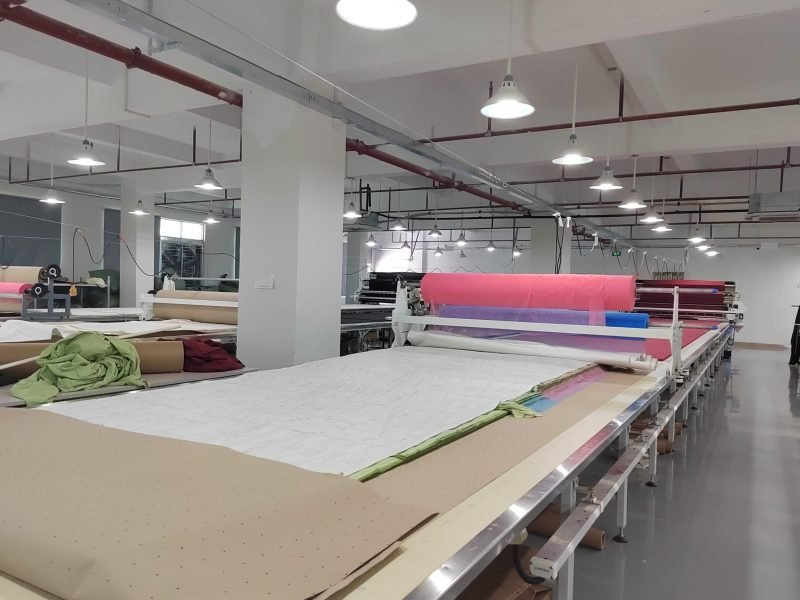
A live cutting route should show how approved materials become controlled cut components. Current equipment includes 2 automatic cutting machines and 2 automatic spreading systems, with manual cutting capacity also available for materials or development tasks unsuitable for automation. Normal cutting output is recorded around 6,000-8,000 pieces per day, with peak output around 8,000-10,000 depending on product and workflow. The relevant question is how accuracy and material behavior are controlled for the planned styles.
- Check spreading and cutting methods against the fabric type.
- Ask how cut-part inspection links back to approved patterns and markers.
Sewing Lines
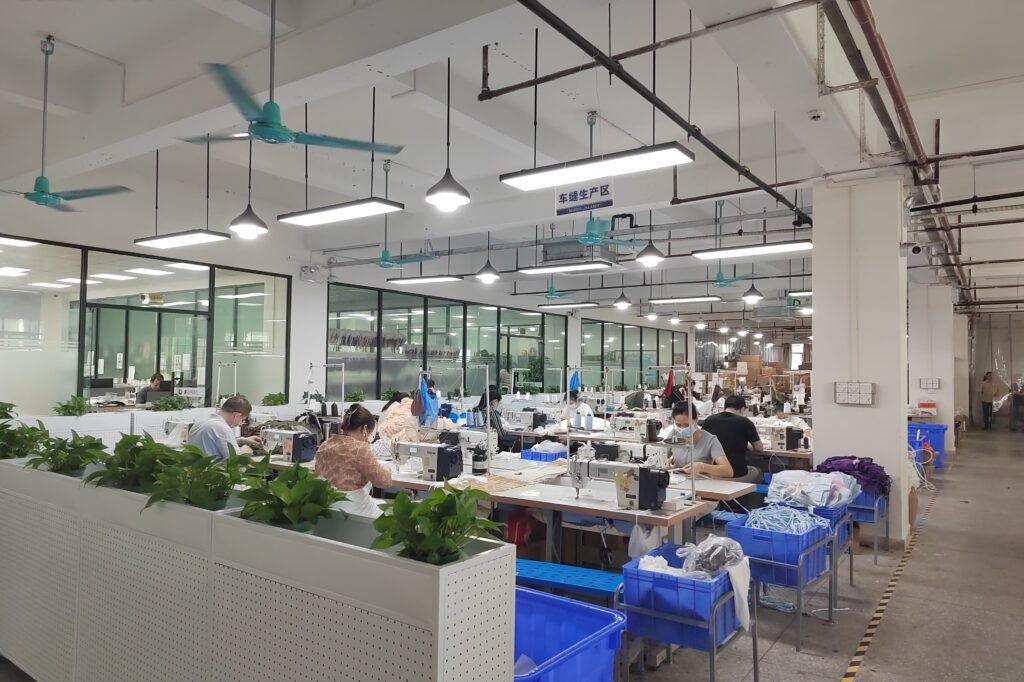
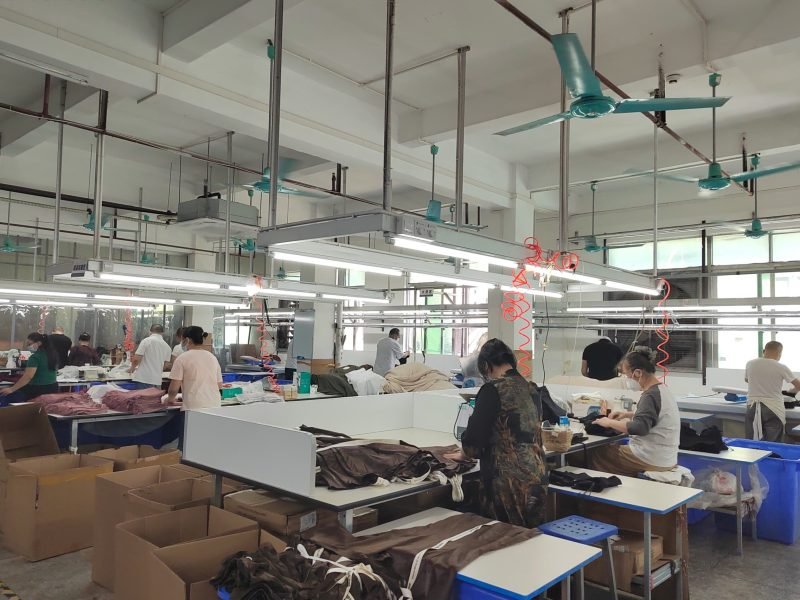
Continue into active sewing areas rather than stopping at equipment counts. XZ Apparel records approximately 80 sewing lines and around 640 Brother sewing machines covering broad women’s apparel operations.
Ask to see line organization, work-in-progress control, inline checking and examples relevant to the target category. A live view confirms production activity and process coverage, while final line allocation for a specific order still depends on style complexity, timing and confirmed production planning.
- Match operations with the intended construction.
- Ask how inline findings are corrected before the next stage.
QC And Measurement

Visit the areas where garment quality is measured against controlled references. Useful checks include measurement method, approved size specification, handling of out-of-tolerance findings and the relationship between inline, finishing and final inspection.
A garment cannot be judged consistently when the factory lacks approved POM definitions or a measurement method. Ask to see anonymized or non-confidential examples of how inspection status is recorded without exposing another brand’s proprietary information.
- Verify the reference standard used by inspectors.
- Ask how defects or measurement failures are escalated and rechecked.
Finishing And Packing

Finish the route where garments are pressed, visually checked, prepared and packed. XZ Apparel’s quality workflow includes 100% finishing inspection before final inspection and packing inspection. Remote review can cover finishing presentation, label and packing checks, carton preparation and how customer-specific packing instructions are controlled. A clean packing area does not prove earlier sewing quality by itself; its value is showing that the manufacturing route continues through final presentation and shipment preparation.
- Check packing instructions against approved requirements.
- Confirm that final release follows the agreed inspection route.
Read Factory Scale In The Context Of Your Program
Factory numbers are useful only when they are connected to development load, product complexity, cutting flow, sewing allocation and the requested production window.

Manufacturing Footprint
Three production buildings and approximately 20,000 m2 provide a physical base for development, materials, cutting, sewing, quality control, finishing, packing and storage.Remote review should show how those functions are arranged rather than using floor area as a prestige number.
A sourcing team can ask to see the production route across the actual buildings and confirm whether the departments required for the program are visible and operational.
- Approx. 20,000 m2 across 3 production buildings.
- Around 1,120 employees across the manufacturing organization.
- Scale supports multiple functions; it does not guarantee a reserved slot.
Organization At Scale
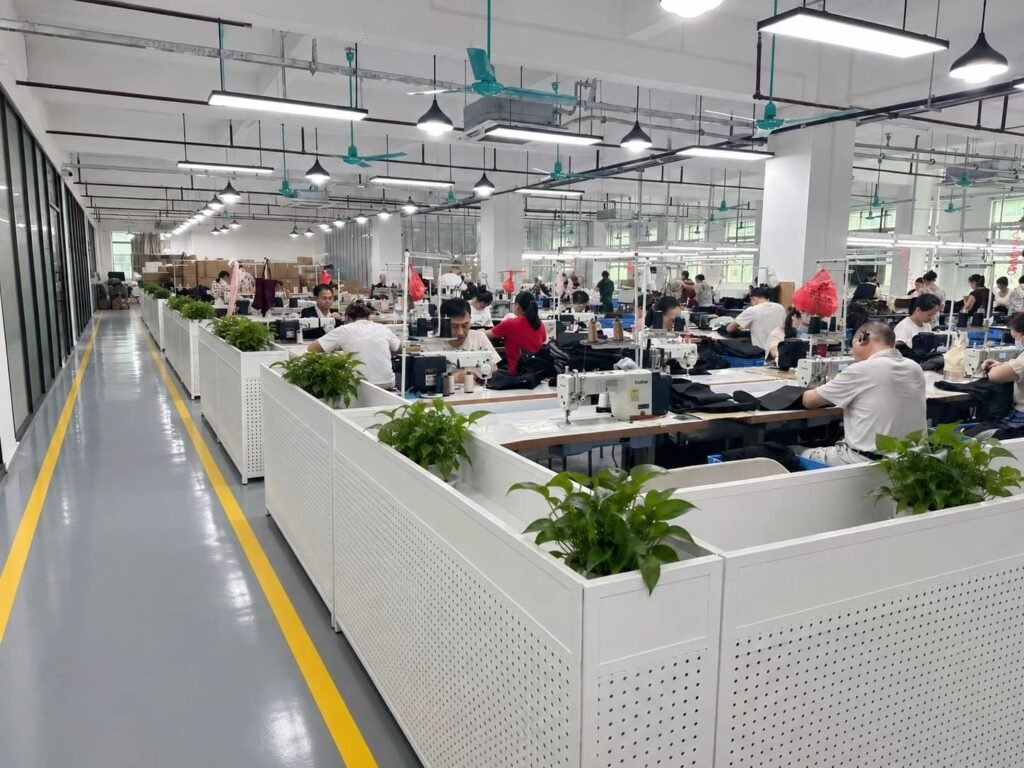
Around 1,120 employees indicates a substantial operating organization, but headcount should never be translated directly into output for one order.
Different programs use pattern, sample, sourcing, cutting, sewing, QC, finishing and packing resources in different proportions. During remote qualification, focus on responsibility: who receives development input, who controls materials, who approves production readiness and who owns final quality decisions. A clear responsibility chain is more useful than a headline workforce number.
- Ask who owns each approval gate.
- Confirm access to the technical teams relevant to the planned category.
- Avoid treating total headcount as immediate project capacity.

Cutting And Sewing Resources
Current resources include 2 automatic cutting machines, 2 automatic spreading systems and approximately 80 sewing lines with around 640 Brother sewing machines.
Normal cutting output is around 6,000-8,000 pieces per day, rising to approximately 8,000-10,000 at peak depending on product conditions. Remote review should match those resources to fabric behavior, construction complexity and style count rather than assuming automated equipment is suitable for every material.
- Verify which styles use automatic versus manual cutting routes.
- Match sewing operations to the actual construction plan.
- Confirm capacity after style and fabric review.

Capacity Planning
Normal monthly production is recorded at approximately 180,000-200,000 pieces, with up to around 220,000 depending on product mix.
A 30,000-piece collection of simple tops and a 30,000-piece collection with structured dresses, hand-applied details and multiple specialist processes are not equivalent workloads. For supplier approval, ask for a project-specific capacity discussion that includes style count, color count, material readiness, PPS timing, production complexity and required shipment window.
- Treat factory capacity as context, not a reservation.
- Review available production windows only after the program mix is defined.
- Reconfirm scheduling before bulk commitment.
Verify Development Strength Before You Trust Bulk Production
For fashion programs, remote verification should examine how references, Tech Packs, fit comments and sample approvals become a controlled production standard before sewing volume increases.
See How Product Intent Becomes A Controlled Sample
XZ Apparel supports development from inputs including reference images, sketches, Tech Packs, physical garments and size charts. The development platform includes 6 sample rooms, 48 pattern makers and 60 sample makers, with current sample throughput recorded at approximately 45-60 samples per day and 1,500-2,000 per month. Those figures are useful only when connected to an observable method. During remote review, ask how the team interprets the silhouette, chooses the starting pattern route, identifies missing specifications and records fit or measurement comments.
- Pattern control: Ask how base patterns, style patterns and revisions are identified so an outdated pattern does not enter PPS or cutting.
- Measurement control: Review how key POMs are measured, who checks them and how the brand’s measurement method is interpreted when two teams could measure the same point differently.
- Construction review: Use difficult features – lining, closures, elastic, cups, boning, bindings, drape or asymmetric details – to see whether sample comments address manufacturability rather than appearance alone.
- Multi-style coordination: For collections with 10-30 styles, confirm how priorities, due dates and comments are separated by style so parallel development does not create version confusion.

Use Sample Stages To Remove Specific Unknowns
Normal samples are typically recorded at 3-5 working days, while more complex styles typically require 5-7 working days. Revisions are commonly around 2-3 working days, and PPS around 4-5 working days. Those timings are planning baselines, not unconditional promises; material readiness, construction difficulty, trim availability and the quality of the development input all affect the real schedule. A remote qualification call should therefore ask what each sample stage is intended to prove rather than simply asking for the fastest sample date.
- First sample: confirm shape, proportion, construction direction and initial material behavior.
- Fit revision: resolve specific POM, balance, ease, support, length or mobility issues using written comments and controlled measurements.
- Material or process approval: confirm fabric, trim, print, embroidery or other appearance and durability variables before locking the production route.
- PPS: verify the production-intent standard after key fit, material, construction and workmanship decisions are approved.

Check Version Control Before Bulk Release
Sampling becomes commercially valuable only when the approved version can be transferred into production without losing decisions made during development. Before supplier approval, ask how XZ Apparel controls the latest Tech Pack, size specification, approved sample, fabric and trim references, artwork, construction comments and packing requirements. The objective is to reduce the common gap between “sample approved” and “factory floor working from the same approved information.”
- Approved input: establish which files and physical references are authoritative before PPS and bulk.
- Change control: record later changes to material, color, dimensions, construction or artwork instead of relying on chat history alone.
- Production handover: link approved information to pre-production review, cutting, sewing, measurement and final inspection.
- Confidentiality: review only the brand’s own files during live sessions; anonymized examples can demonstrate process without exposing another brand’s protected designs.

Verify Category Maturity Instead Of Accepting "Any Product"
Different women’s apparel categories demand different fit, material, construction and production knowledge, so qualification should match each planned style to the correct capability level.
Proven Core Categories
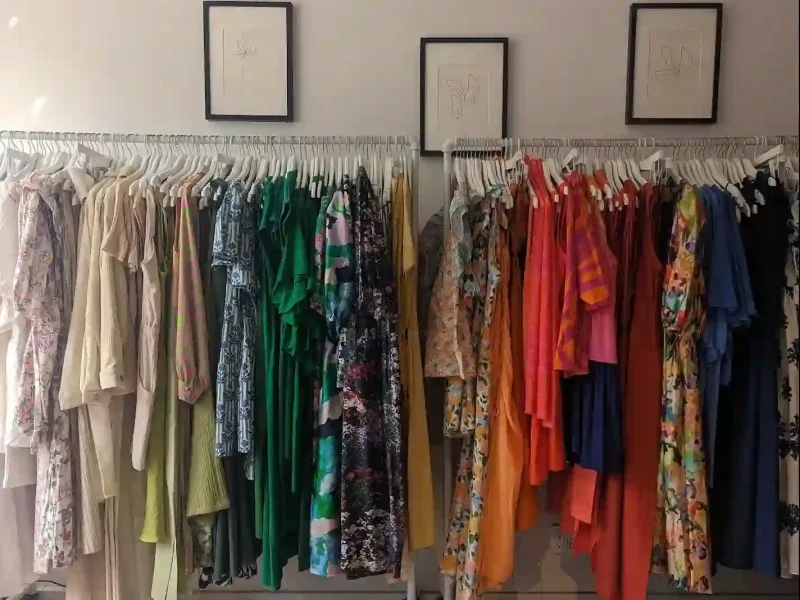
Dresses, tops, bottoms, swimwear and sets sit within XZ Apparel’s proven core manufacturing scope. Remote qualification for these categories should go beyond finished product photographs and examine relevant patterns, sample handling, fabric behavior, construction details and bulk control points. A sourcing team can select representative styles from the collection and ask the development or production team to explain where fit, material and construction risks would be checked before bulk.
- Best evidence: relevant samples, development workflow, materials, process route and QC controls.
- Strong use case: recurring seasonal collections and multi-style programs.
Established Categories
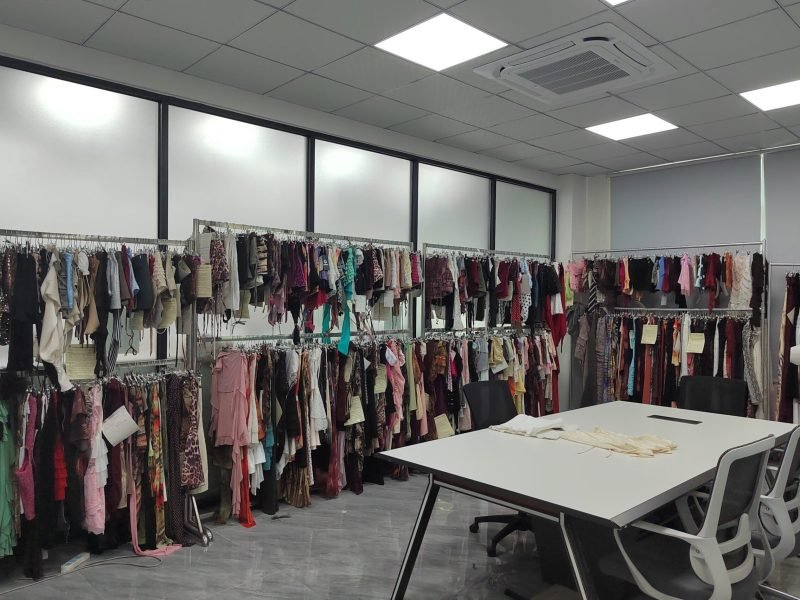
Sweatwear, activewear and fashion shapewear are established capabilities rather than the main core category group. Qualification should therefore focus on the particular project and its technical requirements. Activewear may require stretch, recovery and seam-performance attention; shapewear can introduce negative-ease, support and construction questions; sweatwear may depend on fabric weight, shrinkage and finishing. Evidence should be matched to the selected styles instead of using one generic “sportswear” claim.
- Verify project-specific materials and construction.
- Ask for relevant sample and quality-control evidence before confirming commercial fit.

Specialist Partner Categories
Knitwear, embroidery and certain printing or specialised fabric processes are supported through long-term specialist partners, with XZ Apparel coordinating development, standards, production interfaces and final garment quality. Remote verification should identify the partner boundary rather than presenting these processes as factory-owned equipment. Ask who performs the operation, how samples are approved, how materials move between steps, who checks incoming processed components and how final garment acceptance remains controlled.
- Partner capability should be visible in the ownership map.
- Specialist process MOQ and lead time may affect the overall garment plan.

Development Review Categories
Selected outerwear and heavier winter or down products sit in development or expansion scope rather than proven-core bulk specialization. A responsible qualification decision starts with construction, material, insulation and process review instead of treating the category as equivalent to dresses or tops. If a program depends heavily on advanced winter outerwear expertise, the sourcing team should verify the exact product before assuming fit. Development capability means the project can be assessed; it does not automatically mean mature high-volume history.
- Request product-specific feasibility review.
- Avoid upgrading development capability into a core-specialist claim without evidence.
Match Equipment Evidence To The Operation It Controls
Equipment counts matter only when they explain how a relevant material, construction detail or production risk is managed during development and bulk manufacturing.
Automatic Spreading And Cutting
XZ Apparel records 2 automatic spreading systems and 2 automatic cutting machines for suitable bulk fabrics and styles. Their value is controlled spreading, repeatable cutting and efficient handling of approved markers; they are not automatically the best route for every fabric. During remote review, ask how slippery, delicate or development materials are assessed and when manual cutting is selected instead of automation.
- Evidence to request: active equipment, approved marker route and cut-part checking.
Core Sewing Equipment
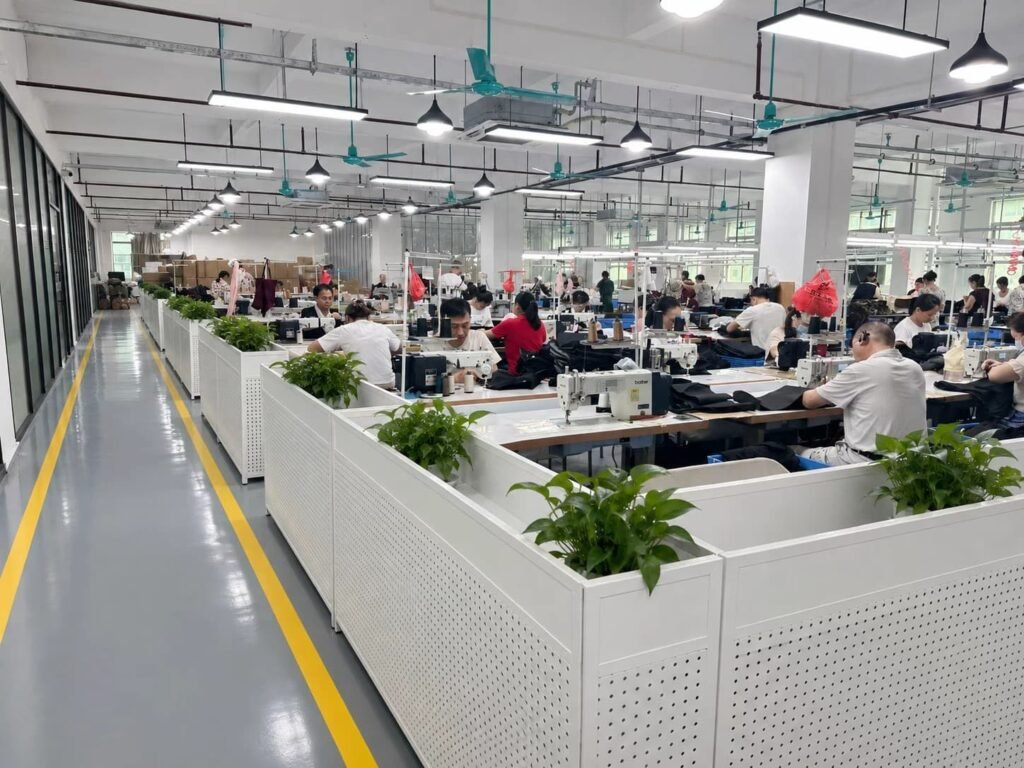
Approximately 640 Brother sewing machines support broad women’s apparel sewing operations across roughly 80 sewing lines.
A sourcing team should not stop at machine count. Ask to see operations that match the planned garments – lockstitch, overlock, coverstitch, button operations or other required sewing work – and confirm how line setup changes for woven, knit, structured or stretch garments.
- Evidence to request: relevant operations, work-in-progress control and inline inspection connection.
Smocking Capability
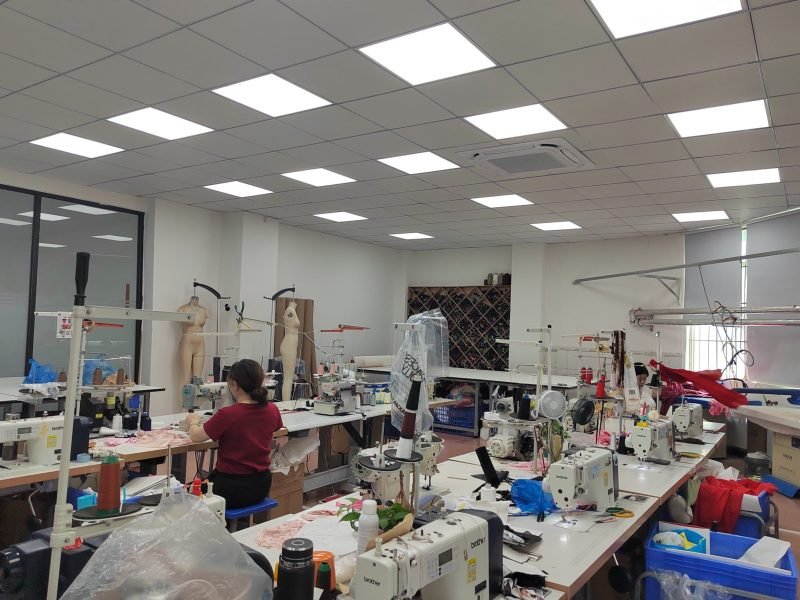
Selected smocking equipment is recorded in-house for fashion dresses, tops and sets where elasticized texture or gathered structure is required.
During qualification, review whether the smocked area controls dimensions, recovery and placement consistently enough for the intended design. The strongest evidence is an operation linked to an approved sample or specification, not a standalone machine photograph that gives no indication of output quality.
- Evidence to request: sample result, dimension/placement standard and production control point.

Pleating Capability
Selected pleating equipment is recorded in-house for skirts, dresses, tops and other suitable constructions. Pleat appearance can change with fabric composition, heat response, finish and garment handling, so capability review should connect equipment with fabric compatibility and sample approval. Ask how the pleat form is approved and checked before bulk rather than assuming all fabrics will hold the same structure under one process setting.
- Evidence to request: approved pleat sample, material route and finished garment consistency check.

Fabric Control Equipment
The manufacturing system includes a fabric inspection machine and one pre-shrinking machine for relevant incoming materials. Those resources support production control by identifying visible fabric issues and reducing dimensional risk when pre-conditioning is appropriate. Remote review can connect equipment to the actual fabric specification, test plan and cutting decision. A machine’s presence is useful evidence only when the team can explain when and why it is used.
- Evidence to request: incoming fabric route, inspection criteria and pre-shrink decision logic.
Finishing And Safety Checks
Recorded finishing resources include 10 steam ironing tables and one needle detector for finished garments where needle detection is applicable. A remote walkthrough can show how pressing supports presentation and how final safety controls fit into the packing route. The presence of a needle detector should not be generalized into a claim that every product or every market uses the same requirement; application depends on the agreed product and quality plan.
- Evidence to request: finishing route, packing sequence and applicable final-control requirement.
Know Who Performs Every Important Production Step
A transparent ownership map separates factory-controlled operations, specialist partner processes and independent services so responsibility remains clear across a multi-category fashion collection.
| Production Step | Execution Route | XZ Apparel Responsibility | Remote Evidence To Request |
| Product development | In-house | Translate reference/Tech Pack into development route and controlled approvals | Development meeting, sample comments, approved input |
| Pattern making | In-house | Pattern creation, revision and fit/measurement coordination | Pattern room, revision identification, POM review |
| Sampling | In-house | Prototype, fit revision and PPS preparation | Sample rooms, sample stages, revision records |
| Fabric and trim sourcing | Managed in-house | Supplier coordination, material matching and incoming control | Sourcing brief, swatches, incoming fabric route |
| Spreading and cutting | In-house | Approved marker execution, spreading, cutting and cut-part checks | Active cutting route, automatic/manual method, cut inspection |
| Sewing | In-house | Core women’s apparel assembly and inline control | Relevant line, sewing operations, inline QC link |
| Smocking / pleating | Selected in-house | Develop and control suitable fashion effects | Equipment, approved sample, production check |
| Knitwear | Long-term specialist partner | Development coordination, standards, interface control and final garment QC | Partner-boundary explanation, sample approval, incoming/final checks |
| Embroidery | Long-term specialist partner | Artwork/process coordination, approval and garment-level quality control | Strike-off/sample, ownership route, final inspection |
| Certain printing / special processes | Specialist partner where applicable | Technical coordination, sample approval, process handoff and final QC | Approved artwork/sample, process route, ownership evidence |
| In-house fabric tests | In-house production control | Support material and production decisions | Test equipment/method summary, applicable records |
| Independent audit / lab / inspection | Third party when required | Coordinate access and provide requested manufacturing information | Buyer-appointed scope, independent report or audit output |
Verify Material Control Before Fabric Reaches Bulk Cutting
For fashion garments, remote factory verification should connect fabric properties to the intended silhouette, fit, construction and quality plan instead of reviewing material sourcing as a separate purchasing task.
Incoming Fabric Inspection
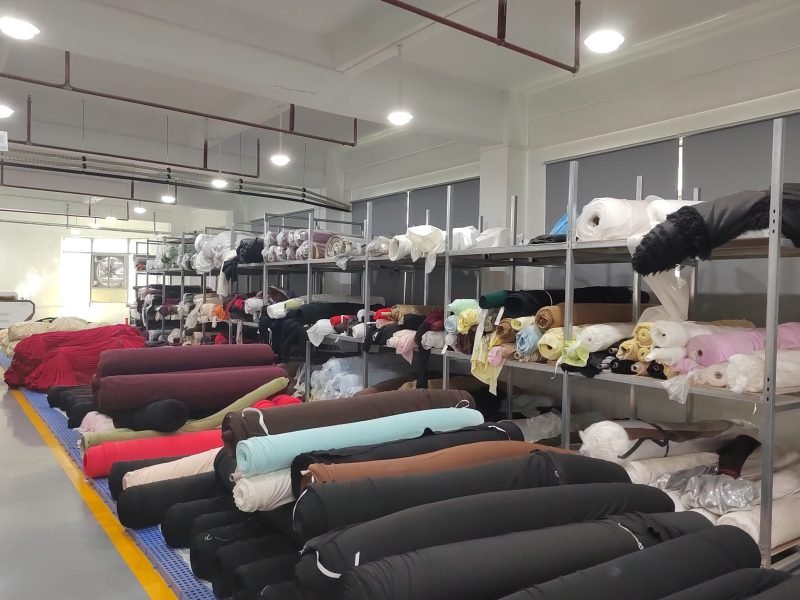
Incoming fabric is checked before production so visible defects, shade concerns, width issues and other relevant conditions can be identified before cutting. A remote review should ask how inspection findings are recorded and what happens when a roll does not meet the agreed requirement. The important evidence is the decision route: accept, segregate, replace, retest or escalate – not simply a photograph of an inspection machine.
- Link incoming checks to the fabric specification and approved color standard.
- Ask how suspect material is prevented from entering cutting.
GSM And Construction

GSM is one of several controls used to confirm whether a received fabric is consistent with the approved material direction. Weight alone does not define performance; knit or woven construction, stretch, drape, finish and width also affect the garment. Remote verification can review how GSM checking is performed and how a deviation would influence fit, opacity, handfeel, consumption or approval before bulk cutting.
- Compare against the approved fabric brief or swatch.
- Use GSM as a production decision input, not a stand-alone quality grade.
Shrinkage And Stability

Shrinkage and dimensional stability matter because garment measurements can change after washing, finishing or material relaxation. XZ Apparel records in-house shrinkage and dimensional-stability testing capability, supported by a pre-shrinking machine for relevant materials. During qualification, ask how test results affect pattern allowance, material conditioning or bulk approval. A meaningful test should change a production decision when results fall outside the agreed requirement.
- Confirm the conditioning or wash method relevant to the product.
- Link results to pattern, measurement and care expectations.
Colorfastness And Crocking

Colorfastness, crocking and washing checks help identify color-transfer or shade-performance risks that could affect garments during production, wear or care. Remote review should establish which methods are used for factory production control and when a brand requires an independent laboratory report. The same control does not apply identically to every fabric, color or market, so the test plan should follow the material and the agreed quality standard.
- Distinguish internal production control from accredited external reporting.
- Escalate higher-risk colors, finishes or market requirements when needed.
Pilling And Spirality

Pilling and spirality can affect surface appearance and garment shape, particularly in selected knit fabrics.
XZ Apparel records in-house capability to check these properties as part of production control. During remote verification, ask which product categories trigger the checks, what approved material reference is used and how unacceptable results affect sourcing or bulk release. A result has value only when it leads to a clear material decision.
- Connect pilling risk to surface, fiber and end use.
- Connect spirality to knit construction and garment balance.
Stretch And Recovery

Stretch percentage without recovery information can mislead fit decisions. For swimwear, activewear, shapewear and other fitted garments, review direction of stretch, extension and recovery together with pattern ease and support requirements. XZ Apparel records stretch-and-recovery testing capability, allowing material behavior to be checked before bulk decisions. Remote qualification should therefore connect the test to the actual silhouette and size specification rather than presenting a generic stretch number.
- Review stretch direction and recovery, not extension alone.
- Link material behavior to fit, seam choice and product support.
Verify Quality Through Gates, Not A Final Check Alone
A credible quality system starts from approved inputs, controls risk during production and keeps internal factory checks separate from independent inspection or testing when required.
Turn Approved Inputs Into Repeatable Inspection Standards
“Strict quality control” has little meaning until the factory and brand are checking against the same approved standard. Before bulk, establish the authoritative Tech Pack, size specification, approved sample, fabric and trim references, artwork, workmanship notes and packing instructions. For measurement-intensive garments, define POM locations and measuring methods clearly enough that the development team, production team and QA function would reach the same result.
- Approved sample: use it as a workmanship, appearance and construction reference, while keeping dimensional requirements tied to the approved size specification.
- Measurement method: agree how each critical POM is positioned and measured; inconsistent technique can create false tolerance failures even when sewing is unchanged.
- Material standard: link fabric and trim approval to the correct color, composition, GSM, stretch or other project-specific requirements.
- Change control: record post-approval changes so production does not continue from an outdated file or physical sample.

Follow The Quality Route From Fabric To Packing
XZ Apparel’s recorded quality workflow is Fabric Inspection -> Pre-Production Meeting -> Cutting Inspection -> Inline QC -> Measurement -> 100% Finishing Inspection -> Final Inspection -> Packing Inspection. Each gate controls a different risk, so the remote review should ask what decision is made at every point and who owns the release.
- Fabric Inspection: identify incoming material issues before expensive cutting or sewing work begins.
- Pre-Production Meeting: align approved samples, specifications, construction, workmanship, packaging and known risk points before bulk execution.
- Cutting Inspection: confirm cut components and the cutting route are consistent with the approved pattern and material plan.
- Inline QC: detect sewing or assembly problems while correction is still possible inside production, rather than waiting until finished quantity accumulates.
- Measurement: check garment dimensions against approved POM and tolerance requirements using the agreed method.
- 100% Finishing Inspection: visually review finished garments during finishing before final lot release.
- Final Inspection: evaluate the completed lot under the agreed inspection standard or customer requirement.
- Packing Inspection: confirm folding, labels, packing materials, assortment and shipment presentation against the approved packing instruction.
Keep Factory Control And Independent Verification Separate
Final inspection can be arranged according to AQL 2.5, AQL 4.0, customer-defined criteria or 100% inspection where agreed. The exact inspection route should be confirmed for the order rather than assumed from a website statement. Factory inspection remains part of production control; an independent third-party inspection is a separate service and provides a different level of independence.
For brands whose supplier policy requires external involvement, XZ Apparel can cooperate with buyer-arranged third-party organizations such as SGS, Intertek, Bureau Veritas or QIMA according to the agreed scope and access requirements. The same distinction applies to testing: in-house fabric checks support production decisions, while accredited laboratory reports should be commissioned when the product, market or brand standard requires them.
- Use in-house controls for day-to-day manufacturing decisions and risk containment.
- Use independent inspection when policy, risk level or commercial agreement requires external confirmation.
- Use third-party laboratory testing when formal reports or specific test standards are required.
- Keep report scope, tested sample, entity and date attached to the claim they actually support.

Check Certification Scope Before Relying On Any Logo
Certification evidence should identify the correct entity, site, scope and validity period, while material documentation and project support remain clearly separated from factory-level certification claims.

Factory-Level Records
SMETA and ISO are recorded within the current XZ Apparel fact base, but public use should follow the actual current document, covered entity, site, scope and validity. A sourcing or compliance team may request document review during supplier qualification rather than rely on a logo shown online. Exact certificate numbers, dates and legal fields should be taken from the source document at the time of review. If a record has expired, changed scope or applies to a different entity, it should not be represented as current factory proof.
- Verify issuer, entity, site, scope and validity.
- Share controlled documents according to qualification stage and confidentiality needs.

Material And Project Scope
BSCI should be described as support that can be coordinated according to project requirements, not as an automatic statement that the factory holds a current BSCI certificate. GRS or OEKO-TEX related documentation may belong to qualified fabric or material suppliers and does not become an XZ Apparel factory certification merely because the material is used in production. The same rule applies to specialist partners. Procurement teams should attach every document to the entity, material or process it actually covers.
- Separate factory audit status from supplier/material documentation.
- Arrange buyer-required third-party review when internal policy calls for independent evidence.
Build A Verification Pack Around Evidence, Not Claims
A useful supplier file should let procurement, product and QA teams review the same manufacturing facts without repeatedly asking sales for disconnected photos or unsupported statements.

Factory Fact Sheet
A concise fact sheet should identify the manufacturing base, core categories, development resources, production scale, standard MOQ, normal lead-time conditions and major quality-control stages.
Values must keep their conditions: normal output is not peak output, total capacity is not a reserved production slot and standard MOQ is not an unconditional promise for every fabric or process.
- Useful for supplier triage and internal vendor files.
- High-risk fields should link back to controlled source documents.

Manufacturing Route
Provide a route showing how an approved garment moves from development through materials, cutting, sewing, quality control, finishing and packing.
Current photos or live-video access are stronger than decorative factory galleries because each image has a defined manufacturing role. The route should also show where specialist partner processes enter and where finished components return to XZ Apparel control.
- Useful for remote factory reality checks.
- Helps sourcing teams identify missing or unclear production steps.
Capability Matrix
A capability matrix should distinguish proven core categories, established capabilities, long-term specialist partner support and development/expansion categories. It prevents a procurement team from assuming every product shown online has the same production maturity. Product-specific evidence can then be requested only for the categories entering the actual program, reducing review time while improving qualification accuracy.
Useful for category fit and multi-SKU collection planning.
Prevents “can develop” from being confused with proven bulk specialization.

Ownership Map
Map product development, pattern making, sampling, sourcing, cutting, sewing, special processes, testing and independent services by execution route.
The map should state who performs the work, what XZ Apparel controls and where independent third parties enter.
Clear ownership is especially important when knitwear, embroidery or selected printing are coordinated through long-term specialist partners.
- Useful for subcontracting transparency and responsibility review.
- Supports vendor onboarding and brand audit preparation.

Quality And Test Summary
Summarize the quality route, major fabric-production-control tests, final inspection options and the boundary between internal checks and accredited external reports.
Cotton testing should be described accurately: every incoming batch of cotton fabric is tested, not every meter and not every finished garment.
Formal reports should be shared only when they belong to the relevant product, scope and time period.
- Useful for QA review and test planning.
- Helps identify where independent testing is still required.

Audit And KYC Pack
High-intent qualification may require selected legal, audit, certification or payment documents. These records are more sensitive than public factory content and should be shared according to the brand’s onboarding process, document validity and confidentiality requirements. Exact legal fields must come from formal records rather than being inferred from website copy. A controlled pack is more reliable than scattering sensitive documents across email threads.
- Useful for procurement, finance and compliance approval.
- Sensitive files can be managed under NDA or controlled sharing where appropriate.
Know Where Remote Verification Should Stop
Remote access is a strong qualification tool, but the safest supplier decision also recognizes which risks need independent evidence, physical sampling or on-site review.
Evidence Is Not Guarantee
A remote walkthrough can confirm current factory activity, relevant equipment, development organization, quality routes and production ownership. It cannot guarantee that a future order will receive a particular capacity slot, deliver without defects or meet every market requirement unless those terms are separately reviewed and agreed. Samples, PPS approval, material readiness, production planning and order-specific quality criteria still control the commercial program. Treat remote evidence as a reasoned basis to proceed, not a substitute for order-specific approvals.
- Reconfirm capacity after style mix and timing are known.
- Use approved samples and specifications for bulk release.
- Keep performance promises inside the commercial agreement, not the factory tour.
Escalate Higher-Risk Decisions
Independent or on-site verification is appropriate when brand policy, product risk, order value or compliance requirements demand it.
Examples include formal social-compliance audits, accredited laboratory testing, buyer-appointed final inspection, high-risk product requirements or first-time supplier approval under a strict vendor manual. XZ Apparel can provide manufacturing access and relevant records within the agreed scope while keeping the independent organization responsible for its own report and conclusion. Clear separation preserves the value of both factory evidence and external assurance.
- Use third-party inspection or audit where independence is required.
- Schedule on-site visits when physical review is part of vendor policy.
- Keep external findings linked to the exact scope and date reviewed.
An Anonymized Multi-Style Verification Program In Practice
The following anonymized structure reflects the scale and workflow of current multi-style brand programs without identifying protected brand names, proprietary designs or commercial pricing.
Program Brief: 18 Styles And 36,000 Pieces
A US fashion brand needed to qualify a manufacturing route for an 18-style women’s collection totaling approximately 36,000 pieces. The mix included dresses, fashion tops and coordinated sets, with several styles carrying specialist decoration. The initial task was not to request a quote first. The team needed to confirm whether development depth, category maturity, production ownership and quality controls were strong enough to justify sample and commercial review.
The verification plan therefore started with evidence relevant to the actual collection: sample-room organization, pattern and fit review, fabric handling, cutting, sewing, quality gates and specialist-process ownership. Core sewn categories could be evaluated against XZ Apparel’s proven manufacturing platform. Decoration steps were separated as specialist-partner activities so responsibility for approvals and final garment quality remained visible.
- Program scale: 18 styles / approximately 36,000 pieces.
- Category mix: dresses, fashion tops and sets.
- Qualification focus: development, ownership, capacity context and quality controls.
- Confidentiality rule: no other brand’s artwork, Tech Pack or unpublished style was used as evidence.

Verification Sequence Before Commercial Commitment
The remote review followed the manufacturing sequence rather than a showroom presentation. First, the team reviewed sample and pattern capability, including how references, measurement comments and revisions move toward PPS. Next came incoming fabric control and testing, followed by spreading and cutting. Sewing review focused on operations relevant to the 18 styles rather than a general tour of every line. The quality route was then checked from inline inspection through measurement, finishing, final inspection and packing.
Specialist decoration received a separate ownership check. Instead of treating the process as “in-house,” the review identified the specialist-partner boundary, the approval sample required before bulk, the handoff back into garment production and the final quality responsibility. That structure allowed the sourcing team to distinguish manufacturing capability from production ownership without treating external specialist support as an automatic negative.
- Live evidence: relevant factory areas and active manufacturing functions.
- Development evidence: sample stages, fit comments and PPS route.
- Material evidence: incoming checks and product-relevant tests.
- Ownership evidence: clear split between core in-house sewing and specialist processes.
What Had To Be Approved Before Bulk Scheduling
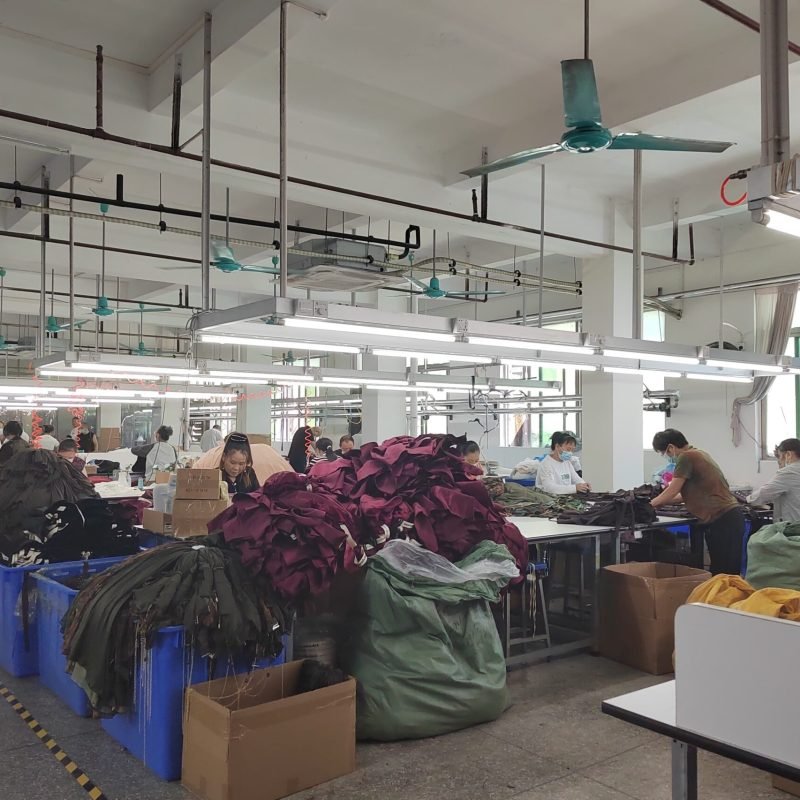
A 36,000-piece total sits well below XZ Apparel’s normal monthly factory output of approximately 180,000-200,000 pieces, but that comparison alone would be a poor capacity decision. Eighteen styles create separate fabric, color, fit, trim and process dependencies. Capacity could only become project-specific after the style matrix, specialist-process timing, material readiness and PPS calendar were defined.
The program therefore moved forward through approval gates rather than a broad capacity promise. Samples needed to close fit and construction issues; materials needed relevant checks; PPS had to represent the intended production standard; specialist decoration needed an approved reference; and the commercial team needed a realistic production window after those prerequisites were in place. Normal bulk timing at XZ Apparel is typically around 25-35 working days after fabrics and trims are ready, PPS is approved and production details are confirmed, subject to product complexity and scheduling.
- Capacity decision: based on the 18-style mix, not the 36,000-piece total alone.
- Production release: dependent on material readiness and PPS approval.
- Quality release: tied to approved specifications and the agreed inspection route.

Score Suppliers With The Same Evidence Framework
The weighting below is a usable starting point for supplier qualification. Adjust it to your internal vendor policy, product risk and market requirements rather than treating it as a universal score.
Evaluation Area | Example Weight | Evidence To Verify | Strong Qualification Signal |
Product / category fit | 15% | Relevant samples, construction knowledge, category maturity | Evidence matches the actual collection instead of generic apparel claims |
Development capability | 15% | Pattern, sample, fit, revision and PPS workflow | Controlled route from input to approved PPS with visible responsibility |
Material control | 10% | Sourcing route, fabric inspection, relevant tests | Material decisions are linked to product behavior and bulk approval |
Capacity context | 15% | Lines, cutting resources, normal output, program schedule | Supplier separates total capacity from project-available capacity |
Quality system | 15% | PPM, inline, measurement, finishing, final and packing controls | Approved inputs drive repeatable checks through multiple production gates |
Production ownership | 10% | In-house / partner / third-party map | Specialist processes are disclosed with clear standards and final QC ownership |
Documents / compliance | 10% | KYC, audit, certificates, material documentation | Entity, scope, validity and responsibility are clearly separated |
Communication / commercial fit | 10% | Response quality, MOQ conditions, timelines, files required | Supplier explains conditions and open risks instead of giving automatic “yes” answers |
Choose The Verification Route That Fits Your Approval Stage
Start with the evidence needed for the current decision. A sourcing team comparing factories needs a different level of access from a brand preparing formal vendor onboarding.
Request Verification Pack
Choose a document-first review when your team needs factory facts, capability scope, ownership, quality information and selected KYC or audit evidence before investing in a live session. Share the product categories, approximate style count, planned quantity, target market and the specific items your procurement policy requires. Sensitive legal or audit records can be handled according to document validity and confidentiality needs rather than being published openly.
- Best for: supplier shortlist, internal procurement review and pre-meeting preparation.
- Send: company/brand, role, product categories, style count, quantity range, market, required documents and target decision date.
- Output: a focused qualification file matched to the requested scope.
Book Live Factory Tour
Choose a live walkthrough when your team needs visual confirmation of the manufacturing route or wants technical staff to answer questions in real time. Before the call, identify which areas matter most – pattern and sample, fabric inspection, cutting, sewing, QC, testing, packing or partner-process coordination. A directed agenda produces better evidence than an open-ended camera tour and allows XZ Apparel to arrange the relevant production or technical contacts where appropriate.
- Best for: capability confirmation, remote factory reality checks and pre-audit review.
- Send: product focus, verification priorities, preferred time zone, meeting attendees and any NDA requirements.
- Output: a live, role-based review of the requested manufacturing areas.
Frequently Asked Questions About Remote Factory Verification

Start Your XZ Apparel Supplier Verification Review
If XZ Apparel is being considered for a new collection, second-source program, supplier switch or formal vendor onboarding, begin with the evidence your team actually needs to make the next decision. We can organize a qualification route around factory identity, development resources, product capability, manufacturing ownership, quality controls and the relevant document scope. For production-ready programs, sharing a clear style and quantity picture also allows the discussion to move from general factory capacity toward a realistic project review.
Please include:
- Company or brand name and your role
- Product categories and approximate number of styles
- Quantity by style or an estimated program range
- Target market and intended launch or delivery window
- Verification focus: factory, sampling, ownership, quality, testing, KYC or audit documents
- Relevant files such as line sheet, Tech Pack, size chart or internal supplier checklist
- Preferred time zone if a live factory walkthrough is required
Sensitive files can be handled according to the agreed confidentiality process. Commercial timing and capacity are confirmed only after product, material, process and approval requirements are reviewed.