Skip to content
Polyester tops are easy to source, but not every style works in real sales. If the fabric feels cheap, traps heat, or fits badly, the style loses value fast.
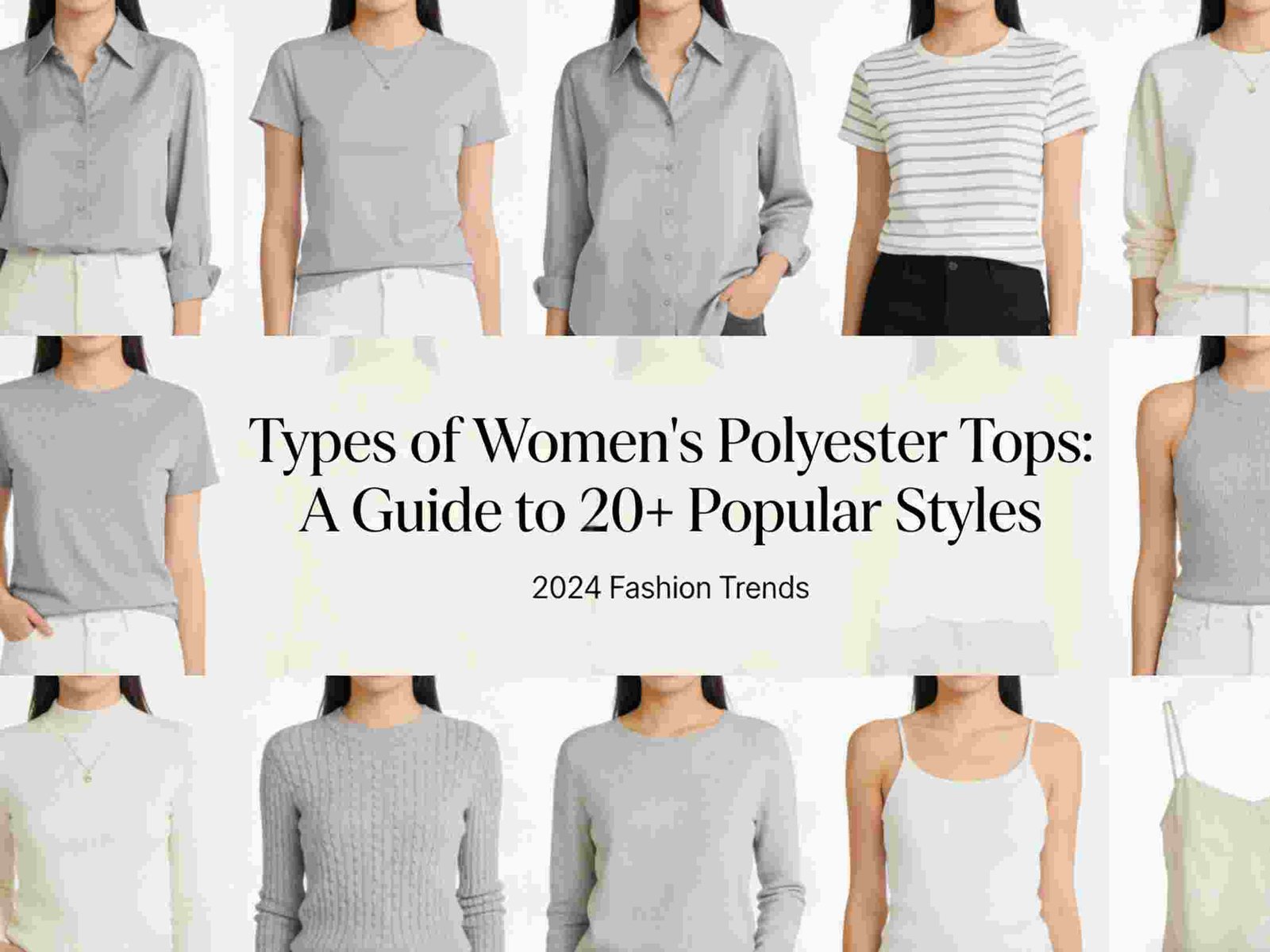
The most practical Types of Women’s Polyester Tops include 20+ styles that balance price, wrinkle resistance, print performance, and styling range. I usually build the range around shirts, blouses, tanks, knit-look tops, mesh styles, satin-look tops, and fashion basics that give both volume sales and better margins.
I learned this after seeing simple polyester tops outperform more complicated styles. Since then, I have treated polyester not as one cheap fabric story, but as a flexible category with very different commercial roles.
How do I define Types of Women’s Polyester Tops in a practical way?
Many people group all polyester tops together, but that creates weak planning. Polyester can look sporty, polished, silky, structured, or very casual depending on construction.
I define Types of Women’s Polyester Tops by fabric behavior, not just fiber content. The key is to separate them by drape, surface, breathability, stretch, and end use, because polyester can support both low-risk basics and higher-margin fashion styles.
The main ways I classify polyester tops
| Category | Main Use | Common Surface |
|---|---|---|
| Woven polyester tops | blouses, shirts, satin styles | smooth or crisp |
| Knit polyester tops | basics, fitted tops, casual wear | soft, stretchy, stable |
| Fashion polyester tops | mesh, lace-look, pleated, printed | decorative or trend-led |
| Performance polyester tops | active or sporty tops | light, breathable, technical |
Why this matters
- polyester shirts sell for different reasons than polyester rib tops
- satin-look tops need drape, not just low cost
- mesh and sheer styles need layering logic
- casual basics need comfort, not only easy care
That is why I always plan polyester tops by function first.
What are the 20+ most popular Types of Women’s Polyester Tops?
A strong polyester program needs both safe volume styles and a few fashion-driven shapes. I do not build it around basics only.
The most practical Types of Women’s Polyester Tops include button-down shirts, blouses, shell tops, tank tops, camisoles, satin tops, wrap tops, peplum tops, tunic tops, rib-look tops, mesh tops, lace-look tops, printed tops, pleated tops, halter tops, off-shoulder tops, crop tops, bodysuit-style tops, polo tops, zip-front tops, hoodie tops, and lightweight layering tops.
Core commercial styles
- button-down polyester shirt
- polyester blouse
- shell top
- tank top
- camisole
- rib-look fitted top
These usually carry stable repeat business.
Better-margin fashion styles
- satin-look top
- wrap top
- peplum top
- mesh top
- pleated top
- lace-look top
These help the line feel more elevated.
Trend and capsule styles
- halter top
- off-shoulder top
- crop top
- bodysuit-style top
- zip-front top
These work better in smaller runs.
Why do polyester tops keep selling across so many categories?
Polyester stays popular because it solves commercial problems that many other fabrics do not solve as easily.
Polyester tops keep selling because polyester is cost-efficient, wrinkle-resistant, color-stable, and adaptable across many silhouettes. I use it when I need print clarity, smoother surface effects, easier care, and more price flexibility than natural fibers usually allow.
The main commercial strengths I rely on
1. Surface versatility
Polyester can imitate:
- silk-like shine
- soft matte drape
- sporty technical surfaces
- lightweight mesh effects
2. Better print performance
Polyester often holds bright colors and prints well, which makes it useful for trend programs.
3. Easier care
Many customers like polyester because it dries quickly and wrinkles less than linen or cotton.
4. Price control
It gives me more room to build entry-level and mid-level products.
Where polyester performs best
| Product Role | Polyester Advantage |
|---|---|
| printed tops | strong color clarity |
| travel tops | low wrinkle |
| satin-like fashion tops | shine and drape |
| mesh layering tops | light weight |
| casual basics | price flexibility |
This is why polyester stays important even when buyers also want natural fabrics.
How do I choose the right polyester fabric for different top styles?
This is where professionalism matters most. Polyester is not automatically good or bad. The result depends on yarn, construction, weight, and finish.
I choose polyester fabric by matching hand-feel, drape, opacity, and breathability to the style. Structured shirts need different polyester from satin tops, fitted tops, or mesh styles, so I never develop polyester tops from fiber name alone.
The fabric directions I use most
| Fabric Type | Best For | Main Risk |
|---|---|---|
| Polyester woven | shirts, blouses, tunics | stiff feel |
| Polyester crepe | blouses, wrap tops | weak opacity |
| Satin polyester | fashion tops, camis | snagging, shine quality |
| Polyester jersey | fitted tops, basics | heat retention |
| Polyester mesh | layering tops | seam comfort |
What I check before approval
Drape
A blouse or wrap top needs movement. If the fabric is too hard, the top looks cheap.
Hand-feel
The surface must not feel plastic or harsh. This is one of the biggest commercial risks.
Breathability
For close-to-body tops, I watch comfort very closely.
Opacity
Light colors and lightweight weaves can become too sheer.
My practical rule
- shirts and tunics: need cleaner structure
- fashion tops: need better drape
- fitted basics: need softness and stretch recovery
- mesh styles: need comfort at seams and neckline
How do I control the biggest quality risks in polyester tops?
Polyester has strengths, but it also has clear risks. If I ignore them, the product may look good online and disappoint in wear.
The biggest risks in polyester tops are poor breathability, static, cheap-looking shine, snagging, pilling, and weak drape. I reduce these by choosing the right construction, using better finishing, and matching each fabric to the right silhouette instead of forcing one polyester quality into every style.
The risk areas I pay attention to
- too much shine: makes the top look low quality
- poor airflow: causes comfort complaints
- snagging: common in satin and light woven styles
- pilling: risk in knit polyester tops
- cling and static: affects real wear and styling
My quick risk-control table
| Risk | Cause | Control Method |
|---|---|---|
| cheap appearance | wrong luster | use matte or controlled sheen |
| heat discomfort | dense low-breathability fabric | improve fabric selection |
| pilling | weak yarn/surface friction | test knit quality |
| snagging | delicate surface | simplify use and check finish |
| transparency | light weight + pale color | adjust weight or add layering plan |
A strong polyester top should feel intentional, not cheap.
How do I build a balanced 20+ style polyester-top collection?
A polyester line can become repetitive very fast if I only make simple blouses and tanks. I need variety, but I also need clear commercial roles.
I build a polyester-top collection by dividing it into core basics, polished fashion tops, trend capsules, and functional layering styles. This lets me use polyester’s flexibility without making the assortment feel flat or overly synthetic.
My collection structure
| Role | Share | Example Styles |
|---|---|---|
| Core basics | 35–40% | tanks, shell tops, fitted tops, shirts |
| Polished fashion | 25–30% | satin tops, blouses, wrap tops, pleated tops |
| Trend styles | 15–20% | halter, off-shoulder, crop, mesh |
| Layering / utility | 15–20% | tunics, zip-front tops, lightweight outer tops |
Why this works
- basics bring reorder stability
- fashion styles lift the margin
- trend tops add freshness
- layering pieces make the range more complete
This is the safest way I know to make polyester feel commercially strong instead of generic.
Polyester Blouse

Some tops look refined in photos but disappoint in real wear. They wrinkle too fast, feel too delicate, or lose shape after washing, which makes repeat orders harder to secure.
A Polyester Blouse is one of the most practical Types of Women’s Polyester Tops because it combines a polished appearance, easy care, stable structure, and broad styling use. I see it as a core style for brands that want a dressier top with lower maintenance and stronger commercial consistency.
I noticed this when I compared soft fashion tops with reorder data. Many trend pieces came and went, but a well-made polyester blouse kept performing because it fit workwear, casual styling, and occasion dressing at the same time.
What makes a Polyester Blouse different from other women’s polyester tops?
Not every polyester top serves the same purpose. Some are casual basics, while others are clearly fashion-driven. A blouse usually sits in the middle, with both function and value.
A Polyester Blouse stands out because it offers more drape, more polish, and more styling flexibility than many casual polyester tops. Compared with polyester T-shirts or tanks, it usually delivers a cleaner silhouette, stronger perceived value, and wider use across office, daily, and dressy settings.
Why I treat it as a key category
| Feature | Polyester Blouse | Casual Polyester Top |
|---|---|---|
| Appearance | polished | relaxed |
| Styling range | wide | medium |
| Margin potential | higher | stable |
| Reorder value | strong | depends on style |
Where it performs best
- office and smart-casual collections
- boutique dailywear ranges
- occasion-inspired capsules
- easy-care fashion programs
This is why I do not treat it as a simple fashion extra. I treat it as a bridge between commercial basics and elevated tops.
What fabric works best for a Polyester Blouse?
Fabric is the core issue here. Polyester is versatile, but not every polyester fabric creates a good blouse. Some feel too flat, while others feel too shiny or too stiff.
The best fabric for a Polyester Blouse is usually a woven polyester quality with balanced drape, soft hand-feel, and enough opacity to look polished. I usually prefer chiffon, crepe, satin, or matte woven polyester depending on whether I want softness, texture, or a dressier finish.
Common fabric directions
| Fabric Type | Best Quality | Main Risk |
|---|---|---|
| Polyester chiffon | light and feminine | too sheer |
| Polyester crepe | soft texture, easy drape | weak surface quality if too cheap |
| Polyester satin | elegant and glossy | can look cheap if too shiny |
| Matte woven polyester | practical and commercial | may feel too plain |
What I check first
- drape and flow
- opacity in light colors
- surface shine
- wrinkle resistance
- seam behavior
A blouse must feel refined. If the fabric looks overly synthetic, the whole product loses value fast.
How do I design a Polyester Blouse so it looks polished instead of cheap?
This is the real professional part. Polyester is useful, but it can easily look low-end if the design and fabric do not match.
I make a Polyester Blouse look polished by balancing fabric surface, silhouette simplicity, and clean construction. I usually keep the body shape controlled, avoid unnecessary details, and let neckline, sleeve shape, or drape create the visual interest instead of over-designing the garment.
The design points I focus on
Surface control
Cheap shine is one of the biggest risks in polyester blouses. I usually prefer matte or soft-lustre finishes.
Silhouette balance
A blouse works best when the body is not too tight and not too oversized. Clean lines make the fabric look better.
Detail discipline
I do not overload the blouse with too many ruffles, seams, or trims unless the fabric quality can support them.
Proportion guide
| Design Element | Best Direction | Risk |
|---|---|---|
| Body fit | relaxed but controlled | too boxy |
| Sleeve shape | soft volume or clean straight sleeve | excess bulk |
| Neckline | V-neck, round neck, or soft collar | crowded upper body |
| Surface finish | matte or soft sheen | plastic shine |
A strong polyester blouse should look effortless. When too many design elements compete, the product often loses refinement.
What are the biggest quality and construction risks in a Polyester Blouse?
A blouse may look easy to make, but weak quality shows very quickly. Small technical problems can damage the whole appearance.
The biggest risks in a Polyester Blouse are static feel, cheap shine, seam puckering, transparency, and poor drape control. I reduce these by choosing the right fabric finish, testing stitch balance, and keeping the construction clean in visible areas like the neckline, placket, and sleeve join.
The main risk areas
- seam puckering: common in lightweight woven polyester
- too much shine: makes the blouse look low quality
- sheerness: a problem in ivory, blush, and other pale shades
- stiff drape: makes the garment look flat
- static buildup: affects wear comfort and appearance
My simple risk-control table
| Risk | Cause | Control Method |
|---|---|---|
| Seam puckering | wrong needle or tension | adjust sewing settings |
| Cheap appearance | poor fabric shine | use matte or better-quality finish |
| Transparency | thin fabric and light color | improve opacity or add layering plan |
| Weak drape | fabric too stiff | switch to softer weave |
| Static feel | finish issue | improve fabric treatment |
A good blouse should move softly and look clean under normal light, not only in studio photos.
How should I place a Polyester Blouse inside a polyester-top collection?
This style works best when it supports the whole range. It should add polish, not get lost between basics and trend pieces.
In a polyester-top collection, I place the Polyester Blouse as an elevated core style. It usually helps the range feel more complete, supports higher price perception, and gives customers a dressier option between basic tops and more trend-driven fashion pieces.
My collection role for this style
- stronger than a basic tee in value
- safer than highly trend-led tops
- useful for workwear and daily dressing
- good as a margin-supporting item
Best role inside the range
| Collection Role | Polyester Blouse |
|---|---|
| Core basic | medium |
| Polished essential | high |
| Fashion highlight | medium |
| Margin builder | strong |
That is why I usually keep polyester blouses in the main body of the collection, not only in seasonal trend capsules.
Polyester Button-Down Shirt

Some fashion tops look good at first, but they are hard to maintain in real daily wear. They wrinkle fast, lose shape, or feel too limited for repeat use.
A Polyester Button-Down Shirt is one of the most practical Types of Women’s Polyester Tops because it combines easy care, shape stability, and broad styling use. I see it as a core style that works well for casual wear, office looks, layering, and fast-moving wholesale programs.
I noticed this after comparing fashion tops with real reorder data. Trend pieces brought attention, but polyester button-down shirts kept performing because they were easier to wear, easier to care for, and easier to reorder.
What makes a Polyester Button-Down Shirt different from other women’s polyester tops?
Not every polyester top plays the same role. Some are more decorative, while others are built for daily use. A button-down shirt usually has stronger commercial value because it does more than one job.
A Polyester Button-Down Shirt stands out because it offers more structure, more styling flexibility, and lower maintenance than many other polyester tops. It can work as a standalone top, a layering piece, or a light outer layer, which gives it stronger repeat value than many trend-led silhouettes.
Why I treat it as a core polyester style
| Feature | Polyester Button-Down Shirt | Many Other Polyester Tops |
|---|---|---|
| Styling range | very wide | medium |
| Wrinkle resistance | high | depends on style |
| Reorder potential | high | medium |
| Fit risk | low to medium | medium |
| Season span | broad | narrower |
Why it performs well
- easy to style for work and casual wear
- keeps shape better than many soft tops
- easier to wash and maintain
- works across more age groups and markets
This is why I usually see it as a foundation style, not just another polyester top.
What fabric works best for a Polyester Button-Down Shirt?
Fabric quality decides whether the shirt feels clean and polished or cheap and flat. Polyester is practical, but not every polyester fabric behaves well in shirt construction.
The best fabric for a Polyester Button-Down Shirt is usually a medium-light woven polyester or polyester blend that offers smooth drape, wrinkle resistance, and enough body to hold the placket and collar cleanly. I usually avoid fabric that is too shiny, too thin, or too stiff for the intended fit.
Fabric directions I compare most
| Fabric Type | Best Quality | Main Risk |
|---|---|---|
| Plain woven polyester | stable and easy care | can feel flat or synthetic |
| Polyester-spandex blend | better comfort and movement | may lose crisp shirt feel |
| Polyester-rayon blend | softer hand-feel and drape | less structure |
What I check first
- surface shine
- drape at the body
- opacity in light colors
- placket and collar stability
A good polyester shirt should feel easy, but it should not look overly artificial.
How do I design a Polyester Button-Down Shirt so it feels polished instead of cheap?
This is the key issue. Polyester shirts are commercially strong, but they can look low-grade if the shape and details are weak.
I make a Polyester Button-Down Shirt look polished by controlling four things: fabric surface, collar shape, body proportion, and button-placket construction. The shirt should look clean and functional, while the fit stays modern enough for the target market.
The design points I focus on
Collar balance
A collar that is too stiff looks harsh. A collar that is too soft loses shape fast.
Body proportion
The body should fit the role:
- classic fit for office and everyday use
- relaxed fit for casual styling
- oversized fit for fashion-driven collections
Placket construction
If the front placket looks weak or wavy, the whole shirt looks cheaper.
Hem shape
A slight curve usually gives better styling flexibility than a flat hem.
My proportion guide
| Design Element | Best Direction | Risk |
|---|---|---|
| Collar | clean and moderate | too sharp or too limp |
| Body fit | regular or relaxed | too tight looks dated |
| Length | regular or slightly longer | too long feels heavy |
| Surface | matte or soft sheen | high shine looks cheap |
This is why I usually update this style with proportion and finish, not with too many extra details.
What are the biggest quality and production risks in a Polyester Button-Down Shirt?
A polyester shirt may look simple, but there are still clear technical risks. If I ignore them, the product may sell once but fail in repeat business.
The biggest risks in a Polyester Button-Down Shirt are excessive shine, static, seam puckering, light-color transparency, and poor placket stability. I reduce these risks by choosing better fabric quality, controlling sewing tension, and keeping the shirt structure clean and balanced.
The main risk areas
- seam puckering: common in lightweight woven polyester
- cheap surface shine: makes the shirt look lower value
- static build-up: affects comfort and wear experience
- transparency: common in white and pastel shades
- weak collar or placket: hurts the whole appearance
My simple risk-control table
| Risk | Cause | Control Method |
|---|---|---|
| Seam puckering | wrong tension or thin fabric | adjust sewing settings |
| Cheap shine | low-grade polyester surface | use matte or soft-finish fabric |
| Static | fiber property and dry conditions | improve finish or blend |
| Transparency | light color + low density | increase fabric cover |
| Weak front shape | unstable placket | reinforce construction |
A strong polyester button-down shirt should look neat, stable, and easy to wear.
How should I place a Polyester Button-Down Shirt inside a women’s polyester-top collection?
This style should support the whole range. It is not always the most eye-catching piece, but it often carries the most practical value.
In a women’s polyester-top collection, I place the Polyester Button-Down Shirt as a core anchor style. It usually supports repeat orders, balances more fashion-led tops, and gives the collection a stronger commercial base.
My collection role for this style
- core volume style
- easy reorder item
- bridge between casual and office looks
- good base for color and print updates
Best role inside the range
| Collection Role | Polyester Button-Down Shirt |
|---|---|
| Core basic | high |
| Fashion highlight | medium |
| Margin builder | medium to strong |
| Reorder safety | very high |
That is why I usually treat it as one of the safest styles in a polyester-top program.
Polyester Tunic Top

Some tops look fashionable for one season, but they do not last in real business. They may wrinkle too fast, lose shape, or feel hard to style across different customers.
A Polyester Tunic Top remains one of the most practical Types of Women’s Polyester Tops because it offers easy care, stable shape, broad body fit, and flexible styling. I see it as a strong commercial style that works best when I control length, drape, and fabric quality instead of relying only on loose fit.
I noticed this after comparing trend tops with repeat-order styles. Many fashion tops created short-term attention, but tunic tops kept working because they solved comfort, coverage, and easy styling at the same time.
What makes a Polyester Tunic Top different from other women’s polyester tops?
Not every polyester top plays the same role. Some are made for trend value. Some are made for layering. A tunic top is different because length is part of its function.
A Polyester Tunic Top stands out because it gives more coverage, easier body tolerance, and more styling flexibility than many shorter tops. Compared with cropped or regular-length polyester tops, it usually works for more age groups, more body shapes, and more daily wear settings.
Why I treat it as a practical commercial style
| Feature | Polyester Tunic Top | Regular Polyester Top |
|---|---|---|
| Coverage | high | medium |
| Body tolerance | strong | medium |
| Styling flexibility | high | medium |
| Trend risk | lower | depends on style |
Where it usually performs well
- casual daily wear
- comfort-led collections
- travel and easy-care programs
- smart-casual assortments
- plus-size or relaxed-fit ranges
That is why I do not see it as an old-fashioned shape by default. I see it as a functional silhouette that depends on execution.
What polyester fabric works best for a Polyester Tunic Top?
Fabric choice decides whether the tunic feels fluid and modern or cheap and lifeless. Polyester can do both, so I have to choose carefully.
The best polyester fabric for a Polyester Tunic Top is usually one that gives soft drape, wrinkle resistance, and stable recovery. I often prefer brushed polyester, polyester crepe, poly-spandex blends, or chiffon-layered constructions, depending on whether I want the top to feel casual, polished, or more flowing.
Fabric directions I compare most
| Fabric Type | Best Quality | Main Risk |
|---|---|---|
| Polyester crepe | soft drape, better surface texture | can feel thin if too light |
| Poly-spandex jersey | comfort and stretch | may cling too much |
| Brushed polyester knit | soft touch, easy wear | may look less polished |
| Chiffon polyester | light and elegant | may need lining |
What I study before approval
- drape at side seams
- opacity in light colors
- static build-up
- breathability for daily wear
- whether the fabric hangs cleanly at longer length
A tunic top needs more than soft fabric. It needs fabric that still looks controlled when the body length gets longer.
How do I design a Polyester Tunic Top so it looks modern instead of oversized or dated?
This is the key issue. Tunic tops are practical, but poor proportion can make them feel old very fast. The real work is not adding more detail. The real work is controlling shape.
I make a Polyester Tunic Top look modern by balancing length, side shape, neckline, and sleeve proportion. A good tunic should give ease and coverage, but it should still create direction on the body instead of falling like a flat rectangle.
The fit points I focus on most
Length balance
If the tunic is too short, it loses its purpose. If it is too long, it becomes heavy and harder to style.
Side shaping
A tunic should not be skin-tight, but it still needs some shape through:
- side slits
- curved hems
- slight A-line movement
- controlled straight fit
Sleeve proportion
The sleeve affects whether the tunic feels relaxed or bulky. I usually avoid sleeves that are too wide when the body is already long.
Neckline choice
Necklines help modernize the style:
- V-neck for visual length
- split neck for casual polish
- round neck for basics
- shirt collar for smart casual use
My proportion table
| Design Element | Best Direction | Risk |
|---|---|---|
| Length | mid-hip to upper thigh | too long feels heavy |
| Body shape | relaxed with control | boxy and flat |
| Hem | curved or side slit | straight hem can look stiff |
| Sleeve | slim or balanced | oversized sleeve adds bulk |
This is why I say a tunic top is not “just a long top.” Its proportion system has to work together.
What are the biggest quality and wear risks in a Polyester Tunic Top?
A polyester tunic top can look easy to make, but the longer body creates extra technical risk. If the fabric or pattern is weak, the problems show quickly in real wear.
The biggest risks in a Polyester Tunic Top are static, poor drape, cling at the hip area, transparency, and shapeless volume. I reduce these by choosing better polyester quality, checking side-line balance, and testing how the garment moves when walking and sitting.
The main risks I watch
- static build-up: common in dry climates and lighter fabrics
- cling at hips or stomach: happens when drape is weak
- see-through issue: especially in ivory and pastel colors
- twisting side seams: more visible on longer garments
- flat, lifeless silhouette: caused by poor fabric and no shaping
My simple risk-control table
| Risk | Cause | Control Method |
|---|---|---|
| Static | low-quality synthetic surface | better finish or blend |
| Cling | poor drape | choose softer fabric |
| Shapeless body | no side control | add slit or curved hem |
| Transparency | light fabric or color | adjust weight or lining |
A strong tunic top should feel easy, but it should never look careless.
How should I place a Polyester Tunic Top inside a women’s polyester-top collection?
This style works best when it has a clear role in the range. I do not use it as the only direction, but I also do not leave it out of a practical collection.
In a women’s polyester-top collection, I place the Polyester Tunic Top as a comfort-driven and coverage-driven style that supports broad customer demand. It usually works well beside polyester blouses, casual knit tops, and dressier fashion tops because it gives the range more versatility.
The role I usually give it
- practical coverage style
- easy reorder item
- good option for mature and broad markets
- useful bridge between casual and smart-casual tops
Collection role table
| Role in Collection | Polyester Tunic Top |
|---|---|
| Core basic | medium to high |
| Fashion statement | low |
| Comfort value | very high |
| Reorder potential | strong |
That is why I treat it as a support pillar in the assortment, not as a trend headline piece.
Polyester Tank Top

Many fashion tops look good in photos, but they fail in daily wear. Some lose shape fast, some trap heat, and some feel too thin to justify repeat orders.
A Polyester Tank Top is one of the most practical Types of Women’s Polyester Tops because it combines low cost, shape stability, easy care, and wide styling use. I see it as a core volume style that works best when fabric hand-feel, opacity, stretch, and armhole fit are controlled well.
I learned this after comparing trend tops with repeat-order basics. Fashion pieces created short-term interest, but polyester tank tops kept performing because they were easier to wear, easier to wash, and easier to reorder.
What makes a Polyester Tank Top different from other women’s polyester tops?
Not every polyester top plays the same role. Some are fashion-driven, while some are built for volume and daily wear. A tank top usually belongs to the second group.
A Polyester Tank Top stands out because it is simple, versatile, and commercially efficient. Compared with polyester blouses or fashion tops, it usually offers broader use, easier fit approval, and stronger reorder potential across casual, active, and layering categories.
Why I treat it as a core style
| Feature | Polyester Tank Top | Fashion Polyester Top |
|---|---|---|
| Styling range | high | medium |
| Cost efficiency | strong | medium |
| Reorder potential | high | lower |
| Fit complexity | low to medium | medium to high |
Where it works best
- casual basics programs
- active-inspired collections
- layering assortments
- summer and resort ranges
That is why I see it as a foundation style, not just a simple top.
What fabric works best for a Polyester Tank Top?
Fabric choice decides whether the tank feels useful or cheap. Polyester can perform very well, but only if the structure matches the product role.
The best fabric for a Polyester Tank Top is usually a polyester jersey, rib knit, or polyester-spandex blend that gives smooth hand-feel, enough opacity, and stable recovery. I usually avoid fabric that is too shiny, too stiff, or too thin for daily wear.
Fabric directions I compare
| Fabric Type | Best Quality | Main Risk |
|---|---|---|
| Polyester jersey | smooth and stable | can feel basic or thin |
| Polyester-spandex blend | better stretch and fit | may feel too tight if weight is low |
| Polyester rib | stronger body shape | may bag out if recovery is weak |
| Brushed polyester knit | softer hand-feel | may feel too warm for summer |
What I check first
- opacity under light
- hand-feel against skin
- stretch and recovery
- surface shine
- heat comfort in wear
A polyester tank top must feel practical first. If it looks too synthetic, the value drops fast.
How do I design a Polyester Tank Top so it feels comfortable and still looks polished?
This is where the product becomes professional. A tank top looks simple, but small pattern mistakes become very obvious in wear.
I make a Polyester Tank Top work by balancing neckline shape, armhole depth, strap width, and body ease. The best version feels clean on the body, stays in place during movement, and does not gap, twist, or look too clingy.
The fit points I focus on
Neckline shape
A neckline that is too high can feel heavy. One that is too low can reduce bra coverage and daily wear value.
Armhole control
This is the biggest issue in tank tops. If the armhole is too deep, the top looks cheap and exposes too much.
Strap width
Thin straps can look more fashionable, but wider straps often improve comfort and commercial use.
Body fit
A polyester tank top can be:
- fitted for layering
- semi-fitted for broader appeal
- relaxed for casual volume
Proportion guide
| Design Element | Best Direction | Risk |
|---|---|---|
| Neckline | clean scoop, square, or high crew | too open or too tight |
| Armhole | controlled and close to body | gaping |
| Strap width | medium for daily wear | too thin feels less practical |
| Body shape | fitted or semi-fitted | too clingy or too boxy |
This is why I do not judge tank tops by flat sketches alone. I always think about movement and real use.
What are the biggest quality and performance risks in a Polyester Tank Top?
A polyester tank top often looks easy to produce, but many complaints come from weak fabric selection and poor fit control. The problems are simple, but they are costly.
The biggest risks in a Polyester Tank Top are sheerness, armhole gaping, heat discomfort, neckline stretching, and poor recovery after washing. I reduce these by choosing better knit structure, controlling pattern balance, and testing the garment under movement and repeated wear.
The main risk areas
- too thin fabric: causes transparency and low value feel
- poor recovery: neckline and body lose shape
- deep armholes: create fit complaints
- cheap shine: makes the garment look lower quality
- heat retention: hurts comfort in hot weather
My simple risk-control table
| Risk | Cause | Control Method |
|---|---|---|
| Sheerness | low fabric weight | use denser knit or darker shades |
| Gaping armhole | poor pattern balance | revise curve and fit |
| Stretch-out neckline | weak recovery | improve rib or binding |
| Too much heat | wrong fabric finish | use lighter breathable knit |
| Cheap appearance | high shine surface | choose matte hand-feel |
A good polyester tank top should feel easy, but it should never feel careless.
How should I place a Polyester Tank Top inside a women’s polyester-top collection?
This style should anchor the range. It is usually not the most dramatic piece, but it often supports the whole program.
In a women’s polyester-top collection, I place the Polyester Tank Top as a core basic that supports volume, layering, and repeat business. It usually works best beside more visual styles like blouses, ruched tops, and fashion camis because it brings balance and commercial stability.
My collection role for this style
- strong volume driver
- useful entry-price item
- important layering piece
- good reorder base
Best role inside a range
| Collection Role | Polyester Tank Top |
|---|---|
| Core basic | very strong |
| Fashion highlight | low |
| Margin builder | medium |
| Reorder safety | very high |
That is why I usually treat it as one of the backbone styles in a polyester-top program.
Polyester Camisole Top

Some tops look attractive in photos but disappoint in real use. They may cling badly, feel cheap, or lose shape after washing. That is why fabric and silhouette matter so much.
A Polyester Camisole Top is one of the most practical Types of Women’s Polyester Tops because it combines light weight, smooth surface, easy care, and strong styling flexibility. I see it as a core fashion-basic that works for layering, summer dressing, and dressy casual looks when fabric quality and construction are controlled well.
I noticed this after comparing reorder results across different polyester tops. Trend pieces created short-term attention, but camisole tops kept coming back because they were easy to wear and easy to style.
What makes a Polyester Camisole Top different from other women’s polyester tops?
Not every polyester top serves the same purpose. Some are statement pieces, while others are everyday basics. A camisole top sits in the middle.
A Polyester Camisole Top is different because it offers a lighter, more fluid, and more versatile silhouette than many other polyester tops. Compared with blouses or fitted knit tops, it works better for layering, warm weather, and day-to-night styling.
Why I treat it as a key category
| Feature | Polyester Camisole Top | Many Other Polyester Tops |
|---|---|---|
| Styling flexibility | high | medium |
| Layering value | high | medium |
| Season range | broad | depends on style |
| Construction difficulty | medium | medium to high |
Where it performs best
- layering under shirts or blazers
- summer casual looks
- dressy evening styling
- resort and vacation capsules
This is why I see it as more than a simple basic. It is a bridging style inside a polyester-top collection.
What fabric works best for a Polyester Camisole Top?
Fabric is the core decision here. Polyester can look refined or cheap depending on yarn, weave, and finish.
The best fabric for a Polyester Camisole Top is usually a lightweight polyester woven with soft drape, smooth touch, and enough opacity. I usually prefer satin-like polyester, matte crepe polyester, or polyester blends that balance flow, comfort, and surface quality.
The main fabric directions I compare
| Fabric Type | Best Quality | Main Risk |
|---|---|---|
| Polyester satin | smooth shine and fluid drape | cheap shine or snagging |
| Polyester crepe | matte, elegant, easy wear | weak drape if too stiff |
| Polyester blend | softer hand-feel | less clear surface identity |
What I study before approval
- drape at bust and side seam
- shine level under light
- opacity in pale colors
- static tendency
- seam puckering risk
The fabric should feel fluid, but it should not look slippery or overly thin.
How do I design a Polyester Camisole Top so it looks refined instead of cheap?
This is where the product becomes professional. A camisole top is simple, so every detail becomes more visible.
I make a Polyester Camisole Top look refined by controlling neckline shape, strap proportion, fabric drape, and body ease. The top should skim the body lightly, not cling too hard or hang too flat, because both extremes reduce its perceived value.
The fit points I focus on
Neckline line
A camisole top depends heavily on neckline shape.
- cowl neck gives softer drape
- straight neck looks cleaner
- V-neck feels sharper and more mature
Strap proportion
Straps affect both comfort and appearance.
- very thin straps feel more delicate
- medium straps are safer for broad use
Body ease
Too tight makes the top look cheap and uncomfortable. Too loose removes shape.
My proportion guide
| Design Element | Best Direction | Risk |
|---|---|---|
| Neckline | clean and balanced | too low feels unstable |
| Straps | fine but secure | too thin may dig in |
| Body fit | light ease | too clingy |
| Length | regular or slightly long | too short limits styling |
That is why I keep the silhouette clean. A camisole top works best when it feels effortless.
What are the biggest quality and construction risks in a Polyester Camisole Top?
The style looks easy, but it has several common failure points. Most of them come from weak material control or poor finishing.
The biggest risks in a Polyester Camisole Top are cheap-looking shine, sheerness, strap failure, seam puckering, static buildup, and poor neckline behavior. I reduce these by choosing better fabric, stabilizing the neckline, and testing strap and seam performance early.
The main risk areas
- sheerness: common in ivory, champagne, and pastel shades
- strap weakness: low-quality adjusters or bad stitching
- seam puckering: very common in light woven polyester
- static: makes the top cling to the body
- snagging: satin surfaces can mark easily
My simple risk-control table
| Risk | Cause | Control Method |
|---|---|---|
| Cheap appearance | harsh shine | choose softer surface |
| Puckering | wrong sewing setting | adjust needle and tension |
| Strap break | weak attachment | reinforce stitch points |
| Static cling | dry finish | improve finishing and fabric choice |
| Transparency | light color + thin fabric | increase opacity or add double layer |
A strong camisole top should feel light and elegant, not fragile.
How should I place a Polyester Camisole Top inside a polyester-top collection?
This style should support many other pieces in the range. It is not just an isolated summer item.
In a polyester-top collection, I place the Polyester Camisole Top as a versatile anchor style that connects fashion pieces with practical basics. It works well as a layering item, a dressy casual option, and a clean core style with steady reorder potential.
My collection role for this style
- strong layering item
- good entry fashion piece
- useful for day-to-night dressing
- suitable for core colors and seasonal colors
Best position inside the range
| Collection Role | Polyester Camisole Top |
|---|---|
| Core basic | medium to high |
| Fashion highlight | medium |
| Margin builder | strong |
| Reorder value | strong |
That is why I usually keep it in the line. It helps the whole collection feel more complete.
Polyester Crop Top

Some crop tops look trendy, but they fail fast in real sales. If the fabric feels cheap, traps heat, or loses shape, the style may get attention first and returns later.
A Polyester Crop Top is one of the most commercial Types of Women’s Polyester Tops because it combines trend appeal, shape stability, and broad price flexibility. I see it as a strong fashion-basic style that works best when I balance fabric hand-feel, stretch recovery, breathability, and crop length carefully.
I learned this after comparing cotton and polyester crop tops across several programs. Cotton felt more natural, but polyester crop tops often gave me cleaner shape, brighter color, and better consistency in bulk when the fabric choice was right.
What makes a Polyester Crop Top different from other women’s polyester tops?
Not every polyester top plays the same role. Some are soft layering pieces. Some are dressy blouses. A crop top is more sensitive because the garment is shorter, tighter, and more exposed in wear.
A Polyester Crop Top is different because it relies more on silhouette, tension control, and surface finish than many other polyester tops. Compared with regular-length tops, it needs stronger control over stretch, hem behavior, and fit balance to stay flattering and wearable.
Why I treat it as a high-visibility style
| Feature | Polyester Crop Top | Regular Polyester Top |
|---|---|---|
| Trend appeal | high | medium |
| Fit sensitivity | high | medium |
| Shape stability | strong if fabric is right | more forgiving |
| Return risk | medium to high | lower |
Where it usually performs best
- young fashion collections
- active casual ranges
- going-out capsules
- layered spring and summer programs
That is why I never develop it like a normal basic top. The shorter length makes every fit issue easier to see.
What fabric works best for a Polyester Crop Top?
Fabric is the key decision here. Polyester can perform very well, but only if the structure matches the style.
The best fabric for a Polyester Crop Top is usually a polyester blend with controlled stretch, soft hand-feel, and good recovery. I usually prefer polyester-spandex jersey, rib, or interlock for fitted crops, while woven polyester works better for fashion crops with more structure.
Fabric options I compare most
| Fabric Type | Best Use | Main Risk |
|---|---|---|
| Polyester-spandex jersey | fitted basic crops | heat retention |
| Polyester rib knit | body-hugging fashion crops | bagging out |
| Interlock polyester blend | smoother premium crops | heavier feel |
| Woven polyester blend | corset or boxy crops | less comfort |
What I check before approval
- stretch and recovery
- hand-feel against skin
- heat and moisture behavior
- sheen level under light
Polyester can look clean and modern, but if the surface is too shiny or too stiff, the top loses value fast.
How do I design a Polyester Crop Top so it feels flattering instead of cheap or uncomfortable?
This is where the product becomes professional. A crop top is simple in appearance, but not simple in execution.
I make a Polyester Crop Top flattering by controlling crop length, neckline balance, fabric tension, and hem stability. The body should feel close but not restrictive, and the hem should stay flat without rolling, pulling, or riding up too easily.
The fit points I focus on
Crop length
The length changes the whole commercial result.
- too short = more trend, more returns
- slightly above waistband = safest option
- longer crop = broader market appeal
Bust and body tension
If tension is too strong, the top pulls upward and becomes uncomfortable.
Hem behavior
A weak hem makes the garment look cheap fast.
Proportion guide
| Design Element | Best Direction | Risk |
|---|---|---|
| Length | near high-waist line | too short feels limited |
| Fit | close but not tight | over-compression |
| Neckline | square, round, halter, scoop | poor support |
| Hem finish | stable clean finish | rolling or curling |
This is why I usually keep the silhouette clean. The best polyester crop tops rely on fit control, not too many extra details.
What are the biggest quality risks in a Polyester Crop Top?
A polyester crop top can be commercial, but it can also create fast complaints if I ignore the technical side.
The biggest risks in a Polyester Crop Top are heat discomfort, shine that looks cheap, hem rolling, poor stretch recovery, and fit distortion after repeated wear. I reduce these by choosing better yarn quality, testing recovery, and avoiding fabric structures that feel too plastic or trap too much heat.
The main risk areas
- poor breathability: common in low-quality polyester
- over-shiny surface: reduces perceived value
- hem curl or ride-up: very common in short tops
- bagging at bust or waist: weak recovery problem
- see-through issue: in light colors or thin knits
My simple risk-control table
| Risk | Cause | Control Method |
|---|---|---|
| Too hot to wear | low breathability fabric | use better blend or lighter knit |
| Cheap-looking shine | poor yarn/surface finish | use matte or soft finish |
| Hem rolling | unstable construction | strengthen hem finish |
| Shape loss | weak recovery | test stretch return |
| Transparency | thin fabric + light shade | adjust weight or lining |
A good polyester crop top should feel smooth, stable, and wearable. It should not only look good in a photo.
How should I place a Polyester Crop Top inside a women’s polyester-top collection?
This style works best as part of a balanced range. It should add energy, but it should not carry the whole collection alone.
In a women’s polyester-top collection, I place the Polyester Crop Top as a trend-meets-basic item. It usually works best next to longer fitted tops, tanks, bodysuits, and fashion blouses because those styles help balance risk and widen the customer base.
My collection role for this style
- strong visual trend item
- good for younger buyers
- useful for fashion capsules
- better in controlled color and size plans
Best role in the assortment
| Collection Role | Polyester Crop Top |
|---|---|
| Core basic | medium |
| Trend highlight | high |
| Margin builder | medium to high |
| Reorder safety | medium |
That is why I use it as a focused commercial style, not as the only hero product in a polyester-top program.
Polyester V-Neck Top

Some tops look good in photos but disappoint in real wear. They may cling badly, feel cheap, or lose shape after washing. That is why I never judge a polyester top by appearance alone.
A Polyester V-Neck Top is one of the most practical Types of Women’s Polyester Tops because it combines easy care, strong shape retention, and broad styling appeal. I see it as a core style that works well in casual, workwear, and layered collections when the neckline, drape, and fabric quality are handled correctly.
I learned this after comparing several synthetic tops in production. Some trend styles looked more exciting, but the V-neck version kept performing better because it fit more outfits and more customer types.
What makes a Polyester V-Neck Top different from other women’s polyester tops?
Not every polyester top plays the same role. Some depend on prints, trims, or special silhouettes. A V-neck top is different because the neckline itself creates most of the value.
A Polyester V-Neck Top stands out because the V-neckline makes the body line look cleaner and more balanced. Compared with crew neck or high-neck polyester tops, it usually feels lighter, more flattering, and easier to style across different age groups and occasions.
Why I treat it as a core style
| Feature | Polyester V-Neck Top | Many Other Polyester Tops |
|---|---|---|
| Styling range | high | medium |
| Visual balance | strong | depends on silhouette |
| Reorder potential | high | more trend-dependent |
| Fit risk | medium | varies |
Where it works best
- daily casual tops
- office-casual ranges
- layered collections
- fashion basics programs
That is why I see it as a stable product, not just a seasonal filler.
What fabric works best for a Polyester V-Neck Top?
Polyester is not one simple fabric story. The surface, weight, and blend all change how the top feels and how the V-neck behaves.
The best fabric for a Polyester V-Neck Top is usually a polyester base with controlled drape, soft hand-feel, and enough stability around the neckline. I usually compare matte woven polyester, brushed polyester knits, and polyester-spandex blends based on whether the style needs structure or stretch.
Fabric directions I compare most
| Fabric Type | Strength | Main Risk |
|---|---|---|
| Polyester woven | clean look, good drape | may feel stiff or static |
| Polyester knit | comfort and stretch | neckline may grow or wave |
| Polyester-spandex blend | better fit recovery | may cling too much |
What I check first
- neckline stability
- fabric shine level
- drape through bust and hem
- breathability for daily wear
A polyester V-neck top should feel smooth and easy, not plastic-like or overly tight.
How do I design a Polyester V-Neck Top so it looks flattering instead of cheap?
This is the key issue. A V-neck can improve the whole top, but only if the cut is clean. If the angle is wrong, the garment quickly looks weak or low quality.
I make a Polyester V-Neck Top look flattering by balancing three things: V-depth, body drape, and neckline finish. The neckline should open the upper body visually, while the fabric and fit keep the style polished instead of clingy or shapeless.
The fit points I focus on
V-neck depth
If the V is too high, the shape loses effect. If it is too deep, the top becomes less versatile.
Neckline finish
The V point must stay sharp and flat. A weak finish makes the whole garment look cheap.
Body shape
This style usually works best with:
- a straight relaxed body
- a lightly shaped waist
- a regular or slightly longer length
Proportion guide
| Design Element | Best Direction | Risk |
|---|---|---|
| V depth | moderate | too deep or too closed |
| Body fit | relaxed or lightly shaped | too clingy |
| Fabric drape | soft and clean | too stiff or too limp |
| Sleeve design | simple short or long sleeve | too much detail fights the neckline |
This is why I keep the styling controlled. The V-neck already gives the top enough character.
What are the biggest quality and construction risks in a Polyester V-Neck Top?
A polyester V-neck top may look simple, but weak construction shows fast. Most problems appear at the neckline, shoulder, and fabric surface.
The biggest risks in a Polyester V-Neck Top are neckline stretching, poor drape, static feel, shine that looks cheap, and seam distortion near the V point. I reduce these by choosing better polyester quality, stabilizing the neckline, and matching the fabric to the right silhouette.
The main risk areas
- wavy neckline: weak finish or unstable knit
- cheap shine: low-grade polyester surface
- too much cling: fabric too thin or too elastic
- poor V point construction: uneven stitching at center front
- static and discomfort: weak fabric hand-feel
My simple risk-control table
| Risk | Cause | Control Method |
|---|---|---|
| Neckline stretching | unstable fabric | add stabilization |
| Cheap appearance | high shine surface | use matte fabric |
| Clingy fit | thin stretch fabric | increase weight or relax fit |
| Distorted V point | poor sewing control | refine neckline construction |
A good polyester V-neck top should feel clean and dependable, not flimsy.
How should I place a Polyester V-Neck Top inside a polyester-top collection?
This style works best as a foundation piece. It helps the collection feel wearable and commercially safe.
In a polyester-top collection, I place the Polyester V-Neck Top as a core style that supports both volume and styling flexibility. It works best next to trend pieces, printed tops, and fashion blouses because it gives the assortment a stable and repeatable base.
My collection role for this style
- strong reorder driver
- easy cross-season basic
- useful for layered styling
- good for entry to mid-level price points
Best role inside a range
| Collection Role | Polyester V-Neck Top |
|---|---|
| Core basic | high |
| Fashion highlight | medium |
| Margin builder | medium to strong |
| Reorder safety | high |
That is why I usually treat it as one of the most reliable polyester top shapes.
Polyester Sleeveless Top

Many tops look good in photos, but they fail in real use. Some wrinkle too fast, some feel too thin, and some lose shape after repeated washing and bulk production.
A Polyester Sleeveless Top is one of the most practical Types of Women’s Polyester Tops because it combines light weight, easy care, stable shape, and wide styling use. I see it as a strong core style for warm weather, layering, and volume programs when fabric, armhole fit, and opacity are controlled well.
I noticed this after comparing several summer top categories. Trend styles brought attention, but sleeveless polyester tops usually performed better in repeat orders because they were easier to wear, easier to pack, and easier to reorder.
What makes a Polyester Sleeveless Top different from other women’s polyester tops?
Not every polyester top plays the same role. Some are fashion pieces, while others are basic volume items. A sleeveless top usually sits in the most practical part of the range.
A Polyester Sleeveless Top stands out because it offers comfort, low-maintenance wear, and strong versatility with less bulk than long-sleeve or detailed polyester styles. It works well as both a standalone summer top and a layering piece under shirts, jackets, or cardigans.
Why I treat it as a core commercial style
| Feature | Polyester Sleeveless Top | Many Other Polyester Tops |
|---|---|---|
| Styling range | high | medium |
| Ease of care | high | high |
| Fit complexity | low to medium | medium |
| Reorder potential | high | depends on trend |
Where it usually performs best
- daily casual collections
- smart-casual layering programs
- warm-weather basics
- travel and easy-care assortments
That is why I usually place it closer to core styles than fashion-led statement pieces.
What fabric works best for a Polyester Sleeveless Top?
Polyester can behave in very different ways. Some versions feel smooth and clean, while others feel cheap or trap heat too easily. Fabric choice decides most of the final result.
The best fabric for a Polyester Sleeveless Top is usually a lightweight or medium-light polyester knit or woven fabric with smooth surface, stable opacity, and good drape. I normally choose fabric based on breathability, hand-feel, and how well it holds shape after washing.
Fabric directions I compare most
| Fabric Type | Best Use | Main Risk |
|---|---|---|
| Polyester jersey | soft casual tops | heat retention |
| Polyester crepe | dressier sleeveless tops | transparency |
| Polyester chiffon with lining | layered fashion tops | weak coverage |
| Polyester rib knit | fitted basics | stretch distortion |
What I study before approval
- opacity in white and pastel shades
- sweat visibility and comfort
- drape at side seam and hem
- recovery after washing
Polyester is commercially strong, but only when the fabric does not feel overly synthetic on the body.
How do I design a Polyester Sleeveless Top so it fits well and feels professional?
A sleeveless top looks simple, but it exposes fit problems very fast. If the armhole, neckline, or body width is wrong, the whole garment looks awkward.
I make a Polyester Sleeveless Top work by controlling three points: armhole balance, neckline stability, and body proportion. A good design should feel easy on the body, sit flat at the chest, and stay clean enough to wear alone or under layers.
The fit points I focus on most
Armhole shape
If the armhole is too deep, it gaps. If it is too tight, it restricts movement. This is the first point I check.
Neckline balance
A neckline should stay clean without waving, collapsing, or exposing too much.
Body width
I usually avoid extremes.
- too fitted = less comfort
- too loose = weak shape
My practical proportion guide
| Design Element | Best Direction | Risk |
|---|---|---|
| Armhole | close but comfortable | gaping |
| Body fit | straight or lightly shaped | boxy look |
| Length | regular or slightly cropped | poor layering |
| Neckline | round, V-neck, or square | instability |
This is why I keep the design clean. The simpler the top, the more important the pattern becomes.
What are the biggest quality risks in a Polyester Sleeveless Top?
This is where many basic tops lose value. The product may look simple, but poor control creates returns very quickly.
The biggest risks in a Polyester Sleeveless Top are transparency, armhole gaping, static feel, neckline distortion, and low breathability. I reduce these by choosing the right fabric construction, stabilizing key edges, and making sure the fit matches the fabric behavior.
The main risk areas
- sheerness: common in light colors and thin fabrics
- heat discomfort: some polyester qualities feel too warm
- armhole exposure: happens when the curve is too deep
- neckline stretching: weak finishing causes this
- static or cling: especially in dry conditions
My simple risk-control table
| Risk | Cause | Control Method |
|---|---|---|
| Transparency | low fabric density | adjust weight or add lining |
| Armhole gaping | poor pattern shape | revise curve and fit |
| Neckline wave | unstable edge finish | add better binding or facing |
| Poor comfort | wrong fabric choice | use softer and lighter polyester |
A polyester sleeveless top should feel easy and polished, not flimsy or overly technical.
How should I place a Polyester Sleeveless Top inside a women’s polyester-top collection?
This style should support the range as a reliable core item. It is not always the visual center, but it often carries real selling power.
In a women’s polyester-top collection, I place the Polyester Sleeveless Top as a core practical style that supports repeat business, layering value, and warm-weather demand. It works best beside more directional items because it keeps the assortment commercially stable.
The role I give this style
- core basic item
- strong reorder style
- useful layering piece
- good entry-price or mid-price product
My collection view
| Collection Role | Polyester Sleeveless Top |
|---|---|
| Core basic | high |
| Fashion statement | low |
| Margin builder | medium |
| Reorder safety | high |
That is why I usually treat it as a foundation style, not just a filler product.
Polyester Short Sleeve Top

Some tops look good in photos, but they fail in real selling. They may feel too thin, trap heat, or lose shape after washing. That is why I never treat a short sleeve top as a simple basic.
A Polyester Short Sleeve Top is one of the most practical Types of Women’s Polyester Tops because it combines shape stability, easy care, and broad styling use. I see it as a core commercial style that works best when fabric hand-feel, breathability, and silhouette stay balanced.
I learned this after comparing many reorder styles. Trend tops brought short-term attention, but polyester short sleeve tops kept performing because they were easier to fit, easier to wash, and easier to repeat in bulk.
What makes a Polyester Short Sleeve Top different from other women’s polyester tops?
Not every polyester top plays the same role. Some are fashion-led, while some are volume-driven. A short sleeve top usually performs better because it fits daily use.
A Polyester Short Sleeve Top stands out because it offers more versatility and lower production risk than many trend-based polyester tops. It can work for casual wear, smart casual outfits, uniforms, and layering, which gives it stronger reorder potential than more limited silhouettes.
Why I treat it as a core style
| Feature | Polyester Short Sleeve Top | Trend Polyester Top |
|---|---|---|
| Styling range | wide | narrower |
| Reorder potential | high | medium or low |
| Fit difficulty | lower | higher |
| Commercial safety | strong | less stable |
Where it performs best
- daily casual collections
- smart-casual programs
- workwear-inspired lines
- core wholesale basics
This is why I see it as a reliable anchor style, not just a filler item.
What fabric works best for a Polyester Short Sleeve Top?
Fabric choice matters more than many buyers expect. Polyester can feel smooth and stable, but it can also feel cheap or uncomfortable if the fabric is wrong.
The best fabric for a Polyester Short Sleeve Top is usually a polyester jersey, crepe, interlock, or blended polyester fabric that balances durability, softness, and airflow. I usually avoid polyester qualities that are too shiny, too stiff, or too thin for the intended customer.
Fabric directions I compare most
| Fabric Type | Strength | Main Risk |
|---|---|---|
| Polyester jersey | soft, flexible, easy daily wear | may trap heat |
| Polyester crepe | better drape, cleaner look | may feel less casual |
| Polyester-spandex blend | stretch and recovery | can feel too clingy |
| Interlock polyester | stable shape | may feel heavier |
What I check first
- hand-feel against skin
- breathability for warm weather
- opacity in light colors
- wrinkle resistance after wash
A good polyester top should feel easy to wear, not plastic or overly technical.
How do I design a Polyester Short Sleeve Top so it feels modern and wearable?
This is where the product becomes more professional. A short sleeve top may look simple, but poor proportion makes it feel outdated very fast.
I make a Polyester Short Sleeve Top more wearable by controlling sleeve length, shoulder balance, body ease, and neckline shape. The top should feel clean and modern, while still staying easy to pair with denim, trousers, skirts, or layered pieces.
The fit points I focus on
Sleeve shape
A short sleeve should not be too tight or too wide. It needs enough room for movement without losing shape.
Body width
Too fitted can feel cheap. Too boxy can feel plain. I usually prefer a clean straight fit or a softly relaxed body.
Neckline choice
The neckline changes the whole market direction:
- crew neck = casual and safe
- V-neck = more flattering and polished
- square neck = more trend-led
- mock neck short sleeve = more elevated
Proportion guide
| Design Element | Best Direction | Risk |
|---|---|---|
| Sleeve length | mid short sleeve | too short feels weak |
| Body fit | straight or relaxed | too tight looks dated |
| Length | regular or slightly cropped | too long feels dull |
| Neckline | simple and clean | overdesigned neckline |
This is why I keep the silhouette clear. A strong short sleeve top usually wins through balance, not complexity.
What are the biggest quality risks in a Polyester Short Sleeve Top?
This is where many “basic” tops fail. Polyester is stable in some ways, but it also has risks that affect long-term sales.
The biggest risks in a Polyester Short Sleeve Top are poor breathability, static, shine that looks cheap, seam twisting, and weak hand-feel. I reduce these by choosing the right fabric construction, controlling finishing quality, and making sure the silhouette matches the fabric behavior.
The main risk areas
- poor airflow: the top feels hot in daily wear
- too much shine: the garment looks low-end
- thin fabric: creates transparency issues
- bad recovery: neckline or sleeve opening loses shape
- static build-up: affects comfort and wear experience
My simple risk-control table
| Risk | Cause | Control Method |
|---|---|---|
| Cheap appearance | overly shiny fabric | choose matte surface |
| Heat discomfort | low breathability | use lighter knit or blends |
| Transparency | thin fabric | increase weight or density |
| Shape loss | poor recovery | test neckline and sleeve opening |
A good polyester short sleeve top should feel stable, practical, and easy to repeat.
How should I place a Polyester Short Sleeve Top inside a polyester-top collection?
This style should not sit randomly in the range. It usually works best as one of the commercial foundations.
In a polyester-top collection, I place the Polyester Short Sleeve Top as a core volume style. It supports repeat orders, balances more fashion-led tops, and gives the collection a stable base for broad customer demand.
My collection role for this style
- core reorder item
- easy entry-level style
- strong volume driver
- useful balance against trend pieces
Best role inside the range
| Collection Role | Polyester Short Sleeve Top |
|---|---|
| Core basic | very high |
| Fashion statement | low |
| Margin builder | medium |
| Reorder safety | very high |
That is why I usually build around this style first, then add more seasonal pieces after.
Polyester Peasant Top

Some fashion tops look attractive at first, but they lose value fast in real selling. The fit may feel awkward, the fabric may trap heat, or the silhouette may look messy instead of relaxed.
A Polyester Peasant Top remains one of the most useful Types of Women’s Polyester Tops because it combines soft volume, easy styling, and strong commercial flexibility. I see it as a feminine casual top that works well when I control drape, neckline shape, and gathering balance.
I noticed this after comparing trend tops with more stable reorder styles. Some fashion pieces created short-term attention, but peasant tops kept working because they felt familiar, wearable, and easier to update across seasons.
What makes a Polyester Peasant Top different from other women’s polyester tops?
Not every polyester top creates the same feeling. A peasant top usually feels softer, looser, and more relaxed than a structured blouse or a fitted fashion top.
A Polyester Peasant Top stands out because it uses gathers, softer volume, and a more relaxed neckline to create an easy feminine look. Compared with sharper polyester shirts or basic tops, it offers more movement, more visual softness, and broader casual styling appeal.
Why I treat it as a strong commercial style
| Feature | Polyester Peasant Top | Basic Polyester Top |
|---|---|---|
| Visual softness | high | low |
| Styling flexibility | medium to high | medium |
| Margin potential | medium to high | stable |
| Fit tolerance | better | average |
Where it usually works best
- casual boutique collections
- resort and vacation edits
- spring and transitional programs
- feminine everyday assortments
That is why I see it as a practical fashion style, not just a decorative top.
What fabric works best for a Polyester Peasant Top?
Fabric matters a lot here. If the polyester is too stiff, the top looks inflated. If it is too thin, it loses body and looks cheap.
The best fabric for a Polyester Peasant Top is usually lightweight or medium-light polyester with soft drape, smooth surface, and stable recovery. I often prefer crepe, chiffon with lining, or brushed polyester blends when I want the gathers to look soft instead of bulky.
Fabric directions I compare most
| Fabric Type | Best Quality | Main Risk |
|---|---|---|
| Polyester crepe | soft drape and texture | may feel dry if too harsh |
| Polyester chiffon | light and feminine | transparency |
| Brushed polyester | softer hand-feel | may lose crisp detail |
| Satin-like polyester | richer surface | can look too dressy |
What I check before approval
- drape at neckline and sleeve
- opacity in light colors
- wrinkle resistance
- breathability for real wear
The fabric should support soft movement. It should not fight against the gathered shape.
How do I design a Polyester Peasant Top so it looks elegant instead of shapeless?
This is the key issue. A peasant top is supposed to feel relaxed, but if the balance is wrong, it quickly looks oversized or dated.
I make a Polyester Peasant Top look elegant by controlling neckline width, gather volume, sleeve fullness, and body length. The top should feel airy and soft, but the silhouette still needs enough structure to keep the body line clean.
The design points I focus on
Neckline control
A peasant top often uses a wider or gathered neckline. If it is too wide, the top loses shape. If it is too tight, it loses its relaxed identity.
Gather balance
Gathering gives character, but too much gather creates visual weight and seam bulk.
Sleeve proportion
Soft volume works well, but very full sleeves can make the top look heavy.
Body shape
The body usually works best when it stays:
- lightly relaxed
- straight or slightly shaped
- regular or slightly cropped in length
Proportion guide
| Design Element | Best Direction | Risk |
|---|---|---|
| Neckline | soft gathered shape | too open or too flat |
| Sleeve | light to medium fullness | too bulky |
| Body width | relaxed but controlled | shapeless look |
| Length | regular or easy cropped | too long feels dated |
This is why I never let every part become loose at the same time. One soft area is enough. The rest should stay clean.
What are the biggest quality and construction risks in a Polyester Peasant Top?
A peasant top may look easy, but it has more technical risk than a plain polyester blouse. Most problems come from poor fabric choice or weak volume control.
The biggest risks in a Polyester Peasant Top are excess bulk, poor drape, transparency, neckline instability, and uneven gathering. I reduce these by using softer polyester fabrics, controlling seam construction carefully, and making sure the silhouette stays relaxed without becoming messy.
The main risk areas
- too much gather: makes the top look cheap or heavy
- fabric too stiff: sleeves and body puff out unnaturally
- fabric too thin: top looks weak or see-through
- unstable neckline: shape shifts after wear
- poor sleeve balance: volume gathers in the wrong place
My simple risk-control table
| Risk | Cause | Control Method |
|---|---|---|
| Bulky appearance | excess fullness | reduce gather ratio |
| Weak drape | stiff fabric | use softer crepe or blend |
| Transparency | thin fabric or light color | add lining or better opacity |
| Neckline distortion | poor elastic or finish | stabilize construction |
A good peasant top should feel soft and easy, not uncontrolled.
How should I place a Polyester Peasant Top inside a polyester-top collection?
This style works best when it adds softness to the range. It should not replace basics, but it can make the full collection feel more feminine and complete.
In a polyester-top collection, I place the Polyester Peasant Top as a feminine fashion style that adds drape, softness, and visual variety. It usually works best beside core tops like polyester blouses, shirts, and tanks, because those cleaner styles help balance the assortment.
My collection role for this style
- not the main core basic
- good for soft fashion direction
- useful for mid-level margin
- strong in prints and seasonal colors
Best role inside a range
| Collection Role | Polyester Peasant Top |
|---|---|
| Core basic | low |
| Fashion highlight | high |
| Margin builder | medium to high |
| Reorder safety | medium |
That is why I use it to soften the collection and give it more shape variety.
Polyester Wrap Top

Many polyester tops look good in photos, but some fail in real wear. If the fabric is too thin, too shiny, or too stiff, the wrap shape can pull, gape, or look cheap.
A Polyester Wrap Top is one of the most practical Types of Women’s Polyester Tops because it combines shape, drape, and styling flexibility at a workable cost. I see it as a strong fashion-basic hybrid that can flatter the body, support multiple occasions, and scale well in wholesale programs when fit and fabric are controlled properly.
I learned this after comparing simple polyester blouses with wrap styles in actual selling seasons. The basic blouse was safer, but the wrap top often gave better visual value and stronger margin when the pattern was done right.
What makes a Polyester Wrap Top different from other women’s polyester tops?
Not every polyester top creates the same effect. A wrap top changes how the garment sits on the body, so it depends more on drape, tension, and balance than a simple pull-on top.
A Polyester Wrap Top stands out because it shapes the waist, creates a more feminine line, and gives the customer some fit flexibility. Compared with basic polyester tops, it usually offers stronger styling identity and better outfit impact, but it also needs better control in patternmaking and fabric behavior.
Why I treat it as a high-value style
| Feature | Polyester Wrap Top | Basic Polyester Top |
|---|---|---|
| Body shaping | high | low |
| Styling identity | strong | simple |
| Margin potential | higher | stable |
| Fit risk | medium | low |
Where it usually works best
- smart-casual collections
- office-to-dinner styles
- boutique fashion ranges
- feminine core programs
That is why I do not see it as just another blouse. I see it as a shape-driven polyester style.
What fabric works best for a Polyester Wrap Top?
Fabric decides whether the wrap top feels flattering or frustrating. If the fabric is too stiff, the wrap stands away from the body. If it is too slippery, the neckline may shift too much.
The best fabric for a Polyester Wrap Top is usually a polyester fabric with soft drape, moderate weight, and enough surface quality to make the wrap fall cleanly. I usually prefer matte or low-sheen polyester crepe, chiffon with lining, or soft woven blends instead of very stiff or overly shiny polyester.
Fabric directions I compare most
| Fabric Type | Best Quality | Main Risk |
|---|---|---|
| Polyester crepe | balanced drape, clean surface | can feel dry if low quality |
| Polyester chiffon | light and feminine | needs lining, may shift |
| Soft polyester satin | smooth and elevated | can look too shiny |
| Brushed polyester knit | comfort and stretch | may lose sharp wrap line |
What I check before approval
- drape at bust and waist
- neckline stability
- shine level under light
- cling and static behavior
The fabric must support the wrap shape, not fight it.
How do I design a Polyester Wrap Top so it looks flattering instead of awkward?
This is the core issue. A wrap top can look elegant, but it can also pull open, add bulk, or lose balance if the pattern is weak.
I make a Polyester Wrap Top flattering by balancing neckline depth, waist placement, tie tension, and body ease. The wrap should create shape without exposing too much, and the fabric should fall smoothly instead of pulling across the bust or collapsing at the waist.
The fit points I focus on
Neckline control
If the neckline is too deep, the top feels risky. If it is too high, the wrap effect becomes weak.
Waist position
The waist tie must sit at the right level. If it sits too high or too low, the body line looks off.
Bust balance
This is the biggest technical point. A wrap top must cover the bust cleanly without gaping.
Tie construction
The tie should shape the waist, but it should not create too much fabric bulk at the side seam.
Proportion guide
| Design Element | Best Direction | Risk |
|---|---|---|
| Neckline | soft V shape | too open |
| Waist shaping | natural waist | awkward body balance |
| Body fit | lightly shaped | too tight pulls open |
| Length | regular or slightly cropped | too long feels heavy |
This is why I keep the shape clean. The wrap detail already gives enough visual interest.
What are the biggest quality and construction risks in a Polyester Wrap Top?
A wrap top may look simple, but it has more technical risk than many people think. Most failures come from poor balance between fabric, neckline, and tie tension.
The biggest risks in a Polyester Wrap Top are neckline gaping, bust pulling, side-tie bulk, seam distortion, and cheap surface appearance. I reduce these by controlling pattern overlap, improving tie placement, selecting better drape fabrics, and testing the garment in movement instead of only on a hanger.
The main risk areas
- neckline slipping: common in very smooth polyester
- bust gaping: caused by weak overlap or poor grading
- waist bulk: tie seam becomes too thick
- static cling: fabric sticks to the body
- cheap shine: especially in low-grade satin polyester
My simple risk-control table
| Risk | Cause | Control Method |
|---|---|---|
| Gaping neckline | poor overlap or slippery fabric | revise neckline and add hidden fix |
| Bust pulling | low ease or bad grading | improve bust balance |
| Bulky waist tie | thick seam buildup | simplify tie construction |
| Static cling | dry polyester finish | use better finish or lining plan |
A strong wrap top should feel secure, smooth, and easy to wear.
How should I place a Polyester Wrap Top inside a polyester-top collection?
This style works best as a value-adding piece inside the range. It should sit between the basic blouse and the more fashion-led statement top.
In a polyester-top collection, I place the Polyester Wrap Top as a feminine margin builder. It adds shape, visual variety, and occasion flexibility, while core polyester shirts and simple blouses carry the safer reorder volume.
My collection role for this style
- stronger than a basic top in visual value
- safer than highly trend-led fashion tops
- good for dressy casual and day-to-night use
- best supported by simpler polyester basics nearby
Best role inside the range
| Collection Role | Polyester Wrap Top |
|---|---|
| Core basic | medium |
| Fashion highlight | high |
| Margin builder | strong |
| Reorder safety | medium to strong |
That is why I use it to lift the assortment, not replace the basics.
Polyester Off-Shoulder Top

Some fashion tops get attention fast, but they also fail fast. If the fabric feels cheap, the neckline slips, or the fit pulls at the bust, the style quickly loses repeat value.
A Polyester Off-Shoulder Top is one of the most commercial Types of Women’s Polyester Tops because it combines fashion appeal, shape retention, and price flexibility. I see it as a strong style for trend-led collections when I control neckline support, fabric hand-feel, and body proportion carefully.
I learned this after seeing many off-shoulder tops sell well in photos but perform very differently in real wear. The best ones were not the most complex. They were the ones with stable construction and balanced fabric.
What makes a Polyester Off-Shoulder Top different from other women’s polyester tops?
Not every polyester top creates the same styling effect. An off-shoulder top changes the neckline focus, so the upper body becomes the main visual area.
A Polyester Off-Shoulder Top is different because it highlights the collarbone, shoulder line, and upper-body shape more directly than most other tops. Compared with basic polyester blouses or tanks, it has stronger fashion identity, more occasion value, and higher styling impact.
Why I treat it as a fashion-led style
| Feature | Polyester Off-Shoulder Top | Basic Polyester Top |
|---|---|---|
| Visual impact | high | low to medium |
| Occasion use | stronger | broader daily use |
| Margin potential | higher | stable |
| Fit risk | medium to high | low |
Where I think it works best
- trend-focused boutique collections
- vacation and party edits
- date-night or going-out ranges
- feminine spring and summer capsules
That is why I do not place it as a pure basic. I use it as a style that lifts the whole range.
What polyester fabric works best for an off-shoulder top?
Fabric choice decides whether this style looks elegant or cheap. Polyester gives flexibility, but not every polyester fabric works for an exposed neckline.
The best polyester fabric for an off-shoulder top is usually one that balances drape, recovery, and surface quality. I often prefer polyester blends, crepe-like polyester, chiffon with lining, or stretchy jersey polyester, depending on whether I want a soft romantic shape or a more body-hugging fit.
Fabric directions I compare most
| Fabric Type | Best Quality | Main Risk |
|---|---|---|
| Polyester crepe | clean drape and better texture | may feel dry if too stiff |
| Polyester chiffon | light and feminine look | transparency and weak support |
| Polyester jersey | comfort and stretch | may look too casual |
| Poly-spandex blend | better recovery and fit | can feel too synthetic if hand-feel is poor |
What I check first
- neckline recovery after stretch
- drape across bust and sleeve area
- shine level under light
- comfort against skin
I always watch shine carefully. Polyester already has a risk of looking artificial, so the surface must stay controlled.
How do I design a Polyester Off-Shoulder Top so it stays flattering and wearable?
This is where the style becomes technical. The look is simple, but the balance is not. If the neckline, sleeve, and body fit do not work together, the top becomes hard to wear.
I make a Polyester Off-Shoulder Top flattering by balancing neckline tension, bust ease, and sleeve proportion. The neckline must stay secure without digging in, while the body should look shaped enough to feel feminine but relaxed enough to stay comfortable.
The fit points I focus on
Neckline support
This is the center of the whole style. If the neckline slips, the customer loses confidence in the product right away.
Bust balance
Too tight, and the top pulls upward. Too loose, and the neckline collapses.
Sleeve proportion
Off-shoulder styles often use short sleeves, flutter sleeves, or long fitted sleeves. Each one changes the silhouette.
Body length
A cropped version feels younger and trend-led. A regular length usually has broader commercial value.
Proportion guide
| Design Element | Best Direction | Risk |
|---|---|---|
| Neckline tension | secure but soft | digging or slipping |
| Body fit | lightly shaped | too tight or too boxy |
| Sleeve shape | simple and balanced | too much volume |
| Length | cropped or regular | long body feels heavy |
I keep reminding myself that this style already shows a lot visually. I do not need to overload it with extra design details.
What are the biggest quality and construction risks in a Polyester Off-Shoulder Top?
This style looks easy, but it has more failure points than a standard blouse. Most problems come from weak neckline engineering and poor fabric choice.
The biggest risks in a Polyester Off-Shoulder Top are neckline slipping, elastic discomfort, bust pulling, transparency in light fabrics, and a cheap-looking surface. I reduce these by controlling elastic quality, neckline pattern shape, lining use, and fabric finish before bulk production.
The main risk areas
- neckline slips down: elastic is weak or pattern is unbalanced
- elastic digs in: tension is too strong
- fabric shines too much: product looks low quality
- light colors become see-through: common in chiffon or thin woven polyester
- bust area pulls: not enough ease or poor grading
My simple risk-control table
| Risk | Cause | Control Method |
|---|---|---|
| Slipping neckline | weak support | stronger elastic and better curve |
| Tight neckline | over-tension | revise elastic spec |
| Transparency | thin fabric or pale color | add lining or change weight |
| Cheap appearance | high shine | choose matte or crepe surface |
| Bust pulling | low ease | improve fit and grading |
A good off-shoulder top should feel secure in movement. It should not make the customer adjust it all day.
How should I position a Polyester Off-Shoulder Top inside a polyester-top collection?
This style works best when it supports the collection instead of trying to carry the full volume plan.
In a women’s polyester-top collection, I position the Polyester Off-Shoulder Top as a fashion highlight and margin builder. It usually works best beside core polyester blouses, camis, and simple knit tops, because those styles bring stability while the off-shoulder top brings visual interest.
My role for this style
- good for trend and image
- useful for occasion dressing
- better for focused color options
- not the safest main reorder style
Best collection role
| Collection Role | Polyester Off-Shoulder Top |
|---|---|
| Core basic | low |
| Fashion highlight | high |
| Margin builder | strong |
| Reorder safety | medium |
That is why I use it carefully. It is valuable, but it needs the right place in the assortment.
Polyester Square Neck Top

Some polyester tops look trendy at first, but many lose appeal when the fit feels off or the fabric looks too cheap. If the neckline shape, fabric hand-feel, or body proportion is wrong, the whole top feels less premium.
A Polyester Square Neck Top is one of the most practical Types of Women’s Polyester Tops because it combines a clean neckline, stable structure, and strong styling versatility. I see it as a fashion-basic hybrid that works well in fitted tops, blouses, dressy casual styles, and trend-led collections.
I noticed this after comparing round neck, V-neck, and square neck styles in women’s tops. The square neck version often looked more polished in photos and gave better outfit definition with very small design changes.
What makes a Polyester Square Neck Top different from other women’s polyester tops?
Not every polyester top creates the same visual effect. A square neck top stands out because the neckline itself changes the whole upper-body impression.
A Polyester Square Neck Top is different because its neckline creates a sharper and more structured frame than a round neck or scoop neck top. This makes the style look cleaner, slightly more elevated, and often more flattering in fitted or semi-fitted silhouettes.
Why this neckline has strong commercial value
| Feature | Polyester Square Neck Top | Basic Round Neck Top |
|---|---|---|
| Neckline definition | strong | soft |
| Fashion identity | higher | basic |
| Styling versatility | high | high |
| Margin potential | better | stable |
Where I think it performs best
- fitted casual tops
- dressy day-to-night tops
- feminine polyester blouses
- layering tops for jackets or cardigans
That is why I do not treat it as only a neckline change. I see it as a style upgrade with low development risk.
What polyester fabric works best for a Polyester Square Neck Top?
Fabric matters a lot here because the neckline must hold its shape. If the fabric is too soft, the neckline collapses. If it is too stiff, the top feels harsh.
The best fabric for a Polyester Square Neck Top is usually a polyester fabric with enough body to support neckline shape and enough comfort for daily wear. I often prefer polyester-spandex knits for fitted styles and smoother woven blends for dressier square neck tops.
Fabric directions I compare first
| Fabric Type | Best Use | Main Risk |
|---|---|---|
| Polyester-spandex knit | fitted tops | neckline stretching |
| Rib polyester blend | body-hugging basics | recovery issues |
| Polyester woven blend | blouses and dressy tops | neckline stiffness |
| Brushed polyester blend | soft casual tops | too much bulk at edge |
What I check before approval
- neckline recovery after wear
- fabric shine level
- opacity in light colors
- comfort on the skin
- seam behavior around neckline corners
The neckline must stay clean. That is the main technical point of this style.
How do I design a Polyester Square Neck Top so it looks flattering instead of stiff?
This is the key design issue. A square neck can look refined, but it can also look awkward if the angle, width, or depth is wrong.
I make a Polyester Square Neck Top flattering by balancing neckline width, neckline depth, strap or shoulder width, and body fit. The neckline should open the upper body visually, while the garment still feels secure and easy to wear.
The fit points I focus on
Neckline width
If it is too wide, the shoulder area looks unstable. If it is too narrow, the square shape loses impact.
Neckline depth
Too high looks flat. Too low increases fit risk and bra exposure.
Strap and shoulder balance
The neckline corners must connect cleanly into the shoulder or strap area. This affects both comfort and appearance.
Body proportion
This style usually works best with:
- fitted body
- semi-fitted blouse shape
- cropped or regular length
Proportion guide
| Design Element | Best Direction | Risk |
|---|---|---|
| Neck width | moderate | too open |
| Neck depth | balanced mid depth | too revealing |
| Body fit | fitted or clean semi-fit | too boxy |
| Shoulder line | stable and clean | slipping shape |
I usually keep the body simple. The square neck already gives the top enough character.
What are the biggest quality and construction risks in a Polyester Square Neck Top?
The style looks simple, but the neckline makes it more technical than a basic tee. Most problems appear at the edge and corner construction.
The biggest risks in a Polyester Square Neck Top are neckline distortion, corner puckering, edge waviness, and poor recovery after washing. I reduce these risks by controlling fabric stretch, stabilizing the neckline, and keeping the sewing at the neckline corners very clean.
The main risk areas
- neckline stretching: common in soft knits
- corner puckering: happens when stitching tension is wrong
- edge waviness: appears in light or stretchy fabrics
- poor support: neckline collapses after wearing
- shine problem: cheap polyester can make the style look less refined
My simple risk-control table
| Risk | Cause | Control Method |
|---|---|---|
| Wavy neckline | unstable fabric | add stabilization |
| Puckered corner | poor sewing control | refine neckline construction |
| Shape collapse | fabric too soft | use fabric with more body |
| Cheap appearance | overly shiny polyester | choose softer matte surface |
A strong square neck top should look crisp, but it should not feel hard or uncomfortable.
How should I place a Polyester Square Neck Top inside a women’s polyester-top collection?
This style works best as a bridge between basic and fashion tops. It adds visual value without becoming too risky.
In a women’s polyester-top collection, I place the Polyester Square Neck Top as a polished fashion-basic. It usually performs well between simple core tops and more trend-led statement pieces because it feels fresh, wearable, and easy to style.
My collection role for this style
- stronger than a basic tee
- safer than a highly trend-led top
- useful for dressy casual capsules
- good for elevated repeat styles
Best role inside a range
| Collection Role | Polyester Square Neck Top |
|---|---|
| Core basic | medium |
| Fashion highlight | medium to high |
| Margin builder | strong |
| Reorder safety | medium to strong |
That is why I often use it to add shape and polish to a polyester-top assortment.
Polyester Smocked Top

Some fashion tops look attractive in product photos, but real wear tells a different story. If the fabric feels cheap or the smocking is too tight, the top quickly loses value.
A Polyester Smocked Top is one of the most practical Types of Women’s Polyester Tops because it combines stretch, shape, and decorative value in one style. I see it as a strong fashion item for women’s collections because it offers better fit flexibility, clearer waist or bust shaping, and easier commercial styling than many rigid woven tops.
I noticed this when I compared simple polyester blouses with smocked styles. Basic blouses sold steadily, but smocked tops often created stronger visual interest and better perceived value at a similar cost level.
What makes a Polyester Smocked Top different from other women’s polyester tops?
Not every polyester top creates shape in the same way. A smocked top stands out because the fabric itself becomes part of the fit structure.
A Polyester Smocked Top is different because the smocking adds built-in stretch and texture, which helps the top fit more body shapes while also creating a more feminine silhouette. Compared with flat woven polyester tops, it usually has stronger visual detail and better body flexibility.
Why I treat it as a shape-driven style
| Feature | Polyester Smocked Top | Basic Polyester Top |
|---|---|---|
| Stretch effect | high | low |
| Visual texture | strong | simple |
| Fit flexibility | better | more fixed |
| Fashion value | higher | more basic |
Where it works best
- trend-led boutique collections
- spring and summer tops
- feminine casual ranges
- vacation and occasion capsules
That is why I see it as more than a decorative top. It is also a fit solution.
What polyester fabric works best for a Polyester Smocked Top?
Fabric choice is critical here. Smocking changes fabric behavior, so the wrong polyester quality can make the top feel stiff, shiny, or uncomfortable.
The best fabric for a Polyester Smocked Top is usually lightweight or medium-weight polyester with soft drape, stable recovery, and low stiffness. I usually prefer polyester crepe, chiffon with lining, or softer peach-skin-like polyester because these fabrics support smocking without making the garment feel harsh.
Fabric directions I compare most
| Fabric Type | Best Quality | Main Risk |
|---|---|---|
| Polyester crepe | soft texture, easy drape | can be too dry if low quality |
| Polyester chiffon | light and feminine | needs lining or layering |
| Soft woven polyester | balanced and commercial | may look plain without texture |
| Satin polyester | strong visual impact | can look too shiny with smocking |
What I check first
- how the fabric gathers under smocking
- whether it recovers after stretch
- whether it feels breathable enough for warm weather
- whether shine becomes too strong under light
The fabric must support both comfort and surface texture.
How do I design a Polyester Smocked Top so it looks flattering instead of overly tight or childish?
This is the most important design question. Smocking can shape the body well, but it can also create too much tension or visual clutter if I do not control the balance.
I make a Polyester Smocked Top flattering by balancing smocked area size, body proportion, and sleeve or neckline design. The smocking should support the silhouette, while the rest of the garment should stay clean enough to avoid looking overdesigned or too tight.
The key design points I focus on
Smocked placement
The most common areas are:
- bust
- waist
- back panel
- cuff or shoulder detail
Each placement changes the product role. Bust smocking gives shape. Back smocking gives fit flexibility. Waist smocking creates figure emphasis.
Body proportion
If too much of the body is fully smocked, the top can look crowded. I usually prefer one clear focus area.
Neckline and sleeve balance
Smocked tops often work best with:
- square necklines
- soft scoop necklines
- short puff sleeves
- simple straps
Proportion guide
| Element | Best Direction | Risk |
|---|---|---|
| Smocked panel | focused and controlled | too much compression |
| Body shape | clean and light | too busy visually |
| Sleeve detail | soft and simple | childish look |
| Neckline | open and balanced | crowded upper body |
This is why I do not let the smocking do everything. I use it as one design tool, not the whole design.
What are the biggest quality and production risks in a Polyester Smocked Top?
A smocked top may look easy, but it has more technical risk than a plain woven top. Most problems come from tension, recovery, and construction control.
The biggest risks in a Polyester Smocked Top are uneven smocking tension, poor recovery, seam distortion, lining imbalance, and discomfort from low-quality elastic thread. I reduce these by controlling fabric behavior, smocking density, and panel stability before bulk production.
The main risks I always study
- uneven gathering: makes the top look low quality
- over-tight smocking: causes discomfort and fit complaints
- weak recovery: top loses shape after wear
- fabric puckering: common if stitching tension is wrong
- lining mismatch: outer fabric stretches, lining does not
My simple risk-control table
| Risk | Cause | Control Method |
|---|---|---|
| Uneven texture | unstable stitching tension | test smocking consistency |
| Too tight fit | excess elastic tension | adjust panel width |
| Shape loss | weak recovery | stretch and rebound test |
| Puckering | wrong thread or fabric tension | sample check before bulk |
A professional smocked top should stretch naturally and still return to shape.
How should I place a Polyester Smocked Top inside a women’s polyester-top collection?
This style works best as a fashion-supporting item, not as the only key style in the range. It adds shape and softness to collections that also need simpler tops.
In a women’s polyester-top collection, I place the Polyester Smocked Top as a feminine fashion piece that adds texture, fit flexibility, and stronger visual value. It usually works best next to simpler polyester blouses, camis, and printed tops that keep the assortment balanced.
My collection role for this style
- stronger visual item than a basic blouse
- useful for younger and feminine customers
- good margin builder
- medium reorder safety if fit is proven
Best collection role
| Collection Role | Polyester Smocked Top |
|---|---|
| Core basic | low |
| Fashion highlight | high |
| Margin builder | strong |
| Reorder potential | medium |
That is why I use it to lift the collection, not replace the basics.
Polyester Peplum Top

Some fashion tops look attractive in photos, but they fail in real wear. If the fabric feels cheap or the waist seam sits in the wrong place, the whole top loses shape fast.
A Polyester Peplum Top is one of the most practical Types of Women’s Polyester Tops because it combines shape retention, easy care, and strong visual femininity. I see it as a useful fashion top for brands that want waist definition, stable production, and better styling value without the instability of softer natural fabrics.
I noticed this after comparing several peplum styles in sampling. Some looked elegant at first, but only the polyester versions kept their structure well enough for repeat production and daily wear.
What makes a Polyester Peplum Top different from other women’s polyester tops?
Not every polyester top creates a strong silhouette. A peplum top is different because the waist seam and lower flare shape become the center of the design.
A Polyester Peplum Top stands out because it shapes the body more clearly than basic polyester tops. Compared with straight blouses or simple knit tops, it gives more waist focus, stronger outfit structure, and better visual movement.
Why I treat it as a shape-driven style
| Feature | Polyester Peplum Top | Basic Polyester Top |
|---|---|---|
| Waist definition | high | low |
| Shape retention | strong | medium |
| Styling identity | stronger | simpler |
| Production stability | good | good |
Where it works best
- feminine casual collections
- office-casual assortments
- dressy daywear programs
- fashion capsule tops
That is why I do not treat it like a plain blouse. I treat it as a silhouette piece.
What fabric works best for a Polyester Peplum Top?
Fabric decides whether the peplum looks clean or awkward. If the fabric is too soft, the flare drops flat. If it is too stiff, the whole top looks hard.
The best fabric for a Polyester Peplum Top is usually a medium-weight polyester woven or blended polyester fabric with enough body to hold the peplum shape, but enough softness to keep the garment wearable. I usually look for balance, not extreme stiffness.
Fabric directions I compare
| Fabric Type | Best Quality | Main Risk |
|---|---|---|
| Polyester crepe | soft drape with shape | peplum may collapse if too light |
| Polyester poplin | cleaner structure | can feel too stiff |
| Polyester blend | balanced hand-feel | depends on blend quality |
| Satin-like polyester | dressier surface | seam puckering |
What I check first
- how the peplum falls after hanging
- wrinkle resistance
- seam appearance at waist
- opacity in light colors
The fabric must support the flare, not fight it.
How do I design a Polyester Peplum Top so it looks flattering instead of outdated?
This is the most important part. A peplum top can define the waist beautifully, but it can also look old-fashioned if the proportion is wrong.
I make a Polyester Peplum Top look modern by controlling waist seam placement, flare volume, and upper-body simplicity. The body should stay clean, while the peplum adds shape without creating too much width or bulk.
The fit points I study most
Waist seam position
If the seam sits too high, the top looks childish. If it sits too low, the waist effect disappears.
Peplum volume
A soft medium flare usually works best. Too much flare makes the top heavy.
Upper-body balance
I usually keep the bodice clean with:
- a simple neckline
- controlled bust ease
- smooth shoulder shape
Proportion guide
| Design Element | Best Direction | Risk |
|---|---|---|
| Waist seam | natural or slightly high waist | awkward body balance |
| Peplum flare | medium | too full looks dated |
| Bodice fit | clean and shaped | too tight causes pulling |
| Length | regular or slightly cropped | too long feels heavy |
That is why I always simplify the top half. The peplum already carries the visual story.
What are the biggest quality and construction risks in a Polyester Peplum Top?
A peplum top may look simple, but it is not a low-risk style. Most problems start at the waist seam and flare balance.
The biggest risks in a Polyester Peplum Top are waist seam puckering, uneven flare volume, poor drape, and fit imbalance between bust and waist. I reduce these by controlling fabric body, improving seam construction, and making sure the flare matches the bodice shape.
The main risk areas
- waist seam puckering: common in lighter polyester fabrics
- flare collapse: fabric too soft or too thin
- too much stiffness: peplum stands out unnaturally
- bust pulling: bodice too tight above the seam
- cheap surface shine: lowers perceived value fast
My simple risk-control table
| Risk | Cause | Control Method |
|---|---|---|
| Waist puckering | unstable seam construction | adjust sewing and interlining |
| Flat peplum | fabric too soft | use more supportive fabric |
| Harsh shape | fabric too stiff | soften finish or reduce flare |
| Bust tension | bodice too tight | improve fit balance |
A good peplum top should shape the body in a natural way, not force it.
How should I place a Polyester Peplum Top inside a polyester-top collection?
This style works best when it supports the range with shape variety. It should not replace basic tops, but it can lift the collection clearly.
In a polyester-top collection, I place the Polyester Peplum Top as a fashion item that adds waist definition and a more polished look. It works best beside simpler styles like polyester blouses, shell tops, and button-front tops, because those styles keep the assortment commercially balanced.
My collection role for this style
- not the main volume basic
- useful as a feminine fashion option
- strong for margin improvement
- best in focused core colors
Best role inside the range
| Collection Role | Polyester Peplum Top |
|---|---|
| Core basic | low |
| Fashion highlight | high |
| Margin builder | strong |
| Reorder safety | medium |
That is why I use it to add structure and variety, not to carry the whole line.
Polyester Ruffle Top

Some fashion tops look attractive in photos but fail in real sales. If the fabric feels cheap, the ruffles look flat, or the fit becomes too busy, the style quickly loses value.
A Polyester Ruffle Top is one of the most versatile Types of Women’s Polyester Tops because it combines light structure, decorative detail, and broad styling appeal. I see it as a fashion-focused top that works well when the ruffle placement, fabric drape, and silhouette stay balanced.
I noticed this after comparing simple polyester blouses with more detailed tops. The plain styles sold steadily, but ruffle tops often created stronger visual value when the design stayed clean and wearable.
What makes a Polyester Ruffle Top different from other women’s polyester tops?
Not every polyester top creates the same effect. A ruffle top changes the look fast because the trim itself becomes part of the silhouette.
A Polyester Ruffle Top stands out because it adds movement, femininity, and visual texture to a basic polyester top. Compared with plain blouses or shirts, it usually has stronger fashion appeal, better display value, and more obvious styling character.
Why I treat it as a value-adding style
| Feature | Polyester Ruffle Top | Basic Polyester Top |
|---|---|---|
| Visual detail | high | low |
| Styling identity | strong | simple |
| Margin potential | higher | stable |
| Fit risk | medium | low |
Where it usually works best
- boutique fashion collections
- office-casual capsules
- feminine day-to-night tops
- trend-led seasonal programs
This is why I do not treat it as a simple basic. I use it to add shape and visual energy to the range.
What polyester fabric works best for a Polyester Ruffle Top?
Fabric choice matters a lot here. If the fabric is too stiff, the ruffle looks hard. If it is too soft, the shape disappears and the top loses definition.
The best polyester fabric for a Polyester Ruffle Top is usually a lightweight or medium-weight woven fabric with soft drape and enough body to hold a clean ruffle edge. I usually prefer chiffon, crepe, georgette, or satin-like polyester depending on the target look.
Fabric directions I compare most
| Fabric Type | Best Quality | Main Risk |
|---|---|---|
| Polyester chiffon | light and feminine | too sheer |
| Polyester crepe | balanced drape and body | can feel dry |
| Polyester georgette | soft movement | seam slippage |
| Polyester satin | smooth and dressy | too shiny or slippery |
What I check before approval
- ruffle edge behavior
- drape at neckline or sleeve
- transparency under light
- seam stability after washing
The fabric should support soft movement, but it should not make the garment look cheap or overdecorated.
How do I design a Polyester Ruffle Top so it looks elegant instead of overdone?
This is the most important part. Ruffles can increase value, but too many details can make the garment look crowded and low-end.
I design a Polyester Ruffle Top by controlling three things: ruffle placement, garment balance, and fabric flow. The ruffle should create focus, while the body shape stays clean enough to keep the whole top looking modern and wearable.
The design points I focus on
Ruffle placement
I usually place ruffles at one main area:
- neckline
- front placket
- sleeve edge
- shoulder line
If I add ruffles in too many places, the top loses clarity.
Body balance
A ruffle top usually works best with:
- a straight body
- a lightly shaped waist
- a simple sleeve shape
- a clean hem
Visual proportion
| Design Element | Best Direction | Risk |
|---|---|---|
| Ruffle size | small to medium | too theatrical |
| Body fit | simple and clean | too boxy or too busy |
| Neckline | V-neck, round, or stand collar | crowded upper body |
| Sleeve | plain or lightly shaped | too much volume |
This is why I keep the body structure simple. The ruffle already carries the design story.
What are the biggest quality and construction risks in a Polyester Ruffle Top?
A ruffle top may look soft and easy, but it has more production risk than a plain polyester blouse. Most problems come from unstable drape or poor sewing control.
The biggest risks in a Polyester Ruffle Top are uneven ruffle shape, seam puckering, cheap shine, transparency, and distortion after washing. I reduce these by matching the right fabric to the design, controlling stitch tension, and simplifying the silhouette when the ruffle detail is already strong.
The main risk areas
- uneven ruffles: caused by poor cutting or unstable edge finishing
- seam puckering: common in light polyester fabrics
- cheap surface look: often caused by overly shiny fabric
- too much transparency: common in chiffon styles
- shape imbalance: happens when the ruffle is too large for the body shape
My simple risk-control table
| Risk | Cause | Control Method |
|---|---|---|
| Flat or weak ruffle | fabric too soft | choose better body fabric |
| Harsh ruffle edge | fabric too stiff | use softer drape fabric |
| Puckering | poor stitch tension | adjust sewing settings |
| See-through issue | fabric too light | add lining or change weight |
A good Polyester Ruffle Top should feel polished and feminine, not messy or exaggerated.
How should I place a Polyester Ruffle Top inside a women’s polyester-top collection?
This style should bring fashion value to the range, but it should not replace the core basics. It works best when simpler tops support it.
In a women’s polyester-top collection, I place the Polyester Ruffle Top as a fashion-driven style that adds softness and visual variety. It usually performs best beside core polyester blouses, shirts, and shells, because those simpler styles keep the assortment commercially balanced.
My collection role for this style
- not the main volume basic
- strong as a fashion highlight
- useful for higher-margin edits
- best in focused color and print options
Best role inside a range
| Collection Role | Polyester Ruffle Top |
|---|---|
| Core basic | low |
| Fashion highlight | high |
| Margin builder | strong |
| Reorder safety | medium |
That is why I use it to lift the collection, not to carry the whole line.
Polyester Tie-Front Top

Some fashion tops look fresh at launch, but they lose value fast if the fabric feels cheap or the fit is unstable. A tie-front top is even riskier because the front detail controls both shape and comfort.
A Polyester Tie-Front Top is one of the most commercial Types of Women’s Polyester Tops because it combines visual detail, easy styling, and flexible price positioning. I see it as a fashion-driven top that works well when the drape, tie placement, and body balance are controlled carefully.
I noticed this after comparing simple polyester blouses with more detailed fashion tops. Basic tops were safer, but tie-front styles often created stronger visual interest and better margin when the front construction was done well.
What makes a Polyester Tie-Front Top different from other women’s polyester tops?
Not every polyester top creates shape in the same way. A tie-front top changes the body line because the front detail becomes the main focus.
A Polyester Tie-Front Top is different because it uses the front tie to create waist definition, styling interest, and a softer silhouette. Compared with plain polyester tops, it usually feels more feminine, more fashion-led, and more useful for trend collections.
Why I treat it as a fashion style
| Feature | Polyester Tie-Front Top | Basic Polyester Top |
|---|---|---|
| Visual detail | high | low |
| Shape effect | strong | simple |
| Styling identity | clear | broad |
| Fit risk | medium | low |
Where it works best
- boutique fashion collections
- spring and summer capsules
- day-to-night assortments
- trend-led e-commerce programs
That is why I do not treat it like a core basic. I use it to add shape and variety.
What polyester fabric works best for a Polyester Tie-Front Top?
Fabric choice decides whether the tie-front looks soft and flattering or stiff and awkward. The same design can feel very different depending on drape.
The best fabric for a Polyester Tie-Front Top is usually a lightweight or medium-weight polyester with fluid drape, smooth surface, and enough stability to hold the tie shape. I usually prefer crepe, chiffon with lining, or soft woven polyester for the best commercial balance.
Fabric directions I compare
| Fabric Type | Best Quality | Main Risk |
|---|---|---|
| Polyester crepe | soft drape and easy wear | may feel flat if too thin |
| Polyester chiffon | light and feminine | needs lining or layering |
| Satin polyester | higher visual value | shows puckering easily |
| Soft woven polyester | stable and practical | can lack softness if too stiff |
What I check first
- tie drape after knotting
- opacity in light colors
- seam puckering near front panel
- recovery after steaming and packing
The fabric must support the front detail, not fight against it.
How do I design a Polyester Tie-Front Top so it looks flattering instead of cheap?
This is the key part. A tie-front top can create strong shape, but it can also look forced if the proportion is wrong.
I make a Polyester Tie-Front Top flattering by balancing tie size, front opening position, and body length. The tie should shape the front cleanly, while the rest of the top stays simple enough to keep the look polished and wearable.
The fit points I focus on
Tie placement
If the tie sits too high, the bust area looks crowded. If it sits too low, the waist effect disappears.
Front length
Tie-front tops usually work best in:
- cropped length
- waist length
- slightly shortened regular length
Body balance
The body should not be too full, or the tie loses definition. It also should not be too tight, or the front pulls badly.
Proportion guide
| Design Element | Best Direction | Risk |
|---|---|---|
| Tie size | medium and controlled | oversized looks heavy |
| Body fit | clean semi-fitted | too loose looks shapeless |
| Length | cropped or waist length | long length feels awkward |
| Neckline | V-neck, square, or open round | crowded front detail |
This is why I keep the front as the hero and reduce extra design noise.
What are the biggest quality and construction risks in a Polyester Tie-Front Top?
A tie-front top looks simple, but technically it has more front-balance risk than a normal blouse. Most problems happen around the tie area.
The biggest risks in a Polyester Tie-Front Top are front pulling, tie distortion, seam puckering, gaping at the bust, and shape loss after washing or steaming. I reduce these by controlling fabric drape, reinforcing stress points, and testing how the tie behaves in real wear.
The main risk areas
- front pulling: body fit too tight or tie placed badly
- puckering: common in satin or light woven polyester
- tie twisting: poor pattern balance or uneven fabric behavior
- bust gaping: low ease or weak neckline control
- cheap appearance: overly shiny fabric or poor drape
My simple risk-control table
| Risk | Cause | Control Method |
|---|---|---|
| Front pulling | low ease | revise fit and tie position |
| Tie collapse | fabric too soft or thin | choose more stable fabric |
| Puckering | poor sewing control | adjust needle and seam handling |
| Bust gaping | weak front balance | refine neckline and spacing |
A good tie-front top should feel easy and intentional, not unstable.
How should I place a Polyester Tie-Front Top inside a polyester-top collection?
This style works best when it supports the range with shape and fashion interest. It should not replace the simpler volume styles.
In a polyester-top collection, I place the Polyester Tie-Front Top as a fashion piece that adds femininity and visual movement. It usually works best beside core tops like polyester blouses, camis, and simple shirts, which help keep the assortment balanced.
My collection role for this style
- not the safest volume item
- strong as a fashion highlight
- useful for higher-margin drops
- best in focused prints or solid colors
Best role inside a range
| Collection Role | Polyester Tie-Front Top |
|---|---|
| Core basic | low |
| Fashion highlight | high |
| Margin builder | strong |
| Reorder safety | medium |
That is why I use it to lift the collection, not to carry the whole category.
Polyester Oversized Top

Some fashion tops look fresh at first, but they do not always work in real selling. If the fabric feels cheap, the drape is wrong, or the fit is too wide, the top quickly loses appeal.
A Polyester Oversized Top is one of the most practical Types of Women’s Polyester Tops because it combines easy care, flexible styling, and strong commercial range. I see it as a core casual-fashion piece that works best when drape, volume, and fabric hand-feel stay balanced.
I noticed this after comparing fitted polyester tops with oversized ones in different collections. Fitted styles depended more on body shape, but oversized tops usually reached a wider customer group and fit more styling scenes.
What makes a Polyester Oversized Top different from other women’s polyester tops?
Not every polyester top serves the same role. Some focus on body shape. Some focus on trend detail. An oversized top is different because volume itself is part of the design.
A Polyester Oversized Top stands out because it uses relaxed proportion as its main value. Compared with more fitted polyester tops, it offers easier wear, broader body tolerance, and stronger layering potential, which makes it more commercially stable in many markets.
Why I treat it as a core shape
| Feature | Polyester Oversized Top | Fitted Polyester Top |
|---|---|---|
| Fit tolerance | high | medium |
| Styling flexibility | high | medium |
| Layering value | strong | lower |
| Return risk | lower | higher |
Where it usually works best
- casual daily collections
- streetwear-inspired ranges
- relaxed office-casual capsules
- travel and easy-care assortments
That is why I see it as more than a simple loose top. It is a volume-driven silhouette with broad use.
What fabric works best for a Polyester Oversized Top?
Fabric decides whether the top looks fluid and modern or cheap and shapeless. Polyester can go in very different directions, so I never treat it as one simple fabric group.
The best fabric for a Polyester Oversized Top is usually a polyester fabric with soft drape, smooth surface, and enough body to hold shape without looking stiff. I often prefer brushed polyester knits, polyester-spandex blends, or soft woven polyester for more wearable oversized silhouettes.
Fabric directions I compare
| Fabric Type | Best Quality | Main Risk |
|---|---|---|
| Polyester jersey | soft, easy, casual | can cling or look thin |
| Polyester-spandex knit | better recovery and comfort | too synthetic if surface is poor |
| Soft woven polyester | cleaner drape and polish | can lose ease if too stiff |
| Brushed polyester | softer hand-feel | can pill if quality is weak |
What I check first
- drape through body and sleeve
- surface quality under light
- recovery after wear
- whether the fabric feels too plastic
Oversized shapes need fabric that falls cleanly. If the polyester is too flat or too stiff, the whole top loses value fast.
How do I design a Polyester Oversized Top so it looks relaxed instead of sloppy?
This is the key issue. Oversized does not mean I just make everything bigger. If the balance is wrong, the top looks shapeless and cheap.
I make a Polyester Oversized Top look modern by controlling shoulder drop, sleeve width, body length, and hem shape. The goal is relaxed proportion with clear structure, so the top feels intentional instead of simply over-sized.
The fit points I focus on
Shoulder drop
A soft dropped shoulder works well, but too much drop can make the upper body look heavy.
Body width
The body needs ease, but it still needs shape control. Too much width removes definition.
Length
Oversized polyester tops usually work best in:
- regular length for broadest use
- cropped oversized length for younger markets
- tunic length for layering-focused styles
Proportion guide
| Design Element | Best Direction | Risk |
|---|---|---|
| Shoulder | controlled drop | too slouchy |
| Body width | relaxed, not extreme | shapeless look |
| Sleeve | loose but clean | heavy arm volume |
| Hem | straight or slightly shaped | awkward bunching |
This is why I always say oversized is about proportion, not just size.
What are the biggest quality and construction risks in a Polyester Oversized Top?
A polyester oversized top looks simple, but it still has technical risks. Most problems come from weak fabric quality or poor control of shape.
The biggest risks in a Polyester Oversized Top are poor drape, static feel, low breathability, twisting seams, and a cheap surface look. I reduce these by choosing better yarn quality, checking garment balance, and making sure the oversized fit still holds a clear silhouette.
The main risk areas
- cheap shine: makes the garment look low value
- poor drape: body hangs stiffly instead of flowing
- twisting after wash: common in weak knit quality
- too much static: hurts real wear comfort
- oversized with no structure: looks messy instead of fashionable
My simple risk-control table
| Risk | Cause | Control Method |
|---|---|---|
| Cheap appearance | poor surface quality | use better finish and yarn |
| Shapeless body | wrong fabric or pattern | refine balance and drape |
| Static problem | fiber finish issue | improve finishing treatment |
| Low comfort | poor breathability | use better blends or lighter structure |
A good oversized polyester top should feel easy and modern, not flat and artificial.
How should I place a Polyester Oversized Top inside a polyester-top collection?
This style works best as a core relaxed item. It helps the collection feel modern, but it should still be supported by more fitted and more polished tops.
In a polyester-top collection, I place the Polyester Oversized Top as a core casual-fashion style. It usually supports broad customer reach, easy reorders, and styling flexibility, while more detailed or body-hugging tops add variation around it.
My collection role for this style
- strong as a core casual piece
- useful for broad size tolerance
- good for repeat colors and reorders
- best when balanced with cleaner fitted styles
Best placement inside a range
| Collection Role | Polyester Oversized Top |
|---|---|
| Core basic | strong |
| Fashion highlight | medium |
| Margin builder | medium to strong |
| Reorder safety | high |
That is why I often use it as a base style in polyester assortments.
Polyester Button-Front Top

Many fashion tops look good in photos, but real performance depends on fabric stability, fit, and daily wear value. If the fabric wrinkles too much or the placket pulls, the top quickly loses appeal.
A Polyester Button-Front Top is one of the most practical Types of Women’s Polyester Tops because it combines shape retention, easy care, and broad styling use. I see it as a core fashion-basic that works well for casual, office, and smart-casual collections when fabric drape and front construction are controlled properly.
I noticed this after comparing reorder data across several blouse programs. Trend tops created short-term interest, but button-front styles kept performing because they were easier to wear, easier to style, and easier to reproduce.
What makes a Polyester Button-Front Top different from other women’s polyester tops?
Not every polyester top plays the same role. Some focus on softness, while others focus on fashion detail. A button-front top stands out because the front opening adds both function and visual structure.
A Polyester Button-Front Top differs from other polyester tops because it offers more versatility, clearer garment structure, and stronger day-to-night styling value. Compared with pull-on tops, it usually feels more polished and gives buyers a safer balance between fashion and practicality.
Why I treat it as a core commercial style
| Feature | Polyester Button-Front Top | Many Other Polyester Tops |
|---|---|---|
| Styling flexibility | high | medium |
| Visual structure | strong | softer |
| Office-to-casual use | strong | depends on style |
| Reorder potential | high | more trend-dependent |
Where it performs best
- office and smart-casual ranges
- everyday fashion collections
- easy-care travel styles
- layered seasonal capsules
This is why I usually position it as a stable style, not a short-term novelty piece.
What polyester fabric works best for a Polyester Button-Front Top?
Fabric is the real driver here. A good silhouette cannot hide weak polyester quality. If the surface looks cheap or the drape is wrong, the whole top feels lower in value.
The best polyester fabric for a Polyester Button-Front Top is usually a medium-light woven quality with clean drape, low wrinkle risk, and enough body to support the placket. I usually compare matte polyester, crepe polyester, satin polyester, and chiffon-layered options based on the target market.
The fabric directions I use most
| Fabric Type | Best For | Main Risk |
|---|---|---|
| Polyester crepe | everyday blouses | poor drape if too stiff |
| Matte polyester woven | office and uniform-style tops | flat visual effect |
| Polyester satin | elevated fashion tops | shine can look cheap |
| Polyester chiffon with lining | feminine styles | transparency and seam control |
What I analyze before approval
- drape around the placket
- wrinkle resistance after packing
- opacity in light colors
- seam puckering risk
- surface quality under strong light
The best polyester button-front top should feel easy-care, but it still needs a refined surface.
How do I design a Polyester Button-Front Top so it looks polished instead of cheap?
This is where the product becomes professional. Polyester is useful, but it can easily look overly synthetic if the shape and details are not controlled.
I make a Polyester Button-Front Top look polished by focusing on placket balance, collar scale, button spacing, and fabric drape. The design should feel clean and intentional, because polyester already has a manufactured look and cannot rely on natural texture the way linen or cotton can.
The fit and design points I focus on
Front placket control
If the placket is too soft, the front collapses. If it is too stiff, it looks rigid.
Button spacing
This matters a lot in women’s tops. Poor spacing creates bust gaping and weakens the whole style.
Collar and neckline balance
A small change in collar shape can move the top from basic to refined.
Body silhouette
The safest shapes are:
- clean straight fit
- soft relaxed fit
- lightly shaped body
My proportion guide
| Design Element | Best Direction | Risk |
|---|---|---|
| Placket | clean and stable | waviness |
| Body fit | relaxed or lightly shaped | too boxy or too tight |
| Sleeve | simple and fluid | too much volume |
| Collar | clean medium scale | too stiff |
A button-front top should look smooth and wearable, not overdesigned.
What are the biggest quality risks in a Polyester Button-Front Top?
This style looks simple, but technically it has several weak points. Most problems show at the front opening, seam line, and fabric surface.
The biggest risks in a Polyester Button-Front Top are placket pulling, seam puckering, shine imbalance, static cling, and poor drape. I reduce these by matching the right fabric to the silhouette, controlling construction details carefully, and checking how the top behaves after packing and movement.
The main risk areas
- bust gaping: weak button spacing or low ease
- placket waviness: unstable front construction
- cheap shine: overly glossy polyester surface
- static cling: common in dry environments
- seam puckering: especially in lighter woven fabrics
My simple risk-control table
| Risk | Cause | Control Method |
|---|---|---|
| Bust pulling | low ease or bad spacing | adjust fit and button placement |
| Wavy placket | unstable fabric or sewing tension | reinforce front construction |
| Cheap appearance | high shine fabric | choose matte or softer finish |
| Puckering | wrong needle or tension | test sewing settings |
A strong polyester button-front top should look crisp, but it must still move naturally on the body.
How should I place a Polyester Button-Front Top inside a women’s polyester-top collection?
This style works best as a collection anchor. It helps stabilize the range while trend pieces add freshness around it.
In a women’s polyester-top collection, I place the Polyester Button-Front Top as a core structured style that supports repeat orders, styling versatility, and broad customer use. It usually works best beside softer blouses, fashion tops, and trend silhouettes because it adds balance and commercial safety.
My collection role for this style
- strong reorder base
- good office-to-casual bridge
- useful mid-level margin style
- stable option beside trend pieces
Best role inside the range
| Collection Role | Polyester Button-Front Top |
|---|---|
| Core basic | strong |
| Fashion highlight | medium |
| Margin builder | medium to strong |
| Reorder safety | high |
That is why I often build polyester collections around this style instead of treating it as a secondary piece.
Polyester Puff Sleeve Top

Some fashion tops look strong in product photos, but they fail in real sales. If the sleeve is too big, the fabric too shiny, or the body too stiff, the top quickly looks cheap instead of stylish.
A Polyester Puff Sleeve Top is one of the most commercial Types of Women’s Polyester Tops because it combines shape retention, visual detail, and better price control. I see it as a fashion-driven top that works best when sleeve volume, fabric surface, and body proportion stay balanced.
I learned this after comparing puff sleeve styles in different fabrics. Cotton versions felt natural, but polyester versions usually gave me more stable volume, cleaner color consistency, and lower production risk.
What makes a Polyester Puff Sleeve Top different from other women’s polyester tops?
Not every polyester top creates the same value. A puff sleeve top changes the focus of the garment because the sleeve becomes the main design point.
A Polyester Puff Sleeve Top is different because it uses polyester’s structure and stability to hold a more defined sleeve shape. Compared with basic polyester blouses or tanks, it offers stronger visual impact, clearer feminine styling, and higher margin potential.
Why I see it as a value-adding style
| Feature | Polyester Puff Sleeve Top | Basic Polyester Top |
|---|---|---|
| Visual detail | high | low |
| Shape retention | strong | medium |
| Fashion identity | strong | simple |
| Margin potential | higher | stable |
Where it usually works best
- boutique fashion collections
- smart-casual tops programs
- occasion and holiday edits
- trend-led online assortments
That is why I do not place it in the same role as a basic polyester shell or tank. I use it to lift the range.
What fabric works best for a Polyester Puff Sleeve Top?
Fabric is the center of this product. Polyester can hold shape well, but not every polyester fabric gives the right result. Some look too stiff. Some look too shiny. Some lose the premium feeling.
The best fabric for a Polyester Puff Sleeve Top is usually a lightweight to medium-weight polyester woven that can hold sleeve shape without becoming harsh. I often prefer matte polyester, polyester-crepe, polyester-poplin, or blended polyester fabrics that give clean volume and smoother drape.
Fabric directions I compare most
| Fabric Type | Best Quality | Main Risk |
|---|---|---|
| Polyester crepe | soft drape with controlled shape | weak puff if too soft |
| Polyester poplin | crisp sleeve shape | can look stiff |
| Chiffon with lining | light and feminine | sleeve may collapse |
| Satin polyester | dressy surface | too shiny or cheap-looking |
What I check before I approve fabric
Surface quality
Polyester can easily look too glossy. I usually prefer:
- matte finish
- soft crepe texture
- light grain or subtle texture
Shape retention
The sleeve must hold volume, but the fabric should not stand up like paper.
Weight balance
- Too light: sleeve loses form
- Too heavy: top looks bulky
- Best range: light to medium weight usually works best
My practical fabric rule
If I want:
- a cleaner fashion blouse, I choose polyester crepe
- a sharper puff silhouette, I choose polyester poplin
- a softer romantic look, I use chiffon with support or lining
The fabric must support the puff sleeve, not fight against it.
How do I design a Polyester Puff Sleeve Top so it looks flattering instead of overdone?
This is the most important part. Puff sleeves can raise the value of a top very fast, but they can also make the body look wide or costume-like if the balance is wrong.
I make a Polyester Puff Sleeve Top flattering by controlling sleeve fullness, shoulder position, neckline openness, and body simplicity. The sleeve should create focus, while the rest of the top stays clean enough to keep the full silhouette modern and wearable.
The three fit areas I study most
1. Sleeve volume
I do not treat all puff sleeves the same. I usually separate them into:
- soft puff: easiest to commercialize
- medium puff: best balance of fashion and wearability
- dramatic puff: higher photo impact but higher risk
For most buyers, medium puff works best.
2. Shoulder position
If the puff starts too far outside the shoulder, the whole upper body looks too broad. If it starts too high, the sleeve can look stiff. I usually keep the shoulder line controlled and let the volume grow slightly below the shoulder point.
3. Body proportion
The body should stay simpler than the sleeve. Good options are:
- straight body
- slightly shaped waist
- cropped body for younger styling
- regular length for wider commercial use
Proportion guide I use
| Design Element | Best Direction | Main Risk |
|---|---|---|
| Sleeve fullness | medium and controlled | too theatrical |
| Shoulder line | clean and balanced | too broad |
| Body fit | simple and neat | too boxy |
| Neckline | square, V-neck, scoop, open round | crowded upper body |
Why neckline matters more than many people think
A puff sleeve already adds visual weight near the shoulder. If I add a tight or crowded neckline, the top can feel heavy fast. That is why square necks, V-necks, and open round necks often work better than very closed necklines.
What usually makes the top look cheap
- sleeve too large for the body
- fabric too shiny
- too many gathers at the sleeve cap
- too many extra trims on the front body
- poor balance between sleeve volume and body width
I keep the design simple because the sleeve already carries the style story.
What are the biggest quality and construction risks in a Polyester Puff Sleeve Top?
A puff sleeve top looks easy, but it has more technical risk than a basic blouse. The problems usually come from sleeve construction, seam bulk, and fabric behavior under heat and wear.
The biggest risks in a Polyester Puff Sleeve Top are harsh sleeve shape, seam bulk at the shoulder, heat discomfort, static, and low-quality surface shine. I reduce these risks by controlling gather volume, using better fabric finishes, and keeping the upper-body construction clean and stable.
The main risk areas I always check
Excessive gather bulk
Too much gathering creates a thick sleeve head. That makes the top uncomfortable and less polished.
Stiff silhouette
If the polyester is too hard, the puff does not look soft or feminine. It looks forced.
Heat and comfort
Polyester is practical, but it is less breathable than linen or cotton. So I pay extra attention to:
- fabric weight
- lining choice
- sleeve volume and armhole comfort
Static and cling
Some polyester fabrics cling to the body or create static. This can ruin the look, especially in lighter blouses.
My risk-control table
| Risk | Cause | Control Method |
|---|---|---|
| Bulky shoulder seam | too much gather | reduce fullness and control seam build |
| Harsh sleeve shape | stiff fabric | use softer crepe or washed finish |
| Cheap shine | glossy surface | choose matte polyester |
| Poor comfort | heavy fabric or tight armhole | improve ease and reduce weight |
| Static cling | weak finish | use better finishing and lining plan |
My construction priorities
- cleaner sleeve cap shape
- stable armhole balance
- neat neckline finish
- enough body ease for movement
- lining only where it adds value
A good polyester puff sleeve top should look polished, not overloaded.
How should I place a Polyester Puff Sleeve Top inside a women’s polyester-top collection?
This style works best when it supports the assortment instead of carrying the whole range. I use it as a fashion piece beside simpler polyester tops.
In a women’s polyester-top collection, I position the Polyester Puff Sleeve Top as a fashion highlight and margin builder. It works best next to core tops like polyester blouses, shell tops, shirts, and camis because those simpler styles give the collection stability.
My collection role for this style
- not the safest basic
- strong for visual variety
- useful for boutique and trend programs
- best in controlled color and fabric options
Best role inside the assortment
| Collection Role | Polyester Puff Sleeve Top |
|---|---|
| Core volume basic | low |
| Fashion highlight | high |
| Margin builder | strong |
| Reorder safety | medium |
That is why I usually keep it in focused colors and clean designs. I want it to feel fresh, but still easy to sell.