Skip to content

Women’s Apparel Factory in Dongguan, China
Develop and manufacture multi-category women’s collections through our Humen, Dongguan production base, sample system, sourcing network and quality controls.
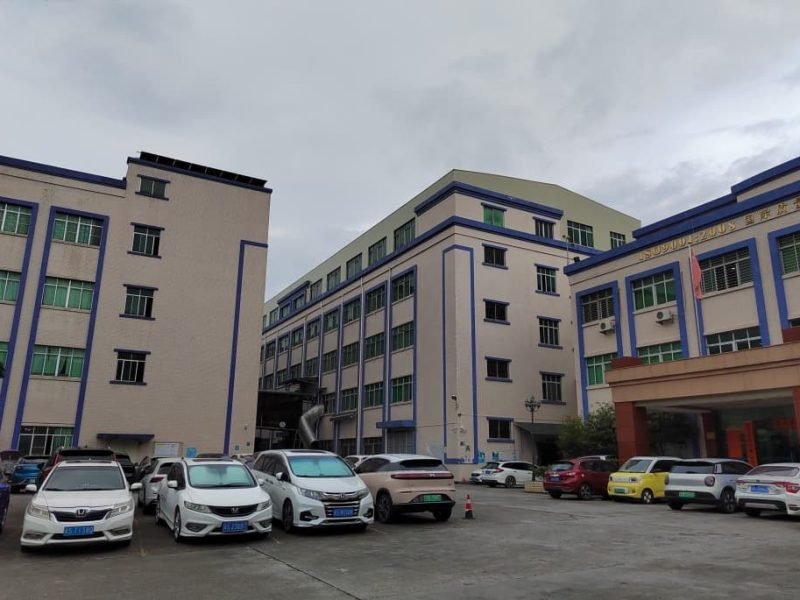
- 3 production buildings covering approximately 20,000 m², with around 1,120 employees supporting development, manufacturing, finishing and quality operations.
- 6 sample rooms, 48 pattern makers and 60 sample makers support parallel style development and fit revisions across multi-SKU programs.
- Approximately 80 sewing lines and 640 Brother sewing machines support normal monthly production of around 180,000-200,000 pieces, depending on product mix.
- Proven core categories include dresses, tops, bottoms, swimwear and coordinated sets, supported by centralized development and controlled specialist resources.


A Dongguan Factory Built for Women’s Collections
Real Manufacturing Base
Our manufacturing base is located in Humen, Dongguan, Guangdong, with three production buildings covering approximately 20,000 m2. Development and production work is organized around pattern making, sampling, material coordination, cutting preparation, sewing, finishing, inspection and packing. Around 1,120 employees support the wider operation. Factory scale is useful only when it connects to project execution, so production information is tied to actual categories, sample readiness, line planning and quality gates rather than used as a stand-alone claim.
One Managed Production System
XZ Apparel does not present every process as in-house. Core women’s garment development and manufacturing are managed through our own production system, while selected knitwear, embroidery, certain printing and specialist fabric processes can be coordinated through long-term specialist partners. Specifications, development samples, approvals, production handoffs, incoming checks and final garment quality remain under XZ Apparel project control. For sourcing teams, the result is one development and production window with clear ownership instead of unclear subcontracting behind a generic factory claim.
Factory Facts for a Faster Supplier Review
Factory Scale
Sample System
Sewing Scale
Core Categories
Sourcing Network
Quality Coverage
Inside Our Dongguan Women’s Apparel Factory
Production Buildings
Cutting Preparation
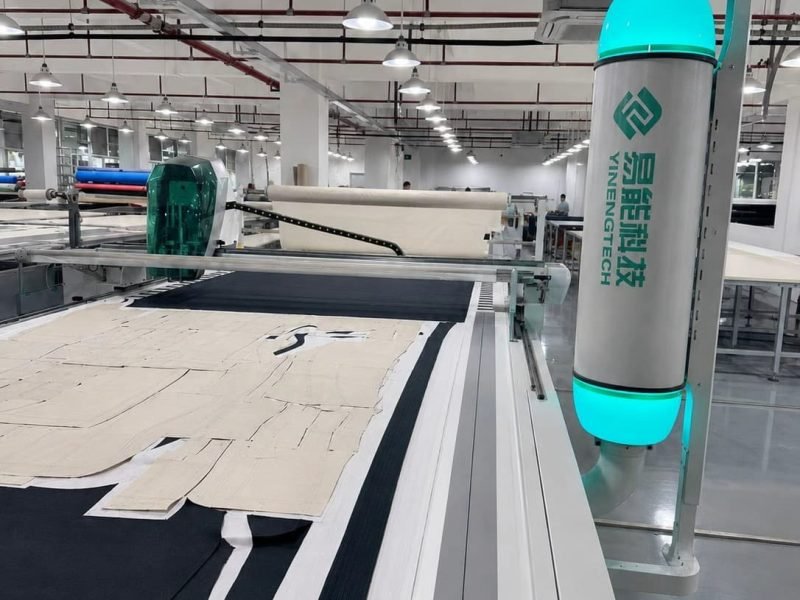
Cutting preparation begins only after the relevant pattern, material, color and production information are released.
Fabric condition, usable width, shade, shrinkage considerations and marker requirements can affect the cutting plan.
The objective is not speed alone; stable cutting creates the dimensional base needed for fit consistency, sewing alignment and accurate measurement later in the line.
Sewing Production
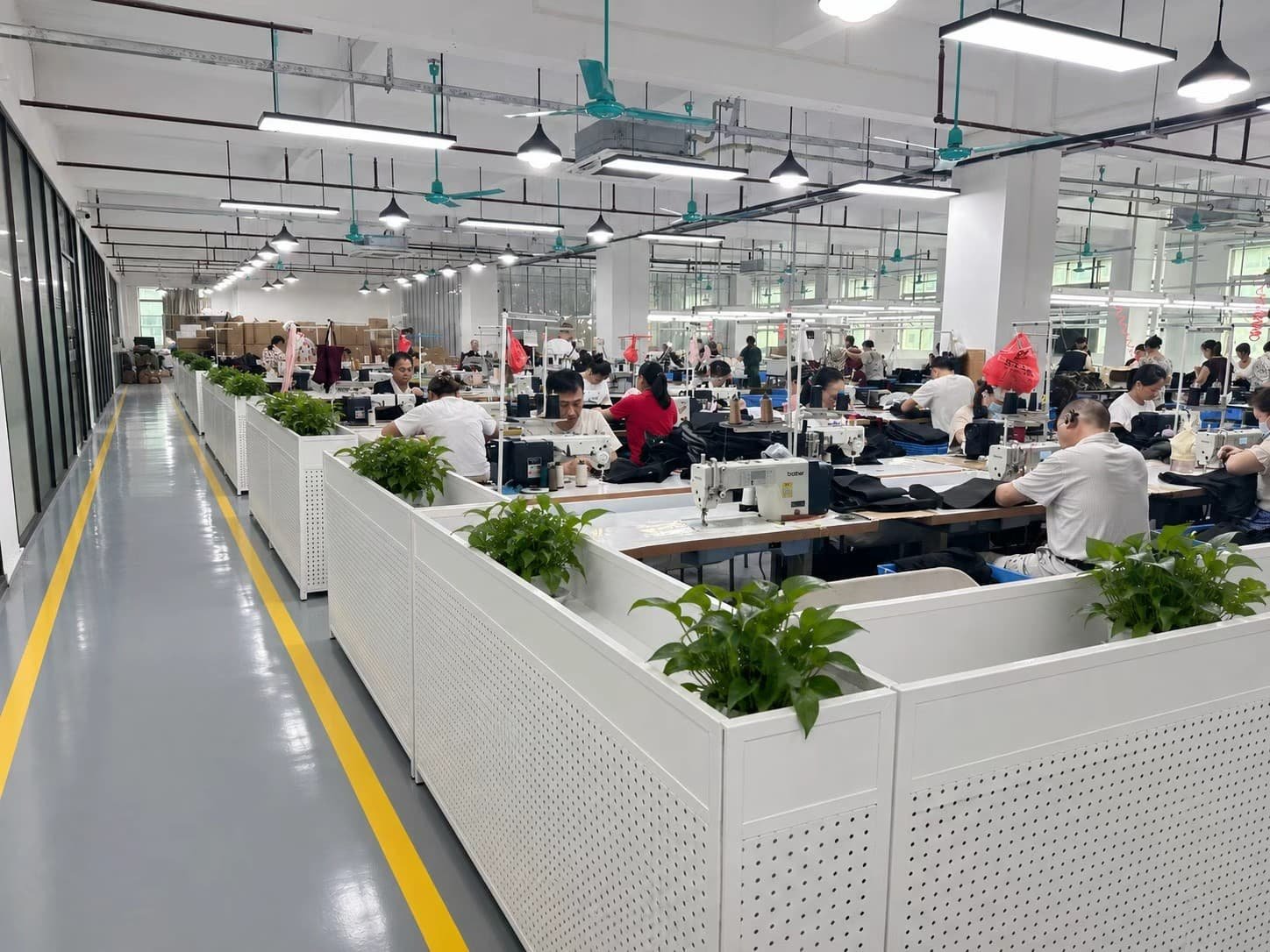
Approximately 80 sewing lines and around 640 Brother sewing machines support the main garment production platform.
Line planning considers product category, construction sequence, operation difficulty, order quantity and planned release dates.
A bodycon dress, lined woven top, swim style and coordinated set do not belong on the same sewing plan simply because total quantities are similar.
Finishing and Packing
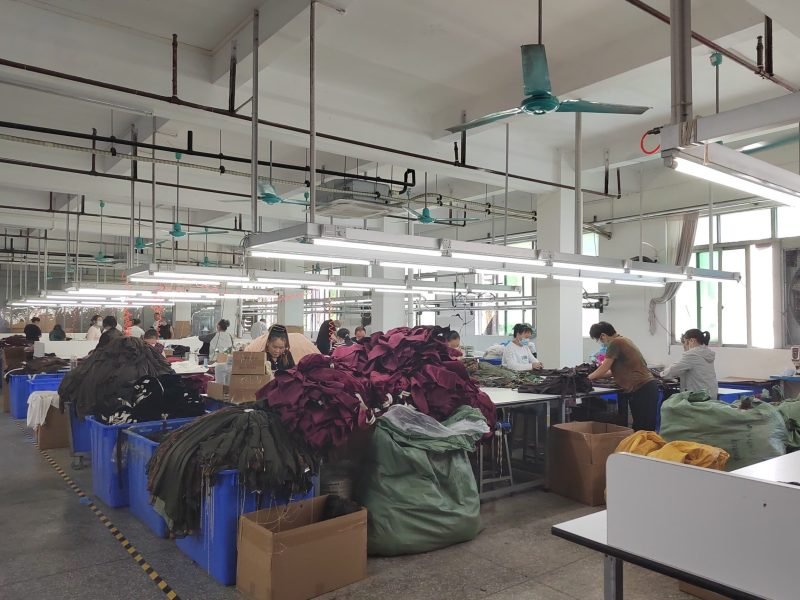
Finished garments pass through 100% finishing inspection before final and packing inspections. Loose threads, appearance, measurement concerns, labels, folding, packaging identity and carton information are checked against approved project requirements.
Packing is treated as the final production identity check for style, color, size and shipment information rather than a cosmetic step added after quality work is complete.
How Dongguan Supports Product Development
Fabric Sourcing Network
XZ Apparel regularly works with more than 30 fabric suppliers and can draw on the Humen, Dongguan and Guangzhou Zhongda sourcing ecosystem. Material selection begins with garment requirements such as drape, stretch, recovery, GSM, opacity, surface effect, color and wash behavior.
The sourcing route is therefore connected to a style brief instead of being treated as a separate fabric-shopping exercise.
Trim and Component Access
Specialist Process Coordination
Women’s Categories Developed for Commercial Collections

Dresses
Dresses are a proven core category covering fitted, draped, woven, stretch and occasion-led directions.
Development can involve bodice balance, bust shaping, waist placement, skirt volume, lining, zippers, boning, cups, slit control or decorative work depending on the design.
Fabric choice is reviewed against silhouette rather than trend name alone: satin needs seam and surface control, stretch jersey needs recovery, and fitted structured styles need enough stability to hold the intended shape through bulk production.

Tops and Blouses
Tops and blouses range from fitted knit silhouettes to woven shirts, corset-led constructions, lined fashion tops and lighter draped shapes.
Fit decisions often concentrate around neckline position, bust shaping, armhole balance, body length and closure choice. Fabric weight, stretch, transparency and seam behavior influence pattern and construction decisions early.
For repeated programs, approved neckline, body length and key POM references can be retained as development anchors while details and fabrics change across new seasonal styles.
Bottoms

Coordinated Sets
Coordinated sets are treated as a collection system rather than two unrelated garments.
Color and fabric lots, top-to-bottom proportion, size pairing, trim identity and packing logic all need coordination.
When tops and bottoms use different constructions or consumption levels, production planning also has to keep both pieces ready for shipment at the same time. The approach suits brands building repeated co-ord programs where consistent color, fit language and finishing matter across several related SKUs.
Swimwear and Resort
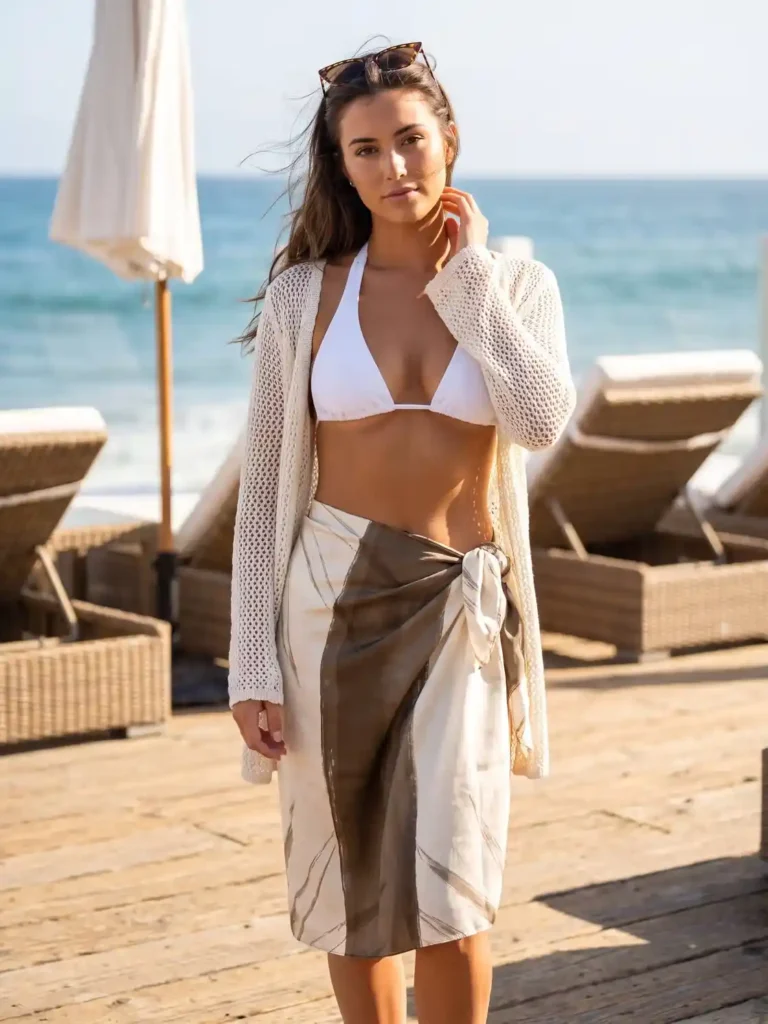
Swimwear is a proven core category and is reviewed through stretch and recovery, lining, opacity, elastic, support construction, coverage, torso balance and colorfastness rather than treated as ordinary stretch apparel. Bikini and one-piece development may require different negative ease, cup or support solutions, leg-opening control and lining choices.
Resort pieces can sit alongside swim programs, but fabric behavior, wet-use requirements and garment construction remain clearly separated during development and approval.
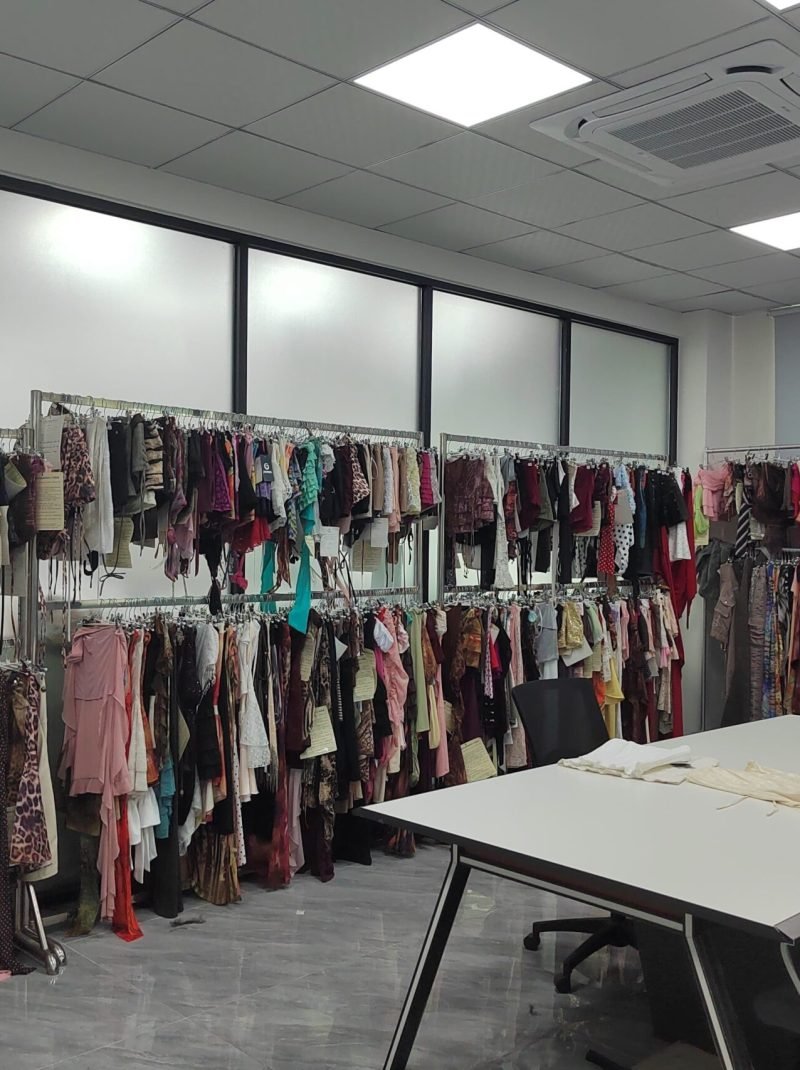
Selected Extended Categories
Know What Is Core, Established, Partner-Managed or Developing
Clear capability boundaries make factory qualification easier and prevent specialist partner resources or development-stage categories from being presented as identical to long-running core production.
| Capability Status | Product / Process Examples | Production Ownership | Meaning for a Project |
|---|---|---|---|
| Proven Core | Dresses, tops, bottoms, swimwear, coordinated sets | Core XZ Apparel manufacturing system | Established development and bulk-production routes; suitable for recurring commercial programs subject to style and material review. |
| Established | Sweatwear, activewear, shapewear | XZ Apparel capability used in selected programs | Suitable where project construction and material requirements match existing technical experience; reviewed style by style. |
| Specialist Partner | Knitwear, embroidery, certain printing and specialist fabric processes | Long-term specialist partner execution with XZ Apparel coordination | XZ Apparel manages specifications, samples, approvals, garment integration, production coordination and final garment QC. |
| Development | Selected outerwear, heavy winter and down directions | Development route, not presented as a core specialty | Feasibility depends on construction, insulation, materials and process requirements; project review is required before commitment. |
From Design Input to a Workable Development Brief

Reference Image

Tech Pack

Sketch or Garment

Size and Fit Input
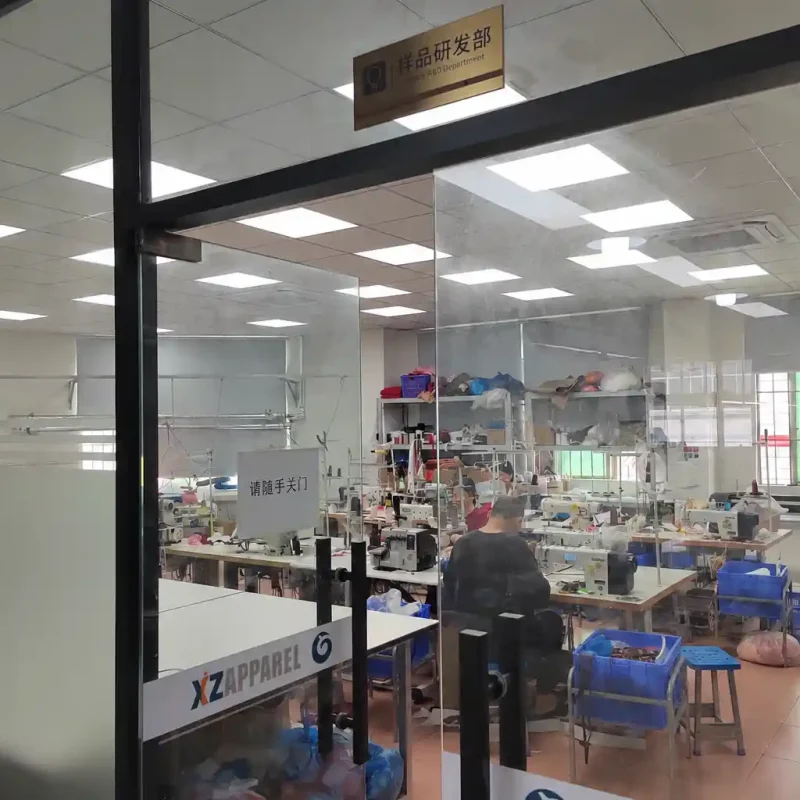
Sampling Capacity for Multi-SKU Women’s Fashion Development
Six sample rooms and dedicated pattern and sample teams allow several styles to move through pattern, sewing and revision work in parallel.

Pattern Development Before Sewing
Pattern development is where a design starts becoming measurable manufacturing information. XZ Apparel works with 48 pattern makers across the wider sample system, giving multi-style projects enough technical capacity to run several developments at the same time. The pattern review begins from the selected input – reference image, tech pack, sketch, physical sample or size chart – and translates the design into silhouette, balance, ease, length, key POM, seam position, internal support and construction allowances.
Fabric behavior is considered before the first sample wherever possible. A stretch jersey fitted top cannot use the same ease logic as a non-stretch woven top; satin drape affects seam placement and handling; swimwear requires negative ease, recovery, lining and elastic decisions; a corset-led dress needs the pattern to work with boning, cups, lining and closure placement. When those relationships are ignored, sample revisions become a sequence of visual corrections rather than controlled product development.
Normal simple samples are typically completed in around 3-5 working days once the necessary material and development information are ready. More complex samples typically require around 5-7 working days. Timing remains dependent on fabric, trims, special processes and the completeness of the brief. Pattern comments are recorded against the relevant size and construction point so later revisions can be traced to a specific fit or engineering decision rather than a vague visual preference.
Parallel Sample Making and Fit Review
Sixty sample makers work across six sample rooms, with normal output of approximately 45-60 samples per day and around 1,500-2,000 samples per month across the sample system. The numbers matter most when a collection contains many styles: dresses, tops, bottoms and sets can be released in controlled batches instead of forcing the whole range through one sample sequence.
Each sample is used to remove specific uncertainty. First samples establish silhouette, proportion, construction and material behavior. Fit reviews focus on body balance, key measurements, movement, neckline or armhole position, support and length. Revisions normally take around 2-3 working days when required materials and comments are ready. A revision is not treated as an automatic remake; comments are checked against measurements, pattern changes, fabric behavior and the approved design direction so one correction does not create a new problem elsewhere.
For larger programs, sample status can be separated by readiness. Styles with confirmed fabrics and clear fit comments can move toward approval while more complex styles continue revision. The goal is a controlled route toward PPS and bulk, not simply a high sample count. Approved measurements, material references and workmanship notes are carried forward so the production team receives a defined standard rather than only a finished sample hanging in the sample room.
Fabric and Trim Sourcing Built Around the Garment
Material sourcing is connected to silhouette, fit, construction and bulk continuity so a good-looking swatch can become a workable production specification.

Match Material to Silhouette
XZ Apparel regularly works with more than 30 fabric suppliers and uses the Humen, Dongguan and Guangzhou Zhongda sourcing ecosystem to compare options for women’s fashion development. Sourcing starts with the garment rather than the fiber name. A fitted top may need controlled stretch and recovery; a draped dress may require fluid handfeel without excessive seam distortion; swimwear needs stretch, recovery, opacity, lining compatibility and color performance; structured bottoms need enough body to hold the intended silhouette.
The team reviews composition, knit or woven construction, GSM, stretch, drape, opacity, surface character, color, shrinkage behavior and care expectations according to the design. When an exact requested fabric creates supply, minimum or lead-time problems, alternatives can be compared against the same design requirement instead of substituting only on price. For recurring programs, repeat-order continuity also matters: a fabric choice is stronger when its specification, supplier source and approval standard can be identified for future replenishment.
Material documentation is kept separate from factory certification. When recycled or certified-related fabrics are requested, supplier and material documents must match the relevant material and project scope rather than being treated as blanket factory claims. Bulk continuity is also reviewed early: color repeatability, supplier availability and the likelihood of future replenishment can be more important to a recurring collection than choosing the most visually attractive first swatch.
Control Trims Before Bulk
Trims can create hidden development and bulk risks even when the main fabric is straightforward. Zippers, buttons, elastic, lining, cups, underwire, boning, labels, hangtags and packaging components each have their own color, size, performance, supplier minimum and booking considerations. A custom metal component or special elastic can influence MOQ and timing more than the garment sewing itself.
Trim review therefore begins during development. The team checks visible design intent, functional purpose, attachment method, color matching, compatibility with the main fabric and repeatability in bulk. For supportive garments, cups, boning, elastic or lining are reviewed together with fit rather than added after the pattern is approved. For dresses and occasion-led styles, closures and decorative components are considered alongside seam allowance and internal structure so the garment can be assembled without distorting the intended shape.
Where a specialist process is involved – embroidery, selected printing or a special material effect – the execution partner, approval sample or strike-off, garment integration and final quality responsibility are defined before bulk release. Trim status is then tied back to the style schedule so a missing zipper, elastic or decorative component does not remain invisible until sewing is ready to start. Approved component references are recorded with color, size and attachment details so replenishment or repeat-order discussions can return to the same controlled specification.
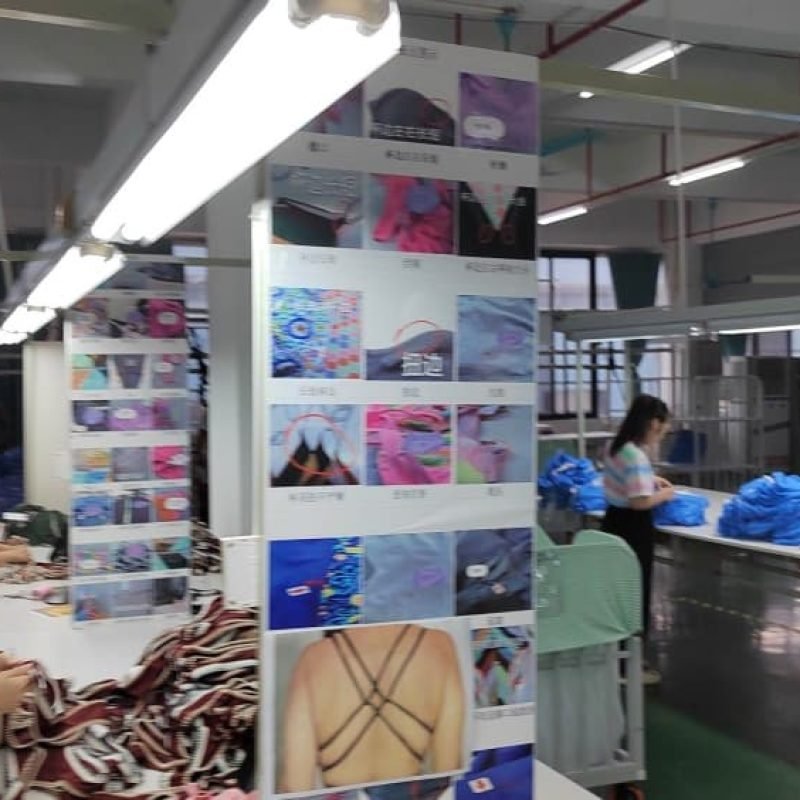
Material Checks Before Production Decisions Are Locked

Weight and Dimension

Color and Washing

Surface and Durability

Stretch, Print and Heat
Carry Approved Sample Standards Into Bulk Production

PPS Approval

Cutting Control
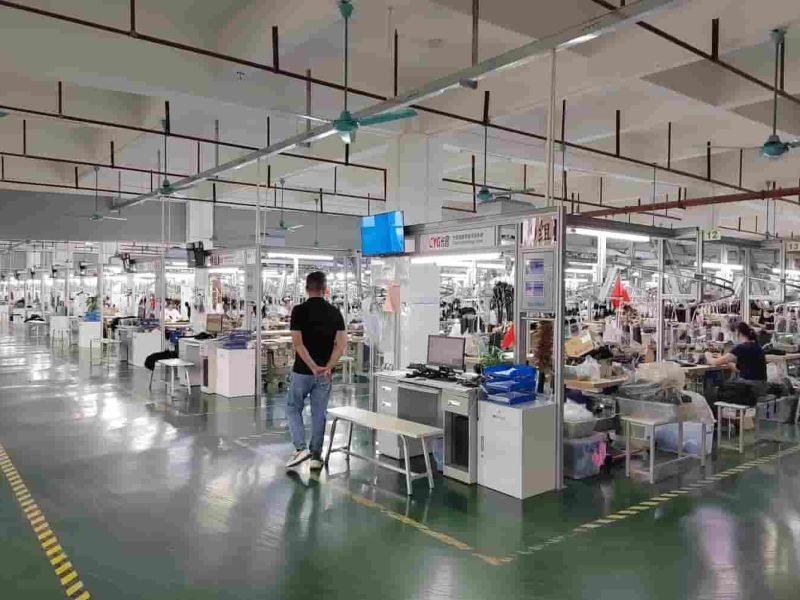
Sewing Control

Finishing Release
Garments move through measurement, 100% finishing inspection, final inspection and packing inspection before shipment release. The approved sample, measurement method, workmanship standard and packing instructions remain the reference points.
Final inspection is not expected to discover every production problem for the first time; earlier fabric, cutting and inline gates are designed to keep defects from accumulating until the end of the order. Packing release also confirms the correct style, color, size and project identity before cartons are closed for dispatch.
Quality Gates From Fabric Intake to Packing
Each quality gate protects a different production decision, allowing material, construction, measurement and packing issues to be corrected at the stage where action is still efficient.
| Quality Stage | Control Focus | Production Decision |
|---|---|---|
| Fabric Inspection | Fabric condition, width, shade, visible defects and relevant material checks | Release, segregate, replace or review material before cutting. |
| Pre-Production Meeting | Approved sample, specifications, construction, measurements, trims and risk points | Align line, QC and production teams before bulk starts. |
| Cutting Inspection | Pattern release, panel accuracy, shade and style/color/size separation | Confirm cut components are suitable for sewing. |
| Inline QC | Sewing workmanship, alignment, construction and critical operation issues | Correct process problems while production is running. |
| Measurement Inspection | Key POM and agreed measurement method | Identify dimensional drift before finishing. |
| 100% Finishing Inspection | Appearance, workmanship, loose threads, labels and finishing condition | Rework or hold garments before final release. |
| Final Inspection | Overall conformance to approved project standards | Decide shipment readiness or corrective action. |
| Packing Inspection | Style, color, size, packaging identity and carton information | Confirm finished order identity before dispatch. |
Capacity Planning for Multi-SKU Women’s Collections
Normal Monthly Output
- Normal range: approximately 180,000-200,000 pieces/month
- Higher output: up to approximately 220,000 pieces depending on product mix
Line Allocation by Mix
Approximately 80 sewing lines provide room to allocate different products according to construction and operation sequence.A simple jersey top, lined dress, structured bottom and swim style use different labor content and quality checkpoints, so equal quantities do not mean equal capacity consumption. Line planning looks at operation difficulty, batch size, planned start date and finishing requirements before confirming how several styles can run within the same program window.
- Around 80 sewing lines
- Around 640 Brother sewing machines
Parallel Development Support
Large collections often become delayed before sewing because too many styles reach material, fit and approval gates at different times. Six sample rooms, 48 pattern makers and 60 sample makers support parallel development, allowing ready styles to progress while complex styles continue revision. Production planning can then follow real readiness instead of holding every SKU until the slowest development is complete.
- Approx. 45-60 samples/day across the sample system
- Approx. 1,500-2,000 samples/month
MOQ and Timing Depend on Project Readiness
Standard Garment MOQ
The standard garment MOQ is 200 pieces per style per color, with sizes reasonably mixed within the same style and color.
The garment MOQ does not override fabric, trim or specialist-process minimums.
Custom-dyed fabric, exclusive components, hand embellishment, special printing or supplier setup can raise the workable threshold, so final feasibility is reviewed from the complete style rather than the sewing quantity alone.
- Baseline: 200 pcs/style/color
- Final structure: subject to fabric, trim and process review
PPS and Bulk Timing
PPS normally takes around 4-5 working days once required materials, specifications and approvals are ready.
Bulk production is typically around 25-35 working days after material readiness, PPS approval and final detail confirmation.
Timing is therefore linked to a release condition rather than counted from the first inquiry. Programs with many SKUs can also use staged approvals so ready styles enter production without waiting for unresolved styles.
- PPS: typically 4-5 working days after readiness
- Bulk: typically 25-35 working days after readiness and approval
What Changes Timing
Material booking, custom color, trim development, complex construction, specialist process windows, size and SKU mix, testing requirements and peak production loading can all change the schedule. A realistic delivery plan is built after the critical path is visible. For sourcing teams, the most useful input is not only a target shipment date; style count, quantity, files, fabric status and sample or PPS target dates allow the production team to identify schedule risks before commitment.
- Key inputs: style count, quantity, material status and required delivery window
- High-impact risks: custom materials, specialist processes and incomplete approvals
A Multi-SKU Order Profile for Fast-Moving Collections
A representative program profile shows how style count, quantity, materials, approvals and production allocation can be managed without treating every SKU as a separate project.
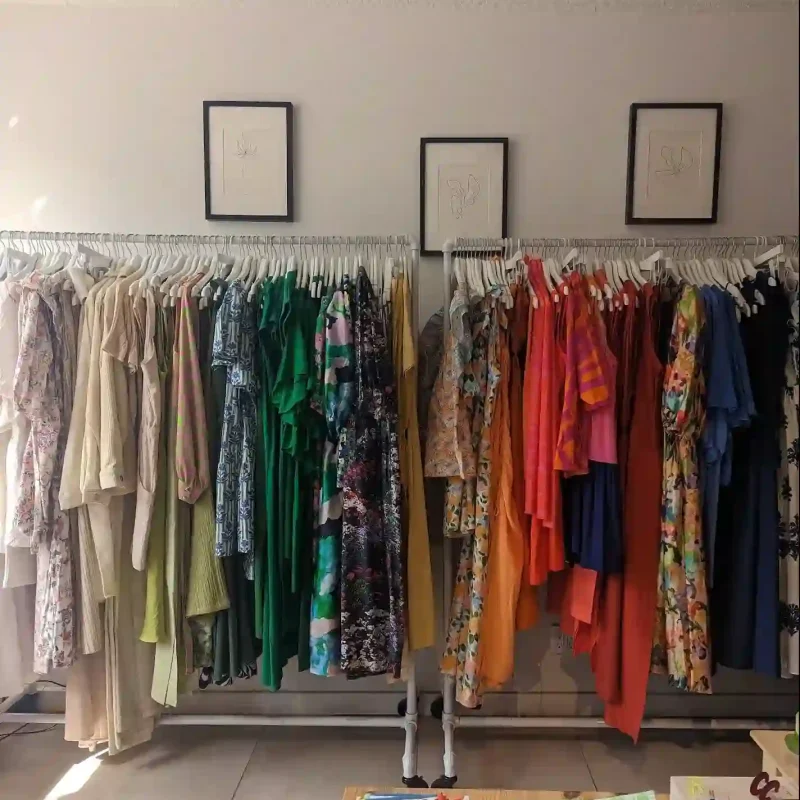
Representative Program: 18 Styles, 42,000 Pieces
A typical recurring order profile within our current brand programs can sit inside the 10-30 style range and 20,000-80,000 total-piece range. One representative planning model uses 18 women’s styles and 42,000 total pieces across dresses, tops, bottoms and coordinated sets. The commercial challenge is not the average quantity per style; the harder work is keeping fit, fabric, trim, color and release status organized while several styles move at different speeds.
Development can be split into controlled groups. Styles using confirmed fabrics and familiar constructions move into pattern and first-sample work first. More complex fitted dresses, new trims or special surface details can follow a separate review path. Six sample rooms and the 48-pattern-maker / 60-sample-maker system allow several styles to progress in parallel instead of waiting for one complete collection batch.
Material planning is then grouped where possible. Styles sharing a fabric family, lining, elastic, zipper standard or packaging format can be coordinated for color and supplier continuity, while styles with unique components remain separately tracked. PPS release follows actual readiness. A style with approved fit and materials can move toward production while another style remains in revision, reducing avoidable idle time across the overall program.
For bulk, sewing allocation is based on construction and line suitability rather than simply dividing 42,000 pieces by 18 styles. Quality controls remain tied to the approved sample, measurements and workmanship standard for each SKU. Packing identity is checked by style, color and size before dispatch. The result is a collection-managed production approach designed around many related SKUs, not one large single-style order.
Who Our Dongguan Manufacturing System Fits Best
Fashion Brands
Production-ready fashion brands often need several styles developed within one seasonal or recurring collection.
XZ Apparel is suited to programs where fit, material, construction, sample approvals and bulk consistency matter alongside speed. Multi-category capability allows dresses, tops, bottoms, sets and swimwear to be coordinated through one development and manufacturing system while each product keeps its own technical requirements.
Retail and Buying Teams
Designer-Led Commercial Labels
Evidence Your Sourcing Team Can Review

Factory and Production
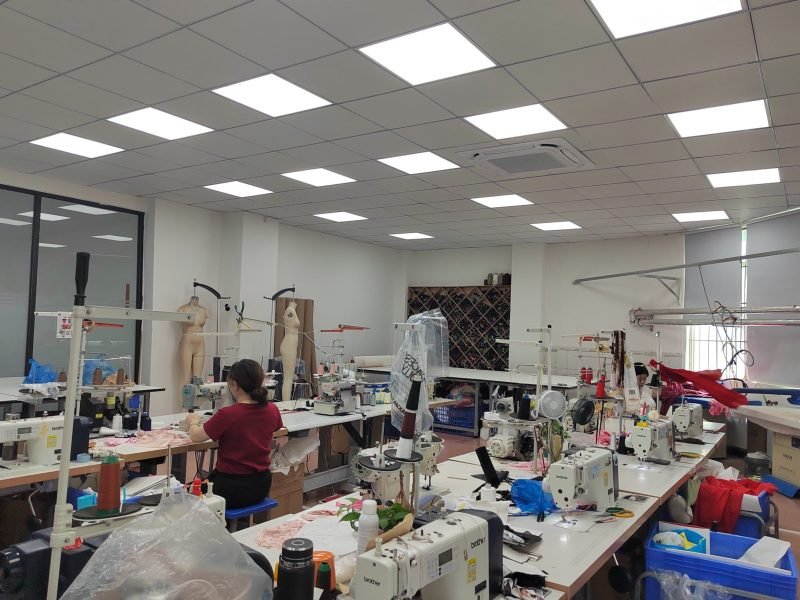
Factory evidence can include the three-building Dongguan manufacturing base, production areas, sewing lines, finishing areas and packing operations.
Scale information such as approximately 20,000 m2, around 1,120 employees, approximately 80 sewing lines and around 640 Brother sewing machines can be reviewed alongside real production areas. Facility size is used to verify manufacturing reality, not to claim quality by itself.
Sample and Pattern

Quality Records
Quality evidence can include fabric inspection records, pre-production review, inline findings, measurement checks, finishing inspection and final or packing inspection records where appropriate for the project.
Records should be tied to the relevant style, batch or production stage.
A photo of an inspection area proves the activity exists; it does not replace the approved measurement method, test result or quality record needed for a specific claim.

Audit and Project Documents
Frequently Asked Questions About Our Dongguan Factory
- Dresses, tops, bottoms, swimwear and coordinated sets are proven core categories.
- Activewear, sweatwear and shapewear are established capabilities for selected programs.
- Knitwear, embroidery and certain printing or specialist fabric processes may use long-term specialist partners under XZ Apparel coordination.
- Selected outerwear and heavy winter directions remain development categories and are reviewed individually before commitment.
- Simple samples typically take around 3-5 working days once the required material and development information are ready.
- More complex samples typically take around 5-7 working days.
- Revisions are normally around 2-3 working days.
Send Your Women’s Apparel Project for Factory Review
A useful factory review starts with enough information to understand product complexity, material readiness, quantity structure and the delivery path. Send the files already available; a complete tech pack is helpful but not required for every development route. Our team can review reference images, sketches, physical-sample photos, size charts and technical files, then identify the missing decisions needed before sampling, quotation or production planning.
Please include:
- Product category and number of styles
- Quantity by style, color and size range
- Reference images, sketches, tech packs or sample photos
- Fabric composition, GSM, stretch, drape or surface requirements when known
- Trims, lining, closures, support construction, print or embellishment details
- Target market and any quality, testing or document requirements
- Sample target date and required bulk delivery window
- Packaging, labels, hangtags or carton requirements if already defined
The review is used to clarify feasibility, sample route, material risks, workable MOQ, timing dependencies and the information required for the next commercial step.