Skip to content

Women's Apparel Production Capacity and Line Allocation
Capacity planning for multi-style women’s collections, with production lines assigned by garment complexity, volume, readiness, and required delivery window.
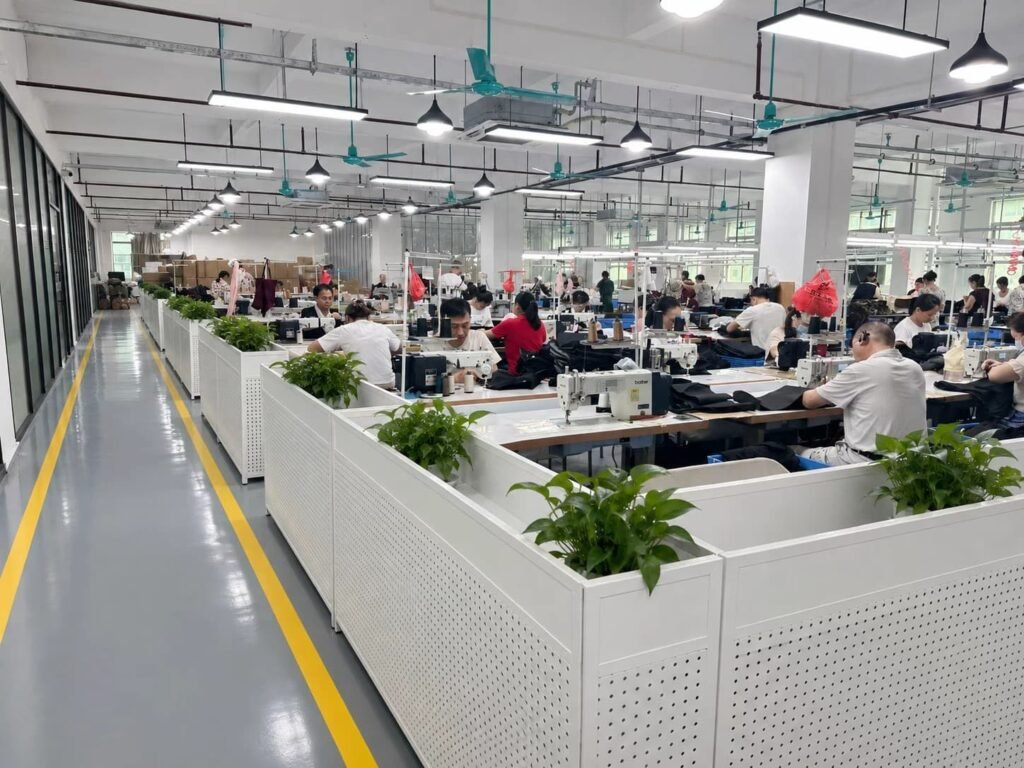
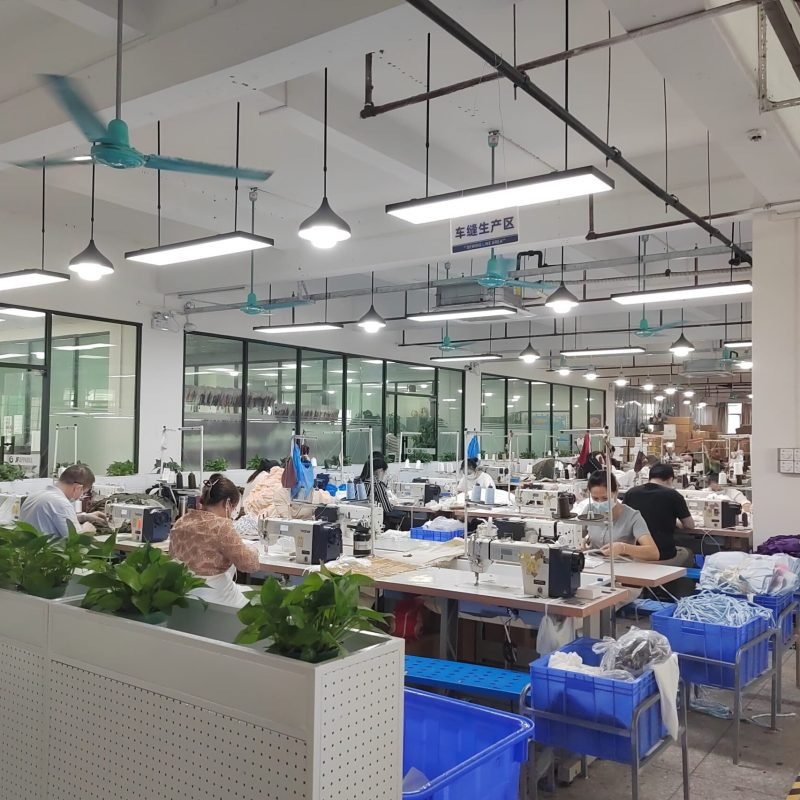
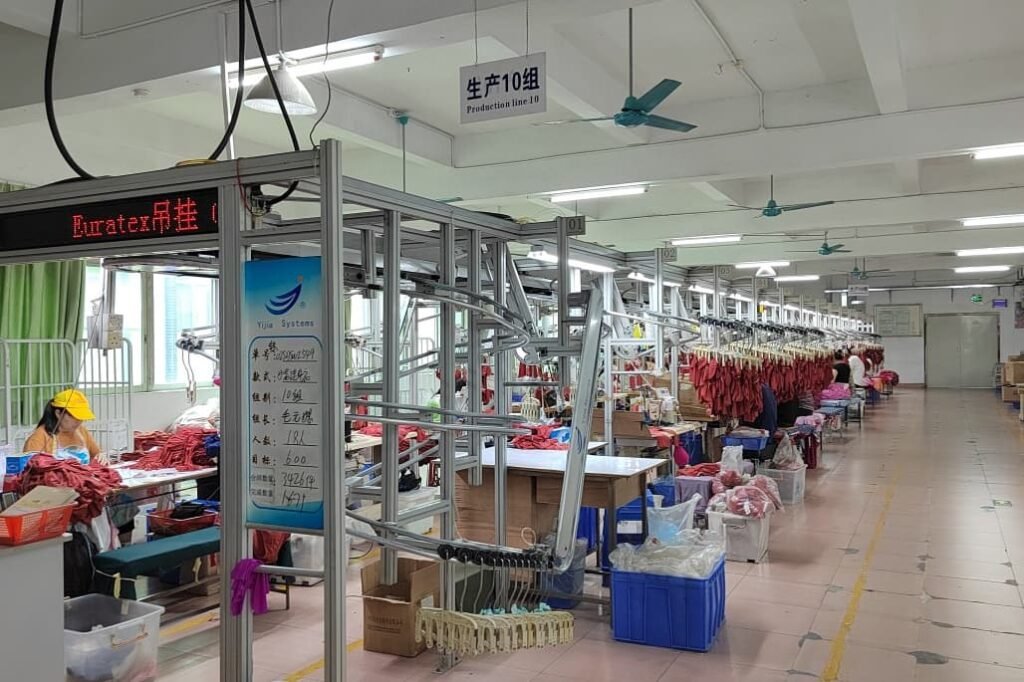
- XZ Apparel operates 8 sewing workshops with approximately 80 sewing lines for multi-style and multi-order production planning.
- Normal finished output is approximately 5,000-7,000 pieces per day and 180,000-200,000 pieces per month; output can reach about 220,000 pieces depending on product mix.
- Line allocation is reviewed against style complexity, quantity, material readiness, approval status, specialist process windows, and the required production window before bulk scheduling is confirmed.


How Factory Capacity Becomes Order-Level Manufacturing Capacity
Factory Capacity
Factory capacity describes the manufacturing system as a whole: workshops, lines, machines, labor, cutting, quality control, finishing, packing, and supporting development resources.
XZ Apparel uses this level to understand the scale of work the manufacturing system can carry across multiple programs. It should not be read as a promise that every line is open for a new order on the same date. Existing production, product mix, material status, approved standards, and delivery commitments all affect usable capacity.
Allocated Capacity
XZ Apparel Capacity Facts Used in Production Planning
Manufacturing Footprint
Workforce Scale
Sewing Equipment Base
Development Throughput
Six sample rooms, 48 pattern makers, and 60 sample makers provide development capacity before bulk production begins. The value for larger programs is not only sampling speed; parallel pattern, sample, revision, and PPS work helps prevent approved production standards from becoming the bottleneck when many styles are planned for overlapping launch windows. A line should not be released simply because sewing capacity exists while technical approvals remain unresolved.
Material Network
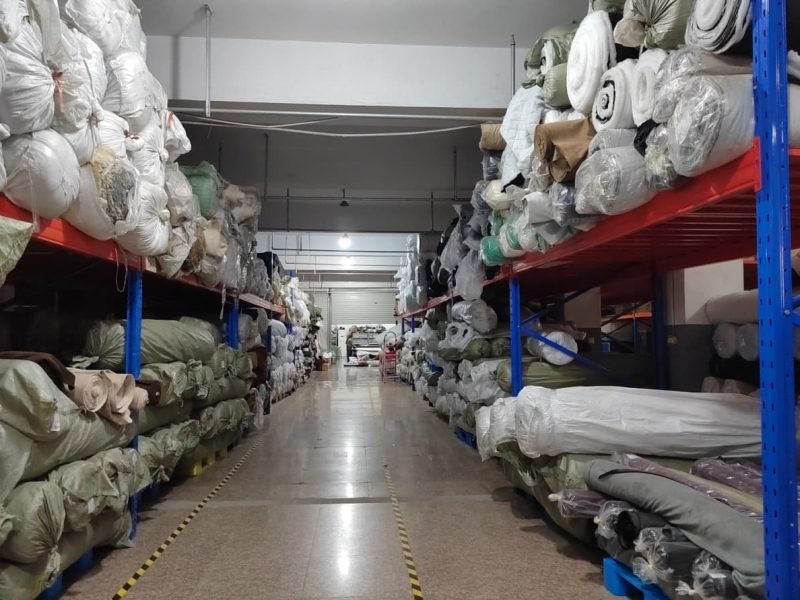
XZ Apparel regularly works with more than 30 fabric suppliers, supported by a broader trim and specialist-process network.
Material sourcing breadth matters to production capacity because missing bulk fabric, delayed trims, or unapproved components can leave a scheduled line waiting.
Capacity planning therefore links material readiness with production release rather than treating sourcing and sewing as separate schedules.
Daily Output Baseline
Normal finished output is approximately 5,000-7,000 pieces per day across the manufacturing system. Daily output varies with style mix, operation content, line loading, changeovers, fabric behavior, process steps, quality requirements, and order sequence.
The range is most useful as a scale reference for program planning. Order-level output should be reviewed from the actual style and delivery brief instead of applying one fixed pieces-per-day figure to every garment.
Three Capacity Levels Matter Before Production Is Scheduled
Nominal Capacity
Nominal capacity is the manufacturing system’s normal operating scale. For XZ Apparel, normal monthly finished capacity is approximately 180,000-200,000 pieces, with output up to approximately 220,000 pieces depending on product mix.
The figure helps brands understand overall factory scale, but it cannot answer which lines are free, whether the target product fits those lines, or whether material and approval gates are complete. It is a qualification signal, not an order commitment.
Available Capacity
Allocated Capacity
Manufacturing Scale Matters Only When Resources Work Together
Factory scale creates options, but coordinated development, production, quality, and delivery functions determine whether those options become usable capacity for a women’s apparel program.

Scale Supports Parallel Women's Programs
Approximately 80 sewing lines across 8 workshops give XZ Apparel room to plan different women’s apparel orders in parallel, but the value is not simply the number of lines. Dresses, tops, bottoms, sets, and swimwear can have very different work content even when order quantities look similar. A lined dress with an invisible zipper, shaped panels, boning, ruching, or placement-sensitive details places a different load on sewing and quality control from a simpler top. Sets add coordination between two garments, while swimwear adds stretch handling, elastic, lining, and fit-sensitive operations.
Production planning therefore starts with the garment work content and program structure. Product categories, construction details, quantity concentration, material status, process steps, and required delivery windows are reviewed before a line plan is treated as realistic. The same monthly factory capacity can support very different numbers of styles depending on how work is distributed. A concentrated order with repeat construction can be loaded differently from a fragmented program containing many styles, colors, approvals, and special processes.
For sourcing teams, the useful capacity question is not “How many pieces can the factory make?” It is “How much suitable capacity can be assigned to our approved style mix within the required window, and what conditions must be met before production starts?”
Development Capacity Protects Bulk Capacity
Production can lose time before sewing begins. In a multi-style collection, unresolved fit comments, missing POM details, late fabric decisions, unapproved trims, incomplete artwork, or pending PPS approval can block line release even when a sewing workshop has room. XZ Apparel’s six sample rooms, 48 pattern makers, and 60 sample makers provide a development layer capable of handling many styles and revisions in parallel. The planning value comes from moving more styles toward an approved bulk standard without forcing production to work from incomplete information.
A strong capacity plan therefore tracks two different forms of readiness: manufacturing resources and product readiness. Pattern and sample teams work toward approved fit, construction, materials, measurements, and production references. Sourcing teams work toward bulk fabric, trims, and process approvals. Production management then schedules lines against styles that can realistically reach the required release gate. When development and production are planned as one chain, open sewing time is less likely to be wasted waiting for missing decisions.
This approach is especially important for seasonal collections where several styles may share launch dates but sit at different approval stages. Capacity is protected by sequencing styles according to readiness and commercial priority instead of pushing every SKU toward the same production start date.


Capacity Numbers Always Need Conditions
Normal monthly capacity of approximately 180,000-200,000 pieces and output up to approximately 220,000 pieces depending on product mix describe the scale of XZ Apparel’s manufacturing system. Those numbers should never be converted into a simple formula such as monthly capacity divided by order quantity equals guaranteed lead time. Women’s apparel programs contain too many variables for that shortcut to be reliable.
The production window changes with style count, construction complexity, color fragmentation, material availability, special processes, inspection requirements, packaging, current line loading, and the speed of approvals. Order sequencing also matters. A style entering a stable production run has different output behavior from a new style during initial line setup and balancing. A line that is technically open may not be the right line if the equipment mix, operator experience, or surrounding schedule does not suit the product.
For this reason, XZ Apparel treats capacity review as a dated production-feasibility exercise. Brands receive a more useful answer when they provide the SKU matrix, quantities, technical files, material status, process requirements, and required delivery windows.
The production team can then review suitable routing and planning conditions instead of relying on a general factory-capacity statement.
Capacity Fit Depends on More Than Order Quantity
A quantity can look easy on paper and still create a difficult production plan. Feasibility becomes clearer when volume is reviewed together with product, readiness, timing, and process variables.
| Planning Input | What Production Reviews | Capacity Impact | Needed Before Scheduling |
|---|---|---|---|
| Product mix | Dresses, tops, bottoms, sets, swimwear, established activewear/shapewear | Different operation content and line suitability | Category and construction details |
| Style count | Few concentrated styles or many fragmented styles | More styles increase setup, changeover, tracking, and approval coordination | Style list and priority |
| Quantity structure | Pieces by style, color, and size | Determines loading depth and whether volume is concentrated or fragmented | Final quantity matrix |
| Construction | Lining, zipper, elastic, boning, cups, panels, special seams | More complex operations can change line balance and daily output | Tech pack, reference, or sample |
| Material readiness | Stock, custom, dyed, printed, or pending approval | Missing materials can delay bulk release even if sewing capacity exists | Bulk fabric and trim status |
| Specialist process | Embroidery, certain printing, special treatments | Adds partner windows, sample approvals, transport, and QC handoffs | Process spec and approved sample |
| Approval status | First sample, revision, size set, PPS | Unresolved approvals can block production release | Approved production standard |
| Delivery plan | One shipment, drops, split delivery, reorder | Changes sequencing and resource reservation | Required delivery windows |
Line Allocation Starts With the Work Inside Each Style
Production lines are assigned from the garment work content, order structure, readiness, and timing. The goal is a stable production route, not the fastest-looking start date.

Start With Garment Work Content
Women’s apparel line allocation begins by understanding what must physically happen to the garment. Category names alone are not enough. Two dresses can require completely different production routes: one may be a simple stretch mini with a limited number of operations, while another may include lining, shaped panels, boning channels, an invisible zipper, cups, draping, or placement-sensitive decoration. Similar differences appear between basic tops and structured tops, simple bottoms and tailored bottoms, or one-piece swimwear and styles with support, lining, elastic, and multiple panel joins.
The first planning task is therefore to translate the approved product into operation content, handling difficulty, quality-critical points, and any special equipment or process requirements. Production management can then judge which sewing resources are suitable and where the style fits within the current schedule. A line should not be selected only because it becomes free first. Poor product-line fit can create slower learning, unstable work balance, higher WIP, more rework, and a daily output below the planning assumption.
For large collections, similar styles may be grouped where doing so reduces repeated setup and makes skill transfer easier, while styles with very different construction may need a separate sequence. The goal is to build a realistic loading plan around garment behavior rather than forcing every SKU into one standard pieces-per-line model.
Match Volume to the Production Window
Quantity changes the way a line should be used. A deep order concentrated in one or two repeat styles may justify a longer stable run. The same total quantity split across many styles, colors, and delivery drops creates more starts, stops, material checks, version control, line setup, and quality handoffs. Capacity planning therefore reviews quantity by style and color, not only the program total.
Delivery timing adds another layer. A 30,000-piece program required in one narrow shipment window is not equivalent to 30,000 pieces released across several planned drops. If several styles share a launch date, the production team needs to examine which styles can run in parallel, which can follow one another, and which depend on the same fabric, trims, process partner, finishing route, or QC resources. The plan should also account for the time needed to stabilize a new style before assuming full running output.
When brands provide an accurate style-color-quantity matrix and required delivery windows early, capacity can be reviewed against the real load. Without that structure, a monthly factory number gives little visibility into whether the right resources are available at the right time.

Release Lines Only When Inputs Are Ready
A planned line is useful only when the product can be released into production. XZ Apparel links capacity planning with material readiness and approval gates. Bulk fabric and trims need to be identified and ready for the planned sequence. Final construction, measurement standards, artwork or process approvals, PPS, packaging instructions, and quality requirements must be sufficiently controlled for production to work from one approved version.
Starting early with incomplete inputs can create the opposite of speed. A line may begin, stop for missing information, restart after changes, or produce work that requires sorting and repair. On multi-SKU programs, one unclear instruction can affect several styles if they share a material, trim, print, packaging component, or approval owner. Production release therefore depends on readiness rather than a calendar date alone.
If one style slips, the schedule may need to be resequenced around another style that has completed the required gates. The ability to resequence is one reason multi-line capacity matters, but flexibility still depends on product-line suitability and downstream resources. Capacity planning is strongest when development status, material status, process status, and line planning are reviewed together.
Plan Exceptions Before Sewing Starts
Production schedules become fragile when every assumption depends on perfect timing. A stronger plan identifies where delays or conflicts are most likely before the order reaches the line. Common pressure points include late fabric, shade or lot issues, pending PPS comments, specialist-process approvals, packaging changes, overlapping delivery windows, and a style becoming more complex after quotation or sampling.
Production planning should therefore include decision points for resequencing, split releases, alternative material timing, revised delivery priorities, or additional review where the original plan changes materially. A style that was quoted and planned as a simple construction should not remain on the same capacity assumption if later revisions add lining, hardware, handwork, extra panels, or a process step. The same principle applies when quantities change sharply or delivery dates move forward.
The purpose is not to promise that schedules never change. The purpose is to make the conditions visible so changes can be managed before they spread into multiple lines, quality checkpoints, packing plans, or shipment windows. Brands gain more reliable delivery planning when capacity commitments stay connected to the approved product and current production brief.

Six Variables Shape Every Line Allocation Decision
Product and Construction
A product category gives the first clue, while construction determines the real work content. Lining, zippers, elastic, boning, cups, multiple panels, draping, binding, topstitching, or difficult fabric handling can alter operation sequence and line balance. Production review should therefore use an approved tech pack, reference, sample, or construction brief rather than assigning capacity from a style name alone.
- Define the garment structure before line loading.
- Flag quality-critical operations early.
- Separate core sewing from specialist-process needs.
Quantity Concentration
- Show quantity by style and color.
- Identify hero styles and smaller support styles.
- Mark any planned split shipments or replenishment.
Material Readiness
Bulk fabric and trims can become the real production constraint. A scheduled line cannot run efficiently if fabric arrives late, shade lots are unresolved, trims are short, or a custom component is still awaiting approval.
Production planning should connect line start dates to material readiness rather than assuming sourcing will automatically catch up with the sewing schedule.
- Confirm bulk fabric status and lot identity.
- Confirm critical trims and components.
- Link material release to the intended production sequence.
Approval Status
First sample, fit revision, size set, artwork, process samples, PPS, labeling, and packaging approvals can sit at different stages across one collection. A style still under revision should not be treated as equally ready to load as a style with a controlled PPS and finalized materials.
Capacity planning therefore needs a live status view across the full SKU matrix.
- Show the current sample or PPS stage.
- Lock the approved version before bulk release.
- Flag open comments with an owner and due date.
Specialist Process Window
Embroidery, certain printing, and selected specialist treatments are managed through long-term specialist partners rather than being represented as universal in-house capacity.
The production plan needs to account for process sample approval, material movement, partner timing, return timing, and garment-level QC before final assembly or finishing can continue.
- Confirm ownership of every specialist step.
- Approve strike-off or process sample before bulk.
- Build the external process window into the line plan.
Delivery and Release Window
- State the required completion or handover window.
- Mark styles that must ship together.
- Identify which dates are fixed and which have flexibility.
Product Mix Changes the Capacity Needed for Bulk
Women’s apparel cannot be planned with one universal pieces-per-line assumption. Different product families create different handling, operation, fit, material, and quality demands before a line plan is finalized.
| Product Family | Line Planning Focus | Capacity Sensitivity | Pre-Bulk Check |
|---|---|---|---|
| Dresses | Lining, zipper, panels, drape, support, embellishment, hem finish | High when structured or detail-heavy | Approved construction, fit, fabric behavior, PPS |
| Tops | Fabric handling, neckline/armhole finish, closures, shaping, surface details | Low to high depending on structure | Stable pattern, seam method, trim and artwork approval |
| Bottoms | Waistband, closure, pockets, rise, stretch, pressing | Medium; increases with tailoring and hardware | Fit, zipper/button spec, waistband method, measurements |
| Sets | Two garments must remain coordinated in color, handfeel, timing, and packing | Higher coordination load across styles | Shared fabric/trim status, top-bottom shade control, pack plan |
| Swimwear | Stretch handling, lining, elastic, support, recovery, fit-sensitive seams | High when support or multiple panels are involved | Fabric/lining/elastic approval, fit, measurement, test plan |
| Activewear / Shapewear | Stretch, recovery, compression, seam extensibility, support zones | Established capability; technical review required | Material performance, fit, structure, process and quality plan |
Style Color and Size Structure Changes Production Load
Deep Volume Per Style
- Confirm quantity by color and size.
- Identify any planned replenishment quantity.
- Keep version and material lot control consistent through the run.
Many Styles Same Total
- Provide a clear SKU priority order.
- Mark styles sharing fabric, trims, or processes.
- Keep approval status visible across all styles.
Multiple Colorways
- Confirm final color list before material booking.
- Identify colors using the same fabric and trims.
- Flag any color-specific print, hardware, lining, or packaging requirement.
Size Ratio Complexity
- Supply the approved size chart or POM specification.
- Confirm quantity by size.
- Identify styles requiring additional size-set or grading review.
Multi-SKU Programs Need One Connected Production Plan
Seasonal drops become harder when development, materials, approvals, production lines, specialist processes, and packing move on separate schedules. One program plan keeps those dependencies visible.

Build a Launch-Centered SKU Matrix
A multi-SKU program should begin with a structured matrix rather than a list of style names. Each row needs enough information for development and production teams to understand category, color, size range, quantity, fabric, key trims, special processes, current approval stage, target completion window, and launch priority. The matrix creates a shared planning language across merchandising, technical, sourcing, production, QC, and packing teams.
Commercial priority matters because not every style carries the same role. Hero products, campaign styles, matching sets, replenishment styles, and support SKUs may need different sequencing. A late support style should not automatically consume the same escalation effort as a launch-critical hero style, while two pieces designed to sell as a coordinated set may need to remain synchronized. The matrix makes those relationships visible before line loading begins.
For XZ Apparel, the value of approximately 80 sewing lines is strongest when the SKU structure is clear enough to plan parallel and sequential work. Line count alone does not solve a fragmented program. The production team still needs approved product information and a priority structure to decide what should start, what should follow, and what should wait for a missing dependency.
Use Shared Materials Without Hiding Risk
Shared fabrics, trims, colors, and packaging can simplify a collection, but only when the relationship is controlled. Several tops, skirts, and dresses may use the same base fabric or lining, allowing material booking and shade control to support multiple SKUs. Sets may share fabrics and trims by design. Repeated zippers, labels, buttons, elastic, hangtags, or packaging components can also reduce unnecessary supplier fragmentation.
Material sharing should not be treated as an automatic shortcut. Two styles using the same fabric can still require different stretch direction, cutting layout, lining, interfacing, seam method, finish, or consumption. A shared material that fails a required bulk check can affect several styles at once. For this reason, common material planning should include style applicability, lot identity, approval status, consumption assumptions, and any construction-specific condition.
The production benefit appears when common materials are booked and released with enough visibility to support the intended line sequence. The risk appears when a shared material becomes a single point of failure across many SKUs. A good collection plan recognizes both sides and keeps alternatives or sequencing options visible before delivery dates become compressed.

Reserve Capacity Around Milestones
Large programs are more stable when capacity is planned around real milestones rather than a single desired start date. Development milestones may include first sample, fit revision, size validation, artwork or process sample, and PPS. Material milestones include bulk fabric and trim confirmation, lot or shade review, and any required documentation. Production milestones then move through release, cutting, sewing, inline control, measurement, finishing, final inspection, packing, and shipment preparation.
If several delivery windows overlap, line allocation should be reviewed against the readiness of each SKU. A style with approved PPS and ready materials can move into a planned slot while another style remains in revision. If a priority style slips, production management can examine whether another ready style can move forward without disrupting product-line fit, specialist-process timing, or downstream capacity. Resequencing is useful only when the substitute style is genuinely ready.
Capacity reservation for large accounts may be part of a commercial agreement, forecast, or seasonal program and therefore must be confirmed project by project. Public capacity figures cannot replace that discussion. A credible plan is built from the current forecast, confirmed quantities, approval status, materials, and requested delivery windows.
Production Starts After Readiness Gates Are Controlled

Approved PPS Standard
The PPS is the production reference for final material, trim, construction, color, dimensions, artwork or decoration, labeling, and other approved details relevant to the style. A line should work from the approved version rather than a mixture of earlier sample comments and informal updates. Where requirements change after PPS, the change needs to be reviewed for pattern, material, process, quality, cost, and timing impact before the production plan remains valid.
- Link PPS to the correct style and version.
- Close or record any approved exception.
- Keep production instructions aligned with the approved sample and specification.
Bulk Materials Ready
- Confirm fabric and trim status by style.
- Separate ready, pending, and blocked materials.
- Protect the planned line start from unresolved bulk material issues.

Process Samples Approved
- Lock artwork, position, size, and process standard.
- Confirm the specialist-process window.
- Define what returns to XZ Apparel for garment-level checking.

Production Release Gate
- Confirm one production-ready version.
- Record open risks before release.
- Move only approved and ready styles into the bulk schedule.
Sewing Capacity Depends on Stable Line Execution
A production plan becomes meaningful only when sewing runs against clear operations, controlled standards, and visible bottlenecks. Stable execution protects both output and bulk consistency.

Break the Style Into Operations
Once a style is released, production management needs to understand how the garment moves through assembly. The sequence may include joining panels, inserting zippers, attaching lining, setting elastic, applying binding, constructing support details, topstitching, hemming, pressing, and other operations specific to the product. Some steps are fast and repetitive; others need higher skill, more handling time, or tighter visual control. A line plan that ignores those differences can look balanced on paper while developing queues on the floor.
For women’s fashion, operation content changes quickly from style to style. A draped dress may create handling pressure at gathering and seam matching. A corset-inspired top can concentrate work around boning channels, cups, or structured panels. Swimwear can be sensitive to stretch sewing, elastic tension, lining, and seam recovery. Sets add coordination between two garments. Production teams therefore review the actual construction sequence and identify quality-critical operations before output expectations are treated as stable.
The goal is not to publish internal engineering calculations or pretend every style has a fixed standard minute value. The goal is to make line allocation reflect the physical work inside the garment and the skills needed to execute it consistently.
Balance Constraints Before They Multiply
A sewing line can lose output when one operation consistently receives more work than the next operation can process. The visible symptom may be growing WIP before a difficult step, operators waiting after it, or quality problems caused by rushing the constrained operation. Line balancing addresses these imbalances by adjusting work distribution, operator assignment, operation method, attachments, or sequence where appropriate.
Planning should pay special attention to operations that are difficult to transfer or duplicate. Examples can include precise zipper insertion, binding on stretch fabric, cup or boning attachment, detail-sensitive topstitching, difficult fabric handling, or any construction step requiring a narrower skill set. Adding more operators to easy operations does not solve a bottleneck elsewhere. Production management needs to identify where throughput is really constrained and respond at the operation level.
For sourcing teams, the useful signal is not whether every line looks busy. It is whether production can stabilize flow, protect the approved construction, and avoid repeated stop-start corrections. Output becomes more credible after a style has passed initial setup, operation checks, and balancing rather than being assumed from the first hour of loading.


Control WIP and Critical Operations
Work-in-progress is useful when it keeps operations fed, but uncontrolled WIP can hide problems. Large piles between operations may indicate an imbalance, delayed inspection, missing components, or a quality issue waiting to be discovered. On fashion styles with many panels, trims, or matched components, excess WIP also increases the risk of mixing sizes, colors, lots, or versions if identification is weak.
XZ Apparel’s production and quality flow links sewing with inline inspection and measurement rather than waiting until final inspection to discover repeated defects. Critical operations should be checked early enough to stop a construction problem from spreading through hundreds or thousands of pieces. When a recurring defect appears, the response can include operation correction, method review, operator guidance, sorting of affected WIP, and verification before normal flow resumes.
Capacity is therefore not only the speed at which pieces leave sewing. Usable capacity is output produced to the approved standard with enough control to avoid rework consuming the same line again. Stable WIP, operation checks, and early defect control protect the production window more effectively than chasing a high gross output number.
Specialist Processes Need Their Own Capacity Windows
Process Input Locked

Embroidery, certain printing, and selected specialist treatments require clear production inputs before bulk work begins.
Artwork, placement, dimensions, color, base material, backing or support needs, wash or heat conditions, and approved appearance should be controlled through a sample or strike-off where relevant.
Incomplete process information can delay both the specialist step and the garment line waiting for processed components.
- Confirm artwork and placement.
- Approve process sample or strike-off.
- Link the approved process standard to the correct style and version.
Partner Window Controlled

- Confirm expected handoff and return sequence.
- Build partner timing into the production calendar.
- Keep project coordination and approval responsibility with XZ Apparel.
Return to Garment QC

Processed components or garments return to the main manufacturing flow for integration and garment-level checking.
The specialist step is not considered complete simply because the process partner finishes its work.
Placement, appearance, workmanship, material effect, damage, shade, and compatibility with the approved garment standard still need to be reviewed before the next production stage proceeds.
- Verify the returned process against the approved standard.
- Isolate and correct process defects before they spread.
- Continue sewing, finishing, or packing only after the handoff is accepted.
Delivery Capacity Extends Beyond the Sewing Lines
Cutting Capacity
- Release only approved pattern versions.
- Keep lot and bundle identity visible.
- Match cutting sequence to the intended line-loading plan.
Quality Control Capacity
- Check quality-critical operations during sewing.
- Compare measurements to the approved method and specification.
- Escalate recurring defects before more WIP is created.
Finishing Capacity
XZ Apparel uses 100% finishing inspection as a separate control stage before final inspection. Finishing can include thread trimming, appearance checks, stain control, pressing, accessory verification, and other order-specific preparation. Large programs with overlapping line completions can create a finishing bottleneck if all styles arrive at once. Production sequencing should therefore consider downstream finishing load rather than optimizing sewing in isolation.
- Plan finishing flow by style and delivery priority.
- Keep repaired pieces separated and rechecked.
- Protect appearance standards before final release.
Packing Capacity
Packing adds size-color assortment, labels, hangtags, barcodes, folding, polybags, carton ratios, carton marks, and shipment identity.
Retail and multi-SKU programs can be especially sensitive because a packing error can affect store or warehouse receiving even when garment quality is acceptable. Packing readiness, packaging materials, and final assortment instructions should be confirmed early enough to support the planned shipment window.
- Confirm pack ratios and retail requirements.
- Match cartons to approved style, color, and size information.
- Align packing sequence with shipment priority.
Six Capacity Risks Can Disrupt a Good Schedule
Overlapping Delivery Windows
- Flag fixed delivery dates early.
- Identify styles that must ship together.
- Recheck line loading when launch priorities change.
Late Bulk Materials
- Track readiness by style, not only by supplier.
- Separate critical materials from replaceable items.
- Review alternatives before the line-start date is at risk.
Delayed Approvals
Fit comments, size-set feedback, artwork approval, process samples, PPS, labels, or packaging decisions can hold production release.
The risk increases when several styles depend on the same decision owner. A clear approval calendar should show open items, required date, responsible party, and the production consequence of missing the date.
- Make approval deadlines visible.
- Link each approval to the affected SKU.
- Re-plan capacity when a critical gate moves.
Construction Changes
- Compare revised construction with the planning version.
- Recheck operation and process requirements.
- Update timing assumptions before bulk release.
Specialist Process Delays
- Book specialist windows against the bulk plan.
- Confirm approved samples before processing volume.
- Keep return QC time in the schedule.
Priority and Quantity Changes
- Record quantity and priority changes by version.
- Assess impact before promising a new date.
- Protect already committed production windows from silent changes.
Multi-Line Production Needs One Quality Control Chain
Fabric Inspection

Bulk production starts with the material entering the factory. Fabric inspection reviews relevant characteristics such as shade, width, weight, defects, and lot identity, with additional checks or tests depending on the product and material risk.
Problems found before cutting are easier to isolate than problems discovered after several lines are already sewing affected components.
- Link fabric lots to the intended styles.
- Review relevant risk before cutting release.
- Keep supplier data separate from XZ Apparel’s own production-control checks.
Pre-Production Meeting

- Confirm the approved production version.
- Highlight critical operations and inspection points.
- Resolve conflicting instructions before line loading.
Cutting Inspection

- Verify pattern and material identity.
- Protect bundle traceability.
- Stop incorrect components before line feeding.
Inline QC
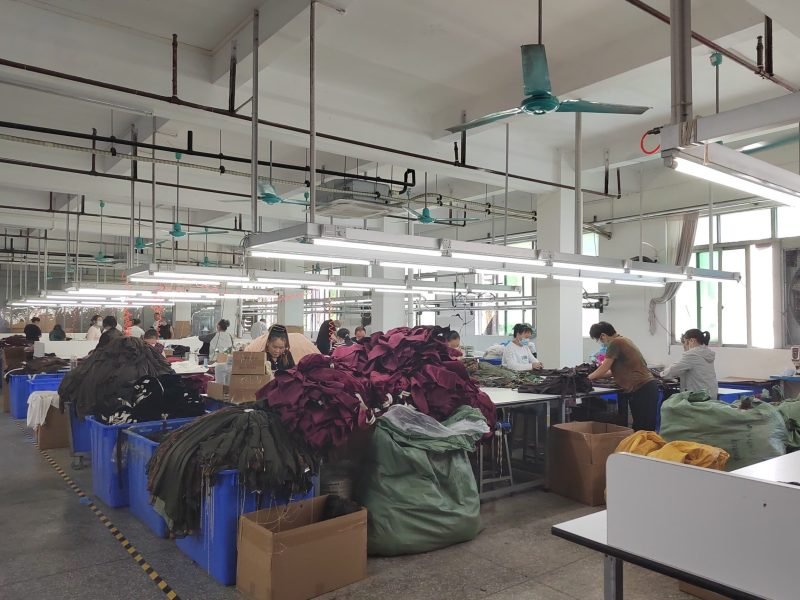
Inline inspection focuses on defects while garments are still moving through production. Quality teams can review critical seams, symmetry, construction, operation workmanship, and other style-specific points where repeated defects could spread quickly.
The purpose is early correction, not simply documenting defects after the line has already produced a large quantity.
- Check risk points close to the operation.
- Escalate repeated defects quickly.
- Verify corrective action before normal flow resumes.
Measurement and Finishing

Measurement inspection compares garments against the approved POM method and specification.
After sewing, 100% finishing inspection checks appearance and finishing conditions before the final inspection stage. Keeping measurement and finishing visible in the production plan is important when several lines complete styles at similar times, because downstream quality capacity must absorb the same output.
- Use the approved measurement method.
- Separate repaired pieces for recheck.
- Plan finishing flow around delivery priority.
Final and Packing Inspection

- Confirm the applicable final-inspection basis.
- Verify packaging and assortment requirements.
- Release shipment only against the approved program standard.
Capacity Evidence Should Show How Production Really Runs
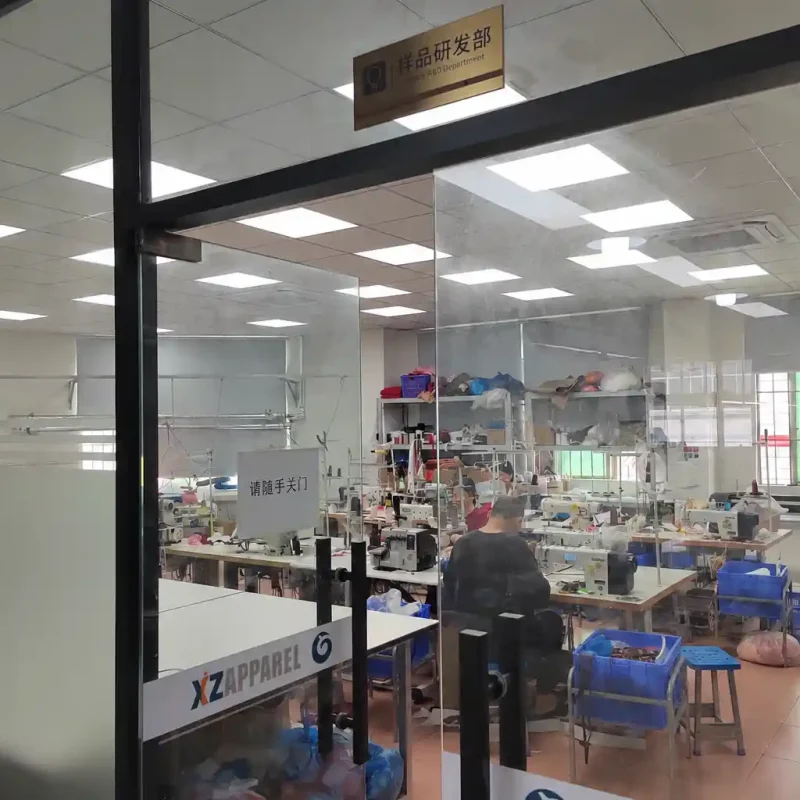
Sewing Workshop View
Cutting and Bundle Control

Show spreading, cutting, bundle preparation, or piece inspection where the image helps explain how approved patterns and material lots move toward sewing.
Visual evidence should make the production route easier to understand and should avoid turning a machine close-up into a broad capacity claim that the image cannot support.
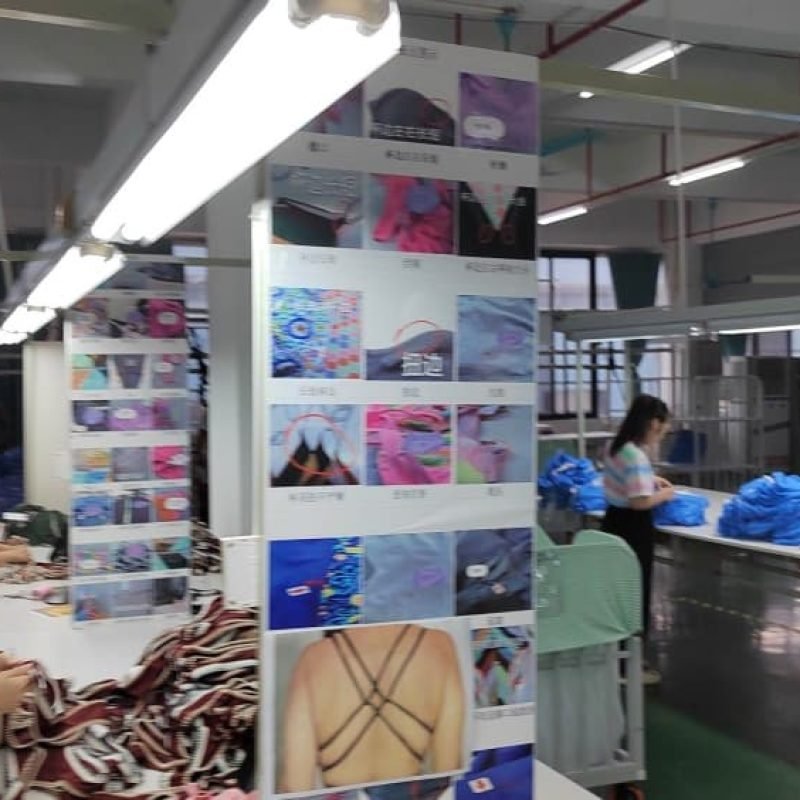
Inline Inspection Activity
Measurement Records

Finishing and Packing Flow

Planning and Version Records

Representative Multi-SKU Capacity Allocation Scenario
Starting Production Brief
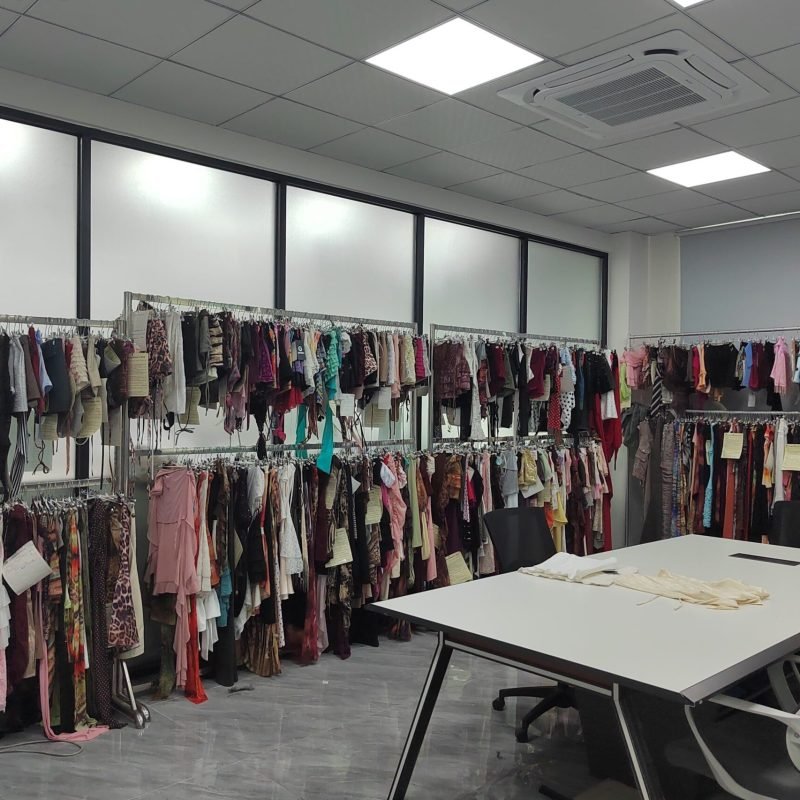
Consider a representative seasonal program containing 18 styles and 42,000 total pieces. The assortment includes 7 dresses, 4 tops, 3 bottoms, 2 sets, and 2 swim/resort styles. Individual style quantities range from roughly 1,200 to 3,600 pieces, with several colorways and a shared launch calendar. Three commercial delivery drops are planned rather than one single completion date. Some styles share fabrics or trims, while others include lining, invisible zippers, elastic, structured panels, or specialist decoration.
At the first capacity review, all 18 styles are not equally ready. Eleven styles have approved PPS and confirmed bulk materials. Four styles are still closing fit or construction revisions. Three styles are waiting for final fabric or process approval. Treating the entire 42,000-piece order as one ready production block would therefore create a misleading schedule. Production management first separates approved and material-ready styles from styles that still carry development dependencies.
The matrix then identifies commercial priority, delivery drop, style family, quantity, construction difficulty, material status, process requirements, and quality needs. The goal is to create a sequence that uses available resources efficiently while keeping late approvals from blocking styles that are ready to move.
Allocation Logic
The first production release focuses on ready styles with confirmed materials and clear line suitability. Deeper-volume styles can receive longer running windows once the line is stabilized, while smaller fashion styles may be grouped in a sequence where construction, fabric handling, or operator skill is sufficiently similar. Matching sets are planned with additional attention to color, fabric lot, top-bottom coordination, and packing. Swim/resort styles are reviewed for stretch fabric, lining, elastic, fit-sensitive seams, and any related testing or measurement needs before line loading.
No fixed public rule assigns “dress lines,” “top lines,” or “swim lines” by number. Actual allocation depends on current loading, the approved work content, required equipment or skills, readiness, and the surrounding schedule. If a style planned for the second drop misses PPS or bulk fabric readiness, another approved style may move forward only after production confirms the substitution will not create a new material, process, QC, or packing conflict.
Specialist decoration is inserted as a separate process window with an approved sample, handoff date, return date, and garment-level QC requirement. Cutting, inline inspection, measurement, finishing, final inspection, and packing are reviewed against the same three delivery drops so sewing output does not simply move the bottleneck downstream.

Controls Before Each Release
Before each group enters bulk, production checks the current approved version, PPS status, material and trim readiness, artwork or process approval, measurement standard, packaging requirement, quality plan, and required completion window. Any material change in quantity, construction, color structure, process, or delivery priority triggers a capacity review because the original allocation was built on the earlier brief.
For a 42,000-piece program, the strongest planning result is not the earliest possible start for every style. It is a controlled sequence in which ready styles enter suitable resources, unresolved styles remain visible, and delivery priorities are protected without silently shifting risk into another SKU. The example also shows why large-account planning needs both development throughput and manufacturing scale: several styles can be moving through fit, PPS, material approval, cutting, sewing, QC, and packing at the same time.
A production plan created from the real SKU matrix is far more useful than comparing 42,000 pieces with a monthly capacity figure and assuming the order can automatically be absorbed. Capacity becomes credible when the line plan, readiness gates, process windows, quality resources, and delivery milestones agree.
Send These Inputs for a Reliable Capacity Review
SKU and Category Matrix
List every style with product category, style reference, colorways, size range, and current development status.
A structured matrix makes it possible to distinguish concentrated volume from fragmented volume and shows which styles belong to the same launch or coordinated set.
For larger programs, also mark hero styles, support styles, and styles that must ship together.
- Include all active styles in one matrix.
- Mark category and commercial priority.
- Identify matching sets or linked products.
Quantity by Style and Color
Provide confirmed or forecast quantities by style and color, with size ratios where available. Total program quantity alone is not enough for line allocation because 30,000 pieces across three styles create a different production load from the same volume across twenty styles.
Quantity structure also helps identify where material or process minimums may affect feasibility.
- Show pieces per style and color.
- Add size ratios when known.
- Mark any planned replenishment or call-off quantity.
Tech Pack or Reference
- Send the latest controlled version.
- Highlight structural or process-intensive details.
- Include the approved size chart where available.
Material Readiness
State whether bulk fabric and trims are approved, ordered, in production, in-house, or still being sourced. Include any custom dyeing, printing, certification documentation, special finish, branded hardware, or supplier condition that may affect timing.
Material readiness often determines the earliest realistic production release more directly than a general question about open sewing lines.
- Mark ready and pending materials.
- Identify shared fabrics across styles.
- Flag any item with a longer supplier lead time.
Special Process Requirements
List embroidery, printing, beading, rhinestones, pleating, smocking, wash, or other specialist work together with artwork status and approved samples where applicable.
Process ownership and timing must be visible before the line plan is confirmed. Partner processes should be scheduled with clear handoff, return, and QC requirements instead of being added after the sewing schedule is fixed.
- Define process type and placement.
- State approval status.
- Share target appearance or approved reference.
Delivery Windows
Provide required bulk completion or shipment windows by style group, drop, or launch. Mark which dates are fixed, which styles must ship together, and whether split delivery is acceptable. A program with several staged drops can often be planned differently from the same volume required at one time. Clear timing also helps production teams identify where approval or material delays would directly affect launch priority.
- List each required window.
- Mark fixed and flexible dates.
- State split-shipment or coordinated-shipment requirements.
Frequently Asked Questions About Capacity and Line Allocation
Normal finished capacity is approximately 180,000-200,000 pieces per month across the manufacturing system. Output can reach about 220,000 pieces depending on product mix. These figures describe overall scale, not capacity automatically available to one program. Order-level feasibility still depends on style mix, quantities, construction, materials, approvals, current loading, process requirements, and delivery windows.
XZ Apparel operates approximately 80 sewing lines across 8 workshops. The line count should not be read as 80 lines being open for one new order at the same time. Available and allocated capacity changes with current production, line suitability, product mix, material readiness, delivery priorities, and approved production plans. A dated SKU and quantity matrix is needed for a meaningful review.
Production management reviews garment category, construction and operation content, quantity, fabric behavior, required skills or equipment, material readiness, special processes, approval status, current loading, and delivery timing. A line is selected for suitability and schedule fit rather than assigned only because it becomes free first. Actual line numbers are confirmed within the production plan, not published as fixed category rules.
Yes. Multi-style and multi-order planning is part of a manufacturing system with approximately 80 lines, but parallel production depends on the actual style mix and readiness. Several styles may run at the same time when suitable resources, materials, approvals, QC, finishing, and packing capacity align. Large programs should provide style priorities and delivery windows so parallel work supports the launch plan rather than creating downstream congestion.
No. Piece count alone does not reflect work content. A structured dress with lining, zippers, boning, cups, draping, multiple panels, or decoration can require more operations and tighter control than a simpler top. Line allocation therefore considers construction, handling difficulty, quality-critical operations, and process steps before output expectations are set. Product mix is one reason overall monthly capacity is always stated with conditions.
Capacity discussions can start from forecasts and planned windows, but a production release still depends on material and approval readiness. The exact terms of any capacity reservation, seasonal commitment, or large-account program must be agreed for the specific project. A sewing slot should not be treated as a guaranteed start if bulk fabric, critical trims, PPS, or required process approvals remain unresolved.
Embroidery, certain printing, and selected specialist treatments are managed through long-term specialist partners. The production plan should include approved process samples or strike-offs, component handoff, partner processing time, return timing, garment integration, and QC. Partner equipment or capacity is not represented as XZ Apparel’s in-house asset. The relevant process window is reviewed as part of the overall critical path.
XZ Apparel uses a staged quality chain: fabric inspection, pre-production meeting, cutting inspection, inline QC, measurement inspection, 100% finishing inspection, final inspection, and packing inspection. Product-specific standards, approved PPS, measurement methods, critical operations, and quality requirements are communicated before bulk. Multi-line capacity is useful only when output remains tied to the same approved standard.
Common changes include quantity increases, new colorways, construction revisions, late materials, delayed PPS, process-sample delays, changed delivery priorities, packaging changes, or a new specialist-process requirement. A material change should trigger production review because the original plan was built on earlier assumptions. Updating the schedule early is safer than keeping an outdated allocation and moving the risk into sewing or shipment.
Send the SKU matrix, quantities by style and color, size range, latest tech packs or references, fabric and trim status, specialist-process requirements, current sample or PPS status, quality requirements, and required delivery windows. For multi-drop programs, identify commercial priorities and styles that must ship together. Those inputs allow production management to review order-level feasibility instead of responding with a general monthly factory figure.
Send Your Production Plan for Capacity Review
A useful production-capacity review starts with the same information your merchandising and production teams use to build a launch plan. Send XZ Apparel the current style matrix, quantities, development status, material position, and required delivery windows. The production team can then review whether the program fits the available manufacturing route, which styles are ready to move first, where specialist-process windows need to be built in, and which missing approvals could affect the schedule.
- Product categories and number of styles
- Quantity by style, color, and size
- Tech packs, approved samples, or clear references
- Fabric, trim, and specialist-process status
- Current sample, size-set, or PPS status
- Required completion, shipment, and split-delivery windows
- Target-market quality, inspection, testing, and packaging requirements
The result is a capacity discussion tied to the actual program rather than a generic factory number. If details are still changing, send the latest controlled version and mark open items clearly so production assumptions remain visible.