Skip to content

Women’s Clothing Factory in China
Develop and manufacture multi-category women’s collections in Dongguan with centralized sampling, core in-house production, and controlled specialist support.
- Dongguan manufacturing base: 3 production buildings, approximately 20,000 m², and approximately 1,120 employees across the current manufacturing system.
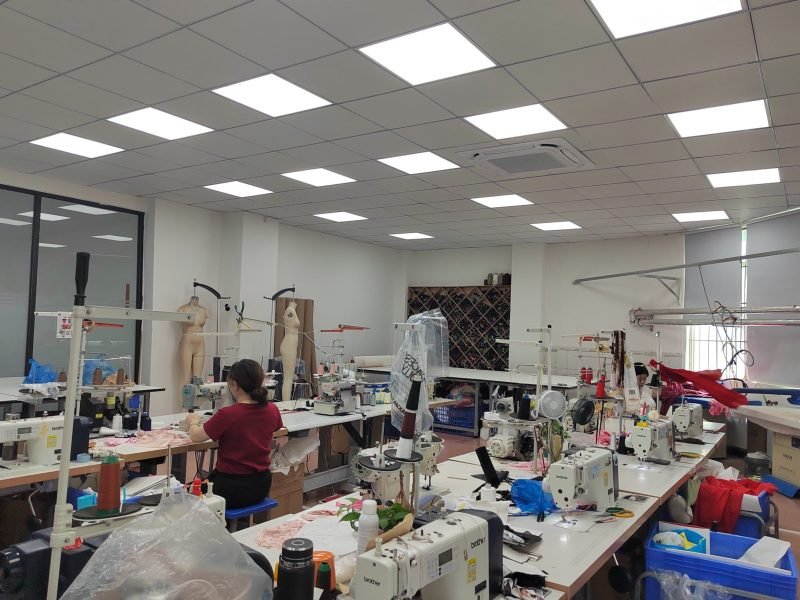
- Development capacity: 6 sample rooms, 48 pattern makers, and 60 sample makers supporting parallel style development and fit revision.
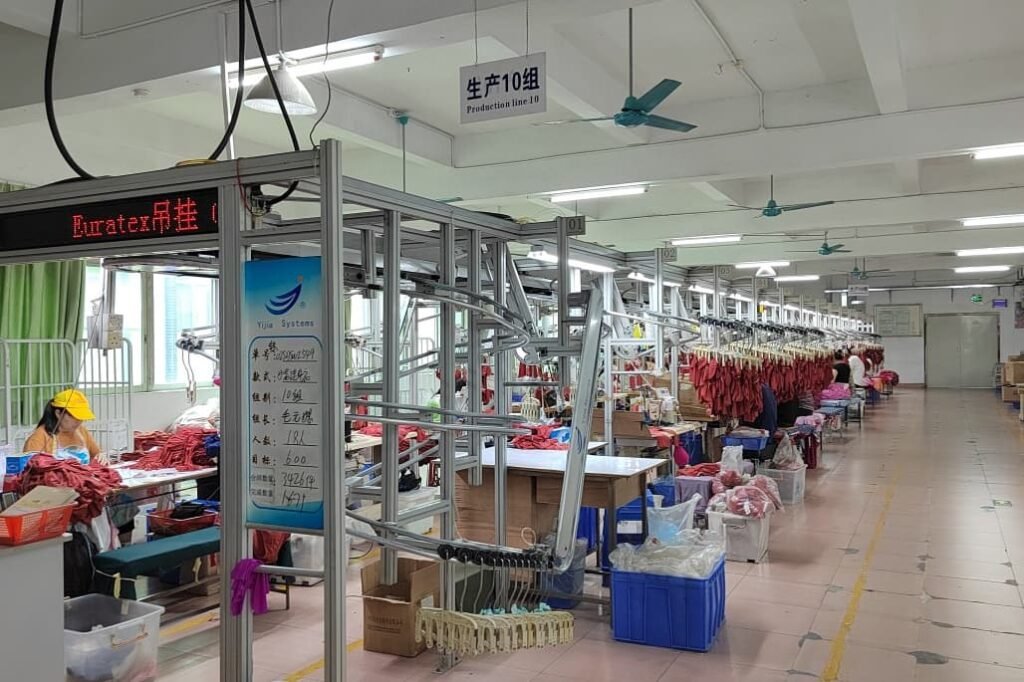
- Bulk platform: approximately 80 sewing lines with normal monthly output around 180,000-200,000 pieces, depending on product mix.
- Standard garment MOQ starts from 200 pcs/style/color; fabric, trim, color splits, embellishment, and specialist processes can raise project thresholds.


Women’s Clothing Factory Facts at a Glance
XZapparel combines product development, sampling, material coordination, core manufacturing, quality control, and specialist process management within one womenswear production system in Dongguan, China.
Factory Qualification Item | XZapparel Baseline |
Manufacturing base | Humen, Dongguan, Guangdong, China |
Manufacturing heritage | Garment manufacturing operation began in 2008 |
Factory scale | 3 production buildings; approximately 20,000 m²; approximately 1,120 employees |
Sample system | 6 sample rooms; 48 pattern makers; 60 sample makers |
Sample output | Approximately 45-60 samples/day; 1,500-2,000 samples/month |
Sewing platform | Approximately 80 sewing lines; approximately 640 Brother sewing machines |
Normal monthly production | Approximately 180,000-200,000 pcs; up to around 220,000 depending on product mix |
Standard garment MOQ | 200 pcs/style/color; material, trim, process, and supplier requirements may increase the threshold |
Built for Established Fashion and Retail Programs
The manufacturing structure is designed for commercial womenswear programs that require repeatable development, clear approvals, scalable production, and reliable communication across multiple styles.
Fashion Brands
Established fashion brands often need more than a sewing line. Collections involve style interpretation, fabric selection, pattern work, sample revision, branded trims, size control, production planning, and repeat-order consistency.
XZapparel is structured around those connected tasks. Projects can begin from a reference image, sketch, tech pack, physical garment, or size chart, then move through pattern development, sampling, fit review, PPS approval, bulk production, and quality control under one coordinated development route.
Retail and E-Commerce Teams
Retail and e-commerce programs usually carry tighter launch calendars, broader size runs, multiple colors, and more SKU coordination than a single-style order. The factory system supports dresses, tops, bottoms, sets, swimwear, and selected established categories through shared sampling, sourcing, manufacturing, and QC controls. Commercial review focuses on quantities by style and color, material availability, trim requirements, packaging, delivery windows, and whether the assortment can be scheduled without weakening sample-to-bulk consistency.
Product and Sourcing Teams
Product, sourcing, and buying teams need information that can be checked, not broad factory claims. XZapparel can review product categories, size ranges, target fit, fabric direction, construction details, embellishment requirements, testing needs, order quantities, and timing before production is committed.
Capability boundaries are kept visible: core in-house categories, established categories, specialist-partner processes, and development-only areas are treated differently so sourcing decisions can be made on the real manufacturing route.
See Where Your Collection Is Actually Made
Factory qualification is easier when each stage can be traced to a real function. The following areas show where development, production, and quality decisions are carried out.
Dongguan Production Base
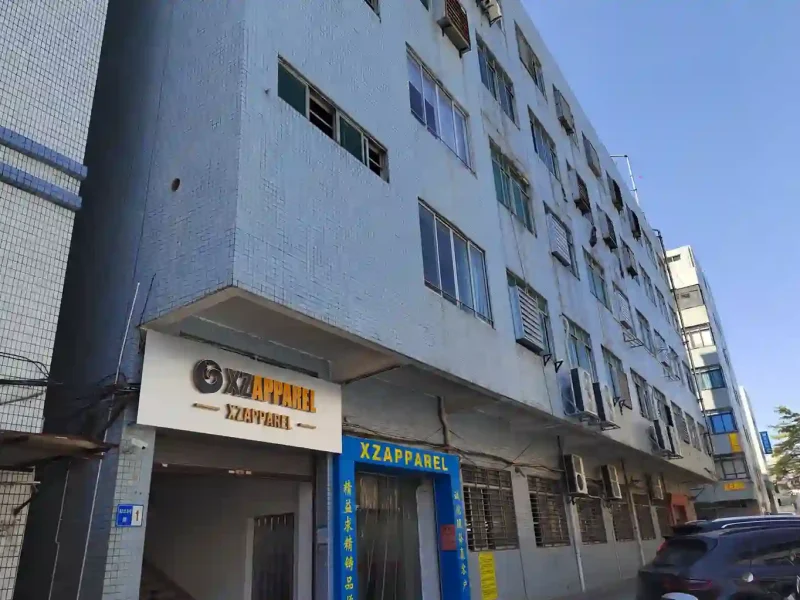
The manufacturing base is located in Humen, Dongguan, with three production buildings covering approximately 20,000 m². A site review should connect the physical factory to actual work: sampling, cutting, sewing, inspection, finishing, packing, and material handling. For brand qualification, factory scale matters only when the space, workforce, equipment, and workflow match the product category and order structure being discussed.

Pattern Department
Pattern development turns a sketch, reference, garment, or tech pack into a manufacturable shape.
The current team includes 48 pattern makers, creating enough capacity to handle multiple styles and revision cycles in parallel. Pattern review should focus on silhouette, balance, key POMs, support areas, seam placement, construction allowances, and fabric behavior rather than copying a visual outline without considering how the garment will fit and sew in bulk.
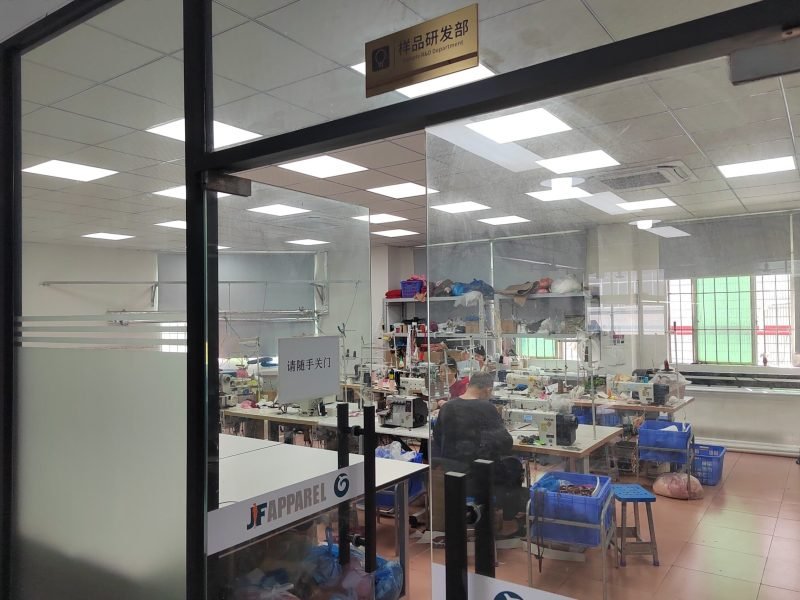
Sample Rooms
Six sample rooms and 60 sample makers support first samples, fit revisions, construction trials, and PPS preparation.
The system produces approximately 45-60 samples per day and around 1,500-2,000 per month.
The value of that capacity is not sample volume alone; it allows several styles to move through development while pattern, fabric, trim, construction, and fit comments are being resolved before bulk release.
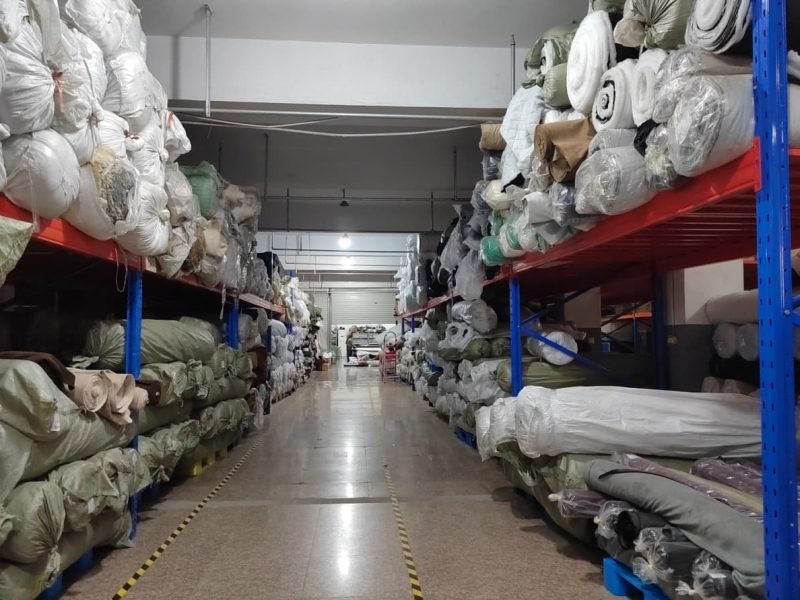
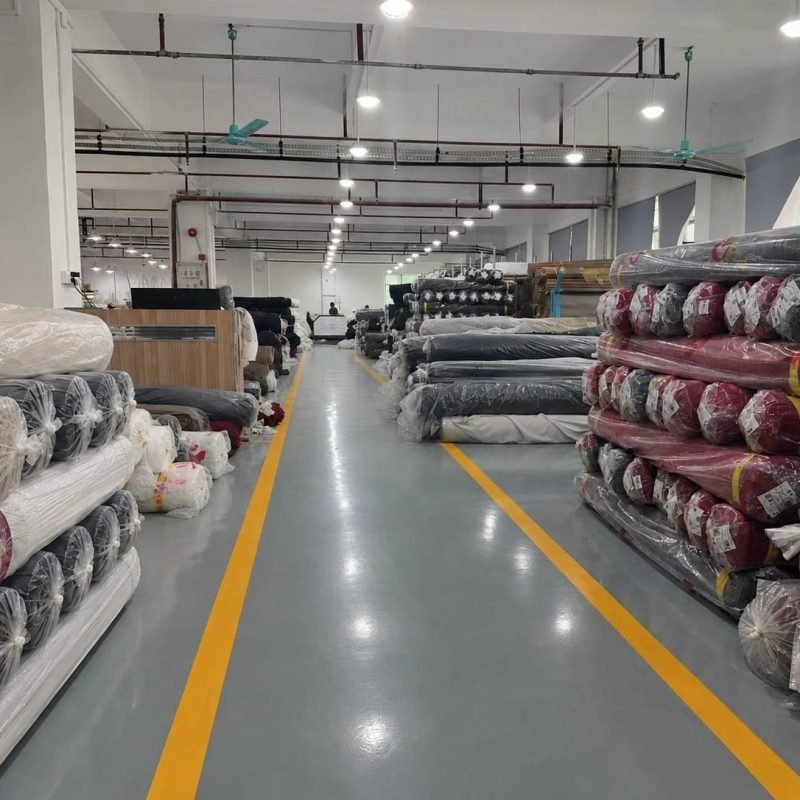
Fabric Inspection Area
Incoming fabric decisions affect fit, cutting, color, shrinkage, and bulk appearance. Fabric inspection and in-house checks are used to review relevant material properties before production decisions are finalized.
A sourcing program may require GSM, shrinkage, colorfastness, rubbing, stretch/recovery, spirality, pilling, washing, or other checks depending on product type, material behavior, target market, and the brand’s own quality requirements.

Cutting Operations
Cutting is the bridge between approved material and sewing consistency. Fabric condition, shade grouping, shrinkage expectations, marker planning, grain direction, stretch direction, print placement, and panel accuracy can all affect the finished garment. Cutting control therefore belongs inside the production plan rather than being treated as a simple mechanical step. Inspection at this stage helps contain issues before they are multiplied across sewing lines.
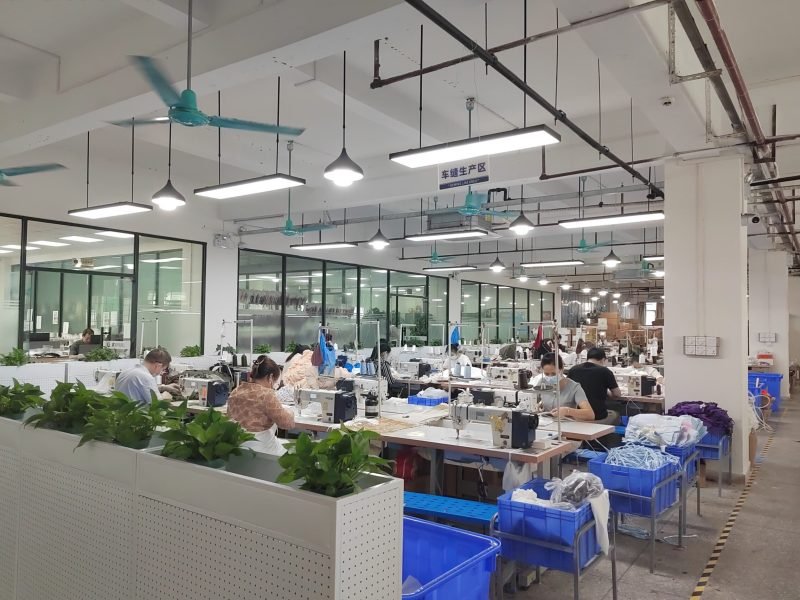
Sewing Lines
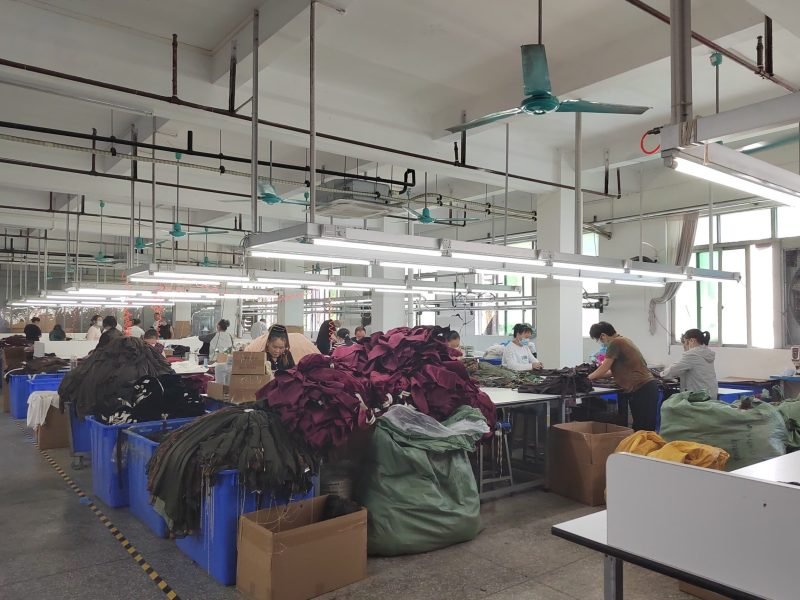
The production platform includes approximately 80 sewing lines and around 640 Brother sewing machines. Line allocation depends on product mix, construction complexity, order size, and timing. A structured dress, stretch top, swim style, and casual woven bottom do not require identical sewing control. Production planning should match operators, construction sequence, attachments, reinforcement points, and inline checkpoints to the actual garment being produced.

Measurement and QC
Measurement control links the approved sample and specification to bulk garments. Key POMs, tolerance, grading, seam placement, visual balance, and construction quality need to be checked during production rather than left to final inspection. XZapparel’s quality route includes inline QC, measurement inspection, 100% finishing inspection, final inspection, and packing inspection, with earlier fabric and cutting controls feeding into the same system.
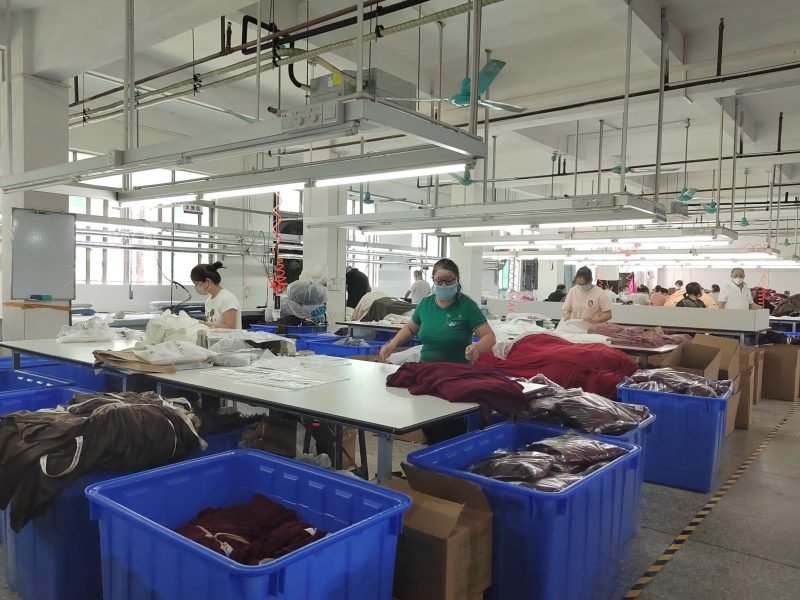
Finishing and Packing
Finishing should confirm appearance, workmanship, measurement, labels, trims, pressing, cleaning, and presentation before garments enter final inspection and packing. Packing requirements can vary by brand, market, retailer, and shipping method, so packaging details need approval alongside the garment rather than after production is complete. A clean handover from finishing to final and packing inspection reduces avoidable shipment-stage rework.
Women’s Product Categories We Manufacture and Develop
Product capability is separated by manufacturing maturity, so a collection can be planned around categories with the right level of proven production, established experience, or specialist support.
Dresses

Dresses are a proven core category, covering commercial womenswear programs where silhouette, drape, lining, closure, support, embellishment, and fit need to remain stable from sample to bulk. Development can address bodycon, occasion, casual, resort, structured, bias-influenced, lined, and other fashion-led constructions according to the design brief. Material and construction reviews should be completed together because satin, stretch knits, mesh, lace, woven fabrics, linings, boning, zippers, and surface decoration can change both fit and production risk.
Tops and Blouses

Tops and blouses are another core category and work well within high-frequency collection calendars because they can share fabrics, trims, size logic, and color stories with bottoms or sets. Development may include fitted tops, corset-influenced shapes, blouses, cropped silhouettes, jersey tops, woven fashion tops, lined styles, and embellished options.
The important production questions are neckline stability, bust shaping, hem behavior, stretch direction, closure choice, seam finish, opacity, and how the style is expected to recover after wear or washing.
Bottoms

Bottoms sit within the proven core manufacturing range and include skirts, trousers, shorts, and related fashion shapes.
Bulk consistency depends on waist construction, rise, hip balance, length, pocket placement, closure, lining, fabric stability, and grading. Stretch materials need recovery control while fluid wovens need attention to grain, drape, and seam behavior.
When bottoms are part of a set, color, fabric lot, trim finish, and top-to-bottom fit relationship should be approved as one coordinated program.
Matching Sets

Matching sets are a core category with particular value for collection planning because one material direction can support multiple coordinated SKUs.
A set may combine a top with a skirt, trouser, short, or other bottom, but matching appearance alone is not enough. Fabric lot, color, stretch, drape, trim finish, sizing logic, packaging, and production timing should be controlled across both pieces. Set development is strongest when top and bottom fit are reviewed together rather than as unrelated garments.
Swimwear

Swimwear is treated as a proven core category, but it requires decisions that differ from ordinary knitwear. Main fabric stretch/recovery, lining, opacity, elastic, edge construction, coverage, torso length, bust support, leg opening, and colorfastness all affect commercial performance. Sample approval should check both static measurements and body response.
Special trims, cups, underwire, hardware, or specialist processes may influence MOQ, sourcing time, construction method, and the final production route.
Sweatwear

Sweatwear is an established capability rather than a primary core category. Selected programs can include hoodies, sweatshirts, jogger-linked separates, and related casualwear where fabric weight, shrinkage, rib behavior, seam bulk, print or embroidery placement, and wash performance need review. The manufacturing route should be confirmed around the exact fabric and style instead of assuming every fleece or French-terry project behaves the same. Specialist decoration may be coordinated through long-term process partners when required.
Activewear

Activewear is an established capability for selected programs. Fabric stretch/recovery, opacity, pilling, dimensional stability, seam stretch, waist support, compression intent, and movement fit become more important than fashion appearance alone. A suitable project starts with product use, target fit, fabric specification, size range, and performance expectations. Development language stays within established project capability rather than presenting activewear as the factory’s largest core production category.
Fashion Shapewear
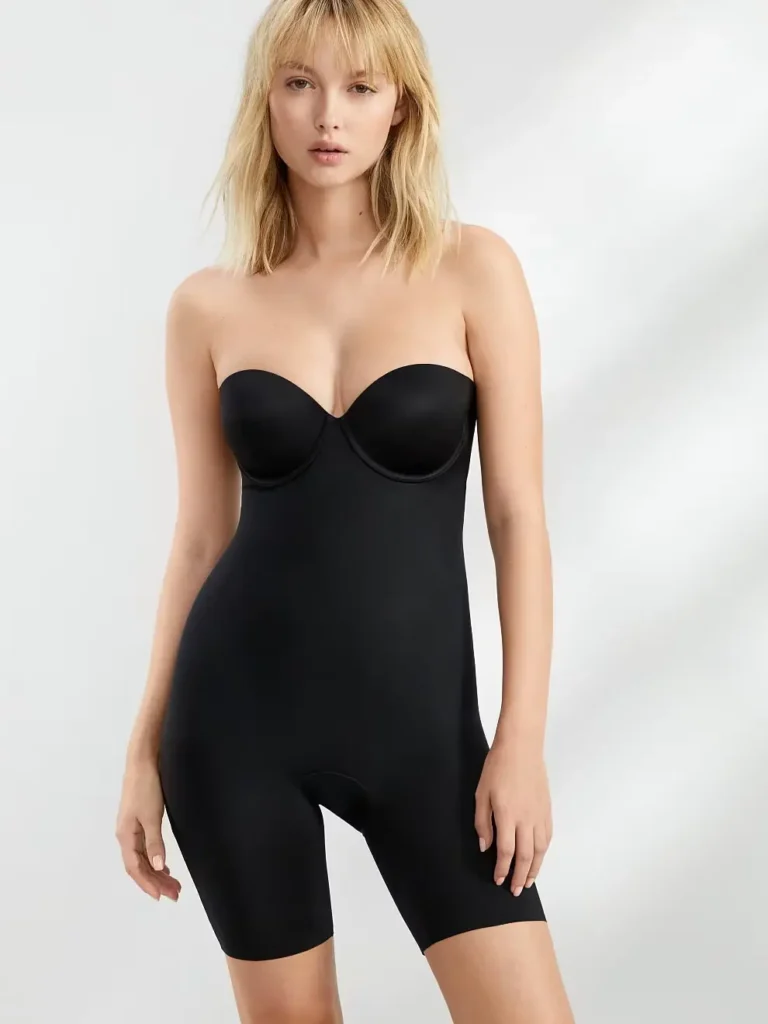
Fashion shapewear is an established capability for selected styles where stretch, recovery, support, lining, panel placement, elastic behavior, and body fit must work together. Projects can be reviewed when the structure fits the factory’s garment construction range. Specialized molding or technical intimate-apparel components require separate feasibility review and should not be assumed to be core in-house processes. Sampling is used to confirm support level, comfort, seam position, edge finish, and size behavior before bulk decisions.
Clear Manufacturing Ownership Across Every Product Category
A reliable sourcing decision starts with knowing which capabilities are core, which are established, which use specialist partners, and which remain development-led.
Proven Core Manufacturing
Dresses, tops, bottoms, swimwear, and sets sit within the proven core manufacturing level. These categories have stable bulk-production facts and are supported by the current pattern, sampling, sourcing, cutting, sewing, and quality system. “Core” does not mean every design is automatically feasible at the same MOQ or lead time.
Fabric, trim, construction, embellishment, size range, order split, and target market still need review before the production route is confirmed.
- Core categories are suitable for recurring commercial collections.
- Development and bulk control remain style-specific.
Established Programs
Sweatwear, activewear, and fashion shapewear are established capabilities with real technical and project experience, but they are not positioned as the highest-volume core categories.
Project review should begin with the exact garment function, material, fit, construction, and quality requirements. A selected activewear or shapewear program may be a strong fit while another style with highly specialized technical requirements may need a different manufacturing route.
- Use “established capability” rather than “specialist in every style.”
- Confirm material and performance expectations early.
Specialist Knitwear Support
Knitwear outside the core cut-and-sew range is supported through long-term specialist partners. XZapparel can coordinate development requirements, material direction, approvals, project communication, and final garment quality, but partner-factory assets are not presented as XZapparel in-house equipment. The production route should identify who owns the specialist operation and which approvals remain under XZapparel coordination so responsibilities are clear before bulk production.
- Specialist production ownership stays transparent.
- Development and QC requirements remain centrally coordinated.
Embroidery and Selected Printing
Embroidery and certain printing processes can be managed through long-term specialist resources when a project requires equipment or process expertise outside core in-house operations.
Artwork scale, placement, fabric compatibility, stretch, wash resistance, heat sensitivity, backing, stitch density, color, and bulk repeatability can all influence feasibility.
A decoration reference should therefore be reviewed together with the garment material and construction rather than quoted as an isolated surface process.
- Process approval follows material and garment compatibility.
- Specialist-partner ownership is identified rather than hidden.
Specialty Fabric Processes
Certain specialty fabric treatments or processes can be supported through qualified specialist networks.
The relevant question is not whether a process can be sourced somewhere in the supply chain, but whether material quality, repeatability, lead time, supplier MOQ, testing, and garment construction can be controlled for the intended order.
XZapparel’s role is to centralize product development and production standards while keeping specialist responsibilities visible.
- Supplier MOQ may differ from garment MOQ.
- Samples and material approval define the production standard.
Development and Expansion Areas
Selected outerwear, heavy winter products, and down-related categories remain development or expansion areas rather than proven core specialties. Suitable projects can be reviewed, but public capability language should stay aligned with actual manufacturing history. A development route may be possible through existing teams and specialist resources, yet feasibility must be confirmed around materials, technical construction, equipment, testing, and production ownership before any commercial commitment is made.
- Development capability is not described as proven specialization.
- Complex technical requirements require project-specific review.
Build More of One Collection Through One System
Multi-category production becomes valuable when related styles share development standards, material decisions, approval logic, and quality controls instead of being handled as disconnected orders.

Occasion and Going-Out

Coordinated Sets
Matching sets benefit from shared material lots, color approvals, trims, labeling, and packaging.
Top and bottom fit should be reviewed together because proportion and size balance affect the set as a commercial product.
Development can also identify where a common fabric or trim improves sourcing efficiency without forcing every SKU into the same construction or cost structure.

Resort and Swim
Swimwear can be coordinated with cover-up, top, skirt, dress, or resort-separate concepts where product scope and material direction support the program.
Swim-specific stretch, recovery, lining, opacity, elastic, and support decisions remain separate from woven resort styles, but color stories, trims, artwork, packaging, and delivery planning can still be managed within one collection workflow.

Casual Separates
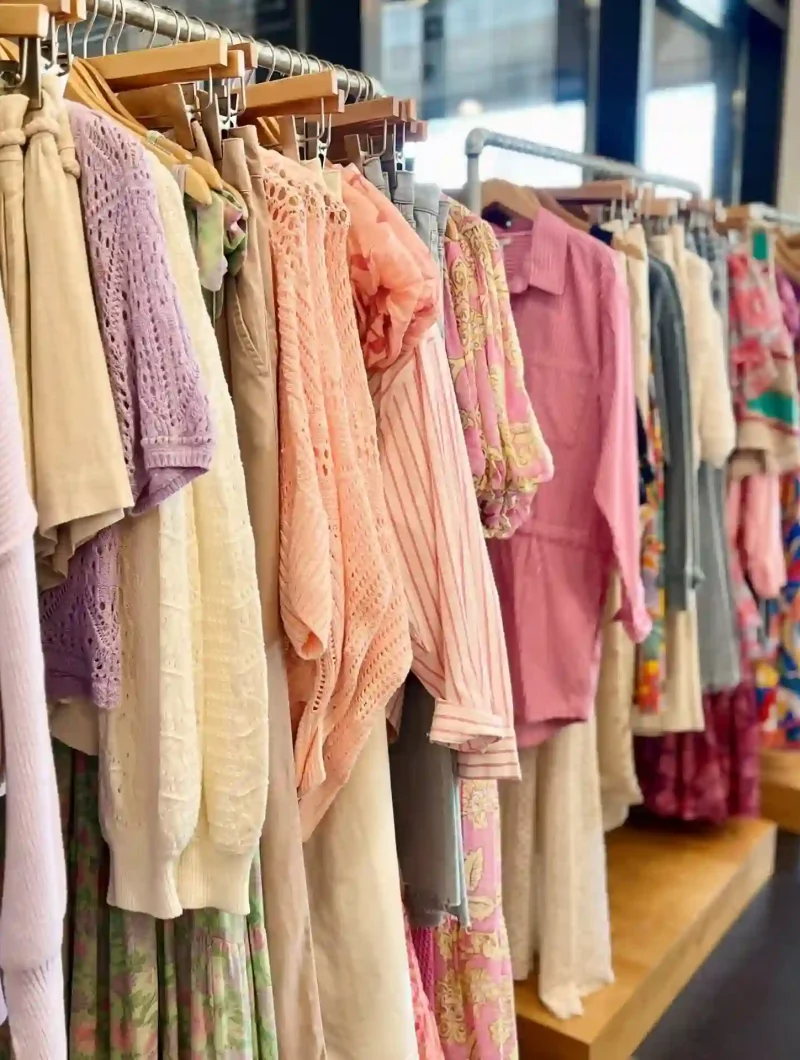
Casual womenswear programs often combine tops, bottoms, dresses, and sets around shared color palettes and fabric families. A centralized development route makes it easier to compare silhouette, material weight, wash behavior, size logic, and construction before individual styles are released.
|The goal is not identical production methods; it is a consistent decision system across the assortment.

Active and Sculpt
Selected activewear and fashion shapewear styles can sit beside core fashion categories when fabric performance, support, and fit requirements are clearly defined. Stretch/recovery, opacity, seam behavior, waist support, panel placement, and grading should be reviewed as technical variables. These categories remain established capabilities and are planned according to the real project rather than treated as automatic extensions of fashion jersey.
Reorder Programs
A collection gains long-term value when approved standards can be carried into repeat orders.
Reorder planning should reference approved samples, specifications, material details, color approvals, construction notes, labeling, packaging, and known production comments. Any material or process change needs review before the repeat order is treated as equivalent to the previous production run.
Start Development From the Information You Already Have
Projects can enter development at different levels of readiness. The first review identifies what is usable, what is missing, and which decisions must be confirmed before sampling.
Reference Images
A clear front, back, detail, and proportion reference can be enough to begin a structured feasibility review when a full tech pack is not yet available. The development team interprets silhouette, likely construction, fabric behavior, visible trims, support details, and areas that cannot be confirmed from an image. Questions are then converted into sample inputs rather than guessed. Fit, size, fabric, and hidden construction still require confirmation before the reference becomes a production standard.
- Best input: multiple angles and close-up details.
- Add target fit, size range, quantity, and fabric direction where possible.
Tech Packs
A complete tech pack can shorten interpretation time when measurements, construction, materials, trims, artwork, labels, packaging, and revision history are clearly defined. The team still reviews manufacturability rather than assuming every specification should be followed without question. Conflicts between measurements, sketches, fabric behavior, construction, or trim availability should be raised before cutting a sample so corrections happen during development instead of after bulk materials are committed.
- Include BOM, POM, tolerances, artwork, and packaging instructions when available.
- Flag non-negotiable brand standards clearly.
Sketches
Design sketches are useful when the creative direction is established but technical details are still open. Development can translate the visual concept into questions about fabric, support, closures, seam placement, lining, proportion, length, and construction. A sketch-led project works best when the brand can also provide target market, intended fit, key measurements, reference products, or fabric inspiration. The goal is to preserve design intent while building a garment that can be sampled and reproduced in bulk.
- Mark critical silhouette and design details.
- Add reference photos where the sketch cannot show construction clearly.
Physical Garments
An existing garment can provide direct information about proportion, fabric handfeel, construction, seam placement, trims, and finishing. It should not be treated as permission to copy protected branding or design assets. For development, the garment can serve as a fit, quality, or construction reference while new specifications are built around the brand’s own requirements. Measurements and materials still need to be documented so the approved result can be controlled during bulk production.
- Identify which features are references and which must change.
- Provide target sizing and market requirements separately.
Size Charts
A brand size chart gives the pattern team a starting framework for fit and grading, but garment-specific POMs still need review.
Bodycon dresses, woven blouses, swimwear, trousers, and relaxed tops respond differently to ease, stretch, support, and length.
A size chart should therefore be paired with the intended silhouette, base size, size range, fabric behavior, and tolerance expectations so pattern decisions are made for the actual product rather than a generic womenswear block.
- Confirm base size and grade direction.
- Identify critical POMs that define brand fit.
Collection Briefs
A collection brief helps organize multiple styles before individual tech packs are complete. Useful inputs include category mix, style count, target quantity by style/color, launch window, target market, price position, fabric direction, key colors, size range, packaging, and any retailer or compliance requirements. The review can identify which styles share material or construction logic, which need specialist processes, and which should be sampled first because they carry greater fit or production risk.
- Suitable for 10-30 style development programs.
- Helps sequence sampling, sourcing, approvals, and bulk planning.
Pattern, Sampling, and Fit Before Bulk Production
The sample stage should remove uncertainty from silhouette, measurements, material behavior, construction, and manufacturability before bulk quantities are released.
Pattern Interpretation From Design Intent
Pattern work starts by deciding what the design is expected to do on the body, not by tracing the outline of a reference. A fitted dress, bias-influenced skirt, structured top, relaxed blouse, swim one-piece, and stretch bodysuit all distribute ease and tension differently. The pattern team reviews silhouette, target size, bust and waist relationship, hip shape, torso length, shoulder position, neckline, armhole, hem level, support areas, closure position, and fabric direction before the first sample becomes a meaningful fit test.
XZapparel currently works with 48 pattern makers across the manufacturing system, which supports multiple styles and revision rounds in parallel. The value of a larger pattern team is strongest when information is controlled. Brand size charts, target fit, approved reference garments, key POMs, and tolerance expectations should be supplied where available. If a measurement conflicts with the sketch or fabric behavior, the conflict should be raised rather than carried into the sample.
Fabric decisions are part of pattern decisions. Stretch and recovery change negative ease. Drape changes volume and balance. Lining can alter stability. Boning, cups, elastic, and closures can change support and strain. A pattern that looks correct in one material may fail in another, so material substitutions should trigger a fit review when they change weight, stretch, thickness, or drape.


First Samples Built to Answer Specific Questions
A first sample is most useful when it answers a defined set of questions: Is the silhouette right? Does the fabric produce the intended drape? Is the neckline stable? Is the bust or waist shaping sufficient? Are the closures, lining, support, and seam finishes workable? Can the construction be repeated in bulk without unnecessary handling or distortion? A sample that only looks attractive in a photograph but leaves these decisions open is not ready to become a production reference.
XZapparel operates 6 sample rooms with 60 sample makers, supporting approximately 45-60 samples per day and around 1,500-2,000 samples per month across the current system. Parallel capacity matters for fashion programs carrying several styles at once, but speed should not replace decision quality. Complex styles may need construction trials, alternative fabric or trim options, and more than one fit round before PPS.
Sample comments should be specific. “Make it better” is difficult to control; “raise the neckline 1 cm at center front,” “reduce waist circumference by 2 cm,” or “move strap position 8 mm inward” creates an executable revision. Photos, marked measurements, fitting comments, and version control help the pattern and sample teams understand which changes are approved and which areas must remain unchanged.
Fit Revision, POM, and Size Control
Fit revision should separate visual preference from measurable control. A brand may want a dress to feel more sculpted, a blouse to sit looser through the body, or a trouser to gain more hip room, but the factory still needs to translate those comments into POM changes, pattern adjustments, seam placement, ease, and grade rules. The approved base size becomes the anchor for bulk production only when both appearance and measurements have been agreed.
Static garment measurements are not enough for every category. Swimwear, activewear, bodycon dresses, fitted tops, and fashion shapewear also need attention to stretch response, recovery, torso balance, coverage, support, and movement. A woven occasion dress may instead depend on bust shaping, waist placement, lining, zipper behavior, hem balance, and the relationship between outer fabric and internal support. Fit review therefore changes by product rather than following one universal checklist.
For multi-size programs, grading should preserve design proportion as sizes change. Critical lengths, strap positions, neckline depth, cup placement, waist position, pocket position, and style lines may need product-specific review rather than mechanical enlargement. A brand size chart and clear grade expectations reduce the risk of approving one attractive sample while creating problems at the ends of the size range.


PPS as the Bulk Production Handover
PPS is the point where design approval becomes a manufacturing reference. The garment should reflect approved measurements, fabric, color, trims, construction, artwork, labels, finishing, and packaging details closely enough for bulk teams to work from one controlled standard. Open questions should be closed before production quantities are cut. If an approved fabric or trim is replaced, the change should be reviewed for fit, appearance, cost, MOQ, testing, and lead-time impact rather than treated as an administrative substitution.
A useful PPS handover connects the approved physical sample with the latest specification, BOM, artwork, label information, packing details, and comments from previous revisions. Production and QC teams need the same version. When the pattern room, sample room, sourcing team, production team, and QC function work from different revisions, bulk inconsistency becomes more likely even if each department performs its own task correctly.
The purpose of the sampling system is therefore not to produce samples quickly for presentation. It is to convert design information into a controlled bulk standard. The stronger the handover, the easier it is to identify whether a later issue comes from material variation, cutting, sewing, measurement, finishing, or an unauthorized change to the approved specification.
Fabric and Trim Decisions Built Around the Garment
Material sourcing starts from how the garment must fit, move, drape, cover, wash, and reproduce in bulk rather than from fiber names alone.
Translate Design Language Into Material Requirements
A material brief becomes useful when design language is converted into measurable or observable requirements. “Soft satin” may mean low surface friction, fluid drape, controlled shine, suitable opacity, and enough stability for the planned seam and zipper construction. “Sculpting jersey” may require a particular weight, stretch direction, recovery, opacity, handfeel, and compatibility with binding or lining. “Light resort fabric” may still need enough cover, dimensional stability, and seam strength for the intended silhouette.
The first material review should therefore connect fiber content, fabric construction, GSM, stretch/recovery, drape, handfeel, opacity, shrinkage, color, finish, season, wash expectations, and target garment. These variables influence pattern, construction, cutting, sewing, testing, cost, and lead time. A fabric that looks right on a hanger can still create fit instability or bulk inconsistency if recovery, shrinkage, skew, pilling, or color behavior is not suitable.
Material substitution needs the same discipline. When a nominated fabric is unavailable or commercially unsuitable, the replacement should be compared against the properties that matter to the garment, not only composition and color. A visually similar fabric with different weight or stretch can change the fit enough to require another sample review.

Use the Sourcing Network Without Losing Control
XZapparel regularly works with more than 30 fabric suppliers and uses the broader Humen/Dongguan and Guangzhou Zhongda sourcing ecosystem together with trim and specialist supplier networks. Access to many suppliers is useful only when sourcing is filtered through product requirements. The sourcing task is to reduce options to materials that can meet appearance, fit, performance, MOQ, lead time, documentation, and cost conditions for the intended order.
For commercial programs, supplier availability should be checked against the planned quantity by style and color. Fabric MOQ can exceed garment MOQ, especially when custom dyeing, special finishes, low-volume colors, or nominated constructions are involved. A program with many colors and relatively low quantity per color may need a different sourcing strategy from a program using fewer colors across multiple coordinated styles.
The same principle applies to repeat orders. Reordering an approved style does not guarantee identical material if the original fabric is discontinued, the supplier changes construction, or a new dye lot behaves differently. Reorder planning should reference the approved material specification and identify any change before bulk cutting.


Review GSM, Stretch, Drape, Opacity, and Shrinkage Together
GSM is useful, but it does not describe a fabric completely. Two fabrics at similar weight can differ in construction, stretch, recovery, surface, density, drape, opacity, and wash behavior. For fitted products, stretch and recovery may be more important than weight alone. For fluid dresses and skirts, drape and bias behavior can dominate. For light-colored swimwear or fitted tops, opacity and lining interaction can become critical.
Shrinkage affects both finished measurements and pattern planning. If fabric behavior is not considered before approval, the finished garment may move outside tolerance after washing or finishing even when the sewing operation was accurate. Dimensional stability, spirality, and skew can also change side seams, hems, and visual balance. Material testing should therefore be selected according to product risk rather than applied as a generic marketing checklist.
A useful fabric approval links the swatch or sample yardage to the actual style, color, test need, and bulk source. For high-risk materials, approval may require more than handfeel and color. The decision should answer whether the fabric can support the intended fit, construction, care method, order quantity, and launch timing.

Trim and Component Feasibility Before Sampling
Trims can create hidden MOQ and lead-time problems if they are considered only after the garment sample is approved. Zippers, buttons, elastics, hooks, sliders, cups, underwire, boning, labels, hangtags, branded hardware, and packaging may each have supplier minimums, color limitations, tooling, artwork, or sampling requirements. A style with modest garment quantity can still become commercially difficult if a custom component requires a much higher supplier MOQ.
Function matters as much as appearance. Elastic width and recovery affect waist or leg openings. Boning placement changes support and comfort. Zipper weight and flexibility influence seam behavior. Lining must work with the outer fabric in stretch, shrinkage, opacity, and pressing. Decorative hardware needs adequate attachment and wash durability. Components should therefore be reviewed with the pattern and construction rather than purchased as isolated accessories.
A complete trim review helps the quotation remain realistic. If the final component is not available at first quotation, the assumption should be stated and updated once supplier requirements are known. This prevents a style from being approved around a component that later changes cost, MOQ, appearance, or delivery timing.
Material Testing That Changes Production Decisions
Testing is selected according to product, material, market, and brand requirements. Results are used to support material approval, pattern decisions, process control, and bulk consistency.

Fabric Inspection
Incoming fabric inspection checks whether bulk material is suitable to enter cutting and whether visible or structural variation needs attention first.
|
The review can include width, shade, surface faults, obvious defects, roll condition, and other characteristics relevant to the fabric. Inspection does not replace laboratory testing, but it helps prevent known material problems from being spread across production.
The required inspection scope should follow the fabric, garment type, and agreed quality standard.

GSM and Weight Control
GSM provides a useful reference for fabric weight and can help identify whether bulk material remains close to the approved direction.
Weight influences drape, opacity, support, seam bulk, warmth, stretch response, and perceived quality. A difference that seems small numerically can still affect a fitted top, bodycon dress, active style, or lightweight blouse.
GSM should be interpreted together with construction and performance rather than used as a stand-alone quality claim.

Shrinkage and Dimensional Stability

Colorfastness and Rubbing
Colorfastness and crocking/rubbing checks are particularly relevant where dark shades, contrast components, swimwear, activewear, or high-contact surfaces could transfer color or change appearance.
The selected method should reflect material and end use. Results can influence fabric approval, wash instructions, lining or trim choices, and whether the color is suitable for the intended garment. External testing may be added when a brand or market requirement calls for documented third-party results.

Stretch, Recovery, and Spirality
Stretch and recovery affect fit retention in swimwear, fitted tops, activewear, bodycon styles, and fashion shapewear.
A fabric can reach the required stretch but still recover poorly, creating looseness or distortion after wear. Spirality is relevant to knitted constructions where twisting can move seams or distort shape.These checks help pattern, fabric, and production teams decide whether a material supports the intended fit and whether bulk controls need additional attention.

Washing, Pilling, and Process Durability
Washing, pilling, print adhesion, heat resistance, and related checks can be used where product and process risk justify them. A brushed surface, printed panel, heat-applied decoration, bonded detail, or soft knit may require different validation.
Not every garment needs every test. The test plan should focus on what could materially change appearance, fit, durability, or shipment acceptance, then feed the result back into fabric, process, care, or production approval.
Construction Decisions and Controlled Specialist Processes
Construction is planned around fabric behavior, fit, function, appearance, bulk repeatability, and the real ownership of each specialist process.
Engineer the Garment Before Chasing the Finish
A garment may look simple from the front while carrying significant construction risk inside. Necklines can stretch, side seams can twist, zippers can wave, linings can pull, cups can shift, elastic can distort openings, and bias-influenced panels can grow during handling. Construction review should therefore ask how each seam, layer, closure, support component, and finish works with the selected fabric and expected fit.
The correct seam and reinforcement approach depends on the product. A fluid satin dress, mesh-lined corset top, stretch swim style, woven trouser, and active legging require different control points. Seam allowance, stitch type, thread, reinforcement, pressing, binding, lining attachment, facing, elastic application, and stress points need to support both appearance and repeatable sewing. A complex finish that works only when handled by one highly skilled sample maker is not yet a stable bulk process.
Manufacturability review is most valuable before PPS. If a design detail creates excessive handling, poor access, inconsistent tension, or a high risk of distortion, an alternative construction can be proposed while keeping the intended appearance. The decision should show the trade-off instead of silently simplifying the design.


Lining, Support, Cups, Boning, and Closures
Support structures should be considered as an integrated system. Lining can provide opacity, comfort, stability, or a clean internal finish. Boning can help shape a bodice but may create pressure or visible channels if placement and casing are poor. Cups, underwire, elastic, and closures influence bust position, neckline security, stretch, and dressing function. Each component needs compatible material, placement, attachment, and size logic.
For corset-influenced dresses and tops, the brand should identify the intended support level rather than assuming every visible corset detail performs like technical lingerie. XZapparel can review garment-level support constructions within its womenswear capability, while specialized bra-cup molding or other highly technical intimate-apparel processes require separate feasibility assessment. Keeping that boundary clear prevents design language from being mistaken for an unsupported technical claim.
Closures also affect bulk control. Invisible zippers, hook-and-eye systems, buttons, snaps, drawcords, and branded hardware can introduce supplier MOQ, color, strength, or placement requirements. They should be approved as part of the garment standard, not only as purchasing items.
Decoration Must Match Fabric and Production Method
Embroidery, selected printing, sequins, beading, rhinestones, pleating, smocking, heat-applied details, and other surface effects can add commercial value, but the process must be compatible with the base fabric and garment construction. Stretch fabrics may distort under dense embroidery. Heat-sensitive materials may react to transfer processes. Beading can create weight and handling issues. Sequin placement can affect seam allowances, comfort, and needle access.
Artwork and process review should define placement, scale, density, color, backing, attachment, edge clearance, tolerance, and the area that must remain free for sewing. A decoration sample should be evaluated on the actual or equivalent production fabric whenever process response could change. The approved reference then becomes part of the garment production standard.
Some decoration methods require specialist equipment or process partners. In those cases, XZapparel coordinates development and quality expectations while keeping the specialist production ownership visible. The objective is controlled execution, not an “all in-house” claim.


Control Specialist Partners Through Clear Approval Gates
Long-term specialist partners are used for knitwear, embroidery, certain printing, and selected specialty processes where dedicated expertise or equipment is required. The value of the network depends on governance. Product requirements, material standards, artwork, samples, tolerances, testing needs, lead time, and delivery into final garment production need clear owners and approval points.
A specialist process should not become a black box between sampling and sewing. The first approval should confirm whether the effect can be repeated on the intended fabric. Bulk input should match the approved standard. Incoming processed panels or materials should be checked before they are consumed by final garment production. If the specialist supplier changes a method, material, or source, the change should be reviewed rather than accepted because the visual effect appears similar.
XZapparel’s manufacturing logic is centralized product development plus core in-house manufacturing and a controlled specialist supply chain. The model is designed to give brands a broader collection route while keeping process ownership, responsibilities, and QC boundaries understandable.
From Reference or Tech Pack to Bulk Production
Every stage should close a defined risk before the next one begins. The sequence below keeps design, materials, approvals, production, and quality connected.
Input Review
The project starts with the available information: reference images, tech pack, sketch, physical garment, size chart, or collection brief. Product category, style count, quantity, target market, fit, fabric direction, trims, processes, and timing are reviewed so missing decisions are visible before sampling begins. A clear starting brief avoids quoting or developing a style against assumptions that later change the production route.
Feasibility Review
Fabric, trim, construction, embellishment, support components, size range, supplier MOQ, and specialist processes are checked against the intended order. Feasibility is not a yes/no marketing answer. The review identifies conditions: what can proceed directly, what needs sourcing, what may raise MOQ, what requires a specialist partner, and what needs a sample or test before commercial approval.
Pattern Development
Pattern work translates silhouette, target fit, measurements, fabric behavior, support, and construction into a manufacturable shape.
Key POMs, balance, ease, length, seam position, closures, and high-risk details are reviewed. The pattern becomes the technical foundation for the first sample, but it remains open to revision until fit and construction are approved.
First Sample
The first sample tests the combined interpretation of pattern, fabric, construction, trims, and visible design details. Comments should identify measurable or observable changes rather than broad preferences. Material substitutions, temporary trims, or construction assumptions are recorded so nobody mistakes the first sample for the final bulk standard.
Fit Revision
Fit comments are converted into pattern and measurement updates. Critical POMs, neckline, bust, waist, hip, length, strap position, torso balance, coverage, support, and movement are reviewed according to product type. Changes are version-controlled so one approved correction does not accidentally reverse another during later sample rounds.
Material Approval
Bulk-intent fabric, trims, color, lining, elastic, closures, artwork, and specialist process references are confirmed before PPS. Supplier MOQ, lead time, material testing, and compatibility with the approved fit are considered. A material change after fit approval may require another sample or targeted review if it changes weight, stretch, drape, thickness, shrinkage, or support.
PPS Approval
PPS brings the approved pattern, measurements, materials, trims, construction, artwork, labels, finishing, and packaging into one production reference.
Open development questions should be closed.
Production and QC teams need the same approved version so the handover does not rely on verbal explanations or outdated files.
Bulk Production
Cutting, sewing, inline control, measurement, finishing, and production planning follow the approved standard.
Line allocation and checkpoints depend on product mix and construction complexity.
Material variation or process deviation is handled against the approved sample and specification rather than by making informal changes on the line.
Final QC and Packing
Bulk garments pass through finishing, measurement, final inspection, and packing controls according to the agreed requirement. Labels, presentation, packaging, and shipment details are checked alongside workmanship and measurements. Final inspection is the last gate, not the first time quality is considered; earlier material, cutting, inline, and measurement controls should already have contained major issues.
Core In-House Production Built for Repeatable Bulk
Bulk manufacturing is planned around approved product standards, line suitability, material readiness, inline control, and a clear handover into finishing and final inspection.
Cutting Starts Only After Material and Approval Readiness
Cutting should begin when the production fabric, color, shrinkage expectations, approved pattern, marker, and relevant artwork or placement information are ready. Starting early against incomplete approvals may appear to save time but can lock a project into the wrong material, measurement, print position, or construction assumption. For fashion programs with multiple colors or fabric lots, shade and lot control also need attention before panels are mixed across garments.
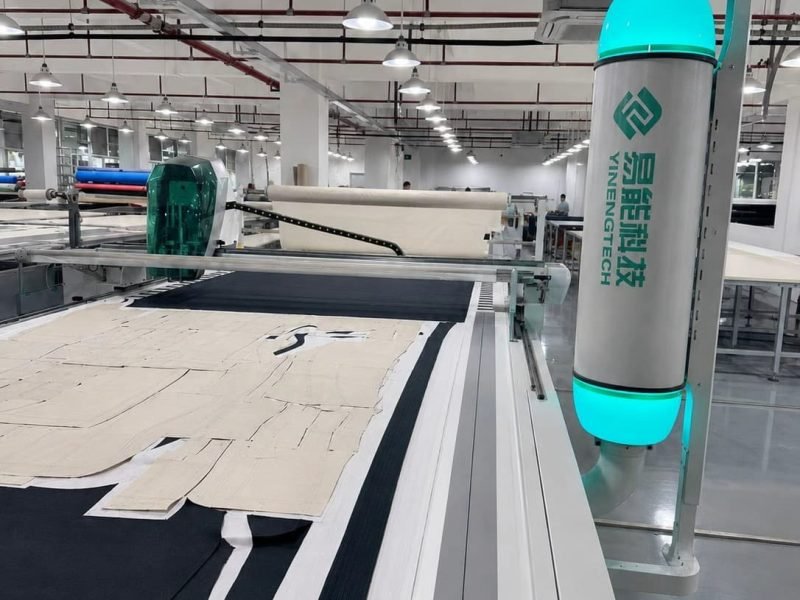
XZapparel’s manufacturing system combines automated and manual cutting according to production needs. The choice of method depends on fabric behavior, order structure, style complexity, pattern geometry, and handling risk. Stretch, slippery, bias-influenced, printed, striped, or delicate materials may require different controls from stable plain wovens. Cutting inspection checks whether panels, notches, grain, matching points, and visible quality are suitable before sewing consumes the material.
Cutting is also where material efficiency and garment accuracy meet. Cost engineering cannot simply chase the tightest marker if panel distortion, print placement, or fabric defects create downstream rework. The cutting plan should protect the approved garment first, then optimize consumption within that standard.

Sewing Lines Are Matched to Product Complexity
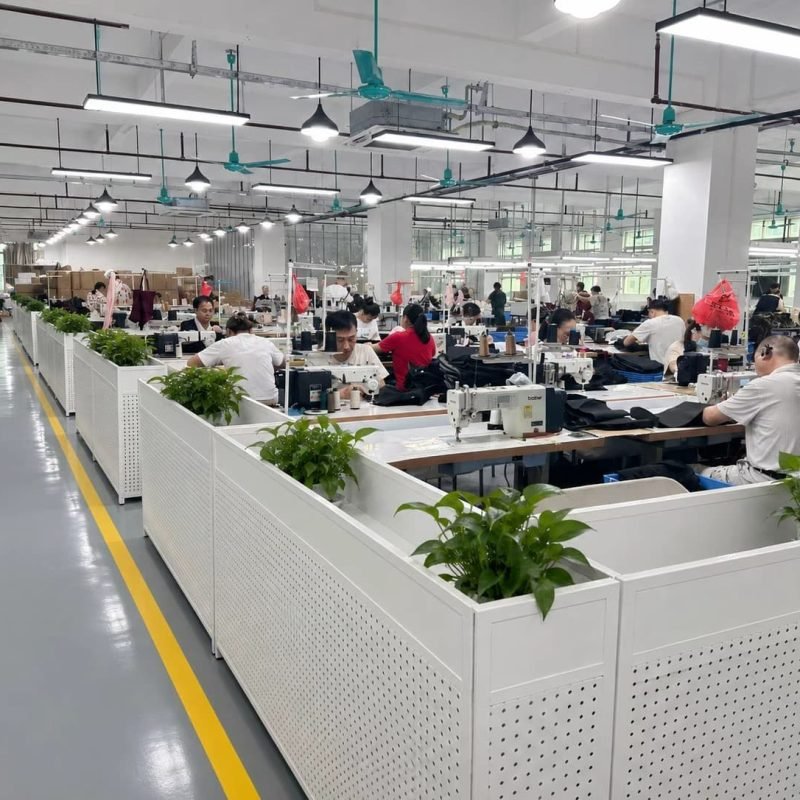
The current platform includes approximately 80 sewing lines and around 640 Brother sewing machines. Capacity is meaningful only when line planning reflects what is being produced. A multi-layer occasion dress, swim style, casual blouse, tailored bottom, and stretch active garment require different operation sequences, operator skills, attachments, pressing points, and inline checkpoints.
Before bulk starts, production planning should break the garment into a workable operation sequence and identify risk points. Neckline stretch, zipper insertion, lining attachment, elastic application, topstitching, support components, pattern matching, decoration clearance, and high-strain seams may need focused control. The objective is not to force every style through the same standard minute value or line configuration; it is to create a repeatable route for the approved garment.
For multi-SKU programs, line allocation also needs to balance launch timing and style complexity. Releasing every style at once can overload approvals, materials, or QC. Sequencing the collection around readiness can protect delivery while keeping enough flexibility for later styles to incorporate lessons from earlier production.
Inline Control Contains Problems Before They Multiply
Inline QC is most effective when it is connected to the approved sample, measurement specification, construction notes, and known risk areas. Inspectors and production leaders should know which details are critical for the style rather than looking only for generic sewing defects. A bodycon dress may require attention to seam waviness and measurement recovery; a blouse may require neckline, placket, and sleeve balance; a set may require matched color and top-to-bottom consistency.
When an issue appears, the decision should identify whether the cause comes from material, cutting, machine setting, operation method, measurement, or handling. Containment is more valuable than simply recording the defect after a large quantity is complete. Inline checks therefore work together with cutting inspection, measurement inspection, and finishing controls.
Corrective action should also feed back into the line. A repeated symptom that is fixed only at final inspection creates cost and timing pressure. A production system becomes more stable when the cause is corrected where it occurs and the approved method is reinforced for the remaining quantity.
Finishing and Packing Complete the Production Standard
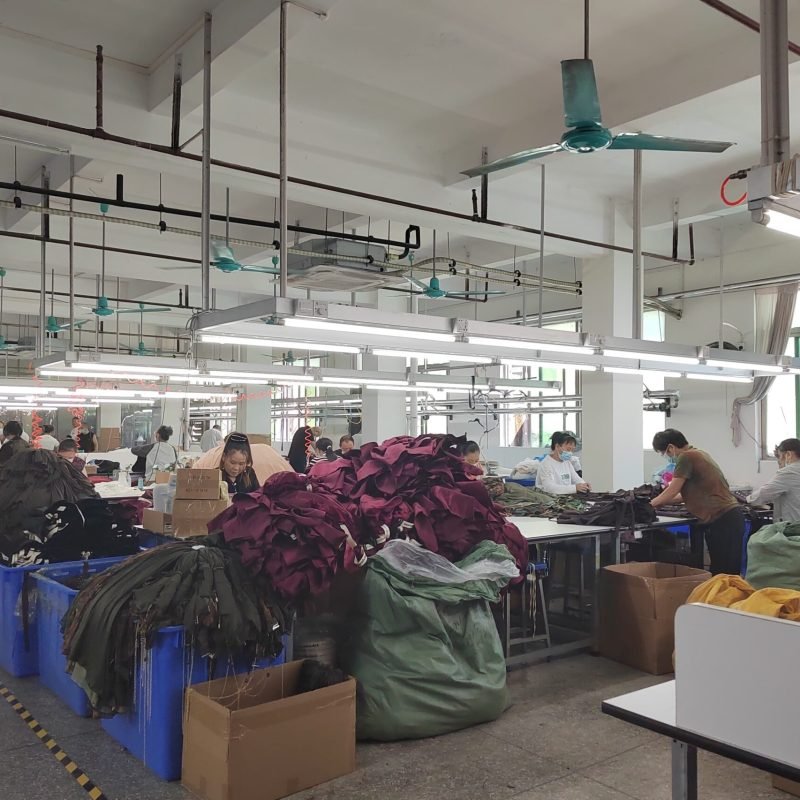
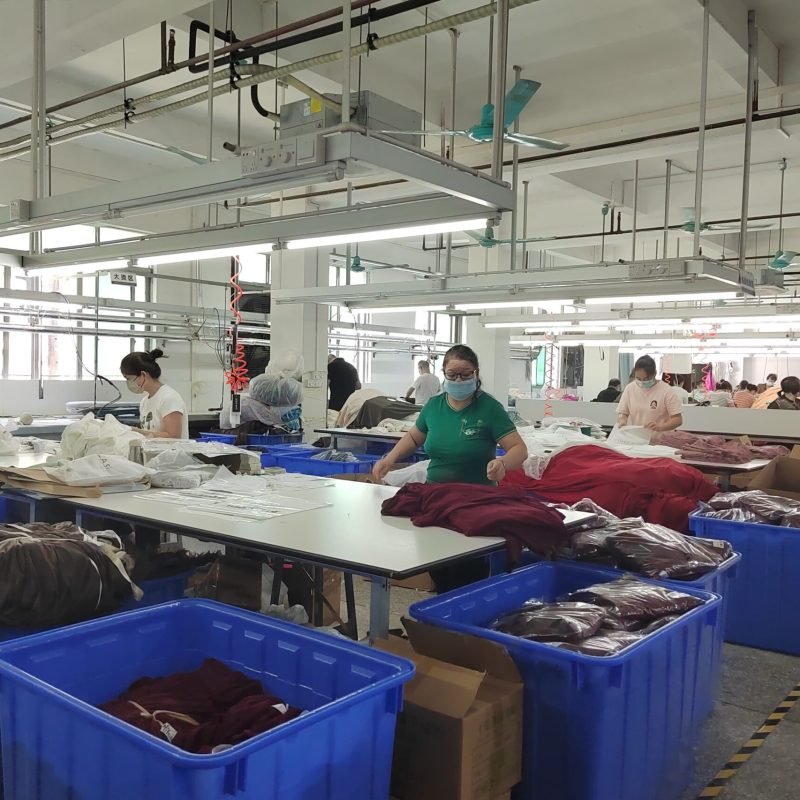
Finishing is not cosmetic clean-up after sewing. Pressing, thread trimming, stain control, shape, labels, closures, embellishment security, measurements, and overall presentation determine whether the garment matches the approved standard when it reaches final inspection. XZapparel’s quality flow includes 100% finishing inspection before final inspection, creating a dedicated gate for appearance and workmanship issues that should not move into packing.
Packing requirements should be confirmed before the end of production. Fold method, polybag, size stickers, barcodes, hangtags, cartons, assortment, retailer instructions, and shipping marks can differ by program. Packaging components may also carry supplier lead time or artwork approval, so they belong in the production plan from the start.
The last production handover should connect finished garments, final inspection requirements, packing instructions, and shipping readiness. A well-managed end stage protects the work completed earlier and avoids turning labeling or packing details into last-minute delivery risks.
Quality Gates From Fabric to Packed Garments
Quality is controlled through defined gates rather than relying on a final inspection to discover problems after the full order has already been produced.

Fabric Inspection

Pre-Production Meeting
Cutting Inspection
Cut panels are checked before they enter sewing to contain issues related to panel accuracy, visible defects, shade, grain, stretch direction, matching points, print or stripe alignment, and other style-specific requirements.
A cutting error can be repeated across every garment if it is not identified early. Inspection at this stage protects both material value and later sewing capacity by preventing known panel problems from consuming production time.

Inline QC
Measurement Inspection
Measurement inspection connects bulk garments to the approved specification and fit intent. Critical POMs are checked against the agreed tolerance, with product-specific attention to areas that influence silhouette or function.
Measurement should not be reduced to one final table at the end of production; early checks help identify pattern, cutting, sewing, or handling drift before the issue spreads across the order.
100% Finishing Inspection

Final Inspection
Final inspection evaluates the completed order against the agreed inspection requirement. Depending on the program, final inspection can follow AQL 2.5, AQL 4.0, customer-defined criteria, or 100% inspection where agreed. The inspection standard, sample size, defect classification, measurements, packaging, and documentation should be confirmed for the project rather than assumed. Final inspection verifies the finished lot; it does not replace earlier process control.

Packing Inspection
Packing inspection confirms that approved garments are packed according to the required method, assortment, labels, barcodes, hangtags, polybags, cartons, and shipping marks.
Errors at this stage can create retail or warehouse problems even when the garment itself is correct. Packing control therefore closes the quality chain by checking whether the finished product is ready for the intended logistics and receiving process.
MOQ, Sampling, and Lead-Time Feasibility
Commercial feasibility depends on product complexity, material readiness, color structure, trim requirements, approvals, and the order plan. Baselines below are starting points for project review.
| Decision Area | XZapparel Baseline | What Can Change It | Useful Inputs to Send |
| Standard garment MOQ | 200 pcs/style/color | Fabric MOQ, custom trims, color splits, embellishment, specialist processes, supplier minimums | Style count, quantity by color, fabric direction, trim/process details |
| Simple sample | Typically 3-5 working days | Material sourcing, trim readiness, pattern complexity, sample queue | Tech pack or reference, base size, fabric, key measurements |
| Complex sample | Typically 5-7 working days | Structure, lining, support, embellishment, specialist process, custom components | Detail photos, construction notes, fabric/trim references |
| Sample revision | Typically 2-3 working days | Scope of changes, replacement materials, new pattern work, new components | Marked fit comments, revised spec, approval priorities |
| PPS | Typically 4-5 working days | Final material/trim availability, artwork, labels, packaging, unresolved approvals | Approved sample comments, final BOM, artwork, packing requirements |
| Bulk production | Typically 25-35 working days after materials are ready, PPS is approved, and production details are confirmed | Product mix, order size, material lead time, specialist processes, approval timing, packaging | Quantity breakdown, delivery window, confirmed materials, PPS target, quality requirements |
| CTA | Check Project Feasibility | ||
Multi-SKU Programs Need More Than Sewing Capacity
Established brands often develop 10-30 styles in one program. The real challenge is coordinating approvals, materials, timing, and quality across the assortment without losing style-level control.
Parallel Development
Multiple styles rarely move at the same speed. One may be waiting for fabric, another may need a fit revision, and another may already be ready for PPS. Parallel development works best when each style has a clear status, owner, next action, and approval requirement.XZapparel’s pattern and sample structure allows several styles to move at once, but the sequence should still prioritize high-risk silhouettes, specialist processes, and materials with longer sourcing lead times.
- Separate style status prevents one delayed SKU from hiding the readiness of others.
- High-risk products should enter sampling early enough for revision.

Material Coordination
A collection can become unnecessarily expensive or slow when every style uses unrelated fabrics, trims, colors, and suppliers. Material coordination looks for sensible commonality without forcing design compromise. Shared fabric groups, linings, zippers, elastics, labels, or color standards can improve sourcing efficiency, but the decision must respect fit, drape, opacity, stretch, and construction. Supplier MOQ is reviewed at program level because one common material may support several styles even when each garment quantity is different.
- Consolidate only where technical requirements remain compatible.
- Keep shade and lot control visible across coordinated styles.

Approval Tracking
Every style can carry pattern, sample, fit, fabric, trim, artwork, PPS, label, and packaging approvals. Verbal approval is easy to lose when a program includes many SKUs and revision rounds.
A controlled approval route should show which version is current, what remains open, and whether a later change affects cost, MOQ, fit, or delivery. Production should not treat “almost approved” as equivalent to an approved PPS.
- Version control protects the latest fit and construction decisions.
- Changes after approval require impact review before bulk release.

Production Planning
A 20-style program should not be treated as one large order or 20 unrelated orders. Line allocation, material readiness, construction complexity, specialist-process timing, quality checkpoints, and delivery windows need to be sequenced. Some styles can share production logic; others require separate controls. The plan should protect launch priorities while avoiding a situation where too many complex styles compete for the same people, equipment, or finishing resources at the same time.
- Sequence by readiness and risk, not only by style number.
- Align packing and shipment requirements before the last production stage.

Quality Alignment
Different styles have different defects, but a brand still needs one quality language across the program. Measurement tolerance, workmanship, color, labels, packaging, defect classification, final inspection, and documentation should be aligned before bulk.
Product-specific checkpoints are then added where needed: stretch recovery for swim or fitted styles, zipper behavior for dresses, waist construction for bottoms, or matching color and fit for sets.
- Shared standards improve consistency across the assortment.
- Product-specific risk remains visible inside the common QC framework.

Reorder Continuity
- Reuse approved standards where inputs remain unchanged.
- Revalidate changes before treating a reorder as a repeat.
Anonymized Multi-Style Womenswear Production Case
A representative program shows how style count, material groups, approvals, and bulk controls can be organized when an established fashion brand places a multi-SKU order.
Program Brief: 18 Styles and 42,600 Pieces
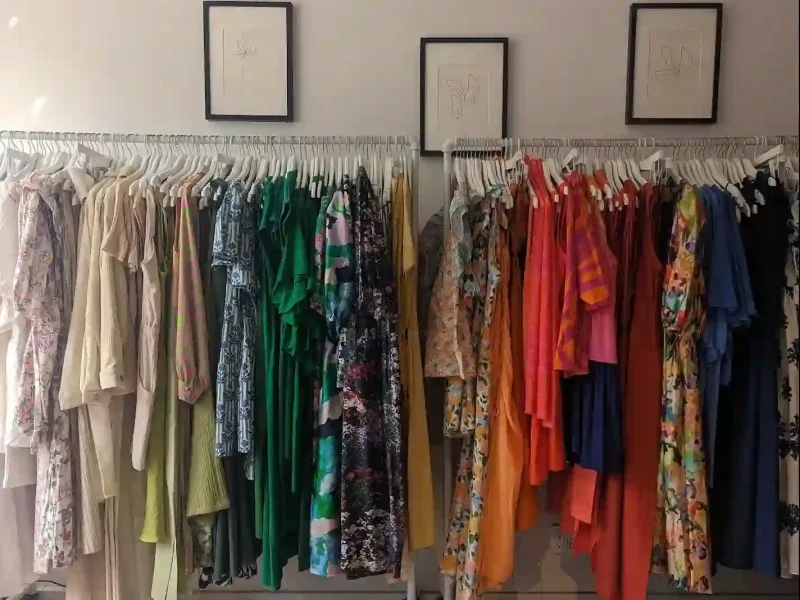
The anonymized program structure reflects current brand-order patterns where one development cycle may include 10-30 styles and total quantities commonly sit between 20,000 and 80,000 pieces. In this example, the order covered 18 women’s styles with 42,600 pieces across dresses, fitted tops, skirts, and matching sets. The commercial challenge was not individual garment quantity; it was keeping fit, fabric, color, trims, approvals, and production timing aligned across a collection with different levels of construction complexity.
The program was divided into product groups rather than managed as 18 unrelated styles. Structured and lined pieces were treated separately from stretch-fitted styles. Coordinated sets shared material and color decisions where technically suitable. More complex styles entered development earlier because they carried greater risk around support, lining, closure, or embellishment. Simpler styles could move faster once fabrics and size direction were confirmed.
Quantity planning was reviewed by style and color instead of using the total order volume as a shortcut. A 42,600-piece program can still contain colors or trims that fall below supplier minimums. The sourcing review therefore checked fabric and component thresholds before approvals were locked. The objective was to make the whole assortment commercially workable, not merely to accept the headline quantity.
Development and Approval Route
The first development stage focused on fit families, material groups, and construction risk. Styles using similar stretch behavior could reference related fit logic, while structured woven products followed separate pattern and support decisions. Reference images and technical information were converted into pattern and sample questions. Fabric, lining, zipper, elastic, and decoration requirements were reviewed early so sample changes did not repeatedly reset sourcing decisions.
Sample comments were controlled by style and version. Fit revisions were translated into POM and pattern updates rather than broad visual comments. Material changes were flagged when they could affect drape, stretch, opacity, seam behavior, or support. Complex styles moved through additional review before PPS, while simpler styles were released when design, material, measurement, and construction were stable.
PPS served as the handover point between development and production. Each approved style needed the current specification, material and trim direction, construction details, labels, and packing requirements to match the physical reference. Styles were then scheduled according to material readiness, process complexity, and shipment priority rather than being forced into one production start date.
Bulk Control Across the Assortment
Bulk control followed the same quality route used across the factory system: fabric inspection, pre-production meeting, cutting inspection, inline QC, measurement inspection, 100% finishing inspection, final inspection, and packing inspection. The checkpoints were shared, while the risk focus changed by style. Structured dresses required closer attention to support, lining, zipper insertion, and balance. Stretch tops required seam and measurement control. Sets required color and top-to-bottom consistency.
The most useful lesson from a multi-style order is that scale alone does not make the program easier. More styles create more approval paths, more supplier dependencies, and more opportunities for version confusion. Centralized development and a controlled handover reduce those risks by keeping product, sourcing, production, and QC decisions connected.
The program profile also shows why established brands should evaluate a factory by development depth and coordination capacity, not only by monthly production. A factory can have enough sewing capacity but still struggle if pattern, sample, sourcing, and approval systems cannot manage several styles at different stages at the same time.
Compliance and Documentation With Clear Ownership Boundaries
Documentation is reviewed according to the legal entity, factory, material, supplier, target market, and project requirement so one certificate is not presented as proof for unrelated scopes.
SMETA Records
SMETA is recorded within the current company/factory fact base and can be used within the verified scope. A sourcing team should still review the relevant entity, site, audit date, scope, and current document rather than relying on a logo alone. Social compliance documents are most useful when they form part of supplier qualification and can be matched to the manufacturing location involved in the project.
- Verify current document details during onboarding.
- Keep audit scope connected to the relevant factory entity.
ISO Records
ISO is also recorded within the company/factory fact base. The exact certificate, scope, issuing body, and validity should be supplied from current documentation during formal qualification. Public content should not extend an ISO claim beyond what the certificate actually covers. For project review, the document supports evaluation of the management system but does not replace product-specific QC, testing, or the brand’s own acceptance standard.
- Use the current certificate rather than generic claims.
- Product quality still depends on project-level controls.
BSCI Project Support
BSCI is treated as project-support capability rather than automatically presented as an XZapparel factory certification in all contexts. When a program requires BSCI-related qualification, the correct facility, document route, and scope should be reviewed for the project. Keeping the distinction clear avoids assigning a partner or project-specific document to the wrong legal or manufacturing entity.
- Confirm requirement early in supplier onboarding.
- Match the audit route to the production plan.
Material Certifications
GRS, OEKO-TEX, and related material documents belong to the qualified supplier or material boundary unless XZapparel itself holds the relevant certification.
A brand requesting certified or documented materials should specify the required standard, product scope, transaction or chain-of-custody needs, and target market. Sourcing then focuses on suppliers able to provide the appropriate documentation for the selected material rather than transferring a supplier certificate into a factory claim.
- Material documents follow the material and supplier scope.
- Confirm documentation before bulk material commitment.
Third-Party Testing and Inspection
External laboratories or inspection companies can be used when brand standards, retailers, markets, or project risk require independent results.
Third-party reports should identify the tested product, method, result, date, and relevant scope.
A generic report from another material or order should not be used as evidence for a new project.
Required testing and inspection should be included in the project plan early enough to protect shipment timing.
- Define required test methods and acceptance criteria before production.
- Allow time for external testing or re-test where needed.
Documentation for Supplier Qualification
Formal onboarding may require factory information, audit documents, quality procedures, testing capability, product scope, trade information, and project-specific records.
The correct package depends on the brand’s vendor manual and destination market. XZapparel can organize relevant information for review, while restricted legal fields, client records, or documents outside the approved public scope remain controlled and are supplied only through the appropriate business process.
- Send the supplier questionnaire and required document list early.
- Separate public claims from controlled qualification documents.
How to Evaluate a Women’s Clothing Factory in China
Use the same qualification criteria across shortlisted factories. A strong manufacturing partner should make product strengths, development depth, process ownership, commercial conditions, and evidence easy to verify.
Verify the Manufacturing Base
Ask where pattern making, sampling, cutting, sewing, QC, finishing, and packing actually happen. Factory photos are useful only when they can be connected to real functions, locations, and current production. If a supplier uses partner factories, ask which stages are external and who controls approvals and final quality.
Transparency is more valuable than an “everything in-house” claim that cannot be verified.
Match Product Maturity
A factory may list dozens of product categories but have deep experience in only a few.
Ask which categories are core, which are established, which rely on specialist partners, and which are still development areas.
Review real samples, construction details, fabric knowledge, and bulk records for the products closest to your collection.Product maturity should influence supplier allocation more than the number of category names on a website.
Review Development Capacity
Look beyond sample speed. Check whether the factory has enough pattern, sample, and technical capacity to manage your expected style count and revision rounds.
Ask how reference images, tech packs, size charts, fit comments, and PPS approvals are controlled. For multi-SKU programs, a strong development system should keep styles moving independently while preserving clear version control and common brand standards.
Check Material Control
Ask how fabrics and trims are selected, approved, inspected, and traced into bulk.
Review whether the team understands GSM, stretch/recovery, drape, opacity, shrinkage, color, lining, trim MOQ, and material lead time in relation to your products.
A sourcing network is useful only when it can translate design requirements into materials that remain commercially and technically suitable at bulk quantity.
Confirm Process Ownership
Embroidery, printing, knitwear, washing, pleating, beading, special finishing, and other processes may involve specialist partners. Ask who owns each process, where it happens, how samples are approved, how processed goods are checked, and who is responsible for corrective action. Clear ownership helps prevent a hidden subcontracting chain from becoming a quality or compliance risk after the order is placed.
Inspect the QC Gates
A final inspection report does not show how quality is controlled during production.Review the full route from fabric inspection and pre-production meeting through cutting, inline QC, measurement, finishing, final inspection, and packing.
Ask which checkpoints change by product and how repeated defects are contained. The system should be able to explain how an approved sample is converted into a repeatable bulk standard.
Test Commercial Fit
Compare garment MOQ, fabric MOQ, trim MOQ, color splits, sample timing, bulk lead time, payment terms, packaging, logistics, and approval deadlines against your actual program.
A supplier with a low headline MOQ may still be unsuitable if custom fabric or hardware requires larger commitments. A realistic quotation should show the variables that can change price, quantity, or delivery rather than presenting one unconditional number.
Inspect Documentation
Request the documents that matter to your market and vendor policy, then confirm the owner, facility, validity, and scope.
Audit certificates, material certifications, test reports, inspection records, and legal information should be matched to the entity or product they actually cover.
A disciplined supplier will explain boundaries clearly instead of using unrelated documents to create the appearance of broader compliance.
Women’s Clothing Factory Frequently Asked Questions
Send Your Women’s Collection for Factory Review
A useful quotation starts with enough information to understand the product, not only a target quantity. Send your collection brief, tech pack, reference images, size chart, or current sample information and the team can review product fit, material direction, construction, specialist processes, sampling route, MOQ conditions, and production timing. For multi-style programs, include the full style count and launch window so development and bulk planning can be reviewed as one collection instead of separate isolated orders. Confidential files should be shared through the normal project process and used only for development and quotation review.
Please include as much of the following as available:
- Product categories and total style count
- Quantity by style, color, and size range
- Target fit, base size, and size chart
- Fabric, lining, trim, and construction direction
- Print, embroidery, embellishment, or specialist processes
- Sample target, PPS target, and bulk delivery window
- Target market, quality, testing, and packaging requirements
- Tech packs, sketches, reference images, or sample photos