Skip to content

The womenswear market is entering a period in which attractive designs alone are no longer enough to guarantee commercial success. Fashion brands are navigating changing consumer expectations, rising sourcing costs, unpredictable demand, faster digital product discovery, and growing expectations around quality and transparency. At the same time, opportunities continue to emerge across everyday essentials, expressive occasionwear, coordinated sets, resort collections, and products that combine distinctive design with practical wearability. The real challenge is deciding which changes deserve investment and which are simply temporary bursts of attention.
Womenswear market trends in 2026 are being shaped by five connected forces: value-conscious shopping, evolving product preferences, digital and AI-assisted discovery, greater attention to material and garment quality, and more complex sourcing decisions. Brands can respond more effectively by validating demand, matching products to their target customers, testing fabrics and fit, and assessing manufacturing feasibility before committing to bulk production. The strongest strategy combines market evidence with product-level decisions rather than following every visible trend.
Consider a brand preparing a new summer collection. A particular dress silhouette may attract attention online, but the fabric could be difficult to source consistently, the construction may exceed the target price, and the trend could lose momentum before the collection reaches stores. Another product with a simpler silhouette and more reliable demand might deliver better commercial results. Understanding these differences is what turns fashion trend awareness into a practical business advantage.
What Is Driving the Womenswear Market in 2026?
The womenswear market in 2026 is being shaped by economic uncertainty, changing shopping priorities, digital discovery, and evolving fashion preferences. Brands need to examine market data, regional demand, category performance, and production feasibility together rather than assuming that one global trend determines which products will succeed.
What Do Current Market Forecasts Reveal?
Market forecasts help fashion brands understand the broader commercial environment, but their value depends on how closely the data relates to a specific product category, customer, and selling market. A global womenswear forecast may describe the overall size of the industry, while a regional report can reveal differences in purchasing power, category demand, distribution channels, and competitive conditions. Neither automatically tells a brand which styles will sell or which manufacturing investment will be profitable.
For example, a brand developing contemporary dresses for European retailers needs different information from a business focused on affordable everyday tops in North America. Both operate within womenswear, but their customers, retail prices, material requirements, and inventory risks can differ considerably. Market research should therefore be evaluated at several levels: market size, historical performance, projected growth, category contribution, geographic relevance, and the assumptions behind the forecast. It is also important to distinguish retail sales from manufacturer revenue because retail figures include margins and other costs that do not translate directly into garment manufacturing revenue.
Industry reports can provide useful context for these decisions. McKinsey and Business of Fashion’s State of Fashion 2026 report examines economic pressure, tariffs, changing consumer expectations, and the need for greater operational flexibility across the fashion industry. Its findings illustrate why brands should evaluate commercial opportunities alongside cost and supply-chain conditions rather than relying exclusively on optimistic growth projections.
For XZapparel, market forecasts become most useful when they help a brand define a clearer product-development brief. A large market valuation may justify further research, but the decision to develop a particular garment should also reflect the brand’s sales history, intended retail price, target customer, and expected order quantity. Market data identifies potential opportunities; product-level evidence determines whether those opportunities deserve further investment.
How Are Prices and Trade Costs Changing?
Price pressure affects more than the amount a customer sees on a product page. It influences fabric selection, garment construction, order quantities, sourcing locations, inventory exposure, and the margin available to absorb unexpected costs. A manufacturer may quote a lower garment price, but that figure alone does not establish whether the finished product will deliver the required quality or whether the total landed cost will remain commercially attractive.
Trade policy introduces another layer of complexity. Tariffs, freight changes, currency movements, and supplier pricing can alter the cost of a collection after development decisions have already been made. This is especially important for brands selling internationally because the same garment may face different import costs and retail conditions in different destinations. McKinsey’s 2026 fashion outlook highlights tariff-related pressure and the importance of sourcing adjustments, price management, and operational efficiency. These changes do not affect every product or country equally, so brands should evaluate the conditions relevant to their own distribution markets.
A practical cost review should separate expenses into identifiable components rather than relying on one quoted garment price.
| Cost component | What needs to be assessed | Commercial impact |
|---|---|---|
| Main fabric | Composition, weight, usable width, yield, and supplier minimums | Material cost and fabric consumption |
| Trims and components | Availability, minimum quantities, and specifications | Purchasing commitments and development complexity |
| Construction | Seams, lining, closures, support, and finishing | Labor requirements and product performance |
| Order quantity | Quantity per style and color | Unit economics and inventory exposure |
| Freight and duties | Destination, shipping method, and applicable trade rules | Landed cost and retail margin |
| Quality management | Testing, inspection, and defect prevention | Rework, returns, and replacement costs |
These variables interact. A fabric with a lower price per meter may create more waste if its usable width does not suit the pattern. A decorative process may improve a dress’s appearance but introduce additional approvals, material minimums, and production time. Cost engineering should therefore preserve the product features that matter to the customer while identifying savings that do not undermine fit, appearance, or durability.
At XZapparel, the practical objective is to help establish whether the proposed garment can meet its intended specifications and commercial requirements. This creates a more useful basis for comparing quotations than selecting a supplier solely because its initial unit price appears lower.
Which Market Signals Indicate Lasting Growth?
A lasting market opportunity is supported by more than visibility. Search interest, runway coverage, social engagement, and retailer commentary can indicate that a product direction is attracting attention, but stronger commercial evidence comes from actual purchases, replenishment, customer feedback, and performance across relevant selling periods.
The Vogue Business Spring/Summer 2027 buyer report, published in October 2026, examined collections presented across 440 fashion shows and presentations in four major fashion capitals. Buyers highlighted skirts, expressive colors, embellishment, lace, and distinctive occasionwear while considering which products could work commercially. These observations offer a useful view of industry expectations, but runway and buyer commentary should not be confused with confirmed retail sales.
Brands can evaluate emerging opportunities through three evidence groups:
- Historical evidence, including sales, replenishment, return reasons, and the performance of comparable products.
- Forward-looking signals, including search trends, retailer reports, runway analysis, and relevant consumer research.
- Operational evidence, including material availability, achievable pricing, development time, and manufacturing feasibility.
An internal scoring model can help teams compare ideas more consistently. A brand might score each opportunity from 1 to 5 for customer demand, brand fit, margin potential, manufacturing feasibility, and replenishment potential. These scores are planning tools rather than industry benchmarks, and they should not replace commercial judgment. A high overall score should never conceal a serious weakness in cost, quality, or delivery feasibility.
The important distinction is between an attractive idea and a validated business opportunity. A style with strong visual appeal may justify a sample, but it should not automatically justify a large production commitment. For XZapparel, the next question is whether the proposed design can be translated into suitable materials, reliable construction, an approved sample, and a production plan that fits the brand’s intended market.

Which Womenswear Categories Are Gaining Momentum?
Commercial opportunities differ by customer, season, geography, and price position. Dresses, tops, bottoms, coordinated sets, swimwear, and resortwear can serve different purposes within a collection. The strongest category choices combine relevant customer demand with a distinctive product proposition, realistic pricing, and manageable development and production requirements.
Which Clothing Categories Offer Commercial Potential?
Different womenswear categories contribute different benefits to a collection. Dresses can communicate a complete style through silhouette, color, fabric, and occasion. Tops and bottoms create more outfit combinations, while coordinated sets offer a connected look that can be worn together or separately. Swimwear and resortwear can support seasonal collections, while activewear serves customers seeking garments designed around movement and performance.
The right category mix depends on the brand’s identity and sales model. A contemporary fashion label may rely on statement dresses and expressive tops to establish its aesthetic, while a retailer focused on everyday dressing may prioritize versatile separates and coordinated essentials. Neither assortment is universally superior. Each needs to reflect customer purchasing habits, the retailer’s merchandising strategy, and the role each product plays in the collection.
Manufacturing requirements also differ across categories.
| Category | Important product variables | Development priorities |
|---|---|---|
| Dresses | Silhouette, drape, length, lining, and occasion | Fit, fabric behavior, finishing, and movement |
| Tops and blouses | Neckline, sleeves, collar, and body proportions | Measurements, construction, and comfort |
| Bottoms and skirts | Waist, hip, rise, length, and drape | Pattern accuracy, fit, and fabric recovery |
| Coordinated sets | Shared fabric, color, and complementary styling | Cross-style consistency and combined planning |
| Swimwear | Stretch, support, lining, and coverage | Elastic performance, fit, and material suitability |
| Activewear | Movement, stretch, recovery, and durability | Construction performance and intended-use testing |
For a multi-category collection, the objective is not necessarily to produce as many categories as possible. It is to select a coherent range that meets the customer’s needs without creating unnecessary complexity in fabric sourcing, trim purchasing, sampling, and production scheduling. A smaller, well-defined assortment may be easier to validate and manage than a wide range of unrelated products.
XZapparel’s core manufacturing categories include dresses, tops, bottoms, swimwear, and sets. Activewear, shapewear, and sweatwear are established capabilities, while selected specialist categories and processes may be managed through long-term specialist partners. Matching the product to the appropriate capability helps establish a realistic development route before a project begins.
How Are Casualwear and Occasionwear Evolving?
The distinction between casualwear and occasionwear is becoming less restrictive in many contemporary collections. Customers may want clothing that feels special without being difficult to wear, while everyday pieces can incorporate more distinctive details, richer textures, or expressive proportions. This creates opportunities for garments that combine visual interest with practical comfort and versatility.
Recent runway coverage illustrates the range of directions brands are exploring. The Spring/Summer 2027 buyer report highlighted lace, sheer fabrics, lingerie-inspired dressing, romantic details, expressive colors, and embellished separates. Buyers also considered commercial wearability rather than treating every runway idea as a likely bestseller. Such observations can help brands identify creative directions, but they need to be interpreted in the context of each label’s customer and retail position.
For product developers, the challenge is deciding which details should define the garment and which can be adapted to make it more commercially practical. A statement blouse might retain an unusual neckline but use a simpler body construction. A romantic dress could achieve its intended appearance through fabric choice and selective lace placement rather than extensive decorative work. A coordinated set might use a distinctive color or texture while maintaining a familiar silhouette.
Three considerations help maintain this balance:
- Preserve the features that make the product recognizable and relevant to the brand.
- Evaluate whether each decorative or structural detail improves the customer experience enough to justify its cost.
- Confirm that the selected fabric, construction, and finishing methods can achieve the intended result consistently.
This approach does not require brands to avoid ambitious designs. It helps distinguish creative value from complexity that adds cost without a corresponding customer benefit. A visually expressive garment can still be commercially practical when the team understands which features matter most and how they affect material use, production time, and final price.
A useful development process begins with the visual objective, then tests the technical choices needed to achieve it. Fit, material behavior, construction, and price should be reviewed together before the product is approved for bulk production.
Do Seasonal Trends Translate Into Repeat Demand?
Seasonal trends can introduce new customers to a product, but repeat demand depends on whether the garment continues to meet their expectations after the initial attraction. A striking print may generate short-term interest, while a well-fitting top or coordinated set may remain relevant across several launches. The actual outcome depends on the product, customer, price, distribution, and quality.
Forecasts can help brands identify ideas worth testing, but a predicted rise in interest does not establish how much inventory a brand should purchase. Forecast visibility, search activity, runway coverage, and sales measure different things. Teams should avoid treating one signal as a substitute for the others, particularly when a product requires substantial material commitments or complex development.
Brands can reduce uncertainty by testing a limited number of variations before expanding a trend into a larger collection. A dress might be evaluated in two print scales or a small selection of colorways while retaining a consistent silhouette and construction approach. Comparing the resulting performance can help the team determine whether customers respond primarily to the print, the fit, the price, or the overall styling.
This method can also improve production planning. Shared fabrics, compatible trims, and related patterns may make it easier to compare variations while controlling development complexity. However, material commonality should not be forced if it compromises the intended performance or appearance of an individual garment.
Repeat demand should ultimately be judged through evidence such as sales over time, customer feedback, return reasons, and replenishment performance. A product that sells quickly because of a temporary promotion may behave differently from one that continues to sell at its intended price.
For XZapparel, a commercially focused approach means helping brands turn a promising trend into a defined product and evaluating its manufacturability before larger commitments are made. This supports creative experimentation while keeping development connected to the realities of cost, quality, and production.
How Are Consumer Preferences Changing?
Consumers are balancing price, trend relevance, quality, comfort, and personal expression in different ways. These priorities vary by market and customer segment, so brands should avoid assuming that one global preference defines the entire womenswear market. Effective product decisions begin with a clear understanding of what the target customer values and how those expectations translate into garment specifications.
What Do Consumers Expect From Modern Womenswear?
Modern womenswear needs to perform in everyday life as well as look appealing in photographs. Depending on the product and audience, customers may expect comfortable movement, dependable fit, appropriate fabric weight, versatile styling, and finishing that remains satisfactory through normal use. They may also want distinctive design details that make a garment feel relevant to their personal style and worth its price.
These expectations have direct technical consequences. A relaxed shirt still needs suitable shoulder proportions and a collar that maintains its intended shape. A fitted dress requires careful control of measurements, fabric behavior, and construction. A coordinated set should feel consistent across both pieces, even if each garment has different design details. These are not minor production considerations; they influence the experience customers have after purchasing the product.
The challenge is that words such as “comfortable,” “premium,” and “versatile” are not precise manufacturing specifications. They need to be translated into measurable requirements that can be evaluated during development and sample approval. A product brief may define target garment measurements, permitted tolerances, fabric composition, weight, stretch, recovery, lining, closures, construction details, and color standards. The exact requirements depend on the product category and target customer.
At XZapparel, product development connects the intended silhouette with fabric selection, pattern work, construction, and sample review. This helps translate broad customer expectations into practical requirements that the brand and manufacturer can evaluate together, reducing the risk of approving a garment that looks right but does not perform as intended.
Are Quality, Comfort, and Value Becoming More Important?
Value is not simply the lowest price available. A garment can be inexpensive but disappoint customers through inconsistent sizing, poor fabric behavior, or weak construction. Conversely, a more expensive product must offer benefits that justify its price, whether through design, materials, fit, durability, or a distinctive brand proposition. The right balance depends on positioning, and different brands will not necessarily prioritize the same product features.
Strategy& reported findings from a December 2025 survey of 2,000 consumers in Germany and Austria in its 2026 fashion retail outlook. In that sample, 51% identified frequent offers and discounts as a reason to repurchase from a brand, 42% cited trend-relevant assortments, and 41% cited assurance of quality. The report also found that 56% had increased their purchases of discounted fashion during the preceding 12 months. These findings are specific to the surveyed markets and should not be interpreted as global womenswear statistics.
The findings illustrate a commercial tension: customers may want current designs while remaining highly conscious of price and quality. Before reducing costs, teams should identify which features matter most to the intended customer. A fabric substitution may be reasonable if it preserves the required drape, comfort, appearance, and durability. Simplifying an internal construction detail may be appropriate if it does not affect performance. Removing a feature that defines the product’s fit or quality, however, may weaken its value proposition.
A sound value strategy evaluates the relationship between price and product performance rather than treating cost reduction as an isolated goal. This makes supplier discussions more productive because decisions can be tied to the benefits the garment is expected to deliver. It also gives brands a clearer way to compare alternatives when material availability or production costs change.
How Do Regional Preferences Affect Product Demand?
Regional preferences reflect climate, culture, purchasing power, local retail competition, and the occasions for which people buy clothing. A lightweight resort dress may be suitable for one market or season but less relevant elsewhere. Sleeve length, coverage, fabric weight, print, color, and fit can also influence how well a product meets local expectations.
International brands should distinguish between the design elements that define their identity and the features that may require local adaptation. A familiar silhouette might work across several markets, while the fabric weight, lining, or length changes to suit local conditions. This can create a more relevant assortment without fragmenting the brand into entirely different collections. It also helps teams avoid treating broad geographic labels as substitutes for actual customer research.
Regional product decisions should account for operational constraints as well. A material may be attractive for a particular climate but difficult to source consistently in the required color or quantity. A construction method may be technically suitable but increase the finished garment cost beyond the intended retail range. These factors are best evaluated before the product is finalized, when adjustments are easier to make.
A useful market review covers five variables:
- Climate and season, including fabric weight, coverage, lining, and intended wear period.
- Customer and occasion, including where the garment will be worn and what the customer expects from it.
- Price position, including the material and construction choices compatible with the intended retail price.
- Fit and styling, including measurements, proportions, and design details that may require adjustment.
- Distribution and timing, including planned order quantities, launch dates, and delivery requirements.
Brands should use local sales information and customer feedback wherever possible instead of relying exclusively on broad regional assumptions. Even within the same country, preferences can differ between customer groups and sales channels.
For XZapparel, a clear target-market brief provides a better starting point for development than a generic request to make a garment suitable for a particular continent. The intended customer, product use, fit, materials, and price range should be discussed together so that technical decisions support the actual commercial objective.
How Are Search, Social Media, and AI Shaping Demand?
Search engines, social platforms, and AI-assisted tools are changing how consumers discover fashion and how professional teams research products and suppliers. These channels can reveal emerging interests and help people compare options, but online attention is not proof of profitable demand. Brands need to combine digital signals with customer behavior, product suitability, and commercial evidence.
How Can Search Trends Reveal Emerging Demand?
Search data can reveal which products, attributes, and questions people are actively exploring. Searches may focus on garment categories, silhouettes, colors, fabrics, occasions, or styling solutions. More specific queries can also indicate that a person is moving from general inspiration toward a defined product requirement, although search wording alone cannot establish purchase intent with certainty.
An increase in searches for summer sets, for example, could reflect seasonal demand, social-media exposure, or interest in a particular fabric or silhouette. It does not automatically establish how many customers will purchase the product or which price they will accept. Search interest should therefore be compared with other evidence before it influences significant inventory or development decisions.
A practical approach is to monitor a focused set of relevant queries over time, distinguish broad inspiration from specific product needs, and compare the results with sales and customer feedback. Brands should also consider the location, language, season, and time period represented in the data. Search patterns can differ substantially across markets, making an undifferentiated global trend difficult to interpret. A temporary spike may also be caused by media coverage rather than a lasting change in demand.
Search behavior can reveal useful product questions as well as fashion interests. Repeated searches related to fabric care, fit, sizing, or garment versatility may indicate that customers need clearer information or that an existing product does not fully address their expectations.
For manufacturers, these signals can help identify the questions brands are asking before development begins. A trend becomes more actionable when it can be translated into a defined garment, fabric requirement, target price, and intended customer. XZapparel can then discuss the technical implications of that product direction rather than assuming that a popular search phrase alone is enough to justify production.
Do Viral Fashion Trends Become Commercial Successes?
Viral fashion trends can spread quickly because images and short videos communicate a recognizable style in seconds. A silhouette, print, color, or styling combination may gain widespread attention before brands have enough evidence to understand whether consumers will purchase it. Some trends generate sustained demand, while others lose relevance before products reach the market.
This creates a timing challenge. Brands need enough time to develop a suitable garment, source materials, approve samples, and arrange production, yet excessive commitment to a short-lived trend can leave them with unwanted inventory. Even a promising concept may become unprofitable if complex construction, material minimums, or delayed delivery undermine the intended retail price or launch date.
Before pursuing a viral style, teams should ask whether it fits their established customer and collection identity. They should then evaluate material availability, design complexity, cost, and production timing. Where possible, a limited launch or focused product test can help establish whether customer interest translates into purchases. The appropriate scale depends on the brand’s selling model, available evidence, and tolerance for inventory risk.
Intellectual-property considerations also matter. A viral reference can inspire a new design direction, but copying protected artwork, distinctive design elements, or another brand’s product without appropriate authorization can create legal and commercial risks. The development process should clarify which elements are inspiration and which are intended to be original.
For XZapparel, an early concept or reference image can be examined in terms of silhouette, fabric, construction, and manufacturing feasibility. The aim is to establish a practical development route while respecting the brand’s design intent and applicable intellectual-property boundaries. The commercial objective is not to avoid every risky trend, but to distinguish a well-founded product opportunity from a short-lived burst of online attention and choose an appropriate level of commitment.
How Is AI Changing Fashion Discovery?
AI-assisted search allows consumers and professional teams to describe needs in more natural language. Instead of searching only for a general product category, someone may request a garment with a particular silhouette, fabric, price range, occasion, and style. Sourcing professionals can also use AI tools to compare manufacturing options, understand technical requirements, and prepare an initial supplier shortlist.
Strategy& reported that 25% of respondents in its Germany-and-Austria consumer survey were likely or very likely to purchase fashion directly through an AI assistant, while 26% believed an AI shopping assistant could match their personal style. The findings come from a survey of 2,000 consumers conducted in December 2025 and are not a global measure of AI purchasing behavior. They nevertheless illustrate why brands should pay attention to how people discover and evaluate products through emerging digital tools.
For fashion brands and manufacturers, discoverability depends on more than inserting popular phrases into web pages. Useful information should identify the business accurately, explain product capabilities, answer specific questions, and distinguish confirmed facts from general industry knowledge. Relevant technical details can be more useful than broad promotional statements because they help people assess whether a supplier matches their actual requirements.
For example, a womenswear manufacturing page should explain relevant product categories, development inputs, material considerations, sampling requirements, and production constraints. A general claim that a company manufactures every type of garment offers little guidance to someone evaluating a specific project. Clear headings, useful comparison tables, consistent company facts, and relevant internal links make the information easier to understand.
At XZapparel, the aim is to make manufacturing knowledge understandable to both people and automated systems. That means explaining what we do, how product development works, which conditions affect feasibility, and what information is needed to evaluate a project. These practices can improve the usefulness and clarity of a website, although no structure or wording can guarantee inclusion in an AI recommendation.
Which Fabrics and Product Features Matter Most?
The right fabric and product features depend on the intended silhouette, customer, use, and price position. Composition, weight, drape, stretch, construction, and finishing all influence the finished garment. Brands should evaluate these variables together because a material that looks attractive may still be unsuitable if it creates fit problems, inconsistent quality, or unacceptable production costs.
Which Materials Suit Different Womenswear Categories?
Fabric selection should begin with the garment’s intended behavior rather than a trend label or material name. A fluid dress may require a fabric with suitable drape and weight, while a structured blouse may need more body to maintain its silhouette. Stretch garments depend on suitable elasticity and recovery, and swimwear requires careful coordination between the main fabric, lining, elastic, and construction.
The material specification should identify the properties that affect the finished product. Depending on the category, these may include fiber composition, fabric construction, weight in grams per square meter (GSM), usable width, stretch, recovery, shrinkage, colorfastness, pilling, opacity, and care requirements. These factors influence how a garment fits, hangs, feels, and performs during normal use. The appropriate specification depends on the design and target market, so there is no universally correct fabric weight or composition for an entire product category.
A practical comparison can help teams identify the most important checks before sampling.
| Product type | Material priorities | Important checks |
|---|---|---|
| Dresses | Drape, opacity, weight, and lining requirements | Shrinkage, hem behavior, fit |
| Tops and blouses | Hand feel, breathability, structure | Collar, neckline, placket, measurements |
| Bottoms and skirts | Drape, stretch, recovery, thickness | Waist, hip, rise, seam stability |
| Coordinated sets | Compatible fabric behavior and appearance | Color consistency, shrinkage, shared trims |
| Swimwear | Stretch, recovery, lining, and support | Opacity, elastic performance, fit |
| Activewear | Movement, stretch, recovery, and durability | Intended-use performance and construction |
A heavier fabric may provide structure but feel uncomfortable in a warm climate; a lightweight material may improve drape but require additional attention to opacity or lining. Similarly, a fabric with excellent stretch may not recover sufficiently for a close-fitting silhouette. The material should therefore be evaluated against the intended garment rather than selected solely because it is fashionable or available at an attractive price.
At XZapparel, material choices are considered alongside pattern, construction, and intended use. This helps brands avoid selecting a fabric purely for its appearance before confirming that it can deliver the desired product behavior. Material availability and supplier minimums should also be reviewed early because they can affect color choices, order quantities, and production timing.
How Do Fit and Construction Affect Product Quality?
Fit and construction determine how the garment behaves on the body. A product may use the correct color and fabric yet still disappoint if its proportions are wrong, seams distort, or the garment behaves differently from the approved sample. These issues can affect comfort, appearance, customer satisfaction, and the consistency of repeat orders.
Fit should be assessed against a defined measurement specification rather than relying solely on a visual impression. Relevant measurements may include bust, waist, hip, shoulder, garment length, rise, inseam, armhole, or strap placement, depending on the garment. The team should also consider ease, movement, fabric stretch, and the way the intended silhouette changes across the size range.
Construction details require equal attention. Seam type, stitch performance, lining, elastic, closures, reinforcement, and finishing can affect both appearance and durability. A fitted stretch garment may require close attention to recovery and seam behavior, while a fluid woven dress may need careful control of fabric distortion and hem appearance. The appropriate checks depend on the product’s design, material, and intended use.
A disciplined development process typically includes:
- Confirming the intended fit and measurement specification.
- Reviewing fabric and construction compatibility.
- Evaluating the sample against the agreed requirements.
- Recording comments and identifying specific revisions.
- Approving the relevant sample and specifications before bulk production.
The objective is to reduce ambiguity. Comments such as “make it more premium” are difficult to implement unless they are translated into identifiable changes to material, construction, finishing, or fit. Clear measurement records and sample-version control help prevent approved changes from being lost when a product moves toward production.
For XZapparel, connecting pattern development, sampling, fabric review, and quality assessment helps keep product decisions aligned with the approved design. This is especially important for collections with multiple sizes, coordinated styles, or repeated production runs, where consistency matters as much as the appearance of the initial sample.
Are Traceability and Sustainability Becoming More Important?
Traceability and sustainability are increasingly relevant to fashion sourcing, but they require precise definitions and appropriate evidence. A garment made with recycled fiber is not automatically low-impact in every respect, and a sustainability claim should not be based solely on a supplier’s marketing description. Brands need to understand the material attribute being claimed, the scope of any supporting documentation, and whether the evidence applies to the fabric, component, finished garment, or manufacturing operation.
Strategy& reported that 49% of respondents in its December 2025 survey of 2,000 consumers in Germany and Austria had a higher intention to purchase fashion products when their origin and materials could be verified through a Digital Product Passport. The same report found that 74% were willing to pay a premium for fully traceable and sustainability-verified fashion items. These findings describe stated intentions in the surveyed markets, not guaranteed purchasing behavior across all consumers. They nevertheless highlight the importance of credible product information and clearly documented claims.
For sourcing teams, the practical priority is to maintain clear documentation for the claims that matter to the target market. Depending on the product, this may include fiber composition, material specifications, supplier declarations, relevant transaction documents, certification documentation, and applicable testing or inspection records. Brands should also distinguish between general material information and verified claims about environmental performance.
Terms such as “eco-friendly,” “sustainable,” or “responsibly made” can imply broad benefits that require stronger evidence than a single material attribute. Regulatory obligations also vary by market and continue to evolve, so brands should verify current requirements before making compliance decisions or publishing specific claims.
XZapparel’s sourcing approach distinguishes company capabilities, specialist-partner responsibilities, and material-level documentation. A certification held by a material supplier does not automatically certify the finished garment or the entire manufacturing operation. Keeping these boundaries clear helps brands make accurate claims, prepare better-supported product information, and reduce the risk of confusing a material characteristic with a broader environmental guarantee.
How Can Brands Turn Market Trends Into Sourcing Decisions?
Brands can turn market trends into sourcing decisions by validating customer demand, defining the intended product, confirming materials and construction, reviewing samples, and assessing MOQ, timing, capacity, and quality requirements. A structured process will not eliminate uncertainty, but it helps teams identify risks before committing to bulk production and makes supplier comparisons more meaningful.
How Can Brands Validate Trends Before Bulk Production?
Trend validation begins by turning a broad market signal into a specific commercial hypothesis. Interest in romantic styling, for example, does not yet establish which garment a brand should develop, who will buy it, or what price the market will accept. The team needs to define the product opportunity before evaluating manufacturing options.
The first step is to establish the evidence behind the trend. This may include customer feedback, search patterns, previous sales, retailer input, or the performance of comparable products. The second step is to define the product: silhouette, fabric direction, color, construction, target customer, intended retail price, and expected selling period. The third step is to assess feasibility through material availability, sample development, cost review, and appropriate product testing.
Brands should decide in advance what would justify further investment. Depending on their sales model, this might include preorder demand, a successful limited launch, satisfactory customer feedback, or sales performance against an internal target. The threshold should reflect the brand’s economics rather than an arbitrary industry-wide rule. A focused product test can be especially useful when the trend is promising but the evidence remains incomplete.
For example, a brand may compare two colorways or print variations while keeping the underlying silhouette consistent. This can help identify which product attributes matter most to customers without requiring an extensive initial assortment. Where practical, the team can also use sample feedback to assess fit, material behavior, and perceived quality before committing to a larger production quantity.
At XZapparel, early-stage development can begin with an idea, reference image, sketch, physical garment, or technical pack. The development team can help examine manufacturability and clarify technical requirements, while the brand retains responsibility for its design intent, commercial positioning, and final approvals.
What Should Teams Confirm During Sampling and Development?
Sampling is the stage at which a market idea becomes a product that can be evaluated against real specifications. It allows the brand and manufacturer to assess silhouette, fit, material behavior, construction, finishing, and expected cost before the design moves into bulk production. A sample should therefore be reviewed against agreed requirements rather than accepted simply because it resembles a reference image.
Before development begins, teams should align on the available design inputs, target fit, measurement requirements, fabric direction, trims, colors, construction details, and intended price range. Missing information should be identified explicitly. A photograph, for example, may show the exterior appearance of a garment but reveal little about lining, internal support, seam construction, or the precise material specification. These assumptions should be clarified before they affect the pattern or sample.
During sample review, comments should be specific and traceable. Instead of requesting a general improvement, the team should identify the relevant measurement, construction detail, fabric behavior, or finishing requirement. Revisions should be recorded against the correct sample version so that approved changes are carried forward accurately. For larger programs, this control helps design, sourcing, merchandising, and quality teams work from the same information.
The current XZapparel company profile records six sample rooms, 48 pattern makers, and 60 sample makers. It also lists typical sample-development times of 3–5 working days for simple samples, 5–7 working days for complex samples, and 2–3 working days for revisions. These are indicative operating figures rather than guaranteed timelines for every project; complexity, materials, workload, and the completeness of the brief can change the schedule.
The objective is to establish a clear path from concept to approved product. A well-controlled sample process makes it easier to identify technical problems early, confirm the intended appearance, and reduce the risk of costly revisions after bulk production has begun.
Are MOQ, Lead Time, and Capacity Aligned With Demand?
MOQ, lead time, and capacity should be evaluated together because they influence both inventory risk and the ability to deliver a collection on schedule. A product may be commercially attractive but unsuitable for a brand’s current plan if the minimum order creates too much stock exposure or if material sourcing and development cannot be completed in time for launch.
XZapparel’s current company profile lists a standard garment MOQ of 200 pieces per style per color. It records typical bulk lead times of 25–35 working days after materials are ready, the pre-production sample is approved, and the relevant details are confirmed. The same profile lists normal monthly production of approximately 180,000–200,000 pieces, with output potentially reaching approximately 220,000 depending on product mix. These are company-level operating benchmarks rather than commitments for a specific order.
Before confirming a project, brands should clarify the following:
| Planning variable | What must be confirmed |
|---|---|
| MOQ | Whether the minimum applies per style, color, or another agreed unit |
| Material availability | Supplier minimums, stock status, color availability, and replenishment |
| Sample approval | Which approved sample and specifications authorize production |
| Lead time | Start conditions, outstanding approvals, and material dependencies |
| Production capacity | Product mix, available allocation, and the required delivery window |
| Shipment planning | Destination, packaging, shipping terms, and applicable duties |
The quoted garment MOQ does not necessarily determine the minimum for every fabric, trim, or specialized process. A custom-dyed material or special component may introduce a separate supplier minimum, which can affect the economics of a small order. These conditions should be identified before the brand commits to a final quantity.
Capacity figures also require context. A factory’s total monthly output does not represent production capacity reserved for a particular customer, nor does it establish that every garment can be produced at the same rate. Style complexity, color count, material readiness, process requirements, and current scheduling all influence feasibility.
The most useful supplier discussion therefore starts with the actual product, intended quantity, target delivery date, and technical requirements. This gives both parties a clearer basis for evaluating whether the project can proceed under the required commercial conditions.
Which Evidence Matters When Evaluating a Manufacturer?
A reliable manufacturer should be able to explain how its capabilities connect to the product and program being evaluated. Factory size, production volume, and years of experience provide useful context, but they do not independently establish that a supplier can deliver a particular garment to the required quality, schedule, and cost. Strong supplier evaluation connects company facts with product-specific evidence and clearly defined responsibilities.
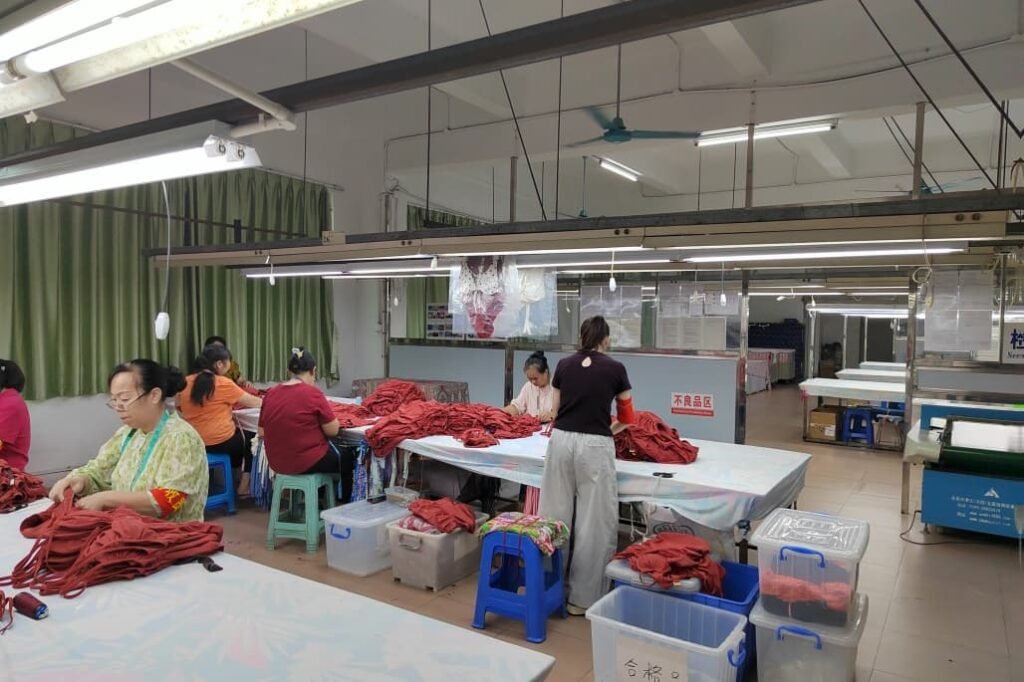
XZapparel’s company profile records a manufacturing operation that began in 2008, a base in Humen, Dongguan, Guangdong, China, approximately 20,000 square meters across three production buildings, and approximately 1,120 employees. The profile also records around 80 sewing lines and approximately 640 Brother sewing machines. Normal monthly output is approximately 180,000–200,000 pieces, subject to product mix. These figures describe the overall operation; project-specific suitability still needs to be confirmed.
Brands should evaluate a supplier through evidence that relates directly to their requirements.
- Product capability: Relevant samples, category experience, and clear technical boundaries.
- Development process: Pattern, sampling, revision, and approval procedures.
- Material sourcing: Fabric options, specifications, supplier minimums, and supporting documents.
- Quality management: Inspection stages, measurement controls, and applicable testing records.
- Production planning: MOQ, product-specific capacity, schedule assumptions, and delivery arrangements.
- Process ownership: Clear disclosure of which operations are in-house and which are managed through specialist partners.
- Communication and control: Version tracking, approval records, and clear responsibility for decisions.
Brands should verify certificates, reports, references, and compliance claims wherever they are relevant to the project. They should also confirm that documentation applies to the correct legal entity, material, facility, or product rather than assuming that one certificate covers every part of the supply chain. The same principle applies to quality claims: an inspection procedure is useful evidence of process, while an actual inspection or testing record provides evidence of a particular result.
XZapparel’s quality process includes fabric inspection, pre-production review, cutting inspection, inline quality control, measurement checks, 100% finishing inspection, final inspection, and packing inspection. In-house fabric checks can cover parameters such as GSM, shrinkage, colorfastness, rubbing, washing, pilling, stretch recovery, and dimensional stability, depending on the product requirements. The applicable controls should be agreed according to the material and intended garment rather than assuming every test applies to every product.
For brands developing dresses, tops, bottoms, swimwear, or coordinated sets, the next step is to provide a clear product brief and discuss the relevant manufacturing requirements. Reference images or a technical pack, target quantity, intended market, fabric preferences, and delivery window help establish a useful starting point for evaluating the project.
The strongest supplier relationship is built on a shared understanding of the product, transparent commercial conditions, and evidence that supports the proposed manufacturing route. That foundation makes it easier to move from market research to approved samples and, when the project is feasible, controlled bulk production.
Conclusion
Womenswear market trends in 2026 reflect a combination of changing consumer expectations, economic pressure, expressive design, digital discovery, and more demanding sourcing decisions. The most useful response is not to follow every emerging aesthetic or chase every increase in online attention. It is to identify which signals are relevant to the brand’s customers, test them against commercial evidence, and translate the strongest opportunities into products with appropriate fit, materials, construction, and price positioning.
Brands that connect market research with disciplined product development can make more informed decisions about sampling, order quantities, production timing, and supplier selection. They can also build a clearer evidence trail for quality, material transparency, and manufacturing capability. These practices do not eliminate market risk, but they make decisions easier to explain, test, and improve.
At XZapparel, we approach womenswear development through the connection between product concept, fabric, fit, construction, sampling, and production feasibility. For brands preparing a new collection or reviewing an existing product range, the next step is to define the commercial objective, identify the most promising product opportunities, and establish the technical requirements before bulk production begins. That is how market insight becomes a practical development plan rather than just another trend report.
Frequently Asked Questions
1. What are the biggest womenswear market trends in 2026?
The main forces shaping womenswear in 2026 include value-conscious shopping, changing expectations around quality and comfort, expressive design, digital product discovery, and greater attention to sourcing and transparency. The relative importance of each trend varies by region, category, and price position. Brands should compare industry reports with their own customer feedback and sales data before deciding which trends deserve investment. A trend’s visibility does not automatically mean it will produce sustained demand or acceptable margins.
2. Which womenswear categories offer commercial opportunities in 2026?
Dresses, tops, bottoms, coordinated sets, swimwear, and resortwear can all play useful roles in a womenswear collection, but their commercial potential depends on the target customer and selling market. Dresses can communicate a distinctive style, while separates provide outfit flexibility and coordinated sets create connected styling opportunities. Brands should assess category demand, retail pricing, fabric availability, and manufacturing requirements together instead of assuming one product category will outperform every other option.
3. How can fashion brands identify which trends will last?
Brands can evaluate potential longevity by combining historical sales, replenishment rates, customer feedback, search interest, retailer observations, and manufacturing feasibility. Search or social-media activity can reveal attention, but it does not prove purchase intent. A focused product test can help determine whether customers respond to the actual garment rather than the surrounding publicity. The most reliable decision combines customer evidence with realistic cost, quality, and delivery requirements before committing to a larger production quantity.
4. Which fabrics are suitable for womenswear manufacturing?
Suitable fabrics depend on the garment’s silhouette, intended use, season, and price position. Dresses may require particular drape and opacity, structured blouses may need more body, and stretch garments depend on suitable elasticity and recovery. Swimwear requires careful coordination between the main fabric, lining, elastic, and construction. Brands should assess composition, GSM, shrinkage, colorfastness, pilling, and other relevant properties rather than selecting a material based on appearance or trend popularity alone.
5. What should brands look for in a womenswear manufacturer?
Brands should evaluate relevant product experience, development resources, material sourcing, sampling procedures, quality controls, production planning, and clarity about process ownership. Factory size and monthly output provide useful context but do not guarantee that a particular project can be completed on the required schedule. Reviewing relevant samples, understanding MOQ and lead-time conditions, and confirming the quality requirements before bulk production provide a more reliable basis for supplier selection.
6. What is the typical MOQ for women’s clothing manufacturing?
Minimum order quantities vary by manufacturer, product category, fabric, trims, color requirements, and specialized processes. XZapparel’s standard garment MOQ is 200 pieces per style per color, although particular materials or production requirements may increase the minimum. Brands should confirm whether fabric suppliers have separate purchasing minimums and whether multiple colors or variations affect the order economics. A clear product brief and quantity plan make it easier to assess feasibility before sampling and production commitments.
7. How long does womenswear manufacturing take?
The timeline depends on design complexity, material availability, sample revisions, approval speed, production scheduling, and shipping arrangements. XZapparel’s typical bulk lead time is 25–35 working days after materials are ready, the pre-production sample is approved, and the relevant details are confirmed. This is an indicative production benchmark rather than a guaranteed delivery date for every order. Brands should confirm the complete development and delivery schedule, including material sourcing, sample approval, quality checks, and shipment planning, before finalizing a launch date.