Skip to content
Jeans are one of the most iconic clothing pieces in fashion, but how much do they really cost to make—especially when customized? If you’re planning your own denim line or exploring custom clothing options, this guide breaks it all down.
The cost of making a pair of custom jeans ranges from $10 to over $100, depending on fabric, finishes, volume, and location. Low-MOQ manufacturers may charge more per unit, while large factories in Asia offer better pricing for volume orders. Design complexity also plays a huge role in final costs.
When I first started developing denim for new collections, I learned quickly: every decision—from fabric weight1 to zipper type—directly impacts cost. In this article, I’ll break down all those hidden layers and show you how to make smart, cost-effective decisions.
What Factors Determine the Cost of Making Custom Jeans?
There’s no flat rate for making jeans. Your choices define your cost structure. Brands must consider the technical side of production to avoid budget surprises.
The cost of custom jeans depends on fabric weight, wash type, trims, sewing complexity, and the production region2. Each small detail—rivets, back pocket design, waistband structure—can push prices up or down.
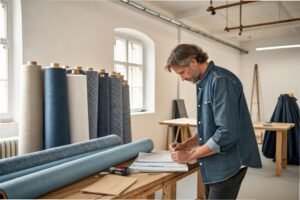 Denim Design Studio
How Do Fabric Choices Like Denim Weight and Stretch Impact Cost?
Fabric cost is the biggest cost driver in denim manufacturing. Heavier, stretch, or blended fabrics can raise the price significantly.
| Fabric Type | Average Cost (USD/Yard) | Characteristics |
|---|---|---|
| 8 oz Basic Denim | $2.50 – $3.50 | Lightweight, good for summer wear |
| 12 oz Raw Denim | $4.50 – $7.00 | Classic weight, great for all-year use |
| 14 oz Selvedge Denim | $8.00 – $12.00 | Premium, old-school weaving, stiff feel |
| Stretch Denim | $5.00 – $8.00 | Blended with Lycra or elastane |
| Organic or TENCEL® | $7.00 – $10.00 | Sustainable, soft, but premium priced |
Denim mills also have MOQs for bulk rolls. Sourcing small quantities from stock can be 20–30% more expensive per yard.
Why Do Design Elements (rips, embroidery, washes) Affect Pricing?
Each creative detail adds extra work. You’ll pay more for jeans that include:
- Laser distressing
- Screen printed logos
- Decorative stitching
- Multi-stage washes (enzyme + stone)
Example Cost Breakdown for Added Features:
- Heavy distressing: +$4.00
- Custom embroidery: +$2.50
- Acid wash: +$3.00
- Leather patch: +$1.50
Some washes also require longer drying times, water treatment, or environmental compliance fees3—especially in Europe.
What Are the Average Costs for Custom Jeans Manufacturing?
There is no “one price” fits all. Geography, production scale, and desired quality all shape your quote.
Custom jeans typically cost $12–$30 per unit in Asia, $30–$60 in Europe, and $40–$100+ in the USA.
How Much Does It Cost to Get Custom Clothing Made in Asia vs. Europe or the USA?
| Region | Avg. Cost/Unit | MOQ Range | Notes |
|---|---|---|---|
| China | $12 – $20 | 300 – 1000 | Cost-effective, good quality levels |
| Vietnam | $10 – $18 | 300 – 1500 | Lower cost, but slower development |
| Portugal | $30 – $50 | 100 – 300 | Small batch friendly, ethical focus |
| Turkey | $20 – $40 | 200 – 500 | Fast turnaround, EU proximity |
| USA | $50 – $100+ | 50 – 200 | Ethical labor, faster logistics |
Europe is ideal for sustainable or premium brands who need compliance and flexibility.
What’s the Price Range for Low-Volume vs. High-Volume Production?
Volume affects pricing more than many founders realize.
The more you produce, the lower the cost per unit. This is due to better material usage, more efficient sewing lines, and spread-out fixed costs.
| Volume (pcs) | Unit Cost Range |
|---|---|
| 50 – 100 units | $35 – $60 |
| 300 – 500 units | $20 – $35 |
| 1000+ units | $12 – $25 |
Small brands can reduce risk with low MOQs—but should expect to pay a premium for that flexibility.
What Are the Hidden Costs of Getting Custom Jeans Made?
It’s not just about fabric and sewing. Development costs catch many founders off-guard.
Sampling, grading, pattern-making, labeling, and logistics can increase your total project budget by 20% or more.
How Do Sampling, Tech Packs, and Prototyping Add to the Final Price?
Each sample round has its own cost:
- First fit sample: $80 – $120
- Size grading: $100 – $300 (for full size run)
- Pre-production sample: $50 – $100
- Digital pattern: $80 – $200
You’ll also need tech packs:
- In-house creation: $80 – $150
- Freelance designer: $200 – $500 (based on detail level)
It’s worth investing upfront—mistakes during bulk production are 10x more expensive to fix later.
Why Do MOQ (Minimum Order Quantity) and Custom Labels Influence Cost?
MOQs apply to everything: fabric rolls, button orders, zipper lots, and even woven tags.
| Label Cost Comparison: | Quantity | Woven Label (per piece) |
|---|---|---|
| 100 pcs | $0.70 – $1.00 | |
| 1000 pcs | $0.20 – $0.30 |
Also, if you need private label packaging or branded hang tags, factor those in early. Many suppliers require upfront payment for print setup fees.
How to Work with a Manufacturer to Get Custom Jeans Made?
Good jeans come from good communication. And the right brief is everything.
To get accurate pricing and avoid costly delays, create a tech pack and design brief with full clarity and detail.
What Should You Include in Your Design Brief for Accurate Pricing?
- Tech pack with CAD or line drawing
- Stitch type preferences
- Button, zipper, and trim references
- Fit description (skinny, relaxed, tapered)
- Size chart and tolerance rules
- Preferred production region2
Sample Email Format:
Hello,
I’m looking to produce 100 pcs of custom jeans. Attached is my tech pack. I’d like a mid-weight 12 oz denim with light enzyme wash, zip fly, and woven labels.
Please share your quote (EXW or FOB), lead time, and MOQ policy.
Best,
[Your Name]
How Can You Negotiate Better Rates for Custom Clothing Production?
- Be upfront about your long-term plans
- Ask for price breaks at higher volumes
- Offer flexible timelines to get better deals during factory low seasons
- Combine multiple styles in one order to lower unit cost
Pro Tip: Always ask: “What’s the price at 100 pcs? 300 pcs? 500 pcs?” This gives you negotiation leverage.
How Can You Lower the Cost of Custom Jeans Without Sacrificing Quality?
Startups often face the challenge of staying on budget without compromising brand value.
Choose mid-weight fabrics, simplify hardware, and work with low MOQ factories who specialize in small brands.
What Fabric and Finish Choices Give the Best Value for Price?
- Use medium-weight denim (11–12 oz) for structure and affordability
- Choose enzyme or rinse wash for natural fade at lower cost
- Select YKK zippers—reliable and widely available
- Opt for a branded woven label4 instead of leather for eco-friendly touch
How Does Partnering with Low MOQ Manufacturers Help Fashion Startups?
They allow:
- Testing multiple styles in one season
- Avoiding large cash outlays for inventory
- Easier changes after first sales feedback
Look for factories that offer:
- MOQ of 50–100 units
- Sample development support
- Transparent pricing and delivery timelines
Conclusion
The cost of making jeans isn’t just a number—it’s a reflection of your fabric choices, design goals, and brand values. Whether you’re starting a streetwear label or scaling a sustainable denim brand, understanding the full cost breakdown helps you make smarter decisions.
-
Learn how different fabric weights can impact your budget and the overall quality of your jeans. ↩
-
This resource will clarify how geography affects pricing and quality in denim manufacturing. ↩ ↩
-
This resource will help you understand the importance of compliance in sustainable manufacturing. ↩
-
Learn how branded woven labels can enhance your product’s appeal without breaking the bank. ↩