Skip to content

Digital textile printing has moved far beyond the novelty stage. A few years ago, many fashion teams treated it mainly as a convenient way to make samples, small runs, or personalized graphics. Today, the more interesting question is how digital printing can change the way a collection is developed, tested, produced, replenished, and even redesigned after launch. At XZapparel, we see the strongest opportunity not in replacing every conventional printing method, but in using digital capability where flexibility, visual complexity, shorter cycles, and controlled quantities genuinely improve the finished garment.
Digital textile printing trends in 2026 are centered on flexibility rather than a single replacement technology. Fashion manufacturers are combining digital printing with shorter production cycles, customized artwork, on-demand replenishment, improved color control, more resource-conscious processes, and increasingly automated workflows. The commercial advantage comes from choosing the right print method for the fabric and garment while keeping quality, repeatability, cost, and delivery under control.
The shift becomes easier to understand when you look at a garment rather than a machine. A floral dress may need a completely different print route from a polyester activewear top, while a small seasonal capsule may require a different production model from a proven repeat order. Current industry discussions increasingly connect digital textile printing with on-demand production, sustainability, automation, AI-assisted workflows, and more detailed product information. FESPA’s 2026 industry outlook, for example, identifies automation, AI, customization, on-demand production, sustainability, and specialization as major forces shaping printing.
For a current market benchmark, Grand View Research estimates the global digital textile printing market at USD 9.3 billion in 2025, USD 10.3 billion in 2026, and USD 24.2 billion by 2033, representing a projected CAGR of 13.0% from 2026 to 2033. Its 2025 segmentation places direct-to-fabric roll-to-roll printing at 45.0%, multi-pass systems at 62.6%, cotton at 52.1%, sublimation ink at 52.7%, and clothing and apparel at 54.3%. Market estimates vary substantially between research providers because the category boundaries and methodologies differ, so these figures are best treated as directional benchmarks rather than universal measurements.
What Are the Key Digital Textile Printing Trends?
Digital textile printing trends in 2026 are centered on flexibility rather than a single replacement technology. Fashion manufacturers are combining digital printing with shorter production cycles, customized artwork, on-demand replenishment, improved color control, more resource-conscious processes, and increasingly automated workflows. The commercial advantage comes from choosing the right print method for the fabric and garment while keeping quality, repeatability, cost, and delivery under control.
Is On-Demand Production Becoming Standard?
On-demand production is becoming a more important part of textile printing because fashion brands are under pressure to control inventory while still offering greater design variety. Digital printing makes it easier to change artwork, colorways, repeats, and quantities without rebuilding the setup associated with many conventional printing processes. This flexibility can be especially useful when a brand wants to test several visual directions before making a larger production commitment. FESPA’s 2026 industry outlook specifically identifies customization and on-demand production as important developments, linking them with greater production flexibility and faster responses to market requirements.
For a fashion manufacturer, however, on-demand does not mean producing every garment one piece at a time. The more practical model is controlled responsiveness. A collection may begin with limited quantities, use early market feedback to identify stronger styles, and then replenish selected products instead of manufacturing the same quantity for every design. This approach can reduce exposure to unsold printed inventory, but it only works when the rest of the supply chain can respond at a similar speed.
At XZapparel, this is particularly relevant to printed womenswear because the commercial performance of a print can be difficult to predict from artwork alone. The same silhouette may perform very differently in a soft floral, abstract geometric, animal-inspired, or engineered placement print. Digital printing gives the development team more freedom to test these directions without treating every variation as a completely separate manufacturing project. The technology therefore becomes valuable as part of a flexible product-development system rather than simply as a printing method.
Are Short Runs and Customization Growing?
Short runs and customization are among the clearest commercial drivers behind digital textile printing. Traditional printing methods can become less attractive when a brand needs many designs in relatively small quantities because screen preparation, setup, color changes, and minimum commitments can add cost and complexity. Digital printing reduces several of these barriers and allows artwork variation to be handled more efficiently, making it particularly useful for fashion collections that contain multiple prints or frequent design updates.
Grand View Research’s current market analysis estimates that clothing and apparel represented 54.3% of digital textile printing revenue in 2025, while direct-to-fabric printing represented 45.0%. The same report forecasts the overall market to grow from USD 10.3 billion in 2026 to USD 24.2 billion by 2033. These figures do not mean that every fashion product should move to digital printing, but they demonstrate how strongly apparel is connected to the wider digital-printing expansion.
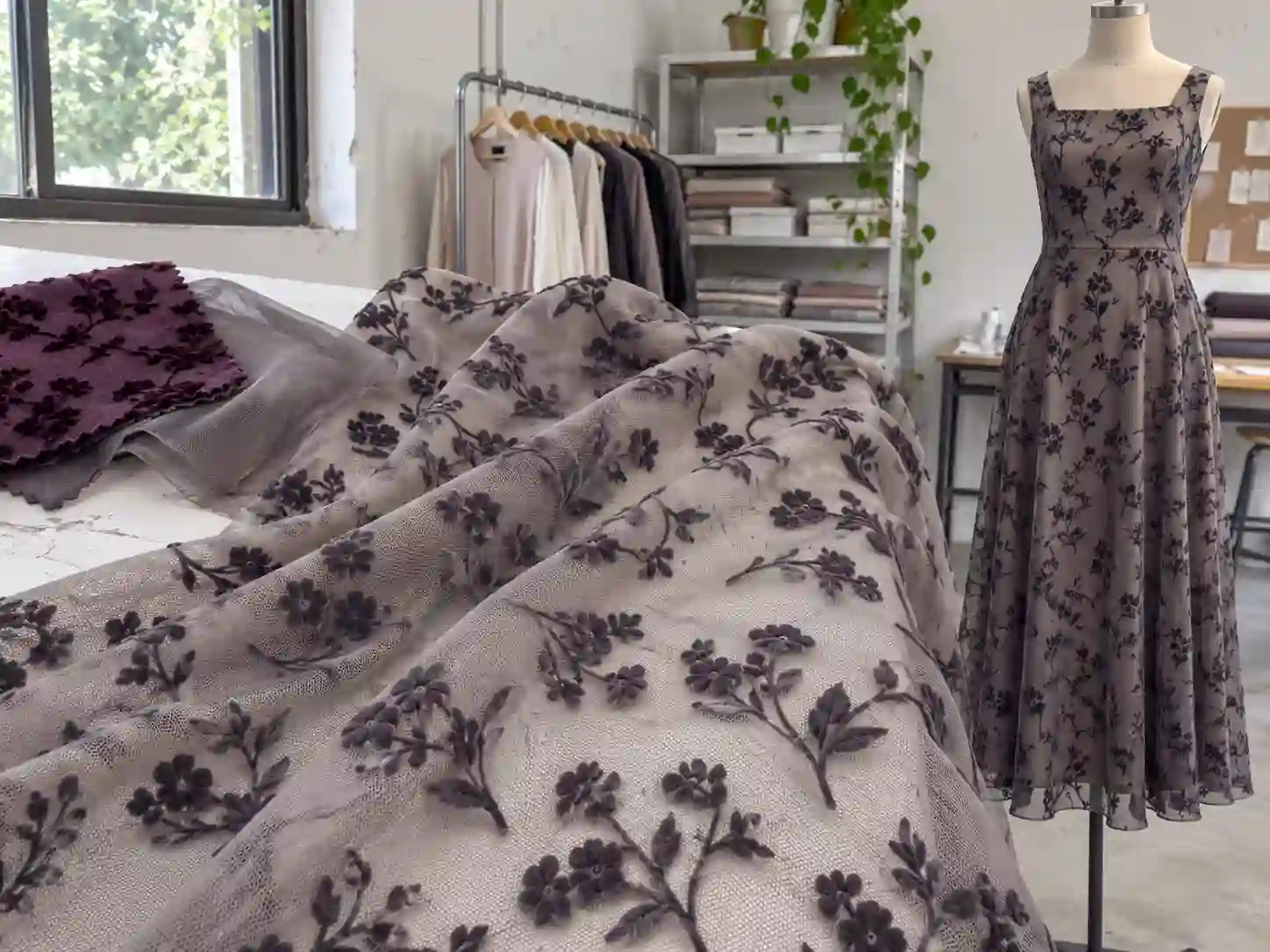
Customization should also be understood more broadly than printing a name or individual graphic on a garment. In womenswear, it can involve different floral scales, regional colorways, alternative repeats, limited-edition artwork, engineered placement, or several coordinated prints developed from the same visual concept. That type of controlled variation can help a fashion collection feel more distinctive without requiring a completely different garment-development process for every version.
The practical limitation is economics. Digital printing reduces certain setup barriers, but fabric cost, ink consumption, pretreatment, finishing, cutting, sewing, inspection, and shipping still influence the final product cost. At XZapparel, the more useful question is therefore whether digital printing creates enough development and production flexibility to justify its overall cost for the specific garment, quantity, fabric, and design.
Is Digital Printing Moving Into Core Production?
Digital printing is increasingly becoming part of mainstream textile production, but the idea that it will completely replace conventional printing is too simplistic. Different production methods continue to have different advantages depending on quantity, fabric, color requirements, artwork complexity, durability, print coverage, finishing requirements, and delivery expectations. The strongest production strategy is therefore usually a combination of technologies rather than a single universal solution.
Current industry discussions show that digital printing is moving from experimentation toward more integrated production workflows. Textile industry coverage in 2026 describes digital printing as increasingly connected with on-demand manufacturing, sustainability, automation, and shorter production cycles rather than treating it only as a niche short-run solution.
For fashion, this distinction matters because printing is only one stage of making a garment. A printer may produce fabric quickly, but if fabric preparation, cutting, sewing, finishing, or inspection cannot maintain the same pace, the overall lead time may not change significantly. Conversely, a slightly slower printing process can still be commercially attractive if it produces more consistent output, fewer defects, better fabric compatibility, or easier repeat production.
XZapparel therefore evaluates digital printing as part of the complete garment process. A print that looks excellent on a digital screen still has to work on the actual fabric, survive the intended finishing process, remain visually balanced after cutting and sewing, and meet the quality expectations of the final garment. This product-first approach is increasingly important as brands seek both speed and reliability from their manufacturing partners.
2025–2026 Digital Textile Printing Market Benchmarks
| Market indicator | Current benchmark | Practical meaning for fashion |
|---|---|---|
| Global market size, 2025 | USD 9.3 billion | Shows the scale of the digital-printing sector |
| Estimated market size, 2026 | USD 10.3 billion | Indicates continued near-term expansion |
| Forecast market size, 2033 | USD 24.2 billion | Signals long-term investment momentum |
| Forecast CAGR, 2026–2033 | 13.0% | Indicates strong projected growth |
| Direct-to-fabric share, 2025 | 45.0% | Important for printed fabric yardage |
| Multi-pass share, 2025 | 62.6% | Shows current industrial workflow reality |
| Clothing/apparel share, 2025 | 54.3% | Confirms the importance of fashion applications |
Market figures are from Grand View Research’s 2026–2033 market analysis. Definitions and estimates vary between research providers.
Which Printing Technologies Are Gaining Ground?
Printing technology is becoming more specialized rather than converging into one universal method. Direct-to-fabric roll-to-roll systems remain important for printed yardage, sublimation is highly relevant to suitable polyester products, pigment and reactive systems serve different textile requirements, and DTG or DTF address selected garment-decoration needs. The right choice depends on fiber, construction, artwork, quantity, performance requirements, and the finished garment rather than machine novelty.

Which Role Do Direct-to-Fabric Systems Play?
Direct-to-fabric printing is particularly important for fashion because artwork can be printed onto fabric before the material is cut and sewn. This makes the process highly relevant to all-over dresses, blouses, skirts, shirts, flowing garments, and other products where the relationship between artwork and garment pattern affects the final appearance. Grand View Research estimates direct-to-fabric roll-to-roll printing accounted for 45.0% of digital textile printing revenue in 2025, making it one of the most commercially significant routes in the sector.
The advantage goes beyond covering a large piece of fabric. Developers can consider the print repeat and garment pattern together, allowing important motifs to be positioned intentionally across bodices, sleeves, skirt panels, collars, or other visible areas. This can create a much more deliberate result than treating the artwork as a generic surface pattern and allowing the cutting process to determine where motifs happen to fall.
That flexibility also introduces technical responsibility. Large-scale prints need careful attention to repeat dimensions, artwork scale, fabric width, pattern pieces, seam locations, and cutting direction. A visually impressive print can become commercially disappointing if a major motif is cut through an important seam or appears unbalanced across the garment. At XZapparel, printed garment development therefore considers artwork and pattern construction together rather than treating printing as an isolated operation.
Are DTG and DTF Expanding in Apparel?
Direct-to-garment and direct-to-film printing are gaining attention because both can support flexible garment decoration, but they should not be treated as interchangeable technologies. DTG applies digital ink directly to a finished garment and can be useful for selected cotton-rich products, personalized apparel, and short-run graphics. DTF uses a transfer film and adhesive system before the graphic is applied to the garment, creating a different set of advantages and limitations.
The commercial decision depends on the garment rather than simply on the popularity of the technology. A small chest graphic on a casual top is a very different requirement from a large graphic across a fitted stretch garment or an all-over print on a flowing dress. Fabric composition, surface construction, stretch, required hand feel, artwork coverage, and durability all need to be considered before selecting the process.
Digital garment printing is also increasingly connected with on-demand production. FESPA’s 2026 industry outlook identifies customization, automation, and on-demand production as important developments, while its textile conference coverage highlights DTG and DTF alongside broader changes in digital manufacturing.
At XZapparel, the focus remains on whether the printed result fits the intended product. The right technology should preserve the garment’s comfort, appearance, durability, and commercial positioning instead of forcing the garment design to accommodate a printing process that was selected first.
Which Inks and Color Systems Matter?
Ink selection is one of the most important technical decisions in digital textile printing because it influences substrate compatibility, color development, hand feel, durability, processing requirements, and total production cost. Grand View Research identifies sublimation ink as the largest digital textile printing ink segment in its 2025 analysis, with a 52.7% revenue share. The same report identifies cotton as the leading material segment at 52.1%, illustrating how different fiber and ink categories can coexist within the same market.
| Printing route | Commonly relevant materials | Main strength | Key validation point |
|---|---|---|---|
| Sublimation | Polyester and suitable blends | Strong color performance on suitable substrates | Color, heat behavior, fabric stability |
| Pigment | Various textile substrates depending on formulation | Flexible processing and reduced wet-processing requirements in suitable workflows | Hand feel, curing, rubbing and wash performance |
| Reactive | Cotton and other suitable cellulosic fibers | Strong coloration on compatible substrates | Pretreatment, fixation, washing, color consistency |
| Acid | Selected polyamide and protein fibers | Suitable for specific fiber groups | Fiber compatibility and durability |
| DTG | Finished garments, often cotton-rich | Detailed short-run garment graphics | Surface, pretreatment, wash performance |
| DTF | Various suitable garment substrates | Flexible transfer-based decoration | Adhesion, stretch, hand feel and wash performance |
These categories should not be selected solely from the fiber label. Two fabrics with identical fiber compositions can behave differently because weight, construction, surface texture, finishing, and pretreatment can change the final print result. A 100% polyester lightweight chiffon and a 100% polyester athletic fabric, for example, should not automatically be expected to produce the same visual or tactile outcome.
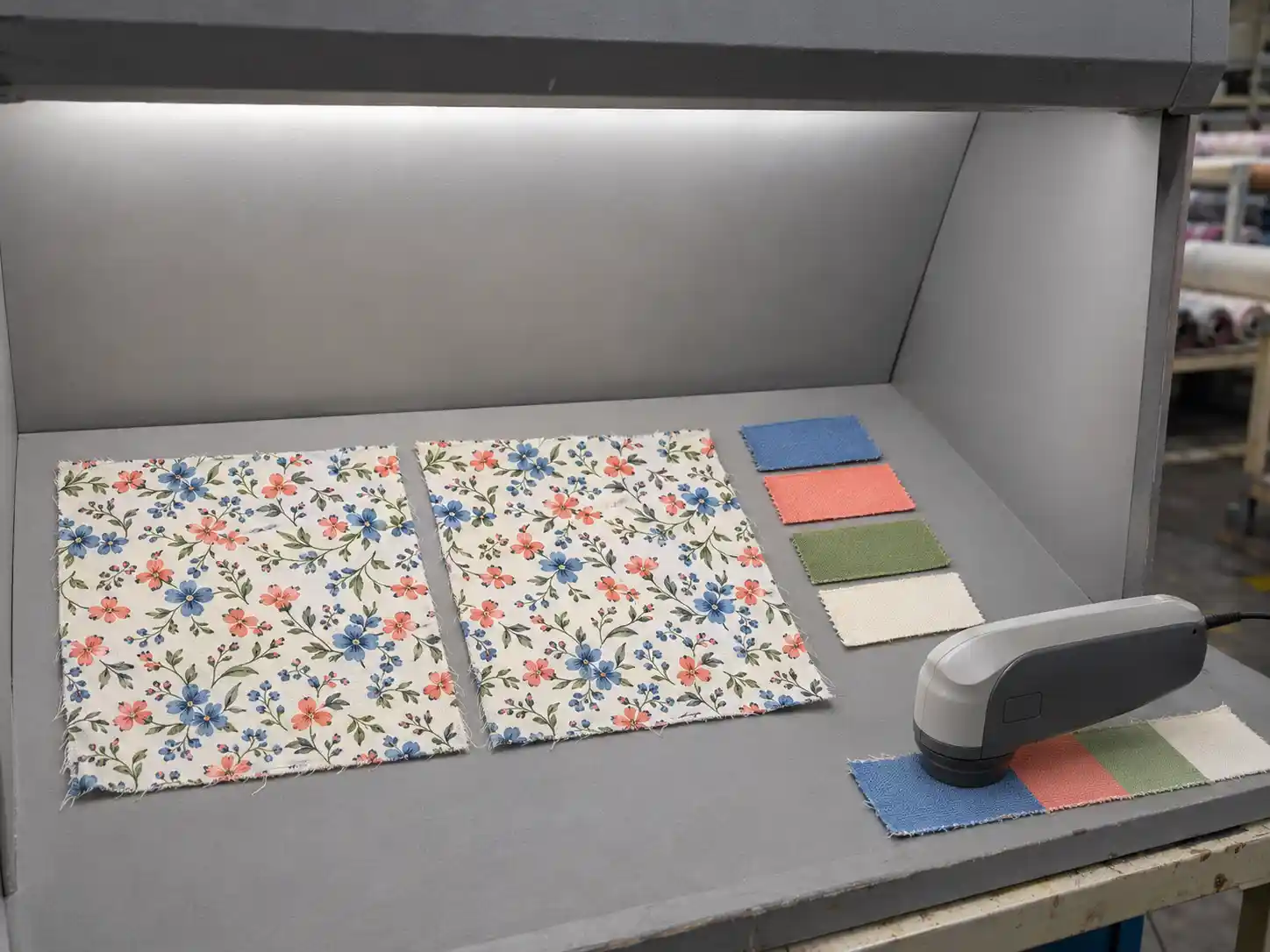
Color management is equally important. A brand may approve a particular beige, green, burgundy, or blue on a screen, but the final color can shift according to fabric, ink, pretreatment, curing, finishing, and viewing conditions. XZapparel therefore treats physical print approval as an essential part of the development process rather than relying exclusively on digital artwork previews.
Is Single-Pass Technology Ready for More Volume?
Single-pass printing is an important technology to watch because higher productivity is necessary if digital printing is to compete across a wider range of commercial applications. At the same time, current market data shows that multi-pass systems still dominate. Grand View Research estimates multi-pass systems represented 62.6% of digital textile printing revenue in 2025. That figure is useful because it illustrates the difference between emerging technology and the technology currently carrying the largest share of commercial production.
Single-pass systems can reduce the number of printhead passes required to complete an image and therefore have the potential to increase productivity. However, machine speed is only one part of the production equation. Fabric feeding, pretreatment, drying, curing, inspection, cutting, sewing, finishing, and packaging can all become bottlenecks if they cannot keep pace with the printer.
For fashion manufacturers, total production efficiency matters more than a machine’s headline speed. A printer operating at a high nominal rate does not necessarily create a shorter overall lead time if the subsequent processes require additional handling. The most useful technology is the one that creates a balanced production flow.
This is particularly important for XZapparel because printed womenswear involves several physical stages after fabric printing. The goal is not to chase the fastest individual machine specification, but to achieve a dependable combination of print quality, production flexibility, fabric compatibility, repeatability, and finished-garment performance.
How Are Sustainability and Efficiency Changing Printing?
Sustainability is increasingly being judged across the whole printing route instead of by a single claim about water or ink. Digital processes can support lower waste, shorter runs, simplified processing, and more responsive production, but their total impact depends on fabric, pretreatment, ink, drying or fixation, energy, finishing, rejected material, transport, and product life. A credible approach measures the complete workflow and validates performance alongside environmental objectives.
How Do Water, Energy, and Waste Shape Choices?
Water consumption is an important consideration when comparing textile-printing processes because some conventional routes require substantial wet processing after coloration. Certain digital workflows can reduce or remove parts of these stages, but the environmental benefit depends heavily on the specific ink chemistry, fabric, pretreatment, fixation, and finishing route. FESPA has highlighted pigment printing as an area of particular interest because suitable pigment workflows can simplify processing and reduce water-intensive post-treatment.
Energy should be evaluated with the same level of care. Printing itself is only one part of textile processing; drying, fixation, steaming, washing, stentering, and other finishing operations can significantly affect the total energy profile. FESPA’s 2026 textile discussions specifically emphasize the potential impact of integrating pretreatment and post-treatment more closely with digital printing, noting that post-processing can represent a major part of the energy requirement.
Waste is also broader than ink or fabric scraps. A failed sample, incorrect colorway, unsuitable fabric, rejected production lot, excess inventory, or unnecessary transportation can all contribute to the product’s overall environmental burden. This is why XZapparel approaches resource efficiency from a product-development perspective. Producing the right fabric, print, quantity, and garment specification the first time can be just as important as selecting a technically efficient printing process.
Are Pigment Inks Gaining Ground?
Pigment inks are receiving increasing attention because selected pigment workflows can simplify textile processing and reduce the need for water-intensive post-treatment. FESPA’s current industry coverage identifies pigment technology, energy efficiency, and resource reduction as important developments in textile printing, while its 2026 outlook places environmentally conscious inks and energy-efficient equipment among the requirements increasingly considered by major brands.
However, a sustainability advantage should never be evaluated separately from garment quality. A printed fabric still needs acceptable color depth, surface appearance, hand feel, rubbing performance, wash behavior, and durability for the intended end use. These requirements can vary substantially between a lightweight blouse, a structured skirt, a casual shirt, and a stretch fashion top.
This is where practical manufacturing experience becomes important. A printing method that performs well on one fabric may require different settings or even a different process on another fabric with a different construction or finishing treatment. The environmental profile should therefore be assessed together with technical performance.
For XZapparel, the most credible sustainability approach is based on measurable production decisions rather than broad labels. Fabric composition, processing route, print performance, production quantity, waste generation, and finishing requirements should all be considered before making a claim about a particular printing solution.
How Does On-Demand Reduce Overproduction?
On-demand printing can help reduce overproduction because brands can delay some production decisions until demand becomes clearer. Digital workflows make it easier to change artwork without preparing an entirely new screen setup, allowing fashion teams to maintain greater flexibility across colorways, prints, and production quantities. FESPA identifies customization and on-demand production as major developments because automation and variable production can help manufacturers respond more quickly to market demand.
The strongest model usually combines controlled initial quantities with a practical replenishment process. Instead of manufacturing the same volume for every print in a collection, a brand can identify stronger performers and allocate additional production toward those products. This can reduce the risk of carrying large quantities of printed fabric or finished garments that may lose relevance before they are sold.
Nevertheless, smaller production batches are not automatically more sustainable. Multiple production cycles can increase transportation, packaging, handling, machine setup, and administrative requirements. The environmental outcome depends on the entire supply chain and the actual behavior of the product.
XZapparel therefore views on-demand capability as a tool for better production decisions rather than a sustainability guarantee. When shorter runs, digital printing, responsive replenishment, and accurate product planning work together, brands can gain flexibility without relying on large speculative quantities.
Practical Efficiency Factors in Digital Textile Printing
| Factor | What can improve efficiency | What still needs control |
|---|---|---|
| Sampling | Faster artwork changes and physical print iterations | Physical approval remains essential |
| Production quantity | Smaller initial commitments where commercially suitable | Unit economics can change at low volumes |
| Water use | Some workflows can reduce wet processing | Depends on ink, fabric and process |
| Energy | Simplified fixation or finishing can reduce processing stages | Drying and curing still require energy |
| Material waste | Digital variation can reduce unnecessary setup waste | Failed samples and rejected fabric remain possible |
| Inventory | On-demand replenishment can reduce speculative production | Frequent small shipments can add logistics impact |
| Quality | Digital repeatability can support consistent files and settings | Fabric and finishing variation still require inspection |
How Are AI and Automation Reshaping Production?
AI and automation are moving into practical parts of textile production, including artwork variation, color management, quality inspection, workflow control, maintenance, and planning. Their strongest value is not simply generating more designs, but helping teams make repeatable decisions faster and reduce avoidable errors. Human product-development expertise remains essential because fabric behavior, garment construction, print placement, hand feel, and physical quality cannot be fully judged from digital files alone.
How Is AI Supporting Print Workflows?
AI can accelerate the creative stage by generating more pattern concepts, color combinations, motifs, and surface-design variations in less time. In textile printing, this creates an opportunity to explore more visual directions before selecting a smaller group for physical development. FESPA’s 2026 textile discussions specifically identify AI-driven pattern making and the use of AI for trend research and print design as emerging practical applications rather than purely theoretical ideas.
The important distinction is that AI-generated artwork is not automatically production-ready artwork. A generated image may contain inconsistent motifs, unsuitable repeat structures, awkward edges, incorrect scale, or details that become difficult to reproduce on fabric. A commercial print still needs appropriate resolution, repeat logic, color control, placement, and compatibility with the actual garment pattern.
AI becomes more useful when it works as part of an experienced development process. It can generate alternatives, accelerate research, identify visual patterns, and help teams compare options, while designers and product developers decide which concepts make sense commercially and technically.
At XZapparel, this human-machine balance is particularly important for womenswear. A print needs to work with the silhouette, fabric drape, garment proportions, seam locations, and target customer. AI can expand the creative field, but experienced product development determines which ideas can become reliable physical products.
Are Automation and Color Control Improving Consistency?
Automation is becoming more important because digital printing creates large amounts of production information that can be controlled more systematically. Artwork versions, color references, fabric specifications, print settings, sample approvals, inspection records, and repeat-order information can increasingly be connected rather than managed as separate pieces of information. FESPA’s 2026 outlook identifies AI and automation as increasingly relevant to quality control, color management, predictive maintenance, and workflow management.
Color consistency is one of the clearest examples. A fashion brand may approve a specific warm beige, olive green, burgundy, or blue and expect the same visual reference across multiple production lots. Even relatively small differences can become noticeable when garments from the same collection are displayed together.
Automation can reduce repetitive errors, but it cannot correct a poor initial specification. The approved fabric, artwork version, color standard, print scale, placement, and finishing requirements must first be defined clearly. Once those references are established, automated workflows can help reproduce them more consistently.
XZapparel considers physical approval and controlled references essential because digital files alone cannot describe every characteristic of a finished garment. Fabric texture, surface reflection, finishing, drape, and garment construction all influence how a printed design is perceived.
Can Smart Workflows Shorten Lead Times?
Smart workflows can shorten lead times when they reduce unnecessary communication between design, fabric sourcing, printing, sampling, pattern development, production, and quality control. The greatest opportunity comes from connecting information across these stages so that a change made during development does not have to be manually recreated in several different systems.
FESPA’s 2026 textile discussions describe an increasingly integrated environment in which AI-assisted design, digital printing, product data, on-demand production, and automation are becoming connected parts of the same value chain.
For fashion manufacturers, this could eventually create a much shorter path from concept to physical garment. Artwork can be revised digitally, print samples can be produced rapidly, garment patterns can be adjusted, and approved information can move into production without repeatedly rebuilding the same specification.
But smart workflows should not remove physical checkpoints. Fabric may behave differently from expectations, color can change during finishing, and construction can alter print placement. Human inspection remains necessary because the finished product is physical.
The practical objective at XZapparel is therefore not simply to make every step digital. It is to use digital tools where they reduce delay and errors while keeping experienced product-development judgment where physical evaluation still matters.

What Do These Trends Mean for Fashion?
Digital printing is giving fashion teams more freedom to change print scale, colorways, repeats, and quantities without rebuilding every part of the production process. This is particularly useful for womenswear, where visual identity can determine commercial performance. The biggest benefit is controlled flexibility: brands can test more ideas, shorten development cycles, and replenish successful styles while maintaining fabric, construction, color, and quality standards.
Are Printed Womenswear Collections Becoming More Flexible?
Printed womenswear is particularly well suited to flexible digital development because the visual identity of a collection can change through color, scale, repeat, placement, and artwork while the underlying garment silhouette remains similar. This creates more opportunities for controlled product testing without requiring a completely different development process for every variation.
A brand might develop one dress silhouette with three coordinated print directions, produce physical samples, evaluate the collection visually, and then choose the strongest option for broader production. Another brand may use the same print family across dresses, skirts, blouses, and matching separates, changing the scale or placement to suit each garment.
This flexibility is useful for seasonal fashion because trends can move quickly. A print that looks commercially strong during one season may lose relevance later, while a successful artwork can sometimes be extended through new colorways or related motifs. Digital printing makes these changes easier to manage because artwork can be modified without rebuilding the entire conventional printing setup.
The value is not unlimited variety. Too many options can make collections difficult to manage. The real benefit is the ability to create carefully controlled variations while maintaining a coherent product range. XZapparel uses this principle when developing printed womenswear, balancing creative flexibility with fabric, pattern, construction, and production realities.
How Does Digital Printing Support Product Development?
Digital printing can shorten the distance between an artwork concept and a physical garment, which is especially useful when the print is a major part of the product’s identity. A floral dress, for example, requires evaluation of more than color accuracy. The development team needs to understand whether the repeat works across the front and back, whether major motifs land attractively, and whether the print remains balanced after the fabric is cut and sewn.
A practical development sequence is:
- Establish the artwork concept and intended visual effect.
- Confirm the production fabric and its composition.
- Test the artwork on the actual material.
- Review color, scale, repeat, coverage, and hand feel.
- Build the garment sample.
- Check print placement after cutting and sewing.
- Conduct relevant durability testing.
- Record the approved production reference.
- Release the controlled specification for bulk production.
This process may take more time than approving a digital image, but it reduces the risk of discovering fundamental problems after bulk production has started. At XZapparel, product development is considered complete only when the print and fabric work correctly as a finished garment, not simply when the artwork looks attractive on a screen.
Which Fabrics and Garments Need Different Print Methods?
Different fabrics require different printing considerations because fiber content, construction, weight, stretch, absorbency, surface texture, and finishing can all influence the final result. Polyester is strongly associated with sublimation applications, while cotton and other cellulosic fibers often require different ink and processing approaches. Nylon, silk, blends, coated fabrics, and stretch materials can introduce additional technical variables.
The garment itself creates another layer of complexity. A print on a flat woven fabric can behave differently after that fabric becomes a gathered sleeve, pleated skirt, fitted bodice, or stretch garment. The visual scale can change with gathering, while seams can interrupt an important motif. These issues need to be considered before production rather than after the garment has been assembled.
| Garment situation | Main print consideration | Physical checks |
|---|---|---|
| Lightweight woven dress | Surface, penetration and drape | Color, show-through, hand feel |
| Cotton blouse | Ink compatibility and surface appearance | Color, rubbing, wash behavior |
| Polyester sportswear | Sublimation compatibility and heat behavior | Color, stretch, dimensional stability |
| Stretch fashion top | Movement and recovery | Cracking, distortion, stretch appearance |
| Large all-over print | Repeat and placement | Panel alignment and motif positioning |
| Multi-panel garment | Pattern-to-print relationship | Seam placement and visual balance |
The safest approach is always to test the actual production-intended material. A successful result on one polyester fabric does not guarantee identical performance on another polyester fabric with a different construction, weight, finish, or surface.
For XZapparel, this is one of the reasons digital printing cannot be separated from fabric and garment development. The print method should enhance the material and the design rather than force the product to compromise its intended appearance or performance.
How Can Brands Apply These Trends?
Brands can apply these trends most effectively by starting with the product requirement and then selecting the printing process, rather than choosing a technology first. A practical workflow should validate fabric compatibility, artwork, color, scale, durability, hand feel, placement, sample construction, production consistency, and quantity. XZapparel treats digital printing as part of complete womenswear development, connecting the printed fabric decision with the finished garment and production requirements.

How Should Brands Validate Print Quality?
The most reliable print approval happens on the actual production-intended fabric and, where practical, on the finished garment. A digital proof or computer display cannot fully reproduce fabric texture, light reflection, color absorption, stretch, surface finish, or the final hand feel. Physical sampling remains especially important when the print occupies a large percentage of the garment or when the product uses a new material.
A practical validation process should include:
- Confirm the fabric composition and construction.
- Confirm the artwork version and print dimensions.
- Produce a physical print sample.
- Compare color against the agreed reference.
- Check sharpness, coverage, and repeat accuracy.
- Review hand feel and surface appearance.
- Check placement after garment construction.
- Conduct relevant wash, rubbing, or stretch testing.
- Compare bulk production against the approved sample.
- Record the final production reference.
For large all-over prints, placement deserves particular attention. A beautiful repeat can become commercially disappointing if an important motif is cut through a neckline, appears awkwardly beside a seam, or becomes distorted by gathering. XZapparel therefore evaluates printed fabric both as a textile surface and as part of the completed garment, because the final customer experiences the garment rather than the fabric roll.
Which Fabrics Should Be Tested Before Production?
The priority should be to test fabrics that are commercially important to the collection and technically different enough to create different printing behavior. If the same artwork will appear on cotton, polyester, nylon, recycled polyester, or a blend, each relevant production fabric should be validated rather than assuming one successful test applies to every material.
Testing becomes even more important when the garment contains stretch, texture, brushing, coating, special finishing, or a particularly lightweight construction. The fabric’s physical behavior can influence print appearance just as much as the ink system itself.
A useful test matrix should consider:
| Test factor | What to confirm | Production decision |
|---|---|---|
| Fiber content | Actual composition | Select compatible printing route |
| Fabric weight | Actual production GSM | Check coverage and appearance |
| Stretch | Movement before and after printing | Confirm print flexibility |
| Color | Reference and reproduction | Approve or adjust color profile |
| Hand feel | Result after printing and finishing | Confirm garment suitability |
| Durability | Relevant wash or rubbing performance | Confirm intended end use |
| Construction | Finished sample appearance | Confirm placement and balance |
The objective is not to test every possible fabric. It is to eliminate uncertainty around the fabrics that will actually be used. This is particularly valuable when one collection contains several garment categories, because a print developed successfully for a flowing woven dress should not automatically be transferred to a stretch top simply because both materials have a similar visual appearance.
XZapparel approaches fabric testing as part of product development rather than as an isolated laboratory exercise. The final decision needs to reflect the intended garment, target appearance, construction, quantity, and quality expectations.
How Can Suppliers Connect Printing With Sampling and Production?
The strongest manufacturing workflow connects artwork, fabric, printing, sampling, pattern development, production, and quality control through one controlled process. A supplier should be able to explain what happens between the first artwork concept and the finished garment, including how specifications are recorded, how samples are approved, and how the approved result becomes the production reference.
Important questions include:
- Who confirms fabric-print compatibility?
- How is the artwork version controlled?
- How is print scale established?
- How is color approved?
- How is the first garment sample evaluated?
- How are revisions recorded?
- What becomes the bulk-production reference?
- How is sample-to-bulk consistency checked?
These questions matter because many production problems occur at the transitions between departments rather than within a single technical process. A printer can produce technically accurate artwork while the pattern team interprets the placement differently, or a fabric can be approved before finishing changes the final appearance.
XZapparel’s approach is centered on connecting these stages. Digital printing is most useful when it supports a controlled garment-development workflow rather than creating another disconnected production step. This becomes increasingly important as fashion brands shorten development cycles and expect suppliers to handle more product complexity without sacrificing consistency.
Are Samples and Bulk Outputs Consistent?
Sample-to-bulk consistency is one of the most important tests of a digital textile printing workflow. A sample can look excellent, but the commercial requirement is to reproduce the approved appearance consistently across the actual production quantity. The production reference should connect the approved artwork, fabric specification, print scale, color requirements, placement, construction, finishing, and applicable quality standards.
Consistency should be evaluated at several points:
- Fabric before printing.
- Printed fabric before cutting.
- Cut panels before sewing.
- Finished garments during inspection.
- Production lots against the approved sample.
This becomes particularly important for repeat orders. A brand may return to the same printed style several months later and expect the new production to maintain the original appearance. Without a controlled reference, small differences can accumulate between development rounds.
For fashion brands, this level of control is not excessive. Printed garments are highly visual products, and differences in color, placement, print scale, or surface appearance can become immediately noticeable when products are displayed together. At XZapparel, the approved physical sample therefore remains an important reference even when the supporting production information is managed digitally.
The future of digital textile printing is not simply about faster machines, more colors, or more sophisticated software. It is about combining digital flexibility with disciplined physical quality control. That combination allows XZapparel to help fashion brands explore more designs, manage changing quantities, shorten development cycles, and still protect the consistency expected from a professionally developed womenswear collection.
Conclusion
The most important digital textile printing trend is not the arrival of one revolutionary machine or one universally superior ink. It is the gradual integration of digital printing into a more flexible fashion-development model. On-demand production, short-run capability, advanced color management, pigment and sublimation developments, AI-assisted design, workflow automation, and greater attention to resource efficiency are increasingly connected rather than operating as separate trends. Current industry coverage from FESPA reflects this convergence, while market research indicates strong continued growth in digital textile printing and a substantial role for apparel.
For XZapparel, the practical lesson is straightforward: digital printing creates the most value when it improves the entire garment-development process. The right fabric still matters. The right print method still matters. Physical sampling still matters. Color and placement still need control, and production consistency still has to be demonstrated rather than assumed. When these elements work together, digital textile printing can give fashion brands something much more valuable than a new printing option: the ability to develop distinctive womenswear more flexibly while maintaining the quality and production discipline required for long-term commercial success.
Frequently Asked Questions
What is the biggest digital textile printing trend in 2026?
The strongest overall trend is the integration of digital printing with flexible production rather than the replacement of conventional printing by one technology. Shorter runs, on-demand manufacturing, customization, automation, AI-assisted workflows, improved color control, and resource efficiency are increasingly being considered together. For fashion brands, the practical benefit is greater flexibility in developing and replenishing printed garments, provided the selected process remains commercially and technically appropriate for the fabric and garment.
Is digital textile printing more sustainable than traditional textile printing?
Digital textile printing can offer sustainability advantages in suitable applications, but it should not automatically be described as sustainable simply because it is digital. The actual result depends on the fabric, ink, pretreatment, drying or fixation, finishing, energy use, production quantity, waste, transportation, and product lifetime. Some pigment workflows, for example, can simplify wet processing, while on-demand production can help control excess inventory. A credible assessment therefore considers the complete production route rather than one isolated environmental metric.
Which digital printing method is best for fashion apparel?
There is no single best method for every fashion garment. Sublimation is highly relevant to suitable polyester products, direct-to-fabric printing is important for printed fabric yardage, pigment and reactive systems serve different textile requirements, and DTG or DTF can be appropriate for selected garment graphics. The decision should be based on fiber composition, fabric construction, artwork, quantity, color requirements, hand feel, durability, finishing, and the final garment application rather than choosing a process simply because it is currently popular.
Is digital textile printing suitable for small fashion production runs?
Digital textile printing is particularly useful for small or controlled production runs because it reduces some of the setup barriers associated with conventional printing and makes artwork changes easier to manage. This can be valuable for sampling, limited collections, seasonal colorways, test quantities, and responsive replenishment. However, small quantity does not automatically mean low cost. Fabric, ink, finishing, cutting, sewing, inspection, and logistics still contribute to the final garment cost, so the entire product economics should be evaluated before selecting the production method.
How does AI affect digital textile printing?
AI is beginning to influence several stages of the textile-printing workflow, including artwork generation, trend research, pattern development, quality control, color management, predictive maintenance, and production planning. Its strongest practical value is helping experienced teams evaluate more possibilities and manage information faster. AI-generated artwork still needs technical review because a visually attractive image may contain unsuitable repeats, inconsistent motifs, incorrect scale, or details that are difficult to reproduce physically. FESPA’s 2026 industry discussions identify AI as an increasingly practical part of the textile value chain.
What should fashion brands check before approving digital printed fabric?
Fashion brands should check the actual production fabric rather than relying only on a digital artwork preview. Important factors include fiber composition, fabric weight, construction, color accuracy, print scale, repeat, hand feel, surface appearance, durability, stretch behavior where applicable, and the way the print looks after cutting and sewing. For large all-over designs, placement should be evaluated on the finished garment because seams, gathers, pleats, and pattern pieces can significantly change how the artwork is perceived.
Will digital textile printing replace conventional textile printing?
Digital printing is likely to continue expanding, but complete replacement is unlikely to be the most practical way to view the market. Conventional processes can remain highly competitive for particular combinations of large volume, standardized artwork, fabric, color, and production requirements, while digital printing offers strong advantages in flexibility, customization, short runs, and variable designs. The future is more likely to involve manufacturers selecting the most appropriate process for each product rather than forcing every textile application into one printing technology. XZapparel’s approach is to make that decision according to the actual fabric, garment, quantity, quality requirements, and production objectives.