Skip to content

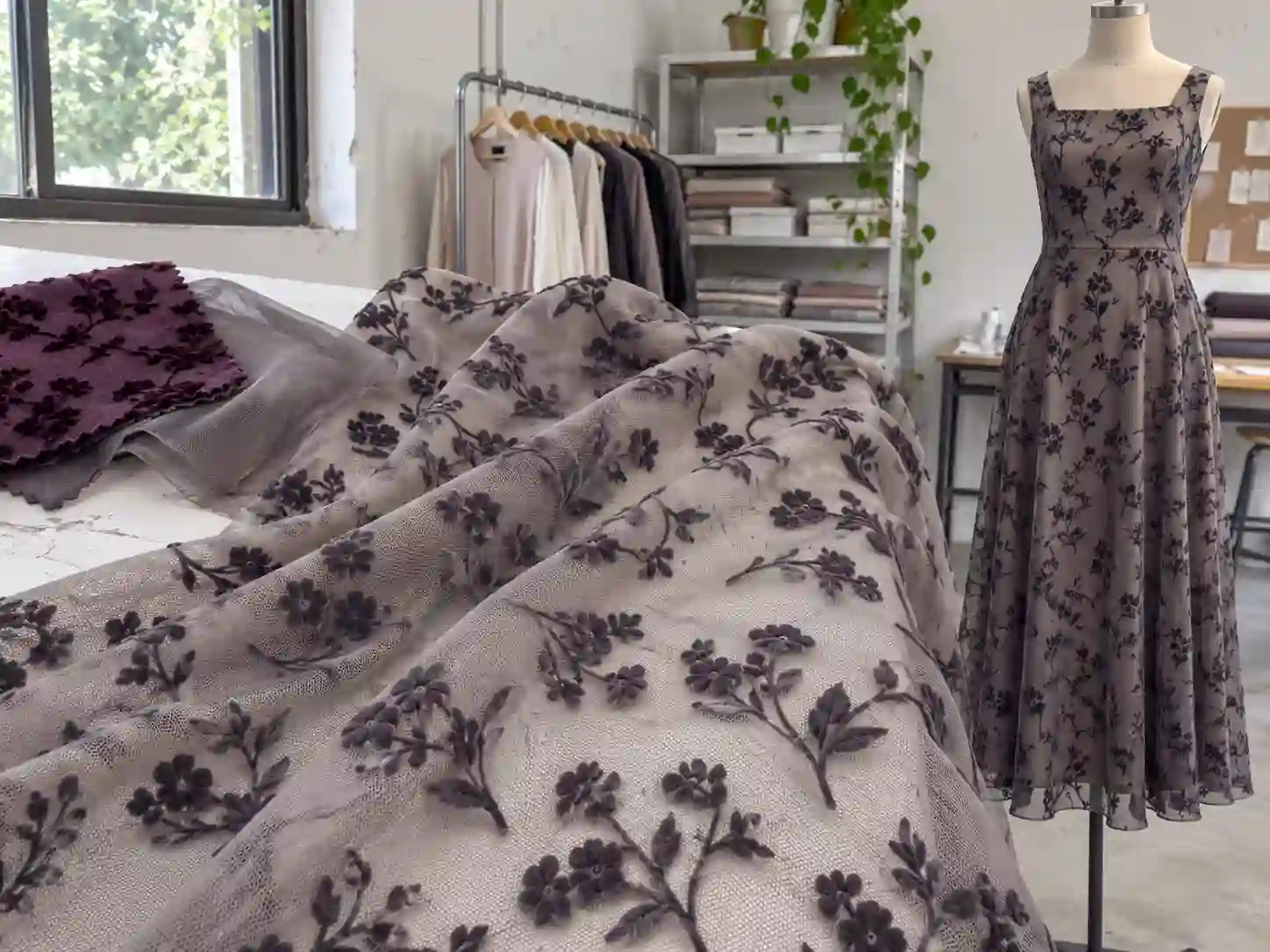
A fabric does not need elaborate embroidery, heavy embellishment, or a complicated weave to make a fashion collection stand out. Sometimes, a subtle change to its surface is enough to transform an ordinary garment into something with greater depth, texture, and visual character. Flocked fabric is a good example. It can create soft floral patterns on evening dresses, raised geometric details on fashion tops, or decorative motifs across transparent mesh. For clothing brands, this finishing technique offers a way to introduce distinctive surface effects while retaining the underlying fabric’s original construction. However, appearance alone cannot determine whether a flocked material is suitable for a commercial collection. The relationship between the base fabric, flock fibers, adhesive, application method, and garment construction influences everything from handfeel and drape to durability and care requirements. A beautiful sample may still create problems when it is stretched, sewn, pressed, washed, or reproduced across multiple production batches. Understanding how flocking works helps fashion teams make better material decisions before committing to a design.
Quick Answer: What Is Flocked Fabric?
Flocked fabric is a textile with short fibers attached to its surface using an adhesive, creating a raised, velvety, or textured finish. The fibers may cover the entire surface or form decorative patterns on woven, knitted, or mesh materials. Its appearance and performance depend on the flock fibers, adhesive system, base fabric, and finishing process. In fashion, flocking is used to create distinctive surface effects on dresses, tops, skirts, and decorative panels.
Consider a brand developing a floral mesh dress for an upcoming collection. The first sample looks attractive, but the flocked pattern feels stiff around the seams, and the team is unsure how it will perform after washing. That is where understanding the material becomes more valuable than simply recognizing its appearance.
What Is Flocked Fabric?
Flocked fabric is a textile with short fibers attached to its surface through a specialized finishing process. The raised fibers create a tactile or visual effect that differs from the underlying woven, knitted, or mesh structure. Depending on the fiber type, adhesive, coverage, and application method, flocked fabric can range from a subtle decorative pattern to a dense, velvet-like surface suitable for selected fashion applications.
What Are Flock Fibers and Base Fabrics?
Flock fibers are short pieces of fiber applied to a prepared surface to create a raised texture. Common options include polyester, nylon, rayon, acrylic, and cotton, although the most appropriate choice depends on the intended appearance and performance requirements. Fiber length, fineness, orientation, density, and color influence the finished surface. Shorter or finer fibers may produce a relatively subtle effect, while a denser pile can create a more pronounced texture. These characteristics should be considered together because softness, visual depth, and durability do not necessarily improve at the same rate.
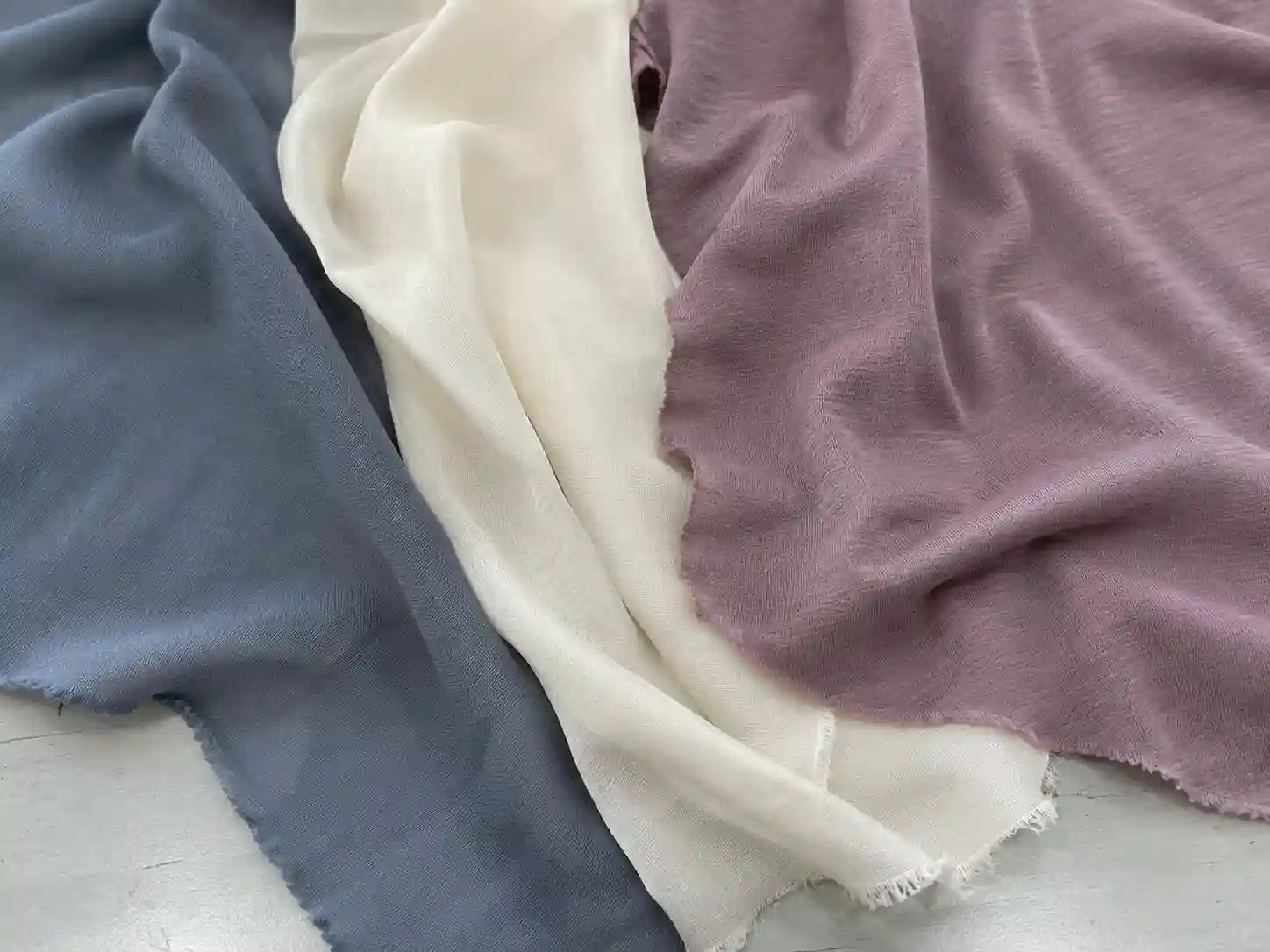
The base fabric is the underlying textile that supports the flocked surface. It provides the original structure, flexibility, strength, and much of the garment’s behavior. In women’s apparel, possible substrates include woven fabrics for structured dresses, knitted fabrics for fitted tops, and mesh for sheer overlays or decorative sleeves. Each construction creates different requirements for surface bonding and garment engineering. A flocked mesh, for example, may need to preserve its open structure, while a stretch knit must accommodate extension without excessive distortion or cracking of the raised pattern.
When evaluating a material, XZapparel considers the base fabric and its surface treatment as a connected system rather than treating flocking as an isolated decorative feature. The material specification should identify composition, construction, weight in grams per square meter (GSM), usable width, flock coverage, and relevant performance requirements. These details provide a more reliable reference for sourcing, sample comparison, and bulk approval than a commercial fabric name alone. They also help identify whether a visually attractive material is appropriate for the intended silhouette, movement, and wearing conditions.
How Is Flocked Fabric Different from Velvet and Velour?
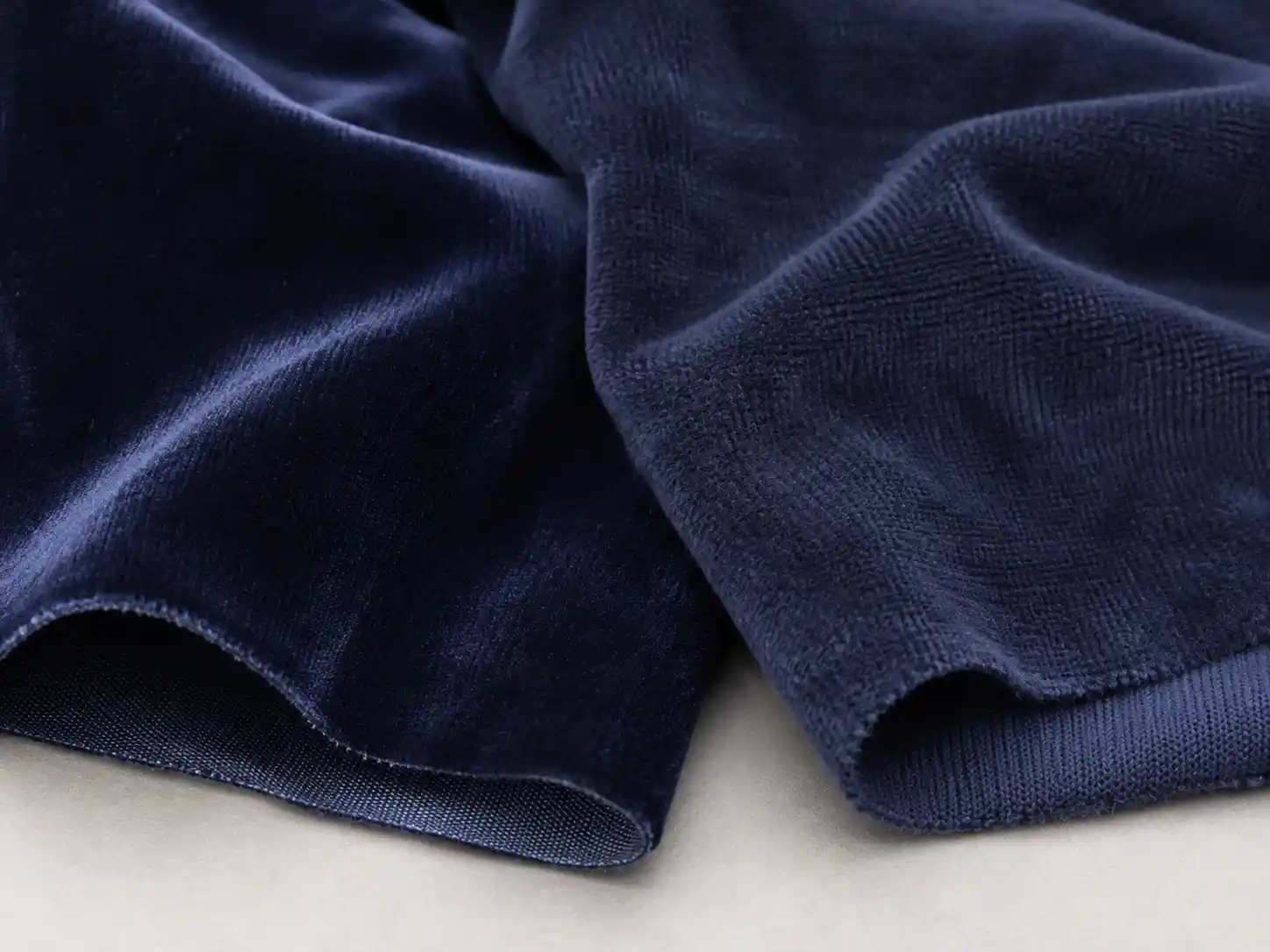
Flocked fabric, velvet, and velour can all have a soft, raised surface, but they achieve that appearance through different constructions. Conventional velvet generally obtains its pile through weaving, while velour commonly uses a pile structure associated with knitted or woven textiles. Flocked fabric receives additional short fibers that are attached to an existing substrate. This difference affects how the material should be evaluated during cutting, sewing, stretching, washing, and wear. Two textiles that look similar in a photograph may have very different flexibility, surface retention, and handling characteristics.
| Feature | Flocked Fabric | Velvet | Velour |
|---|---|---|---|
| Surface formation | Short fibers attached to a substrate | Pile formed through textile construction | Pile formed through textile construction |
| Design possibilities | Local motifs or all-over coverage | Solid surfaces and constructed patterns | Solid surfaces and selected textures |
| Base construction | Woven, knitted, mesh, or another suitable substrate | Commonly woven | Commonly knitted, although woven versions exist |
| Main development concern | Adhesion, coverage, and substrate compatibility | Pile direction, crushing, and surface consistency | Pile appearance, stretch, and surface consistency |
| Important approval checks | Surface retention and appearance after care | Pile behavior and garment construction | Pile behavior, stretch, and garment construction |
These distinctions are useful starting points rather than absolute definitions for every commercial textile. Suppliers may use different product names for similar-looking finishes, and some materials combine multiple surface treatments. A brand should therefore confirm the actual construction, fiber composition, finishing method, and intended use before making a sourcing decision. This is particularly important when the design relies on a specific handfeel or visual effect that must remain consistent across several styles or production runs.
Is Flocked Fabric a Fabric Type or a Surface Finish?
Flocking is primarily a surface-finishing technique, while flocked fabric is the common name for the finished textile. This distinction matters because the term does not identify one standardized composition, construction, weight, or durability level. Two materials described as flocked fabric may have different substrates, flock fibers, adhesive systems, surface densities, and care requirements. A stretch mesh with raised floral motifs, for example, is materially different from a woven textile covered with a dense, continuous flock layer, even if both have a soft surface.
A complete specification should translate the desired appearance into practical requirements. A design brief might call for a stretch mesh base, a matte floral flock pattern, defined motif dimensions, a particular color contrast, and suitable recovery after stretching. The exact technical values should be established through material selection and evaluation rather than assumed from a reference image. If the material is intended for a repeat collection, the approved sample should provide a consistent reference for future orders, colorways, and production comparisons.
This approach also makes supplier communication more precise. A brand may source an existing flocked material, request a custom finish on a selected base, or coordinate a specialist finishing process. Each route may involve different minimum quantities, sample requirements, and lead times. By recording the base material and surface treatment separately, XZapparel can help assess whether a proposed material matches the intended garment and identify the information still needed before a production decision can be made.
How Is Flocked Fabric Made?
Flocked fabric is generally produced by preparing a suitable substrate, applying adhesive to the intended areas, depositing short fibers, removing excess fibers, and curing the adhesive. The precise process depends on the base material, flock specification, desired surface effect, and equipment. Consistent coverage and durable bonding require control of the complete finishing system rather than reliance on the appearance of a finished swatch alone.

How Does Electrostatic Flocking Work?
Electrostatic flocking uses an electric field to help orient short fibers as they move toward an adhesive-coated surface. The fibers align with the field and become embedded in the adhesive, often producing a relatively upright, dense pile. This orientation can create a soft, uniform appearance when the substrate, adhesive, fiber characteristics, and application conditions are compatible. Other flocking methods exist, so electrostatic application should not be assumed to describe every flocked textile available for clothing.
A typical flocking workflow involves six practical stages:
- Substrate preparation: The base material is cleaned or treated when necessary so that its surface can accept the adhesive.
- Adhesive application: Adhesive is applied across the entire surface or to selected areas defined by the design.
- Fiber deposition: Short fibers are introduced through the appropriate application system.
- Excess-fiber removal: Loose fibers are removed to improve coverage and reduce surface contamination.
- Drying or curing: The adhesive is processed under the conditions required by its formulation.
- Final inspection: The material is checked for coverage, loose fibers, surface consistency, and visible defects.
Each stage influences the result. Uneven adhesive application can produce thin areas or inconsistent pile density, while irregular fiber deposition may leave bald spots or poorly defined edges. Inadequate curing can compromise bonding, and unsuitable processing conditions may damage the substrate or alter the finish. The exact equipment settings and processing conditions must be established for the actual material combination rather than copied from another product.
For apparel development, the important question is whether the finished surface can maintain its intended appearance through cutting, sewing, garment finishing, and expected use. A process that works on a stable substrate may not perform identically on an elastic knit. The material therefore needs to be evaluated as a complete textile system before it is approved for a specific garment.
Which Fibers and Adhesives Shape the Finish?
Flock fibers and adhesive work together to create the final surface. Polyester and nylon are common synthetic options, while rayon, acrylic, and cotton may also be used in suitable applications. Their performance depends on the fiber characteristics, application method, and intended use. Fiber fineness and length influence pile appearance, while color and density affect the visual contrast between the raised surface and the base material. The choice should be based on the desired finish and relevant performance requirements, not softness or color alone.
The adhesive anchors the flock fibers to the substrate, so compatibility is essential. A material that stretches, bends, or absorbs moisture may place different demands on the adhesive interface than a relatively stable woven textile. Insufficient bonding can contribute to fiber loss during handling or wear, while an unsuitable adhesive system may change flexibility, handfeel, or surface appearance. Processing conditions also matter because the adhesive must be cured appropriately without damaging the underlying fabric or changing the intended finish.
During development, the material review should record the base fabric, flock specification when available, pattern coverage, adhesive or application system when known, and relevant performance requirements. The finished sample should then be assessed as a complete combination. Changing the base fabric or flock supplier may alter the result, even if the design and color remain unchanged. Any significant substitution should therefore trigger a compatibility review rather than automatic approval.
What Causes Uneven Coverage or Weak Bonding?
Uneven coverage can result from inconsistent adhesive application, irregular fiber deposition, unsuitable substrate preparation, or variations during curing. Common visible defects include bald spots, thin areas, uneven pile height, rough pattern edges, and differences in density across the same textile. These problems are especially noticeable when the flock contrasts strongly with the underlying fabric. Fine floral outlines and geometric motifs may require particularly careful inspection because small variations can affect the overall definition of the design.
Weak bonding creates a separate set of risks. Fibers may detach during rubbing, sewing, laundering, or normal wear, while a sample that appears satisfactory when new may develop defects after repeated use. Stretching can create additional stress when the substrate extends but the flocked surface cannot accommodate the movement in the same way. The cause should not be assumed from appearance alone because fiber loss, cracking, and surface lifting can have different origins.
A useful quality review distinguishes incomplete coverage, fiber shedding, adhesive separation, cracking, edge lifting, color variation, and surface matting. Each defect should be recorded separately because the appropriate corrective action may differ. For example, cracking during extension may require a review of substrate compatibility, while irregular coverage may point toward application consistency. Comparing the affected material with an approved reference sample helps establish whether the problem originated in the substrate, finishing process, handling, or subsequent care. Corrective actions should be verified on a representative sample before bulk approval.
Which Types of Flocked Fabric Are Used in Clothing?
Flocked textiles can be developed as all-over surface finishes, localized patterns, decorative motifs, or textured panels on suitable woven, knitted, and mesh substrates. Their application in clothing depends on the intended visual effect, garment construction, movement requirements, and expected durability. A finish that works well for an occasional-wear dress may not be suitable for a fitted top that stretches frequently or requires regular laundering.
How Do All-Over Flocking and Flock Printing Differ?
All-over flocking generally creates a raised surface across a broad area, while flock printing places flock in selected motifs or patterns. All-over treatments can give the material a more continuous, velvety character, whereas localized flock printing creates contrast between treated and untreated areas. This contrast can work well for floral designs, geometric motifs, logos, and decorative graphics. Although the approaches share some general principles, they should not be assumed to use identical application methods or have the same performance characteristics.
The choice affects garment development. A broad flocked surface may change the overall handfeel, flexibility, and perceived thickness of the textile. A localized pattern may have a smaller effect on untreated areas but introduces transitions between flocked and unflocked surfaces. These boundaries can become important when the fabric stretches, bends, or is sewn into a garment. Motif scale also matters: small details require adequate definition, while large motifs may make variations in pile density more noticeable.
The most reliable approach is to approve the actual flocked result on the intended base fabric. Digital artwork can communicate motif shape, color, and placement, but it cannot fully represent pile height, tactile qualities, opacity, or bonding performance. For repeat collections, the approved reference should record motif dimensions, coverage, placement, color, and relevant process requirements. This creates a clearer basis for evaluating subsequent samples and reducing avoidable differences between development and bulk production.

Which Flocked Finishes Suit Dresses, Tops, and Mesh?
Flocked finishes can be used on dresses, blouses, fashion tops, skirts, and decorative mesh panels when the substrate and surface treatment support the intended design. A floral motif on an evening dress can add visual depth without requiring extensive beadwork. A smaller pattern on a blouse can introduce texture without dominating the silhouette. Flocked mesh can combine transparent ground areas with raised motifs, creating contrast in sleeves, overlays, yokes, and selected body panels.
The right choice depends on how the garment is expected to fit and move. A loose woven dress may rely on fluid drape, while a fitted top may require considerable stretch and recovery. A flocked finish that works on a stable woven fabric may behave differently on elastic mesh. Developers should assess the material in relation to the garment’s movement zones, seam placement, lining, closures, and intended wearing conditions before approving the design.
| Garment application | Potential flocking approach | Key development checks |
|---|---|---|
| Evening dresses | Floral motifs or selected decorative panels | Drape, appearance, surface retention |
| Blouses and fashion tops | Small or medium-scale motifs | Handfeel, seam placement, comfort |
| Fitted tops | Localized flocking on a suitable stretch base | Extension, recovery, cracking |
| Mesh overlays | Raised motifs with transparent ground areas | Opacity, coverage, handling |
| Skirts | Localized or broader decorative patterns | Friction, movement, surface matting |
| Coordinated sets | Consistent flock design across multiple pieces | Color matching, placement, repeatability |
These are potential applications rather than guaranteed recommendations for every flocked textile. A material suitable for an overlay may not be appropriate for a fitted body panel. The finished fabric must be evaluated against the actual garment requirements, and the team should confirm that the same design can be reproduced consistently across required sizes and colorways.
Can Flocking Be Applied to Knits and Wovens?
Flocking can be applied to suitable knitted and woven substrates, but each construction introduces different development considerations. Woven fabrics often provide a relatively stable foundation, although their composition, surface finish, and drape still influence the final result. Knitted fabrics may offer greater flexibility, which can be useful for fitted tops and stretch garments, but that flexibility can place additional demands on the flocked surface.
For knitted materials, extension and recovery are particularly important. A motif may look clean on a relaxed swatch but develop distortion or cracking when the garment is stretched. The substrate and attached fibers do not necessarily deform in the same way, so evaluation should reflect the expected movement of the finished garment. A stable knit and a highly extensible knit may behave very differently, even if their surface appearance is similar.
Woven materials require attention to drape, stiffness, seam interaction, and the effect of the finish on the original handfeel. A lightweight woven blouse may need to retain its softness, while a structured dress may tolerate a firmer surface. These are not fixed rules because fabric construction, composition, weight, and finishing all influence performance. The decision should begin with the garment’s functional requirements rather than assuming that one flocked material can serve every product category.
A fitted top, a loose blouse, and a sheer overlay should not share the same material specification simply because the desired flocked appearance is similar. Each requires an assessment of substrate compatibility, surface retention, construction, and comfort. This product-specific approach helps prevent a material that looks attractive in isolation from creating avoidable problems during fitting, sewing, or wear.
What Are the Benefits and Limitations of Flocked Fabric?
Flocked fabric adds tactile interest, visual depth, and decorative flexibility to clothing, but its raised surface can also affect stretch, drape, care, and durability. Its suitability depends on whether the design benefits justify the additional process requirements and whether the finished textile can meet the garment’s performance expectations. A successful choice balances appearance with practical performance instead of treating the decorative finish as the only priority.
What Visual and Tactile Benefits Does It Offer?
Flocking changes how a garment looks and feels by adding a raised fiber layer to an existing textile. The surface interacts with light differently from the underlying fabric, allowing a motif to appear more dimensional than a flat printed design. Depending on the fiber characteristics and density, the finish may feel soft, velvety, matte, or distinctly textured. This creates opportunities for contrast between a smooth ground and a raised pattern without requiring every decorative element to be embroidered or attached separately.
For fashion brands, the main benefit is design flexibility. A tonal flock pattern can provide subtle surface interest, while a contrasting motif can become a defining feature of a garment. Flocking can also be applied selectively, allowing the design to retain some of the original substrate’s characteristics in untreated areas. This is particularly useful when a product depends on the balance between transparency, texture, and movement, as often happens with decorative mesh and selected eveningwear designs.
However, flocking should not automatically be considered cheaper, lighter, or easier than other decorative techniques. The commercial result depends on coverage, pattern complexity, material requirements, supplier minimums, and quality expectations. A complicated motif may require additional development and inspection, while another technique may achieve a similar appearance with fewer production variables. The best applications are those in which the surface effect contributes directly to the garment’s identity and remains suitable for its intended use.
Does Flocking Affect Drape, Stretch, and Breathability?
Flocking can change the behavior of the original fabric because the finished textile includes an additional layer of fibers and adhesive. The degree of change depends on surface coverage, fiber density, adhesive properties, and the construction of the base material. A small decorative motif may have a limited effect on the overall fabric, while extensive coverage can change perceived thickness, flexibility, friction, and handfeel. These differences become important when the garment relies on a particular drape or close-fitting silhouette.
Drape should be assessed on the finished material rather than inferred from the untreated base. A lightweight fabric selected for a flowing dress may become less fluid if the treatment adds stiffness. Conversely, a firmer surface may be acceptable for a structured garment that relies on shape rather than soft movement. The important question is whether the treated material still supports the intended silhouette, including how it hangs, folds, and moves during wear.
Stretch and recovery require particular attention when flocking is applied to knitted fabrics. If the substrate extends significantly while the surface layer cannot accommodate that extension, the finish may distort or crack. The amount of extension that can be tolerated depends on the complete material system, so there is no single stretch percentage that guarantees suitability across all flocked fabrics. Breathability also depends on the base textile and surface coverage, making actual material evaluation more reliable than assumptions based on the finish alone.
Developers should consider whether the fabric drapes as required, whether the surface remains intact during expected movement, whether the finished material feels comfortable against the skin or lining, and whether its air and moisture behavior suits the garment. These questions connect material selection to the actual wearing experience. A fabric that looks excellent on a hanger may still feel too stiff, warm, or restrictive when worn, so these characteristics should be assessed before production approval.
What Are the Main Limitations in Wear and Use?
The main limitations of flocked fabric involve surface wear, bonding performance, care sensitivity, and consistency between samples and bulk production. Repeated friction can flatten the pile or remove fibers, particularly in areas that rub against other garments, bags, seating surfaces, or the wearer’s body. Washing and dry cleaning may affect some flocking systems, while unsuitable heat or chemicals can change the surface or damage the substrate. These are potential failure modes rather than inevitable outcomes for every flocked material.
The risks vary with the garment. An occasional-wear dress may experience relatively limited friction, whereas a frequently worn fitted top may be stretched repeatedly and washed more often. A skirt may experience rubbing between the thighs, and a flocked mesh sleeve may be exposed to abrasion from outerwear. The same material can therefore be appropriate for one product and unsuitable for another. Product developers should evaluate the actual wearing conditions rather than describing flocked fabric as universally durable or delicate.
Flocking also introduces another production variable. A change in the base fabric, adhesive, fiber specification, application method, or curing conditions can alter the finished result. A replacement material should not be accepted solely because its color and motif look similar. It should be compared against the approved reference for the characteristics that matter to the product, including coverage, surface texture, flexibility, and performance after relevant care procedures.
For commercial development, the team should establish an agreed standard for appearance and performance. This may include acceptable coverage, motif definition, surface retention, color consistency, and the results of relevant tests. If the finish is central to the garment’s identity, these requirements should be documented before bulk production. This helps reduce the risk of discovering that a visually attractive sample cannot be reproduced consistently or does not perform adequately under the intended conditions of use.
Is Flocked Fabric Durable, Washable, and Easy to Care For?
Flocked fabric can be durable and washable when its fibers, adhesive, base material, and finishing process are suitable for the intended use. There is no universal care rule for all flocked textiles. Washing, rubbing, heat, and appearance should be evaluated against the actual garment requirements before care instructions and production standards are finalized. The approved care method should reflect the tested product rather than a generic assumption about flocked materials.
How Do Washing, Rubbing, and Heat Affect Flock?
Washing exposes flocked fabric to water, detergent, mechanical movement, and changes in the substrate. Depending on the material system, these conditions may contribute to fiber loss, matting, color change, or deterioration of the adhesive bond. Dry cleaning can also affect some flocked surfaces, depending on the cleaning chemistry and construction. The fact that the base fabric is washable does not automatically mean the flocked finish will withstand the same treatment.
Rubbing creates a different type of stress. Fibers can flatten or detach, and the surface may show uneven wear in high-friction areas. Color transfer can also become a concern when the flock or underlying material has insufficient fastness. Heat presents another variable because excessive temperature or direct pressure may affect the adhesive, the fibers, or the original substrate. A care method suitable for one flocked textile may damage another, so the approved instructions should be based on the actual material and its intended use.
The most useful approach is to connect testing with the garment’s expected wearing conditions. A frequently washed top may require more demanding laundering evaluation than an occasional-wear decorative garment. A fitted style may need additional assessment under extension, while a dark flock on a pale ground may require closer attention to visible surface loss and color transfer. Before testing begins, the brand and supplier should agree on the laundering method, drying procedure, evaluation points, and acceptance criteria.
For development purposes, a team might assess appearance before washing and at selected checkpoints such as cycles 1, 5, and 10. These are illustrative checkpoints, not universal industry requirements or a guarantee of durability. The actual sequence should follow the customer’s protocol, intended care life, and applicable test method. The important point is to record the conditions and results so that material decisions are based on repeatable observations rather than a general impression of quality.

Which Tests Should Be Run Before Bulk Production?
Testing should reflect the garment’s risks, the material construction, and the quality requirements agreed with the customer. A useful plan separates flock-specific concerns from general fabric and garment performance. Surface retention, for example, is different from dimensional stability, while stretch recovery and colorfastness answer different questions about suitability for use. No single test can establish every aspect of a flocked garment’s performance, so the testing plan should be selected according to the product’s actual requirements.
| Test or inspection | What to record | Main production decision |
|---|---|---|
| Surface coverage inspection | Bald spots, motif edges, density, visible variation | Approve or correct the surface finish |
| Flock retention after care | Fiber loss, matting, and appearance at agreed checkpoints | Confirm the proposed care method |
| Rubbing or crocking fastness | Color transfer and visible surface damage | Assess use suitability and color combinations |
| Stretch and recovery | Extension, recovery, distortion, surface cracking | Evaluate fitted or stretch garments |
| Dimensional stability | Changes in fabric or garment measurements | Review pattern allowance and size consistency |
| Colorfastness | Color change or transfer under relevant conditions | Approve color combinations and care requirements |
| Garment appearance after washing | Surface, seams, pilling, fuzzing, and overall appearance | Confirm compliance with agreed standards |
ISO 15487:2018 describes a method for evaluating the appearance of apparel and other textile end products after domestic washing and drying, including color change, pilling, fuzzing, matting, smoothness, and seam appearance. As of October 2026, ISO lists a successor draft under development, so the applicable edition should be confirmed when preparing a formal purchase specification.
AATCC TM142 was specifically associated with the appearance of flocked fabrics after repeated home laundering or coin-operated dry cleaning, but AATCC lists that method as withdrawn. It should not be presented as a current, universally applicable test without confirmation from the standards organization. For a commercial project, the testing team should confirm the current suitable method, sample preparation, evaluation procedure, and acceptance criteria before testing begins. A test report is meaningful only when the method, conditions, and sample identity are clearly recorded.
XZapparel’s documented testing capabilities include fabric inspection, GSM, shrinkage, colorfastness, rubbing, washing, pilling, stretch and recovery, dimensional stability, print adhesion, and heat resistance. These capabilities support material and garment evaluation, but a specific flock-related protocol or formal third-party report must be confirmed for each project rather than assumed to exist. Where the customer requires formal laboratory evidence, the applicable requirements should be agreed with a qualified laboratory before bulk approval.
How Should Flocked Garments Be Washed and Stored?
Care instructions should be based on the approved garment and its demonstrated performance. Some flocked textiles may tolerate machine washing under defined conditions, while others may require a delicate cycle or professional cleaning. Until the actual material has been evaluated, it is not appropriate to promise universal machine washability or dry-cleaning compatibility. A care label copied from a similar-looking garment may also be unsuitable if the base fabric or flocking system differs.
Direct high heat and aggressive surface rubbing should be avoided unless the garment’s instructions specifically permit them. If ironing is required, the approved care method should explain how to prevent unsuitable heat or direct pressure from damaging the flock. Storage also deserves attention because pressure and friction can flatten a raised surface. Garments with a sensitive pile may need to be stored in a way that limits prolonged compression and contact with rough surfaces, particularly when the raised texture is an important part of the design.
For brands, care requirements should be discussed during development rather than left until the label is prepared. If the garment is intended for regular washing, the proposed material and flocking system should be evaluated under the required care conditions before bulk approval. Poor performance may call for a different adhesive system, revised surface coverage, another substrate, or a change in the design. The correct decision depends on the actual failure observed and the requirements that the finished product must meet.
The final care label must match the approved product. It should not be based on a general assumption that all flocked fabrics require the same treatment. This is especially important when a collection includes multiple flocked materials because their substrates, adhesives, and surface structures may differ. Clear care guidance helps protect the consumer experience and maintain consistency between product development, manufacturing, and retail information.
How Do You Choose and Approve Flocked Fabric for Apparel Production?
Choosing flocked fabric for apparel production requires a clear design specification, a compatible base textile, evaluation of the finished surface, and approval through sampling and appropriate testing. Commercial feasibility must also account for material availability, minimum quantities, process ownership, production timing, and the ability to reproduce the approved result. A material should not be considered production-ready simply because the first swatch looks attractive.
Which Base Fabric and Flock Specifications Fit the Design?
Material selection should begin with the garment’s functional and visual requirements rather than a generic request for flocked fabric. A fitted top, a flowing dress, and a sheer overlay need different combinations of stretch, drape, opacity, surface coverage, and construction. The base fabric should first be evaluated for composition, woven or knitted construction, GSM, usable width, handfeel, and movement. The flocked finish should then be assessed for appearance, texture, motif scale, coverage, and compatibility with the intended use.
A practical specification should record the base material, including fiber composition, construction, weight, width, stretch, recovery, and drape where relevant. It should also define the flocked surface, including fiber type when known, color, motif dimensions, coverage, pile appearance, and placement. Garment requirements such as silhouette, lining, seam positions, closures, movement zones, and expected care conditions should be included so the material can be assessed in its intended context.
The specification should also identify performance requirements and commercial constraints. Surface retention, laundering, rubbing, colorfastness, and dimensional stability may all be relevant, but the exact test plan should depend on the product. Available colors, material minimums, specialist-process minimums, and development timing also affect feasibility. These details allow the team to compare candidate materials against the actual design instead of selecting the softest or most visually striking swatch by default.
Technical values should be established through material selection and evaluation rather than invented to make the specification appear precise. If the exact GSM, stretch requirement, motif dimensions, or acceptable variation is not yet known, the first development stage should establish those values. Once a reference sample has been approved, the specifications provide a consistent basis for future samples, colorways, and repeat orders.
What Should Brands Check During Sampling and PPS Approval?
Sampling should demonstrate how the flocked material behaves in the actual garment, not simply confirm that a motif can be produced. A swatch is useful for reviewing color, texture, and surface definition, but it cannot fully represent seam interaction, garment fit, movement, or the effects of multiple layers. Wherever feasible, the sample should use the intended base fabric and flocking treatment so that the review reflects the actual product rather than an approximation.
During review, the team should check motif size and placement, coverage consistency, handfeel around seams, and the appearance of the surface when the garment is worn or stretched. Sewing, pressing, folding, and finishing may affect the flocked area, so these operations should be assessed where relevant. If the garment will be washed, rubbed, or exposed to specific care conditions, the corresponding evaluations should be completed before the sample is treated as fully approved.
Pre-production sample approval should confirm that the final specifications are understood by the relevant teams. Changes to the base fabric, surface finish, artwork, construction, or care requirements should be recorded. If a substitute material is proposed, it should be reviewed against the approved reference instead of being accepted because it looks broadly similar. The exact approval sequence can vary by project, but appearance, construction, performance, and production feasibility must be aligned before bulk manufacturing.
For repeat collections, maintaining the approved reference is particularly important. It provides a comparison point for later material lots, new colorways, and repeat orders. This helps the brand distinguish acceptable variation from a change that could affect product identity or quality. A visually successful sample with unresolved durability concerns should not be treated as production-ready, just as a technically sound material may still require design adjustments if it does not deliver the intended silhouette or tactile effect.
What Information Is Needed to Review Production Feasibility?
A useful production review begins with enough information to evaluate the actual product rather than the general idea of flocking. A reference image can communicate the intended appearance, but a technical pack, material swatch, artwork file, or existing garment sample provides more specific information for sourcing and development. The brand should identify the garment category, expected quantity, colorways, size range, target delivery window, base-fabric preference, motif dimensions, and required quality standards.
For specialist surface treatments, the team should establish which steps can be handled internally and which require a qualified external partner. Process ownership affects sample coordination, quality responsibility, lead time, and the management of changes between development and bulk production. The ability to source a flocked material does not automatically mean that every flocking treatment can be performed in-house or produced at the same minimum quantity. Feasibility must be confirmed against the actual material, process route, and project requirements.
At XZapparel, the standard garment MOQ is 200 pieces per style per color. Special fabrics, trims, processes, or supplier requirements may increase the practical minimum. This is a garment-level starting point, not a guarantee that every flocked material or finishing process can meet the same quantity. The selected material, color requirements, specialist supplier, and production plan must be reviewed before confirming feasibility.
For an initial review, the most useful inputs include the product reference, garment category, material specification or sourcing request, artwork, motif dimensions, quantity by style and color, size range, quality requirements, and intended delivery window. A technical pack, measurement chart, existing swatches, and sample photographs can help clarify details that a reference image cannot show. Providing this information helps identify missing specifications and establish a realistic development route without making unsupported assumptions about cost, timing, or production capability.
The goal is to move from an attractive concept to an approved textile and a reproducible production specification. When the base fabric, flocked surface, garment construction, and performance expectations are evaluated together, the brand can make better decisions before committing to bulk production. XZapparel’s product development and sourcing workflow connects material choices with garment construction, quality considerations, and production feasibility, helping fashion brands identify the next practical step for a proposed design.
Conclusion
Flocked fabric gives fashion brands a versatile way to introduce raised texture, visual contrast, and distinctive surface details into women’s clothing. Its success depends on more than the appearance of a sample: the base fabric, flock fibers, adhesive system, finishing process, garment construction, and care requirements all influence the final result. A disciplined development process begins with a clear material specification, evaluates the finished textile in the actual garment, and confirms performance through suitable inspection and testing. For brands developing flocked dresses, tops, skirts, or mesh designs, XZapparel can help review material requirements, sourcing considerations, sampling needs, and production feasibility. The aim is to turn an attractive design idea into a product specification that can be evaluated, approved, and reproduced with greater confidence.
Frequently Asked Questions About Flocked Fabric
Is Flocked Fabric the Same as Velvet?
No. Flocked fabric receives short fibers attached to an existing substrate using an adhesive, while conventional velvet generally obtains its pile through woven construction. Velour is another pile textile that is commonly associated with knitted or woven structures. Although these materials can look and feel similar, their construction and performance may differ. When choosing between them, compare the actual composition, surface structure, handfeel, durability, and care requirements rather than relying on appearance or a commercial product name.
Is Flocked Fabric Good for Dresses?
Flocked fabric can work well for evening dresses, fashion dresses, decorative panels, and selected mesh overlays when the base fabric and finish suit the intended silhouette. Raised floral motifs can add depth without requiring extensive embroidery, while flocked mesh can combine transparency with texture. The best choice depends on drape, surface retention, comfort, seam placement, and expected care conditions. A sample should be assessed as a complete garment because a material that looks attractive as a swatch may behave differently when cut, sewn, and worn.
Does Flocked Fabric Wash Well?
Some flocked fabrics tolerate washing under defined conditions, while others may lose fibers, develop a flattened surface, or experience changes in appearance. Performance depends on the base fabric, flock fibers, adhesive system, finishing process, and washing method. The base fabric’s washability alone does not establish that the flocked surface will remain intact. Before approving care instructions, the finished material should be evaluated under an agreed procedure, with surface appearance and fiber retention checked against the requirements for the intended garment.
Does Flocked Fabric Shed Fibers?
Flocked fabric may release fibers if the surface bond is inadequate, the finishing process is inconsistent, or the material experiences wear beyond its capabilities. However, shedding is not inevitable for every flocked textile. Fiber type, adhesive compatibility, curing, substrate construction, and handling all influence the result. A useful evaluation checks the surface before and after relevant rubbing or care procedures, records visible fiber loss, and compares the results with an approved reference. If shedding occurs, the cause should be investigated before the material is approved for bulk production.
What Is the Difference Between Flock Printing and Flocking?
Flocking is the broader process of attaching short fibers to a surface, while flock printing commonly refers to applying flock in selected printed motifs or patterns. All-over flocking can create a more continuous raised surface, whereas localized flock printing creates contrast between treated and untreated areas. The actual application method can vary by supplier and product. For apparel development, the important details are the intended pattern, coverage, base material, surface texture, and performance requirements, all of which should be confirmed on the approved material sample.
Can Flocked Fabric Be Used for Stretch Clothing?
Flocked fabric can be used for selected stretch garments when the substrate and surface treatment are compatible with the required extension and recovery. The main concern is that the base fabric and attached flock layer may respond differently when stretched, potentially causing distortion, cracking, or local separation. Suitability cannot be determined from the untreated base fabric alone. A representative sample should be evaluated under the movement and care conditions expected for the finished garment, with the results reviewed before the material is approved for production.