Skip to content

Velvet and velour are two popular pile fabrics used in fashion because of their soft surfaces, rich appearance, and distinctive ability to reflect light. At first glance, they can look almost identical, particularly when they are produced in similar colors and pile finishes. However, their construction, fabric behavior, stretch characteristics, and suitability for different clothing styles can vary considerably. Understanding these differences is important when developing garments that need to maintain both their intended appearance and performance after repeated wear.
Velvet is commonly associated with woven pile construction, a smooth surface, and an elegant appearance, while velour is commonly associated with knitted construction, a soft plush texture, and greater flexibility. However, neither description applies universally to every fabric sold under these names. Fiber composition, construction, GSM, pile height, finishing, and elastane content all influence the final result. For clothing development, the actual fabric specification and physical sample are more reliable than the commercial name alone.
For fashion brands developing dresses, tops, coordinated sets, jackets, and comfortable casualwear, choosing between velvet and velour involves more than selecting the fabric that looks better in a photograph. A fabric that appears beautiful on a swatch may behave differently when cut, stitched, pressed, or worn as a finished garment. At XZapparel, fabric evaluation is approached as part of the wider garment development process, connecting material selection with pattern engineering, sample confirmation, fit, production feasibility, and quality control.

What Are Velvet and Velour?
Velvet and velour are both pile fabrics characterized by a soft, raised surface that creates a distinctive visual and tactile effect. The main difference in common apparel usage is their underlying construction: traditional velvet is generally woven, whereas apparel velour is frequently knitted. Their appearance and performance also depend on the fibers, pile structure, fabric weight, and finishing methods used during manufacturing.
What Is Velvet Fabric?
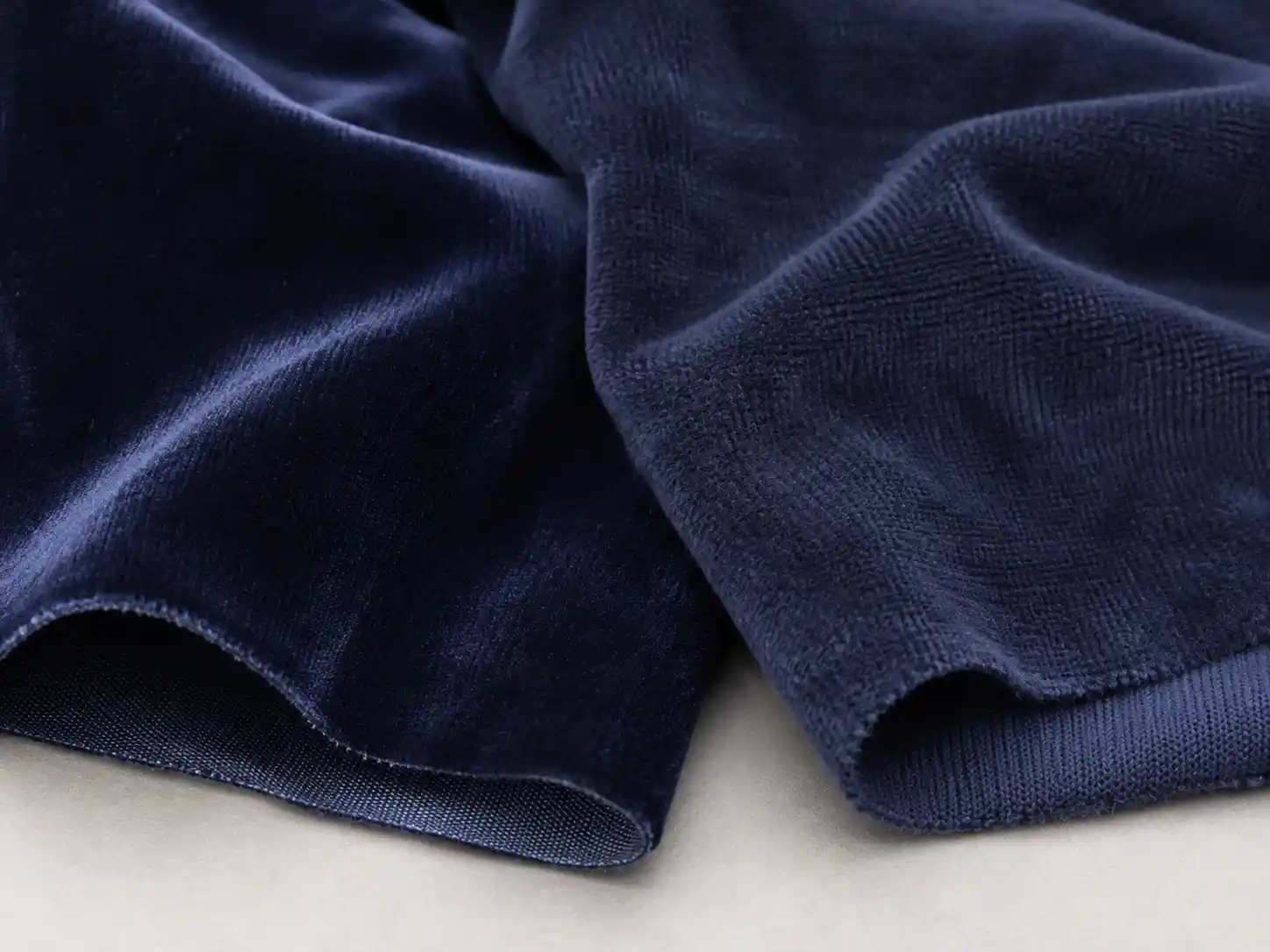
Velvet is a fabric with a dense pile surface created by additional yarns that stand above the ground fabric. Traditional woven velvet is commonly produced using a warp-pile construction, where pile yarns are formed during weaving and then cut to create a soft, upright surface. This construction gives velvet its characteristic depth, smooth handfeel, and directional light reflection. Depending on the fiber and finishing process, velvet can have anything from a subtle matte appearance to a highly lustrous surface.
Modern velvet is available in different fiber compositions, including polyester, cotton, viscose, rayon, silk, and blended materials. Each composition influences the finished fabric’s weight, softness, drape, durability, and care requirements. Polyester velvet is widely used in commercial fashion because it can provide consistent color and a versatile price-performance balance, while viscose and silk-based options can offer different levels of softness and surface richness. Consequently, the word velvet describes a fabric family rather than one fixed material specification.
What Is Velour Fabric?
Velour is a plush fabric that resembles velvet but is commonly associated with a knitted ground construction in modern apparel applications. The raised surface creates a soft, slightly fuzzy appearance, while the knitted structure can provide greater flexibility and stretch than traditional woven velvet. Depending on its composition and finishing, velour can feel lightweight and comfortable or relatively substantial and warm, making it suitable for clothing that combines a plush appearance with ease of movement.
Velour is commonly manufactured from polyester, cotton, cotton-polyester blends, viscose, and other blended fibers. Some versions contain elastane to improve stretch and recovery, which makes them particularly useful for tracksuits, lounge sets, casual dresses, and comfortable fitted garments. Its surface may appear relatively matte or display a gentle sheen depending on pile density, fiber type, dyeing, and finishing. For garment development, XZapparel evaluates the complete fabric specification rather than assuming that every velour offers identical stretch or softness.
Are Velvet and Velour the Same Fabric?
Velvet and velour belong to the same broader family of pile fabrics, but they are not necessarily interchangeable materials. Their names are sometimes used differently across textile references, mills, and commercial markets, which can create confusion when comparing fabric samples. Modern velour is frequently described as a velvet-like fabric with a knitted ground, while velvet can include different woven and knitted constructions. The Woolmark Company and the Textile Research Centre Leiden both document this relationship between velvet and knitted velour, demonstrating that the distinction requires some technical context rather than a simple naming rule.
For clothing development, the practical difference becomes clearer when the fabric is examined physically. A typical woven velvet may offer a more stable base and a formal visual effect, whereas knitted velour may provide greater stretch and a more relaxed wearing experience. Nevertheless, stretch velvet, panne velvet, and other specialized constructions can overlap with these characteristics. XZapparel therefore recommends confirming the ground construction, fiber composition, stretch direction, pile structure, and finishing before making a material decision.
How Are Velvet and Velour Constructed?
Velvet and velour develop their characteristic surfaces through pile formation, but their base structures can be different. Traditional woven velvet commonly uses additional warp yarns or a double-cloth weaving technique, while knitted velour develops its pile effect through a knitted structure and subsequent finishing. Understanding these manufacturing differences helps explain their behavior during cutting, sewing, pressing, fitting, and bulk garment production.
How Is Velvet Pile Formed?
Traditional woven velvet can be manufactured using a double-cloth technique in which two fabric layers are woven simultaneously and connected by pile yarns. The connecting yarns are subsequently cut to separate the layers, leaving raised pile fibers on the fabric surface. Another method uses specialized weaving equipment and cutting wires to form and cut pile loops. Both methods create a dense surface that can be sheared or finished to achieve the required pile height and appearance.
The pile is an important part of velvet’s visual identity because its direction influences how light is reflected from the surface. When the pile lies in one direction, the fabric may appear darker or richer from one viewing angle and lighter from another. This characteristic needs to be considered when preparing cutting layouts and positioning garment pattern pieces. The Texas A&M University fact sheet on velvet construction also explains the importance of pile direction, fabric preparation, and sewing techniques when working with pile fabrics.
How Is Velour Pile Formed?
Knitted velour is commonly produced by creating a knitted ground structure with pile loops or pile-forming yarns. These raised fibers are then cut, sheared, or brushed during finishing to create the characteristic plush surface. The knitted foundation provides flexibility, while the pile finishing determines the softness, density, and appearance of the face. Depending on the knitting construction, fiber blend, and finishing method, different velour fabrics can have noticeably different stretch, recovery, and surface characteristics.
The finishing process is particularly important because a poorly controlled surface can appear uneven or lose its intended softness. Pile height, fiber density, brushing intensity, and shearing consistency all influence the finished material. For example, two fabrics with similar fiber compositions may have different handfeel and visual depth because their knitted structures and finishing processes are not identical. XZapparel considers these factors when comparing fabric samples for clothing development, especially when the final garment requires a consistent appearance across multiple sizes and production quantities.
Are All Velvets Woven and All Velours Knitted?
No. Although woven velvet and knitted velour are useful starting points for understanding the difference, they should not be treated as absolute manufacturing rules. Velvet can also be knitted, and some textile references describe velour more broadly than the modern apparel definition. Panne velvet is one example of a pile fabric that may involve knitted or woven constructions. These overlapping definitions mean that the material’s actual construction must be confirmed through supplier specifications and physical inspection.
This distinction becomes particularly important when sourcing fabrics for stretch dresses, fitted tops, or garments with close-fitting silhouettes. A fabric marketed as stretch velvet may contain elastane or use a knitted base, while a fabric labeled velour may have limited recovery depending on its composition and structure. Rather than selecting materials according to terminology alone, XZapparel examines the ground construction, fiber blend, GSM, width, and measured stretch behavior before recommending a fabric for a particular garment application.
What Is the Difference Between Velvet and Velour?
The main differences between velvet and velour are associated with construction, surface appearance, stretch, drape, and garment suitability. Traditional woven velvet is often selected for its rich surface and more stable structure, while knitted velour is commonly selected for softness and flexibility. However, fiber composition, elastane content, pile height, GSM, and finishing can significantly change these characteristics, so each comparison should be based on the actual fabric being developed.
How Do Texture, Sheen, and Pile Direction Compare?
Velvet generally has a dense and relatively smooth pile surface that produces noticeable changes in appearance as the fabric moves under different lighting conditions. Its surface may appear glossy, softly reflective, or matte depending on the fiber and finishing. Velour often has a softer, more plush handfeel, with a surface that may appear slightly less formal. However, the distinction is not absolute because both fabrics can be produced with different pile densities and surface treatments.
Pile direction is an important consideration for both materials, especially when the fabric has a noticeable nap. When the pile is brushed in one direction, it may feel smoother than when brushed in the opposite direction. This also affects the way colors appear on finished garments. For production, pattern pieces should be arranged with consistent pile direction unless the design intentionally uses contrasting directions. Otherwise, a single garment can show visible differences between the front, back, sleeves, and other panels even when they come from the same fabric roll.
Which Fabric Has More Stretch and Recovery?
Knitted velour generally offers more natural stretch than traditional woven velvet because its knitted ground can expand more easily. However, the actual amount of stretch depends on the knitting structure, yarn composition, fabric density, and whether elastane is included. Stretch velvet can also provide flexibility when developed with suitable knitted construction or elastic fibers. Therefore, it would be inaccurate to assume that every velour stretches substantially or that every velvet is completely rigid.
Stretch recovery is equally important because a fabric should return toward its original dimensions after being extended. A material with high extension but poor recovery may gradually become loose around the elbows, knees, hips, or waist. This can affect fitted dresses, leggings, and other close-fitting garments. XZapparel evaluates both stretch and recovery when a fabric is intended for body-hugging silhouettes, because the final fit depends on the interaction between material behavior, pattern measurements, seam construction, and garment design.
How Do Weight, Drape, and Opacity Differ?
Fabric weight and drape are not determined by the words velvet or velour alone. GSM, fiber composition, ground construction, pile height, and finishing all influence how the material hangs and moves. A lightweight velvet can create a flowing dress, while a heavier velvet may provide greater body for jackets and structured garments. Similarly, lightweight velour may work for flexible tops, while heavier versions can be suitable for coordinated sets and comfortable outer layers.
Opacity should also be evaluated independently because pile density does not automatically guarantee adequate coverage. A stretch fabric may become more transparent when extended, particularly across the bust, hips, or knees. This is especially important for fitted dresses and garments designed with close body contact. During fabric approval, XZapparel considers the material’s thickness, color, stretch behavior, and intended garment structure to determine whether lining, double-layer construction, or additional support is necessary.
| Comparison factor | Typical woven velvet | Typical knitted velour |
| Ground construction | Woven | Knitted |
| Surface | Dense, directional pile | Soft, plush pile |
| Light reflection | Can have noticeable directional sheen | Often softer or more diffuse, depending on finish |
| Natural stretch | Usually limited | Often greater |
| Recovery | Depends on structure and fiber content | Depends on knit structure and elastane |
| Drape | Can range from fluid to structured | Often flexible and body-responsive |
| Common clothing uses | Evening dresses, jackets, skirts | Loungewear, casual sets, comfortable dresses |
| Main development concern | Pile direction and surface consistency | Stretch recovery and dimensional stability |
This table describes common apparel constructions, not guaranteed properties of every commercially labeled fabric. Stretch velvet and woven velour are among the examples that require individual evaluation.
Which Fabric Is Easier to Care For?
Neither velvet nor velour is automatically easier to maintain because care requirements depend heavily on the fiber composition, pile construction, dyeing, and finishing. Polyester-based materials may have different washing requirements from silk, viscose, cotton, or blended fabrics. Some velvet garments require professional dry cleaning, while certain washable velour fabrics can be maintained using controlled washing conditions. The care instructions should therefore be established from the actual fabric specification and confirmed through appropriate testing.
Pile preservation is another important consideration. Excessive heat, strong mechanical friction, aggressive washing, or direct pressing can flatten or damage the raised surface. Garments may develop shiny patches, uneven pile, or changes in handfeel if the material is handled incorrectly. For clothing development, XZapparel considers the intended care method during fabric selection and sample evaluation. The final care label should reflect the approved material and verified garment-care requirements rather than relying on generic instructions for all velvet or velour fabrics.

Which Fabric Is Better for Different Clothing Styles?
Velvet is generally a strong choice for garments that require a rich surface, elegant appearance, and a more structured or formal visual effect. Velour is often better suited to casual clothing that benefits from softness, flexibility, and comfortable movement. However, neither fabric is universally better. The appropriate choice depends on the garment silhouette, intended wearing occasion, required stretch, fabric weight, lining, and the appearance expected from the finished collection.
Which Is Better for Evening Dresses and Blazers?
Velvet is frequently selected for evening dresses, occasionwear, skirts, and blazers because its pile surface creates visual depth and a sophisticated appearance. Depending on the composition and GSM, it can support either flowing silhouettes or more structured designs. Lightweight velvet may work well for dresses with soft draping, while heavier versions can provide greater body for tailored jackets. The correct choice depends on the intended silhouette, fabric stability, and the support required by the garment.
When developing velvet dresses or blazers, XZapparel evaluates how the material interacts with seams, darts, linings, closures, and other structural components. A beautiful velvet swatch does not automatically mean that the material will perform well in a complicated garment. Thick pile can increase seam bulk, while unstable or lightweight constructions may require additional support. Sampling is therefore important for confirming the balance between appearance, construction feasibility, and finished garment comfort.
Is Velour Better for Loungewear and Casualwear?
Velour is commonly suitable for loungewear, tracksuits, comfortable tops, casual dresses, and coordinated sets because knitted constructions can provide flexibility and a soft surface. The material can create a comfortable wearing experience while maintaining a more polished appearance than some ordinary jersey fabrics. Polyester, cotton blends, and elastane-containing versions offer different combinations of softness, weight, stretch, and recovery, allowing the material to be adapted to different product requirements.
For a coordinated collection, the fabric must perform consistently across tops, bottoms, and other matching pieces. The same material may behave differently around waistbands, cuffs, knees, and fitted sections because each area experiences different levels of tension and movement. XZapparel considers fabric recovery, shrinkage, color consistency, and construction details when developing these garments. Matching pieces should also be checked for shade differences and dimensional changes to maintain a consistent appearance after washing and during repeated production.
Which Works Better for Fitted Dresses?
Stretch velour or stretch velvet can both work for fitted dresses when their extension, recovery, opacity, and surface stability are suitable for the intended design. The important distinction is not simply whether the fabric is called velvet or velour, but whether it can accommodate the required body measurements without excessive tension or permanent deformation. A fabric that stretches comfortably during a fitting may still lose its shape if recovery is inadequate.
For bodycon dresses, fitted tops, and other close-fitting styles, XZapparel considers the relationship between fabric extension and pattern ease. Excessive negative ease can create seam stress, surface distortion, or transparency, while insufficient recovery may cause looseness after wear. The sample should therefore be assessed in relevant body areas, including the bust, waist, hip, and sleeve. Fabric stretch tests, garment fit checks, and measurement reviews provide a more reliable basis for approval than visual assessment alone.
How Does Silhouette Affect Fabric Choice?
Garment silhouette determines how a fabric’s weight, drape, stretch, and stability will influence the finished product. A flowing dress requires material that moves naturally and maintains an attractive fall, while a fitted dress needs suitable stretch and recovery. A structured blazer requires sufficient body and stability to support its shape. The same velvet or velour fabric may therefore be appropriate for one design but unsuitable for another, even when both garments belong to the same collection.
XZapparel approaches fabric selection alongside pattern and fit development rather than treating material sourcing as an isolated purchasing activity. For example, a fabric change can influence the garment’s overall weight, ease, seam behavior, and finished measurements. When the fabric is approved, its actual characteristics should be reflected in the pattern and sample process. This helps prevent situations in which a design looks correct on a reference image but produces an unexpected silhouette after the garment is constructed.
How Do You Evaluate Velvet and Velour Before Production?
Velvet and velour should be evaluated through a combination of specification review, physical sample inspection, and relevant fabric testing before bulk production. Important factors include composition, construction, GSM, width, pile direction, stretch and recovery, shrinkage, colorfastness, pilling, and surface defects. These checks help determine whether a material is suitable for its intended garment and whether its appearance and dimensions can be controlled during manufacturing.
What Should You Check in Composition, GSM, and Width?
Composition identifies the fibers used in the fabric, while construction explains how those fibers are organized into the ground and pile structures. GSM indicates fabric weight per square meter, and usable width affects cutting efficiency and material consumption. These factors should be reviewed together because a fabric with the correct appearance may still be unsuitable if its weight, width, or composition creates problems for the garment’s fit, construction, or production cost.
XZapparel uses a multi-dimensional material evaluation approach that includes composition, construction, GSM or weight, width, stretch and recovery, handfeel, drape, opacity, and risk characteristics. For velvet and velour, additional attention should be given to pile height, density, surface uniformity, and backing stability. The actual values should be recorded from supplier specifications and confirmed against approved swatches or fabric lots. No universal GSM range can define the best velvet or velour for every garment because the required weight depends on the design and end use.
How Do Stretch, Recovery, and Shrinkage Affect Fit?
Stretch and recovery influence the amount of movement a garment allows and how well it maintains its original shape after being worn. Shrinkage affects finished measurements and can change the relationship between the garment and the approved size specification. These characteristics are particularly important for knitted velour and stretch velvet, but they should also be checked in woven fabrics when the composition, finishing, or intended care method creates dimensional-stability risks.
For fitted garments, the development team should assess extension and recovery in the relevant fabric directions rather than recording only one general stretch value. Shrinkage should be reviewed under conditions appropriate to the intended care instructions. If the fabric changes dimensions after washing or conditioning, the pattern, pre-shrinking process, or material approval may need adjustment. XZapparel connects fabric testing with pattern engineering and fit validation so that material behavior is considered before the design moves into bulk production.
How Should You Check Pile Direction and Surface Defects?
Pile direction should be checked by gently brushing the fabric surface in different directions and observing changes in touch and appearance. The direction of the pile can influence color depth, sheen, and the way different garment panels look when assembled. Fabric inspection should also identify visible defects such as uneven pile height, bald patches, surface marks, shading variation, contamination, and irregular finishing. These problems can become more noticeable when large pattern pieces are placed next to each other.
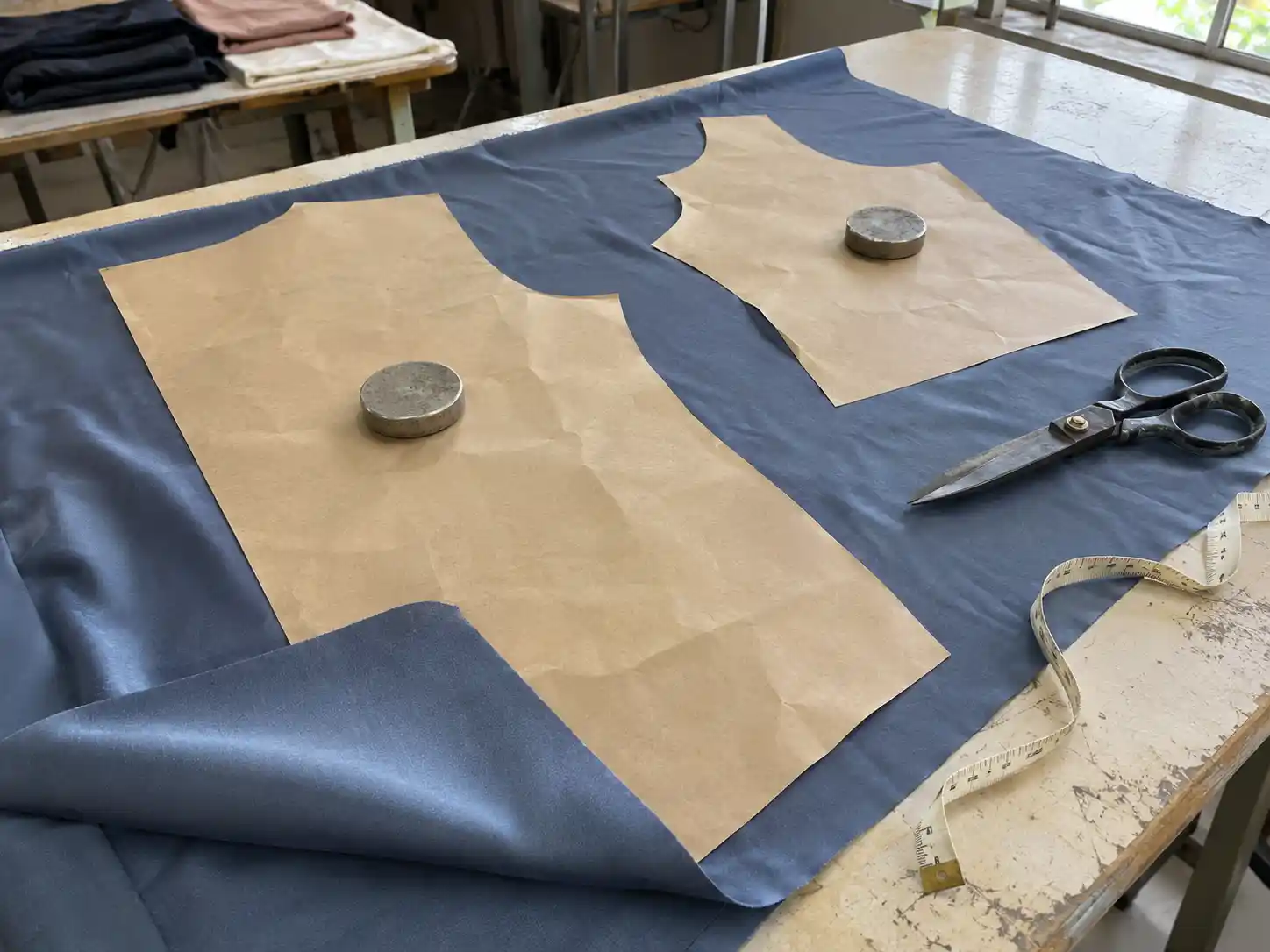
Cutting preparation is especially important for pile fabrics because reversing the direction of selected pattern pieces can produce visible color differences within one garment. The cutting layout should therefore follow the approved nap direction, and the same orientation should be maintained across related pieces unless the design specifically requires a directional contrast. During inspection, fabric rolls should also be checked for shade consistency and width variation. These observations help prevent defects from spreading into cutting and sewing operations.
Which Tests Help Assess Pilling and Colorfastness?
Pilling and colorfastness checks help evaluate how a fabric may perform during wear, washing, and contact with other materials. Pilling assessment is particularly relevant for plush surfaces exposed to repeated friction, while colorfastness and rubbing checks are important for dark or saturated colors that may transfer onto lighter fabrics. Washing and dimensional-stability checks provide additional information about how the material responds to the care conditions expected for the finished garment.
XZapparel’s documented in-house fabric inspection and testing capabilities include GSM, shrinkage, colorfastness, rubbing or crocking, washing, pilling, stretch and recovery, spirality, dimensional stability, and other relevant checks. The appropriate testing plan depends on the material and garment risks. Internal testing supports production decisions, but it should not be presented as equivalent to an accredited laboratory report. When a customer or destination market requires formal verification, testing should be coordinated with a qualified third-party laboratory under the applicable protocol.
| Evaluation item | What to inspect or test | Garment development impact |
| Composition | Fiber content and blend | Handfeel, durability, care and material suitability |
| Construction | Woven or knitted ground, pile structure | Stretch, stability and sewing behavior |
| GSM and width | Actual weight and usable fabric width | Silhouette, consumption and cost |
| Stretch and recovery | Extension and return behavior | Fit, movement and shape retention |
| Shrinkage | Dimensional changes after relevant washing | Pattern allowance and finished measurements |
| Pilling | Surface changes under friction | Appearance and wear durability |
| Colorfastness | Washing and rubbing behavior | Color transfer and care requirements |
| Pile direction | Nap orientation and surface uniformity | Panel matching and visual consistency |
| Shade variation | Differences within and between rolls | Cutting arrangement and batch consistency |
How Should Brands Source and Approve Velvet or Velour?
Successful sourcing of velvet and velour requires clear material specifications, supplier coordination, physical swatch approval, and production-level quality controls. Brands should define the desired composition, construction, weight, width, color, handfeel, drape, and performance requirements before confirming a fabric. XZapparel supports material development through its established fabric sourcing network and coordinates material evaluation with sampling and garment manufacturing, while actual availability and commercial conditions remain subject to supplier confirmation.
What Should a Fabric Brief Include?
A clear fabric brief reduces misunderstandings between the design team, sourcing team, and manufacturer. Instead of requesting velvet or velour based only on a photograph, the brief should describe the required material behavior and its intended garment application. This gives the sourcing team enough information to identify existing materials, compare alternatives, or investigate custom development. A more complete specification also makes it easier to evaluate whether a proposed substitute will produce the intended result.
For velvet and velour development, XZapparel recommends including the following information in the material brief:
Target fiber composition and acceptable blend variations.
Woven or knitted construction preference.
Target GSM or fabric weight range
Required fabric width, if known.
Stretch direction and recovery requirements.
Desired pile height, density, and surface appearance.
Color reference, Pantone target, or printed design.
Handfeel, drape, and opacity expectations.
Intended garment category and silhouette.
Required testing or material documentation.
Estimated quantity, style and color breakdown, and target development schedule.
These details provide a more practical foundation for fabric sourcing than a general request for soft or luxurious material. If the design is based on a reference garment or physical fabric sample, providing that reference can also help the manufacturer understand the desired texture, weight, and finished appearance.
How Do Stock, Similar-Match, and Custom Routes Differ?
Fabric sourcing can follow several routes depending on the development schedule, material requirements, and commercial feasibility. Existing stock is often the most practical starting point when a suitable specification is already available. A similar-match route is useful when the design team has a reference fabric but does not require an identical construction. Custom color or construction development may be necessary when the collection requires a specific appearance or performance that existing materials cannot provide.
XZapparel’s documented sourcing approach covers four main routes:
| Sourcing route | Suitable situation | Main considerations |
| Existing stock or specification | Time-sensitive development | Confirm actual lot, shade, specification, and availability |
| Similar material match | Reference sample or visual target | Compare physical swatches; do not assume identical performance |
| Custom color or finish | Brand-specific colors or collection development | Confirm lab dips, dyeing MOQ, lead time, and color approval |
| Custom construction or GSM | Specific handfeel or performance requirements | Confirm development feasibility, material MOQ, sample, and testing |
XZapparel works with a fabric sourcing network involving more than 30 regularly used suppliers, including approximately eight core fabric suppliers, with sourcing resources in Humen and Dongguan and the Guangzhou Zhongda market ecosystem. These resources support different material searches and development requirements, but they do not mean every fabric is permanently available from stock. Supplier MOQ, color availability, construction requirements, and lead time must be checked for each project before commercial confirmation.

What Should Be Confirmed in Swatches and Samples?
A fabric swatch should be evaluated under conditions that reflect how the finished garment will be seen and worn. The design team should compare color, surface texture, pile direction, handfeel, weight, drape, stretch, and recovery rather than approving the material from a photograph alone. If several alternatives are being considered, they should be compared under consistent lighting and handling conditions so that differences in sheen, shade, and surface density can be identified more accurately.
After fabric selection, the material should be incorporated into a garment sample to confirm its behavior in the actual design. This stage can reveal problems that are difficult to identify from a small swatch, including seam bulk, shifting during sewing, excessive stretch, poor recovery, or unexpected drape. XZapparel coordinates fabric, pattern, and sample development so that material-related adjustments can be addressed before the pre-production sample is approved. Changes to composition, construction, or finishing should be reviewed rather than treated as minor substitutions.
How Can Bulk Inspection Control Shade and Lot Consistency?
Bulk consistency begins with incoming fabric inspection rather than waiting until finished garments are completed. Fabric rolls should be checked for specification, shade, width, visible defects, and relevant performance risks. Where necessary, rolls should be grouped according to compatible shade lots and approved material records. For pile fabrics, cutting direction and surface consistency also require attention because small differences can become visually obvious when garment panels are assembled.
XZapparel’s documented quality management process connects fabric inspection with pre-production meetings, cutting inspection, inline quality control, measurement inspection, 100% finishing inspection, final inspection, and packing inspection. This sequence creates multiple opportunities to identify and manage problems before they affect the entire shipment. During the pre-production meeting, the approved material, sample, construction details, measurements, and special quality requirements should be aligned with the production team. Any material substitution or specification change should be reviewed and approved before implementation.
Conclusion
Velvet and velour offer different possibilities for women’s fashion collections, but the right selection depends on much more than their similar plush appearance. Traditional woven velvet is often suitable for garments that need a rich surface and a more structured visual effect, while knitted velour is commonly preferred for clothing that benefits from softness and flexibility. However, the actual construction, fiber composition, GSM, stretch recovery, drape, and finishing must always be considered before a final material decision is made.
At XZapparel, fabric sourcing and evaluation are connected with garment design, pattern development, sampling, and production quality management. Our approach is to assess whether the selected material can deliver the required appearance, fit, construction, and consistency for the intended clothing collection. For brands developing velvet or velour dresses, tops, skirts, jackets, or coordinated casualwear, sharing a reference sample, technical pack, target composition, color requirements, estimated quantities, and development schedule provides a practical starting point for material feasibility review and sample planning.
Frequently Asked Questions
1. Is velour the same as velvet?
No. Both are pile fabrics with a soft, raised surface, but they are commonly distinguished by their construction. Traditional velvet is generally woven, while modern apparel velour is frequently knitted. However, knitted velvet and other specialized constructions exist, so the actual fabric specification should always be checked.
2. Which is softer, velvet or velour?
Both can feel extremely soft, but their handfeel varies with fiber composition, pile height, density, and finishing. Velour often has a plush, flexible feel, while velvet may feel smoother and denser. Physical swatches provide a more reliable comparison than fabric names alone.
3. Is velour more stretchy than velvet?
Knitted velour generally has greater natural stretch than traditional woven velvet. However, stretch velvet can also be flexible, especially when it contains elastane or uses a knitted ground. Stretch and recovery should be measured on the actual fabric before selecting it for fitted garments.
4. Which fabric is better for dresses?
Velvet is commonly used for evening dresses and occasionwear because of its rich appearance and range of drape characteristics. Velour can be suitable for casual dresses and fitted styles when its stretch, recovery, and opacity are appropriate. The final choice depends on the intended silhouette and performance requirements.
5. Can velvet and velour be used for loungewear?
Yes. Velour is particularly common in loungewear and coordinated casual sets because knitted constructions can offer flexibility and comfort. Stretch velvet can also be used for similar applications when its construction and recovery are suitable. Weight, softness, and care requirements should be confirmed during sampling.
6. How do you prevent velvet and velour from losing their appearance?
Pile direction, friction, heat, washing conditions, and fabric handling can all affect surface appearance. During production, consistent cutting direction and appropriate pressing techniques help protect the pile. Finished garments should follow the approved care instructions based on their actual fiber composition and finishing.
7. What should be checked before ordering velvet or velour for bulk clothing production?
Confirm fiber composition, construction, GSM, width, color, pile direction, stretch and recovery, shrinkage, pilling, and colorfastness. Approve a physical swatch and pre-production garment sample before bulk manufacturing. Material availability, shade lots, supplier MOQ, and relevant quality requirements should also be confirmed.