Skip to content

Affordable Luxury Fashion: Quality, Value & Production Guide

Your trusted Women’s Apparel Manufacturer from China

Affordable luxury fashion sits in a space that many women’s clothing brands want to occupy: clothing that feels considered and looks polished without the price expectations associated with traditional designer luxury. Customers may be drawn to a clean blazer, a fluid dress, a coordinated set, or a well-made everyday top, but they usually judge the finished garment by more than its appearance in a photograph. Fit, comfort, fabric behavior, construction, versatility, and care all shape whether the product feels worth its price.
For fashion brands, the challenge is turning that customer expectation into a product that can be developed, sampled, costed, and manufactured consistently. A premium-looking design can lose its appeal if the fabric drapes poorly, the proportions are unbalanced, or the garment changes shape after care. On the other hand, a thoughtfully selected material and a disciplined construction plan can create a refined result without adding expensive details that customers may barely notice.
Affordable luxury is therefore not simply a lower-priced version of designer fashion. It is a deliberate balance between the product experience and the commercial realities of making clothing. At XZapparel, we approach that balance through women’s apparel development, material evaluation, sampling, production planning, and quality checkpoints. The goal is to make design decisions clear enough to evaluate before bulk production, so the finished product can deliver on the brand’s promise.
What Is Affordable Luxury Fashion?
Affordable luxury fashion combines refined design, carefully selected materials, reliable construction, and accessible pricing. It does not rely only on exclusivity or a famous label. Its value comes from the way fabric, fit, finishing, comfort, and versatility work together at a price customers can justify. For clothing brands, that value must also be supported by a production process capable of delivering approved garments consistently and at commercially workable quantities.
How Is Affordable Luxury Different from Fast Fashion and Designer Luxury?
The difference between fast fashion, affordable luxury, and designer luxury goes beyond the price printed on a tag. Fast fashion generally emphasizes trend responsiveness, accessible prices, and frequent product turnover. Affordable luxury places more emphasis on considered design, a polished appearance, and quality characteristics that justify a step up from basic mass-market clothing. Traditional designer luxury may place greater weight on heritage, exclusivity, signature design, and a distinctive brand experience.
These categories overlap, and price alone cannot prove quality. A high-priced garment is not automatically better constructed, just as an affordable garment is not automatically poorly made. The useful question is what the customer receives for the price and whether the product delivers on its positioning. A simple blazer can feel elevated through balanced shoulders, suitable fabric weight, clean seams, and thoughtful button placement. A dress can look sophisticated through drape and proportion rather than excessive decoration.
For a fashion brand, moving into affordable luxury requires more than raising retail prices. The product must show a meaningful difference in design or wearing experience. When material behavior, fit, construction, and finishing support the same promise, customers can see and feel the value rather than being asked to accept a marketing claim.
Which Brand Types Define the Accessible-Luxury Segment?
Affordable luxury is a positioning strategy rather than one fixed product category. It can include contemporary womenswear labels, premium high-street brands, independent designer collections, and retailers offering elevated everyday clothing. Some focus on workwear and wardrobe essentials; others specialize in occasion dresses, coordinated sets, resortwear, or sophisticated casualwear. Their common ground is a clear promise: the product should feel more considered than basic fashion while remaining within a reachable price range for the intended customer.
The right product mix depends on how customers will use the clothing. Someone buying a blazer for regular office wear may prioritize fit retention, wrinkle behavior, and versatility. A customer purchasing an occasion dress may care more about drape, surface appearance, movement, and how the garment photographs. A coordinated set may need to look polished together while remaining practical when its pieces are worn separately.
These differences influence fabric selection, construction, and cost. A brand cannot assume that the same material or finishing specification will suit every product. XZapparel begins development by clarifying the intended product, target customer, reference style, fit expectations, and commercial requirements. That information helps turn a broad positioning idea into specific choices the team can evaluate during sampling.
What Do Customers Expect at This Price Level?
Customers generally expect affordable luxury clothing to look polished, fit comfortably, and feel appropriate for its price. They may not require the most expensive natural fibers or elaborate construction on every style, but they do expect the material and workmanship to support the product’s intended use. Uneven seams, unstable sizing, poor fabric recovery, or visibly inconsistent finishing can undermine the value proposition even when a garment initially looks attractive.
It helps to distinguish visible quality from performance quality. Visible quality includes drape, surface texture, color, silhouette, and finishing. Performance quality includes dimensional stability, seam strength, colorfastness, pilling resistance, and the ability to retain the intended shape during normal use. A satin-like dress may look beautiful under showroom lighting but snag easily; a fitted jersey top may feel comfortable at first but lose its shape if recovery is inadequate.
Brands should define quality for each product before approving a sample. A fluid dress may prioritize drape and seam stability, while a fitted top may require particular attention to opacity and stretch recovery. The strongest affordable luxury products make these decisions work together, delivering a consistent experience customers can recognize and appreciate over time.
Which Fabrics and Details Create a Luxury Look?
A luxury-looking garment depends on the relationship between fabric, silhouette, construction, and finishing. The most expensive material is not always the best choice. The right fabric is the one that provides the required drape, structure, comfort, opacity, and durability while remaining suitable for the design and target cost. Details should strengthen the garment’s purpose rather than add complexity for its own sake.
Which Fabrics Offer Drape, Structure, and Comfort?
Fabric selection should begin with the intended silhouette rather than the assumption that a particular fiber automatically creates a premium product. A fluid dress needs material that hangs naturally without unwanted bulk or distortion. A structured blazer needs enough body to maintain its shape. A fitted top may require controlled stretch and recovery, while a summer shirt may benefit from a breathable woven fabric with a relaxed appearance.
Fiber composition is only one part of fabric performance. Construction, yarn characteristics, weight, finishing, and usable width also influence how a material behaves. Two fabrics with similar compositions can differ significantly in softness, opacity, surface texture, and dimensional stability. XZapparel evaluates material options using practical criteria such as composition, knit or woven construction, GSM, width, stretch and recovery, drape, hand feel, opacity, shrinkage, pilling, and colorfastness. The relevant checks depend on the product and intended use.
Fabric family | Suitable women’s apparel | Important checks before approval |
Cotton or cotton-blend jersey | Tops, casual dresses, fitted basics | GSM, shrinkage, pilling, stretch recovery |
Rayon or viscose woven fabric | Dresses, blouses, resortwear | Drape, shrinkage, seam slippage, skew |
Satin or satin-like fabric | Occasion dresses, elegant tops | Surface appearance, snagging, bias distortion |
Linen or linen blends | Summer dresses, shirts, coordinated sets | Wrinkling, shrinkage, opacity, dimensional stability |
Nylon or polyester stretch fabric | Swimwear, activewear, fitted garments | Stretch recovery, opacity, colorfastness |
Rib knit | Fitted tops, cuffs, necklines, casual basics | Weight, recovery, dimensional stability |
GSM, or grams per square meter, describes fabric weight, but it does not independently establish quality. A lighter fabric may be entirely appropriate for a fluid summer dress, while a heavier material may be needed for a structured garment. Fabric approval should also consider what happens after cutting, sewing, and care. A bias-cut dress may stretch under its own weight, while a fitted garment may become loose if recovery is inadequate. Testing relevant properties before bulk production helps identify risks while alternatives are still practical.
How Do Fit, Seams, Lining, and Trims Affect Perceived Quality?
Customers often recognize quality through proportion and finishing before they understand the technical reasons behind it. A balanced shoulder, smooth neckline, clean armhole, even hem, and well-positioned waistline can make a simple garment look sophisticated. Attractive fabric can still appear disappointing when the pattern is unbalanced, seams pucker, or the garment pulls awkwardly across the body. Fit is not simply a matter of choosing a size; it depends on body measurements, ease, garment length, silhouette, fabric behavior, and construction.
The main areas to evaluate are fit and balance, seam construction, finishing, and components. Fit checks include shoulder position, bust and waist proportions, sleeve movement, and garment length. Seam checks include alignment, stitch consistency, puckering, reinforcement, and stress points. Finishing covers neckline shape, hems, pressing, thread trimming, and internal neatness. Zippers, buttons, elastic, labels, and decorative hardware should suit both the material and the design.
Lining can improve opacity, comfort, and shape retention, but it also adds material consumption and sewing operations. A lining that is too heavy may interfere with a fluid silhouette, while an unsuitable lining can create static or discomfort. Trims must be selected for function as well as appearance. Defining critical fit and construction requirements before sampling gives the development team clear criteria instead of relying entirely on subjective impressions.
Are Premium-Looking Materials Always Expensive?
No. A premium appearance can come from intelligent material selection and design discipline rather than the highest possible fabric cost. A suitable polyester satin may deliver the desired surface and drape for an occasion garment, while a cotton blend may be more appropriate for comfortable everyday clothing. The correct decision depends on the product, customer expectations, performance requirements, and target price. Lower-cost materials can work well, but they need to be evaluated rather than assumed to be suitable.
Fabric width affects consumption and cutting efficiency. Stretch influences pattern dimensions. Surface texture can affect pressing and sewing. Shrinkage may change finished measurements, while color variation between batches can undermine consistency across a collection. A useful comparison considers material performance, production suitability, consumption, supply conditions, and care requirements. The lowest price per meter may not produce the lowest total garment cost if the fabric creates excessive waste, difficult sewing, or avoidable quality problems.
XZapparel works with a network of more than 30 regularly used fabric suppliers to evaluate options for different product needs. Specific fabric availability, pricing, and purchasing conditions depend on the supplier and project. The goal is not to select the cheapest possible fabric; it is to invest in the properties customers will notice and value while avoiding costs that do not improve the finished garment.

How Can You Judge Quality and Value?
The best way to judge affordable luxury is to compare a garment’s measurable quality, suitability for its intended use, and expected service life with its price. A product offers strong value when its design, fit, construction, comfort, and durability justify the customer’s investment rather than relying on a premium-looking label alone. No single test can guarantee a garment’s lifetime performance, but a clear specification and relevant checks make quality decisions more reliable.
What Should You Check Beyond the Price Tag?
Start with the areas most likely to affect appearance and performance. Examine the fabric composition and construction, but also consider whether the material suits the design, whether the garment provides adequate opacity, and whether seams and hems remain smooth during movement. Inspect the inside as well as the outside, paying attention to loose threads, uneven seam allowances, lining attachment, closures, and finishing. A product should be evaluated as a complete garment rather than as a fabric swatch or photograph.
Next, consider performance after appropriate care. Shrinkage can change garment length and fit. Pilling can reduce the appearance of jersey and knitwear. Poor colorfastness may cause fading or color transfer. Stretch garments may lose their intended shape if recovery is inadequate. A reliable assessment combines visual inspection, measurements, material checks, and appropriate performance testing. The test plan should reflect the fabric, garment category, destination market, customer specification, and intended use.
Before approving a garment, brands should document the approved material, size chart, measurement points, critical construction requirements, relevant performance tests, and packaging standards. XZapparel’s in-house fabric inspection and testing capabilities include GSM, shrinkage, colorfastness, rubbing, washing, pilling, stretch and recovery, spirality, and dimensional stability checks. The applicable checks depend on the material and project requirements. This evidence provides a stronger basis for judging quality than a general instruction to make the garment feel premium.
Do Higher Prices Always Mean Better Quality?
Higher prices do not automatically indicate better fabric, stronger construction, or longer garment life. Retail pricing can reflect design, branding, distribution, marketing, product development, operating costs, and manufacturing. Traditional luxury brands may also offer heritage, exclusivity, or a distinctive creative identity that customers value but that cannot be measured through fabric testing alone. A fair comparison separates those brand benefits from the physical characteristics of the product.
The reverse is equally important: a low price does not prove that a product offers good value. A garment may be inexpensive because its design is simple and production is efficient, or because material and construction choices have reduced its durability. Without examining the product and its supporting evidence, the reason for the price difference may remain unclear.
Brands can make more informed decisions by identifying which features justify the price and which customers are likely to notice. A blazer may offer genuine value through balanced proportions, a stable lining, comfortable movement, and clean construction. If its only visible difference from a cheaper alternative is a decorative logo, its advantage may be less meaningful to customers who prioritize everyday wear. An internal scoring system can compare fit, fabric suitability, finishing, durability evidence, and versatility on a consistent scale, with different weights for different categories.
How Do Durability and Care Affect Cost per Wear?
Cost per wear provides a straightforward way to compare the practical value of clothing over time. It is calculated by dividing the purchase price by the number of times a garment is worn. For example, a $120 dress worn 60 times costs $2 per wear, while a $60 dress worn 10 times costs $6 per wear. These figures are illustrative rather than market averages, and the result depends on actual wearing habits, care requirements, repairs, and how long the garment remains suitable for use.
For brands, this has direct implications for product development. A versatile dress that works for several occasions may offer more practical value than a highly specific design that is rarely worn. A garment that retains its shape, color, and finish after appropriate care is more likely to support repeat use. Clear care instructions can help customers maintain the product, although they cannot compensate for unsuitable materials or poor construction.
Quality checks should reflect the product’s intended use. A garment expected to be washed frequently may need greater attention to dimensional stability and colorfastness than a product intended for occasional wear. Stretch garments require suitable recovery, while textured surfaces may need assessment for pilling or snagging. Brands should avoid promising a fixed lifespan without evidence. A more credible approach is to define performance requirements, use appropriate tests, and explain the care conditions for which the garment is intended.
Which Women’s Apparel Categories Fit Affordable Luxury?
Affordable luxury can work across dresses, tops, bottoms, and coordinated sets when each category has a clear design purpose and suitable construction. Versatile silhouettes, cohesive colors, and materials selected for the intended fit can create a polished collection without requiring every product to use expensive fabrics or elaborate decoration. The key is to develop each product for its intended use while maintaining a recognizable collection identity.
Which Dresses, Tops, Bottoms, and Sets Offer Versatility?
Dresses are useful for affordable luxury collections because silhouette, fabric, and finishing can create a distinctive appearance without relying on excessive decoration. A well-proportioned shirt dress, an A-line day dress, or a fluid occasion style can serve different wardrobe needs. The best choice depends on the target customer, climate, occasion, and retail positioning. A dress intended for frequent use requires different material and care considerations from one designed primarily for special occasions.
Tops provide opportunities to build a recognizable design language through neckline shape, sleeve proportions, fabric texture, and finishing. Bottoms require careful attention to waist placement, rise, leg shape, drape, and movement. Coordinated sets can create a polished look because the pieces share a visual language while remaining wearable separately. A commercially balanced collection considers how products work together rather than treating every style as an isolated design.
XZapparel’s core women’s apparel categories include dresses, tops, bottoms, swimwear, and sets. Sweatwear, activewear, and shapewear are established capabilities, while knitwear and selected specialist processes may involve long-term specialist partners. Different categories have different technical requirements: swimwear needs particular attention to stretch, recovery, and opacity, while a woven dress may depend more on drape, shrinkage, and seam stability. Product selection should reflect both the brand’s commercial strategy and the manufacturing experience required for each category.
How Do Silhouette, Color, and Fabric Build a Cohesive Collection?
A cohesive collection does not require every garment to look alike. It needs enough consistency in color, proportion, material, and design details that customers recognize the relationship between products. A collection might combine fluid dresses, tailored trousers, and structured tops while maintaining a shared palette and a consistent approach to finishing. This balance gives the range a recognizable identity without making every style repetitive.
Color planning is especially important when products are intended to be worn together. A limited core palette can make an assortment easier to coordinate, while a smaller number of seasonal colors introduces variety. However, the same color name does not guarantee an identical appearance across different fabric constructions. Fiber composition, surface texture, dyeing methods, and finishing can affect the result, so color standards and sample approval remain important.
Silhouette planning requires similar coordination. Relaxed garments depend on proportion and drape, while fitted styles rely more heavily on body measurements, ease, and fabric recovery. A material that works well for an oversized shirt may not provide the required performance for a close-fitting top. A collection matrix listing each style, color, fabric, size range, target quantity, and shared component helps teams identify efficiencies without forcing unsuitable material choices. The result is a collection that feels intentional to customers and remains manageable for development and production.
Are Timeless Designs Easier to Wear and Reorder?
Timeless designs can offer practical advantages because they are less dependent on short-lived trends and may remain relevant across several selling periods. Classic shirts, versatile trousers, uncomplicated dresses, and well-proportioned tops can become reliable parts of a collection when their fit and materials match the intended customer. Timelessness does not mean eliminating personality; a distinctive proportion, texture, color, or construction detail can give a simple garment a recognizable identity.
Repeatability depends on more than whether a design remains fashionable. The brand also needs stable specifications, clear material references, approved construction details, and appropriate quality checks. If the fabric changes significantly between orders, the garment may behave differently even when the pattern remains unchanged. Changes in shrinkage, hand feel, color, or stretch recovery may require renewed evaluation.
A reliable reorder process retains the records used to approve the original product, including the tech pack, measurement chart, material details, sample comments, approved pre-production sample, and relevant production changes. At XZapparel, repeatability is treated as a connection between product development and production planning, not as a guarantee that every reorder will be identical without review. Material availability, supplier changes, and revised specifications can all affect the result. Keeping these records helps protect customer expectations while allowing the collection to evolve.

How Do Brands Develop Affordable Luxury Collections?
Developing an affordable luxury collection requires a balance between product ambition and production feasibility. Brands need to identify which design details create meaningful customer value, understand the cost drivers behind each garment, and organize quantities and materials in a way that supports consistent quality and commercially viable pricing. The strongest decisions are made before production, when specifications and alternatives can still be reviewed without unnecessary disruption.
What Drives Garment Cost Beyond Fabric Price?
Fabric is an important garment cost, but it is only one part of the total. Material consumption depends on garment dimensions, fabric width, pattern layout, cutting efficiency, and the number of layers or panels. Trims and custom branding components can add supplier minimums or setup costs. Construction complexity affects sewing time and handling, while printing, embroidery, embellishment, lining, and special finishing can introduce additional operations.
Cost driver | What affects cost | Practical development consideration |
Fabric | Price, width, consumption, cutting waste | Compare suitable alternatives and marker efficiency |
Trims | Customization, supplier minimums, setup | Consider standard components shared across styles |
Construction | Seams, panels, lining, support details | Simplify operations that do not add meaningful value |
Decoration | Artwork, placement, coverage, application method | Adjust process or placement where appropriate |
Quantity and SKU mix | Setup, color changes, leftover materials | Consolidate compatible quantities and components |
Testing and compliance | Required tests, documentation, inspection scope | Define requirements early to avoid late changes |
Two garments made from similar fabrics may have very different production costs. A simple top and a fully lined, structured dress can require different pattern work, component quantities, sewing operations, and quality checks. A small decorative feature can also add disproportionate complexity if it requires specialized handling or coordination with an external supplier. The goal is to understand which expenses create customer value and which can be reduced without weakening the product.
These are cost-management considerations, not promises of a specific percentage saving. Actual quotations depend on the garment specification, material consumption, quantity, production requirements, and commercial terms. If a distinctive neckline defines the design, removing it may undermine the product’s appeal. If an internal detail adds complexity without improving fit, comfort, durability, or appearance, it may be worth reviewing. A structured costing discussion makes these trade-offs visible before production begins.
How Do Construction, MOQ, and SKU Mix Affect Unit Cost?
Minimum order quantity and SKU structure influence garment economics because production involves material purchasing, preparation, setup, and coordination. A style divided across many colors and small quantities may create more sourcing complexity than a style with a consolidated quantity. Custom trims and special fabrics may also have supplier minimums that exceed the garment quantity initially planned by the brand.
XZapparel’s standard garment MOQ is 200 pieces per style per color, subject to material, trim, process, and supplier requirements. This is a planning baseline, not a guarantee that every product or specialized component can be ordered at that quantity. Brands should distinguish between the garment MOQ and minimums imposed by individual suppliers. A custom label, zipper, or specialized fabric may have separate purchasing conditions that affect total feasibility.
A practical review should establish the number of styles and colors, quantity per style-color combination, size range and allocation, shared fabrics and trims, special sourcing requirements, and the target sampling and delivery schedule. Sharing materials can improve efficiency, but consolidation should not override technical suitability. A fabric that works for a relaxed blouse may not meet the stretch or recovery requirements of a fitted garment, and a trim suitable for one style may be inappropriate for another.
At XZapparel, these variables are reviewed together so the product plan reflects both design intent and production realities. A collection matrix is especially useful when several products need to launch together, because it makes quantity, color, material, and timing dependencies visible before sampling and purchasing decisions become difficult to change.
How Can Brands Protect Margin Without Sacrificing Quality?
Protecting margin begins with defining the product’s non-negotiable qualities. If a garment’s appeal depends on a particular drape, lining, or silhouette, removing that feature simply to lower the quotation may undermine the reason customers would buy it. A more effective approach distinguishes essential product attributes from optional complexity and explores alternatives that preserve the intended result.
For example, a brand may retain a distinctive neckline while simplifying an internal construction detail that customers will not notice. It may select a readily available fabric with comparable visual behavior instead of developing a custom material for a small initial order. It may also coordinate colors or trims across several styles, provided the shared components meet each product’s requirements. The correct decision depends on the role each feature plays in the finished garment.
A margin review should consider the complete commercial picture rather than the factory price alone. Material waste, packaging, testing, freight, applicable duties, distribution costs, returns, and promotional activity may all influence the final economics. These costs vary by market and sales model, so brands should calculate them using verified figures rather than generic industry percentages.
A practical review can divide requirements into three groups: essential features that define appearance or performance, adjustable elements with suitable alternatives, and unnecessary complexity that adds cost without meaningful customer benefit. This classification must be made for each style. A lining may be essential for one dress and unnecessary for another, while a specialized treatment may matter for performance apparel but add little value to a casual woven top. Clear target costs, realistic quantities, and defined specifications provide a stronger basis for protecting margin without weakening the product.
How Can Brands Choose a Manufacturing Partner?
Brands developing affordable luxury need a manufacturing partner that can translate design intent into approved samples, manage material and construction risks, and produce garments against clearly defined standards. The decision should be based on verified capabilities, realistic commercial conditions, transparent process ownership, and evidence that the supplier can support the product categories and quantities involved.
What Should Brands Verify About MOQ, Sampling, and Lead Time?
Before selecting a manufacturer, confirm that its minimum quantities, development process, and lead-time assumptions fit the collection plan. A supplier may have substantial production capacity but still be unsuitable for a project if its minimum quantities, specialist processes, or material requirements do not align with the brand’s needs. Sampling and bulk timelines should be evaluated as separate stages with clear prerequisites.
Project stage | XZapparel baseline | Important condition |
Standard garment MOQ | 200 pcs per style per color | Special materials, trims, or processes may increase requirements |
Simple sample | 3–5 working days | Depends on ready inputs and material availability |
Complex sample | 5–7 working days | Construction and process complexity affect timing |
Sample revision | 2–3 working days | Assumes clear feedback and no major material reset |
PPS sample | 4–5 working days | Depends on approved details and materials |
Bulk production | Typically 25–35 working days | Starts after material readiness, PPS approval, and production details are confirmed |
These figures are planning baselines rather than unconditional guarantees. Sampling, revision, material purchasing, approval, and bulk scheduling have different dependencies. A custom fabric or trim may extend the overall project timeline even when the sewing stage itself is straightforward. Brands should provide a useful development brief, including a tech pack where available, or reference images, sketches, an existing garment, a size chart, or a physical sample to establish the starting point.
The manufacturer will still need to clarify measurements, material specifications, construction, trims, quantities, target market, and delivery requirements. Before comparing quotations, make sure suppliers are working from the same specification and commercial assumptions. A lower initial quotation may reflect a different fabric, simpler construction, a smaller inspection scope, or excluded components. A meaningful comparison identifies these differences rather than treating every quotation as an equivalent offer.
How Do Fit Approval, PPS, and Quality Checkpoints Reduce Risk?
Fit approval and pre-production sample approval reduce risk by establishing what the factory is expected to reproduce. A design reference communicates the desired appearance, but it does not automatically define every measurement, material, internal construction detail, or finishing requirement. These elements need to be resolved through technical review and sample development.
A typical workflow moves from input review to pattern development, first sample, fit review, revision, and pre-production sample approval. Each stage answers a different question. The first sample tests whether the concept can be constructed. Fit review examines proportions, movement, and measurements. Revisions address identified issues, while PPS approval establishes the agreed standard for bulk production. If a change is made after approval, its effect on cost, timing, or performance should be reviewed rather than assumed to be negligible.
Quality control should follow the garment through production rather than relying only on final inspection. XZapparel’s documented quality flow includes fabric inspection, pre-production meeting, cutting inspection, inline QC, measurement inspection, 100% finishing inspection, final inspection, and packing inspection. These checkpoints address different risks: incoming material issues, cutting accuracy, sewing problems, measurement consistency, finishing, and packing condition.
Brands should define inspection and testing requirements before production begins. Final inspection can follow AQL 2.5, AQL 4.0, customer-defined criteria, or an agreed 100% final inspection arrangement, depending on the project. These are different approaches and should not be presented as interchangeable guarantees. AQL is an acceptance-sampling framework; it does not mean every garment is individually tested under that sampling plan. Documented approvals and inspection criteria give both parties a common reference for managing quality.
Which Evidence Proves Real Manufacturing Capability?
A credible manufacturer should be able to explain not only what it claims to do, but also how the work is organized, who is responsible, and what evidence supports the claim. Factory photographs can show that an operation exists, while sample records, measurement sheets, material inspection records, process documentation, and relevant reports provide more specific evidence of how work is managed.
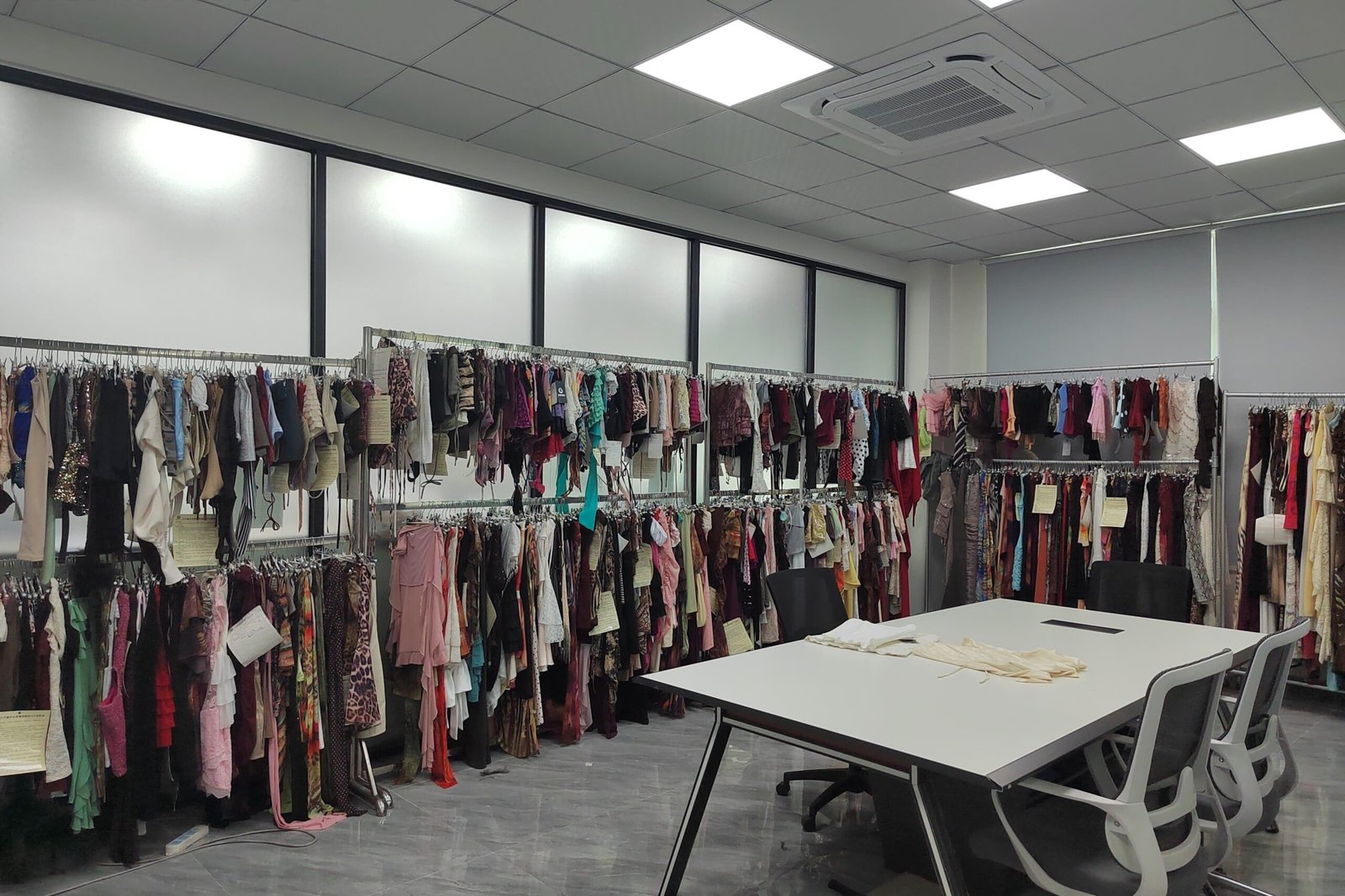
XZapparel’s manufacturing operation began in 2008. The current manufacturing base is in Humen, Dongguan, Guangdong, China, with three production buildings and approximately 20,000 square meters of space. Company records list approximately 1,120 employees, six sample rooms, 48 pattern makers, 60 sample makers, and around 80 sewing lines. These figures help establish operating scale, but they do not guarantee that every type of project can immediately use the full system’s capacity.
The more useful question is whether the available development resources, product experience, material controls, and production planning match the proposed collection. Relevant evidence may include approved samples, material specifications, measurement records, inspection documents, and applicable compliance documentation. It is also important to distinguish work performed in-house from specialist processes managed through long-term partners. Clear process ownership helps brands understand who performs each operation and how quality is controlled.
For an initial assessment, brands can share a tech pack or design reference, product categories, style and color counts, target quantities, fabric preferences, size requirements, quality expectations, and the intended delivery window. This gives the manufacturing team enough context to identify missing information, review initial feasibility, and clarify the next steps. The purpose of evidence is not to create a wall of impressive numbers; it is to show that the supplier can support the actual product and production requirements.
Conclusion
Affordable luxury fashion succeeds when the finished garment delivers on a clear promise: refined design, appropriate materials, dependable construction, and a price customers can justify. That result rarely comes from one expensive fabric or one decorative detail. It comes from a series of connected decisions about silhouette, fit, material behavior, construction, testing, quantities, and production control. Brands that define these requirements early are better positioned to protect the characteristics customers value while keeping development and manufacturing commercially realistic.
For XZapparel, the work begins by understanding the intended product and translating the design into specifications that can be sampled, reviewed, and produced. Dresses, tops, bottoms, sets, swimwear, and other women’s apparel categories each require their own technical considerations, so a clear brief and realistic quantity plan make the development process more productive. If your team is preparing a new collection or refining an existing range, share your tech pack or design reference with XZapparel for an initial production review. A focused discussion about fabric, fit, construction, quantity, and timing can help establish a practical route from concept to approved garment.
Share This Article :

Jerry
Blog Categories

Latest Post