Skip to content

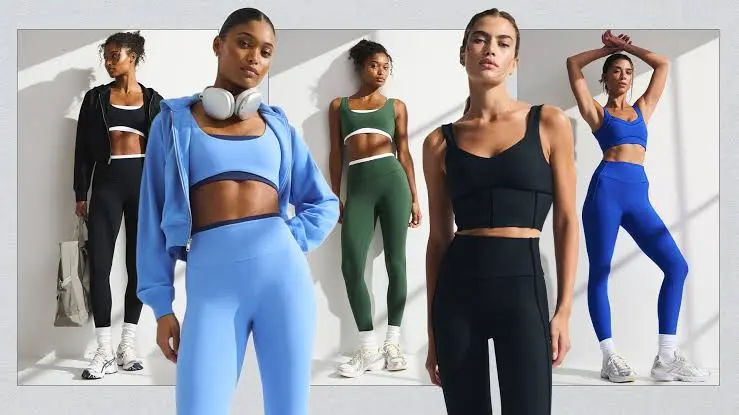
The athleisure market has grown beyond the idea of wearing gym clothes outside the gym. Leggings now appear in travel outfits, technical-looking tops are styled with everyday separates, and comfortable matching sets have become part of many women’s regular wardrobes. For fashion brands, this shift creates an opportunity to develop clothing that combines the appearance of contemporary casualwear with the comfort and functional qualities associated with sportswear. However, a growing market does not automatically make every product commercially successful. Consumers can easily compare prices, fabric quality, fit, design, and brand positioning, while retailers must manage inventory risk and increasingly demanding product expectations.
The global athleisure market is a large and expanding apparel category that combines athletic functionality with everyday fashion. Grand View Research estimated the market at $422.0 billion in 2025 and projected $892.5 billion by 2033, while Fortune Business Insights published a lower estimate using its own research scope. These figures indicate substantial commercial potential, but forecast differences, product definitions, and competitive pressures must be considered before making investment decisions.
For XZapparel, the opportunity lies in understanding what these market changes mean for women’s apparel development: which products deserve attention, which materials support the intended wearing experience, and which manufacturing decisions help a brand deliver consistent quality. Imagine two labels launching nearly identical leggings at the same time. One chooses fabric based on price and approves a single attractive sample. The other validates stretch recovery, opacity, fit, and production consistency before committing to a larger order. Their products may look similar on launch day, but their long-term commercial results can be very different.
What Is the Athleisure Market?
The athleisure market covers clothing designed to combine the comfort and practical features of athletic apparel with the appearance and versatility of everyday fashion. It includes products such as leggings, sports-inspired tops, joggers, sweatshirts, coordinated sets, and selected casual dresses. Unlike a narrowly defined performance-sports category, athleisure also serves people who want clothing that transitions between exercise, travel, errands, work-from-home routines, and social activities.
How Is Athleisure Different from Activewear and Sportswear?
Athleisure, activewear, and sportswear overlap, but they are not interchangeable terms. Activewear is generally designed around movement and physical activity, while sportswear can refer to apparel made for particular sports or broader athletic use. Athleisure places additional emphasis on everyday styling, versatility, and appearance outside exercise settings. A pair of leggings developed for yoga, for example, may also be sold as athleisure when the brand emphasizes its flattering silhouette, coordinated styling, and suitability for travel or casual outings. The distinction matters because the same garment may need to satisfy different consumer expectations depending on its intended use.
For product developers, the category definition should determine the performance requirements before fabric and construction are finalized. A running tight may prioritize moisture management, secure storage, and stable fit during repeated movement. A lifestyle legging may place greater emphasis on softness, a smooth surface, and comfortable wear over several hours. A hybrid product must balance these requirements without assuming that one material automatically performs equally well in every situation. XZapparel approaches established activewear capability through the relationship between fabric behavior, fit, stretch-compatible construction, and testing rather than treating the category as ordinary casual clothing with an athletic appearance.
Which Products Are Included in the Athleisure Market?
The category commonly includes leggings, sports bras, fitted tops, tank tops, T-shirts, joggers, sweatshirts, hoodies, lightweight jackets, and coordinated two-piece sets. Depending on the research provider, it may also include yoga clothing, casual performance apparel, tennis-inspired pieces, travel-friendly separates, or other garments that bridge athletic and everyday use. This broad scope is one reason market estimates should not be compared without examining the definitions behind them. Two reports can use the same market name while measuring different combinations of products, sales channels, and consumer spending.
For a women’s fashion brand, a practical way to organize the category is to group products by their role in the collection. Core bottoms and tops provide repeatable wardrobe foundations, while matching sets make styling easier and can support coordinated product launches. Sweatshirts, joggers, and layering pieces broaden the collection into cooler weather and travel use. More technical garments require closer attention to support, stretch, recovery, and coverage. Each group presents a different development challenge, so a brand should avoid treating the entire athleisure category as a single fabric or construction problem.
How Does Athleisure Fit into Everyday Fashion?
Athleisure succeeds when a garment works in more than one part of a person’s day without looking out of place. A soft matching set may suit a flight, a coffee stop, and a relaxed afternoon, while a fitted top can be styled with a skirt or casual trousers. This flexibility makes product coordination, color consistency, fabric handfeel, and silhouette particularly important. Consumers are not necessarily purchasing technical performance alone; they are also purchasing convenience and confidence in how the garment looks across different situations.
That creates a useful development principle for brands: start with the occasions a product must serve, then decide how much athletic functionality it genuinely needs. Excessive compression may be unnecessary for a relaxed travel set, while a fashion-focused legging still needs adequate opacity and shape retention if it is intended for exercise. Matching pieces also need consistent color, material feel, and proportions. XZapparel’s wider women’s apparel capabilities can support brands exploring collections that combine established categories such as tops, bottoms, and coordinated sets with selected activewear products, provided the specific garment requirements are confirmed during development.

How Big Is the Athleisure Market?
The athleisure market is worth hundreds of billions of dollars globally, and major research providers expect further growth over the coming years. However, the reported totals vary materially. Brands should use market-size figures to understand the direction and scale of an opportunity, not as a direct prediction of their own addressable sales or likely market share.
What Do Recent Market Forecasts Show?
As of October 2026, two published estimates illustrate both the scale of the market and the importance of reading research methodology carefully. Grand View Research estimated the global market at $422.0 billion in 2025, forecasting $892.5 billion by 2033, equivalent to a projected compound annual growth rate of 9.9% from 2026 to 2033. Fortune Business Insights estimated $368.61 billion in 2025 and projected $844.77 billion by 2034, with a reported CAGR of 9.7%.
| Research provider | 2025 market estimate | Forecast endpoint | Projected CAGR |
|---|---|---|---|
| Grand View Research | $422.0 billion | $892.5 billion by 2033 | 9.9% for 2026–2033 |
| Fortune Business Insights | $368.61 billion | $844.77 billion by 2034 | 9.7% over its forecast period |
These are provider-specific estimates, not a single harmonized statistical series. They should not be averaged into an artificial consensus figure. A serious market assessment should record the report date, base year, geographic coverage, product definitions, currency assumptions, and forecast period. A brand preparing a business plan can then explain which estimate it uses and why, making its assumptions easier for investors, partners, and internal teams to evaluate.
Why Do Athleisure Market Estimates Differ?
Market research companies can arrive at different totals because they define the category differently, use different data sources, and apply distinct forecasting models. One report may include a broad range of everyday athletic-inspired apparel, while another may place greater weight on particular product categories or distribution channels. Researchers may also differ in how they estimate unreported sales, regional demand, private-label activity, and future consumer spending. Without access to each report’s complete methodology, it would be misleading to claim that one estimate is definitively correct.
Brands should therefore examine more than the headline dollar figure. A useful market study compares the same geographic area, product category, consumer segment, and time period wherever possible. It should also distinguish reported historical sales from forecasts, since a forecast depends on assumptions about pricing, demand, competition, and economic conditions. If a report projects rapid growth through 2033, that projection is a planning scenario rather than a guarantee. For product decisions, a narrower estimate of the brand’s reachable customers, intended price tier, expected sell-through, and production capacity may be more useful than the largest available global market number.
Which Metrics Matter Beyond Market Size?
Total market value tells brands how large a category may be, but it does not show which products are easiest to sell profitably. More actionable metrics include segment share, growth by product type, average selling price, repeat-purchase behavior, sales-channel performance, inventory turnover, return rates, and contribution margin. These measures help connect broad market demand to the economics of a specific collection. A fast-growing segment may still be unattractive for a new entrant if established competitors dominate visibility, customer acquisition is expensive, or the product requires substantial technical investment.
A brand can begin with a practical market-screening framework:
- Market size and growth: determine whether the category has meaningful demand.
- Customer and price tier: identify the consumer the collection is designed to serve.
- Product economics: estimate fabric, trims, development, production, freight, and returns.
- Competitive differentiation: define the fit, design, functionality, or service that makes the product distinct.
- Operational feasibility: check minimum order quantities, development time, testing needs, and replenishment options.
For XZapparel, this final step is especially relevant. Market opportunity becomes commercially meaningful only when the proposed product can be developed, sampled, costed, and produced within the brand’s requirements.
Which Segments Are Driving Athleisure Market Growth?
Growth opportunities are spread across product categories, customer groups, price tiers, and regions rather than concentrated in one universal winning product. Grand View Research’s published 2026–2033 outlook identifies women’s apparel as the largest end-use segment in 2025, while shirts and T-shirts led its product segmentation. These figures offer useful directional guidance, but individual brands still need to validate demand within their target market and price range.
Which Product Categories Lead Market Demand?
Athleisure includes several product groups with different commercial roles. In Grand View Research’s market segmentation, shirts and T-shirts accounted for 30.5% of market revenue in 2025, while mass-market athleisure represented 63.7%. These figures suggest that everyday, accessible products deserve attention alongside premium leggings and highly technical performance garments. However, segment share does not automatically reveal profitability, competition intensity, or the growth potential of a particular design. A large category can be crowded, and a smaller product group can still be attractive when it serves a clearly defined customer need.
For a women’s fashion collection, useful product groups include:
- Leggings and fitted bottoms for everyday movement and selected exercise activities.
- T-shirts, tanks, and fitted tops that can be worn alone or layered.
- Joggers, sweatshirts, and hoodies for travel, casual use, and cooler weather.
- Coordinated sets that make outfit selection simple and create opportunities for cross-selling.
- Selected lightweight outer layers that extend a collection into transitional seasons.
The strongest assortment is not necessarily the one with the most styles. Brands should evaluate whether products share fabrics, trims, colors, and fit platforms where appropriate, while preserving the specific performance requirements of each garment. Coordinated development can improve collection consistency, but overusing one material across unrelated products may compromise fit, comfort, or durability.
Are Women’s and Premium Athleisure Segments Growing?
Women’s apparel is an important part of the category because consumers often expect a combination of comfort, flattering proportions, reliable coverage, and versatile styling. Grand View Research reported that women accounted for 40.5% of athleisure market revenue in 2025. That makes the segment commercially significant, but it does not mean every women’s product or demographic is growing at the same rate. Demand can vary by age group, activity, climate, purchasing power, body shape, and the purpose of the garment.
Premium athleisure offers another potential direction for brands seeking to compete through material feel, design, construction, and a more considered product experience. Yet a higher retail price does not guarantee stronger margins. Premium positioning usually requires credible evidence of the value being offered, whether that means better recovery after stretching, improved opacity, refined finishing, thoughtful pockets, or a fit that remains comfortable during extended wear. Brands must also consider whether customers recognize these differences and are willing to pay for them.
A practical product strategy separates market attractiveness from execution capability. Before launching a premium capsule, a brand can develop two or three representative styles, test materials, collect fit feedback, and compare customer reactions with the intended price. This approach helps avoid building a large collection around assumptions that have not yet been validated. XZapparel can support the development and sampling of selected women’s activewear styles, with each project’s material, construction, and production requirements assessed before a bulk commitment.
How Do Regional Markets and Sales Channels Compare?
Regional demand matters because consumers do not shop for athleisure in identical ways. Grand View Research identified North America as the largest regional market in 2025, with a 32.8% revenue share, and Asia Pacific as the fastest-growing region over its 2026–2033 forecast period. Its report also identified offline sales as the leading distribution channel, representing 65.7% of revenue in 2025. These figures are useful indicators of market structure, but they should not be interpreted as proof that every brand should prioritize physical retail or enter the same countries.
Regional planning should consider climate, customer expectations, local competition, logistics, and the purchasing behavior of the intended audience. A warm-weather market may support lightweight sets and breathable tops throughout more of the year, while colder regions may offer opportunities for layered outfits, heavier sweatwear, and seasonal colors. Online-first labels may also need more detailed size information, close-up product photography, and clear explanations of fabric behavior because customers cannot physically examine the garment before purchasing.
| Market indicator | Published 2025 figure | Strategic interpretation |
|---|---|---|
| Women’s end-use share | 40.5% | A major segment, not a guarantee of success for every women’s style |
| Shirts and T-shirts | 30.5% | Everyday products deserve consideration alongside technical bottoms |
| Mass-market segment | 63.7% | Accessible price positioning remains commercially important |
| Offline distribution | 65.7% | Physical retail remains relevant in the report’s market definition |
| North American regional share | 32.8% | A useful starting point for regional market prioritization |
The best decision combines these external figures with brand-specific information, including existing customer locations, expected retail pricing, channel costs, and the ability to replenish successful products.
What Trends Are Shaping Athleisure Demand?
Athleisure demand is influenced by lifestyle changes, product functionality, material expectations, online shopping, and brand identity. For fashion brands, the central challenge is translating these broad trends into products that customers will actually wear, recommend, and purchase again, rather than adding fashionable details that increase cost without improving the experience.
How Are Comfort and Versatility Changing Product Design?
Comfort has become a central design consideration because athleisure garments often remain on the body for long periods and serve several purposes during the day. McKinsey’s sporting goods industry research describes an active consumer group for whom physical activity increasingly forms part of personal identity, drawing on a December 2024 survey of 3,606 consumers, including 1,842 active consumers. This research provides useful context for understanding why clothing associated with movement can also carry lifestyle meaning. It does not, however, establish that every consumer prefers the same silhouette or level of technical performance.
Product development should translate comfort into specific decisions. A waistband needs to stay in place without creating unnecessary pressure, a top must allow the intended range of movement, and a garment designed for all-day wear should not rely on aggressive compression simply to look athletic. Seam placement, fabric softness, garment weight, stretch, and ease all influence the finished experience. Even a visually simple product may require several development rounds to achieve the right balance.
Versatility also affects how collections are planned. Neutral colors and coordinated separates can make styling easier, while carefully chosen proportions allow customers to combine athleisure pieces with existing wardrobes. For a brand, the objective is not to make every garment suitable for every activity. It is to define the occasions a product is intended to serve, establish the necessary performance level, and make those benefits visible through clear product descriptions and accurate photography.
Are Functional and Sustainable Fabrics Influencing Demand?
Fabric selection is increasingly important because customers expect garments to feel good, perform consistently, and align with any environmental claims made by the brand. Stretch, recovery, opacity, moisture behavior, durability, and surface feel should be evaluated against the intended use. A soft fabric suitable for a relaxed top may not provide sufficient support or coverage for fitted leggings. Similarly, a material with excellent initial stretch may lose shape after repeated use if its construction and recovery characteristics are unsuitable for the garment.
Sustainability also requires careful interpretation. Textile Exchange’s 2026 Materials Market Report states that polyester represented 59% of global fiber production in 2025, at approximately 82.5 million tonnes. Recycled polyester production reached approximately 9.7 million tonnes, while textile-to-textile recycled fiber remained around 1% of global fiber production. These figures show that recycled materials are available at scale, but they also highlight the industry’s continuing dependence on virgin materials and the limited contribution of textile-to-textile recycling.
For brands, a responsible material strategy begins with the intended product requirements and then evaluates suitable options. Recycled polyester may be appropriate for certain performance fabrics, but recycled content alone does not prove superior durability, lower overall environmental impact, or better garment quality. Buyers should request material composition details, relevant supplier documentation, and appropriate supporting evidence. Claims about recycled content or certifications must refer to the actual material and supply-chain scope rather than implying that an entire factory or collection has a status that has not been verified.
How Are Online Retail and Brand Positioning Changing Competition?
Online retail allows smaller labels to reach customers without building a large physical store network, but it also makes products easier to compare. Consumers can examine prices, read reviews, compare fabric descriptions, and judge whether a brand offers something meaningfully different. As a result, attractive imagery alone is rarely enough to sustain a strong product proposition. Brands need consistent sizing, useful product information, credible performance claims, and an experience that matches what customers receive after ordering.
Brand positioning becomes especially important in a crowded market. A label may compete through accessible everyday essentials, a refined minimalist look, specific fit needs, carefully developed fabrics, or a collection designed around travel and studio-to-street use. The most effective position is one the brand can deliver repeatedly, rather than a list of broad promises such as premium quality, sustainability, and innovation without supporting evidence.
For product teams, this means involving sourcing and manufacturing partners early enough to test whether a concept is feasible. If a design depends on an unusual fabric surface, a particular compression level, or multiple coordinated colors, those requirements should be assessed before photography, pricing, and launch dates are finalized. XZapparel’s product development approach connects design inputs with fabric selection, sampling, fit review, and production feasibility, helping brands identify practical constraints before committing to a collection.

How Do Fabric, Fit, and Quality Affect Athleisure Performance?
Athleisure performance is determined by the combined behavior of the fabric, pattern, garment construction, and finishing process. Stretch alone is not enough. A product must retain its intended shape, provide suitable coverage, withstand expected use, and maintain consistent measurements and appearance across the production order.
Which Fabric Properties Matter Most for Athleisure?
The right fabric depends on the garment’s intended activity and appearance. Composition, knit or woven construction, fabric weight, stretch direction, recovery, surface feel, opacity, and dimensional stability all influence performance. A four-way stretch fabric may accommodate movement in several directions, but its suitability still depends on recovery, construction, and how the garment is patterned. A softer handfeel may improve comfort, while excessive thinness or poor coverage can undermine the product’s perceived quality.
Fabric selection should therefore begin with a written product brief rather than a preference for a particular fiber name. For example, a fitted legging may need adequate stretch and recovery, sufficient opacity when extended, and stable behavior after washing. A relaxed athleisure T-shirt may place greater emphasis on softness, drape, breathability, and resistance to twisting or shrinkage. A sweatshirt may require a different balance of weight, surface texture, rib recovery, and dimensional stability.
A practical fabric review should record the composition, construction, weight, supplier information, color, and relevant test results. Swatches should be assessed in the intended garment context, since a material can behave differently when stretched over the body or combined with lining and elastic. XZapparel’s established activewear capability includes stretch-fabric handling and fit considerations, with material suitability evaluated against the specific product and its construction requirements.
How Do Stretch, Recovery, Opacity, and Seams Affect Fit?
Stretch allows a garment to accommodate movement, while recovery describes its ability to return toward its original dimensions after being extended. Both matter in fitted products. If a fabric stretches easily but does not recover adequately, knees, seat areas, or waistbands may become baggy during wear. If the fabric offers too much resistance, the garment may restrict movement or create uncomfortable pressure. The correct balance depends on fabric construction, garment ease, intended compression, and body movement.
Opacity must also be checked under realistic conditions. A fabric that appears opaque on a flat table may become more transparent when stretched across the hips or thighs. Likewise, seam performance depends on thread, stitch type, seam allowance, machine setup, and the fabric’s ability to extend without breaking or distorting. A well-selected fabric cannot compensate for a seam that fails to accommodate the garment’s intended movement.
ASTM D3107-26 describes methods for assessing stretch, growth, and recovery in woven fabrics made with stretch yarns, while ASTM D2594/D2594M addresses stretch properties of knitted fabrics with low power. The applicable method depends on the material and test objective; no single test automatically validates every athleisure product.
During development, fit review should examine the garment at rest and during relevant movements. Measurements, waistband stability, seam comfort, coverage, and post-wash behavior should be recorded against agreed acceptance criteria rather than judged only by appearance.
What Tests Help Validate Garment Performance and Durability?
Testing helps convert broad quality expectations into measurable checks. The appropriate plan depends on the material, garment design, destination market, and claims made about the product. A stretch legging may need different validation from a loose-fitting top, while a garment with printed graphics or bonded components may require additional checks for its specific construction. Testing should therefore follow a risk assessment rather than a generic checklist applied identically to every style.
| Quality area | What to examine | Why it matters |
|---|---|---|
| Fabric weight and construction | GSM, structure, and consistency | Supports material selection and repeatability |
| Stretch and recovery | Extension, growth, and return behavior | Helps assess fit retention during use |
| Opacity | Coverage under intended garment extension | Reduces the risk of unwanted transparency |
| Dimensional stability | Shrinkage and shape change after washing | Helps preserve fit and garment proportions |
| Color performance | Colorfastness to washing and rubbing, as applicable | Reduces fading and color-transfer concerns |
| Surface durability | Pilling and abrasion resistance, as relevant | Helps maintain appearance during wear |
| Seam performance | Stitch integrity and extensibility | Reduces seam failure or restriction during movement |
| Garment measurements | Critical points of measurement against specifications | Supports consistent fit across sizes and production |
The results should be interpreted against agreed product specifications and applicable test methods. A successful fabric test does not prove that the completed garment will perform perfectly, because pattern design, sewing, finishing, and use conditions also affect results. XZapparel’s documented quality approach includes fabric inspection, pre-production review, cutting inspection, inline checks, measurement, finishing inspection, final inspection, and packing checks. This layered process helps connect material decisions to bulk production control, although each product still requires its own acceptance criteria and evidence.

How Can Brands Evaluate an Athleisure Manufacturing Partner?
A suitable manufacturing partner must do more than produce an attractive sample. Brands need to understand category experience, development capabilities, production feasibility, quality controls, material sourcing, communication, and the evidence available to support supplier claims. These factors are particularly important for athleisure because fabric stretch, fit, and construction can affect the consistency of the finished product.
Is a Supplier’s Activewear Capability Proven at Bulk Scale?
A supplier may have experience developing activewear samples without having the same level of maturity in repeat bulk production. Brands should therefore ask how the supplier classifies the category, what comparable products it has developed, and which parts of the process are handled internally or by specialist partners. A credible answer should distinguish demonstrated experience from a capability that is still being developed, rather than claiming expertise in every product type.
For women’s athleisure, evaluation should cover pattern development, fit review, fabric suitability, stretch-compatible sewing, measurement control, and the ability to carry approved sample standards into bulk production. Real samples, anonymized development records, material documentation, and relevant inspection examples are more useful than a gallery of unrelated garments. If customer confidentiality prevents sharing identifiable projects, a supplier can still explain its process and provide authorized, non-confidential evidence.
XZapparel’s internal capability framework classifies activewear as an established capability rather than a primary core shipment category. Its product development approach includes stretch-fabric handling, fit, stretch sewing, and testing considerations. This distinction matters: it allows prospective partners to assess a project against the company’s actual experience and the technical requirements of the proposed style. Brands planning a highly specialized performance program should confirm the required specifications, evidence, and production route before placing an order.
What Should Brands Check About MOQ, Sampling, and Lead Time?
Minimum order quantity, sampling speed, and bulk lead time directly affect launch planning and inventory risk. A supplier’s published MOQ should be read alongside material, trim, process, and color requirements, because specialized components or supplier restrictions can change what is commercially feasible. Sampling lead times also depend on the completeness of the design input, fabric availability, pattern complexity, and the number of revisions required.
XZapparel’s documented commercial framework provides a standard garment MOQ of 200 pieces per style per color, subject to higher requirements where materials, trims, processes, or suppliers require them. Its normal sample lead time is 3–5 working days for simpler styles and 5–7 working days for more complex samples. Bulk production is typically 25–35 working days after the required materials are ready, the pre-production sample is approved, and other production details are confirmed. These are planning ranges, not unconditional delivery guarantees.
Before requesting a quotation, brands should prepare a concise project brief containing:
- Product category, style count, and reference images or technical pack.
- Estimated quantity per style and color, with the intended size range.
- Fabric composition, weight, stretch requirements, and any preferred materials.
- Construction details, including seams, elastic, lining, closures, labels, and packaging.
- Target market, required quality checks, and relevant compliance documentation.
- Sampling deadlines, approval milestones, and the intended launch window.
Providing these details early makes it easier to assess feasibility, identify missing information, and reduce avoidable quotation revisions.
How Can Buyers Verify Quality, Testing, and Process Ownership?
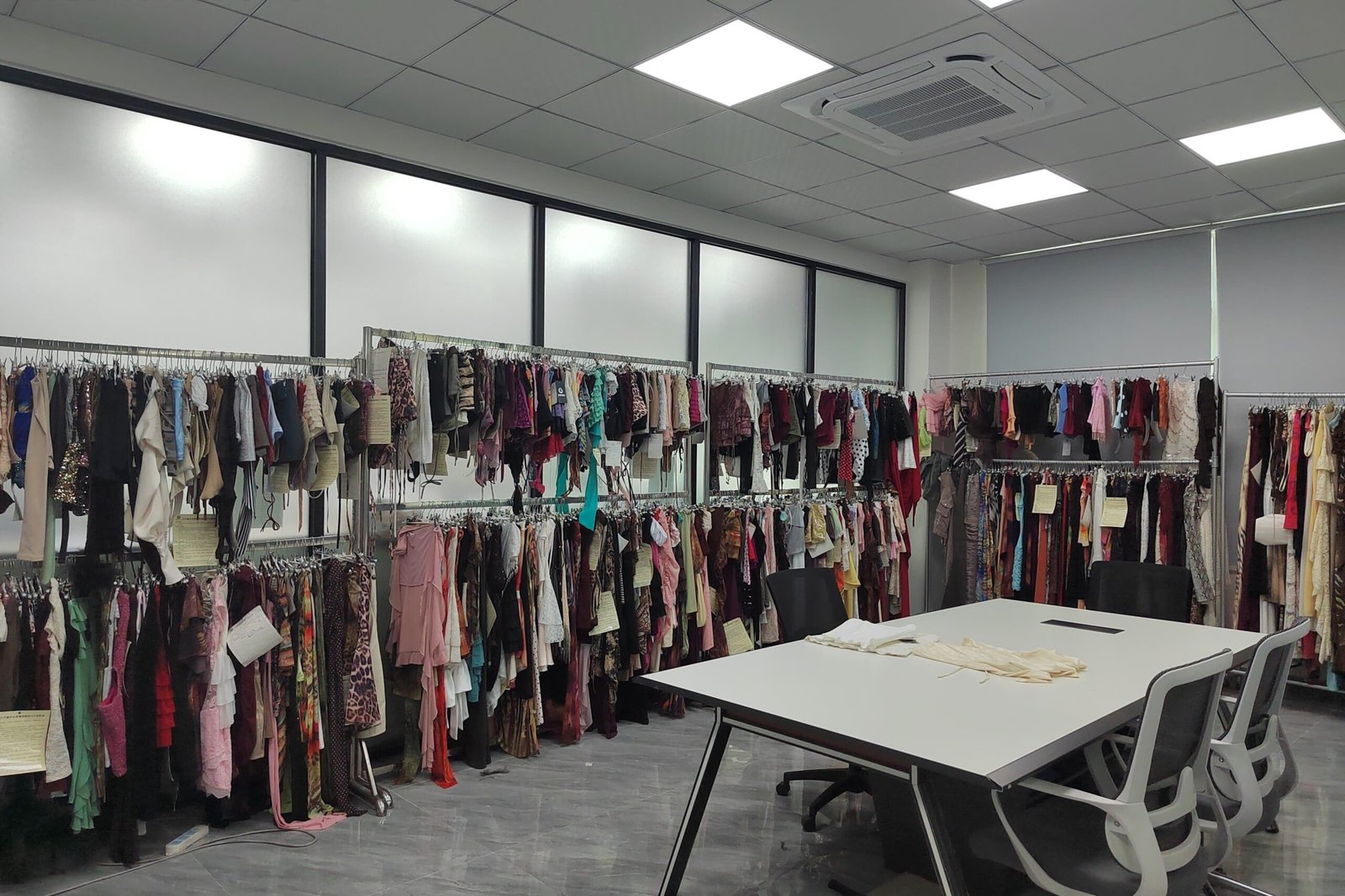
Supplier verification should connect every important claim to an appropriate form of evidence. Factory photos can help establish that facilities and equipment exist, but they do not prove consistent garment quality. A testing procedure shows how a check is organized, while an actual test record provides evidence of a particular result. Similarly, a supplier’s material certificate should not automatically be interpreted as certification of the finished garment or manufacturing facility.
A practical evaluation can follow four steps:
- Verify company identity, factory location, and the scope of the proposed manufacturing service.
- Review relevant product samples, fit records, material information, and applicable inspection procedures.
- Clarify which processes are performed in-house and which depend on specialist partners.
- Confirm how approved measurements, materials, construction details, and revisions will be controlled during bulk production and repeat orders.
XZapparel’s documented quality sequence runs from fabric inspection and pre-production review through cutting, inline quality control, measurement, finishing, final inspection, and packing. Its company knowledge base also distinguishes factory-level audit or certification information from project-specific compliance support and supplier-level material documentation. This separation makes the evidence more meaningful because it shows exactly what a document or process can substantiate.
For brands considering a new women’s athleisure collection, a practical next step is to share a reference style, approximate quantity, size range, target fabric properties, and required launch date with XZapparel. The team can then assess whether the product fits its established capabilities, identify technical questions that need resolving, and determine the appropriate route for sampling and production review.
Conclusion
The athleisure market offers substantial opportunities, but sustainable commercial growth depends on more than favorable market forecasts. Brands need to understand the customer, choose a clear product position, select materials that suit the intended use, validate fit and performance, and establish a manufacturing process that can reproduce the approved standard. Market estimates provide context; product evidence and operational planning determine whether an opportunity can become a viable collection.
For XZapparel, the most relevant approach is to connect market understanding with practical women’s apparel development. By assessing the requirements of each style, communicating capability boundaries clearly, and aligning sampling, quality control, MOQ, and lead-time expectations before bulk production, brands can make more informed sourcing decisions. A well-developed athleisure product should not merely look right in a launch photograph. It should also perform as intended, fit consistently, and remain commercially feasible as the collection grows.
Frequently Asked Questions
1. How big is the athleisure market in 2026?
Grand View Research projected the global athleisure market at $459.8 billion for 2026, while Fortune Business Insights estimated $402.74 billion. These figures come from different research methodologies and market definitions, so they should be treated as separate estimates rather than interchangeable measurements.
2. What are the main products in the athleisure market?
Common products include leggings, sports-inspired tops, T-shirts, tanks, joggers, sweatshirts, hoodies, and coordinated sets. The precise product scope depends on the research provider and whether the market definition includes more technical sportswear or everyday athletic-inspired clothing.
3. Which athleisure products should a women’s fashion brand develop first?
Start with products that match the brand’s customer, price point, and design identity. Leggings, tops, and coordinated sets may be useful candidates, but the final selection should reflect customer research, competition, fabric feasibility, target margins, and the brand’s ability to establish a distinctive product proposition.
4. Which fabrics are suitable for athleisure clothing?
Suitable fabrics depend on the garment’s purpose. Stretch knits may be appropriate for fitted leggings and tops, while cotton-rich jersey, fleece, or French terry may suit more relaxed casual pieces. Stretch, recovery, opacity, weight, shrinkage, and durability should be evaluated against the intended use.
5. How can brands check athleisure garment quality?
Brands should assess fabric properties, fit, opacity, stretch recovery, seam integrity, dimensional stability, and relevant colorfastness or pilling performance. The testing plan should reflect the garment’s construction and intended use, with clear acceptance criteria established before bulk production.
6. What is the typical MOQ for women’s athleisure manufacturing?
MOQ varies by supplier, product, material, color, and construction requirements. XZapparel’s standard garment MOQ is 200 pieces per style per color, with higher quantities potentially required for particular fabrics, trims, processes, or supplier conditions.
7. How can a brand work with XZapparel to develop athleisure products?
A brand can prepare a reference style or technical pack, estimated quantity, size range, fabric requirements, construction details, target market, and launch timeline. XZapparel can use this information to review product feasibility, clarify technical requirements, and determine the appropriate sampling and production planning process.