Skip to content

A fabric can look perfect on a swatch and still disappoint once it becomes a pair of trousers, a structured skirt, or a tailored jacket. The problem is often not the design itself but the relationship between the fabric’s construction, weight, drape, and finishing. Twill is one of the most widely used woven structures in apparel because it creates a recognizable diagonal texture and can be developed into fabrics with very different appearances and performance characteristics. Yet the word twill alone does not tell a designer whether a material will hold its shape, feel comfortable against the skin, resist dimensional changes, or work well with a particular sewing construction.
Twill is a woven fabric structure in which warp and weft yarns interlace in a staggered pattern to create characteristic diagonal lines across the surface. It can be made from cotton, polyester, viscose, wool, and blended fibers. Its actual properties depend on the yarns, weave pattern, fabric density, weight, and finishing, so twill can range from lightweight and fluid to firm and structured. This versatility makes it useful for trousers, skirts, jackets, dresses, and many other apparel categories.
For XZapparel, understanding twill means looking beyond its name and evaluating how the material will behave in a finished garment. A suitable fabric must support the intended silhouette, remain manageable during cutting and sewing, and meet the quality expectations established for the product. The following guide explains the construction, common types, practical properties, garment applications, and material checks that help fashion brands make better fabric decisions before production begins.
What Is Twill Fabric?
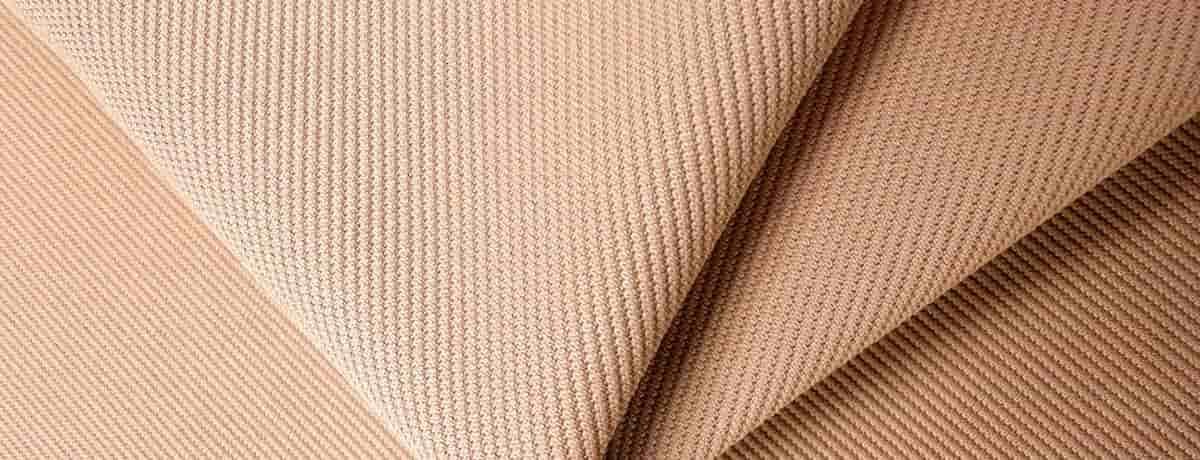
Twill is a woven fabric structure recognized by its diagonal surface lines, which form when warp and weft yarns interlace in a staggered sequence. It is one of the three fundamental weave structures, alongside plain weave and satin weave. Twill can be made from many fiber types, so its weight, softness, durability, breathability, and drape depend on the complete fabric construction rather than the weave name alone.
Is Twill a Weave or a Fiber?
Twill is a weave structure, not a fiber or a specific raw material. Fiber composition describes what the yarns are made from, while weave construction describes how those yarns cross each other to create fabric. Cotton twill, polyester twill, viscose twill, and wool twill can therefore share a similar diagonal surface pattern while behaving very differently during wear and garment production. This distinction is fundamental when developing clothing because a material’s name does not provide enough information to predict its comfort, dimensional stability, or finished appearance.
Consider two fabrics that are both described as cotton twill. One may be lightweight and relatively soft, making it suitable for a relaxed shirt dress, while another may be dense and firm, providing more structure for trousers or a jacket. Differences in yarn count, weave density, finishing, and weight can create these contrasting results even when the fiber composition is similar. Adding elastane can also change how a woven twill stretches and recovers, which may be important for fitted garments.
When evaluating a fabric for a women’s apparel collection, record the fiber blend and weave construction separately. A complete specification should also identify GSM, usable width, desired hand feel, drape, opacity, and any stretch or recovery requirements. For XZapparel, these details provide a more useful starting point for material evaluation than relying on a general description such as “medium-weight cotton twill.”
How Does a Twill Weave Create Diagonal Lines?
Woven fabrics contain two principal yarn systems. Warp yarns run lengthwise through the fabric, parallel to the selvage, while weft yarns cross the width. In a twill weave, the yarns interlace in a staggered sequence, with the interlacing points shifting from one row to the next. This repeated offset creates diagonal lines across the surface, often called twill lines or diagonal ribs. The pattern is a direct result of the weave structure rather than a printed or embossed decoration.
The direction and prominence of these lines depend on the weave draft, yarn arrangement, and fabric construction. Some twills have fine diagonals that are visible only when the fabric is examined closely, while others display pronounced ridges that remain obvious from a distance. Certain constructions show a clear difference between the face and reverse, particularly when one yarn system is more prominent on the surface. Herringbone twill uses a changing diagonal direction to produce a repeated V-shaped pattern.
The structure influences the fabric’s visual character and can affect its drape and handling. However, the presence of diagonal lines does not prove that a fabric is heavy, durable, breathable, or stretchy. Those characteristics depend on additional factors, including fiber strength, yarn construction, density, and finishing.
How Can You Identify Twill Fabric?
Twill can usually be identified by looking for repeated diagonal lines on the fabric surface. Under good lighting, the lines may be obvious without magnification, although fine twills, dark colors, and brushed finishes can make them harder to distinguish. Examining both sides of the material can reveal whether the face and reverse have different textures or yarn prominence. A close-up photograph or hand lens may help identify the pattern, but visual inspection alone cannot establish the fabric’s complete technical identity.
A practical first inspection should cover four areas:
- Surface structure: Look for parallel diagonal ribs rather than the regular grid commonly associated with plain weave.
- Fiber and yarn information: Confirm the declared composition and relevant construction details.
- Physical behavior: Observe the weight, softness, stiffness, drape, and any stretch.
- Specification consistency: Compare the physical sample with the stated GSM, usable width, color, and finish.
A photograph can help a development team communicate a preferred appearance, but it cannot reliably confirm fiber percentages, shrinkage, colorfastness, or exact fabric weight. Two materials with similar diagonal patterns may behave differently during cutting, sewing, washing, and wear. A lightweight viscose twill, for example, may require different handling and pattern allowances from a dense cotton twill.
Before approving a fabric for production, compare the actual swatch with the available technical information. If opacity, dimensional stability, or stretch recovery is important to the garment, evaluate those characteristics separately instead of assuming that the weave pattern guarantees the desired result.

What Are the Main Types of Twill?
Twill includes several weave patterns and familiar fabric categories, including 2/1, 2/2, and 3/1 twill, herringbone, denim, chino, and gabardine. These names do not all describe the same thing: some identify the yarn interlacing arrangement, while others refer to a fabric category or recognizable surface pattern. Understanding this distinction helps designers and sourcing teams compare materials more accurately and avoid treating different fabrics as interchangeable.
Which Twill Patterns Are Most Common?
The most common twill patterns differ in the way yarns interlace and the appearance they create on the surface. Simple twills form continuous diagonal lines, while more complex arrangements may reverse the diagonal, interrupt its continuity, or create a distinctive motif. The resulting texture depends on the weave repeat as well as yarn thickness, density, fiber composition, and finishing. Two fabrics with the same basic twill ratio can therefore look different when dyed, brushed, or finished.
Several constructions are especially useful to recognize during apparel development:
- 2/1 twill: A relatively simple interlacing arrangement that can produce a fine diagonal surface.
- 2/2 twill: A balanced sequence that can create a more balanced appearance between the two sides, depending on the construction.
- 3/1 twill: A familiar warp-faced construction used in many denim and other bottom-weight fabrics.
- Herringbone twill: A pattern that reverses diagonal direction at intervals, creating repeated V-shaped or zigzag lines.
- Broken twill: A construction that interrupts the continuous diagonal to create a different surface pattern.
These classifications describe structure, not guaranteed performance. A 3/1 twill is not automatically heavier or stronger than every 2/1 twill, and herringbone does not specify a particular fiber content. Yarn quality, fabric density, finishing, and weight still determine how the material behaves.
For women’s apparel, the pattern should support the intended visual effect. A pronounced diagonal may complement casual trousers or utility-inspired designs, while a finer texture may be appropriate for a more understated garment. The final choice should be based on the actual swatch rather than the pattern name alone.
What Do 2/1, 2/2, and 3/1 Twill Mean?
Twill notation describes the yarn interlacing sequence. Under a common convention, the numbers indicate the relative lengths of the over-and-under portions of the weave repeat. The exact drafting convention should be confirmed when reviewing technical documentation, particularly if the orientation of warp and weft matters. These ratios are useful because they provide a more precise description of construction than a general request for diagonal fabric.
| Twill notation | General construction | What to evaluate |
|---|---|---|
| 2/1 | Two over, one under, under the stated notation convention | Diagonal visibility, surface texture, and density |
| 2/2 | A balanced two-over, two-under sequence | Face-to-reverse appearance, flexibility, and hand feel |
| 3/1 | Three over, one under, under the stated notation convention | Diagonal prominence, surface character, and handling |
| Broken or reversing twill | The diagonal direction or continuity changes within the pattern | Visual symmetry, pattern matching, and garment-panel appearance |
The numbers should not be treated as a direct quality ranking. A 3/1 twill is not automatically heavier, stronger, or more expensive than a 2/1 twill. Weight depends on yarn size, density, fiber composition, and finishing, while durability also depends on yarn strength and the fabric’s intended use. Two constructions with different ratios may perform similarly in one application and very differently in another.
Understanding the notation helps designers, developers, and manufacturers communicate about the structure they want. When the exact weave is important, request confirmation of the construction and examine a physical sample. The ratio should be considered alongside GSM, width, composition, surface appearance, and performance requirements before the fabric is approved for production.
How Are Denim, Chino, Gabardine, and Herringbone Related to Twill?
Denim, chino, gabardine, and herringbone are related to twill, but they are not interchangeable terms. Denim is commonly associated with cotton twill and a characteristic difference between the fabric’s face and reverse. Chino typically refers to a cotton or cotton-blend twill used for casual trousers and related garments. Gabardine generally describes a closely woven fabric with a distinctive diagonal surface, often selected for tailored clothing. Herringbone, by contrast, identifies a recognizable zigzag pattern created by reversing the diagonal direction.
These differences matter when a design reference becomes a sourcing request. A request for chino may emphasize the appearance and everyday character of casual trousers, while gabardine may suggest a more compact surface and tailored appearance. A herringbone reference may communicate the desired pattern rather than a particular fiber content or weight. Clarifying the intended characteristics helps prevent confusion between a fabric’s name and the qualities required for the finished garment.
The correct choice depends on the product. A structured skirt may require enough body to maintain its shape, while a shirt dress may need a lighter fabric with softer drape. A jacket may require attention to seam bulk, pressing behavior, and lining compatibility. A material that resembles the reference visually may still behave differently during cutting and sewing.
For this reason, define the garment, fiber composition, weight, surface appearance, and relevant performance requirements before selecting a specific fabric category. The most useful material choice is the one that meets the design and production requirements, not simply the one with the most familiar name.
What Properties Does Twill Fabric Have?
Twill can offer a wide range of properties, including a recognizable diagonal texture, useful drape, and different levels of firmness and durability. However, the weave alone does not guarantee breathability, softness, stretch, wrinkle resistance, or seasonal suitability. These characteristics depend on fiber composition, yarn construction, fabric density, GSM, and finishing. Evaluating the complete fabric is therefore more reliable than assuming that every twill behaves in the same way.
Is Twill Durable and Wrinkle-Resistant?
Twill is widely used for trousers, jackets, skirts, and other garments that experience regular movement and friction. Its construction can provide a useful balance of surface texture and flexibility, but durability is not guaranteed by the weave alone. Fiber strength, yarn quality, fabric density, finishing, seam construction, and care conditions all influence how the finished garment performs over time.
Wrinkle resistance varies just as much. A polyester-blend twill may recover from creasing differently from a cotton twill, while wool and viscose constructions have their own characteristics. Certain finishes can influence crease recovery, but their effect should be assessed on the actual fabric rather than assumed from the finish name. A dense fabric may feel substantial, yet it can still develop surface damage or dimensional changes if its construction and finishing are unsuitable.
For product development, separate three performance questions:
- Abrasion resistance: Can the fabric withstand friction in areas such as the seat, inner thigh, or elbows?
- Dimensional stability: Does the material maintain acceptable measurements after washing or other relevant care processes?
- Appearance retention: Does the surface remain acceptable after repeated wear, cleaning, and handling?
A material may perform well in one area but poorly in another. A sturdy twill could still shrink enough to affect garment fit, or a fabric with good dimensional stability might develop pilling in high-friction areas. Relevant checks should reflect the intended garment, customer requirements, and expected care conditions. The correct decision is based on the fabric’s demonstrated performance rather than a general claim that twill is always durable or wrinkle-resistant.
Is Twill Breathable, Soft, or Stretchy?
Twill can be breathable, soft, and stretchy, but these characteristics depend on the complete fabric construction rather than the diagonal weave alone. A lightweight cotton twill may feel comfortable in warm weather, while a dense, heavy twill may retain more heat. A viscose-blend twill may have a softer, more fluid hand feel, whereas a compact cotton or polyester construction may feel firmer. Finishing can further change the surface and tactile experience.
Stretch requires particular attention. Many woven twills have limited mechanical give, but that is not equivalent to the controlled extension and recovery of a fabric designed with elastane or stretch yarns. A stretch twill may improve comfort in fitted garments, but it must also recover sufficiently after extension. Otherwise, the garment can become baggy at the knees, seat, or other areas that experience repeated movement.
For fitted trousers, body-conscious dresses, and shaped waistbands, assess extension and recovery alongside opacity and dimensional stability. For relaxed dresses, casual jackets, and structured skirts, drape and body may matter more than stretch. The garment’s design determines which characteristics deserve priority.
Breathability and comfort should also be considered in relation to climate and garment construction. Lining, multiple layers, garment ease, and skin contact can change the wearing experience. A fabric that feels comfortable as a single-layer swatch may feel warmer or stiffer in a fully lined garment. Reviewing the actual material and a garment sample provides a more reliable basis for approval.
Is Twill Suitable for Summer or Winter?
Twill can be suitable for both summer and winter because it describes a weave structure rather than a fixed weight category. Lightweight constructions may work for summer trousers, skirts, and shirt dresses, while heavier versions can support jackets, outerwear, and cool-weather bottoms. The final garment’s suitability depends on GSM, density, fiber composition, lining, finishing, and the way the material is constructed into the product.
For summer collections, developers often prioritize comfortable hand feel, manageable weight, airflow, and appropriate drape. A lightweight cotton or viscose-blend twill may be worth evaluating, but the actual fabric must be checked for opacity, surface feel, and behavior after washing. A material that is too dense or stiff can feel uncomfortable even when its weight appears reasonable.
For winter garments, a heavier twill may provide more body and work well with lining or layered construction. However, weight alone does not determine warmth. A dense unlined jacket behaves differently from a lined jacket made with the same outer fabric, and the fibers and layers used in the finished product influence insulation and comfort.
Seasonal decisions should consider the intended climate, styling, and use conditions. A summer skirt with several layers may feel warmer than a single-layer skirt made from a slightly heavier material. A jacket may need enough structure to maintain its silhouette while allowing movement over other clothing. Before choosing a fabric, define the intended season, garment silhouette, and wearing conditions, then evaluate samples against those needs.
What Affects Twill’s Weight, Drape, and Hand Feel?
Fiber composition, yarn construction, weave density, and finishing are four important variables that influence how twill feels and behaves. GSM, or grams per square meter, measures fabric mass per unit area and is useful for comparing material weights. However, GSM does not directly measure stiffness, thickness, softness, or drape. Two fabrics with the same GSM can have very different physical characteristics because their fibers, yarns, density, and finishes are not identical.
Drape describes how a fabric falls and forms folds under gravity. A fluid twill may follow the body’s shape, while a firmer construction may maintain a more defined silhouette. Hand feel describes the tactile experience of the material, including softness, smoothness, firmness, and surface friction. These characteristics influence how a garment looks on a hanger, moves when worn, and feels against the skin.
A useful material specification should record composition, construction, GSM, usable width, stretch and recovery, hand feel, drape, opacity, relevant risks, sourcing constraints, and product compatibility. Each characteristic helps answer a practical question about garment performance, fabric consumption, or manufacturing feasibility. Weight should be considered alongside the other variables rather than treated as the sole measure of quality.
A lightweight twill is not automatically fluid, and a heavy twill is not automatically stiff. The result depends on how the material is engineered. For this reason, developers should assess weight alongside the actual drape, surface feel, and behavior of a garment sample before approving the material for bulk production.
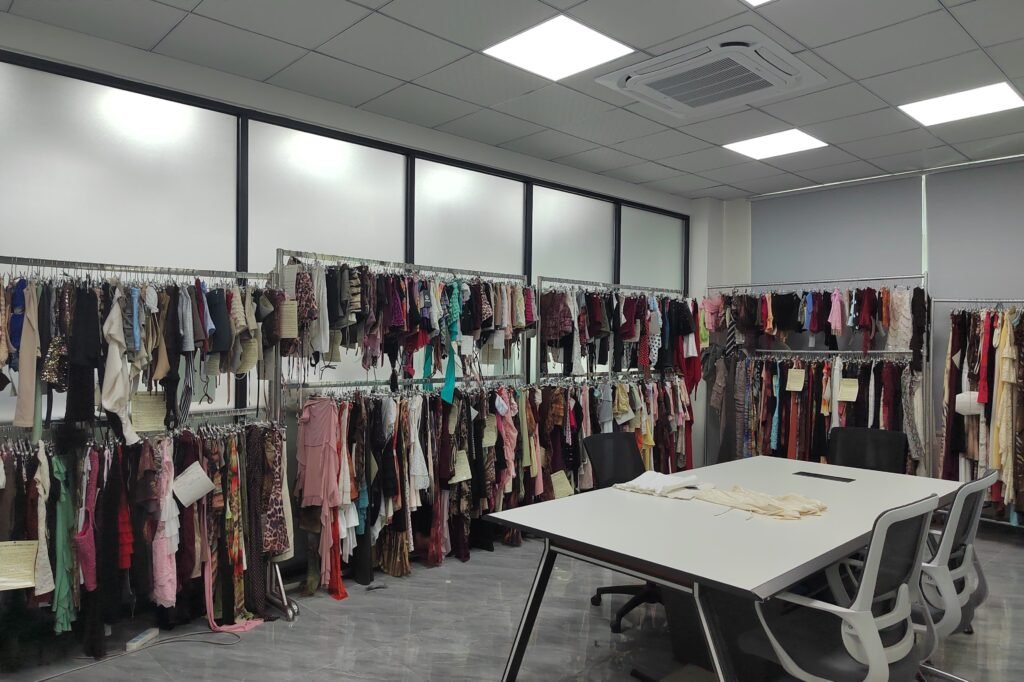
Which Garments Use Twill Fabric?
Twill is used in many garment categories because it can be developed in different weights, fiber blends, and finishes. Common applications include trousers, skirts, dresses, jackets, denim garments, and tailored pieces. The best choice depends on the intended silhouette, movement, season, and surface appearance. A fabric suitable for structured trousers may be too firm for a fluid dress, so material selection should reflect the garment’s actual requirements rather than the twill label alone.
Which Twill Fabrics Work for Dresses, Trousers, and Jackets?
Different garments place different demands on fabric. Trousers need suitable dimensional stability, seam performance, and enough flexibility for sitting and walking. Skirts may require soft drape or sufficient body to hold pleats and shaping. Dresses need an appropriate balance of comfort, opacity, and movement, while jackets often require attention to structure, pressing behavior, lining, and seam bulk. Selecting a fabric by appearance alone can overlook these practical differences.
The following starting points help narrow the material choice:
- Trousers and chinos: Consider abrasion, stretch and recovery, waistband stability, and dimensional change.
- Structured skirts: Evaluate body, drape, opacity, and the fabric’s ability to support pleats or shaped panels.
- Shirt dresses: Look for manageable weight, comfortable hand feel, and enough drape to support the design.
- Casual jackets: Assess seam construction, pressing behavior, fabric body, and lining compatibility.
- Tailored dresses: Check how the fabric behaves at darts, curved seams, closures, and fitted areas.
These are practical guidelines rather than fixed rules. A soft twill may work well for one trouser silhouette but lack the structure required for another. Similarly, a fabric that appears attractive as a flat swatch may become bulky where several layers meet at seams or closures.
A garment sample reveals how the fabric interacts with the pattern, stitching, lining, and construction details. For production planning, the chosen material should support the intended appearance while remaining manageable during cutting, sewing, pressing, and finishing. This garment-level evaluation is especially useful when a brand is developing several related styles that need a consistent visual identity but different fabric weights or levels of structure.
Is Cotton Twill Suitable for Women’s Apparel?
Cotton twill is a common option for women’s trousers, skirts, casual jackets, shirt dresses, and utility-inspired styles. It can offer a familiar hand feel, visible diagonal texture, and a range of appearances depending on the yarns and finish. However, cotton twill is not one uniform material category. Lightweight and heavyweight constructions can differ substantially in drape, opacity, stiffness, shrinkage, and sewing behavior, even when their fiber composition is similar.
A fitted skirt may need cotton twill that maintains its dimensions and allows comfortable movement at the hips. A structured jacket may require a firmer material that supports its shape, while a shirt dress may need a lighter construction that falls naturally without feeling overly stiff. The same fabric should not automatically be assumed suitable for all three applications.
Before selecting cotton twill, confirm the fiber specification, GSM, usable width, color, and finish. Dimensional stability deserves particular attention because shrinkage can affect body length, sleeve length, finished measurements, and the relationship between the outer fabric and lining. Colorfastness may also matter when the garment uses contrasting trims or forms part of a coordinated set.
The fabric should be reviewed in the intended color and construction, with relevant checks selected according to the garment’s risks. If the material is expected to undergo frequent laundering, assess how its appearance and dimensions respond to appropriate care conditions. Cotton twill can be a practical choice for many women’s apparel products, but its suitability should be established through the specific material and product requirements rather than the fiber name alone.
How Do Fiber Content and Fabric Weight Affect Garment Suitability?
Fiber content and fabric weight influence garment behavior in different ways. Cotton, polyester, viscose, and wool each contribute different characteristics, while blended fabrics combine properties according to their composition and construction. GSM helps compare fabric mass, but it cannot independently predict drape, stiffness, warmth, or opacity. These characteristics should be evaluated together when deciding whether a material supports the intended design and wearing experience.
The following weight bands are illustrative screening categories for apparel development, not universal standards for twill. Actual suitability depends on fiber, weave density, finish, and garment construction.
| Illustrative fabric weight | Possible apparel applications | Key checks |
|---|---|---|
| Below 150 GSM | Lightweight shirts, some dresses, and fluid styles | Opacity, drape, seam stability, and shrinkage |
| 150–250 GSM | Everyday trousers, skirts, and medium-weight garments | Hand feel, dimensional stability, and surface appearance |
| 250–350 GSM | More substantial trousers, structured skirts, and selected jackets | Seam bulk, stiffness, pressing, and movement |
| Above 350 GSM | Heavy-duty bottoms and selected outerwear applications | Bulk, handling, pattern allowances, and comfort |
These ranges are only starting points. A 200 GSM twill made from one fiber blend may feel quite different from a 200 GSM twill made from another. A compact construction can feel firmer than a more fluid fabric at a similar weight, and finishing can further change the result. The intended silhouette and garment construction must therefore remain central to the decision.
A useful development brief should record fiber composition, weave construction, GSM, usable width, stretch and recovery, desired hand feel, drape, opacity, and relevant performance risks. The intended product, quantity, color availability, and lead time also matter because sourcing conditions influence the commercial feasibility of a material. Combining these details allows the development team to compare alternatives without treating weight as the only measure of suitability.
How Does Twill Compare with Other Weaves?
Twill, plain weave, and satin weave differ primarily in how warp and weft yarns interlace. Plain weave creates a regular over-under pattern, twill forms diagonal lines through staggered interlacings, and satin uses longer floats to produce a smoother-looking surface. These structural differences influence appearance and fabric behavior, but fiber content, yarn construction, density, and finishing remain important when choosing a material for a specific garment.
What Is the Difference Between Twill and Plain Weave?
Plain weave follows a regular alternating sequence in which each yarn passes over one opposing yarn and under the next. This produces a closely interlaced structure with a small grid-like appearance when examined closely. Twill shifts the interlacing points progressively, creating diagonal lines across the surface. That structural difference changes the appearance and may influence how the fabric bends, drapes, and behaves during handling.
For apparel, plain weave can be appropriate when a design calls for an even surface, while twill may be preferred when diagonal texture or a different balance of drape and body is desired. Neither construction is universally stronger or more suitable. A lightweight plain weave and a dense twill cannot be compared fairly without considering fiber type, yarn quality, density, and finishing.
The garment’s requirements should guide the comparison. A blouse may prioritize softness, airflow, and how easily the fabric can be shaped, while trousers may place greater emphasis on dimensional stability, abrasion, and seam behavior. A structured skirt may require a particular level of body regardless of whether that quality is achieved through twill or another construction.
Swatch comparison and garment sampling reveal practical differences that weave names alone cannot establish. When evaluating alternatives, use consistent lighting, compare hand feel, and review the fabric in the intended color and finish. The final decision should reflect the garment’s needs rather than a blanket assumption that one weave is always better than another.
How Does Twill Compare with Satin?
Satin is known for its smooth surface and characteristic sheen, which arise from longer yarn floats and fewer visible interlacing points on the face. Twill generally presents a more visible diagonal texture. These structures create different surface appearances, but the final result still depends on fiber composition, yarn characteristics, density, and finishing. Satin and twill can both be produced in different weights, so the weave name alone does not establish whether the fabric will be soft, firm, or fluid.
In women’s apparel, satin is often considered for occasionwear, slip dresses, and blouses where luster and smoothness are important. Twill is frequently considered for trousers, structured skirts, casual jackets, and other garments where diagonal texture or a more substantial hand feel supports the design. These are common applications rather than strict limitations. Lightweight twill can drape fluidly, while some satin constructions can provide considerable body.
The production risks also differ. Longer floats can make certain satin fabrics more vulnerable to snagging, depending on the yarn and finish. Twill has its own potential issues, including shrinkage, skew, surface variation, and pilling in susceptible materials. Neither structure should be assumed to meet a performance requirement without suitable evaluation.
When comparing satin and twill, consider the desired appearance, garment construction, care requirements, and how the fabric behaves at seams and closures. A swatch comparison is useful, but a sample garment provides better evidence of how the selected material supports the intended silhouette. The right choice is the fabric that meets the design and performance requirements, not simply the one with the most attractive surface.
Is Denim the Same as Twill?
Denim is closely associated with twill, but denim and twill are not synonymous. Twill identifies a family of woven structures, while denim refers to a more specific fabric category commonly associated with cotton yarns and a characteristic face-and-reverse appearance. Many denim fabrics use a 3/1 twill construction, but fiber blends, weights, colors, and finishes vary. A fabric does not become denim simply because it has diagonal lines.
This distinction matters when communicating a design reference to a manufacturer. A request for “a twill similar to denim” could refer to the diagonal surface, weight, color contrast, or structured feel. Each interpretation can lead to a different material selection. If a design requires a particular denim appearance, the brief should identify the intended color, composition, weight, stretch requirements, and surface finish.
Construction also affects the finished garment. Denim-inspired trousers may need attention to seam strength, waistband stability, and consistent appearance across panels. A softer twill used for a shirt dress may require different pattern allowances and handling. A material that matches a reference photograph can still behave differently during sewing, washing, or wear.
Before development begins, clarify which characteristics must match the reference and which can vary. A physical swatch, technical specification, and garment sample help establish those boundaries. This reduces the risk of approving a material that looks similar but does not support the garment’s intended fit, construction, or use.

How Do You Choose, Test, and Care for Twill?
Choosing twill for apparel production means confirming its specifications, assessing whether its properties suit the garment, and checking relevant risks before bulk approval. Important variables include fiber composition, weave construction, GSM, width, drape, stretch and recovery, shrinkage, colorfastness, and pilling. Care instructions should reflect the actual material and finish rather than assuming that every twill can be washed or pressed in the same way.
Which Twill Specifications Matter for Apparel Production?
A fabric specification turns a general sourcing request into a material that can be compared, evaluated, and approved. At a minimum, it should identify composition, weave construction, GSM, usable width, color, finish, and the intended hand feel and drape. Depending on the garment, it may also need stretch and recovery, opacity, dimensional-stability requirements, pilling expectations, and relevant colorfastness criteria. The purpose is to establish a clear reference for development and production rather than relying on an incomplete description such as “medium-weight twill.”
| Specification | What to record | Why it matters |
|---|---|---|
| Composition | Fiber percentages and blend | Influences comfort, care, durability, and cost |
| Construction | Weave type and structural details | Identifies the material structure |
| GSM and width | Supplier range or measured values | Affects garment weight, consumption, and pattern layout |
| Stretch and recovery | Direction, extension, and recovery behavior | Influences fit and movement |
| Drape and hand feel | Desired visual and tactile behavior | Supports the intended silhouette |
| Dimensional stability | Shrinkage and skew requirements | Helps protect finished measurements |
| Color and finish | Approved color reference and surface treatment | Supports appearance consistency |
| Sourcing conditions | Availability, quantity, color options, and lead time | Determines commercial feasibility |
These details should be assessed together. GSM alone cannot predict drape, and fiber content alone cannot establish dimensional stability. A complete material record connects composition and construction with weight, width, stretch and recovery, hand feel, risk profile, sourcing constraints, and product compatibility. This approach helps identify differences between materials that appear similar but may behave differently during manufacturing.
The required level of detail depends on the project. A straightforward casual garment may need fewer specialized checks than a fitted design with contrasting panels, lining, or strict customer quality requirements. The specification should capture the characteristics that matter to the finished product and provide a reliable reference for sourcing, sample approval, and bulk production.
How Should You Assess Shrinkage, Colorfastness, Pilling, and Skew?
Fabric assessment should focus on the risks most likely to affect the intended garment. Shrinkage can change finished measurements, colorfastness problems can cause fading or transfer, pilling can affect surface appearance, and skew can distort the alignment of panels or seams. These are separate issues, so a visual inspection alone cannot establish that a twill is suitable for production. The appropriate evaluation depends on the fiber composition, color, finishing, construction, and expected care conditions.
A practical assessment follows four steps:
- Identify the risk: Consider composition, color, construction, finishing, and intended use.
- Select the relevant check: Depending on the fabric, this may include GSM, washing, shrinkage, rubbing, pilling, colorfastness, or skew assessment.
- Compare results with an agreed requirement: Use the supplier specification, approved sample, or customer quality criteria.
- Make a material decision: Approve the fabric, request corrective action, seek an alternative, or arrange further testing.
The relevant checks depend on the product. A dark fabric combined with light-colored trims may require particular attention to color transfer. A fitted garment may place greater emphasis on dimensional stability and recovery, while a garment exposed to frequent friction may require closer attention to pilling and abrasion.
For XZapparel, the important principle is to connect each identified risk with a relevant check and a production decision. Formal third-party laboratory reports should be arranged when required by the customer or destination market. In-house production-control checks and qualified laboratory reports serve different purposes and should not be represented as interchangeable evidence. Results should be documented against the agreed requirements rather than converted into unsupported claims about universal fabric performance.
What Should You Confirm Before Approving a Twill Sample?
A swatch can look suitable without proving that it will perform well in a finished garment. Sample approval should connect the fabric to the actual design, pattern, sewing construction, and intended use. This is especially important for fitted garments, lined styles, pleated designs, bias-cut panels, and products that combine different materials. These details affect how the fabric behaves once it becomes a complete garment, rather than a flat piece of material.
Before approval, confirm the following:
- The composition and weave construction match the agreed specification.
- GSM, usable width, color, and finish meet the project requirements.
- Drape, hand feel, opacity, and stretch suit the design.
- Relevant shrinkage, colorfastness, and surface risks have been evaluated.
- Seams, closures, hems, and lining behave as intended.
- Measurements have been checked against the agreed points of measurement.
- The approved fabric and garment sample can be referenced during bulk production.
The approved sample should be linked to the relevant material specification and garment version. If the supplier, color, construction, or finish changes, the team should determine whether the change affects the original approval. A visually similar replacement may have different shrinkage, weight, or drape, which can influence measurements and sewing results.
A clear development brief makes the review more productive. Useful inputs include the technical pack, reference garment or image, intended fabric properties, target quantity, and delivery timeline. These details help the development team distinguish essential requirements from flexible preferences and identify sourcing or testing issues before production begins. The objective is to approve a material that supports the design and can be managed against an agreed reference throughout production.
How Do You Wash and Care for Twill Garments?
Twill has no single universal care method because it is a weave structure rather than a fiber. Cotton twill may respond differently to washing from polyester-blend, viscose, or wool twill, while coatings, brushing, dyeing, and other finishes can introduce additional considerations. Care instructions should therefore be based on the garment’s actual composition and validated requirements. Assuming that every twill can tolerate the same washing temperature or ironing conditions can lead to shrinkage, fading, or changes in appearance.
For consumers, the garment’s care label is the primary reference. Washing temperature, drying method, ironing conditions, and any cleaning restrictions should follow the stated instructions. Excessive heat can damage certain fibers or finishes, while unsuitable washing conditions may cause dimensional changes or changes in hand feel. Garments with lining, interfacing, embellishments, or mixed-fiber components may need additional care because different materials can respond differently.
For apparel developers, care performance should be considered before final approval. A sample may need to be washed or evaluated under the conditions expected for the finished garment. The team can then examine dimensional change, color appearance, surface condition, and any effect on fit or construction. This is particularly important when a garment is intended for frequent laundering or when its appearance depends on precise measurements and coordinated materials.
Care claims should reflect the evidence available for the actual fabric. Do not assume that every twill garment is machine-washable, shrink-resistant, or colorfast under all conditions. Appropriate material specifications, relevant validation, and clear care instructions help reduce avoidable quality problems and give customers more reliable guidance throughout the garment’s useful life.
Conclusion
Twill is a versatile woven structure, but recognizing its diagonal surface is only the beginning of making a sound fabric decision. Fiber composition, yarn characteristics, weave pattern, GSM, usable width, finishing, stretch and recovery, and dimensional stability all influence how a twill behaves in a finished garment. Denim, chino, gabardine, and herringbone illustrate the variety of fabrics and patterns associated with twill, but their names do not replace the need for clear technical specifications and physical evaluation.
For women’s apparel brands, effective material selection connects the intended silhouette with measurable fabric properties and the garment’s expected use. A swatch helps assess appearance and hand feel, a technical specification clarifies what is being sourced, relevant checks identify risks, and sample approval confirms whether the material works in the actual construction. These steps also create a more reliable reference for bulk production and repeat orders.
At XZapparel, a productive twill development discussion begins with a clear description of the garment, the desired fabric characteristics, the target quantity, and the applicable quality requirements. With these details established, the development team can evaluate suitable material options and identify the questions that need to be resolved before production. The goal is not simply to select a fabric called twill, but to develop a garment whose appearance, fit, comfort, and production requirements work together.
Frequently Asked Questions
1. What is twill fabric made of?
Twill is a woven construction rather than a specific fiber, so it can be made from cotton, polyester, viscose, wool, or blended yarns. Its characteristic diagonal lines come from the way the yarns interlace. The fiber content, yarn construction, density, and finishing determine the fabric’s actual weight, hand feel, drape, and care requirements. When sourcing twill, composition should always be confirmed separately from the weave description.
2. Is twill a good fabric for clothing?
Twill is widely used for trousers, skirts, jackets, dresses, and other garments because it can be developed in many weights and fiber blends. However, its suitability depends on the particular construction and intended design. A firm twill may support a structured skirt, while a softer construction may work better for a relaxed dress. The actual fabric should be assessed for drape, comfort, dimensional stability, and relevant quality requirements before approval.
3. Is twill better than plain weave?
Neither twill nor plain weave is universally better. Plain weave creates a regular over-under structure, while twill produces diagonal lines through staggered interlacing. These differences influence appearance and can affect drape and handling, but the final result also depends on fiber composition, yarn quality, density, and finishing. The best choice depends on the garment’s silhouette, wearing conditions, construction requirements, and the fabric’s demonstrated performance.
4. Does twill fabric stretch?
Twill does not automatically stretch. Some woven twills have limited mechanical give, while others use elastane or stretch yarns to improve extension and recovery. These properties matter for fitted trousers, shaped waistbands, and body-conscious garments. A fabric that stretches but does not recover sufficiently may lose its intended shape during wear. Before approval, evaluate the material’s stretch direction, extension, recovery, and dimensional stability in relation to the garment design.
5. Is twill suitable for summer clothing?
Yes, some lightweight twill fabrics are suitable for summer trousers, skirts, and dresses. Breathability and comfort depend on fiber content, fabric density, weight, finishing, and garment construction. A lightweight cotton or viscose-blend twill may be worth evaluating, but its opacity, hand feel, and behavior after washing should also be considered. A fabric sample and, where appropriate, a garment sample provide a more reliable basis for deciding whether the material suits the intended climate.
6. How do you test twill fabric before bulk production?
Testing should reflect the material’s risks and the garment’s intended use. Relevant checks may include GSM, usable width, shrinkage, colorfastness, rubbing, pilling, skew, and dimensional stability. Results should be compared with agreed specifications, approved samples, or customer requirements. When formal evidence is required, qualified third-party testing may be necessary. Documenting the results and linking them to the approved material helps the production team make consistent decisions about fabric acceptance and any corrective action.
7. What information should I provide when sourcing twill for a clothing line?
Provide the intended garment, fiber composition, weave preference, target GSM, usable width, color, desired drape and hand feel, stretch requirements, quantity, and timeline. A reference swatch, technical pack, or garment image can further clarify the request. It is also useful to identify relevant quality requirements, such as shrinkage limits or colorfastness expectations. These details help the development team evaluate suitable materials, identify sourcing constraints, and establish a clear reference before bulk production begins.