Skip to content

A fabric can look beautiful in a swatch and still create unexpected problems when it becomes a finished garment. Chiffon is a perfect example. Its lightness, delicate transparency, and flowing movement make it a favorite for women’s dresses, blouses, occasionwear, and layered designs. Yet those same characteristics can affect coverage, seam construction, fabric consumption, and production consistency. Choosing the right chiffon is therefore about more than finding a material that looks elegant. It requires understanding how the fabric is constructed, how its fibers influence performance, and how it will behave throughout the life of the garment.
Chiffon is a lightweight, sheer or semi-sheer woven fabric known for its soft texture and fluid drape. It is commonly made from silk, polyester, nylon, viscose, or suitable fiber blends. Its appearance and performance depend on fiber composition, yarn characteristics, fabric density, weight, and finishing. Chiffon is widely used for flowing dresses, blouses, scarves, sleeves, and overlays, but its transparency and delicate structure may require lining, careful seam finishing, and appropriate quality checks. The best chiffon is the one that delivers the intended appearance while meeting the garment’s practical requirements.
For fashion brands, the real challenge begins when an attractive fabric must become a repeatable commercial product. A designer may want a floating sleeve, a soft layered skirt, or a printed blouse that maintains its intended appearance after handling and washing. Each application places different demands on the material. At XZapparel, fabric selection is considered alongside pattern development, garment construction, sampling, and quality control. Understanding these relationships helps brands make better material decisions before committing to a collection or bulk production.
What Is Chiffon Fabric?
Chiffon is a lightweight, sheer or semi-sheer woven fabric recognized for its delicate appearance, subtle texture, and flowing drape. It can be made from silk, polyester, nylon, viscose, or suitable blends. Its fine yarns and woven construction allow light to pass through the material while creating soft movement, making it particularly useful for women’s dresses, blouses, scarves, sleeves, and layered garments.
What Makes Chiffon Different From Other Lightweight Fabrics?
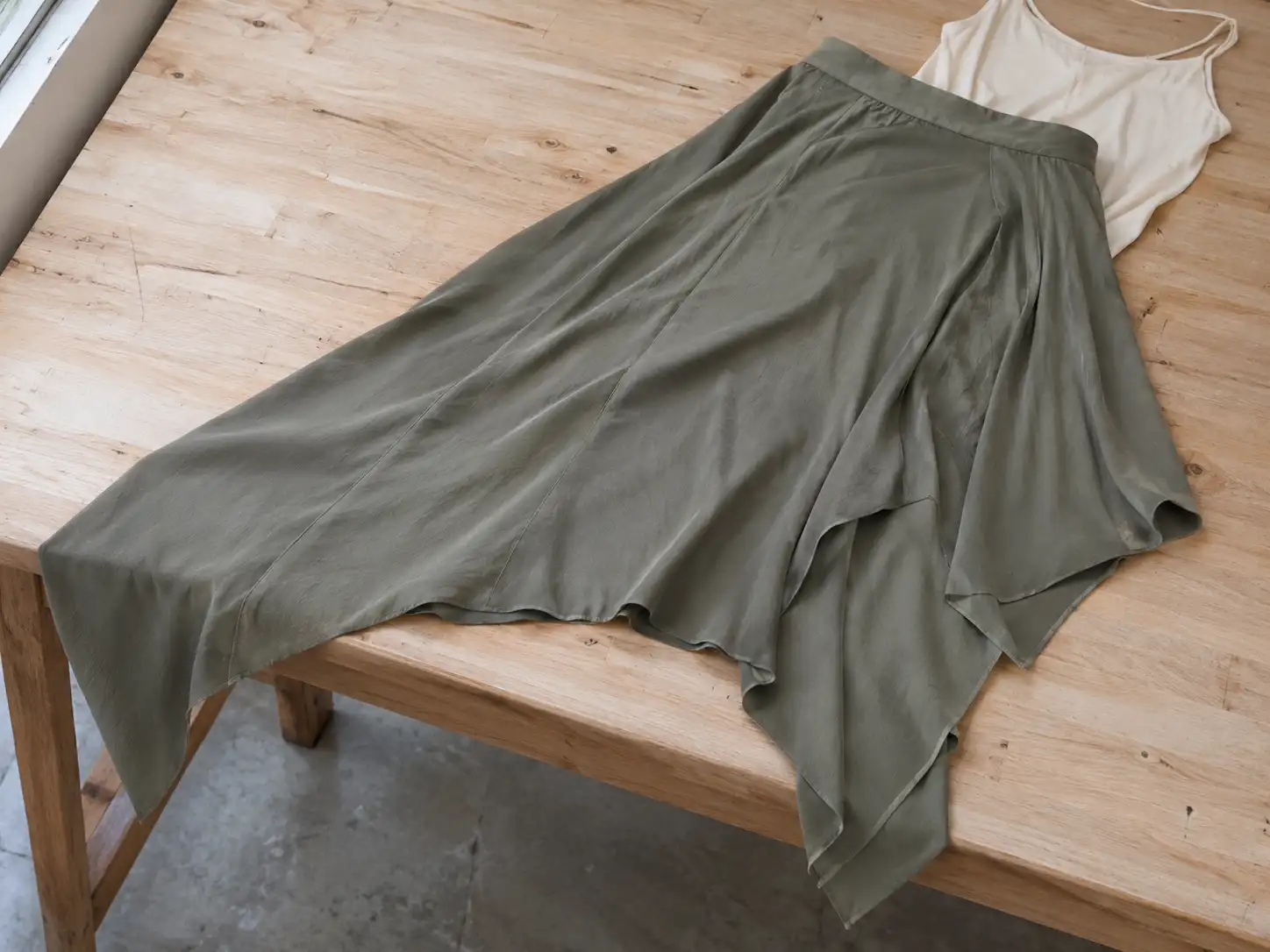
Chiffon’s defining characteristic is its ability to create movement without adding much visual or physical weight. When a person walks, turns, or raises an arm, chiffon often responds with soft folds that follow the body’s movement. This makes it useful for designs that need to feel light and fluid rather than stiff or heavily structured. Depending on its composition and finish, chiffon can create anything from a soft everyday blouse to a more formal eveningwear silhouette. Its visual appeal comes from the relationship between the fabric, light, and movement rather than from a rigid shape.
However, chiffon is not interchangeable with every lightweight fabric. Voile, georgette, organza, and lightweight satin can all create delicate-looking garments, but their surfaces and structural behavior differ. Voile often has a softer, more matte appearance, while organza is generally crisper and better suited to shapes that need to hold their form. Georgette commonly has a more pronounced crepe-like texture and may provide additional body. Chiffon generally emphasizes fluidity, although the exact difference depends on the fabrics being compared.
For apparel developers, the important question is how the material will behave in the finished design. A swatch may look attractive when held flat but reveal too much when used for a single-layer bodice. The same fabric may also behave differently when gathered into a sleeve or cut into a full skirt. Fabric selection should therefore consider the silhouette, coverage, construction, and expected movement of the garment rather than relying on the name alone.
How Does Chiffon’s Weave Create Its Sheer, Flowing Drape?
Chiffon is generally made using a plain weave, in which warp and weft yarns cross in an alternating over-and-under pattern. Fine yarns, yarn twist, weave density, and finishing contribute to the material’s characteristic appearance. The construction allows light to pass through the fabric while providing enough cohesion for cutting and sewing. Many chiffons also have a subtle surface texture rather than the completely smooth appearance associated with some other lightweight materials.
The term chiffon does not describe one universally fixed construction. Different fibers, yarn specifications, and finishing methods can produce fabrics with noticeably different levels of transparency, softness, and body. A relatively stable polyester chiffon may handle differently from a particularly delicate silk version. Two fabrics sold under the same general name may also respond differently to pressing, gathering, washing, and repeated wear. This is why the fabric description should be treated as a starting point rather than a complete technical specification.
These differences become important when translating a design into production. A dress that depends on soft movement around the hem needs material that drapes naturally across a large panel. A design with narrow straps, curved seams, or gathered sleeve heads may place greater demands on handling stability and seam performance. Evaluating a physical swatch and a representative construction sample gives the development team a clearer understanding of how the material behaves than relying on its composition or appearance alone.
What Is Chiffon Commonly Used For?
Chiffon is widely used in women’s clothing because it creates visual softness, movement, and layering opportunities. Common applications include maxi dresses, occasionwear, blouses, flutter sleeves, scarves, shawls, and decorative overlays. It also appears in bridal and resort collections, where designers may want a garment to look light and fluid rather than heavily structured. Its transparency can be a deliberate design feature, particularly when the fabric is layered over a contrasting color or a more substantial base material.
Different garment applications place different demands on the same material. A loose blouse may need comfortable drape and an appropriate level of coverage, while a fitted bodice may require lining or internal support. A full skirt can use several chiffon layers to create depth and movement, whereas a single overlay may remain intentionally sheer. Sleeves and ruffles may require additional attention to seam finishing because their edges remain visible as the wearer moves. These differences influence not only appearance but also the construction process.
For manufacturers, the role of chiffon should be defined before finalizing the material specification. A garment with several layers, extensive gathering, or carefully matched prints may require more fabric and more handling than a simple unlined blouse. Pattern engineering, lining choices, and seam treatments all influence the finished result. At XZapparel, considering these details during development helps connect the fabric choice with the intended silhouette, construction requirements, and production feasibility.

What Is Chiffon Made Of?
Chiffon is a fabric category rather than a specific fiber. It can be made from silk, polyester, nylon, viscose, or suitable blends, and each option may differ in hand feel, cost, care requirements, and performance. To select chiffon reliably, confirm its actual fiber composition and evaluate its weight, construction, finish, and intended application instead of assuming that every chiffon has identical properties.
Is Chiffon a Natural or Synthetic Fabric?
Chiffon can be made from natural or manufactured fibers. Silk chiffon uses a natural protein fiber and is often valued for its refined hand feel, delicate appearance, and fluid drape. Polyester chiffon uses a synthetic fiber and is widely used in commercial fashion because it can be produced in many colors, weights, textures, and finishes. Nylon chiffon and viscose chiffon provide additional possibilities when their characteristics suit the intended garment.
This distinction matters because the fabric name alone does not establish the fiber content. A product described simply as chiffon might contain silk, polyester, nylon, viscose, or a blend. Those differences can influence the way the material feels against the skin, responds to heat, retains its appearance, and performs during washing. They can also affect the information required for product labeling and the documentation a brand needs from its material supplier.
When developing a garment, the fiber content should be specified explicitly. A useful specification identifies the required fiber percentages, construction, target weight, color, finish, and relevant performance requirements. Where a project has particular material compliance or certification requirements, supporting documents should correspond to the actual material and supplier. Neither a fabric trade name nor a general supplier statement is sufficient to establish every technical or compliance characteristic.
For commercial collections, selecting between natural and synthetic fibers is a product decision rather than a simple ranking of quality. Silk may support a premium positioning, while polyester may offer a more practical balance of appearance, care, availability, and cost. The correct choice depends on the product brief and the verified performance of the proposed fabric.
How Do Silk, Polyester, Nylon, and Viscose Chiffon Differ?
Different fibers provide different starting points for chiffon development, but their behavior cannot be predicted from composition alone. Fiber properties interact with yarn twist, fabric density, finishing, and color treatments. The following comparison identifies common considerations rather than universal guarantees for every fabric sold under these names.
| Chiffon type | Common characteristics | Important checks before selection |
|---|---|---|
| Silk chiffon | Refined hand feel, natural-fiber appeal, fluid appearance | Cost, care requirements, snagging, dimensional stability |
| Polyester chiffon | Broad commercial versatility, many color and finish options | Heat sensitivity, static, hand feel, opacity, colorfastness |
| Nylon chiffon | Potentially useful strength and flexibility characteristics | Heat response, snagging, dimensional stability, construction |
| Viscose chiffon | Often soft with a fluid drape | Shrinkage, wet handling, dimensional stability, care requirements |
| Blended-fiber chiffon | May balance selected properties of different fibers | Exact percentages, fiber compatibility, labeling, batch consistency |
Silk chiffon can be appropriate when a design requires a refined hand feel and a particular natural-fiber story. Polyester chiffon may suit commercial collections that need a broad selection of colors or prints and practical sourcing options. Nylon or viscose alternatives may also be worth evaluating, but the decision should be based on the specific fabric’s behavior rather than assumptions about the fiber category.
Blends require particular attention because combining two fibers does not automatically combine their advantages or eliminate their limitations. The percentage of each fiber, yarn structure, and finishing process can change the final result. A blend may also require more careful consideration of washing and pressing instructions if its components respond differently to moisture or heat. These details become especially important when a brand needs a repeatable specification across multiple production orders.
For a production project, compare physical swatches under the same conditions. Evaluate drape, transparency, surface feel, and seam behavior, then confirm the composition and technical information with the supplier. If the garment depends on a specific appearance, a sample made from the proposed bulk fabric provides stronger evidence than a general fabric description.
Does Fiber Content Affect Chiffon’s Cost, Feel, and Care?
Yes. Fiber content affects chiffon cost, hand feel, and care requirements, but it is only one part of the overall equation. Fabric price also depends on yarn specifications, construction, weight, dyeing, printing, finishing, order quantity, and supplier availability. A premium fiber may increase material cost, while a synthetic alternative may provide a commercially suitable appearance at a different price level. The right comparison considers the finished garment rather than the cost of a meter of fabric in isolation.
Care requirements also vary. Silk chiffon may need more delicate handling than some polyester alternatives, but it would be inaccurate to assume that every polyester chiffon is machine washable or that every silk chiffon requires identical care. Finishes, dyes, construction, and supplier instructions can change the appropriate washing and pressing methods. The proposed care label should therefore reflect the actual material and the conditions under which the finished garment is expected to be maintained.
From a manufacturing perspective, material selection affects more than the fabric invoice. A lightweight fabric that requires additional lining, complicated seam finishing, or extensive handling may increase garment construction costs. A less expensive material may become a poor commercial choice if it creates repeated quality problems or fails to deliver the intended silhouette. Conversely, a higher-priced fabric may be justified when it meets important design requirements without excessive construction compromises.
A practical evaluation considers material cost, garment construction requirements, expected quality performance, and intended retail positioning. For larger programs, repeat availability and consistency between fabric lots are also important. The material specification should identify the approved fabric clearly enough that future orders can be compared against the original sample rather than relying on a generic name that could describe several different constructions.
What Are the Key Properties and Limitations of Chiffon?
Chiffon is valued for its light weight, transparency, and fluid drape, but these characteristics also create limitations. Its performance depends on fiber composition, fabric density, finishing, and garment construction. Before choosing chiffon, evaluate opacity, comfort, dimensional stability, snagging, seam behavior, and care requirements. A fabric that looks suitable as a swatch may still be unsuitable for the finished garment.
Is Chiffon Sheer, Breathable, or Stretchy?
Chiffon is generally sheer or semi-sheer, although the degree of transparency varies considerably. Fabric density, fiber type, color, and finishing all affect how much light passes through the material. Pale colors may reveal more than darker colors, and a single layer may look very different from two layers placed together. A fabric that provides sufficient coverage when folded may become noticeably transparent when worn over the body under bright lighting.
Breathability should be assessed in context. A lightweight fabric may allow air movement, but wearing comfort also depends on fiber composition, garment fit, lining, and the surrounding environment. A lined polyester chiffon dress may feel different from an unlined silk chiffon blouse, even if both materials are light. The number of layers and the amount of fabric in contact with the skin can change the overall experience, particularly in warm weather.
Conventional chiffon is usually woven rather than knitted, so it should not be selected on the assumption that it offers the stretch and recovery of an elastane-containing jersey. Some fabrics may have limited give, but this is not equivalent to reliable stretch performance. If a design requires close body contact, substantial movement, or recovery after stretching, the proposed material needs to be evaluated accordingly.
For designers, the useful question is not whether chiffon is universally breathable, transparent, or stretchy. It is whether the exact fabric meets the needs of the intended garment. Assess coverage on a representative panel, consider the lining arrangement, and test movement where the design places tension on the material. These checks are particularly important for fitted bodices, sleeves, and garments intended for warm conditions.
How Do Weight, Opacity, Texture, and Drape Affect Performance?
Four variables deserve particular attention during chiffon selection: weight, opacity, surface texture, and drape. Weight is commonly expressed in grams per square meter, or GSM, and measures the mass of fabric over a defined area. It provides a useful specification for comparing materials, but GSM alone does not establish transparency, softness, durability, or suitability for a particular garment.
Opacity must be evaluated using the actual color and intended number of layers. A pale chiffon overlay may create the desired effect over a darker base, but the same material may require lining when used for a blouse intended to provide greater coverage. Surface texture affects the garment’s visual finish and may influence the appearance of gathered panels, pleats, and seams. Drape determines whether the fabric falls softly against the body, forms flowing folds, or retains a little more volume.
These properties interact rather than operating independently. Two chiffons with the same GSM may have different transparency because their yarns and weave densities differ. Likewise, a fabric with a soft hand feel may not provide the dimensional stability needed for a garment with precise panel lengths. Product teams should avoid using a single measurement as a substitute for assessing the complete material and its intended use.
A practical selection process includes the following checks:
- Record the target GSM and the measurement method.
- Assess opacity in the intended color and layer arrangement.
- Compare drape on a body form or representative garment panel.
- Inspect surface texture for unevenness, visible defects, and snagging.
- Evaluate dimensional stability under the relevant care conditions.
- Check seam appearance and handling behavior during a construction trial.
These observations turn a general material preference into a specification that can be reviewed and reproduced. The approved swatch should remain the reference for later comparisons, especially when color, surface appearance, or drape is critical to the collection.
How Should Chiffon Be Sewn, Washed, and Cared For?
Chiffon can be challenging to sew because its lightweight construction may shift during cutting, move under the presser foot, or fray at exposed edges. Careful fabric handling, a stable cutting surface, a suitable sharp needle, and controlled stitching can help reduce these problems. However, needle size, stitch length, thread, and seam construction should be selected through trials with the actual fabric rather than applied as universal settings.
French seams can be useful for some chiffon garments because they enclose raw edges and create a neat interior finish. They are not automatically the best solution for every seam. Curved sections, gathered areas, stress points, and designs with limited seam allowance may require different approaches. The construction method should provide the required strength and appearance without creating excessive bulk or distorting the material.
Washing and pressing requirements depend on fiber composition, dyeing, finishing, and the supplier’s care recommendations. Before establishing care instructions for a commercial garment, evaluate the fabric under the relevant washing and drying conditions. Check for dimensional changes, color transfer, surface damage, and changes in hand feel. Heat should also be controlled because delicate natural fibers and synthetic materials may respond differently to pressing.
For production teams, these checks are part of material validation rather than optional finishing details. A fabric that looks excellent before washing may not maintain the same dimensions or appearance afterward. When the garment depends on precise lengths, matched panels, or consistent drape, the care process should be considered before the production specification is finalized. Appropriate handling methods and documented approval criteria help reduce variation between development samples and finished goods.

Which Types of Chiffon Are Best for Women’s Clothing?
The best chiffon for women’s clothing depends on the intended silhouette, coverage, surface appearance, care expectations, and production constraints. Silk, polyester, nylon, viscose, printed, and embellished chiffons may all be appropriate for different designs. Selection should begin with the finished garment requirements, then move to material specifications and sampling to confirm that the chosen fabric delivers the intended result.
Which Chiffon Works Best for Dresses, Blouses, and Overlays?
Flowing dresses often benefit from chiffon that moves naturally and creates soft folds without adding unnecessary bulk. The correct choice depends on the design’s construction. A single-layer skirt, a lined bodice, and a multilayer occasionwear dress place different demands on the fabric. Designers should evaluate how the material behaves when gathered, cut into curved panels, or joined along seams. A fabric that appears fluid in a small swatch may behave differently across a full skirt.
For blouses, coverage, comfort, seam appearance, and care requirements become especially important. Chiffon can work well for loose silhouettes, relaxed sleeves, and decorative panels, but collars, cuffs, plackets, and closure areas may require more stable construction. The material should support these details without creating unwanted distortion or making the finished garment difficult to maintain. The designer should also consider whether the fabric’s transparency suits the intended styling and retail positioning.
Overlays offer another way to use chiffon without asking it to provide every function of the garment. A more stable base fabric can supply coverage and structure, while chiffon contributes movement, color, or visual depth. This approach can expand design possibilities, although the additional layers affect fabric consumption, seam thickness, and assembly time.
For manufacturers, the key is to connect the material with the pattern and construction. Before approving a fabric, confirm where lining is required, how seams will be finished, and whether the fabric behaves as intended across the garment’s most important panels. A successful choice should meet the design objective while remaining practical for the target price, production quantity, and quality expectations.
How Do Printed, Pleated, and Embellished Chiffons Differ?
Printed chiffon requires attention to pattern scale, color consistency, and artwork placement. Large motifs may need to be matched across seams or positioned carefully around the garment’s main panels, which can increase fabric consumption. Small all-over prints may allow more flexible cutting, but print clarity and color appearance still need to be reviewed. The printing process can also affect the surface feel, so the final fabric should be assessed rather than judged from artwork alone.
Pleated chiffon introduces another set of variables. The desired fold depth, spacing, and recovery should be assessed on a representative sample. A fabric that looks crisp when flat may not retain the same appearance after handling or care. The finishing method, fabric construction, and garment design all influence whether the pleats achieve the intended effect. If pleat retention is central to the product, it should be treated as an explicit approval requirement rather than a visual preference.
Embellished chiffon requires particular care because beads, sequins, embroidery, and appliqué add localized weight to a delicate base material. Poorly planned placement can pull the fabric, distort the drape, or create stress around attachment points. The design may need reinforcement or a different construction approach, depending on the size and density of the embellishment. These decisions can also influence production time and the consistency of the finished appearance.
These categories should be evaluated as complete material-and-process combinations. A printed fabric needs an artwork and color review, a pleated fabric needs a finishing trial, and an embellished fabric needs a representative construction sample. In each case, the approved result should demonstrate that the decorative treatment works with the base material and the intended garment rather than simply looking attractive in a reference image.
When Is Chiffon Not the Right Fabric Choice?
Chiffon is not the best choice for every garment, even when its appearance suits the design concept. If a product needs a crisp silhouette that stands away from the body, organza or another more structured fabric may be a better starting point. If the garment requires substantial stretch and recovery, a suitable knit or stretch-woven material may be more appropriate than conventional woven chiffon. Selecting a fabric that conflicts with the intended silhouette often leads to unnecessary construction adjustments.
Chiffon can also create production difficulty when a design contains many small pieces, complicated curves, exposed edges, or highly stressed seams. These details are possible to manufacture, but they may require careful handling, specialized construction choices, and more demanding quality checks. If the product has a tight cost target, additional handling and finishing can affect the overall economics even when the base fabric is relatively inexpensive.
Coverage is another reason to consider alternatives. A single layer of chiffon may be unsuitable for a product that requires opacity without lining. Adding lining can solve the problem, but it also changes the garment’s weight, drape, fabric consumption, and construction. The resulting garment must be evaluated as a complete assembly, not simply as an outer fabric choice.
A sound decision balances design value with practical performance. Define the required silhouette, coverage, durability, care conditions, and target cost before choosing the fabric. If no available chiffon meets those requirements consistently, a different fabric may provide a better commercial result. The purpose of material development is not to force every design into one fabric category, but to find the material and construction combination that best serves the intended product.
How Does Chiffon Compare With Georgette and Organza?
Chiffon, georgette, and organza are all used for lightweight and sheer clothing, but they create different visual and structural effects. Chiffon generally emphasizes fluid movement, georgette often provides additional texture and body, and organza is typically crisper and more shape-retaining. The best option depends on the garment’s silhouette, desired coverage, finishing requirements, and intended performance.
Is Chiffon the Same as Georgette?
No. Chiffon and georgette are related lightweight fabric categories, but they are not identical. Chiffon is generally associated with a delicate appearance and fluid drape, while georgette commonly has a more pronounced crepe-like texture and may provide additional body. Both can be made from silk or synthetic fibers, so composition alone does not determine which one will look or behave better.
For a flowing dress, chiffon may be appropriate when the design depends on very light movement and soft folds. Georgette may be preferable when the designer wants a flowing silhouette with a more textured surface or a slightly fuller appearance. The difference can be particularly noticeable in gathered skirts, wrap fronts, loose blouses, and draped bodices. Georgette’s surface texture may also influence how decorative details and seams appear in the finished garment.
These are general tendencies rather than universal rules. A relatively substantial chiffon may have more body than a lightweight georgette, depending on their construction and finishing. Transparency can also vary considerably, so neither fabric should be selected solely on the assumption that one is always more sheer than the other. Comparing actual fabrics is more reliable than relying on trade names.
The most useful comparison involves physical swatches of the proposed fabrics. Place them against the same background, observe their transparency, and compare how they fall when lifted, folded, or draped over a form. For important styles, a representative garment panel or first sample provides more reliable evidence than the fabric name alone. The decision should be based on the appearance and performance required by the actual design.
How Is Chiffon Different From Organza?
The main difference is the balance between fluidity and structure. Chiffon is usually selected for soft movement, whereas organza is commonly used when a sheer fabric needs to maintain a crisper outline. Organza can support puff sleeves, bows, sculptural details, and layered skirts because it tends to hold more shape. Chiffon is often preferred when sleeves, overlays, or skirt panels need to move naturally with the wearer.
Both materials can be transparent, but transparency does not determine the entire result. Crisp organza can create a clearly defined layer, while soft chiffon may fall closer to the body. Color, density, finishing, and the number of layers also affect the final appearance. A multilayer chiffon skirt may appear less transparent than a single organza layer, depending on the materials and lighting.
Construction requirements differ as well. Organza’s crispness can help a garment maintain volume, but its stiffness may be undesirable for designs that need a soft, relaxed drape. Chiffon may be more appropriate for flowing garments, but it may need additional support or lining in areas that require structure. The appropriate choice depends on the intended silhouette rather than an assumption that one fabric is inherently better.
For product development, evaluate both materials in the actual garment context. Examine the edge finish, seam appearance, lining arrangement, and how the fabric behaves when the wearer moves. If the design relies on a precise outline, organza may be worth testing first. If it relies on fluid movement, chiffon is a logical starting point, subject to confirmation through sampling.
Which Fabric Works Best for Different Garment Silhouettes?
The best fabric depends on the shape the garment must create. Chiffon is generally suitable for flowing lines and soft folds, georgette can balance fluidity with added texture, and organza can provide crisp volume. These categories offer useful starting points, but the final result also depends on fiber composition, weight, finishing, lining, and pattern construction.
| Design requirement | Fabric to evaluate first | Main decision factors |
|---|---|---|
| Floating sleeves or soft overlays | Chiffon | Drape, transparency, seam stability |
| Flowing dress with added surface texture | Georgette | Texture, body, gathering behavior |
| Sculptural sleeves or crisp bows | Organza | Shape retention, edge finish |
| Lightweight printed blouse | Chiffon or georgette | Print appearance, comfort, opacity |
| Layered occasionwear skirt | Chiffon or organza | Desired movement versus volume |
| Draped bodice with a defined silhouette | Georgette or a suitable alternative | Body, surface texture, construction |
A useful development method is to compare at least two candidate fabrics against the same design brief. Use equivalent pattern sections and lining arrangements where practical, then evaluate the visual result, comfort, and construction behavior. This helps the team identify whether the fabric itself is producing the intended silhouette or whether the pattern needs adjustment. The exercise is especially valuable when a garment relies on a particular relationship between transparency and structure.
The comparison should also consider commercial requirements. A fabric that performs beautifully in a sample may be unsuitable if its availability, minimum order quantity, care requirements, or cost does not match the collection. Conversely, a slightly different material may deliver a similar appearance with a more practical production route. The objective is to select a fabric that supports both the design and the conditions under which the finished product will be manufactured and sold.

How Do You Evaluate Chiffon for Apparel Production?
Evaluating chiffon for apparel production requires more than approving a color swatch. Brands and manufacturers should confirm fiber composition, fabric construction, GSM, opacity, drape, dimensional stability, and relevant performance requirements. Sampling, material checks, and pre-production approval help establish whether the selected fabric can deliver the intended appearance and performance consistently.
Which Fabric Specifications Should Buyers Confirm?
A useful chiffon specification translates a design concept into measurable or clearly observable requirements. At minimum, the brief should identify fiber composition, target fabric weight, construction, color, finish, transparency expectations, and intended garment application. Additional requirements may include print method, shade consistency, shrinkage, colorfastness, lining compatibility, seam performance, and care instructions. The precise list depends on the design, target market, and conditions under which the garment will be worn and maintained.
It is also important to clarify whether the proposed material is a standard supplier fabric or a custom-developed option. This can affect availability, minimum quantities, lead time, and the feasibility of repeat orders. If a project requires particular material documentation or certification, the documents should match the exact material, supplier, and applicable scope. A general description such as “premium chiffon” is not a technical specification and does not establish that a material meets the product’s requirements.
A practical fabric brief should record the following information:
- Fiber composition and percentage.
- Target GSM and the applicable measurement method.
- Color reference and acceptable shade variation.
- Required opacity and number of fabric layers.
- Drape, surface texture, and finish expectations.
- Dimensional stability and colorfastness requirements.
- Print, embellishment, lining, and construction details.
- Target quantity, delivery window, and relevant compliance requirements.
These details allow a manufacturer to assess feasibility and identify missing information before sampling or quotation. They also provide a reference for reviewing the approved material against later deliveries. Without a clear specification, two fabrics carrying the same trade name may differ enough to affect the garment’s appearance, care requirements, or construction.
How Can You Check GSM, Opacity, Drape, and Shrinkage?
Each measurement answers a different question. GSM measures fabric mass per unit area and helps confirm whether a material matches its target weight. It does not independently establish transparency, softness, or durability. Opacity should be evaluated using the intended color and layer arrangement, while drape should be assessed on a suitable form or representative garment section. Dimensional stability requires measurements before and after defined treatment conditions.
A practical GSM estimate can be calculated from a precisely cut fabric sample. A square measuring 30 cm by 30 cm has an area of 0.09 square meters. If the sample weighs 1.8 grams, its estimated GSM is 20 grams per square meter, calculated by dividing 1.8 by 0.09. This example explains the calculation rather than establishing a recommended chiffon weight. Accurate comparison requires suitable weighing equipment, representative sampling, and an agreed measurement method; formal testing should follow the relevant procedure when required.
Opacity needs to be evaluated in the proposed color and number of layers because both can change the appearance. Drape should be compared under consistent conditions, preferably using the same form or pattern section. Shrinkage should be assessed through a defined washing and drying procedure, with the fabric’s original dimensions and post-treatment dimensions recorded. Length and width should be considered separately because dimensional changes may not be equal in both directions.
| Property | Practical evaluation | Information to record |
|---|---|---|
| GSM | Measure a defined fabric area and weigh it accurately | Sample area, mass, calculated GSM, method |
| Opacity | Assess the intended color and layer count under consistent lighting | Color, background, layer arrangement, observed coverage |
| Drape | Compare how the fabric falls over a form or representative panel | Sample identity, panel shape, visual observations |
| Shrinkage | Measure before and after the specified care procedure | Original dimensions, final dimensions, percentage change |
| Colorfastness | Use an appropriate test method for the intended use | Test method, conditions, results, acceptance criteria |
| Surface condition | Inspect for defects, snagging, and uneven texture | Defect type, location, severity, disposition |
For shrinkage, percentage change can be calculated by subtracting the final measurement from the original measurement, dividing the difference by the original measurement, and multiplying by 100 when the dimension has decreased. Length and width should be recorded separately, and acceptance limits must be established for the project rather than treated as universal chiffon standards. This is particularly important when garment proportions depend on consistent panel lengths or matching pieces.
The results should be compared with the approved fabric specification and the requirements of the finished garment. A fabric that meets its target GSM but fails the opacity or dimensional-stability requirement is not automatically acceptable. The purpose of testing is to establish whether the material meets the product’s actual needs, not simply to produce a set of numbers.
Which Quality Tests Matter Before Cutting and Bulk Production?
The appropriate test plan depends on fiber composition, garment category, care requirements, destination market, and the risks identified during development. For chiffon dresses and blouses, useful checks may include incoming fabric inspection, GSM verification, shade assessment, dimensional stability, colorfastness, and evaluation of drape and seam appearance. Pilling, rubbing, or snagging assessments may also be relevant depending on the material and intended use.
Different styles require different priorities. A printed chiffon blouse may need close attention to shade consistency and print appearance, while a pleated design may require additional evaluation of finishing and fold stability. A lined dress may need compatibility checks between the outer fabric and lining, particularly if the materials respond differently to washing or heat. Testing should be selected to answer defined product questions rather than applied as an identical checklist to every fabric.
Quality control should continue after material approval. A typical garment-control process may include incoming fabric inspection, pre-production review, cutting inspection, inline quality checks, measurement, finishing inspection, final inspection, and packing inspection. These checkpoints can help identify defects before they affect more garments, but their effectiveness depends on clear acceptance criteria, records, and corrective actions. No inspection sequence should be described as a guarantee that every garment will be defect-free.
XZapparel’s documented workflow includes fabric inspection, pre-production review, cutting inspection, inline quality control, measurement checks, 100% finishing inspection, final inspection, and packing inspection. Available in-house fabric checks include GSM, shrinkage, colorfastness, rubbing, washing, pilling, stretch and recovery, spirality, and dimensional stability. The applicable checks depend on project requirements, and formal third-party testing can be arranged where required. In-house production-control testing should not be confused with an accredited laboratory report.
The objective is to establish a documented relationship between the approved material, the finished sample, and the bulk-production requirements. When a fabric or construction detail changes, the team should assess whether the change affects the original approval and whether further testing is necessary.
How Do Sampling and PPS Approval Reduce Production Risk?
Sampling provides an opportunity to evaluate a real garment before committing to bulk production. For chiffon, this is particularly valuable because transparency, drape, seam visibility, gathering, and edge finishing may not be fully understood from a flat swatch. The first sample reveals how the material interacts with the pattern, while revisions allow the team to adjust construction, proportions, lining, and finishing before the design is finalized.
A pre-production sample, commonly called a PPS, provides a reference for the approved garment before bulk manufacturing begins. The review should cover fabric and color, measurements, construction, trims, labels, and finishing requirements. If the proposed bulk fabric differs from the approved sample material, the team should assess whether the difference affects appearance or performance. Approval of one fabric should not automatically be treated as approval of another.
The development schedule depends on complexity and whether the required inputs are available. XZapparel’s documented planning baselines are:
- Simple sample: typically 3–5 working days.
- Complex sample: typically 5–7 working days.
- Sample revision: typically 2–3 working days.
- Pre-production sample: typically 4–5 working days.
- Bulk production: typically 25–35 working days after material readiness, PPS approval, and confirmation of production details.
These are planning baselines rather than unconditional delivery guarantees. The actual schedule depends on design complexity, material sourcing, approval speed, construction requirements, and the completeness of the information provided. They should be confirmed for each project rather than assumed to apply identically to every chiffon garment.
For a production-ready brand, sampling should resolve meaningful uncertainties before they become expensive bulk problems. Clear feedback, controlled material references, agreed measurement specifications, and documented approvals help the manufacturer reproduce the intended result. When the design or material changes, the approval record should make it clear which version is current and whether the change requires another sample or validation step.
What Information Should a Manufacturer Review Before Quoting?
A reliable quotation depends on the completeness of the product brief. The manufacturer needs to understand the garment category, construction, fabric requirements, order quantity, quality expectations, and delivery target. A reference image can communicate the general appearance, but it may not show lining, seam finishes, closure details, measurement tolerances, or the exact fabric properties required to reproduce the design. These details can significantly influence feasibility and cost.
A useful quotation brief should include a tech pack or equivalent design information, reference images or an existing sample, size specifications, quantities per style and color, fabric requirements, trim details, print or embellishment instructions, target market, and planned delivery date. If some information is unavailable, the missing details should be identified before commercial terms are finalized. This allows the manufacturer to distinguish confirmed requirements from assumptions that may change during development.
Order quantity deserves particular attention when chiffon requires a special color, print, finish, or supplier-specific material. A fabric may be technically suitable but commercially impractical at the requested quantity or timeline. Conversely, a readily available material may offer a more practical route if it meets the product requirements. The decision should consider the entire garment program rather than the fabric’s appearance alone.
XZapparel’s standard garment MOQ is 200 pieces per style per color, although special fabric, trim, process, or supplier requirements may raise the minimum. This is a garment-level baseline, not a guarantee that every material or construction can be produced at that quantity. The actual project should be reviewed against the collection plan, sourcing conditions, and construction requirements.
Before moving into development, the manufacturer and brand should establish:
- Whether the garment and construction fit the manufacturer’s current capabilities.
- Which fabric details need sourcing, testing, or confirmation.
- Whether the proposed quantities and color split are feasible.
- Which samples, tests, and approvals are required.
- What information is still needed to estimate cost and lead time.
- Which specifications must remain consistent during repeat orders.
For brands developing chiffon dresses, blouses, sets, and other women’s apparel, a tech pack, sketch, reference garment, or available fabric specification provides a practical starting point for development review. A well-defined brief allows both parties to assess feasibility, identify risks, and establish the next steps toward sampling and a production quotation.
Conclusion
Chiffon is much more than a lightweight, transparent fabric. Its value comes from the way fiber composition, yarn construction, weight, drape, finishing, and garment engineering work together. A successful product begins with the intended silhouette, continues through careful material evaluation, and ends with an approved sample and a quality-control plan suited to the actual garment. Understanding these relationships helps designers make material choices that support both the visual identity and practical performance of a collection.
For fashion brands, the most reliable approach is to specify the properties that matter, compare suitable alternatives, and validate the chosen fabric under realistic conditions. This reduces the risk of unexpected transparency, dimensional changes, or construction problems appearing late in development. At XZapparel, fabric selection is connected with women’s apparel development, sampling, manufacturing, and quality control so that material decisions support the finished product as well as the design concept. When a chiffon project has a clear brief and documented approval criteria, it becomes easier to evaluate feasibility and move toward consistent production.
Frequently Asked Questions
1. What is chiffon fabric made of?
Chiffon can be made from silk, polyester, nylon, viscose, or suitable fiber blends. The word describes a fabric category rather than a single material composition. Fiber content influences hand feel, cost, care requirements, and performance, while yarn characteristics, weave density, weight, and finishing further affect transparency and drape. Always check the actual fiber composition and supplier specification before selecting chiffon for a garment or confirming its care instructions.
2. Is chiffon a good fabric for dresses?
Chiffon is a popular choice for flowing dresses, occasionwear, maxi dresses, and layered designs because it creates soft movement without adding substantial bulk. Its suitability depends on the intended silhouette, required coverage, and construction. A single layer may be too transparent for some bodices or skirts, so lining or multiple layers may be necessary. Before bulk production, assess drape, opacity, seam appearance, and the finished garment’s behavior in movement.
3. Is chiffon see-through?
Chiffon is generally sheer or semi-sheer, but the degree of transparency varies with fabric density, fiber composition, color, and finishing. Pale colors and single layers may reveal more than darker shades or layered constructions. Transparency should be checked using the actual fabric color and intended garment arrangement under appropriate lighting. If the design requires greater coverage, a suitable lining or additional layer may be necessary, and the finished combination should be reviewed before approval.
4. What is the difference between chiffon, georgette, and organza?
Chiffon is generally known for its delicate appearance and fluid drape, georgette often has a more textured surface and additional body, and organza is typically crisper and more shape-retaining. Chiffon works well for flowing overlays and soft sleeves, georgette can suit garments needing movement with texture, and organza is useful for structured volume. These are general tendencies, so the final decision should be based on the actual fabrics, garment design, and desired result.
5. Is polyester chiffon better than silk chiffon?
Neither is automatically better for every application. Silk chiffon may be chosen for its refined hand feel and natural-fiber appeal, while polyester chiffon offers broad commercial versatility in colors, prints, and finishes. The best option depends on the garment’s intended appearance, care requirements, target cost, sourcing conditions, and performance needs. Compare physical swatches and confirm composition, dimensional stability, and other relevant requirements before deciding which material is more suitable for the collection.
6. How do you check chiffon fabric quality before production?
Start by confirming fiber composition, fabric weight, color, construction, transparency, and finish against the approved specification. Depending on the garment, additional checks may include dimensional stability, colorfastness, surface condition, seam appearance, and compatibility with lining or decorative treatments. A representative garment sample and pre-production approval help verify the actual result before bulk manufacturing. The appropriate test plan and acceptance criteria should be based on the material, garment category, and intended use.
7. What information does XZapparel need to develop chiffon clothing?
A useful starting point includes a tech pack or sketch, reference images or an existing garment, size specifications, target quantities per style and color, fabric preferences, trim and construction details, and the desired delivery window. If the exact chiffon has not been selected, available swatches or material references can help begin the review. These inputs allow the team to identify sourcing questions, assess construction feasibility, plan sampling, and clarify what additional information is needed before providing a reliable quotation.